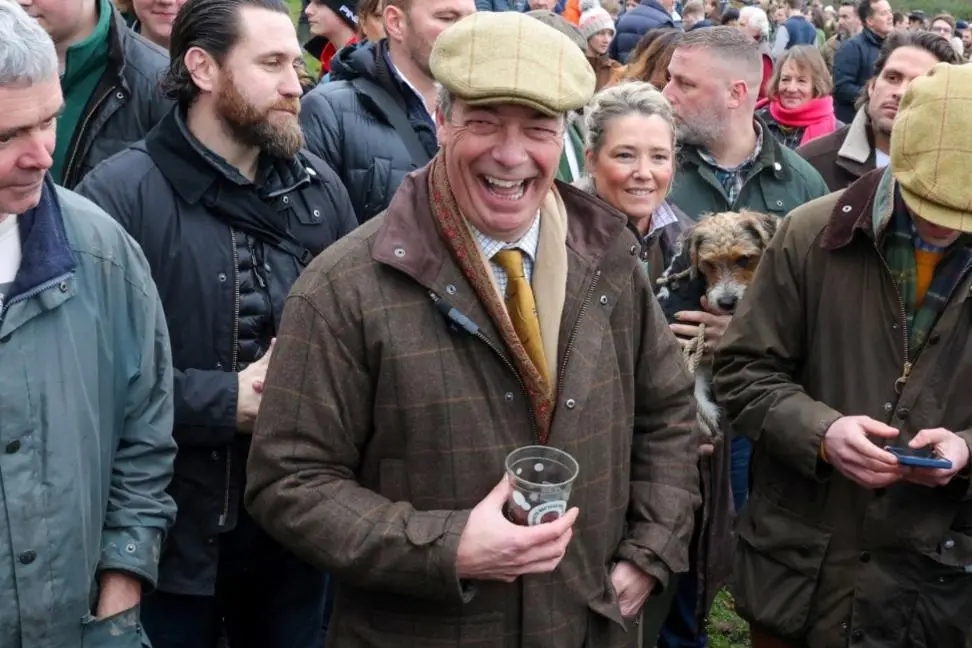

Britain’s two-party system of government, which once appeared immutable, is dead – at least at the local level. The recent local council elections confirmed what pollsters had long been saying: the political landscape has fragmented into five parts. Of course, local authorities deal with local matters, organizing garbage collection, street paving, and maintaining public toilets. But decades of experience show that voting results directly reflect public sentiment and attitudes toward the central government. Reform UK, led by Nigel Farage, who is aiming for the premiership, is now the country’s most popular party. Following behind are four other parties –Labour, the Conservatives, the Liberal Democrats, and the Greens – each with substantial voter support.
The Tories suffered defeats in many districts. But the especially painful blow in these elections was dealt to the ruling party itself. In London, Labour lost 459 seats, surrendering control of 11 borough councils. Before the elections, the party held majorities in 21 of the capital’s 32 boroughs; now it retains an advantage in only ten. Outside London, matters are even worse for Labour: it lost roughly three out of every four seats it previously held.
Labour’s mistakes
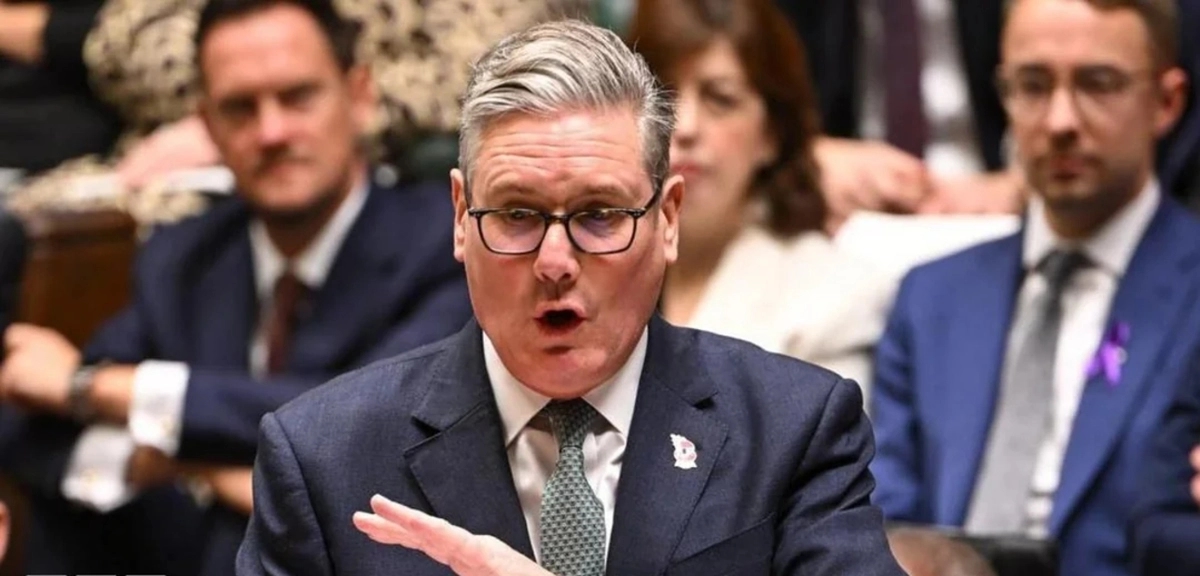
So what is behind this collapse? The extraordinarily low personal approval rating of Prime Minister Keir Starmer –negative 66% – certainly played a role. In an IPSOS poll, 79% of Britons said they were dissatisfied with his performance, while only 13% expressed satisfaction.
It is the lowest figure for any prime minister since such polling began in 1977. Following Labour’s rout in the local elections, commentators have even begun referring to Starmer as a “zombie prime minister”: few believe he will survive in office until the end of the year, let alone survive until the next general elections.
And yet the issue is not only – or even primarily – the personal unpopularity of a leader many in Britain see as an unprincipled opportunist with no clear convictions, as well as a poor speaker and communicator utterly lacking in charisma.
Many in Britain see Starmer as unprincipled, opportunistic, and, on top of that, a poor speaker and communicator utterly lacking in charisma
Voters are clearly disappointed with the government’s domestic – economic and social – policies. It is widely acknowledged that Labour’s impressive victory in the 2024 parliamentary elections, which gave the party an absolute majority in the House of Commons and the ability to pass whatever legislation it wished, was not driven by the appeal of its platform. The outcome was determined by voters’ revulsion toward the Conservatives, who had exhausted the public’s trust after 14 years in power. It was a classic protest vote – not for, but against. Once in office, Labour failed to use its overwhelming majority to adopt any coherent program of its own.
The central mantra of Starmer’s cabinet was a commitment to economic growth. But by now it is clear that this strategy has completely failed. Fiscal policy proved to be a colossal mistake: small and medium-sized businesses were hit with a triple blow. Taxes rose, employers’ social insurance contributions increased, and the minimum wage was raised as well. As a result, every job became far more expensive for companies – in many cases by as much as £10,000 a year.
As a result of these decisions, Starmer’s government lost the support of business owners – but not only theirs. Squeezing entrepreneurs dry means abandoning any hope of meaningful economic growth and, consequently, any rise in living standards. Paradoxically, the legacy of Starmer, who is considered a moderate centrist by Labour standards, resembles some of the party’s most notorious failures: the highest tax burden in 80 years, rapidly growing welfare spending, and labor legislation leading to business decline and job cuts. To top it all off, he failed to stop the flow of illegal immigrants – an issue that deeply irritates voters.
The working class has largely turned away from the ruling party. In many areas, working-class voters backed either Reform UK or the Green Party. A widespread view has taken hold that Labour can no longer be considered the party of workers – that it now represents little more than the interests of the unemployed and disabled living on generous benefits, as well as the idle. The government is prepared to spend colossal sums on welfare – more than £300 billion a year. At the same time, more than 9 million working-age Britons are classified as “economically inactive” – in other words, people who are not even attempting to find work.
To Starmer’s credit, he did try to cut or at least restrain the growth of welfare spending, but he achieved nothing. Left-wing MPs from the ruling party – the so-called backbenchers, who do not hold government posts – quickly forced him to make concessions. In the King’s Speech outlining the government’s legislative agenda for the near future, the anticipated welfare reform bill failed to materialize. Nor did the long-awaited draft law on tax relief for entrepreneurs, whom Labour has pushed to the brink.
Who comes after Starmer?
Labour has found itself facing a fatal dilemma: the views and sentiments of the majority of party members, including those in its parliamentary faction, do not align with the views of most of the population. The Conservative Party has found itself confronting much the same problem – though on the opposite, right-wing flank of British politics. Is it any wonder that the two parties, which for decades had alternated in power according to the swings of public opinion, have now lost their positions – perhaps forever?
The main question occupying British newspapers of every political orientation these days is: what comes after Starmer? Who could replace him, and can a change of leader save the Labour Party from political collapse – and the country from a severe crisis? Several prominent figures are being mentioned as theoretically capable of securing sufficient support both within the ruling party’s parliamentary faction and among its rank-and-file members. But two figures deserve particular attention.
First, there is former Health Secretary Wes Streeting –eloquent, quick-witted, and always self-assured. He is a modern-style politician who knows how to hold an audience, is unafraid of difficult questions, and has proven himself a master of soundbites – short, aphoristic remarks journalists love to quote. He gives the impression of being capable of formulating a coherent, rational, and above all realistic program that could help address the country’s economic problems. He is not a slave to ideology, but rather a continuation of the moderate, pragmatic course of Tony Blair and New Labour. Streeting is openly gay and could become the first LGBT person to lead a British government. But that troubles few people. What hurts him instead is the fatal mismatch between his worldview and pragmatism on the one hand and the dogmatic views of the deeply ideological backbenchers and party members on the other. To them, he is “too right-wing.” So who, then, might satisfy them as a replacement for Starmer? Manchester Mayor Andrew (Andy) Burnham.
A poll conducted by Compass among more than 1,000 party members found that 42% would choose Burnham as Starmer’s successor, while only 11% would vote for Streeting. YouGov polling shows that Burnham significantly outperforms not only his Labour rivals but also the leaders of the country’s other major political parties. Some 34% of voters view him positively, while 30% view him negatively, giving him a net approval rating of plus four. That figure may not seem especially impressive, but none of Britain’s current political figures has a positive approval rating. Compared with other leadership contenders, Burnham also performs strongly. Former Deputy Prime Minister Angela Rayner has an approval rating of minus 35, while Wes Streeting stands at minus 25.
Burnham is widely considered to be handling his role as Manchester’s mayor successfully. In addition, he is sufficiently telegenic, a strong public speaker, and clearly possesses a measure of charisma – unlike the wooden Starmer. But above all, the issue lies in his political convictions.
He has openly declared himself to be a socialist, collectivist, and internationalist, as well as a supporter of a system for redistributing wealth within society – taking from the rich and giving to the poor.
Burnham has declared himself a socialist, collectivist, and internationalist, as well as a supporter of wealth redistribution within society
If rank-and-file Labour members and the backbenchers had their way, Burnham would immediately replace Starmer as party leader and prime minister, advancing their ideals: sharply higher taxes on the wealthy and corporations, greater state control over the economy, large-scale nationalization, and other elements of the left-wing agenda. But under party rules, anyone seeking the leadership must be a member of the House of Commons. In January, the party’s National Executive Committee refused to allow Burnham to stand in a by-election for a vacant parliamentary seat. Now, however, Josh Simons, Labour MP for the Makerfield constituency in northwestern England, has deliberately resigned in order to give Burnham an opportunity to enter Parliament. This time, Starmer’s supporters either could not or did not wish to prevent Burnham from running, and the executive committee did not object to his candidacy. That does not mean, however, that a leadership vote is imminent. Burnham’s supporters say that his main goal is to force such a vote before the party conference scheduled for the fall.
Commentators believe that a further shift to the left in British politics is inevitable in any case. If Starmer, contrary to expectations, manages to remain in office, he will have to cater even more to the mood within the party. If he is replaced by Burnham or by any of the other prominent contenders –with the exception of the “odd man out,” Streeting – the leftward shift will be even more pronounced. But Streeting’s chances are considered slim precisely because of his ideological distance from the party base. As a result, both government policy and the ruling party’s course will move even further left, widening the gap between public opinion and the ideology of those in power. That, in turn, is likely to end in a crushing Labour defeat at the next parliamentary elections and, perhaps by the logic of the political pendulum, the rise of right-wing populists to power.
Populists in power
Daniel Finkelstein, a prominent columnist for The Times, calls on the Labour Party to reinvent itself as the party of the liberal middle class. He recalls that historically the party was a coalition of three very different factions – trade unions, urban socialist intellectuals, and the liberal middle class. Now that coalition has fallen apart, and it can no longer be restored. What happened in the local elections was merely the logical culmination of a long process of disintegration.
The Greens have become a new radically socialist party – and for the first time achieved a measure of success. Nationalistically minded voters have shifted to Reform UK under Farage. Meanwhile, middle-class liberals have been left without a political home, as the Liberal Democrats have failed to formulate any coherent program distinguishing them from the other parties.
However, Finkelstein is indulging in wishful thinking. There is indeed a demand for a strong centrist party representing the interests of the liberal intelligentsia and the middle class. But in practice Labour cannot possibly play that role. The party is entirely dependent on financial support from the trade unions; without it, it would be unable to function, and union leaders have little interest in a liberal agenda. Nor would most ordinary Labour members likely accept such a transformation.
Most importantly, the crisis affecting the ruling party, as well as the opposition Conservatives, is closely tied to the broader process of decline of Britain’s political system. A significant part of the electorate has lost not only its faith in the two traditional parties but also its confidence in the way British democracy itself functions, as well as in politicians and the central government.
A significant part of the electorate has lost not only its faith in the two traditional parties but in the way British democracy itself functions
Under these conditions, society is undergoing painful polarization. Populists, both right-wing and left-wing, are gaining strength. The country’s most popular party, Reform UK, resembles a personality cult centered on its leader, Nigel Farage, who is seriously aiming to reach the pinnacle of power in the coming years. He has nothing even remotely resembling a coherent economic or social program – and does not seem to need one. He promises to stop immigration and make England “great again,” imitating his political idols –Trump and Orbán. In other words, this is undisguised populist nationalism, appealing to xenophobic sentiments and to the growing wave of ressentiment spreading through society and amplified by social media – feelings of hostility, envy, and powerless resentment toward those whom people blame for their misfortunes. For many, those targets are immigrants and the people supposedly enabling them. On the opposite flank stands the Green Party, led by Zak Polanski, whom his opponents regard as a charlatan.
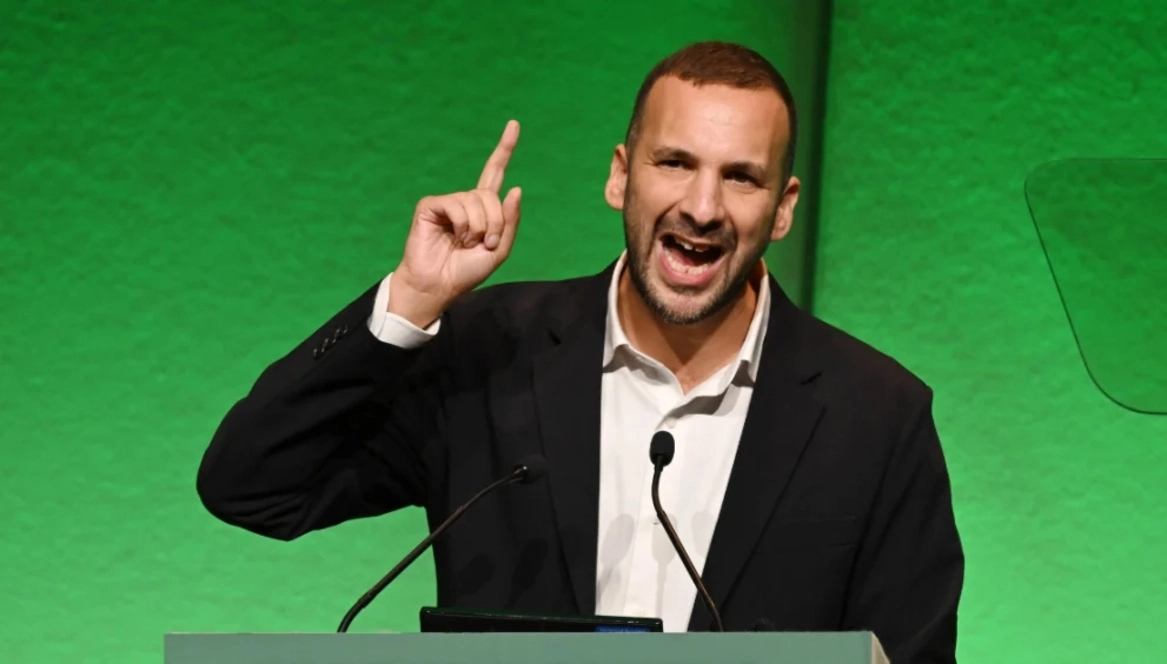
It is enough to recall his claims that, while practicing hypnotherapy, he discovered that hypnosis could be used to increase the size of women’s breasts. He shamelessly embellished his biography with falsehoods. More importantly, under his leadership the Greens have abandoned their traditional role. Environmental protection has receded far into the background, replaced by promises of crude socialist egalitarianism based on the principle of “take and redistribute,” along with calls to punish Israel for what the Greens describe as a “genocide in Gaza.” The party’s anti-Israel rhetoric and protests often verge on antisemitism – and at times cross that line outright.
In Birmingham, a party activist responded with a laughing emoji to a commemorative post honoring the victims of the October 7 terrorist attacks, after which he won election to the local council with 20.5% of the vote. Rebecca Jones, a Green Party candidate in London’s Lewisham district, praised in her social media posts one of Hamas’s most brutal terrorists, Yahya Sinwar, who is considered the chief organizer of the mass killings of Israeli civilians. She also called to “burn Zionism to the ground.” In Newcastle, another prominent Green activist, Tina Ion – who brazenly uses the pseudonym “Anne Frank” – declared that “Israel must be deleted in every sense of the word.” In Croydon, Mark Edderly warns of “Jewish conspiracies” threatening the world.
Overall, more than 30 party candidates were accused of making antisemitic remarks on social media during the election campaign. Polanski himself attracted attention by liking a post by one of his fellow party members in which the latter criticised the police for the way officers dealt with a terrorist who had attempted to kill two Jewish passers-by.
It is no coincidence that the Greens received substantial support in areas with large Muslim populations. British Muslims, dissatisfied with Starmer’s Middle East policy and his unwillingness to break with Israel, are believed to have turned away from Labour, which they had traditionally supported. Some observers see this as one of the reasons for the ruling party’s crushing defeat in the latest elections. Certain commentators now argue that political outcomes in Britain may increasingly be shaped by events in Gaza and Iran. Commentator Robert Colvile even suggested that the fierce debate once centered on Brexit has now given way to another dividing line: “the key question in British politics has been replaced with “Jews or Muslims?’”
The Greens received substantial support in areas with large Muslim populations
Colvile’s assertion may be seen as a polemical exaggeration and an oversimplification. But there is little doubt that, within Britain’s fragmented and overheated public consciousness, both antisemitism and Islamophobia have become serious factors that, at times, determine the political choices of a not insignificant share of voters.
Even so, the Greens are unlikely to be in a position to form a government after the next parliamentary elections. But by siphoning votes away from Labour, they may help bring Reform UK to power. According to BBC projections, the Greens could secure 18% of the vote, putting them ahead of both Labour (17%) and the Conservatives (17%), trailing only Farage’s party at 26%.
An important fact: the Greens have become the most popular political force among young people, winning 49% support among voters aged 18 to 24. Labour may yet come to regret its initiative to grant voting rights to 16- and 17-year-olds.
In the current climate of fierce political debate, European policy has receded into the background. But most Britons still firmly support the government’s course of continuing strong support for Ukraine. There is no doubt that the Conservatives and Liberal Democrats share this position as well – something that cannot be said of the ascendant populists. Farage once openly admired Putin as a politician. He has repeatedly argued that the West “provoked this war,” claiming that NATO’s and the EU’s “endless eastward expansion” gave Vladimir Putin grounds to justify the invasion to the Russian people.
The Greens rarely speak publicly on this issue, but official party documents contain condemnations of Russia’s actions as an “aggressive war” and of its “drive for imperial domination.” At the same time, however, the party advocates cuts in military spending.
The erosion of the political center and the sharp polarization taking place in Britain mirror processes unfolding across many Western countries. Disillusioned voters have grown tired of the liberal-democratic model that emerged after the Second World War. They are increasingly inclined to give authoritarian populists a chance – politicians who will undoubtedly attempt to weaken or even dismantle traditional democratic institutions and systems of checks and balances, subordinating the courts and media to themselves. Such a “cure” may prove far more bitter and dangerous than the disease itself.