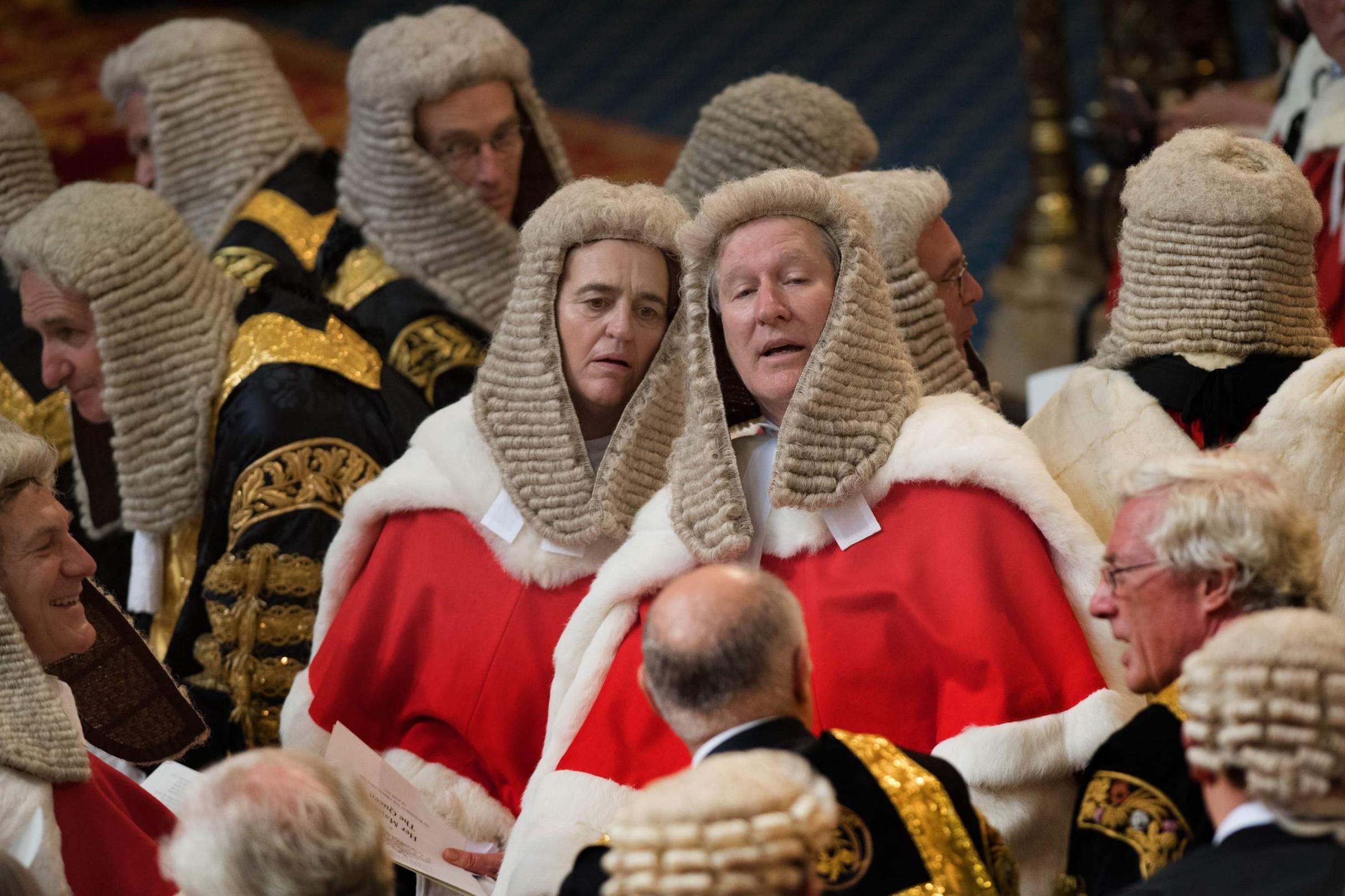

The decisive expulsion of hereditary peers from the House of Lords may have eliminated a glaring anachronism, but it can hardly be called a triumph of democracy. Representatives of aristocratic families have been replaced not by elected representatives, but by appointees — often with little clarity as to who chose them or on what grounds. Unsurprisingly, the new members of the House of Lords are frequently well-connected insiders and wealthy party donors, who have already turned the upper chamber into an embodiment of corruption. This questionable “reform,” in practical terms, has exposed a deep crisis in the British system of governance, argues journalist Andrei Ostalsky.
“The Queen…must sign her own death-warrant if the two Houses unanimously send it up to her.” This statement first appeared in the work of the renowned philosopher and economist Walter Bagehot in the mid-19th century, and it has since been regularly cited whenever the paradoxes of constitutional monarchy are discussed. Its meaning is clear: in Britain, the monarch reigns but does not rule; instead, power is exercised in his or her name by Parliament and the Cabinet.
Bagehot is now being quoted again, this time in connection with the reform of the House of Lords, which is finally expelling hereditary aristocratic peers from its ranks. At present, the chamber consists of 840 members: 733 life peers, 84 hereditary peers, and 23 Lords Spiritual (representatives of the Church of England).
In fact, hereditary peers effectively signed their own political death warrant back in 1999. Until then, they had formed a majority in the chamber, but they obediently agreed to a reform under which only 92 peers would retain their seats. Even then, it was widely understood that this was a temporary compromise on the way to a complete “clear-out.”
A farewell to the peers
Now, 27 years later, it has finally happened: only 15 hereditary peers have been “pardoned” via conversion into life members of the House of Lords, and even these will no longer be able to pass their seats on to their children. This may represent a landmark historic event; however, the quality of the process leaves much to be desired.
On the one hand, the right to sit in Parliament and influence the passage of laws simply as the chance result of having been born into a privileged family represented a glaring anachronism. “Nothing illustrates how broken our political system is quite like the House of Lords,” says Alice Jeffrey of Unlock Democracy in an assessment that many British commentators and ordinary citizens alike would readily second.
All opinion polls show that an overwhelming majority has long considered reform of the upper chamber necessary, as the institution of hereditary peers has clearly outlived its historical lifespan. The only country besides the United Kingdom in which parliamentary seats were inherited was Lesotho, where 22 tribal chiefs participate in lawmaking alongside elected deputies.
Yet the urgency of the moment can obscure the broader historical picture. The bicameral system has played a crucial role in the country’s history, ensuring a high degree of adaptability that allowed the governing system to evolve gradually and peacefully, facilitating the smooth transfer of power and influence from old elites to new ones.
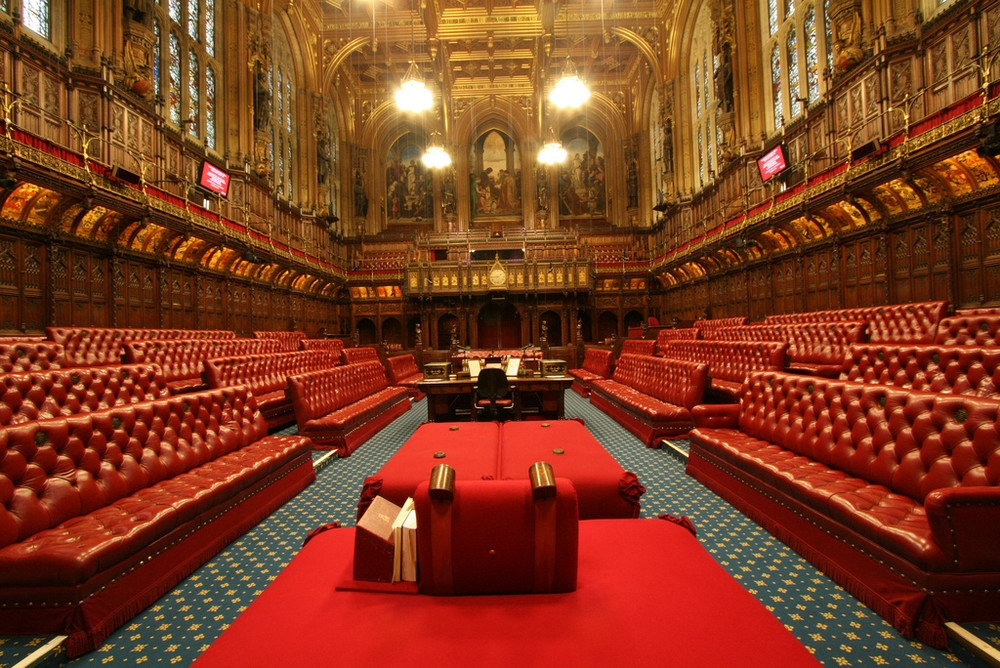
British parliamentarianism began precisely with the House of Lords, which emerged from the Magnum Concilium (the Great Council) that advised monarchs in the Middle Ages. The council was composed primarily of church figures and the high nobility.
Monarchs often preferred to ignore opinions they did not like, and eventually the barons rebelled. In 1215, they forced the king to accept the Magna Carta, which limited the monarch’s power, introduced the concept of the rule of law, established specific liberties, guaranteed the right to a fair trial, and restricted taxation.
It was a truly revolutionary step in the history of the entire Western world, setting a crucial precedent. Initially, these freedoms and rights applied only to the nobility, but after the abolition of serfdom in the 16th century, they were gradually extended to the entire population of the country.
The division into two chambers took place in the 14th century, when representatives of counties and boroughs began to meet separately from clerical leaders and the nobility. This is how the House of Commons emerged. It was a highly important and progressive step in the country’s evolution, even if the aristocracy sitting in the House of Lords retained greater influence in governing the country. However, that influence was already waning.
During the English Civil War (1642-1649), the House of Lords largely sided with Parliament rather than the royal court. The House of Lords also played an important role in organizing Parliament’s war effort against Charles I, and oversaw judicial proceedings, including trials of royalists. At the same time, it often clashed with the more radical House of Commons, advocating for a negotiated settlement with the king. For this, Oliver Cromwell took revenge after becoming dictator, and the chamber was abolished when England became a republic.
The House of Lords was restored after the restoration of the monarchy. What is noteworthy, however, is that from that point on, the superiority of the lower chamber — the House of Commons — was firmly established both in practice and in law. One might have expected that, with the republican enemies defeated and the usurper Cromwell executed, everything would return to the old order, with the lower chamber stripped of any actual power (if not abolished outright). But nothing of the sort happened. Cool calculation prevailed, along with an understanding that preventing new revolutionary upheavals required a balance among the branches of power that corresponded to the actual alignment of forces in society.
Since then, Britain has learned to avoid upheavals and revolutions, with the House of Lords acquiring a new and important role: the upper chamber could review legislation more calmly, without haste, in a measured and independent manner, without direct political pressure from the government or even public opinion. However, as early as 1911, the House of Lords lost its veto power, which was replaced by the right to delay legislation — initially for two years, and later for just one year.
Today the public is once again dissatisfied, believing that the reform of the House of Lords has come too late and is being implemented poorly. Only three percent of Britons approve of how it has been carried out.
The expulsion of hereditary peers may appear to be a triumph of justice, but it cannot be called a triumph of democracy, nor even of common sense. It seems likely, in fact, to reduce the effectiveness of governance in the country.
The problem is that the old aristocracy has not been replaced by elected representatives of the British public, but by appointees — put bluntly, cronies. According to Lord Hamilton, once the hereditary peers are gone, the chamber will consist mainly of “political chancers, like me, and donors and members of the blob of one sort or another.”
According to Lord Hamilton, once the hereditary peers are gone, the chamber will consist mainly of “political chancers, like me, and donors and members of the blob of one sort or another”
Lord Hamilton, while self-depricatingly witty, is not entirely right. There are still some independent figures among the members of the chamber, appointed not on the basis of party affiliation or patronage, but in recognition of their evident merits to society. Their specialized knowledge in various fields allow them to make a genuine contribution to parliamentary work and lawmaking. However, they are a minority, constituting only around 20% of the body. The majority, meanwhile, are either former politicians or those same cronies who have, in one way or another, earned the gratitude of a sitting prime minister or one of the major parties.
Money vs. competence
Some commentators go so far as to describe the House of Lords as the embodiment of corruption: baronial titles and the seats that come with them are openly sold in exchange for donations to the campaign funds of leading parties. The twenty largest donors in the chamber (mostly representing the Conservatives) have collectively donated £92 million.
Consider two recent examples of appointed peers: Peter Mandelson and Michelle Mone. The former was a prominent Labour politician and held ministerial posts in the cabinet of Tony Blair. After stepping down, he received the title of baron and a seat in the House of Lords — this despite questions concerning the somewhat dubious terms of a loan he had received, and later about excessively close contacts with Russian oligarchs. Ignoring warnings from the country’s intelligence services, Prime Minister Keir Starmer brought Mandelson back into public life and appointed him to serve as ambassador to the United States.

But soon Peter Mandelson was forced to resign from that post as well when his close contacts with the disgraced American fixer and trafficker Jeffrey Epstein came to light. Mandelson also had to leave the House of Lords in scandal, while the prime minister was left to apologize humbly to the country for his lapse in judgement.

The situation with Baroness Michelle Mone is equally troubling. Having received her title from the Conservative Party in 2015, for several years she served as a kind of public face for the Tories. But during the COVID-19 pandemic it emerged that her husband’s company, PPE Medpro, had received contracts worth £200 million from the Conservative government to supply personal protective equipment, some of which turned out to be defective. This drew the attention of activists concerned that the most lucrative deals were being awarded to companies whose executives or owners had ties to the party. From 2020 to 2023, the baroness flatly denied that she or her husband had any connection to these contracts, but in January 2022, Mone announced that she was taking leave from the House of Lords in order to “clear her name.”

How many more such barons and baronesses, who received their titles and seats in Parliament thanks to various connections in government and party circles, are now sitting on the famous crimson benches? One may hope that most appointed peers are neither fraudsters nor criminals, but it is hardly reasonable to expect this group to make a significant contribution to public affairs. Age, too, does not lend itself to active work: 56% of peers are over 70, and roughly one in four is over 80.
56% of peers are over 70, and roughly one in four is over 80
In other words, the reform as implemented contains no democratic substance, since members of the chamber are not elected but appointed. Nor does it offer much practical benefit, as in its current composition, the chamber is unlikely to function more effectively than before. Quite the opposite. After all, the now-abolished aristocratic peers were sometimes of real use. At times, they demonstrated complete independence from those in power and could raise persuasive objections, pointing out errors and oversights in draft legislation. Appointees, by contrast, are usually too dependent on their political patrons to do anything of the sort.
It is noteworthy that the House of Lords Appointments Commission (HOLAC) rejected eight candidates put forward by Prime Minister Boris Johnson at the time of his departure from office. Johnson, like some of his predecessors, had often ignored the commission’s objections, taking advantage of the fact that, by law, the final decision rests with the head of government. Only a change in party leadership to Rishi Sunak prevented the questionable nominees from joining the upper chamber.
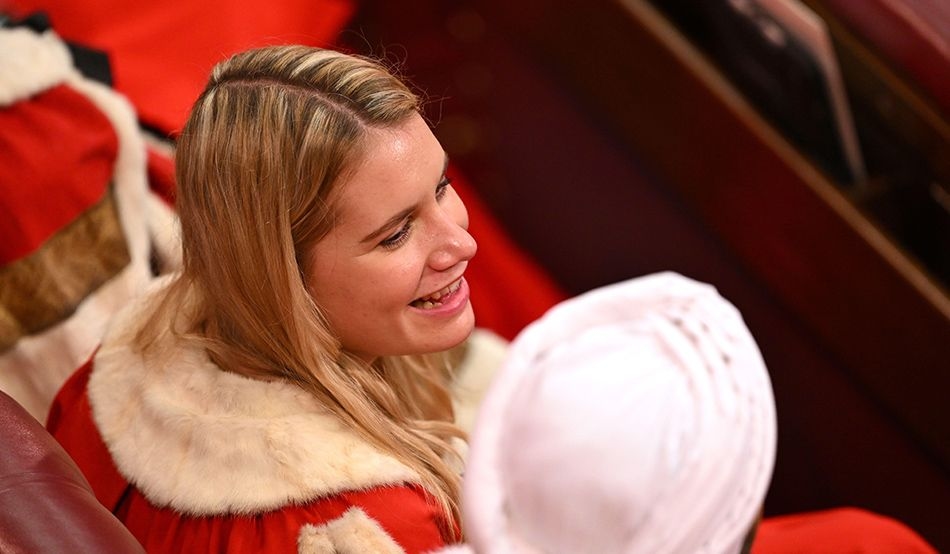
Still, several of Johnson’s other nominees did make it into the House of Lords. Among them is one particularly striking figure: Charlotte Owen, who had worked for just over a year as one of Johnson’s aides, performing duties not much different from those of a secretary.
“She is a blank slate. She has done virtually nothing of note. She has no clearly articulated views on anything. All her achievements combined would hardly fill a full 280-character tweet. And yet she will now sit as a member of the legislature, making and revising laws for all of us for the rest of her life. And since she was only 29 at the time of her appointment, this could last a solid 50 years. We cannot remove her from office. And we will have to shell out £332 a day every time she crosses the threshold of the House of Lords, plus travel expenses and subsidized meals… I suppose this is what is called parliamentary sovereignty,” journalist Alan Rusbridger writes with evident sarcasm.
No hope for real reform
Meanwhile, a solution to the problem of the upper chamber has long been known and was widely discussed as early as the beginning of this century. One of the most popular options is to make it a two-thirds elected body, with members chosen under a proportional rather than a majoritarian system.
The remaining portion could be appointed by a commission independent of the government, selecting the most distinguished figures in science, culture, law, and other fields. They could bring to parliamentary work not only their expertise and life experience, but also a commitment to ideals of public service rather than to political gamesmanship. And no more guaranteed lifetime sinecures. Terms in the chamber should be reasonably limited.
Sadly, the current authorities lack the political will to push through such an obvious reform, and therefore there is not the slightest hope that it will take place in the foreseeable future. This is a manifestation of the deep crisis affecting the system of governance as a whole. British politics has become too deeply mired in the thicket of a two-party majoritarian system, one in which neither group offers a coherent program that it is actually capable of implementing.