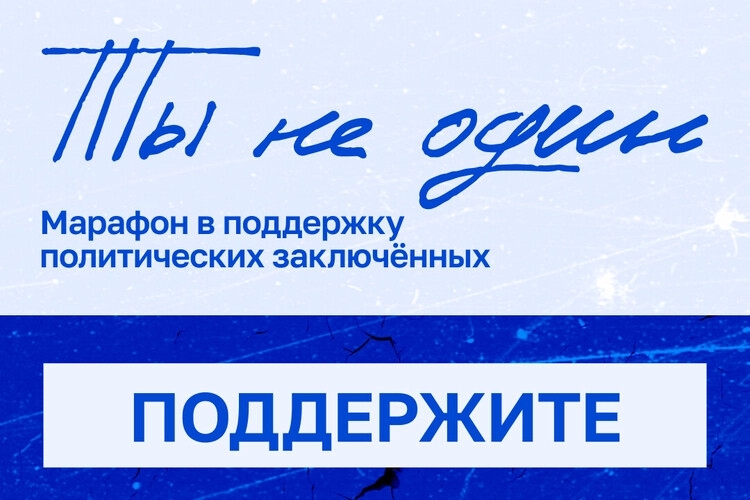
A Russian court has imposed fines against donors to the “You Are Not Alone” fundraiser, independent human rights group OVD-Info reports. Investigators treated the ruble-denominated transfers as financing for the late Alexei Navanly’s Anti-Corruption Foundation (ACF), which in 2021 was liquidated after being outlawed as “extremist.” Two criminal cases are known to have been opened after the Federal Security Service (FSB) obtained records of 7,500 transfers to the same DonationAlerts wallet. It is unclear how many people made those payments.
Both defendants made the transfers during the fundraiser, which took place on June 12, 2023. According to the independent outlet Mediazona, the FSB obtained a confession from the donor in the first case stating he had knowingly sent money to the ACF. A court fined him a substantial amount of money in the summer of 2026. The second case is expected to be tried in absentia. At least five other donors in several parts of Russia were investigated during the summer and fall of 2026, with security officers searching homes, seizing electronic devices, and summoning people for questioning.
After news of the cases became public, the “You Are Not Alone” fundraiser team contacted people who had donated in foreign currencies using cards issued by banks outside Russia. Organizers said Russian law enforcement agencies do not have records of those transactions but still advised such donors to avoid traveling to Russia or Belarus if possible, warning that border officials could uncover evidence of the donations while inspecting their electronic devices.
A 3,000-ruble transfer could carry up to eight years in prison
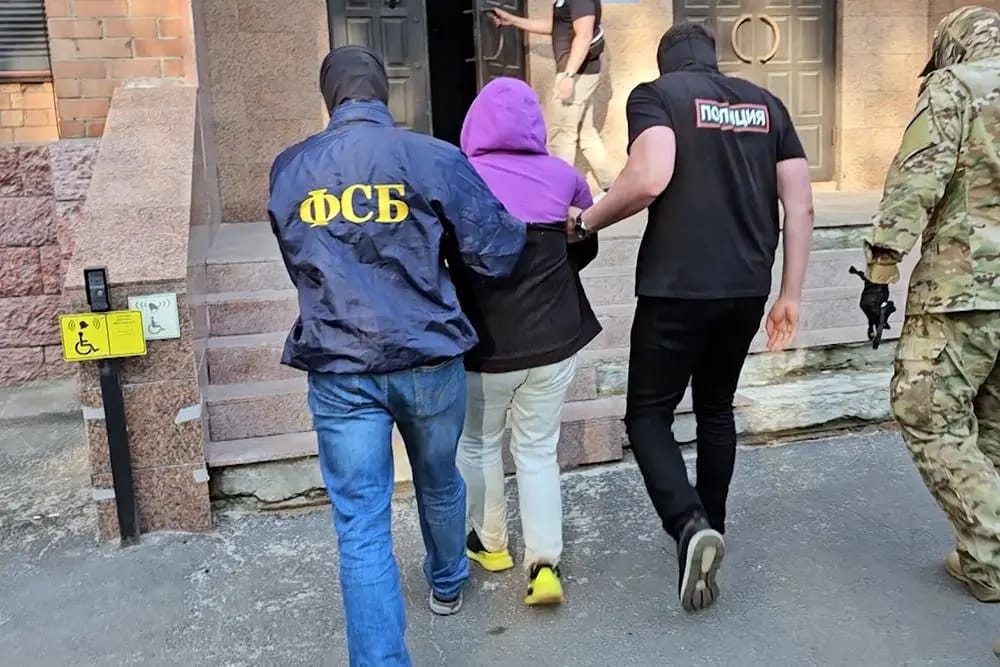
One of the defendants is accused of making a transfer of 3,000 rubles (around $35). He was detained on his way to work in October 2025 and taken back to his home, where security officers seized his electronic devices. The man said FSB officers repeatedly urged him to admit that he had donated to the foundation and promised to let him go home if he confessed. He refused and soon left Russia. A criminal case was opened in April 2026 under a law on financing extremist activity, which carries a maximum sentence of eight years in prison.
At the FSB’s request, Russia’s financial intelligence agency, Rosfinmonitoring, determined that the money from the man’s card had been sent to a wallet on DonationAlerts. Sberbank provided records of transactions on his accounts, while the settlement company VK Payment Solutions supplied a table showing incoming payments to the wallet.
To link the fundraiser to the ACF, investigators reviewed announcements posted by Navalny’s team, reconstructed the fundraiser’s webpage using a web archive, and commissioned a linguistic analysis. The expert cited a section on the ACF’s website about assistance to political prisoners that described “You Are Not Alone” as a joint project organized with the help of independent Russian media outlets. As “evidence of the defendant’s views,” the investigators pointed to saved posts made by Alexei and Yulia Navalnaya, his subscriptions to Mediazona and OVD-Info, and comments posted during the fundraiser livestream. The man said he intended to support human rights groups that provide lawyers to political prisoners and stressed that he did not finance the ACF.
How the money was collected and where it went
At the start of the fundraiser, the independent Russian broadcaster TV Rain accepted ruble donations through DonatePay. On the day of the broadcast, the service shut down the fundraiser after a complaint from RT correspondent Konstantin Pridybaylo. Political commentator Maxim Katz then offered the use of his DonationAlerts wallet. Mediazona reported that the FSB also requested data on transfers to TV Rain’s DonatePay wallet. It is not known whether its investigators received a response.
Katz told OVD-Info that he withdrew the money from his DonationAlerts wallet to an Israeli bank card and then transferred it to TV Rain, saying the ACF had no control over the funds. Fundraiser representative Ksenia Fadeeva said the ACF-affiliated channels Navalny Live and Popular Politics carried the broadcast alongside other participants, and that the donations were collected to support political prisoners — not the work of the ACF.
According to a report from TV Rain, the 2023 fundraiser collected 39.4 million rubles ($480,000). Of that, 10.2 million rubles went toward care packages, deposits into prisoners’ accounts, and family visits, while 9.7 million rubles covered legal expenses. Human rights and anti-war projects received another 9.9 million rubles. The total amount distributed exceeded the original sum raised because of fluctuations in currency and cryptocurrency exchange rates.
The same company supplied the authorities with donor data in another criminal case
VK Payment Solutions, a Russian payment-services company licensed by the Central Bank of Russia, provides payment processing for VK Pay. DonationAlerts was no longer owned by VK at the time of the June 2023 fundraiser, as VK had sold its MY.GAMES gaming division, which included DonationAlerts, in 2022. In December 2024, MY.GAMES completed the sale of DonationAlerts (along with the creator platform Boosty) to companies controlled by Cyprus-based businessman Pavel Kharaneka.
The same payment company previously provided Russian law enforcement agencies with DonationAlerts donor data in the case of Andrei Khoroshko, who was accused of involvement in Artpodgotovka, an opposition movement that Russia banned as extremist in 2017, later designating it as a terrorist organization. The records included the donor’s IP address and email address. In April 2026, a court sentenced Khoroshko to 16 years in prison over four transfers totaling 2,201.59 rubles (around $25) and two messages sent to Artpodgotovka founder Vyacheslav Maltsev.
The ACF was added to Russia’s register of “extremist” organizations in 2021. By October 2026, at least 219 people in Russia had been convicted in cases involving donations to the foundation. OVD-Info has published detailed guidance for people who donated to the 2023 fundraiser using Russian bank cards.