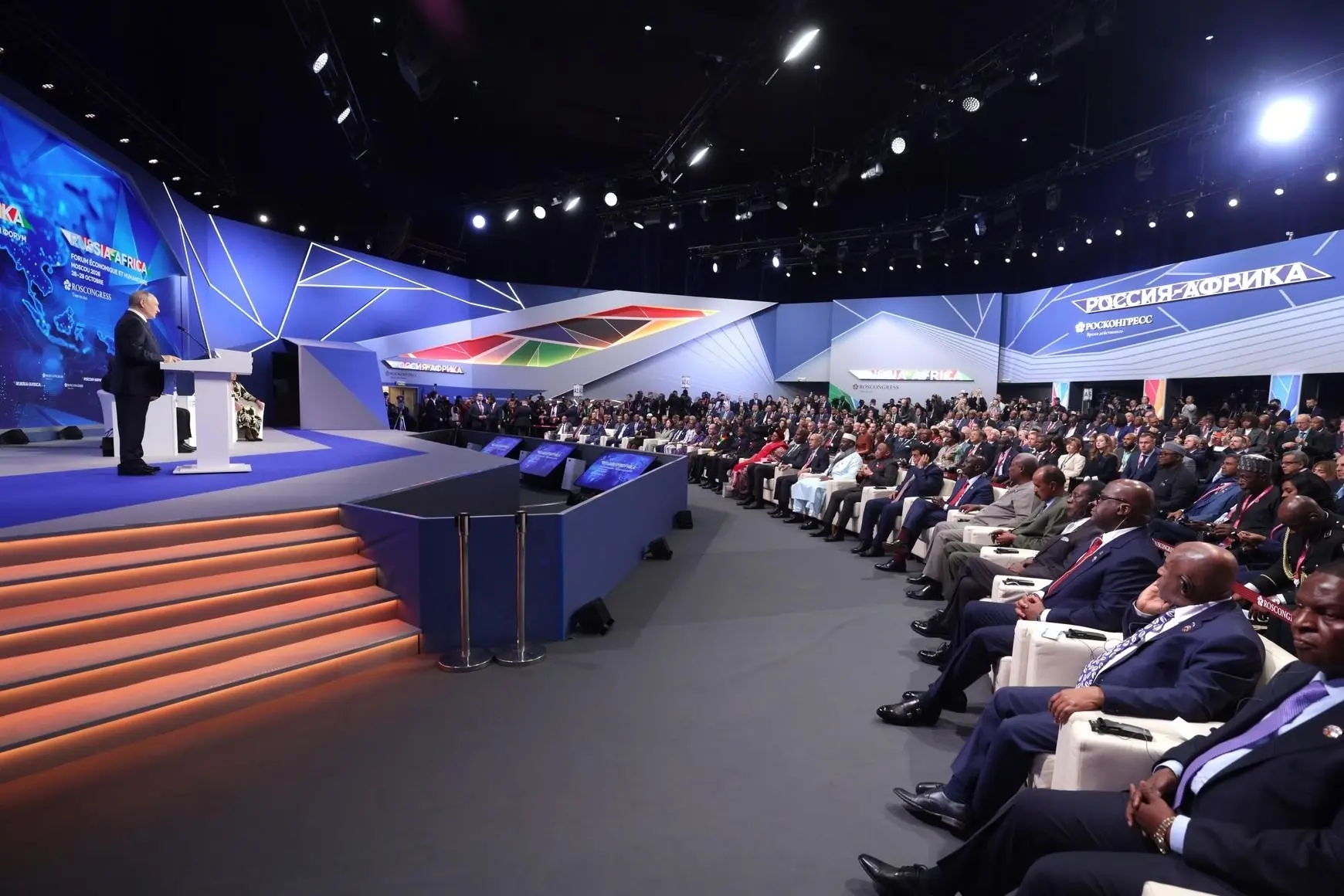
Russia and a range of African countries have adopted declarations on political and economic cooperation following the third Russia-Africa Summit in Moscow. In the outcome documents, the parties agreed to counter the “rewriting of history,” the blocking of sovereign assets, and the politicization of international justice while working to foster cooperation in security, space, mineral extraction, and AI. Vladimir Putin said that Russia already has agreements on military and military-technical cooperation with 45 African nations. The Insider has compiled the main statements and agreements of the two-day summit.
- 1.Countering sanctions, “rewriting of history,” and colonial legacies
- 2.Military cooperation and fight against terrorism
- 3.AI, space, and control over technology
- 4.Precious metals, nuclear power plants, and trade
- 5.Trade with Africa remains significantly below the level promised by Putin
- 6.Dialogue with Europe, possible war, and situation in the Baltic Sea
The third Russia–Africa summit took place in Moscow on Oct. 28–29, with delegations from 48 of the continent’s 54 countries in attendance. Two dozen states were represented by high-level officials, with sessions co-chaired by Putin and Burundian President Évariste Ndayishimiye, who currently heads the African Union.
As a result of the gathering, the parties adopted three main documents: the final declaration of the summit, a declaration on cooperation in the civilian use of AI, and the action plan of the Russia–Africa partnership forum for 2027–2029. In addition, more than 60 official agreements were signed at the summit and at the parallel economic and humanitarian forum, Russian presidential adviser Anton Kobyakov announced via Telegram.
Countering sanctions, “rewriting of history,” and colonial legacies
A significant part of the final declaration is devoted to international politics. Russia and the African states in attendance agreed to oppose the blocking and seizure of sovereign assets, as well as to resist outside political and economic pressure. The parties intend to coordinate their positions when it comes to sanctions against African countries.
The summit participants also agreed to counter attempts at “rewriting and falsifying history.” These and other provisions are included in the final declaration, which consists of 101 points.
Another area will be assessing the damage “inflicted on African states during the colonial period.” Russian scientists are already developing a methodology for such assessment jointly with African colleagues. Preliminary results should be presented in 2027, and a special research laboratory is expected to open in Uganda in November 2026.
In his speech on Oct. 28, Vladimir Putin accused Western countries of trying to preserve Africa’s economic dependence and impose new debt obligations on it. The Russian president claimed that Moscow is ready to transfer technology and foster production on the continent.
African Union Commission Chairperson Mahmoud Ali Youssouf stressed in his speech that African states are interested in developing local industry and gaining access to international capital. He also called for reforming the U.N. Security Council by expanding African representation.
Military cooperation and fight against terrorism
Putin stated that Russia has intergovernmental agreements on military and military-technical cooperation in effect with 45 African states, noting that Moscow trains African servicemen and law enforcement officers at Russian educational institutions.
In the final statements, the parties reaffirmed their intention to expand cooperation in the fight against terrorism and extremism, counter the use of new technologies by terrorist organizations, and develop joint security mechanisms.
Special attention was paid to the Sahel states: Mali, Burkina Faso, and Niger. Commenting on the statement of Assimi Goïta, the head of Mali’s military government, Putin stressed the global importance of resolving the situation in the Sahel.
Russia’s military presence in the region has expanded in recent years. After the Wagner Group wound down its activities following the death of founder Yevgeny Prigozhin in August 2023, Russia's state-run Africa Corps stepped in to take over the role in several African states. Russian military units currently operate in Mali, Niger, Burkina Faso, and the Central African Republic.
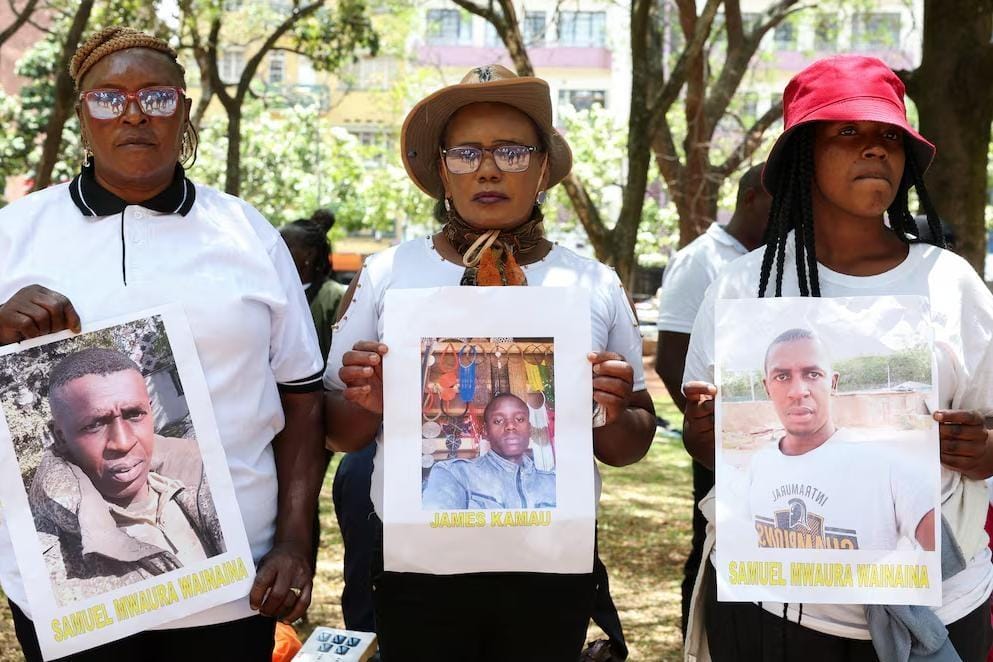
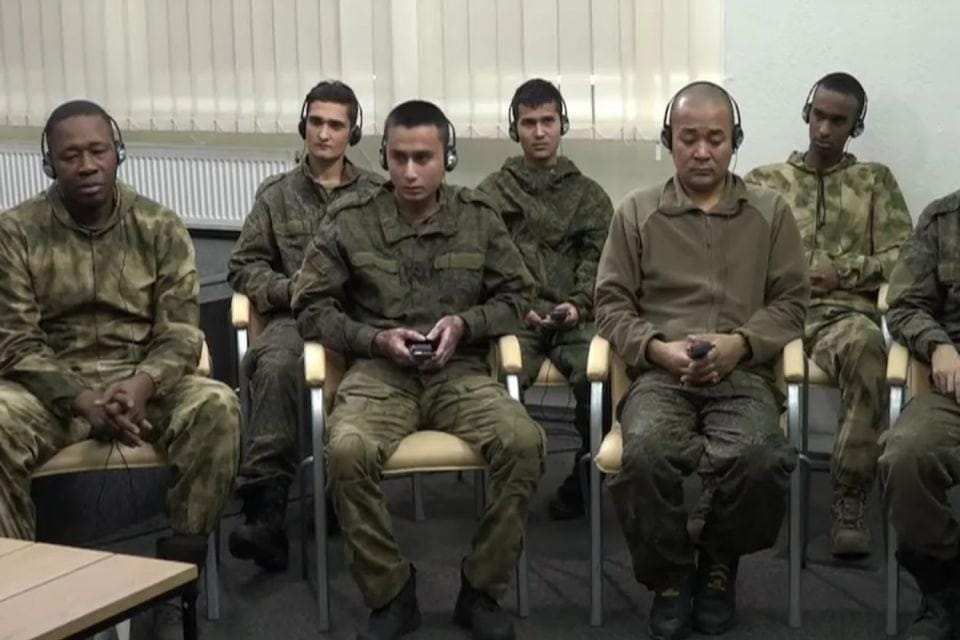
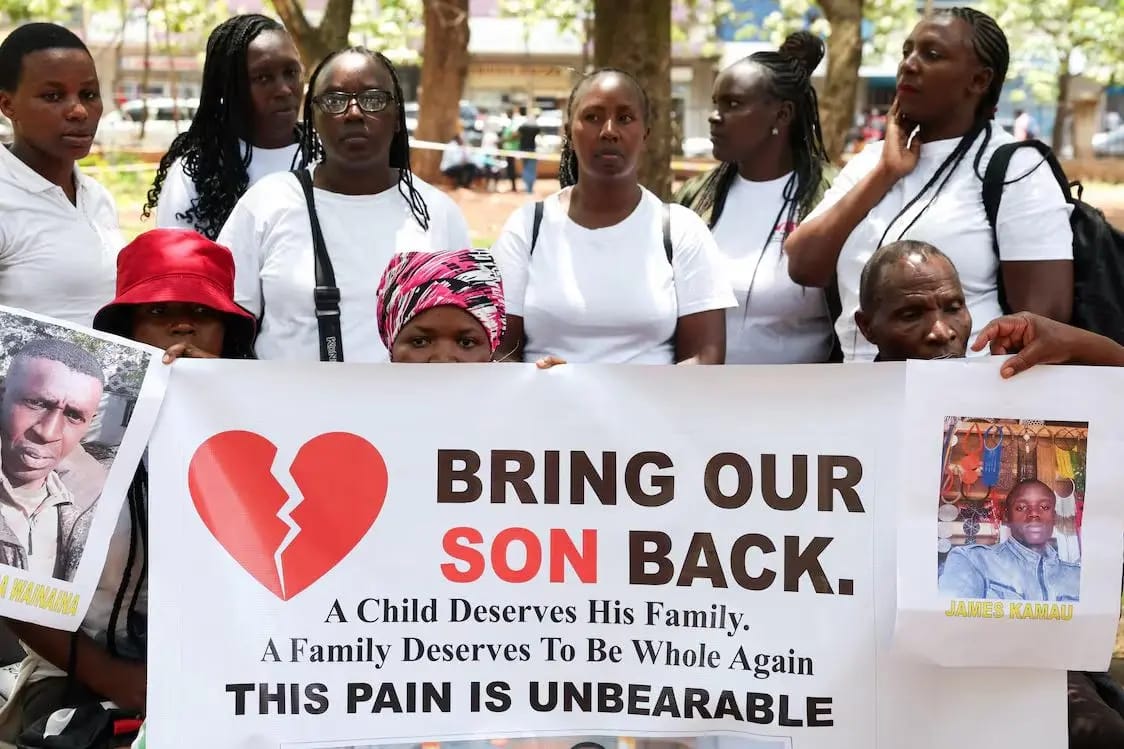
Two days ahead of the summit, African branches of Amnesty International appealed to its participants with a call to demand that Moscow stop the deceptive and coercive recruitment of citizens of African states to take part in the war against Ukraine. Human rights activists claim that Russia recruits foreigners under the guise of employment and then sends them to the front.
AI, space, and control over technology
The summit participants devoted a separate declaration to cooperation in AI — to promote equal and fair access to safe AI technologies, the development of joint educational programs, and capacity-building efforts. Satellite communications and the use of space were discussed separately.
According to Putin, approximately 40,000 students from African countries are studying in Russia, and Moscow is expanding training programs for foreign civil servants, including in the digitalization of public administration. Putin also characterized Russia as being one of three countries with full digital sovereignty — a claim The Insider has examined in its Antifake section.
Precious metals, nuclear power plants, and trade
The economic part of the summit focused on energy, transportation, agriculture, and the mining and processing of minerals.
Russia’s Rusal and the state-owned Ghana Integrated Aluminium Development Corporation agreed to create two joint ventures in Ghana. The companies plan to develop the Nyinahini deposit with annual output of up to 5 million metric tons of bauxite and build an alumina refinery with a capacity of 1.2 million metric tons per year, with Rusal receiving controlling stakes in both ventures. Reuters notes that the company is seeking to reduce its dependence on external suppliers of raw materials after losing part of its supplies from Ukraine and Australia in 2022.
Ghana’s President John Dramani Mahama also announced the start of negotiations with Rosatom on building the country’s first nuclear power plant.
According to Putin, Russia’s trade with African countries reached $27 billion in 2025, and since 2023 Moscow has opened eight new embassies on the continent. In the near future, Botswana, Seychelles, and Togo intend to open diplomatic missions of their own in the Russian capital.
Putin also said that in the first nine months of 2026, Russia had supplied African countries with 13 million tons of agricultural products. Deliveries of mineral fertilizers, he said, exceeded 2.2 million tons this year, compared with 1.5 million tons for all of last year.
Trade with Africa remains significantly below the level promised by Putin
Despite claims of successful cooperation, Russia’s trade with Africa has not yet reached the level that Putin promised at the first summit in 2019. As Chatham House notes, the Russian leader set a goal of bringing trade turnover to $40 billion; however, in 2025, it totaled only $27 billion. For comparison, also according to data cited by Chatham House, China’s trade with African countries reached $348 billion in 2025, and the European Union’s was about $395 billion.
At the same time, Russia continues to expand its political and military presence on the continent. Earlier, The Insider described how Moscow uses cooperation with African governments to gain access to natural resources and strengthen its influence in international organizations.
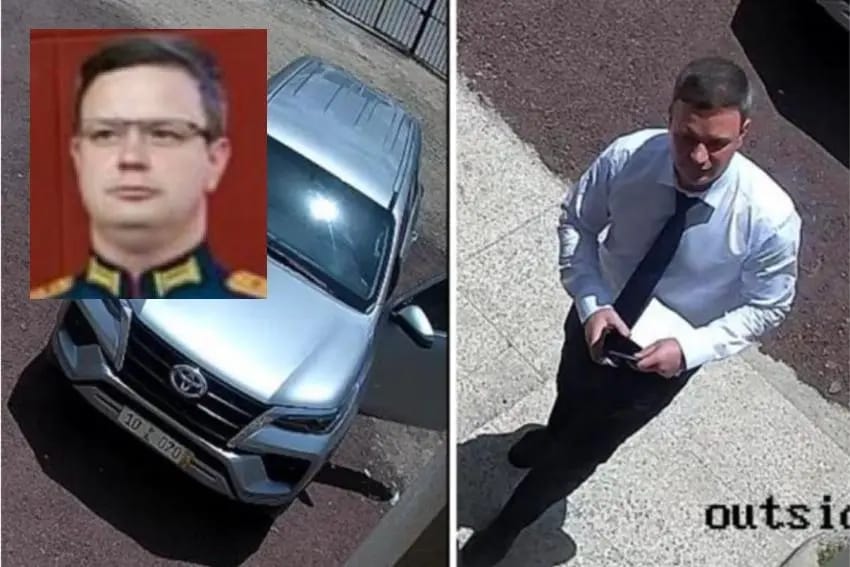
Six days before the current summit, The Insider identified a GRU officer who in April 2025 infiltrated the diplomatic residence of the African Union in Ethiopia. He turned out to be Alexander Dubikov, who worked undercover as an assistant to the Russian military attaché and is linked to hackers from the Sandworm group. The incident occurred at a compound used by the current chairperson of the African Union Commission, Mahmoud Ali Youssouf, who also took part in the Moscow summit.
Dialogue with Europe, possible war, and situation in the Baltic Sea
At the press conference following the summit, Putin took questions about relations with Europe. Commenting on his Oct. 27 phone call with Finnish President Alexander Stubb and Norwegian Prime Minister Jonas Gahr Støre, Putin said the European leaders themselves initiated the call, stressing that they were acting in their national capacity, not on behalf of the European Union. Despite being critical of his counterparts, Putin called the conversation the right step and supported attempts to restore dialogue with European countries.
Nevertheless, Putin said that Russia is ready for war with Europe, even if it does not seek one. He criticized statements by European politicians about the need to prepare for a possible military conflict by 2030 and expressed confidence that Russia cannot be dealt a strategic defeat. “If it goes too far, there will be no winner at all,” he commented, adding that Russia remembers the lessons of the First and Second World Wars and is doing everything it can to prevent reliving them.
Finally, Putin touched on the situation in the Baltic Sea, which he had discussed with the leaders of Finland and Norway. According to Putin, his Nordic interlocutors had invoked the need to comply with international maritime law. Putin supported their position but warned that a situation similar to what is happening in the Persian Gulf and the Strait of Hormuz could develop in the Baltic. Russia, according to him, does not want such a development but is ready to respond to any challenge.