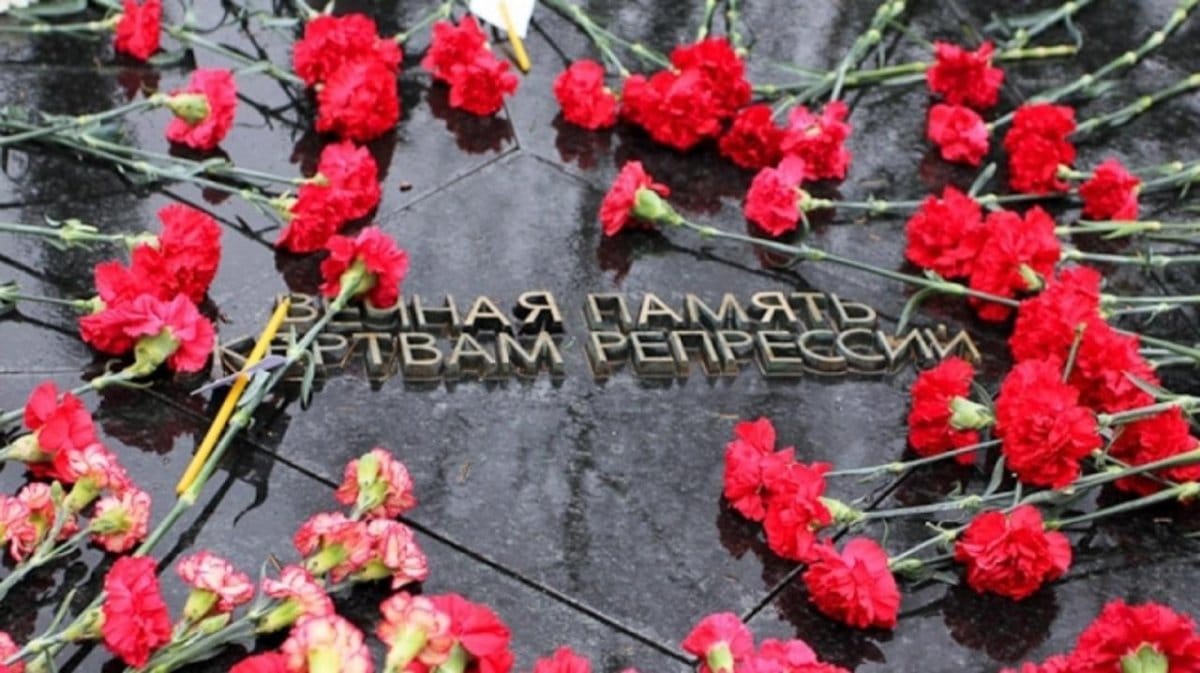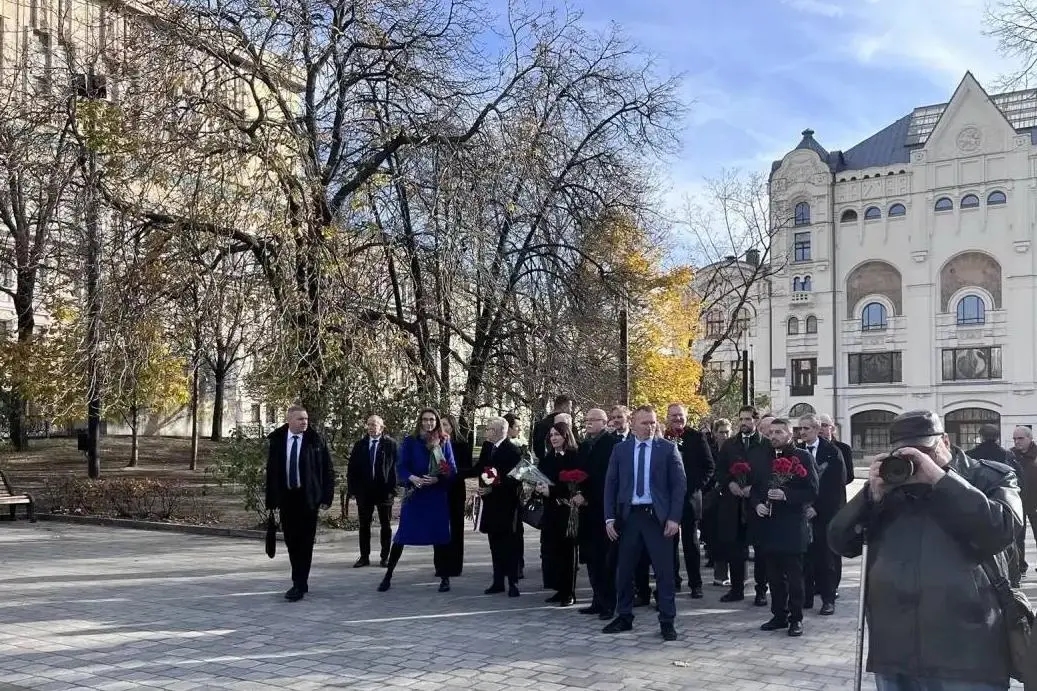
On Oct. 29, Russians and foreign diplomats laid flowers at the Solovetsky Stone on Moscow’s Lubyanka Square ahead of the Day of Remembrance of the Victims of Political Repression. Members of Russia’s OMON riot police force were stationed near the monument, according to witnesses. Those who came to pay tribute included diplomats from Sweden, the Czech Republic, the Netherlands, Germany, Lithuania, and France, as well as Jan Rachinsky — a Kremlin-designated “foreign agent” who formerly served as the chairman of Memorial’s board. This year marks the first commemoration since Russia’s Supreme Court declared Memorial an “extremist” organization in April and outlawed its activities.
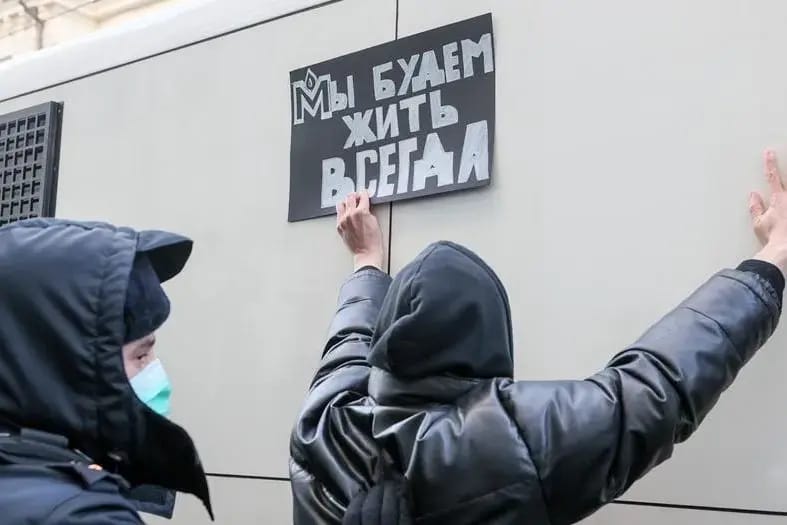
On Oct. 25, police detained a woman who had come to lay flowers at the Solovetsky Stone. According to the legal rights project Slovo Zashchite (lit. “Word to the Defense”), she was taken to the Kitai-Gorod police station, where officers threatened to charge her with disobeying police. The official reason for her detention was not disclosed.
State Duma MP Andrei Lugovoi, best known for his role in the 2006 death-by-polonium of Russian intelligence defector Alexander Litvinenko, also came to the memorial on the morning of Oct. 29. According to the Telegram channel Ostorozhno Novosti, he had hoped to encounter the U.S. or British ambassador and present a figurine of an Indian sepoy — a reference to India’s colonial past and the soldiers who served in the British imperial army. However, he did not manage to meet any of the diplomats.
Where commemorations were held in Russia
Public events honoring victims of political repression were planned in several Russian cities. In the Irkutsk Region, activists organized a reading of victims’ names at a memorial in Pivovarikha. Organizers invited residents to submit the names of relatives who suffered at the hands of Soviet repression even if their descendants could not attend the ceremony themselves.
In Kirov, the regional branch of the liberal Yabloko party received approval from city authorities for an Oct. 30 rally at the Solovetsky Stone on Morozovskaya Street.
A similar event was authorized in Veliky Novgorod, where participants planned to gather near the entrance to the 30 Years of October Park, to read the names of victims, and to express support for today’s political prisoners.
In St. Petersburg, a ceremony took place on the morning of Oct. 30, drawing several dozen attendees, including Yabloko members, city officials, lawmakers, ordinary residents, and representatives of foreign diplomatic missions. The event proceeded peacefully, with participants laying flowers and wreaths at the Solovetsky Stone. An additional ceremony and reading of names was scheduled later that day at the Levashovo Memorial Cemetery, a site of mass graves containing victims of Stalinist terror.
Commemorative events were also announced in the city of Kopeysk in the Chelyabinsk Region, where a rally was scheduled for Oct. 30 at the monument to victims of repression, and in Tolyatti in the Samara Region, where city authorities planned a flower-laying ceremony in the city’s Central District Park.
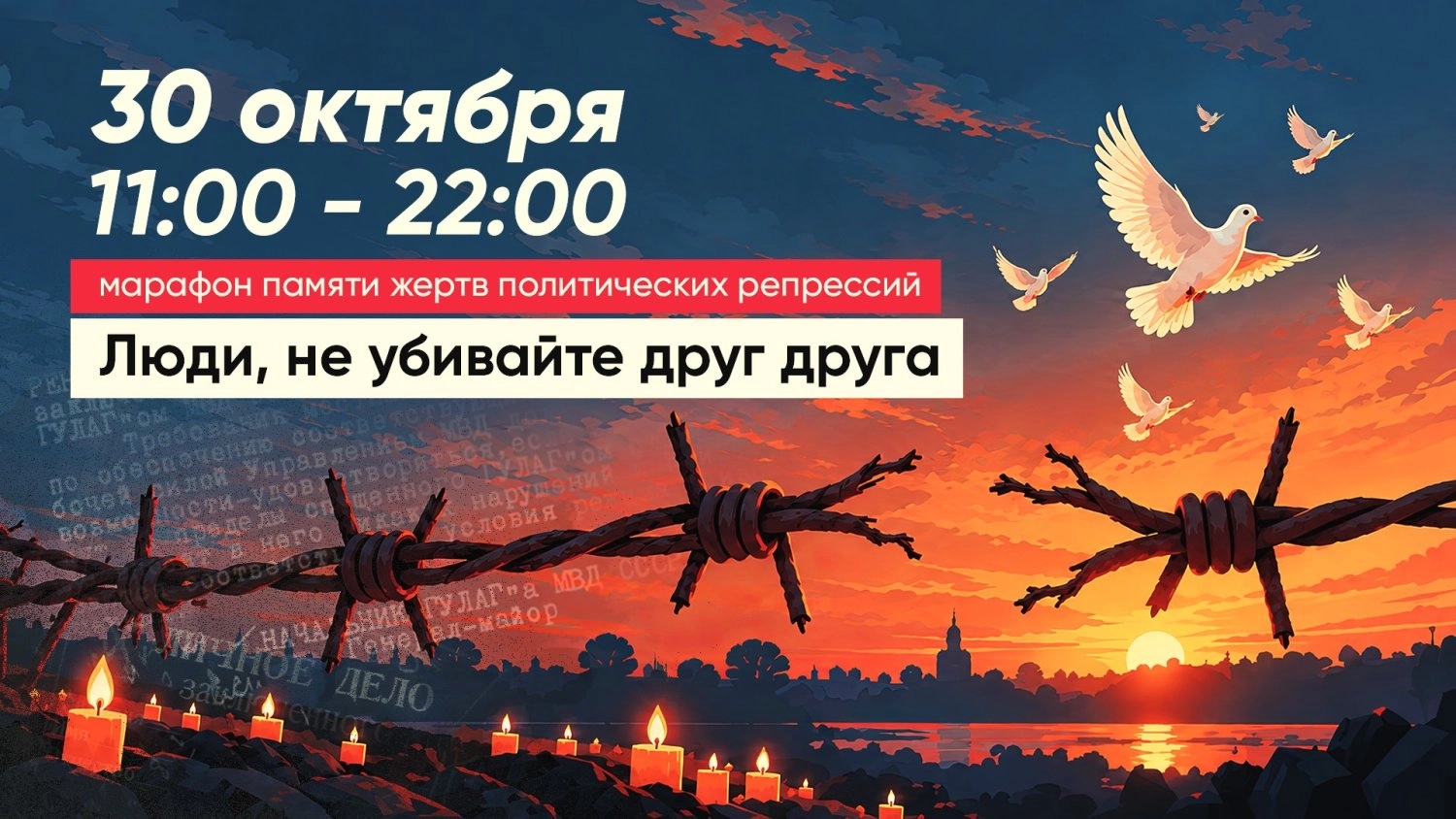
Yabloko also organized a separate 11-hour reading marathon titled “People, Do Not Kill Each Other!” on Oct. 30, bringing together participants from dozens of Russian regions. In Moscow, people could join the readings at the party’s headquarters.
The international “Returning the Names” initiative on Oct. 29 also brought together participants in more than 100 cities around the world. Readings were held both in person and remotely, with organizers running an hourslong online broadcast. In 2025, the event took place in 150 cities.
How authorities restricted the commemorations
The first “Returning the Names” ceremony was held in Moscow on Oct. 29, 2007, at the initiative of Memorial. Participants gathered at the Solovetsky Stone and took turns reading the names, occupations, and execution dates of victims of Stalinist terror.
One of the event’s creators was Elena Zhemkova, executive director of International Memorial. She said organizers had initially hoped to read all 40,000 known names of Moscow residents who had been executed. However, doing so would have required continuous readings around the clock for several weeks.
The mass gathering took place annually until 2020, when it was canceled due to the coronavirus pandemic. However, even after the epidemiological situation eased in subsequent years, Moscow authorities continued citing public health restrictions when refusing authorization for the gathering. In October 2024, Russia’s communications regulator Roskomnadzor blocked the Returning the Names website. Organizers nevertheless continued the readings in other formats, including online.
What happened to Memorial’s members
In December 2021, Russian courts ordered the liquidation of International Memorial and the Memorial Human Rights Center. In 2022, Memorial became one of the recipients of the Nobel Peace Prize, with Jan Rachinsky accepting the award in Oslo.
On April 9, 2026, after a case that was heard behind closed doors, Russia’s Supreme Court designated the International Memorial movement as “extremist” and banned its activities across the country. That same day, the Memorial Human Rights Defense Center announced that it was ending all activities inside Russia.
By then, many of the organization’s employees and leaders had already emigrated. Elena Zhemkova left Russia in 2023 and continues her human rights work in Germany. Russian authorities placed her on the “foreign agents” register in June 2025. Rachinsky and other Memorial representatives, including historian Irina Shcherbakova, have received the same designation.
In February 2026, Russian authorities also declared two Memorial organizations abroad “undesirable”: the International Memorial Association in Switzerland and Zukunft Memorial in Germany. Under Russian law, the designation effectively bans the named group from conducting any activities in Russia and can create legal liability for anyone working with the “undesirable organization.”
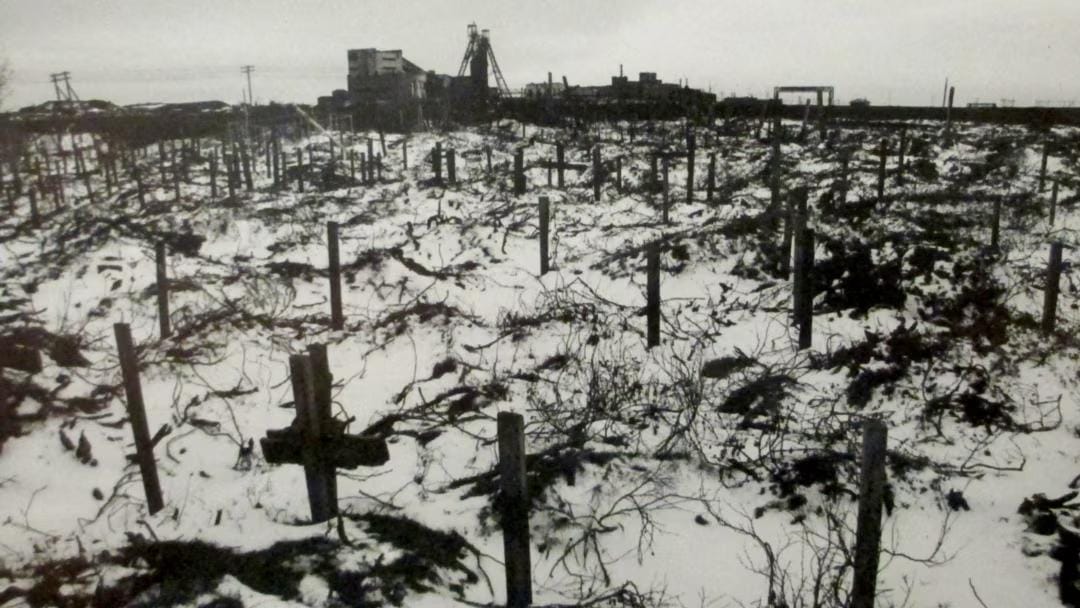
Yury Dmitriev, a researcher of Soviet repression and former head of Memorial’s branch in Karelia, continues to serve a 15-year prison sentence. Dmitriev helped discover mass graves of victims of Stalin-era executions at Sandarmokh in Karelia. In September 2026, he was hospitalized in a prison medical facility.