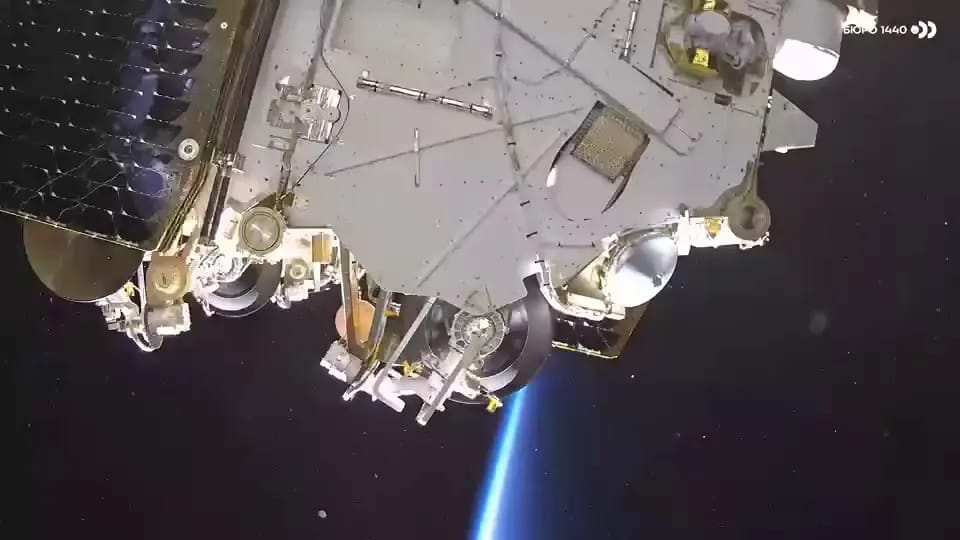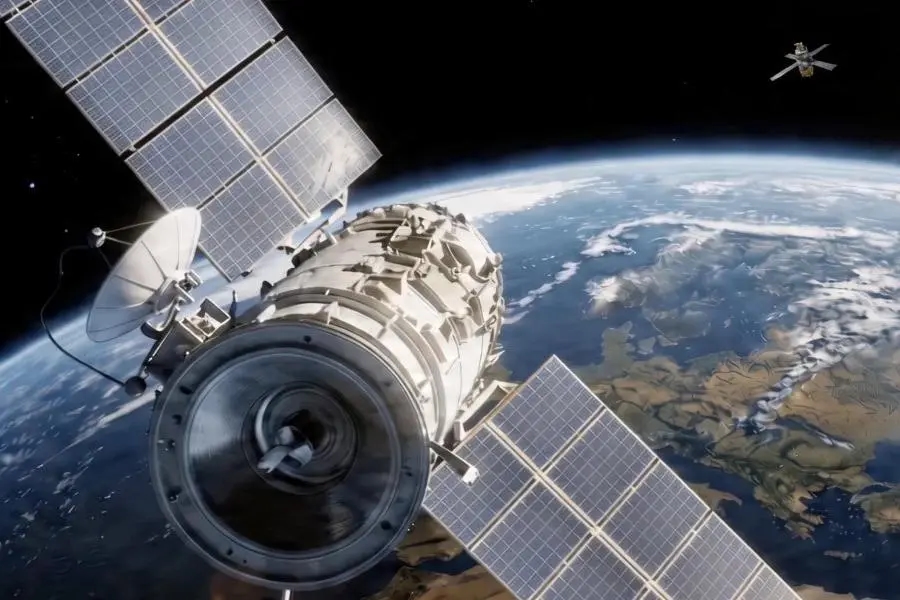
A Russian military satellite, Kosmos-2612, made an unusually close approach to the U.S.-Finnish commercial satellite ICEYE-X36, according to data from orbital monitoring services including Orbital Radar. The data shows the two spacecraft came within 26 meters of each other, with a relative speed of 0 kilometers per second. An orbital approach of less than 1 kilometer is considered critical.
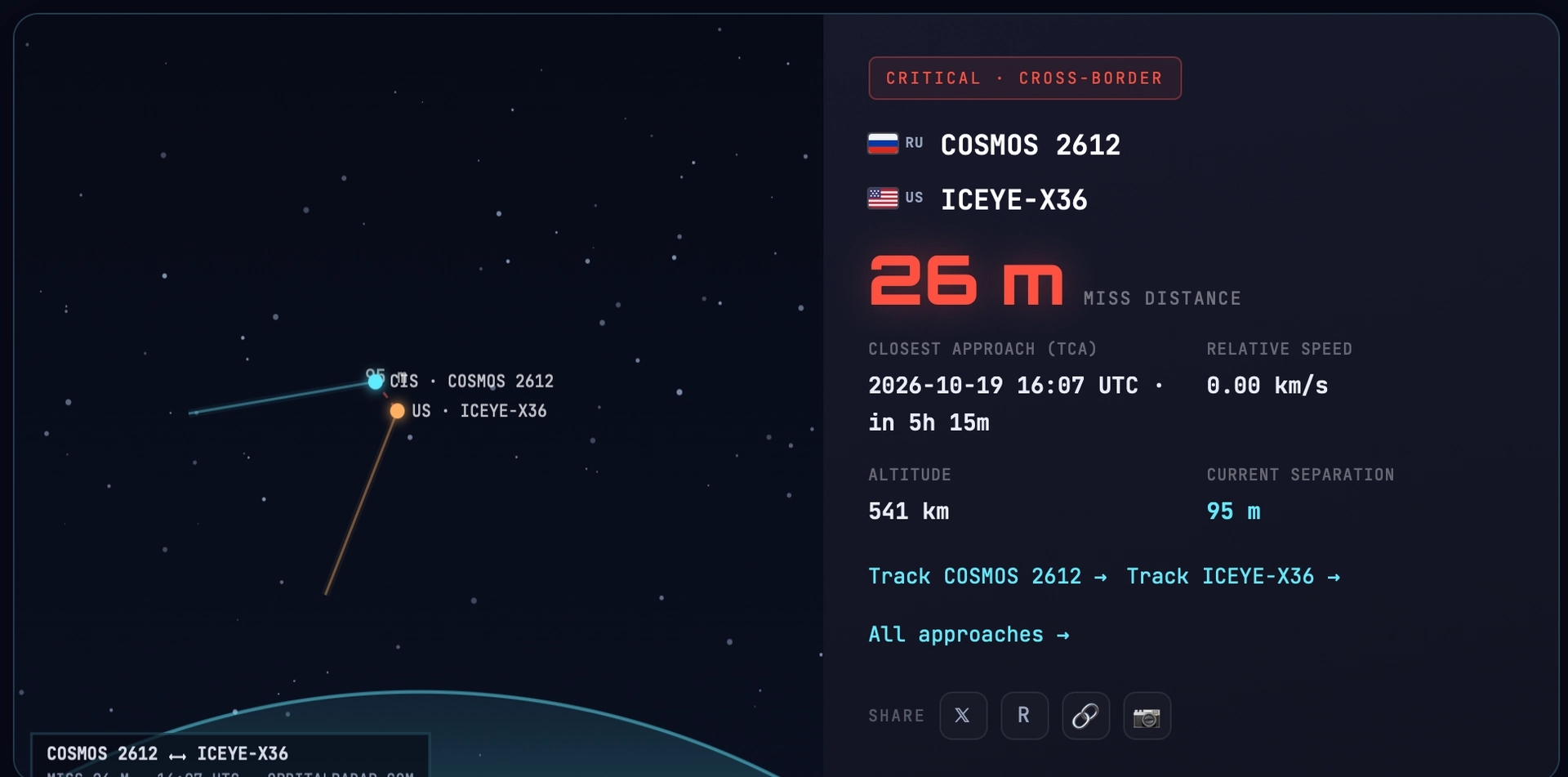
ICEYE-X36 is a synthetic-aperture radar Earth-observation satellite capable of imaging the planet’s surface even through cloud cover. Its data is used for intelligence purposes, including as part of the company’s cooperation with Ukraine, according to RBC-Ukraine.
A report published Oct. 15 by the Center for Strategic and International Studies (CSIS) said Kosmos-2612 was moving along a trajectory that would bring it into close proximity with ICEYE-X36, which supports Ukraine.
The center said it should be assumed that Kosmos-2612 could take actions that might threaten the commercial satellite. Any Russian activity in space directed against Western spacecraft should be viewed in the context of Moscow’s aggressive “gray-zone” policies targeting U.S. and European interests, CSIS said.
Kosmos-2612 was among six satellites Russia launched into low Earth orbit in April 2026. The spacecraft later began carrying out unusual maneuvers and approaching ICEYE satellites. In May, Kosmos-2609 came within 2.5 kilometers of one ICEYE satellite.
CSIS also noted that Russia has previously conducted tests in which satellites in orbit released other objects. In 2017, a senior U.S. official compared such configurations to a “matryoshka” Russian nesting doll.
Georgy Trishkin, a rocket-launch analyst and space and rocketry commentator, told The Insider that a direct attack on ICEYE-X36 is unlikely, as it would be viewed as an attack on Pentagon property and, therefore, an act of aggression against the United States.
“We do not know for certain whether ICEYE-X36 provides intelligence data to Ukraine, but it could certainly be used for that purpose as well. It is one of several similar satellites on the U.S. inventory.
So far, there are no signs of any external impact by the Russian satellite on ICEYE-X36. Essentially, they are simply flying alongside each other. A direct attack is not an option because that would amount to an attack on U.S. Defense Department property. An accidental collision is also unlikely because both spacecraft are controlled. But the risks are increasing, and a collision would be interpreted as an act of aggression.”