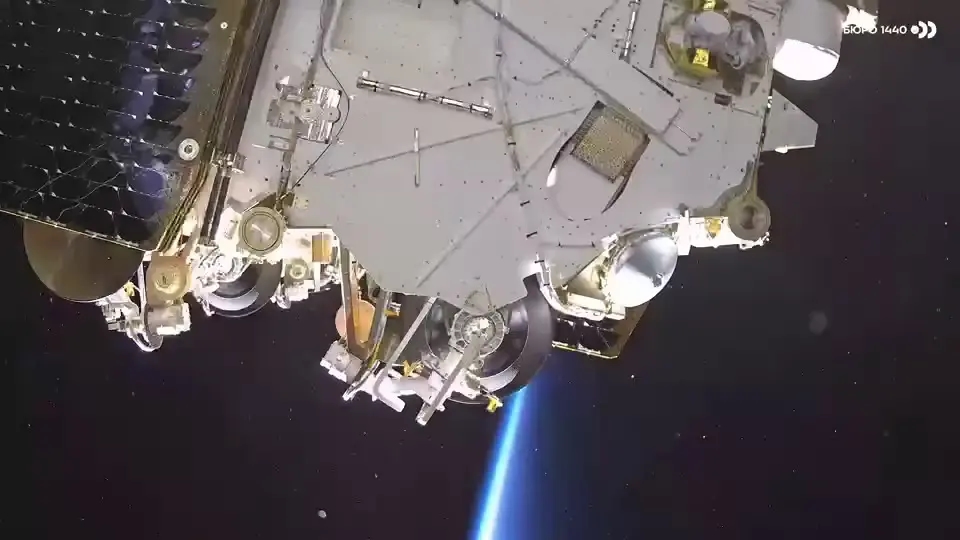
On March 23, Russia’s Bureau 1440, part of ICS Holding, placed 16 spacecraft from the Rassvet constellation into low Earth orbit. They use a 5G NTN communications system, a plasma engine, and an upgraded power supply system.
The launch of the first satellites had originally been planned for 2025, but it was postponed as the manufacturer did not manage to produce the required number of spacecraft on time, according to a report by the newspaper Kommersant.
Dmitry Bakanov, head of Russia’s state space corporation Roscosmos, previously described Rassvet (lit. “Dawn”) as the Russian counterpart to Elon Musk’s Starlink satellite internet system. However, in comments to The Insider, journalist and science communicator Vitaly Egorov said the two projects should not be compared:
“It is more accurate to compare the Rassvet project to another international satellite internet company and system — OneWeb. The difference between OneWeb and Starlink is that Starlink is much more mass-market: several times more satellites have been launched, and its terminals are smaller and suitable for private users. OneWeb is geared toward business and government services, and its terminal is larger. That’s the difference for the end user.
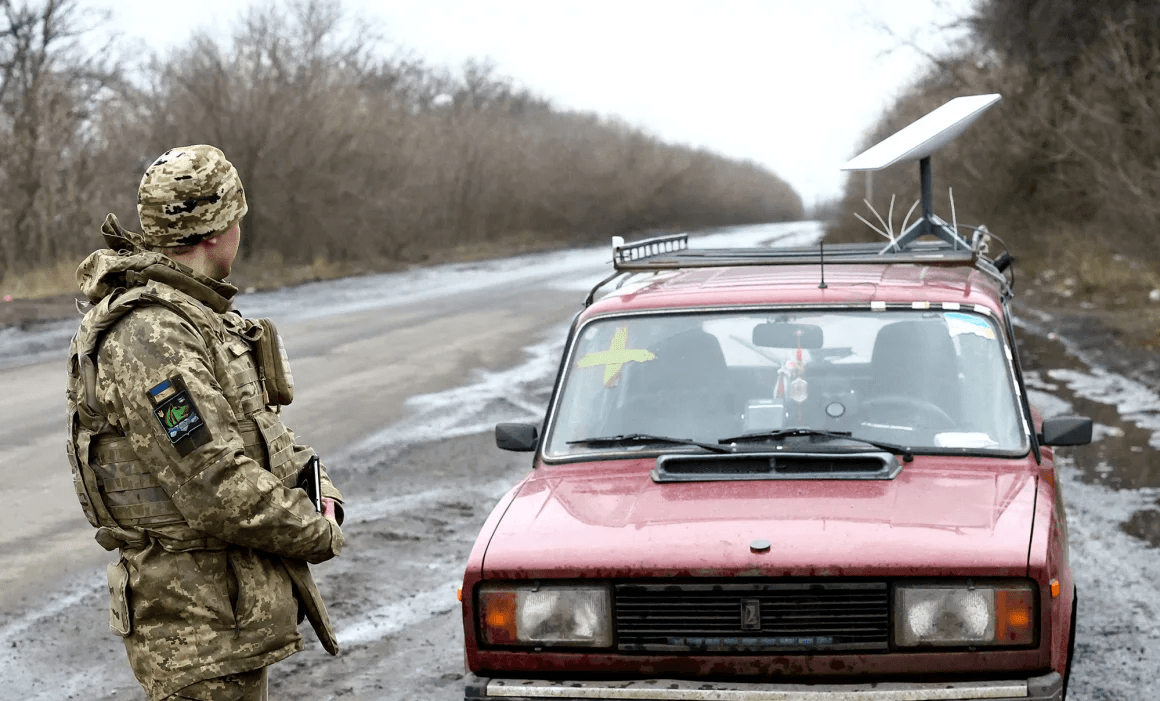
Starlink proved far more effective for use in war precisely because of the mass availability of its ground terminals and their small size. Rassvet’s terminal is larger than Starlink’s and closer in size to OneWeb’s, but what matters here is not only developing the terminal itself, but also setting up mass production of it — just as with mass production of satellites. For Rassvet, the minimum number of satellites needed to provide acceptable-quality communications across Russia, or at latitudes matching its territory, is about 250 spacecraft. Only 16 have been launched so far, so it is too early to say that Russia has its own Starlink. Beyond launching satellites, it is also necessary to establish production of compact and inexpensive — which is also important — ground terminals. That is the next technological barrier Rassvet will have to overcome before end users on the ground, including the Defense Ministry, receive the services they had when they had access to Starlink.”
In total, at least 300 satellites are slated to be put into orbit by 2028, a goal that will require more than 20 launches. The target for this year is about 150 spacecraft, according to the federal project’s plan, under which 102.9 billion rubles will come from the budget and another 329 billion rubles from the company’s own funds.
ICS Holding is the main supplier of equipment for the Russian state’s internet surveillance and phone tapping operations, according to an investigation by the independent journalist Andrei Zakharov. The organization’s deputy director is Boris Korolyov, the son of First Deputy FSB Director Sergei Korolyov. Zakharov believes the Korolyov family may own a stake in the holding company.