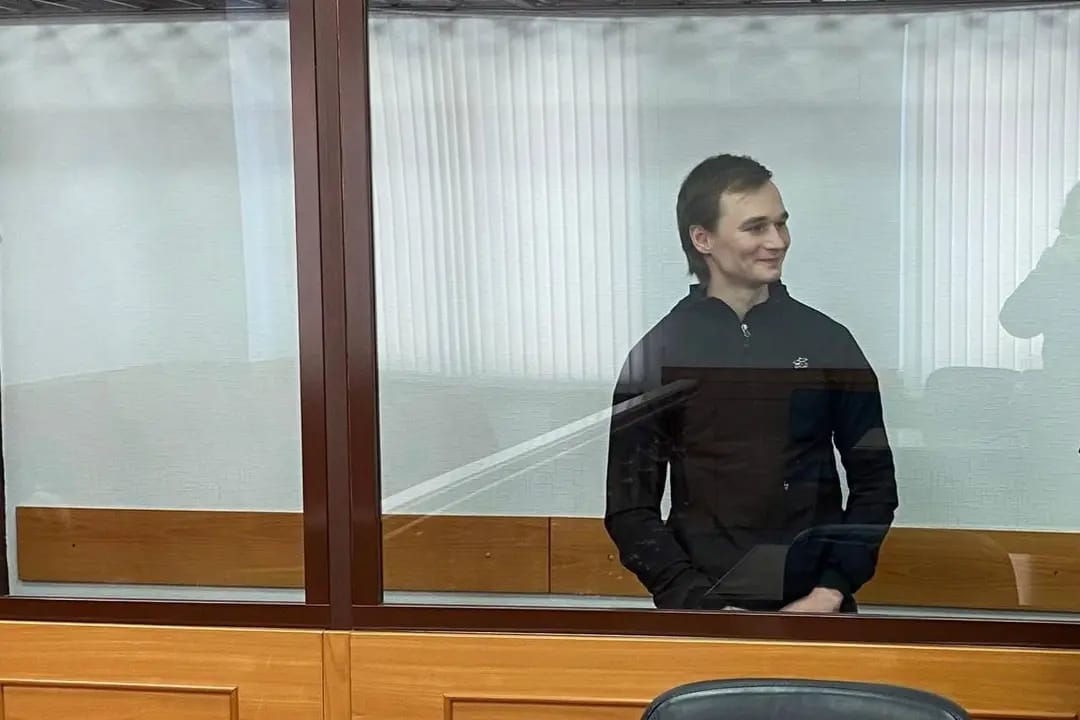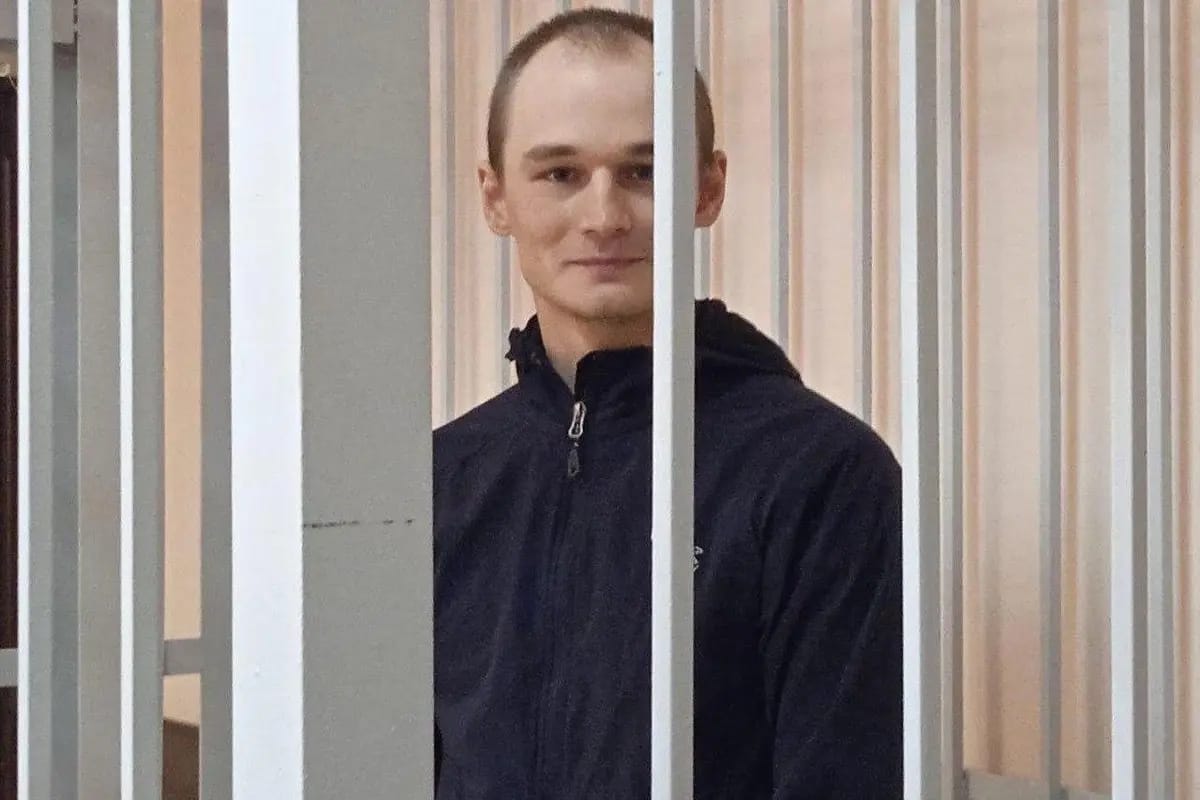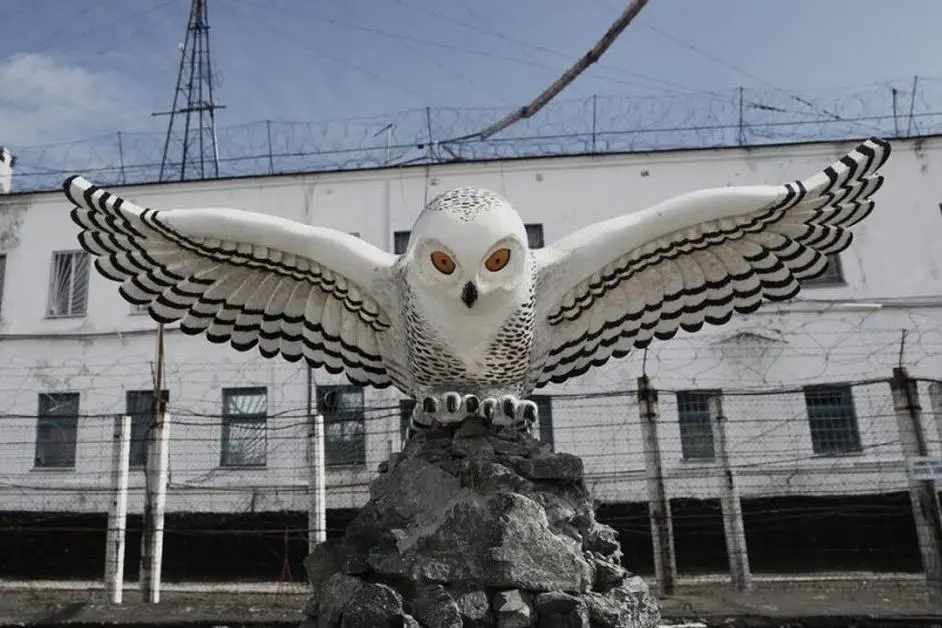
The Insider has reviewed a prosecutor’s filing showing that during a June inspection of the “Polar Owl” special-regime penal colony north of the Arctic Circle, two prisoners were found with physical injuries. One of them, who had been sentenced to life imprisonment by a Russia-installed occupation court in Luhansk, Ukraine, said directly that he had been injured after being beaten by prison staff. Political prisoner and mathematician Azat Miftakhov had previously reported being tortured at Polar Owl after he was transferred there in April 2026. Miftakhov added that other prisoners had also been tortured at the facility.
Prisoner injuries and missing footage from intake procedures
An inspection of Penal Colony No. 18 (IK-18), known as “Polar Owl,” in the settlement of Kharp in the Yamalo-Nenets Autonomous District was carried out on June 1, 13 and 14, 2026, amid complaints by political prisoner Azat Miftakhov and his lawyers about torture there. Based on the findings, Mikhail Mityayev, the prosecutor overseeing compliance with the law in correctional institutions in the region, issued a formal order on June 15 demanding that violations of penal law be corrected. The Insider reviewed the document.
According to the filing, prosecutors examining two prisoners on June 13 — V.A. Ovchinnik and D.A. Gribanov, both of whom had arrived at the colony on June 7 — found physical injuries. The examination was documented with photographs. Ovchinnik said the injuries were caused by prison staff beating him on the day he arrived — meaning signs of the beating were still visible six days later. However, none of the prison’s internal logs or records contained any mention of injuries. Entries were added only at the supervising prosecutor’s direction.
Anna Karetnikova, a former analyst with the Moscow branch of Russia’s Federal Penitentiary Service, told The Insider that when a prisoner arrives at a correctional facility, staff normally document all existing injuries in detail — “this protects the institution from later claims,” she said.
Karetnikova said the procedure is supposed to be followed regardless of whether the prisoner arrives from court, a hospital, or another Federal Penitentiary Service facility. If injuries are found, staff must immediately call a doctor, who is required to draw up a formal report.
When prosecutors reviewed the prison’s video archive, they also found that on June 7 — the day Gribanov and Ovchinnik arrived — staff did not use body cameras during searches of the prisoners and their belongings. Fixed surveillance cameras also failed to record the procedures.
Moreover, on June 13, when both prisoners underwent medical examinations at the prosecutor’s direction, prison staff again failed to use portable video recorders. Prosecutors found that this violated established rules requiring video recording during work with convicted prisoners.
Mityayev ordered prison management to correct the violations and to consider disciplinary action against those responsible.
The filing does not conclude that Polar Owl staff caused the prisoners’ injuries. It does, however, confirm the injuries, record one prisoner’s allegation that he was beaten, and document violations of video-recording procedures. The Insider has no information so far on whether any prison employees were disciplined as a result of the inspection.
Another prison in Kharp located down the road from Polar Owl — Penal Colony No. 3 (IK-3), known by its nickname “Polar Wolf” — is where opposition politician Alexei Navalny was killed on Feb. 16, 2024. Both colonies are overseen by the same specialized prosecutor’s office, headed by Mityayev since June 2022.
What is known about the prisoners whose injuries were documented
The Insider identified both prisoners whose injuries prosecutors documented.
One is Viktor Alexandrovich Ovchinnik, born in 1973 and originally from Ukraine. He was detained in July 2021 in the occupied part of Ukraine’s Luhansk region. In March 2025, the occupation Supreme Court of the self-proclaimed Luhansk People’s Republic sentenced him to life imprisonment on charges that he had created an armed gang that committed robberies and murders.
According to the court, the group carried out eight armed robberies from 2019 to 2021, and Ovchinnik personally committed seven murders, including the killing of the director of the Izumrud jewelry store and three members of her family.
During the trial, Ovchinnik said law enforcement officers had tortured, threatened, and blackmailed him and that case materials had been falsified. On Feb. 24, 2026, the First Court of Appeal of General Jurisdiction rejected his arguments and upheld the life sentence.
Igor Kornet, the head of the Russian occupation Interior Ministry, claimed that Ovchinnik had been recruited by Ukraine’s Security Service (SBU) and that some of the killings had been carried out on orders from Ukrainian intelligence. Those allegations of cooperation with the SBU do not appear in the court ruling.
The second prisoner is Dmitry Andreyevich Gribanov, a native of Kaluga. In March 2026, the Kursk Regional Court sentenced him to life imprisonment for crimes that included the murder, rape, and robbery of a tailoring-shop employee in Zheleznogorsk, as well as the attempted murder of his partner.
In 2016, Gribanov had already been sentenced to 12 years in a strict-regime penal colony for killing his grandfather, whom he stabbed at least 24 times. Gribanov was due for release in December 2027, but in May 2025 he committed new crimes while already at liberty. It is unclear when or on what grounds he was released early.
Political prisoner Azat Miftakhov reported torture at Polar Owl in April
Political prisoner Azat Miftakhov, an anarchist and a mathematician, said that shortly after his arrival at Polar Owl on April 21, 2026, he was tortured for several hours in the prison’s operational department, which inmates nicknamed “Lubyanka” after the headquarters of the FSB in Moscow.
According to Miftakhov, Federal Penitentiary Service employees and prisoners acting on their orders bound him with tape, beat the soles of his feet with a wooden hammer, shocked him with electricity, threatened him with rape, and threatened to immerse him in sewage. Loud music was played to drown out his screams during the electric shocks.
Miftakhov said the torture began after he refused to clean a toilet in the operational department.
Miftakhov also said other prisoners were tortured. In written statements obtained by The Insider, he mentioned prisoner Eduard Salinder.
“Later, Salinder E.T. told me in quarantine that the same thing had happened to him. Only they did not use electricity on him; they just beat him on the soles of his feet and threatened him with rape,” Miftakhov wrote.
Salinder himself did not file a torture complaint.
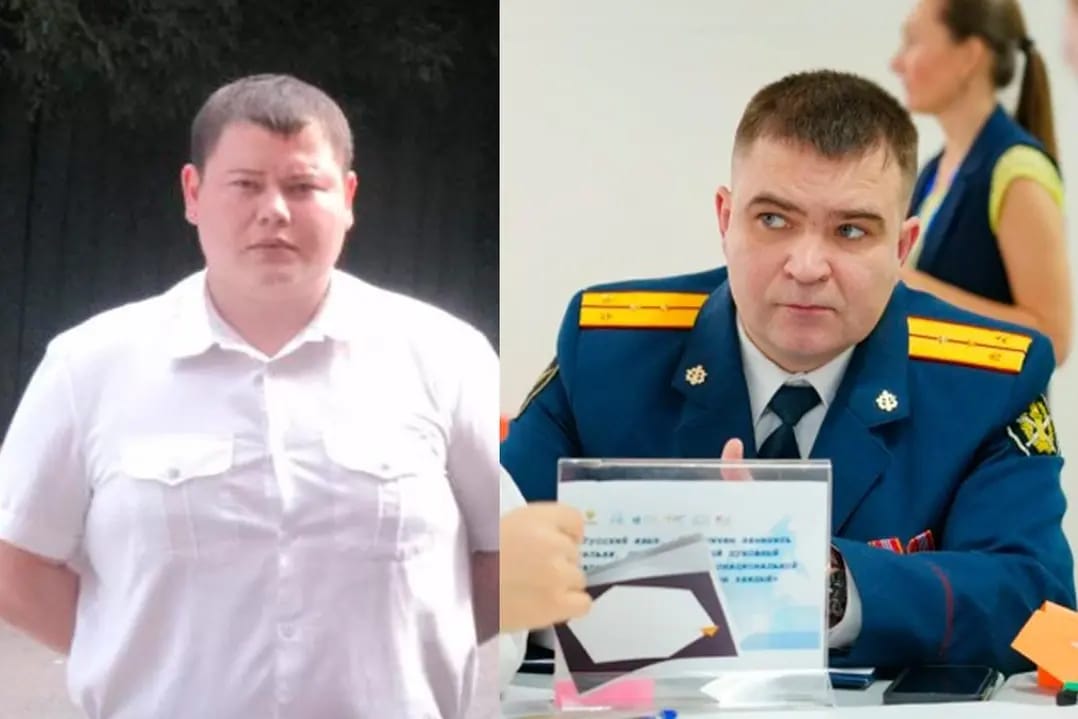
The Insider identified two Polar Owl employees named by Miftakhov in his account and later established the identity of another operative and two prisoners who appeared in materials from an Investigative Committee inquiry.
- Mikhail Sobolev — a Penal Colony No. 18 employee who, according to Miftakhov, personally took part in beatings, strangulation, and threats of rape. Miftakhov said Sobolev summoned the prisoners who tied him up and began torturing him.
- Pavel Kiselyov — a prison operative who, according to Miftakhov, was present in the room where the political prisoner was tortured with electric shocks.
- Yevgeny Tarayev — a senior operative at Penal Colony No. 18 who confirmed speaking with Miftakhov in the operational department on April 21-22 but denied that violence was used.
- Alexander Bulanov — a prisoner whom Miftakhov identified as a direct participant in the beating and electric-shock torture.
- Mikhail Byatets — a prisoner whom the Investigative Committee examined as a possible participant in the torture. He denied involvement. Investigators did not conduct a face-to-face confrontation with Miftakhov or ask him to identify Byatets.
On June 11, the Investigative Committee refused to open a criminal case over Miftakhov’s torture complaint, citing insufficient evidence. The investigator did not request footage from prison staff body cameras or cameras in the quarantine unit; Miftakhov’s first medical examination for injuries took place only two weeks after the torture.
During the June inspection, prosecutors also found violations of Miftakhov’s rights. According to Mityayev’s filing, on May 25 and 26 Miftakhov’s wife and legal representative, Yelena Gorban, was improperly denied meetings with him.
In addition, on June 11, Miftakhov was transferred to a secure location, but the move was not properly recorded in prison documentation, and the conditions of his confinement did not meet the rules established for such protective placement. Nevertheless, the prosecutor Mityayev had told Miftakhov’s lawyers in May that an inspection had found no evidence that violence had been used against him. According to the prosecutor’s response, a medical examination on May 6 (15 days after the torture occurred) found no physical injuries.