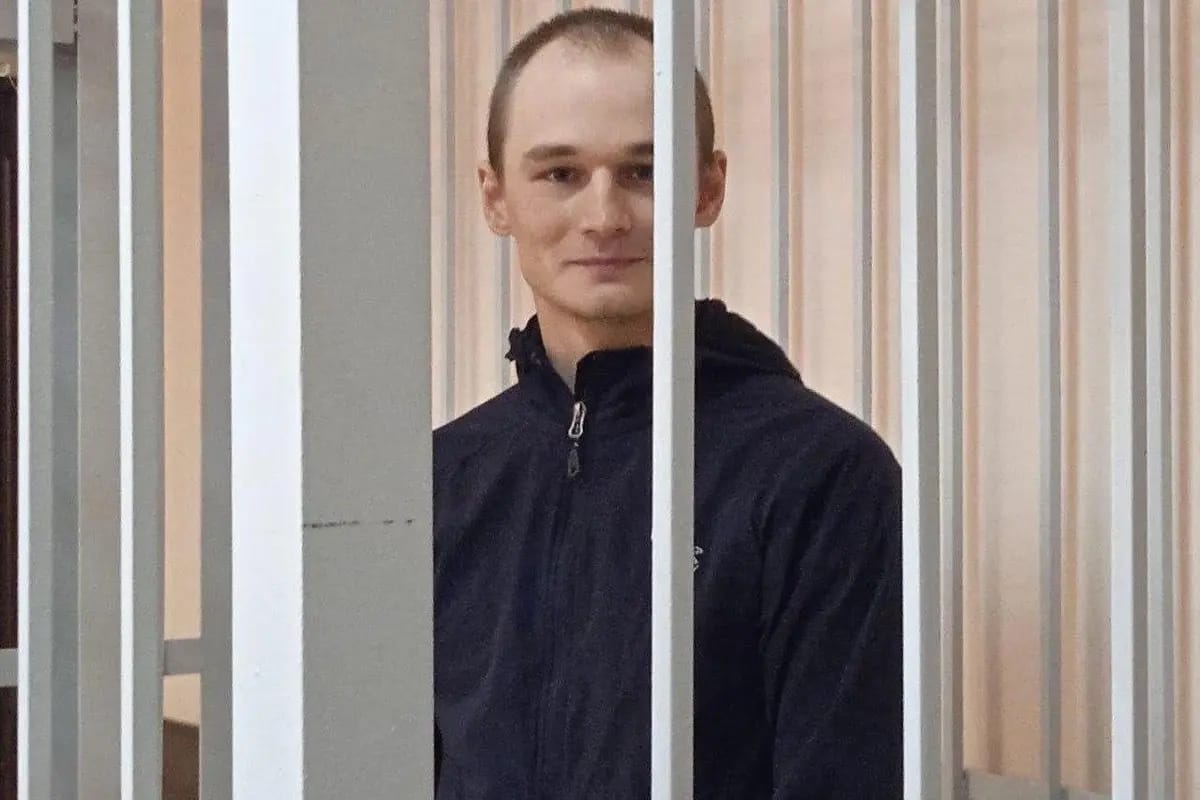
Russia’s Investigative Committee (IC) has refused to open a criminal case into the alleged torture of Azat Miftakhov, a jailed anarchist and mathematician being held at IK-18 Polar Owl, a high-security prison colony in Kharp in Russia’s Arctic north. According to Miftakhov, IK-18 employees Mikhail Sobolev, Pavel Kiselev, and Yevgeny Taraev, along with prisoners Alexander Bulanov and Mikhail Byatets, took part in the torture. The IC’s decision to not prosecute confirmed the identities of Taraev and Byatets for the first time.
“It is not possible to determine whether unlawful actions were committed”
The Insider has reviewed documents showing that the IC investigated the men under articles covering abuse of office and the commission of violent sexual acts. Investigator Ilshat Cheremshantsev issued the decision not to prosecute on June 11, writing that “It is not possible to determine whether unlawful actions were committed against Miftakhov.” Miftakhov’s defense team received the document only two weeks later.
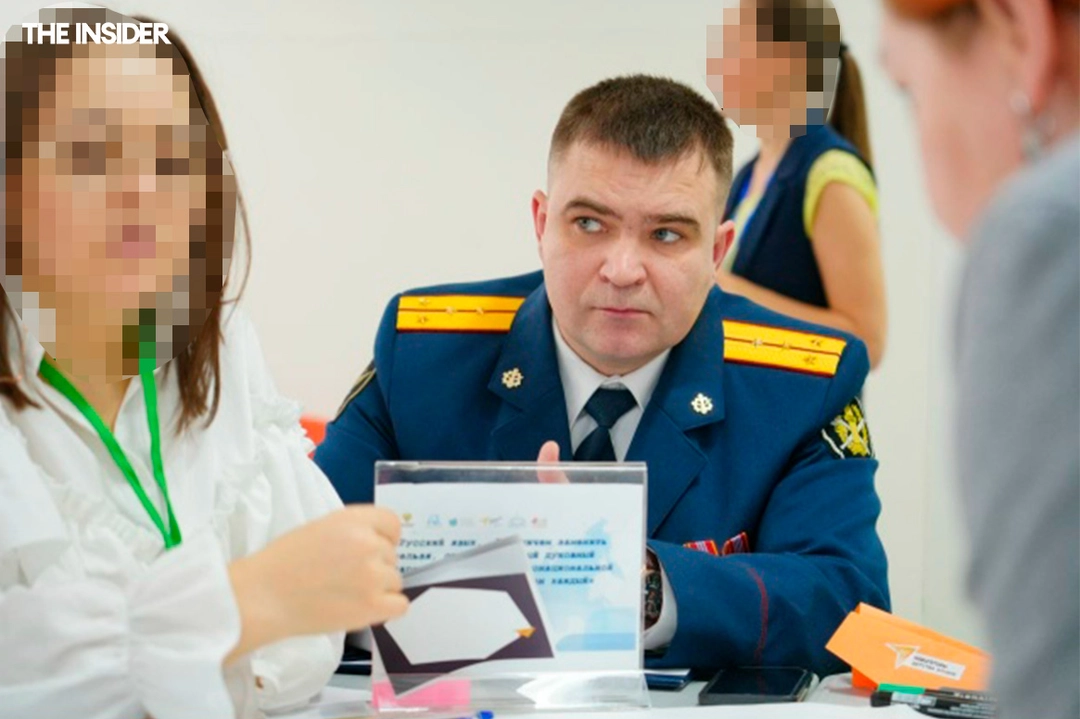
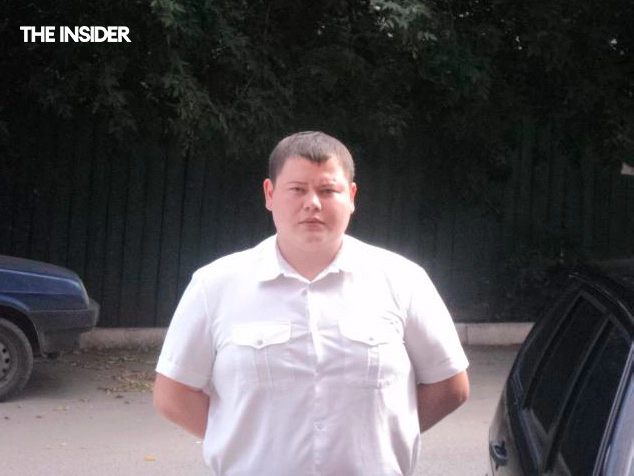
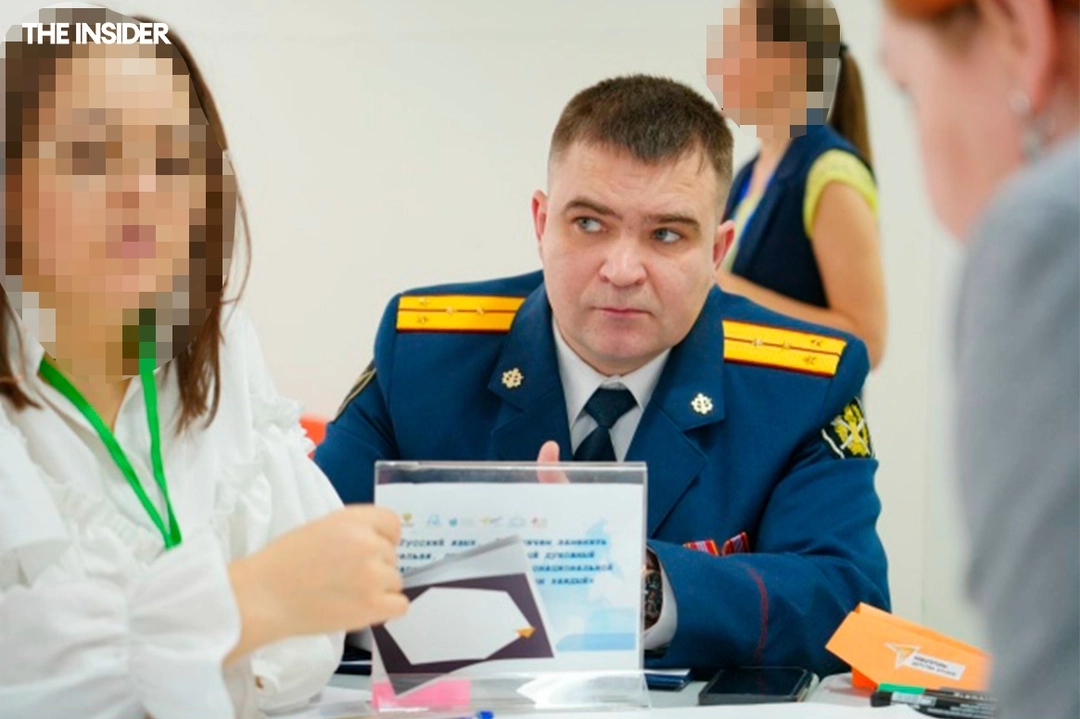
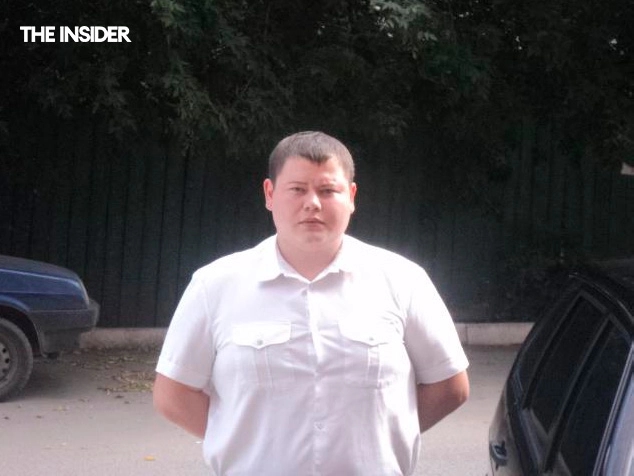
In early May, Miftakhov reported that on April 21, shortly after he was transferred to IK-18 Polar Owl in Kharp, prison employees and two inmates tortured him for several hours in an administrative building. Miftakhov said they beat the soles of his feet with a wooden mallet, threatened him with sexualized violence, threatened to dunk him in a sewage manhole, blocked his breathing, and then tortured him with electric shocks. He said they played music at full volume to drown out his screams.
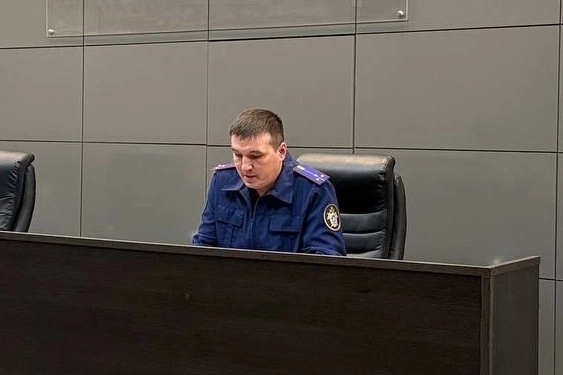
Investigators concluded that the torture allegations could not be substantiated. They cited the absence of visible injuries, the absence of complaints in prison logs, and the absence of records showing that force had been used against Miftakhov. Investigators also appear not to have attempted to identify all of the figures who Miftakhov named in his description of the alleged incident. For example, the document does not mention an employee whom Miftakhov identified as Alexei Viktorovich. Miftakhov said the man entered the office while he was being threatened with sexualized violence; after speaking with him, Miftakhov said, he was carried to a sewage manhole and threatened with being dunked into it.
The decision also does not mention two other employees whom Miftakhov said entered the office after the electric-shock torture had been administered in order to demand that he obey the administration. Investigators also did not allow to personally identify or confront those whom he named as participants in the torture.
The Investigative Committee reviewed video only from a camera in the “bathhouse area” for April 20-22. The investigator said the footage showed that Miftakhov was not limping and had no visible injuries. Despite a request from the defense, investigators did not attempt to obtain footage from the quarantine unit where Miftakhov was held, nor footage that would have shown him limping after the torture. They also did not request footage from body cameras worn by prison employees.
As part of the review, investigators questioned several prisoners. Most said they knew nothing about any violence committed against Miftakhov. However, one prisoner, Sergei Martynov, said that after arriving at the prison colony in late April, Miftakhov told him that people at IK-18 “beat and torture with electric shocks.” Martynov did not see the torture himself and did not ask Miftakhov for details.
The first examination of Miftakhov for injuries recorded in the decision was carried out May 5, two weeks after the alleged torture. A May 14 forensic examination found two abrasions on his left forearm but said they had appeared four to ten days before the examination, meaning after April 21. On May 12, investigators inspected the administrative building where Miftakhov said he was tortured — 21 days after the events he described.
“In view of irreconcilable contradictions in the explanations of these persons, the absence of other eyewitnesses, the absence of bodily injuries on A.F. Miftakhov, the absence of the objects with which bodily injuries were inflicted on A.F. Miftakhov, and the absence of any other evidence, it is not possible to determine whether unlawful actions were committed against A.F. Miftakhov,” Cheremshantsev wrote in the decision not to bring charges.
At the same time, the decision made it possible to identify two more people who correspond to those Miftakhov had mentioned: operative Yevgeny and prisoner Mikhail. The Insider previously identified IK-18 employees Mikhail Sobolev and Pavel Kiselev, whom Miftakhov directly named as participants in the torture.
Operative Yevgeny Taraev: A torturer and a father of four
Among the employees Miftakhov named as participants in the torture was an operative named Yevgeny. Miftakhov said that after the beatings and threats of sexualized violence, he was carried to the second floor of the operations department. Pavel Kiselev and an employee named Yevgeny were there. Wires were attached to Miftakhov’s legs, and electric current was then run through his body. At the end of the process, Miftakhov said, it was Yevgeny who ordered the wires removed and the tape binding him cut.
Miftakhov could not provide the employee’s last name. In the Investigative Committee decision, his testimony is cited with a patronymic: “Yevgeny Adzhayevich.” Investigators questioned Yevgeny Adzhayevich Taraev, a senior operative at IK-18. He confirmed that on April 21 and 22 he spoke with Miftakhov in an operations department office on the second floor of the administrative building — the place where Miftakhov said he had been carried after the first round of torture.
Taraev denied using physical force or psychological pressure against Miftakhov. He says the conversations were “introductory.”
Yevgeny Taraev is a 41-year-old native of Kalmykia. In the phone book of one contact, he is listed as “Yevgeny Taraev Oper Department IK-18.” Taraev has four children, ages 6, 12, 15, and 17.
According to leaked database records, Taraev has worked at IK-18 Polar Owl since at least 2018. In 2022, his income from the prison colony was 1.55 million rubles ($15,500). Before moving to Kharp, he served at IK-2 in the settlement of Yashkul in Kalmykia. In a 2010 declaration by the regional branch of the Federal Penitentiary Service, or FSIN, Taraev is listed as a junior inspector in that colony’s supervision unit.
Yevgeny’s older brother, Sergei Taraev, also worked in the FSIN system. In the same declaration, he is listed as a junior inspector in the supervision unit at IK-2. Sergei Taraev later moved to the Federal Bailiff Service in Kalmykia. A 2023 publication by the regional bailiff service describes him as a bailiff responsible for maintaining order in the courtoom.
Prisoner Mikhail Byatets: Repeat offender and “chief rooster”
According to Miftakhov’s account, the second prisoner who took part in the torture (alongside Bulanov) was a man named Mikhail. Miftakhov did not know his last name but said the prisoner had low status in the prison hierarchy but was the senior figure among the “outcasts” of the prison population — a so-called “chief rooster.”
In Russian prison slang, “rooster” (petukh) is a deeply degrading term for an inmate placed in the lowest caste of the prison hierarchy. It is usually associated with sexualized humiliation, coercion, or sexual “defilement.” Under informal prison rules, such prisoners are treated as untouchable by others.
Miftakhov said Mikhail taped his legs together, hit him in the groin, took part in threats of sexualized violence, brought his face close to an open sewage manhole, and later covered his mouth with a towel during the electric-shock torture.
“They pulled down my pants and underwear… Mikhail began smearing cream on my anus with his fingers. At some point it stopped, but they continued threatening that they would take turns penetrating me,” Miftakhov said.
Although Miftakhov gave only a first name, the Investigative Committee checked a specific prisoner, Mikhail Byatets, for involvement in the torture. The investigator obtained an explanation from Byatets and questioned several inmates from the unit where Bulanov and Byatets are held, asking whether they had heard that the two men had beaten other prisoners.
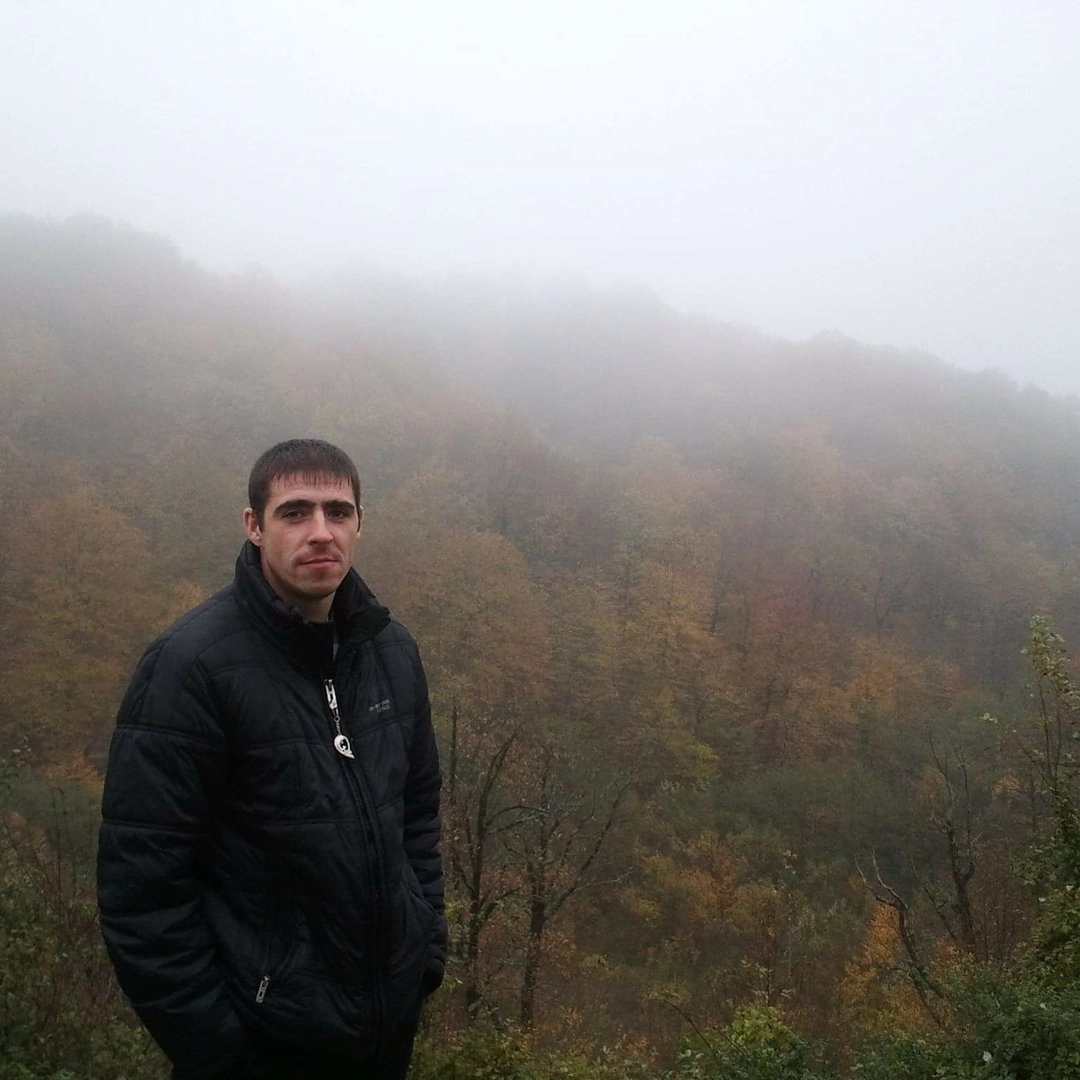
The decision does not explain what evidence led investigators to conclude that the Mikhail mentioned by Miftakhov was Byatets, and it does not say that any identification procedure or confrontation was carried out. Byatets works in the bath and laundry complex of the IK-18 administrative building — the same place where Miftakhov said the torture began. Byatets denies knowing Miftakhov or using force against him. He suggested Miftakhov may have seen him in the building and could have remembered his name from his chest badge.
Byatets is a 43-year-old native of Dnipro who is registered on social media as “Misha Saiman.” He has been convicted several times. A 2014 verdict issued by the Noyabrsk City Court lists four previous convictions, including for robbery and car theft. According to the court, he and an accomplice attacked a taxi driver, hit him on the head with a wooden bat, threatened him with a knife, took his money, and forced him into the trunk. The court found that Byatets’ actions constituted a dangerous repeat offense and sentenced him to five years in a high-security prison colony.
After his release, Byatets again found himself in the dock. In 2021, he was sentenced to 10 years in a high-security prison colony for attempted large-scale drug trafficking. The court found that he had placed five drug “dead drops” in Noyabrsk and planned to send their coordinates to buyers through Telegram. In that case, too, the court found that Byatets was a dangerous repeat offender.
How a Moscow State University graduate student ended up in an Arctic prison colony
Azat Miftakhov, a Moscow State University graduate student, mathematician, and anarchist, was first arrested in 2019. In January 2021, he was sentenced to six years in a general-regime penal colony in a case involving an attack on an office of the ruling United Russia party in Moscow. Investigators said Miftakhov and other anarchists broke a window and threw a smoke bomb inside. He denied any guilt.
In September 2023, on the day he was due to be released, Miftakhov was detained again outside the prison gates, this time in a case alleging “justification of terrorism.” Authorities claimed that in a conversation with another prisoner, Miftakhov expressed approval of an explosion at the FSB office in Arkhangelsk. The other prisoner, who later became the prosecution’s key witness, was later killed fighting in Ukraine.
In the second case, Miftakhov was sentenced to four years in prison and was ordered to spend the first 2.5 years in a prison-type facility and the rest of the term in a high-security penal colony. After serving time in a prison in Dimitrovgrad, he was transferred to IK-18 Polar Owl in the Arctic settlement of Kharp, a facility located down the road from IK-3 Polar Wolf, where opposition politician and anti-corruption activist Alexei Navalny was murdered by the Russian state in February 2024.
While in custody, Miftakhov repeatedly reported being pressured by the authorities. In 2023, he said that after his first arrest, FSB officers used intimate photos against him and arranged for other prisoners to move him into the lowest prison caste, known as the “offended” — a stigmatized category in the informal Russian prison hierarchy often associated with sexualized humiliation and abuse. In November 2024, Miftakhov’s outside support group said his safety in the Dimitrovgrad prison was under threat from of a cellmate with a severe mental health condition. Miftakhov spent almost all of 2025 in solitary confinement.