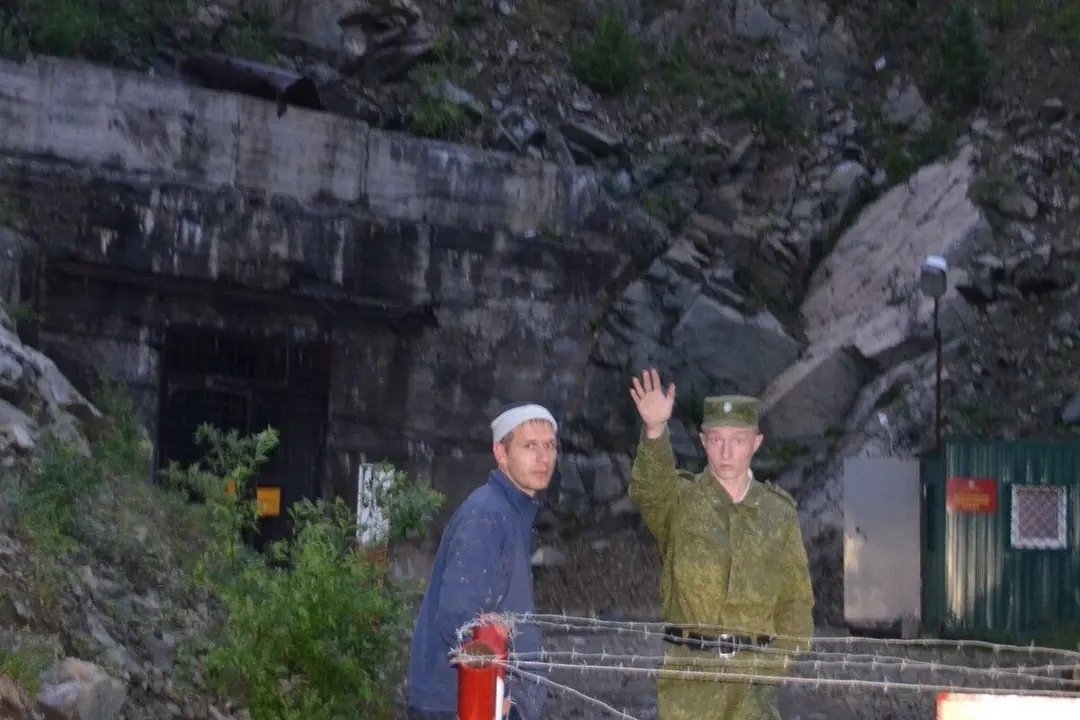
Russia has significantly expanded and modernized a secret underground command center inside Mount Kosvinsky Kamen in the Urals in recent years, a facility linked to the command and control of its strategic nuclear forces, according to a joint investigation by The Sunday Times, Danish organization Danwatch, and the independent Russian Dossier Center. The authors said the work points to a “revival” of the Soviet Perimeter system, known in the West as “Dead Hand.” However, Pavel Podvig, an expert on Russian nuclear forces, told The Insider that the authors’ conclusion was incorrect — as the system was never deactivated in the first place.
“The facility was indeed built. But it is wrong to say that some system was reactivated. Nothing was ever deactivated,” Podvig told The Insider.
A vast complex inside a mountain
The site is known as Facility or Object 1335 and is located near the settlement of Kytlym at the foot of Mount Kosvinsky Kamen. According to the investigation, the “Object” is a large, hardened underground command complex. The authors reviewed around 2.5 million Russian documents and public records, including government procurement files dating back to 2011, as well as satellite imagery and photographs posted by Russian military personnel.
The documents indicate that particularly extensive work began in 2018. Purchases for the site included steel, pipes, cables, concrete, heavy excavation and drilling equipment, mine ventilation systems, earthquake-resistant air-conditioning systems, and air filtration systems designed to protect against chemical, biological, and radioactive contamination.
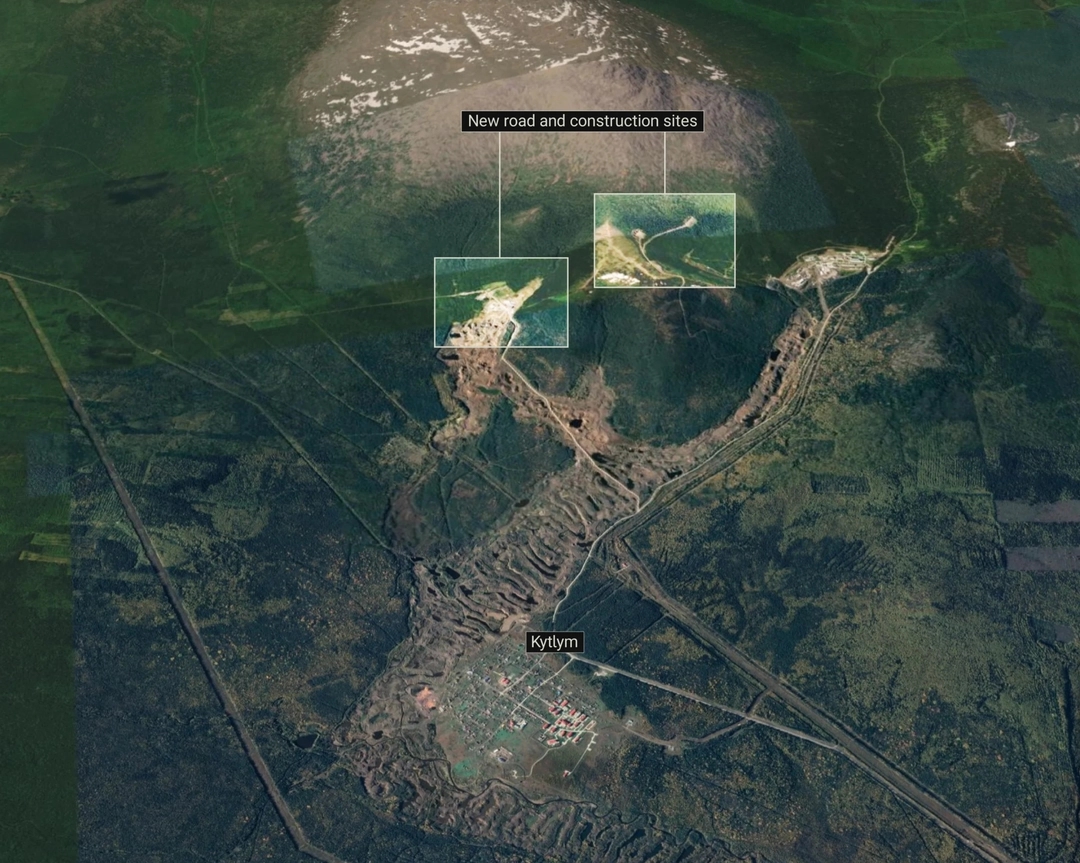
Investigators calculated that about 20,000 metric tons of steel were purchased for the construction. The documents mention at least 24 underground chambers, while the straight-line distance between the main and emergency exits is about 2.5 kilometers. Per Goltermann, a professor at the Technical University of Denmark, estimated that the amount of concrete used would have been enough to create at least 150,000 square meters of surface area.
Procurement peaked in 2020 and 2021. In 2020 alone, contractors used 361.4 kilometers of cable, 5,429 light fixtures, 30 transformers, and 160 ventilation units. Satellite imagery shows large spoil heaps of rock excavated from the mountain and the construction of a new road.
Russian military sources linked the site to Perimeter
The investigation’s authors linked the facility to the Soviet Perimeter system, which was designed to preserve the Kremlin’s ability to transmit an order for a retaliatory nuclear strike even if an attack destroyed the normal command channels for strategic forces. The investigators cited publications by Russian military officers as evidence of the site’s purpose. In 2022, retired Maj. Gen. V.G. Khalin wrote that work was underway at Facility 1335 to place the Perimeter automation system on experimental combat duty, and a 2025 publication by Col. Y. Andreyev said that after years of trial operation, the facility was placed on combat duty in 2023.
In 2026, Khalin again wrote about the facility, saying it had the “technical capability to carry out an automatic retaliatory strike.” Those publications, together with the scale of the construction work, were among the reasons the investigators concluded that “Dead Hand” had been revived.
Pavel Podvig: “Nothing was ever deactivated”
Podvig, however, says that description of Perimeter is misleading, explaining that Facility 1335 is part of Russia’s nuclear command-and-control system, while Perimeter itself is primarily a backup communications system designed to transmit a launch order in the event that conventional channels are destroyed.
Podvig was describing the system that way long before the latest investigation. In a 2006 post on his Russian Strategic Nuclear Forces website, Podvid provided analysis of an internal 1985 Soviet Communist Party Central Committee document in which he wrote that Soviet leaders had indeed considered creating a fully automated retaliatory-strike system that senior officials could activate in advance during a crisis. However, he wrote, the Soviet Union never built such an automatic “doomsday machine,” and Perimeter, with which it is often confused, was a different system.
“Perimeter is just a communication system that uses rockets to transmit launch orders to individual silos in case the land lines or other communication lines are destroyed,” Podvig wrote. Addressing claims that Perimeter could automatically initiate a retaliatory strike, he emphasized that the system “did not and does not have an ‘automatic response’”
How Perimeter is actually supposed to work
Podvig cited the same description after the new investigation was published. In his book Russian Strategic Nuclear Forces, he writes that Perimeter is integrated into Russia’s broader nuclear command-and-control system and uses special command rockets. Once ordered to launch, such a rocket would take off and transmit launch orders and the necessary codes directly to missile units during flight in the event that other communications links had been destroyed.
During the design phase, planners did consider a version in which, after Perimeter had been activated in advance, command rockets could launch automatically if the system did not receive an order to stop the sequence within a set period. That approach was abandoned, however, because of the risk that the automated process could not be stopped.
According to the description cited by Podvig, Perimeter was ultimately deployed as a backup communications channel, with its command rockets launched only on a human order from a central or reserve command post.
Russia’s nuclear command system does, however, provide for the possibility of a retaliatory strike even if direct communication with the country’s supreme commander-in-chief is lost. However, several conditions must first be met: the system must confirm the loss of communications, it must detect nuclear explosions on Russian territory, and the supreme commander-in-chief must have authorized such a retaliatory option in advance. If those factors are present, then a central or reserve command post could use its own authorization codes.