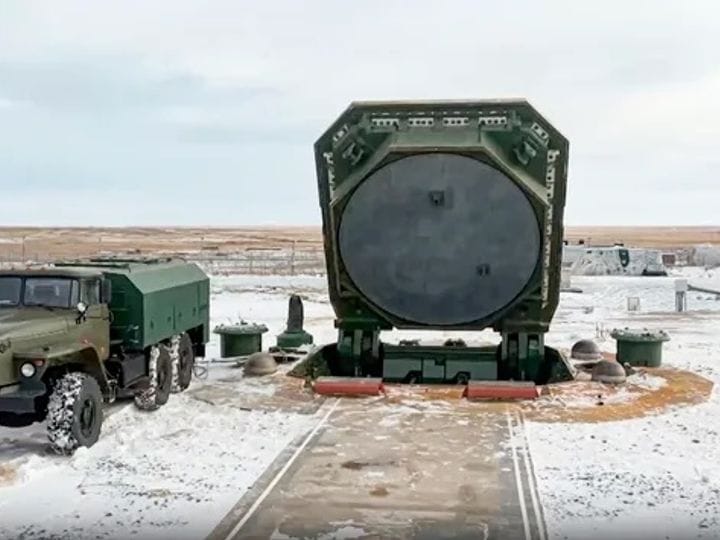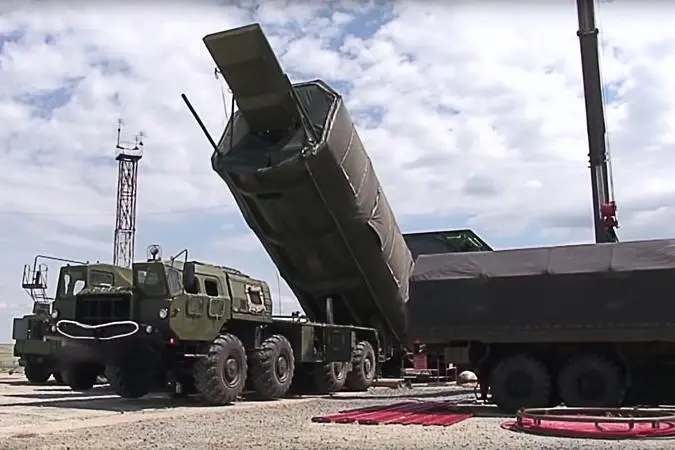
Russia appears to have been preparing to conduct its first test of the Avangard hypersonic system since 2018, but the launch was canceled for unknown reasons, writes Pavel Podvig, an expert on Russia’s strategic nuclear forces. Podvig, who has spent years observing Russia’s protocols for conducting such tests, reached that conclusion after analyzing aviation warnings issued ahead of the apparent launch and notices distributed by local authorities.
According to Podvig, the test was planned for Sept. 3-5. A UR-100N UTTKh intercontinental ballistic missile carrying an Avangard hypersonic glide vehicle was expected to launch from the Dombarovsky/Yasny area in Russia’s Orenburg region and to fly toward the Kura missile test range on the Kamchatka Peninsula.
Ahead of the expected test, Russia issued NOTAMs, or Notices to Air Missions, temporarily closing sections of airspace. The restricted areas covered Dombarovsky along with expected rocket-stage impact zones in the Tyumen Region and the Khanty-Mansi Autonomous Region and the area around the Kura test range.
Residents of the Vikulovsky, Vagaysky and Sorokinsky districts of the Tyumen Region were also warned about an upcoming launch. Sept. 3 was listed as the primary date and Sept. 4 as a backup date.
Podvig said the locations of the restricted areas indicate that the planned test involved Avangard rather than Russia’s Sarmat intercontinental ballistic missile. In particular, the NOTAM around Dombarovsky covered the missile silo used for previous Avangard tests but did not include the silo from which Sarmat had previously been launched.
Another indication that an Avangard test was planned, Podvig said, was the fact that an area near the village of Vikulovo in the Tyumen Region was designated in the September notices as an expected rocket-stage impact zone. The same area was used during previous Avangard tests in 2013, 2015, 2016, and 2018.
Avangard is a Russian strategic missile system equipped with a hypersonic glide vehicle capable of carrying a nuclear warhead. Unlike a conventional intercontinental ballistic missile warhead, the glide vehicle travels toward its target through the atmosphere at hypersonic speed and can maneuver both laterally and vertically. The capability is intended to make its trajectory harder to predict and more difficult for missile defense systems to intercept.
Vladimir Putin first publicly unveiled Avangard in 2018 and the system’s last known test took place in December 2018.If a fresh test had been successful, Russian authorities almost certainly would have publicly reported it due to Avangard’s symbolic importance to the country’s missile program, Podvig explained.
Notably, there were also no signs that an accident occurred during a Russian launch attempt. If a launch failure had occurred, Podvig said, the NOTAMs could have been expected to be canceled early. Instead, they remained in effect and simply expired after Sept. 5.
“The bottom line is that Russia apparently planned to launch Avangard from Dombarovskiy to Kura, but had to scrub the test for some reason. We should expect another attempt at some point,” Podvig concluded.
The Russian authorities have not publicly commented on preparations for such a test, nor about its cancellation.