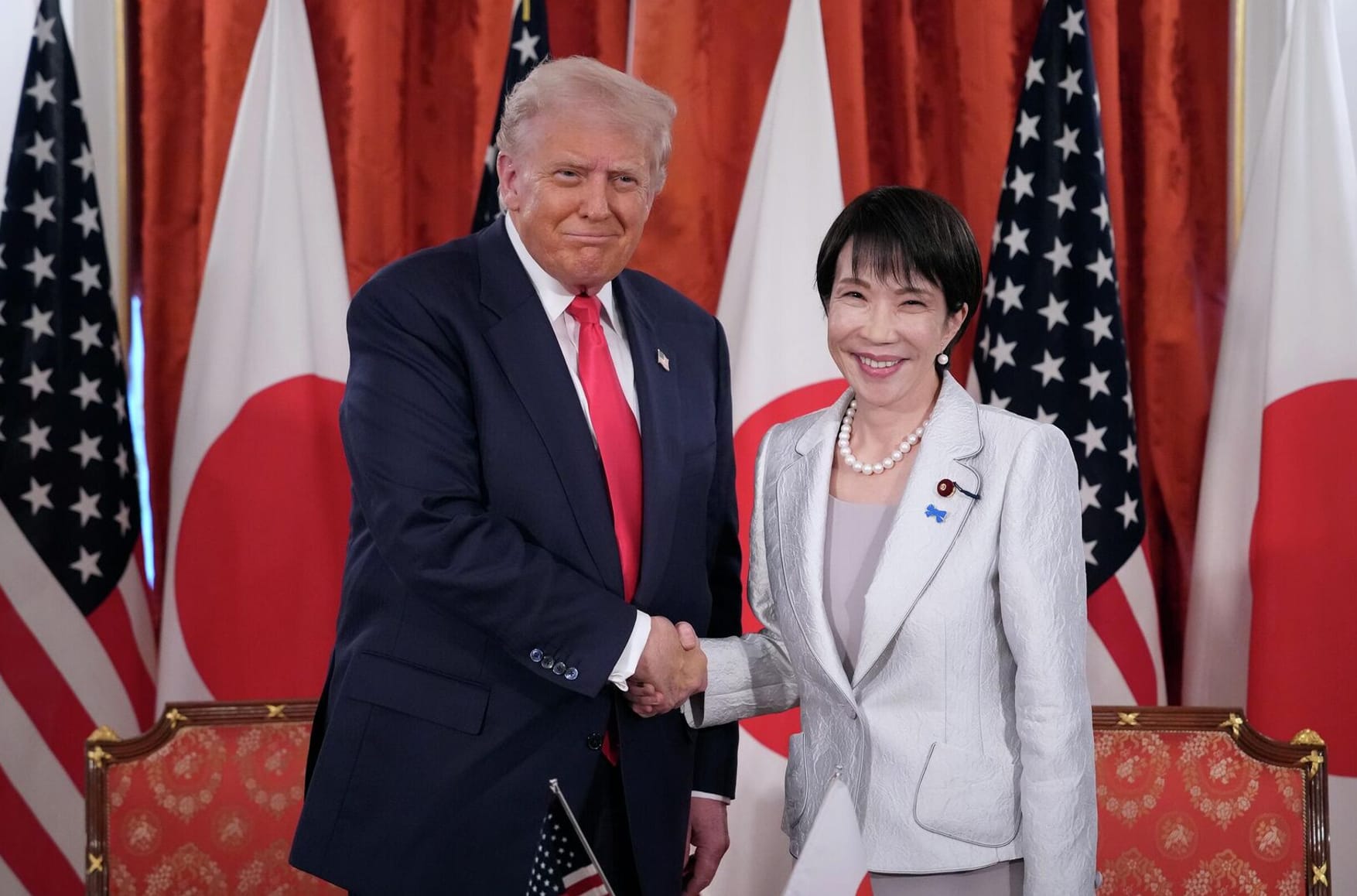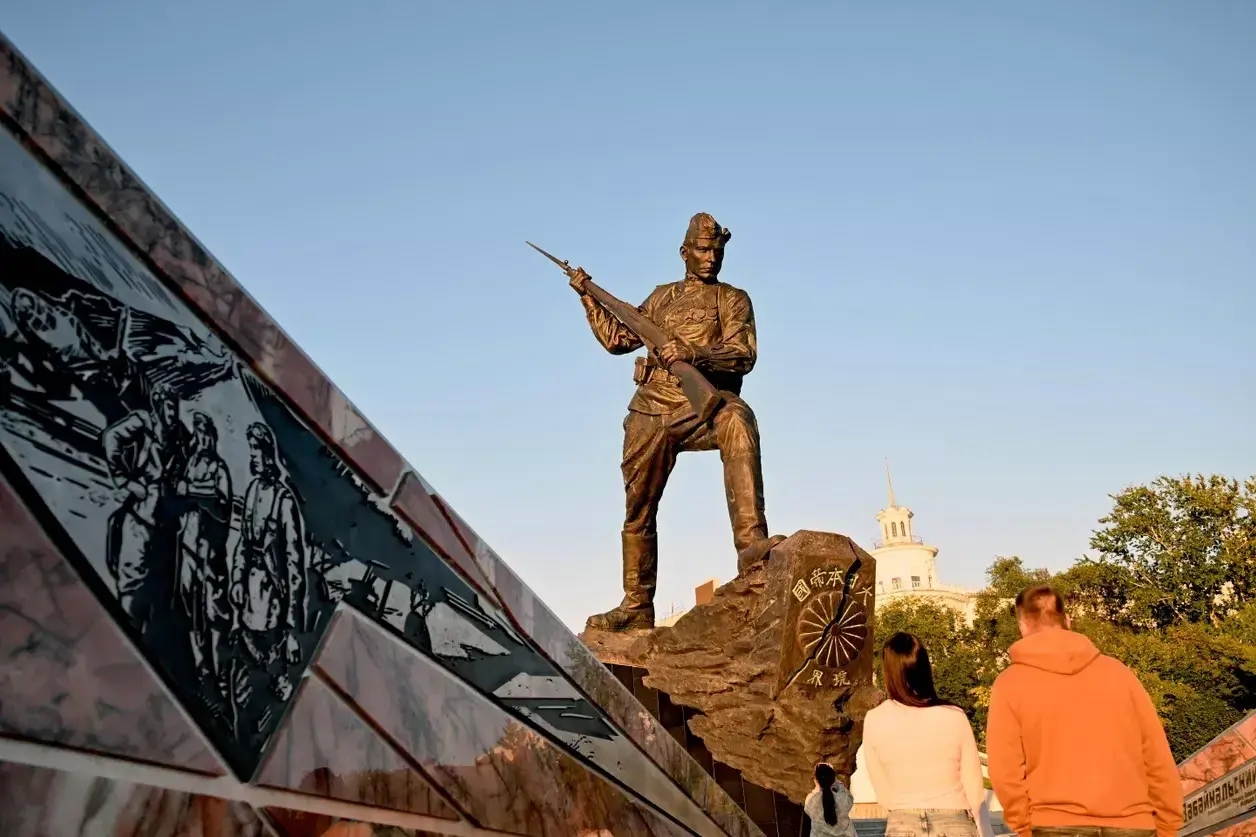
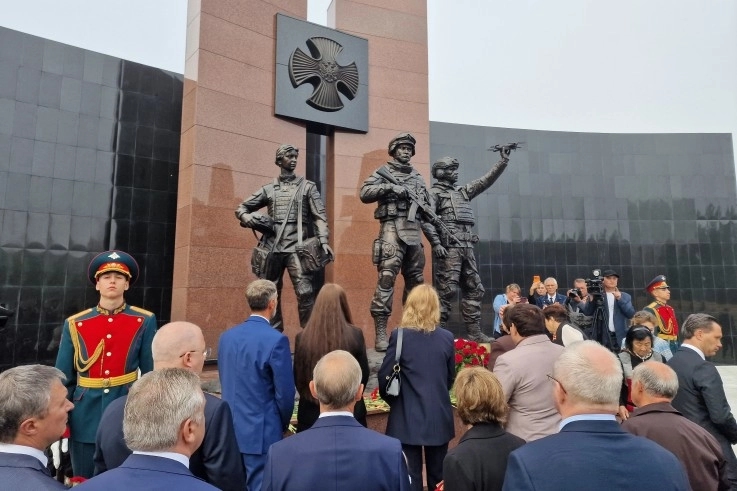
Japanese Prime Minister Sanae Takaichi has demanded the removal of a monument to the “victory over militarist Japan” that was unveiled in Khabarovsk on Sept. 4. The bronze sculpture depicts a Soviet soldier using the butt of his rifle to smash a stone border marker bearing a chrysanthemum, the symbol of Japan’s Imperial House.
Takaichi called said Tokyo had raised objections with the Russian side before the statue was unveiled. Her statement was published in both Japanese and Russian.
“The chrysanthemum emblem is widely recognized as a symbol of Japan, and the erection of a monument depicting its destruction is completely unacceptable,” she said.
Takaichi said her government would continue pressing for the removal of the monument. Japanese Foreign Minister Toshimitsu Motegi said separately on Sept. 5 that demands to stop the installation and dismantle the monument had been conveyed through diplomatic channels. He said the Russian side had not complied.
Russian Foreign Ministry spokeswoman Maria Zakharova responded to Takaichi’s comments, telling Russian state-controlled news agency RIA Novosti: “All that remains is to demand that the wind stop blowing and the sun stop shining.” She described Russian history as “based on facts” and said its memory had been “enshrined in a monument.”
The monument was installed on the Amur River embankment in the far-eastern city of Khabarovsk. According to a statement by the regional government, it was created on instructions from Vladimir Putin with the participation of the Russian Military Historical Society. The project was designed by sculptor Denis Stritovich, architect Vadim Frolov, and artist Ilya Khrabry.
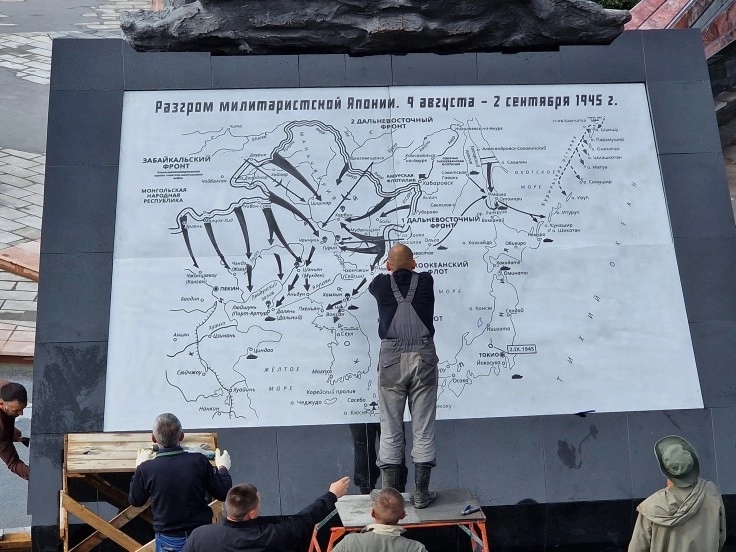
The main figure is 15 meters (49 feet) tall, while the monument’s pylons bear the names of the Soviet Far Eastern and Transbaikal fronts, the Pacific Fleet, and the Amur Flotilla. The unveiling was attended by Khabarovsk regional governor Dmitry Demeshin, representatives of the Russian Military Historical Society, military personnel, and delegations from the Chinese and North Korean diplomatic missions.
Stritovich told the newspaper Vzglyad that the border post depicted as being smashed by a Red Army soldier was modeled on Japanese boundary markers used on Sakhalin after the island was divided following the Russo-Japanese War. The soldier is holding a Mosin rifle, and the sculptor said the specific weapon was chosen to emphasize the connection between Russia’s defeat in the 1904-1905 Russo-Japanese War and the Soviet Union’s victory in 1945.
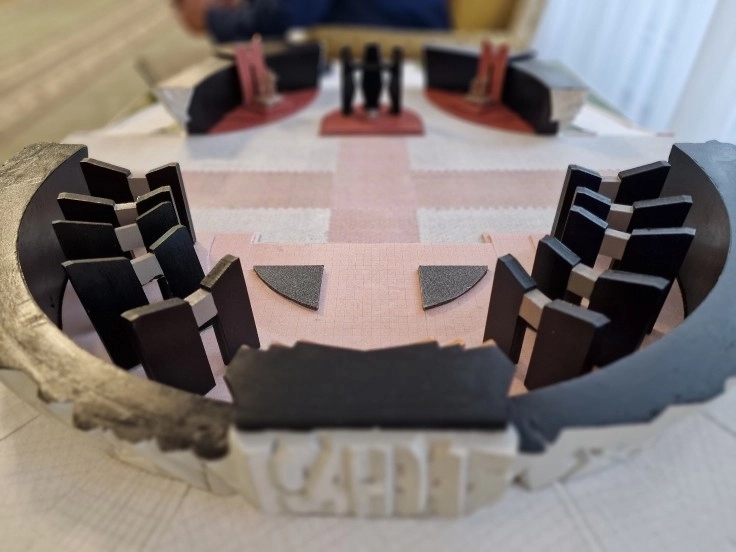
Vzglyad reported that the first stage of another memorial was unveiled at the same time on Slavy (lit. “Glory”) Square in Khabarovsk, dedicated to Russian troops killed in the Kremlin’s ongoing war against Ukraine. A new semicircular section was added to the existing memorial to those killed in the Great Patriotic War (the Soviet term for the 1941-45 war against Nazi Germany).
According to Tatyana Fonova, secretary of the regional working group on commemorating the fallen, the names have not yet been inscribed on the new monument. The local government plans to add them following what it describes as “victory” in the current war.
The episode marks the second public protest by Takaichi in recent weeks over Russia’s actions in the Far East. In August, the Japanese prime minister called Putin’s first visit to the disputed islands “absolutely unacceptable,” and Japan’s Foreign Ministry summoned the Russian ambassador.
Japan claims Iturup, Kunashir, Shikotan and the Habomai islets, which came under Soviet control at the end of World War II. The territorial dispute remains the main obstacle to a formal peace treaty between Moscow and Tokyo.