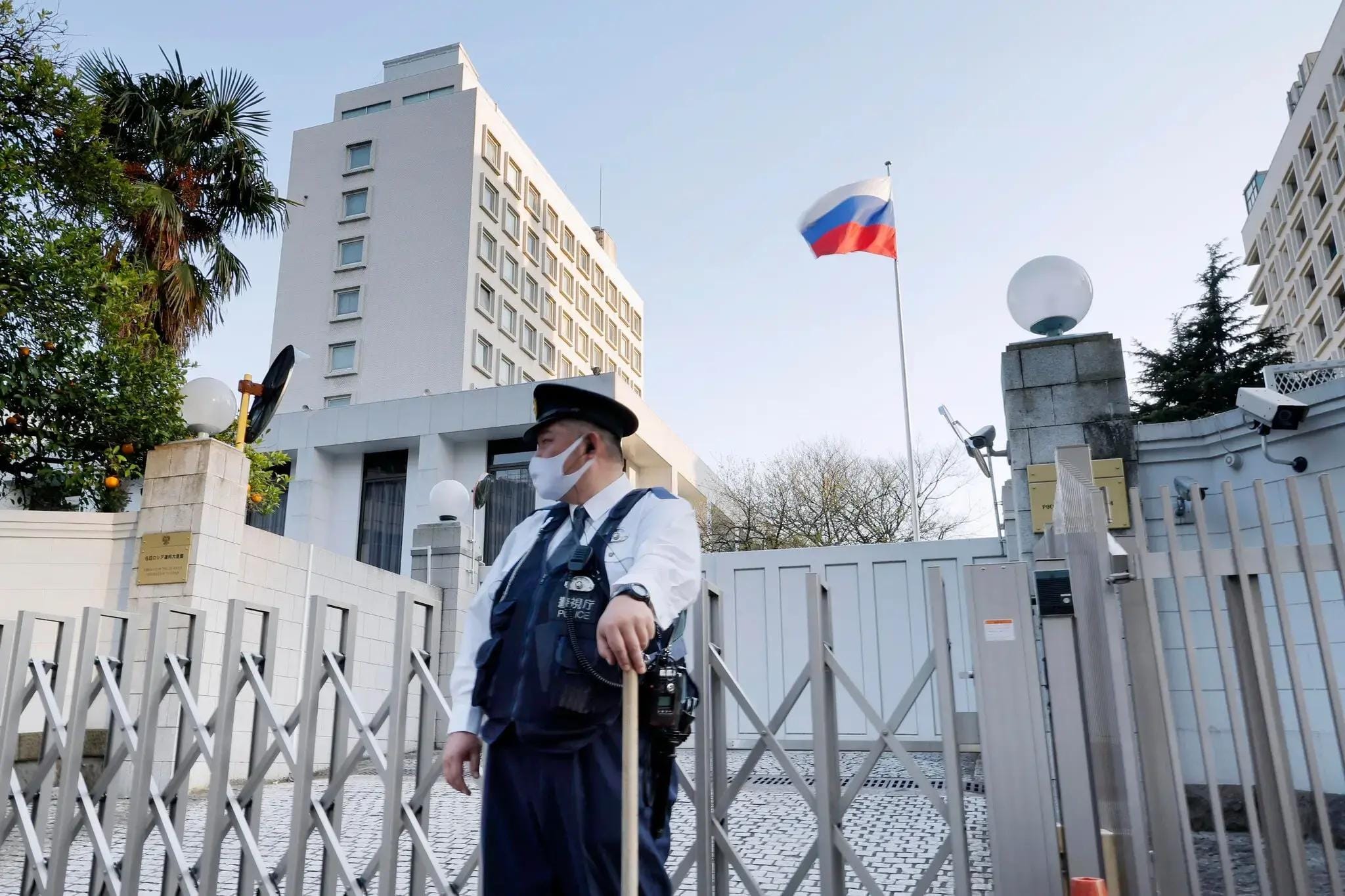
Maxim Filchenkov, an officer of Russia’s GRU military intelligence directorate who posed as an Aeroflot employee, has left Japan, where he had been involved in sourcing high-tech equipment for Russian weapons producers. Filchenkov’s role was exposed by a New York Times investigation, precipitating his departure. The Insider was able to confirm that Filchenkov did indeed leave Tokyo.
Data reviewed by The Insider show that Filchenkov, 49, likely flew from Tokyo to Shanghai and then from there to Moscow. The editorial team found registrations for both him and his wife, Olga Filchenkova, on a morning flight from Shanghai to Moscow on July 21. It is unclear exactly when Filchenkov left Japan.
The Japanese newspaper Yomiuri Shimbun also reported that Filchenkov had left the country, while a Ukrainian intelligence official confirmed his departure to The New York Times.
Filchenkov was identified as an officer of the GRU’s secretive 20th Directorate, whose officers operate under diplomatic cover or as employees of Russian companies. The Insider was able to verify the finding, confirming that Filchenkov had been registered at a dormitory for students of the GRU’s Military-Diplomatic Academy at 4 Marshala Biryuzova Street in Moscow.

Filchenkov arrived in Tokyo in February 2024, posing as an employee of Aeroflot, Russia’s state-owned flag carrier airline. Due to Western sanctions imposed after the start of Russia’s full-scale invasion of Ukraine, Russia was in acute need of high-tech components for its weapons.
While living in Japan, he established contacts with logistics companies that ship cargo from Japan to Russia. Through those connections, he was able to purchase and export high-tech equipment that Russia needs in order to produce many of the weapons it uses to wage its ongoing war in Ukraine.
Kyiv has repeatedly told Tokyo that Japanese-made electronics have been found in Russian weapons. The list of manufacturers of components discovered in those weapons have included Nippon Electric Corporation, Panasonic, and Toshiba, among others. There is no evidence that those companies knowingly sold their products to Russia.