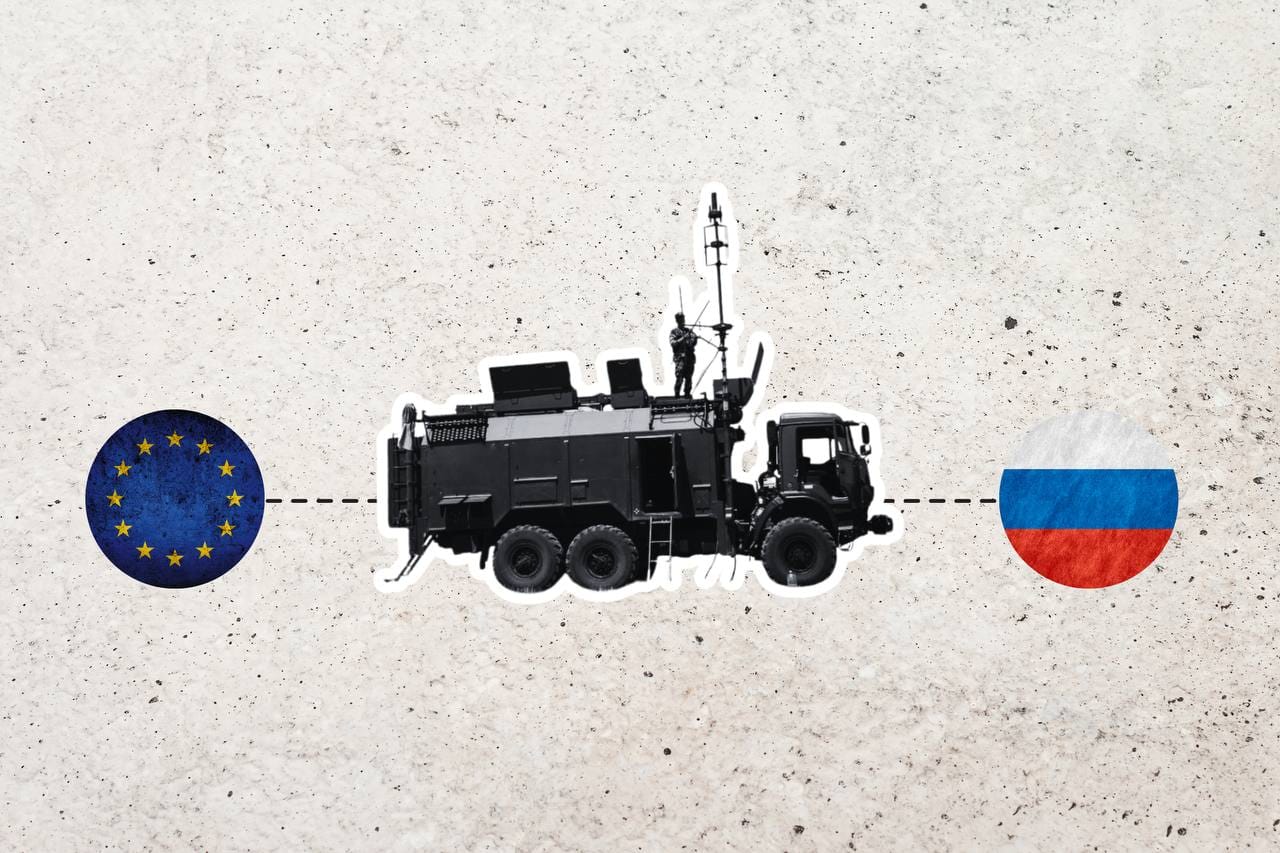
Russia has begun mass production of the Volna Kupol Garant system, designed to jam SpaceX’s Starlink, state-controlled news agency TASS reported late last week. Russia claims the system can “collapse” the operation of Starlink satellites in orbit. However, military analysts interviewed by The Insider are highly skeptical of Moscow’s statements regarding the Volna Kupol Garant’s capabilities.
What do we know about Volna Kupol Garant?
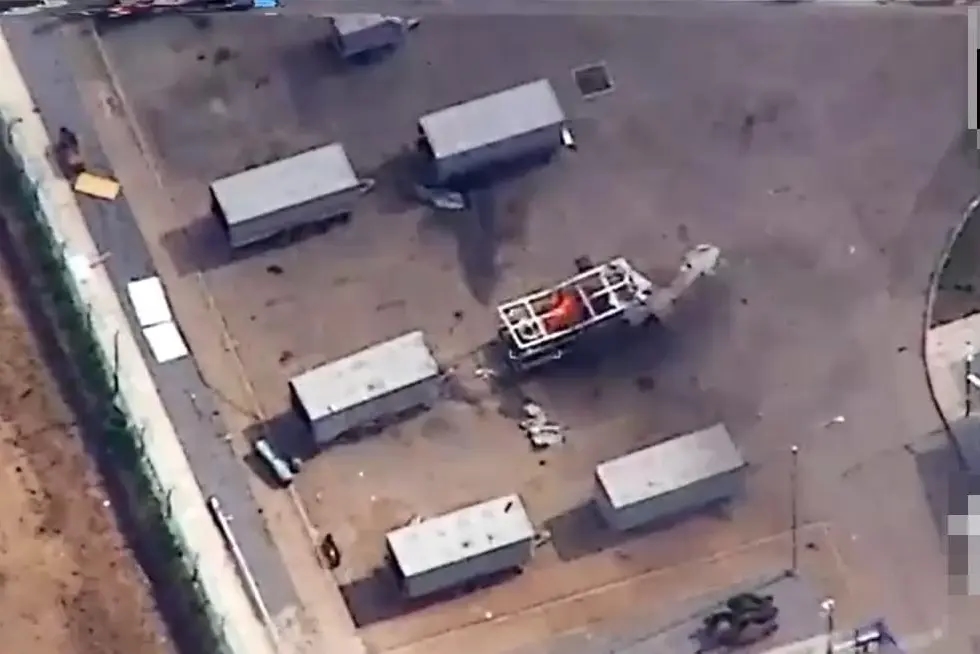
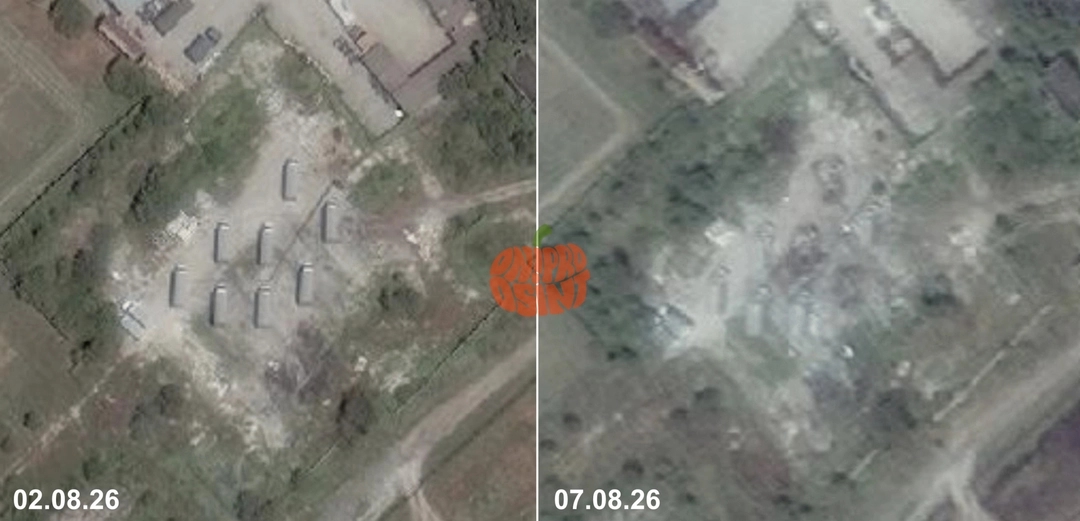
News of a Russian military system called “Volna Kupol Garant” began circulating this past June, with Ukrainian communications and electronic warfare specialist Serhii “Flash” Beskrestnov one of the first to report its existence. Around the same time, footage began appearing on social media showing Ukraine’s destruction of similar systems.
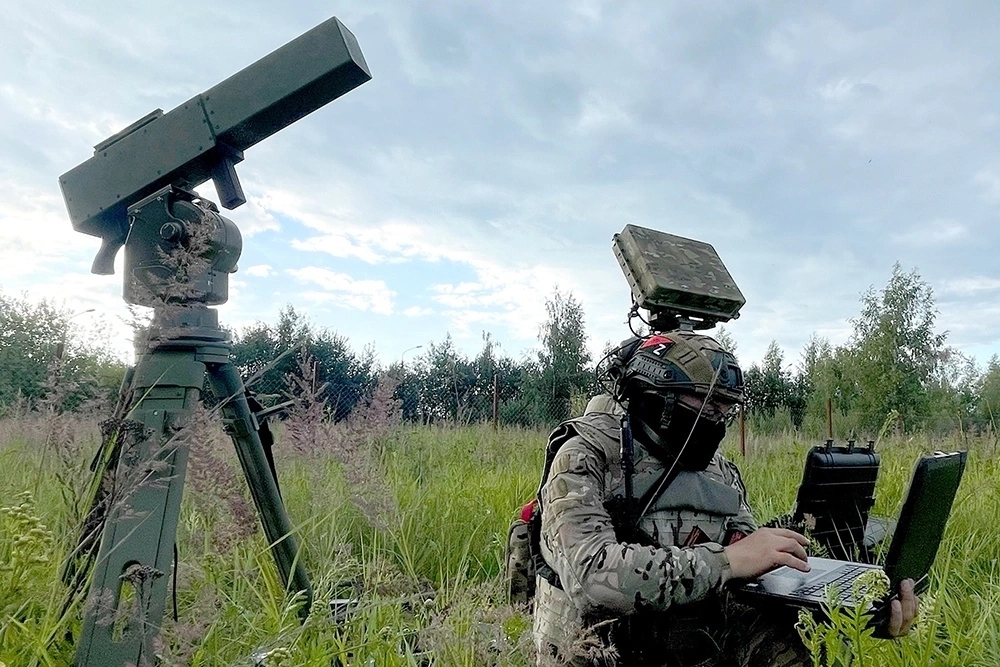
The complex consists of several trailers with satellite antennas. Beskrestnov described how it works: The antennas “look” into the sky, toward a passing Starlink satellite, and emit interference toward it so that it cannot receive signals from ordinary terminals. Eight such dishes were enough, he said, to “deafen” a satellite and destabilize terminal operation across an area of about 20 square kilometers.
A TASS source in Russia’s defense industry later described the same operating method for Volna Kupol Garant: a “narrow, directed” signal that “blinds the receiving antennas of satellites.”
“Several devices can close off an entire region. Dozens of devices switched on simultaneously could cause a temporary collapse in Starlink’s operation,” the state news agency quoted the source as saying.
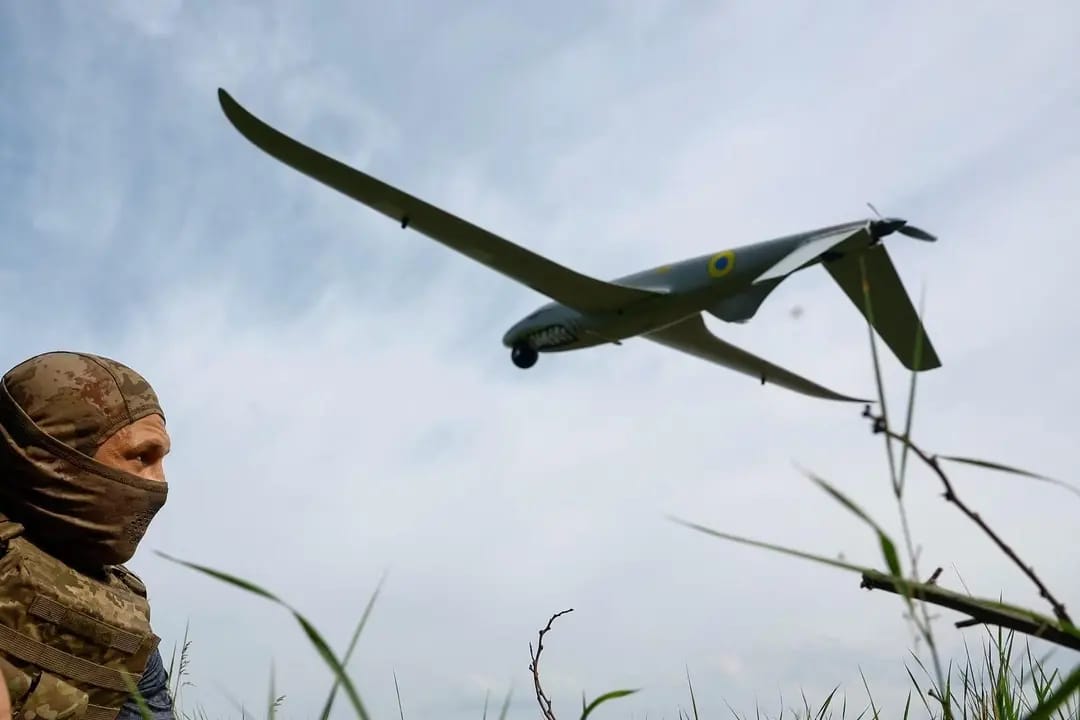
In an interview with Spain’s El Mundo, Ukrainian troops acknowledged that Russian electronic warfare systems of this sort reduce the effectiveness of Starlink, which has been widely used by the Armed Forces of Ukraine (AFU) in recent years. Ukrainian serviceman Ihor Lutsenko described the creation of Ukraine’s own satellite communications system as representing the most reliable solution to the problem.
After that report, the Kremlin-aligned Komsomolskaya Pravda newspaper quickly rushed to label Volna Kupol Garant a “Starlink killer.” But the system is far from that.
The system’s actual effect
The system’s effectiveness has predictably been exaggerated by the Russian side, analysts at the Institute for the Study of War (ISW) wrote last week. Experts interviewed by The Insider agreed with the ISW’s assessment.
Volna Kupol Garant has several major limitations:
- It is not mobile
- It costs about $1.5 million per system
- It has a relatively small coverage area
The relationship between the presumed cost and range makes the system financially unsustainable, said Dr. Thomas Withington, an associate fellow at the UK’s Royal United Services Institute (RUSI):
“Twenty square kilometers isn’t that much. It’s a range of 2.5 kilometers, which is nothing. And $1.5 million dollars to jam 20 square kilometers — that’s very expensive. How many thousands of square kilometers of the occupied area is there? How many of those systems are you going to need, taking into account its cost? This isn’t really a solution. And even if you cover 20 square kilometers — it’s not much. You just fly around the jammer.”
The claimed coverage area of the Volna Kupol Garant is indeed in line with the capabilities of tactical electronic warfare systems already used by Russia’s armed forces, said Anton Zemlianyi, a senior analyst at the Ukrainian Security and Cooperation Center. From that standpoint, he explained, it is not a fundamentally new threat. Scaling up production also does not mean the balance of forces on the front will change as a result. What matters is how Russia integrates the systems and how quickly Ukraine adapts to them.
Zemlianyi said such systems will most likely initially be placed near critical sites in temporarily occupied Ukrainian territories and in border areas.
“That will probably become the main task, since Russia will not be able to create continuous electronic warfare coverage over large areas,” he said. “Mass saturation of the front and rear areas with such systems would require significant resources.”
Still, both Zemlianyi and Samuel Bendett, an expert in the U.S.-based research organization CNA, acknowledge that the system has proved effective on some parts of the front. That is supported by Ukrainian troops’ own accounts of interference with Starlink terminals, including in the El Mundo report.
Bendett also noted another important nuance: by emitting a jamming signal, Volna Kupol Garant itself becomes a “powerful beacon.” Like many combat systems that emit signals, including some types of radar, it becomes detectable, trackable and, ultimately, a target for enemy strikes.
A Starlink “killer”?
Russian state media and military bloggers (1, 2, 3) have emphasized that the system acts against the source of the signal: the Starlink satellite itself. Ukrainian bloggers have also reported about this, but military analysts are skeptical of such claims.
“Personally speaking, I don’t believe that claim of the Russians,” Withington said. “The reason why I don’t believe it is because you’ll need a very, very powerful signal to affect a satellite in orbit. Those satellites orbit the planet about a thousand kilometers above. To get the signal there, it must be very powerful. Think of this as running a marathon: before the marathon [runners] eat a lot of food, they drink a lot of water, but at the end of the marathon they’re very weak and exhausted. It’s the same with radio signals. For the signal to be powerful enough to jam a signal in space, you need a huge amount of power on the ground. And it not only needs to reach space, but also do the damage.”
Withington also noted that such a powerful signal could reveal the location of the systems, and its generation would place an extremely heavy load on electrical systems that they may not be designed for.
There is still no solid basis to claim that Volna Kupol Garant can directly affect the operation of Starlink satellites in orbit, Zemlianyi said. Such electronic warfare systems can jam or distort a satellite signal, limiting the effect of the satellite system for the user on the ground, but they do not interfere with the satellite itself.
“The main task of such a system is to create interference and overload the necessary frequency range,” Zemlianyi said. “Simply put, it creates ‘white noise’ over a specific area. That can either make it harder for a terminal to receive the signal or interfere with the satellite’s ability to receive the signal transmitted by the terminal. Roughly speaking, this can be compared to a classic electronic warfare system affecting the communications channel between a relay and a strike drone. As a result, the drone may lose a stable signal, its control channel, or data transmission.”
A jammer for export
The TASS source in Russia’s defense industry also hinted that Moscow is considering selling technologies like Volna Kupol Garant abroad.
“The most interesting thing is that Russia reserves the right to spread this technology among all interested countries around the world. Tools of similar purpose and power have already appeared in China. This is only the beginning,” he said.
CNA expert Samuel Bendett called the statement about selling such systems to Russia’s partners around the world “concerning.” The Financial Times recently reported that Moscow since at least 2023 Russia has secretly helped Tehran develop and produce supersonic cruise missiles. Russia has also been suspected of helping Iran carry out drone strikes on CIA facilities in the Persian Gulf region.