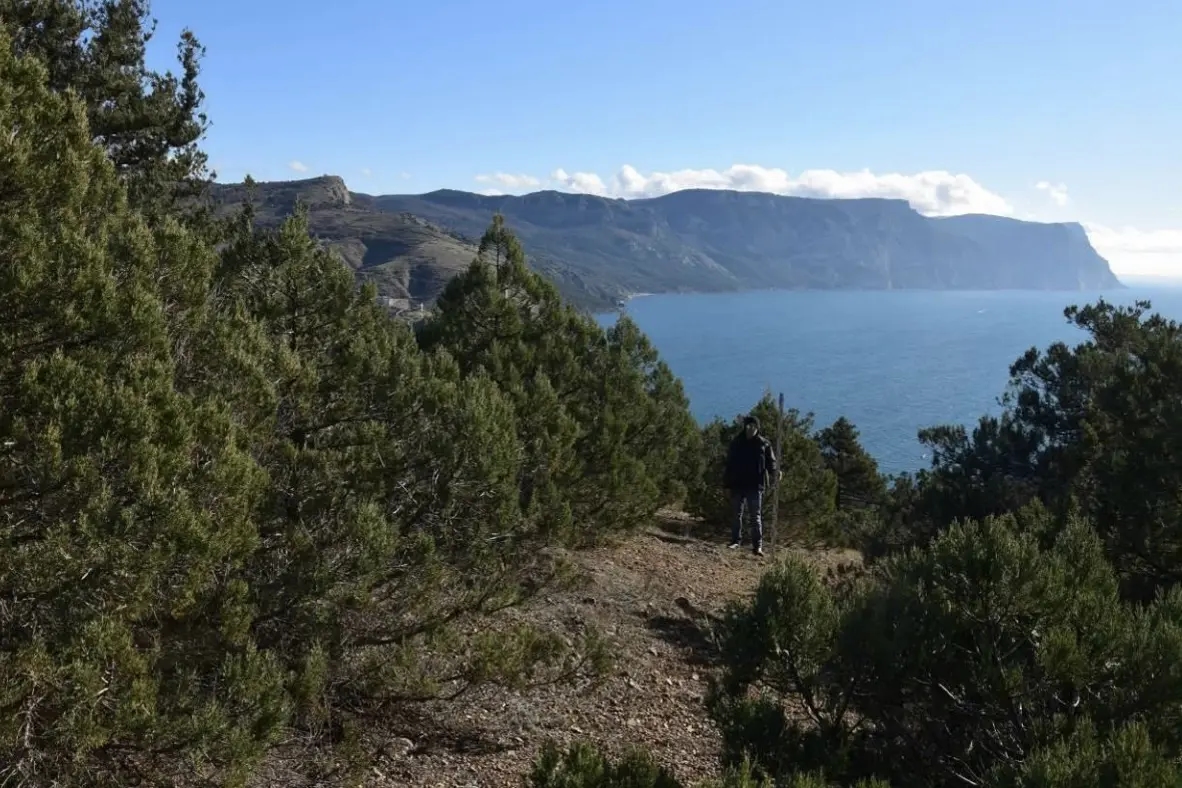
A Russian state historical and cultural assessment has found that it is physically impossible to preserve most of the Tavros Settlement, an archaeological site located in Russian-occupied Crimea. The area lies in the path of the Yacht Village tourist complex project being developed by Arkady and Boris Rotenberg, the billionaire construction magnates best known for their role as Vladimir Putin’s judo sparring partners during his youth in Leningrad. The Insider reviewed the report.
The document does not define the boundaries of the area surveyed by archaeologists
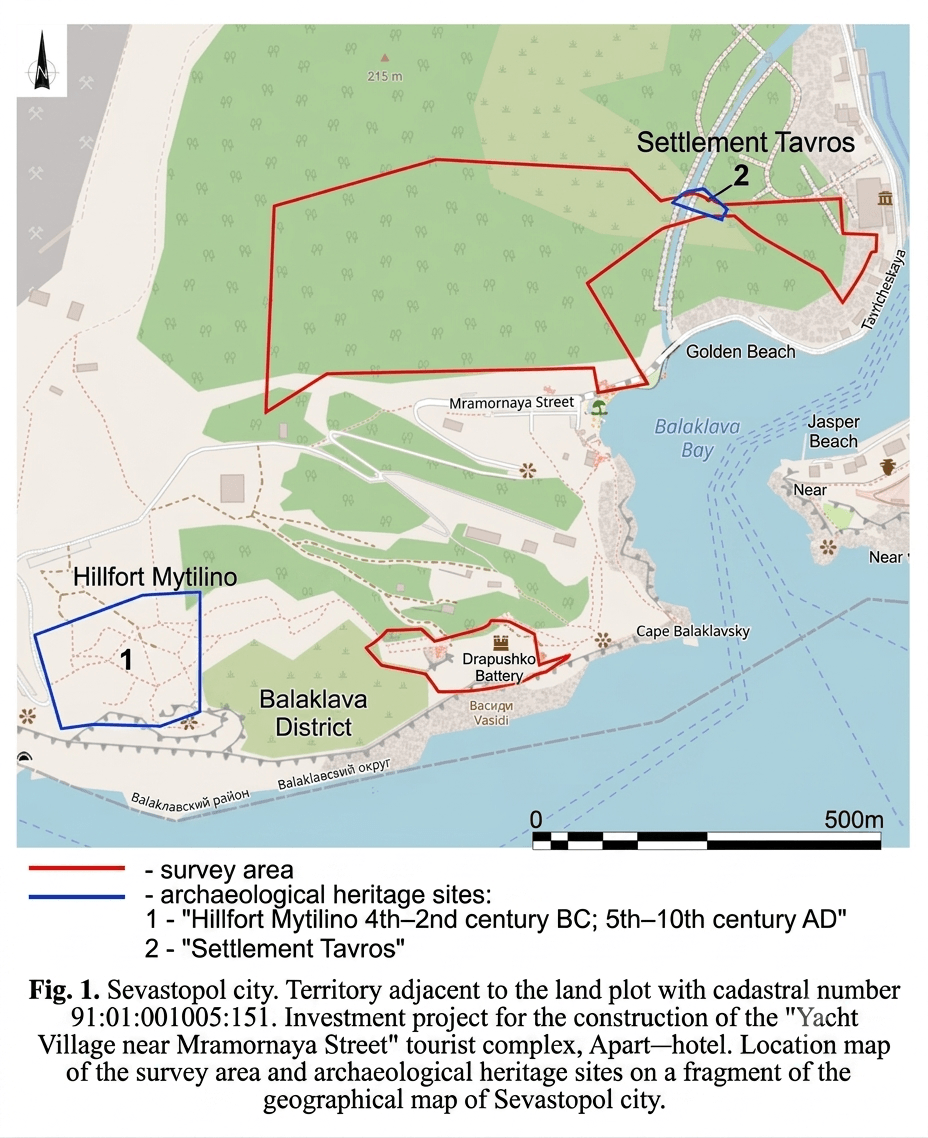
The assessment covers excavation, construction, land reclamation, utility, and other works on land “adjacent to the parcel with cadastral number 91:01:001005:151, where construction of the Yacht Village Apart Hotel tourist complex is being prepared.” The parcel itself covers 157,789 square meters.
According to the report, archaeological research was conducted on an area of approximately 18 hectares. However, the document itself does not specify exactly what area the archaeologists surveyed. Instead, it uses the phrase “area adjacent to the land parcel,” with no indication of precise boundaries. The area is delineated only graphically.
According to urban planning documentation, part of the area is permitted a maximum building height of up to 26 meters, with the “possibility of creating isolated high-rise accents of up to 35 meters.” This is comparable to a 10- to 12-story residential building. The published historical and cultural assessment, however, contains no information about the actual height of future buildings and only evaluates the project’s impact on the archaeological site.
87% of the heritage site will be affected by construction
Over the course of their research, archaeologists identified the Tavros Settlement archaeological heritage site, preliminarily dated to the Bronze Age. It covers an area of 1,619.19 square meters. According to the report, 1,410.5 square meters — or about 87% of the heritage site — will be affected by excavation and construction works. The assessor concluded that it is physically impossible to preserve this portion of the site.
“Physical preservation is impossible. Rescue archaeological fieldwork (excavations) is required, with full or partial removal of archaeological artifacts from the excavation sites,” the conclusion states.
During the survey, archaeologists found fragments of hand-molded pottery, flint artifacts, and seashells. The resulting document makes clear that the proposed construction project — which will involve leveling, grading, and terracing the land — presents a threat to the heritage site. It calls for rescue excavations to be carried out before construction begins.
The Rotenberg project
The construction of a yacht marina in Balaklava is one of the largest projects in the works by Arkady and Boris Rotenberg in occupied Crimea. The project was launched in 2018 on the orders of Vladimir Putin as part of the federal development program for Crimea and the city of Sevastopol. The plan is to create a resort cluster with 600 berths for yachts, along with hotels, restaurants, and promenade areas.
The state is funding construction of the marina itself — the berths, hydraulic structures, roads, and engineering infrastructure. The general contractor is Mostotrest, which is owned by the Rotenbergs. Around the marina, the company Port Lamos, another entity in their project structure, is building hotels, apart-hotels, and other tourist real estate.
In June, the value of the state contract rose from 11.3 billion [$144 million] to 18 billion rubles [$229.6 million], and the completion date was pushed back from late 2027 to December 2029. The project was originally valued at 9.3 billion rubles [$118.6 million] and was due to be completed by the end of 2025. In total, the project’s cost has nearly doubled since construction began, and the timeline has slipped by four years.
In order to move the project forward, Russian authorities have been seizing land and property from residents for several years. Ukrainian owners are stripped of their property through Russia-controlled courts, after which the buildings are demolished. Local residents have also recounted that representatives of Port Lamos offered to buy their homes, explaining that the old buildings would “spoil the view” of the future luxury complex.
Not the first heritage site
This is not the first time the status of archaeological heritage sites has been altered to make way for the Rotenbergs’ tourist complex in Balaklava.
In the spring of 2026, a state historical and cultural assessment recommended that the boundaries of the identified cultural heritage site “Northern Outskirts of Chembalo Fortress” be reduced. Beforehand, archaeologists had surveyed a 245-square-meter plot and found more than 2,000 ceramic fragments from the 14th–18th centuries, then concluded that the area had been fully studied and could be released for construction. As a result, 211 square meters were removed from the heritage site to clear the plot for a Port Lamos hotel.
In the meantime, Port Lamos is buying up historic properties around the bay. The company already owns Prince Yusupov’s Hunting Lodge, Shcherbin’s Dacha, and Dr. Pedkov’s Dachas, all of which are planned to be converted into hotels and restaurants.