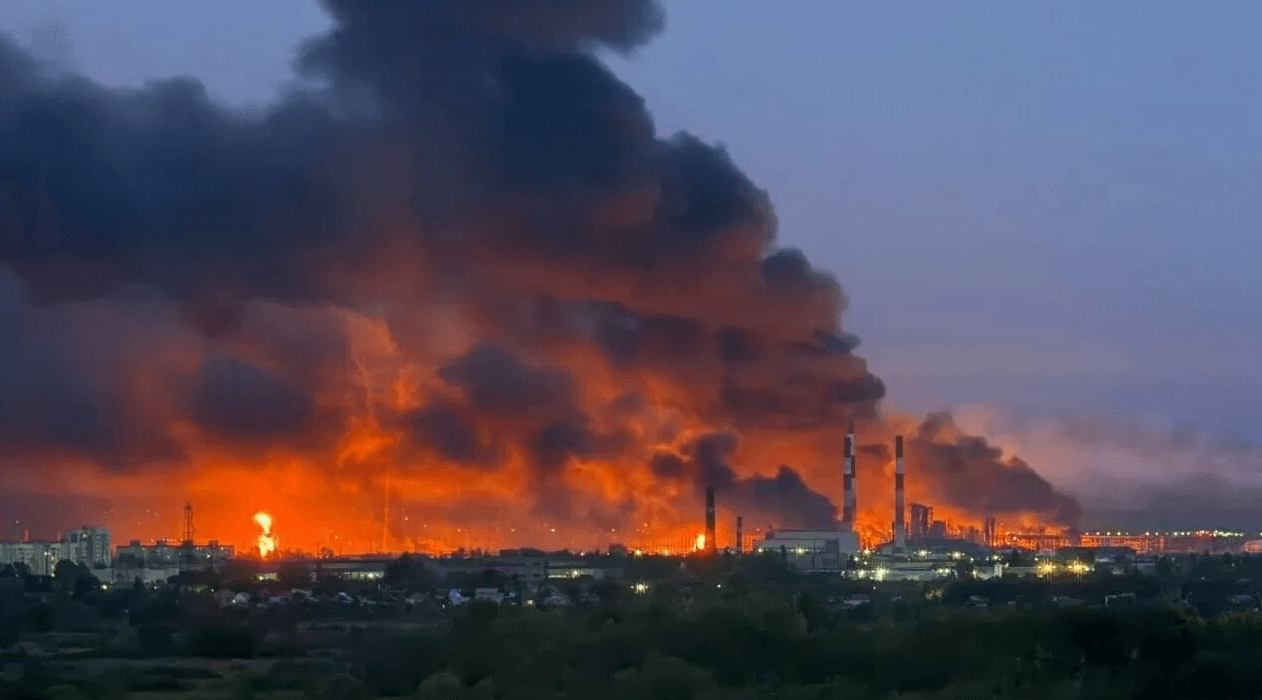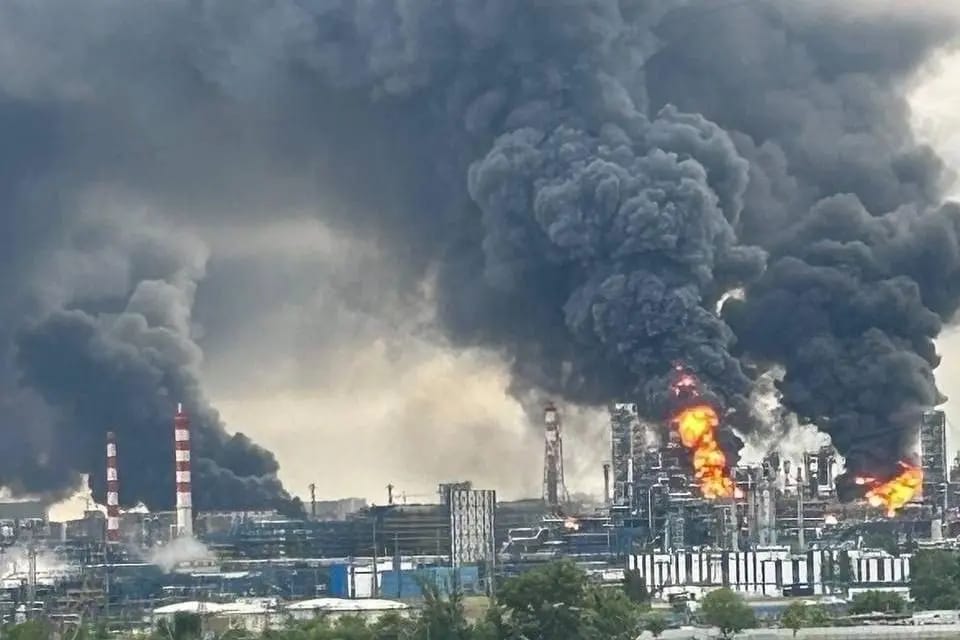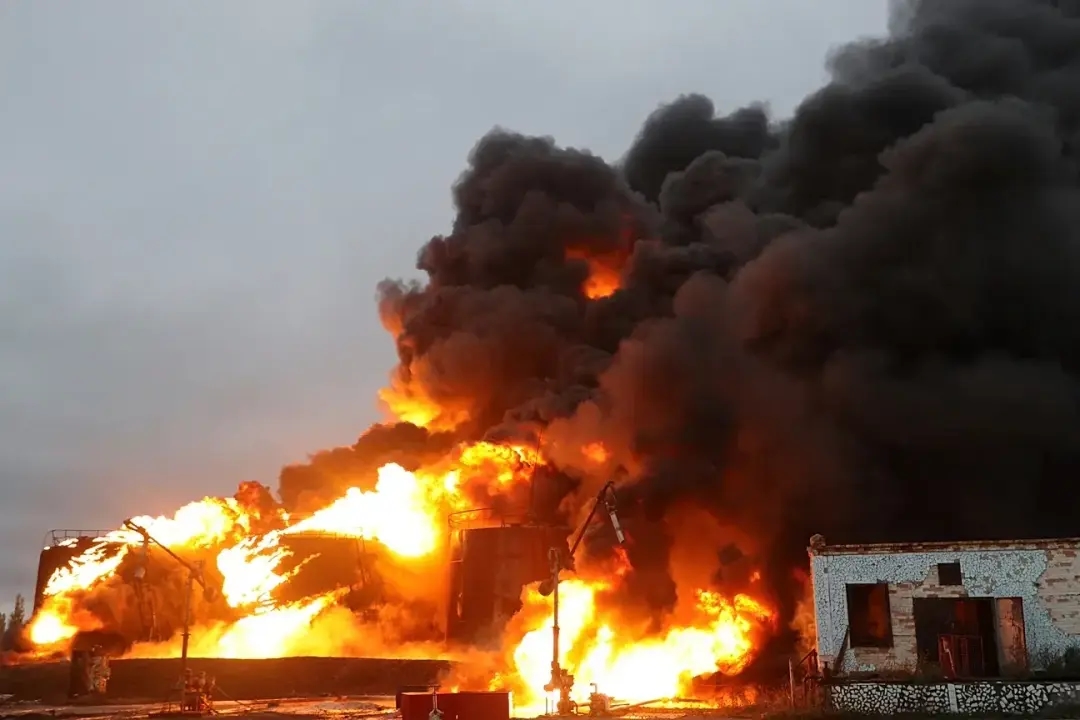
Russia’s ongoing fuel crisis, sparked by Ukrainian drone strikes against oil refining infrastructure, has already driven up prices for public transportation, taxis, freight shipments, and air travel. Economists Maksim Blant and Ruben Enikolopov, a professor at the Pompeu Fabra University in Barcelona, told The Insider that inflation in Russia is poised to rise at an even faster rate and that gasoline prices are likely to remain high for a long time.
According to official data from Rosstat, Russia’s state statistics agency, average gasoline prices across the country rose 3% in the week of June 16-22 — the largest weekly jump in the past 20 years. From June 23 to 29, Rosstat announced, gasoline prices in Russia rose another 1.6%, while diesel fuel rose 2.2%.
The independent outlet Vot Tak reported that the cost of freight deliveries to Russian-occupied Crimea had risen by a factor of between three and six.
Public transportation, taxis, freight, and air travel are getting more expensive
Economist Maksim Blant said gasoline itself was the first thing to rise in price.
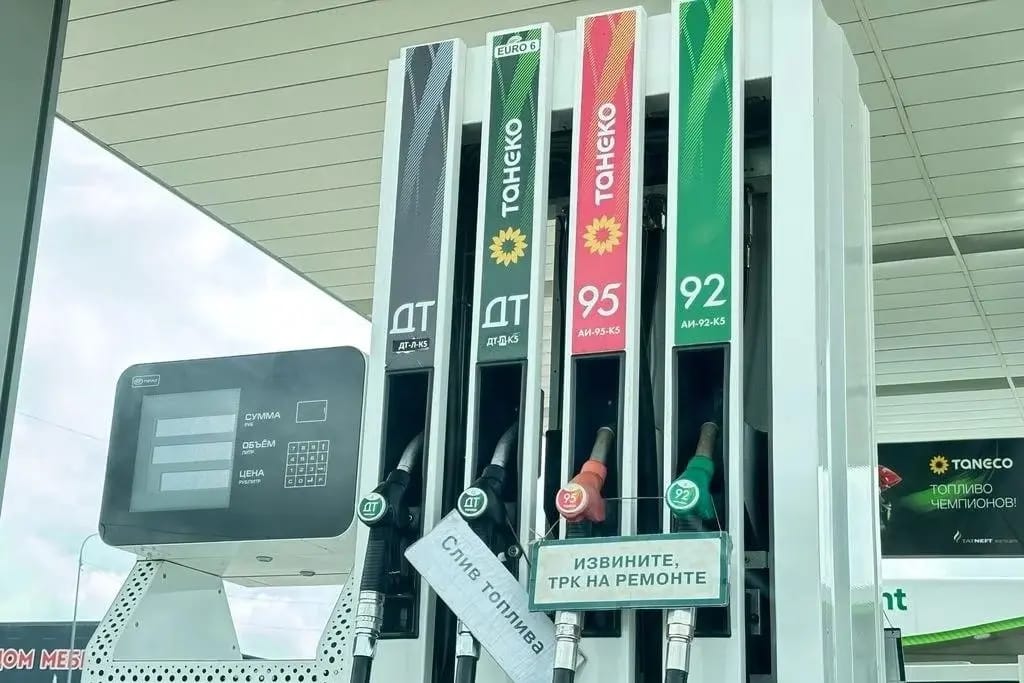
“At the price recorded by Rosstat, you cannot actually fill your tank,” Blant said. “That is the price posted at a gas station, even if there is no gasoline there. [Finance Minister Anton] Siluanov was asked about rising gasoline prices, and he said only independent gas stations were raising prices, while chains owned by vertically integrated holdings were keeping prices steady. But at such chains — Gazprom Neft, Lukoil, Rosneft, and so on — there is either no gasoline, or only a limited amount per vehicle. They also do not fill canisters.
Public transport fares have already risen in a number of regions, and taxi drivers are leaving the sector en masse. They simply cannot refuel — the prices at which they can fill up do not pay off against what they earn. Transport companies that carry goods by truck, including from China, have already started warning of higher freight rates, and some have begun reducing the number of trips. The same applies to freight shipments in southern Russia. Air travel is also getting more expensive, partly because of a shortage of jet fuel. That creates some risks, because airports sometimes close during drone raids, and planes may simply be unable to reach their destinations.”
The fuel crisis is affecting all goods in all sectors of the economy
“Freight transport is a significant component of almost every sector of the economy, starting with bread, which has to be delivered, and ending with all other goods,” Blant said. “Transporting bread is unprofitable because bread is cheap and gasoline is expensive. Late last year, bakeries were already saying that under the current price controls on socially important food products, they were beginning to lose money because they are not allowed to raise prices sharply, while transport costs, labor costs, and other expenses are gradually rising, reducing profitability. They deal with it in different ways. Some honestly admit they are starting to use lower-quality flour, and that affects the quality of the bread.
At the end of July, the Central Bank will assess the inflationary consequences for the entire Russian economy. The cheaper your product, the more noticeable transport costs will be in its final price.”
Economist Ruben Enikolopov agreed that higher fuel costs will affect almost all goods.
“Fuel prices affect almost all goods to one degree or another,” Enikolopov said. “Transportation is part of the sales process for any physical item. We will see this in the overall inflation rate. It is difficult to single out particular categories of goods, but it will affect trade between regions first. Long-haul truckers who transport goods are especially sensitive to supply disruptions. so the market will now become unbalanced. When things calm down, fuel prices will rise to levels where there is at least no shortage. But that will be reflected in the cost of almost all goods.”
The budget crisis deepens
Blant said rising fuel prices have a significant impact on Russia’s state budget.
“Previous food crises were extinguished in one way: officials traveled around the world looking for suppliers to fill the Russian market with scarce goods. Something similar is now happening with gasoline. From the very beginning of the strikes, they reached an agreement with Belarus. The scheme works like this: Russian oil companies supply Belarus with oil, then Belarus processes it for a fee and returns gasoline or diesel fuel. They are trying to persuade Kazakhstan to work under the same scheme.
Still, the gap between domestic prices and the prices at which this gasoline will have to be bought is quite large, and it will be compensated from the Russian budget through the so-called fuel damper mechanism, under which the government compensates major oil companies for profits they lose by selling cheap gasoline inside Russia instead of more expensive oil abroad. The same damper will be used to hold down gasoline prices. After the March price increases caused by the war in the Persian Gulf, this fuel damper led to the federal budget being drawn up with a deficit despite excess oil revenues. Now, with low oil prices, using this damper will put even more pressure on Russia’s budget. The hole is already huge, and of this will contribute to the further development of the budget crisis.”
Bond prices have fallen
“Problems on the Russian stock market began after the Central Bank’s last meeting,” Blant said. “The issue is that bonds, including government bonds, fell in price, so the state will have to borrow at much higher rates than in calmer times. Every time the issue of widening the budget hole arises, the cost of borrowing for the state rises, and raising money becomes more difficult. A week ago, the Finance Ministry was forced to cancel an auction for federal loan bonds because investors demanded a yield the ministry could not afford.
In effect, this is another element adding to the financial crisis. The general inflationary backdrop reduces the likelihood that the Central Bank will continue cutting rates, meaning loans will get cheaper more slowly. Heavily indebted Russian companies are waiting for rates to fall so they can refinance on easier terms, but their expectations will be disappointed. The number of defaults on corporate bonds in Russia is rising, and that growth will continue. Everyone is waiting for a rate cut like manna from heaven, but it still does not come... Business elites, the business community, and a significant share of officials are in a state of serious hangover. The fuel crisis is a kind of perfect storm, where every possible problem for Russia converges in one place. Still, the main thing is that there is no end in sight, and that end no longer depends on Putin.”
Prices will remain high even after normalization
Enikolopov said there is little reason to expect fuel prices to fall soon.
“Normalization can be divided into two stages,” he said. “The first is eliminating the shortage — fuel will become available, but at significantly higher prices. The second stage is restoring fuel production and releasing supply. Then prices may possibly go down, but that is still far off. I think we should now expect high fuel prices to stabilize.”