Russia’s Southern District Military Court has widely concealed the names of defendants in “terrorism” cases on its website, with the number of entries marked “information hidden” rising from 129 to 1,080, according to new calculations by the independent research group Parubets Analytics.
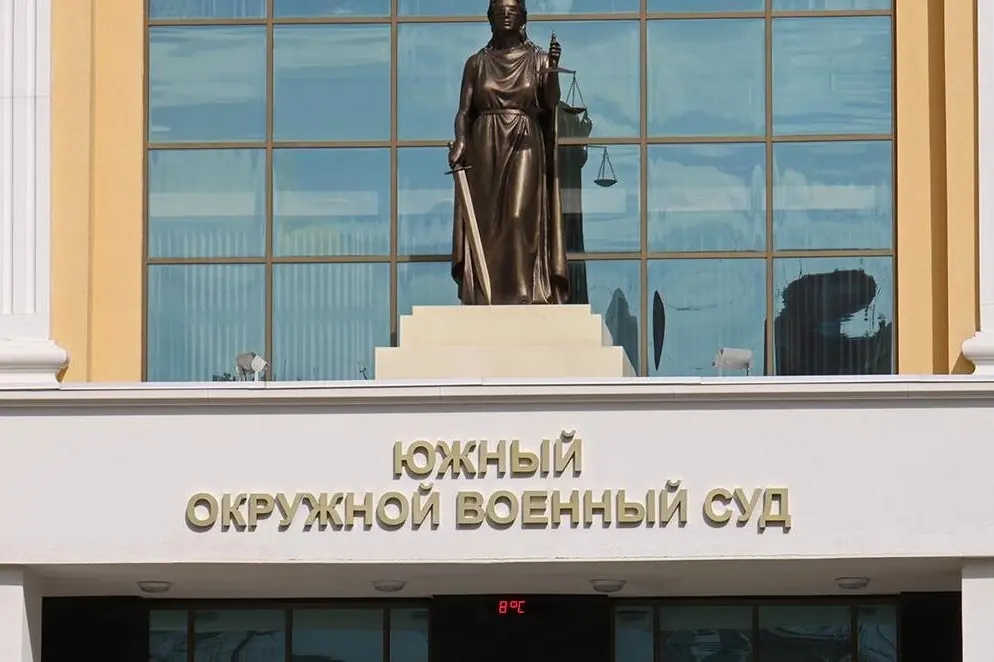
The Southern District Military Court is one of Russia’s key judicial institutions handling criminal cases against Ukrainian citizens. Russian authorities give the court jurisdiction over cases from occupied Ukrainian territories, making it responsible for many cases against Ukrainians detained by Russian security forces or captured in combat zones.
The cases involve terrorism-related articles of Russia’s Criminal Code, ranging from “justifying terrorism” to “an act of international terrorism.”
Parubets Analytics’ dataset covers cases under Articles 205, 205.1, 205.2, 205.3, 205.4, 205.5 and 361 of Russia’s Criminal Code submitted to the Southern District Military Court between Oct. 29, 2020, and March 4, 2026. The dataset includes 1,727 defendants. In early March, 7.5% of their names were hidden. By the end of April, that share had risen above 60%.
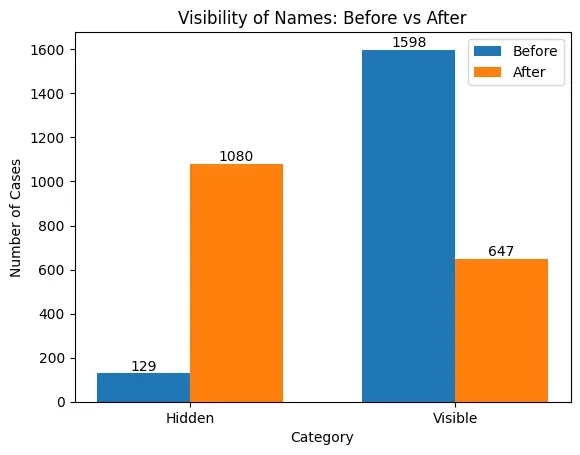
Kirill Parubets, the founder of Parubets Analytics, told The Insider that the Southern District Military Court’s database has largely kept cases involving the “public justification of terrorism” and “assistance to terrorist activity” available to the public. At the same time, all cases involving “terrorist acts,” “training for terrorist activity,” “organizing a terrorist community,” “participation in a terrorist organization,” and “acts of international terrorism” have been concealed.
Among the hidden entries, the largest share consists of cases involving the “organization of a terrorist community.” In some case files, alongside “terrorism”-related charges, an article on “high treason” is also listed. As Parubets clarified, these are specifically cases in which “high treason” is combined with terrorism charges.
As Parubets told The Insider, the main changes to the database occurred between March 15 and March 20, 2026. Prior to that, the Southern District Military Court had been one of Russia’s most transparent district military courts. According to Parubets Analytics data for 2024, only 28 out of 429 entries, or 6.5%, were hidden. By comparison, in the 2nd Western District Military Court, 240 out of 241 entries were already hidden at that time, and in the 1st Eastern District Military Court, 90 out of 91 were concealed.
After the March changes, the Southern District Military Court became one of the most closed courts for terrorism-related cases, along with the 2nd Western and 1st Eastern District Military Courts. Parubets said the situation in other district military courts has remained largely unchanged..
Parubets Analytics compared two database extracts from the Southern District Military Court – as of March 4 and April 24, 2026. The researchers considered only cases submitted before March 4 in order to exclude the impact of new entries. A record was considered anonymized if the defendant’s name appeared in the first extract but was replaced with the label “Information hidden” in the second.
The calculations were based on defendants rather than cases, Parubets explained. A single criminal case may involve multiple defendants, meaning that one case can generate several entries in the court’s database.
An analysis of the court database found that the Southern District Military Court issued at least 1,138 verdicts in such cases from the start of Russia’s full-scale war in Ukraine through April 2026.
Parubets Analytics earlier calculated that, as of mid-March 2026, Russia had charged at least 2,278 Ukrainian citizens with “terrorism” and “extremism.” At least 1,417 had been jailed, 879 were considered missing, and fewer than 1%, or 56 people, had been exchanged.
The Russian authorities have not officially explained the widespread concealment of names. Parubets Analytics said anonymizing defendants in terrorism and related treason cases may be intended to reduce transparency and hinder the analysis of politically motivated prosecutions.