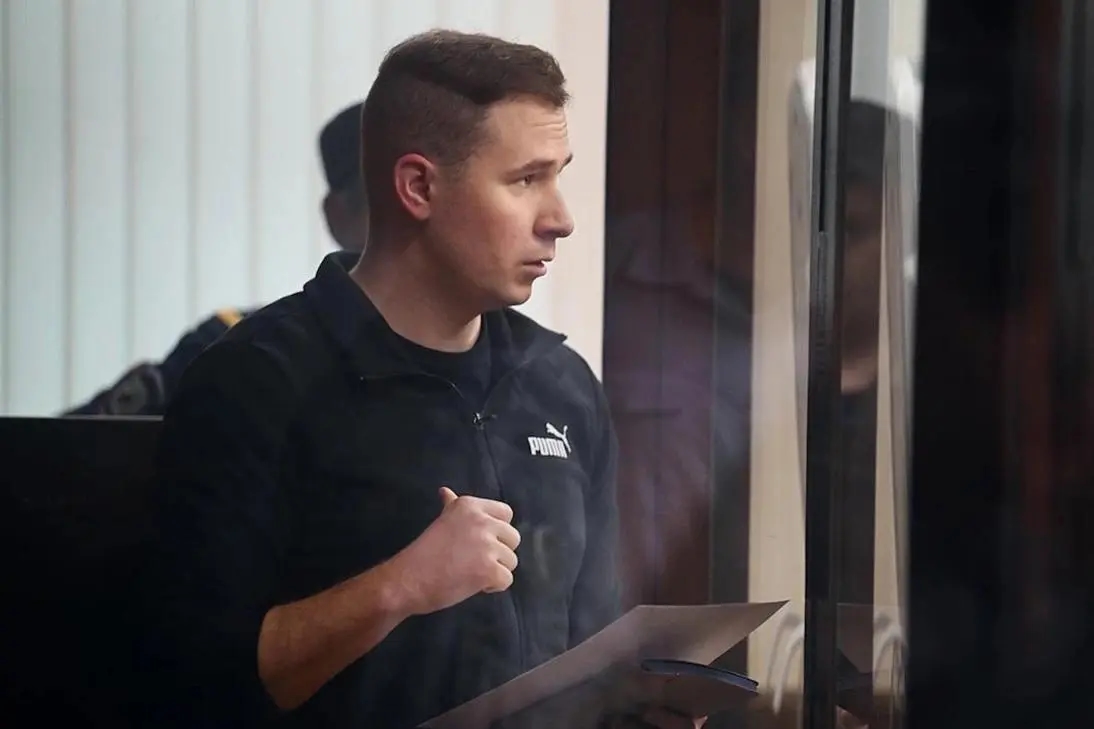
On Sept. 10, the Khimki City Court in suburban Moscow sentenced Anton Nesterov, a senior operative of the Bureau of Special Technical Measures (BSTM) of Russia’s Ministry of Internal Affairs, to 13 years in a maximum-security penal colony. Nesterov was found guilty of selling a classified Federal Security Service (FSB) database to a hacker, taking a bribe, and gaining unlawful access to computer information. The defendant pleaded guilty only in part and refused to name his accomplices. However, The Insider has established Nesterov’s connections and learned additional details of his criminal case. The BSTM unit where Nesterov served is overseen by Department K of the FSB’s Economic Security Service and has a reputation as the most corrupt and scandal-ridden in the Russian law enforcement system.
The criminal case against Nesterov
According to the prosecution, Nesterov copied onto a flash drive a classified FSB database containing compromising material on the leadership of Russia’s Finance Ministry, the Central Bank, and several of the largest state banks, and then posted an advertisement for its sale on the internet. A hacker, whose name has not been disclosed, responded to the ad and offered 9 million rubles ($108,800) for the files.
From here, however, the accounts diverge. According to one version, FSB operatives supposedly detained the buyer before he could acquire the classified data. According to another, the hacker succeeded in buying the database, was subsequently detained, then struck a deal with investigators and testified against Nesterov.
Still though, according to The Insider’s source, the buyer was an informant from the hacker community cooperating with Department K of the FSB’s Economic Security Service (ESS), and in addition to the theft of the secret database, investigators looked into Nesterov’s involvement in extorting a large bribe from the management of the construction company PIK. After all, more than 20 different contacts labeled “PIK” were purportedly found in his phone.
The Insider previously reported on PIK owner Sergei Gordeev’s connections, and his real estate development company is at the heart of this story as well. In 2025, when the firm refused to pay a bribe, Nesterov allegedly organized a DDoS attack on the Lovit internet provider, which serves PIK’s new developments in Moscow and St. Petersburg. For unknown reasons though, this episode did not make it into the final version of the charges.
The criminal case was first heard at Moscow’s Basmanny Court. At the defense counsel’s request, the hearings were then moved to the Moscow Region city of Khimki, the defendant’s official place of residence (although Nesterov had lived for several years in the Edem gated community near Solnechnogorsk). Among those summoned for questioning was Nesterov’s older brother, Ilya, who works as an auditor at Sheremetyevo Airport. He told the investigator that he knew nothing about his brother’s double life.
The Khimki City Court, which sat behind closed doors, sentenced Nesterov to 13 years in a maximum-security penal colony. He will most likely serve his term in Penal Colony No. 11 in the city of Bor, Nizhny Novgorod Region, which holds former officers of the FSB, Main Intelligence Directorate (GRU), Federal Protective Service (FSO), Interior Ministry, and Foreign Intelligence Service (SVR) — a penitentiary facility The Insider also previously reported on.
Nesterov’s career
Anton Nesterov was born in 1992 in Ulyanovsk and developed an interest in computers early on. As a young man, he worked as an engineer at the Signal plant. In 2014, he took his father’s advice and enrolled in the Voronezh Institute of the Ministry of Internal Affairs, joining the department of radio engineering and electronics — a program known for training students from Belarus, Tajikistan, Azerbaijan, Mongolia, and Angola, alongside Russians.
After the institute, Nesterov was assigned to the ministry’s Bureau of Special Technical Measures (BSTM), where he rose to become a senior operative at the 4th section of the 40th department, handling financial crimes committed with the use of information technology and working under the supervision of the FSB’s Department K.
The 40th department, where Nesterov served, is considered the most corrupt and scandal-ridden unit within the BSTM. “They control all the well-known hackers. The guys from the 40th department drive decrepit Soviet vehicles to work, while in their garages they have posh cars registered to relatives and mistresses,” a Ministry of Internal Affairs source told The Insider.
During interrogations, Nesterov refused to name accomplices and took all the blame. However, The Insider’s source is confident that the operative most likely had accomplices from the FSB or the BSTM: “He sat in the FSB compound on Bolshaya Lubyanka Street and worked in tandem with guys from the FSB. It is hard to believe that Anton pulled it all off alone.”
“He sat in the FSB compound on Bolshaya Lubyanka Street and worked in tandem with guys from the FSB. It is hard to believe that Anton pulled it all off alone”
Fugitives from the BSTM and mysterious deaths in Mexico
The Bureau of Special Technical Measures was established in 1992 to combat the illegal distribution of radio-electronic and special technical equipment, electronic payment fraud, terrorism, incitement of ethnic hatred, and child pornography online. It excels in various technological tricks for surveillance and data interception and has at its disposal several direction-finding vehicles with extendable antennas capable of eavesdropping on any cell phone from a distance of 20 km. As a rule, these minibuses and GAZelles are disguised as vehicles marked “Refrigerator repair” or “We install windows.” Some of these special vehicles have been transferred to the occupied territories of Ukraine to track phone calls.
How effective these devices are in practice, however, is unclear. Raisa Parshina, owner of the Far Eastern Transport Group, told The Insider that when her son Maxim was kidnapped in 2005 and a ransom of $7 million was demanded, acquaintances advised her to turn privately to the BSTM to triangulate the incoming numbers. She met with employees of the bureau and was told that a direction finder costs $10,000 a day. Parshina agreed, but a week later she was told that no results had been obtained.
Regional BSTM units operate in all the main directorates of Russia’s Ministry of Internal Affairs, also carrying out tasks for their colleagues at the FSB. Since the Bureau’s creation, nearly all key positions have been held by former FSB officers.
Since 2017, BSTM has been headed by Lieutenant General Mikhail Litvinov, who previously worked as deputy head of the FSB’s 12th Center — responsible for tapping phones, monitoring internet traffic, and intercepting information from technical communication channels. Litvinov’s office was located in downtown Moscow, at 26 Myasnitskaya Street, next door to three units of the FSB’s Operational Search Directorate (military units 52295, 96586, and 98933). For secrecy he was listed as head of the Center for Applied Research and supposedly engaged in studying public opinion.
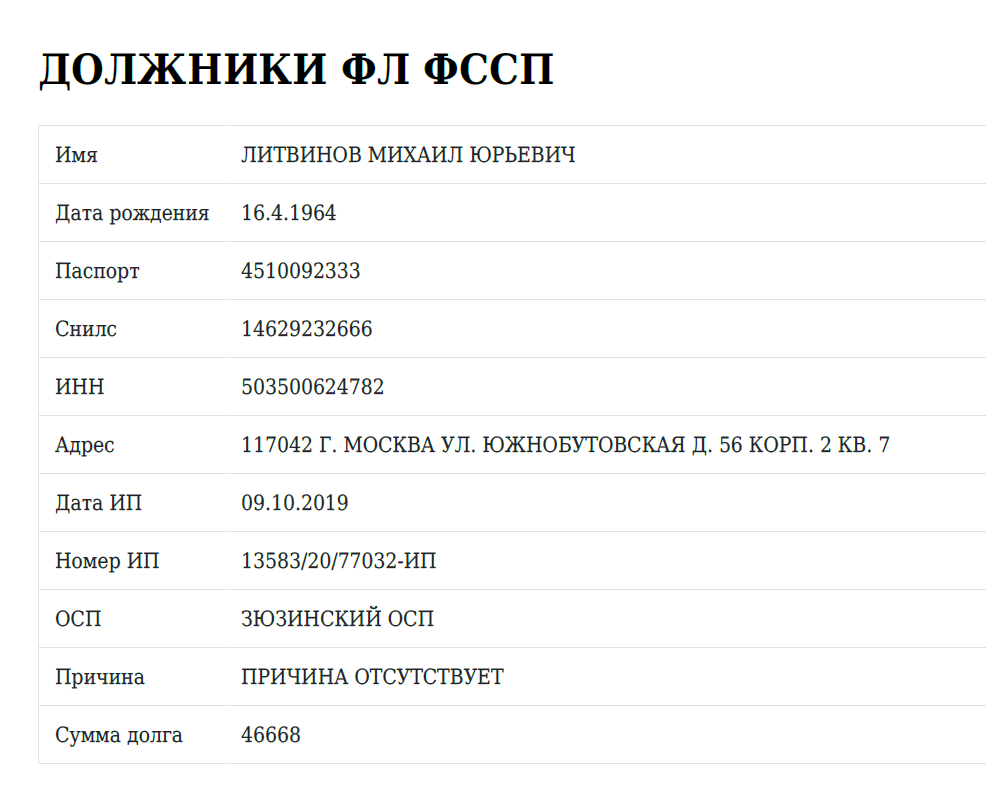
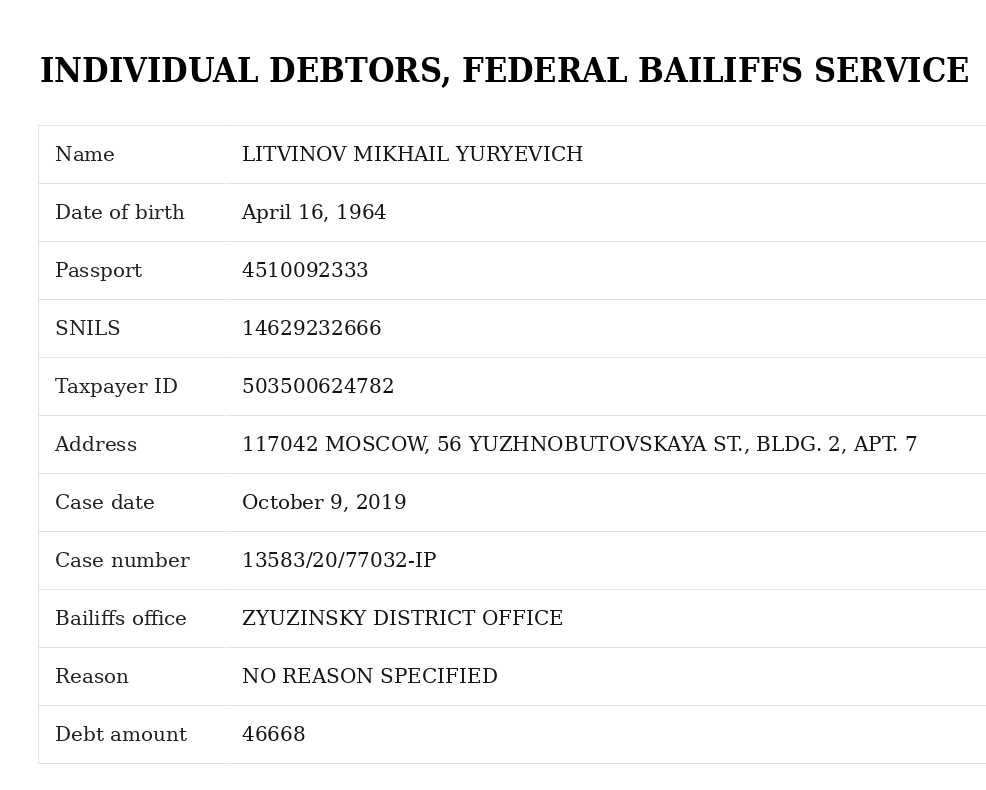
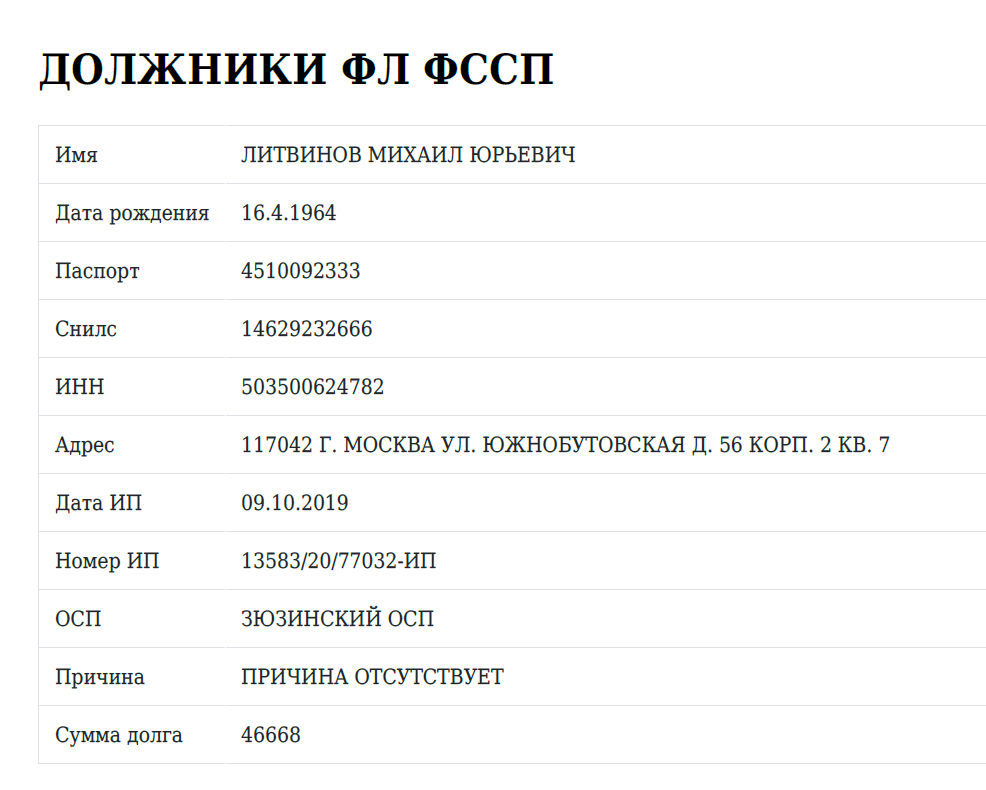
Incidentally, since 2019 bailiffs from Moscow’s Zyuzino district have been unable to “squeeze” 46,668 rubles ($578) in taxes out of the general, left unpaid from his time working at the Center.
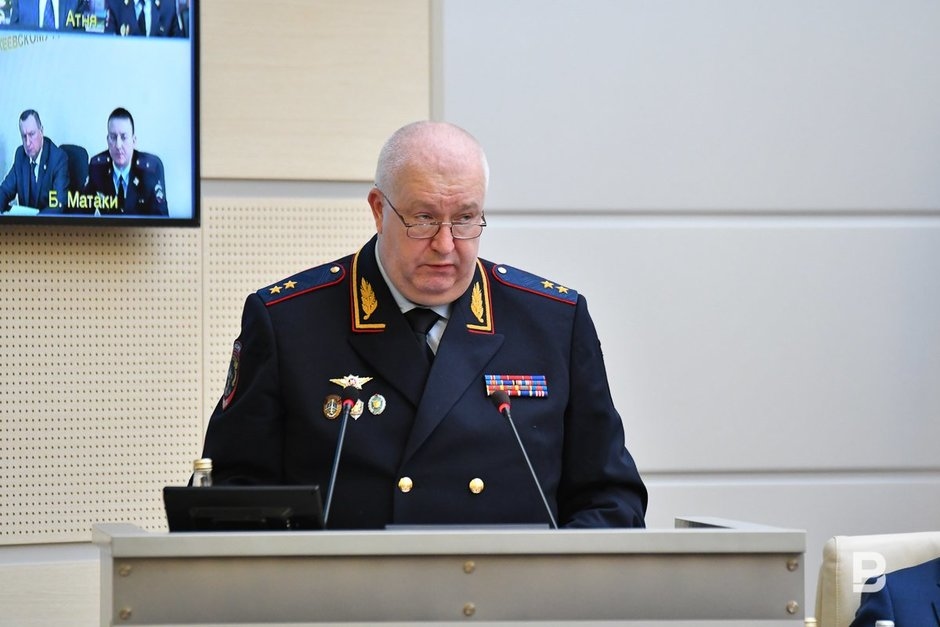
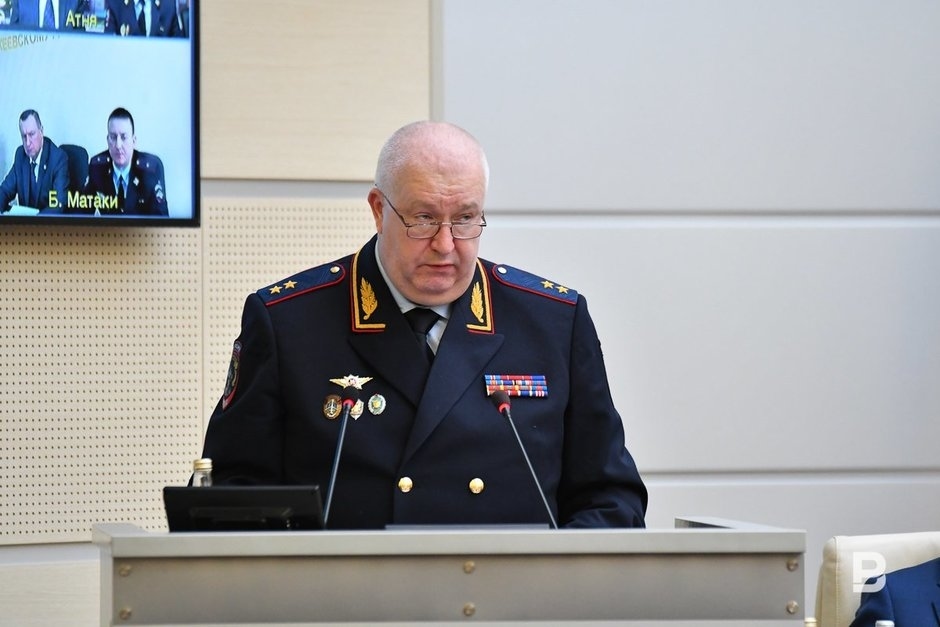
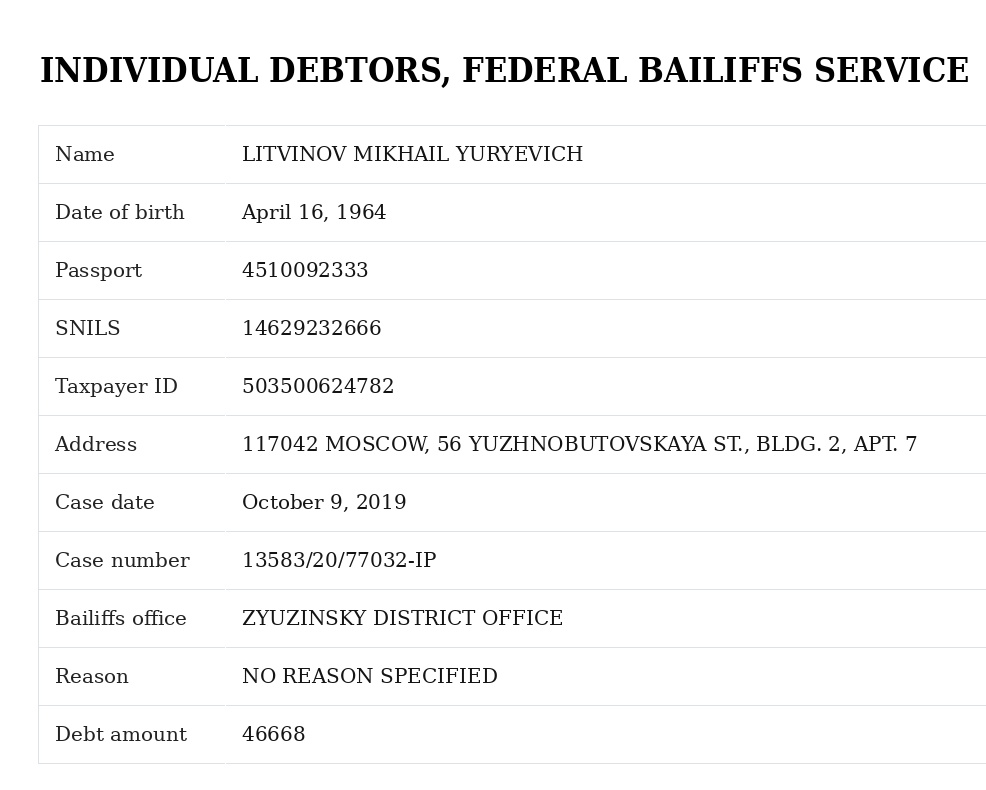
The appointment of Litvinov allowed the FSB to take the BSTM under its control, and the bureau expanded its remit to cover the wiretapping and surveillance of anti-Kremlin opposition figures and independent journalists.
However, in 2023 Litvinov was on the verge of dismissal after his subordinates — Georgy Satyukov, head of the 3rd section of the BSTM’s 40th department, and Dmitry Sokolov, a former colleague from Tyumen — fled abroad. According to the investigation, Sokolov’s brokering helped Satyukov secure a bribe of almost 5 billion rubles ($62 million) in bitcoin from Alexei Ivanov (Bilyuchenko), co-founder of the crypto exchange BTC, who was seeking the closure of a criminal case.
Satyukov received almost $62 million in bitcoin as a bribe for the closure of the criminal case against BTC founder Alexei Ivanov
The correspondence and phone conversations of Satyukov, Sokolov, and the crypto tycoon Ivanov were recorded by the FSB’s 12th Center, where General Litvinov used to serve. Shortly before their arrest, the corrupt operatives were tipped off by accomplices from the FSB and the BSTM, allowing them to flee the country.
It remained unclear how the fugitives crossed the border, since their passports were supposed to be kept in General Litvinov’s safe, and during questioning, the general denied having handed over the documents.
Following a suit by Russia’s Prosecutor General’s Office, the state seized millions of dollars’ worth of real estate from Satyukov: 13 apartments in Moscow and St. Petersburg (including a 200-square-meter unit in the elite Moscow complex Nezhinsky Kovcheg), and 11 non-residential properties in Saratov, Izhevsk, and the Sverdlovsk Region. His mansion in the UAE is currently frozen.
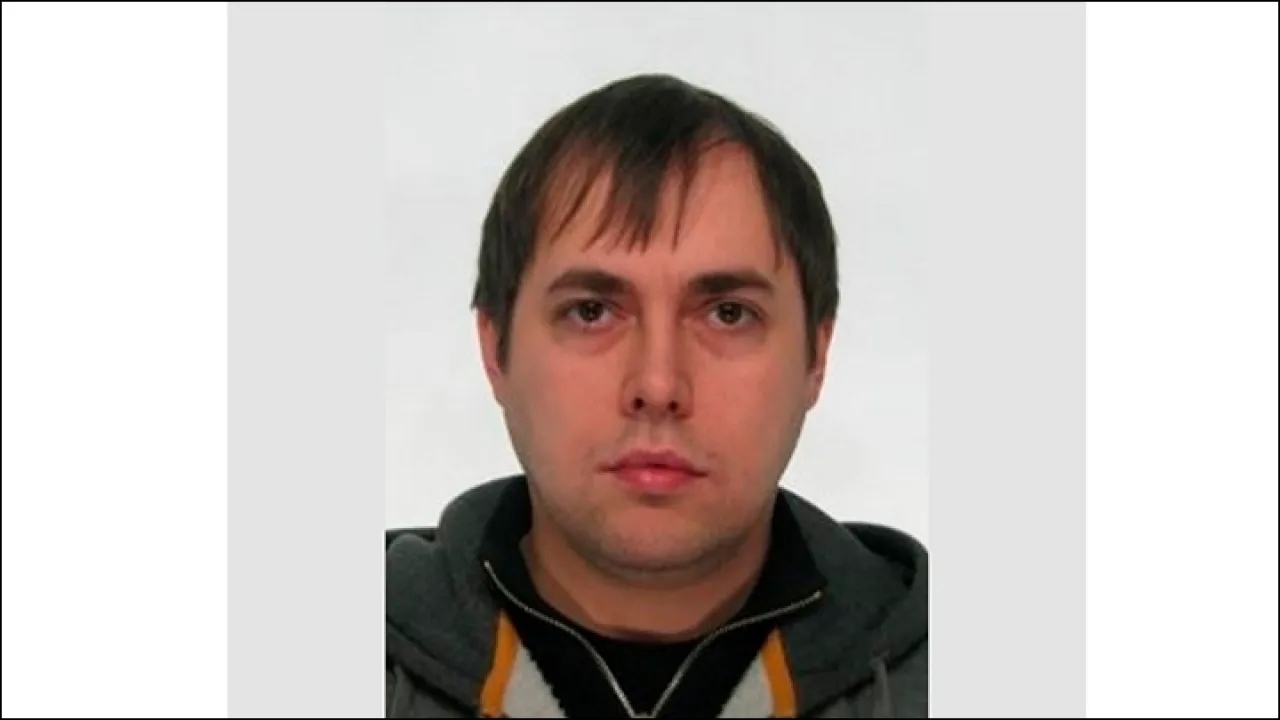
From Sokolov, the authorities confiscated: a nearly 500-square-meter apartment in St. Petersburg valued at 400 million rubles ($4.96 million), three luxury apartments on Kamenny Island, and a mansion in a historic district of the Petrograd Side. At the request of the Prosecutor General’s Office, the authorities in Dubai also froze Sokolov’s apartment in the Burj Khalifa tower.
Then, in 2024, Satyukov and Sokolov supposedly died in Mexico — one after the other, even if investigators suspect their deaths have been faked. In a conversation with The Insider, investigative journalist Andrei Zakharov said that phone billing records of the “dead” Satyukov and Sokolov feature the same BSTM operatives whom Nesterov called, along with three dozen alleged crypto figures, hackers, and businessmen from all over Russia.
Still, a source at the FSB told The Insider that after Nesterov’s imprisonment, BSTM head Litvinov is unlikely to keep his seat. Most likely, he will be given an order and sent off to a well-earned retirement.