Russia’s explosives production relies heavily on imported chemicals from China. The Insider identified the key reagents used by Russia’s defense industry, the foreign companies supplying them, and the chemicals most critical to explosives production — including plasticizers, binders, acids, and stabilizers.
The Insider has previously reported that Russia’s chemical industry remains heavily dependent on foreign equipment, technology, and catalysts. That reliance is especially pronounced in the defense sector, where ammunition production depends on imported auxiliary components.
According to the available data, Russia imported more than $1 billion worth of chemical products in the first quarter of 2025, totaling 347,000 metric tons. China accounted for 87% of those imports, followed by Indonesia and India. The statistic accounts for imported chemicals but does not make a distinction between shipments that were intended for civilian or military use; however, many of the chemicals imported have clear military uses.
Components for explosives
Plasticizer
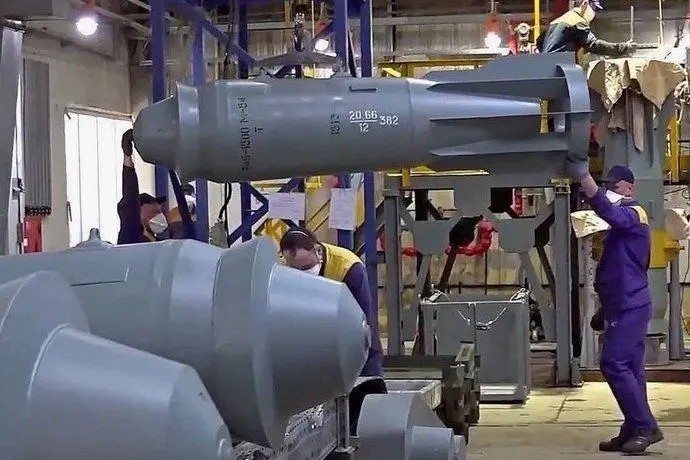
Explosives are central to modern warfare, and producing plastic explosives from RDX or HMX requires a binder, or plasticizer. One such plasticizer is dioctyl sebacate, which Russian manufacturers produce using imported sebacic acid.
In 2025, the Roshal Plasticizer Plant bought sebacic acid from Chinese supplier Farmasino Co., Ltd. As customs records show, the plant specified that the chemical was intended for production of dioctyl sebacate rather than for pharmaceutical use.
Binders
One binder used in explosives and imported by Russia is polyisobutylene. It is brought into the country in a form that is ready for use in explosives production.
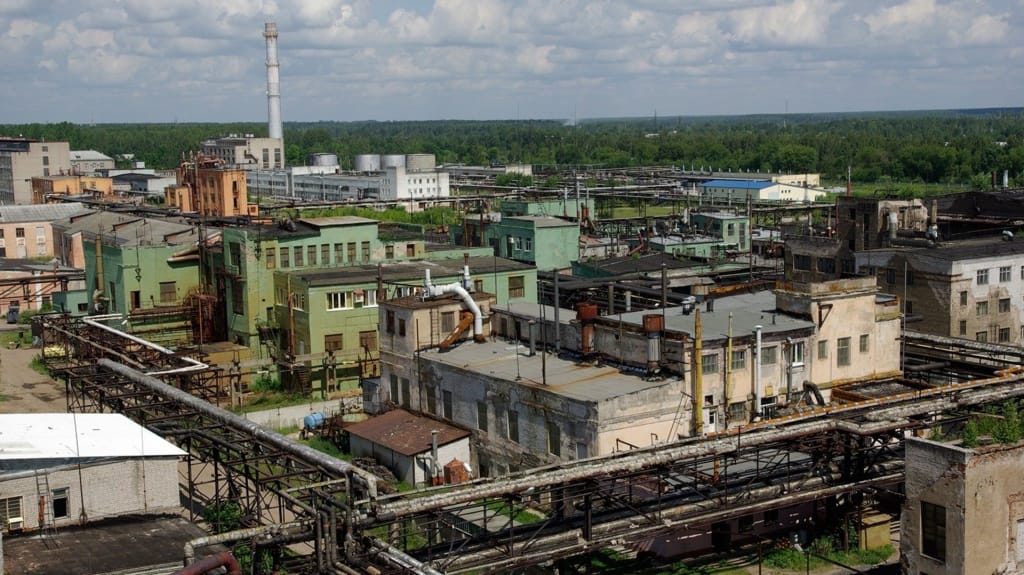
In 2025, the Azot-Vzryv group purchased polyisobutylene in China from Nanjing E-Strong Technical Co., Ltd., through a Kazakh intermediary, Nartas LLP of Almaty. Azot-Vzryv has long supplied the Sverdlov Plant, a major Russian defense chemical enterprise in Dzerzhinsk, Nizhny Novgorod region. As far as is known, the plant is virtually the only Russian producer of military high explosives based on RDX.
Additionally, a polymer made from butadiene and acrylonitrile is used as a binder in solid rocket propellant. The Perm Gunpowder Plant consumes about 1,600 metric tons of acrylonitrile every six months. Of that amount, 600 tons reach Russia from Belarus, from a plant in Novopolotsk.
Acetic acid
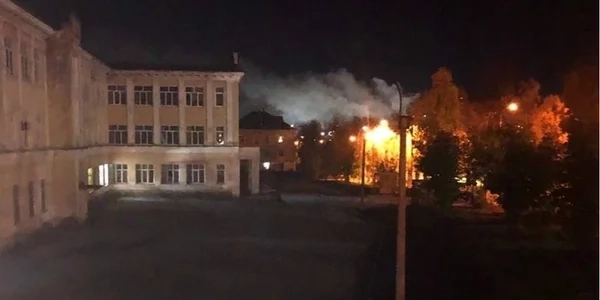
Acetic acid is also needed to synthesize RDX. In Russia, it is produced in Nevinnomyssk. Since Nevinnomyssky Azot is the only Russian producer of high-purity synthetic acetic acid, it is regularly targeted by Ukrainian drones. Chinese supplies help fill the gap, accounting for about 20% of deliveries.
Dozens of tons of nonfood-grade acetic acid were ordered by the Altai Region’s Pioneer Trade LLC (which has taken part in tenders to supply the Perm Gunpowder Plant) and by Bina Group LLC (a regular supplier to the Perm Gunpowder Plant and NMZ Iskra, which manufactures fuzes). The acid was supplied by Chinese companies Eli-X (Qingdao) Chem Co. and Taizhou Ruibai Chemical Co.
Stabilizers
Diphenylamine is needed to prevent nitrocellulose propellant from degrading. It is used as a stabilizer and is produced from aniline. China supplies a significant share of Russia’s needs for the substance.
As The Insider reported last year, Chinese chemical producer Jiangsu Feiya Chemical Industry was among the companies supplying diphenylamine to Russia, with buyers including firms in St. Petersburg and Bashkortostan.
Fibers and composites
Composite materials are widely used in modern weapons. Their production requires aniline, which is then used to make aramid fibers.
One major Russian recipient of aniline is SPG-Kompozit. The company makes composite shelters for radar and navigation systems, polymer ammunition containers, and modular military structures.
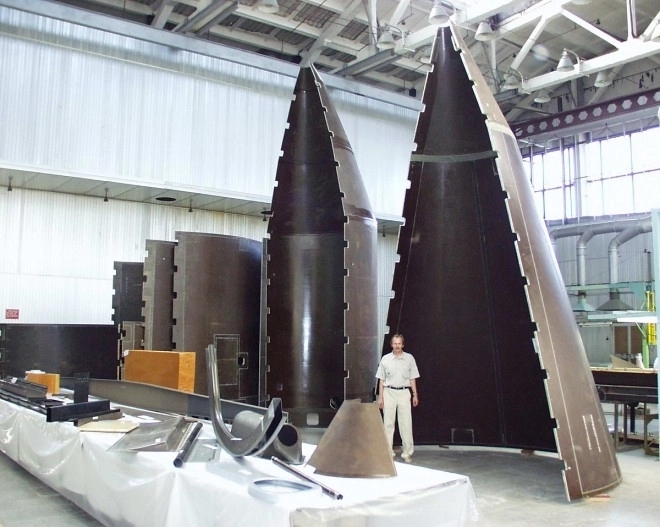
Aramid fibers are also needed for missile bodies. For environmental and economic reasons, aniline production in Russia virtually ceased after 2016, but the authorities are trying to restart it. For example, Alfa-Bank has allocated 11.9 billion rubles ($143.8 million) to launch an innovative aniline plant based at Chapaevsk Aniline Plant JSC.
For now, however, Russia continues to import aniline and aniline derivatives from China. The main suppliers are Jilin Kangxin Chemical Industry Trade, Shandong S-Sailing Chemical, and Shandong Near Chemical. Buyers include SPG-Kompozit LLC, SZ HK AK Bars-Development LLC, and Albatros LLC.
Other chemicals important to the military industry
Among the main imported reagents used in Russia’s chemical and related industries (including both civilian and military production) are raw materials and additives for polymers, synthetic fibers, plastics, and rubber.
Antioxidants and flame retardants are particularly important in this sector because they are generally among the most difficult products to manufacture domestically.
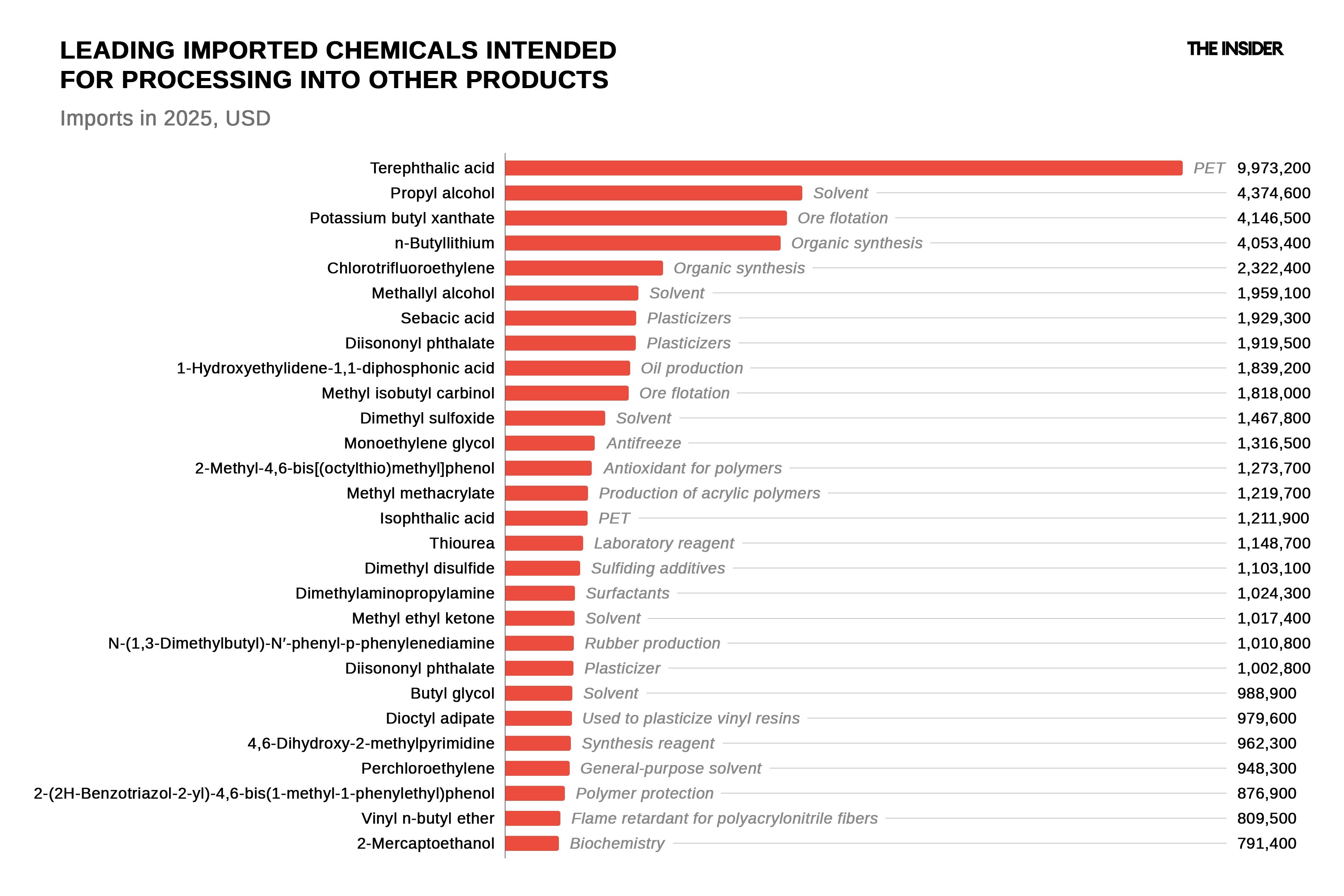
Russia also imports large quantities of alcohols, including propyl alcohol and methallyl alcohol, as well as other substances such as butyl glycol, methyl ethyl ketone, perchloroethylene, and dimethyl sulfoxide. They are generally used without chemical modification — either in pure form or as ingredients in more complex products.
Surfactants and flotation agents used in mining and oil production are also important for export-oriented industries.
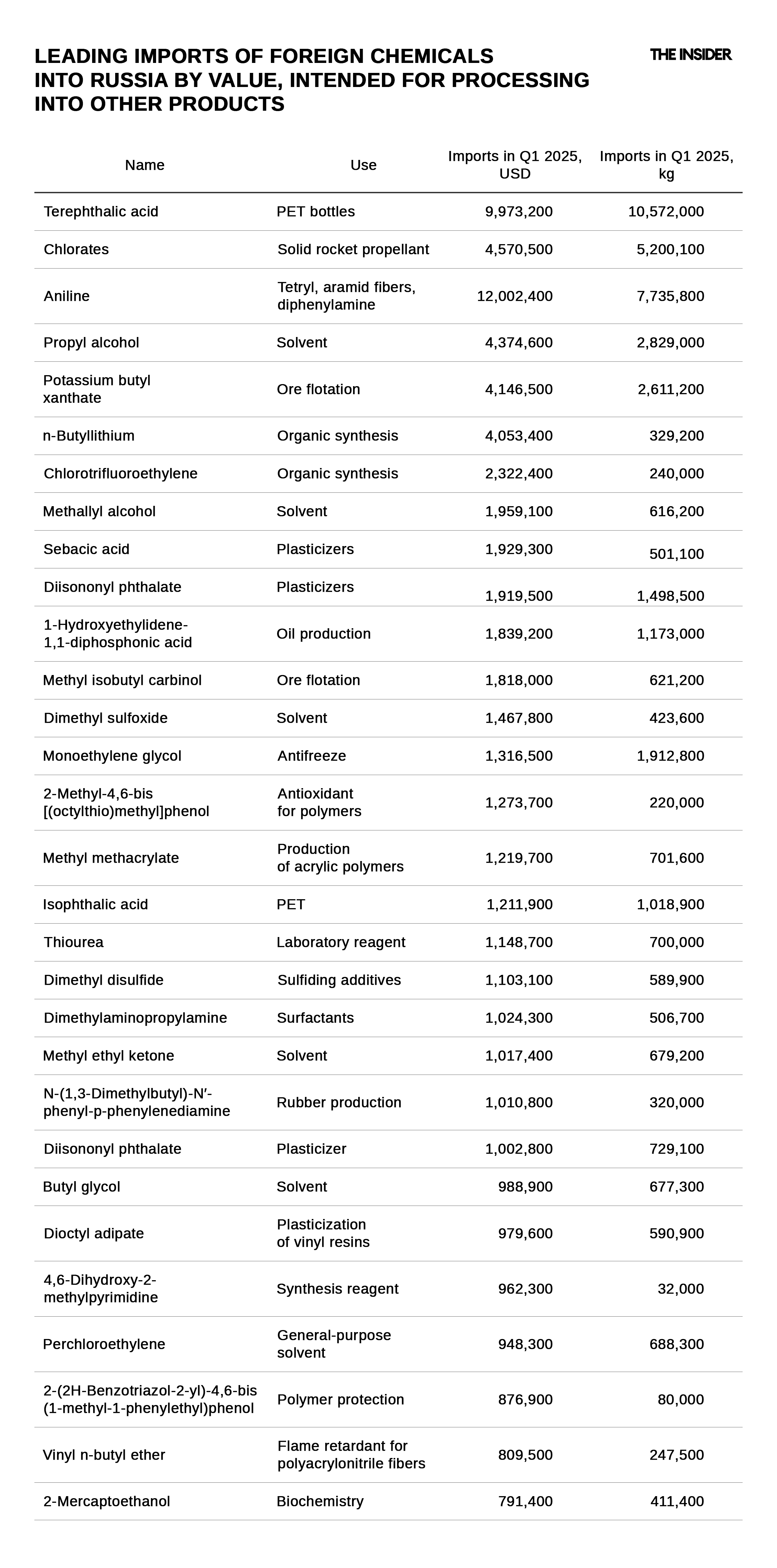
Who supplies the chemicals
Chinese companies supply virtually all of these chemicals to Russia. In most cases, they also manufacture the products themselves.
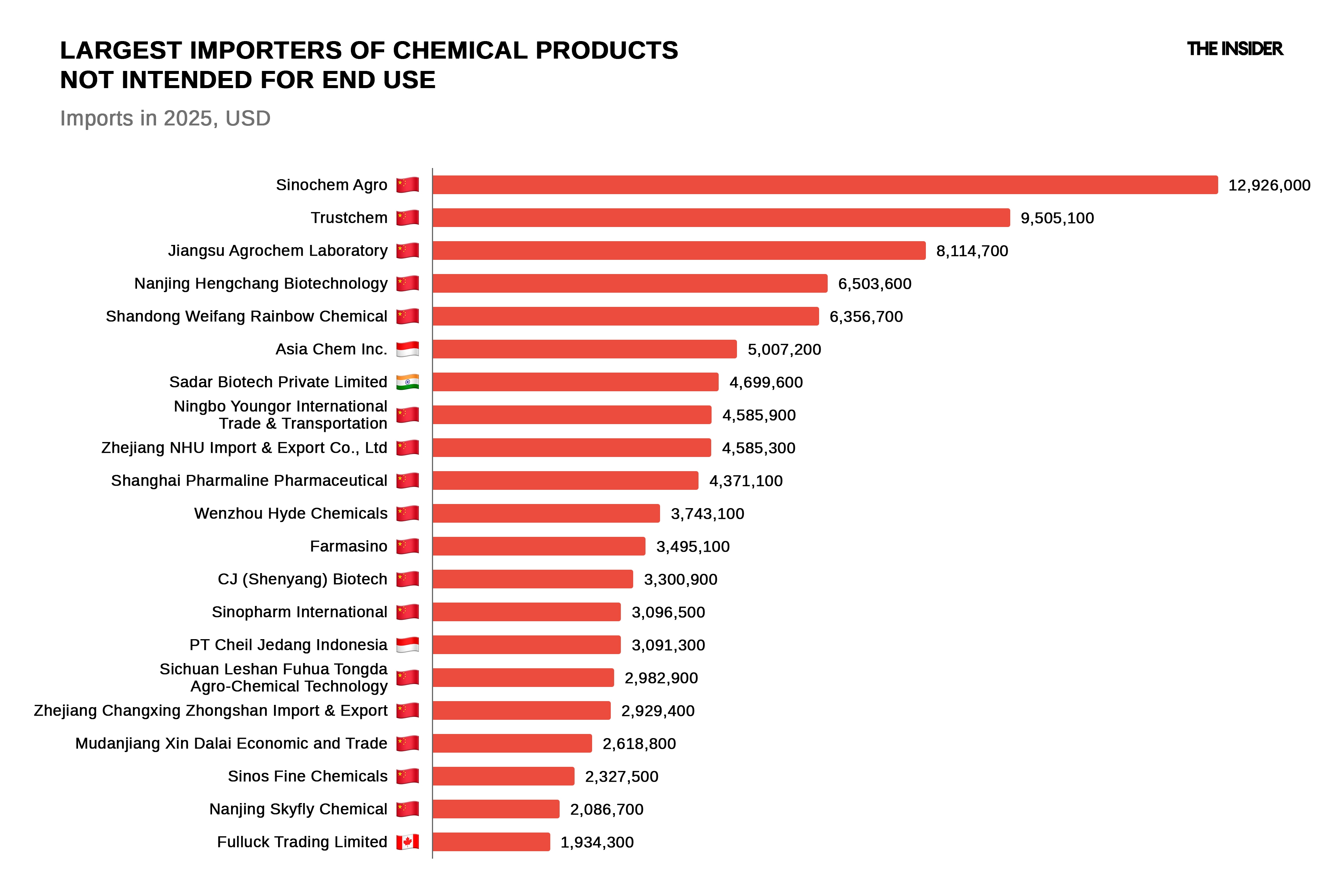
Despite repeated calls for developing domestic production capabilities, Russia’s chemical industry remains heavily dependent on foreign suppliers, particularly for medium- and small-volume specialty chemicals. As a result, the more effectively Ukrainian drones are able to strike chemical production facilities inside Russia, the greater the dependence on imports becomes.
China’s role is critical, particularly when it comes to Russia’s access to plasticizers, antioxidants, flame retardants, and other polymer additives.