Chinese companies are willing to sell critical components for the production of Russian military drones — this despite Chinese laws that have severely restricted exports of these goods to both Ukraine and Russia since 2023. Nevertheless, after Ukrainian drone strikes destroyed Russian fiber-optic cable production facilities, Chinese suppliers stepped in to help Russia’s defense industry, raising their prices as much as threefold. Nordsint confirmed this reality by sending inquiries to Chinese companies while posing as buyers connected with the Russian military-industrial complex. The Insider found that while most of the Chinese suppliers listed on invoices do not appear in recent customs data, some already have goods available for sale from warehouses in Russia. In order to get around sanctions, the Chinese companies have established supply routes involving payments in national currencies (using Chinese banks and Russia’s VTB Bank), in cryptocurrency, and even via the SWIFT network and Western financial systems.
- 1.How the Chinese agreed to sell fiber-optic cables for drones
- 2.Machines for fiber optic cable production
- 3.Mesh modems for “Geran” drones
- 4.Cameras and interceptor drones
- 5.Radars and shell companies
- 6.“Capture the ringleader first to nab the bandits”
- 7.Shortage in the Russian market and rapid price growth
This is a joint investigation by Nordsint and The Insider.
Identifying the main international sources of equipment and spare parts for the Russian military is no easy task for investigative journalists. Standard trade and customs databases often list intermediary companies and logistics firms, rather than manufacturers or actual sellers. This lack of transparency allows international suppliers to plausibly deny their involvement in the trade of sanctioned goods, making it virtually impossible to determine to what extent companies are knowingly collaborating with the Russian defense sector.
However, by contacting manufacturers directly (albeit under a pseudonym), we managed to obtain compelling evidence that several Chinese companies’ shipments to the Russian defense industry were intentional. In conversations with these manufacturers, Nordsint presented itself as a potential Russian client, explicitly stating that the components being purchased were intended for military purposes. This never seemed to bother the suppliers. The Insider examined data on these Chinese companies’ previous transactions, contained in customs and trade registries.
Although the supply of drones and components is officially prohibited by Chinese law, sellers use convoluted financial schemes to meet the demand of the Russian defense industry. When supplying military equipment, some of the Chinese firms we investigated accept payment in yuan through the Shanghai branch of Russia’s VTB Bank or conduct transactions in USDT (Tether), a cryptocurrency pegged to the U.S. dollar. In this way, they are able to circumvent Western financial sanctions. Other firms use the services of Chinese and Hong Kong banks: China CITIC Bank, DBS Bank, Ping An Bank, China Zheshang Bank, and Bank of China Nanjing.
How the Chinese agreed to sell fiber-optic cables for drones
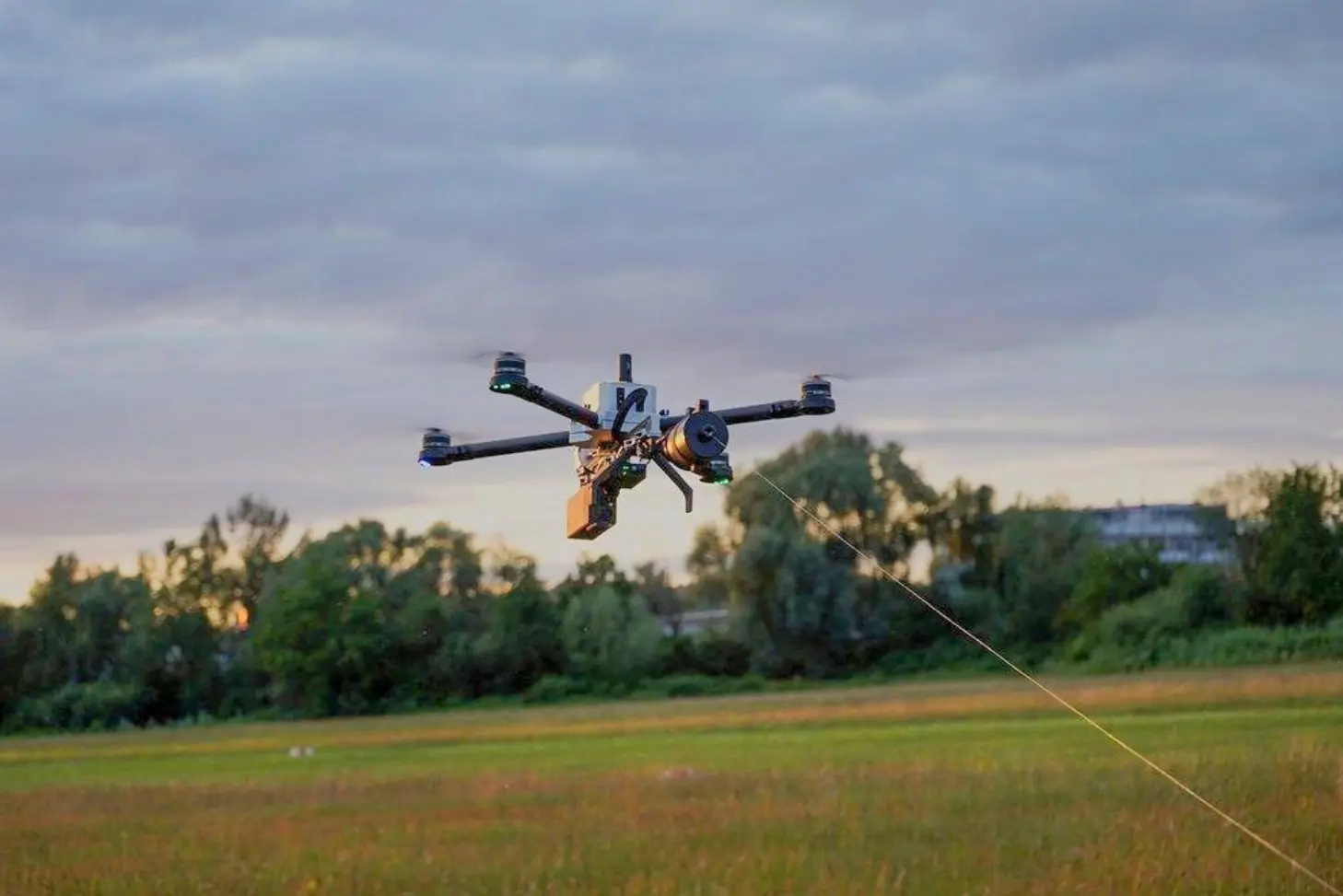
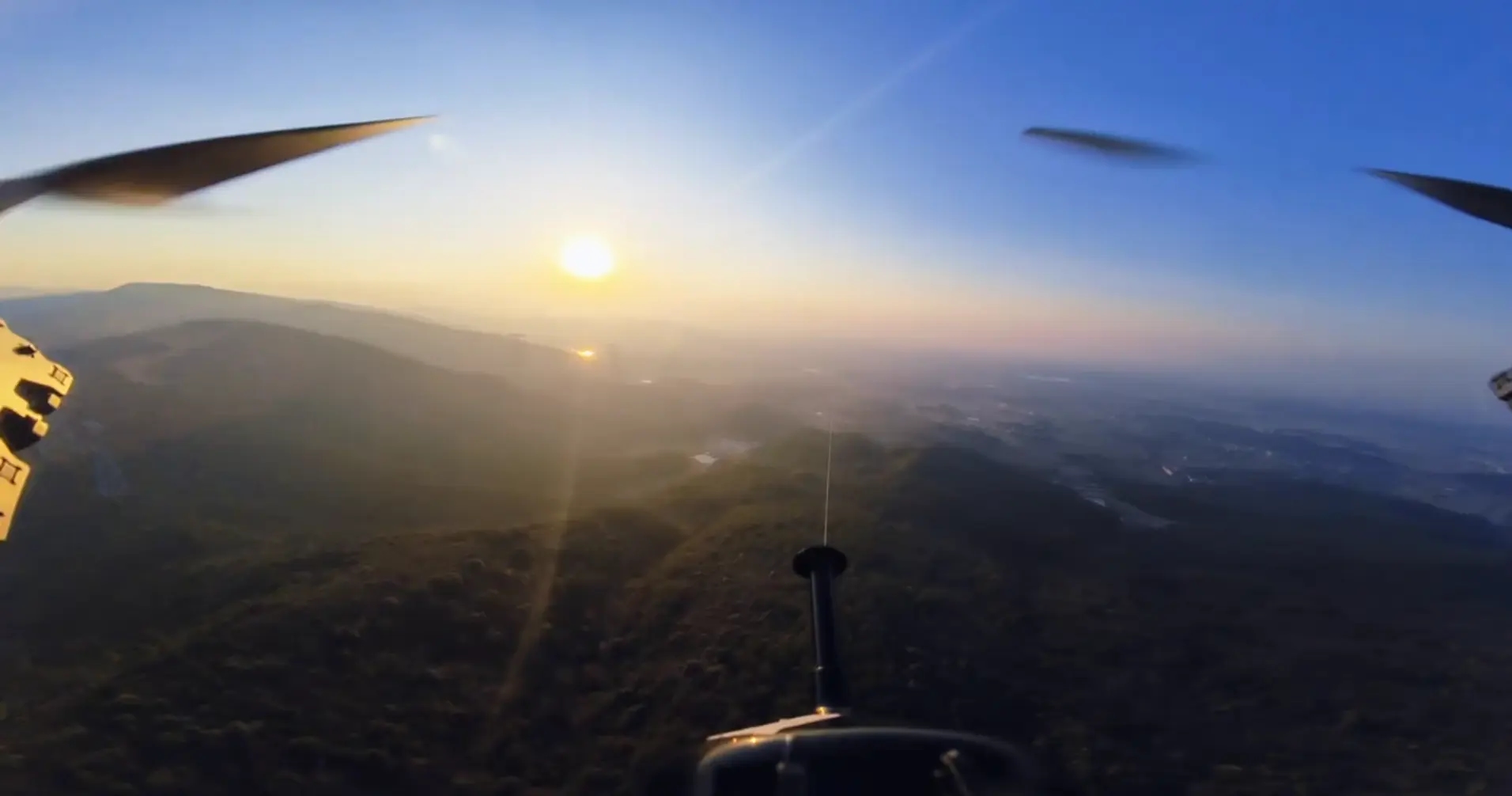
Since 2024, Russian and Ukrainian forces have increasingly been using FPV drones with fiber-optic control to strike targets along the front lines. These systems are resistant to electronic warfare, as the connection is provided by a fiber-optic cable (see video) rather than a wireless network. In particular, single-mode G.657.A2 fiber with enhanced bend resistance is often advertised by manufacturers for use in cable-controlled FPV drones.
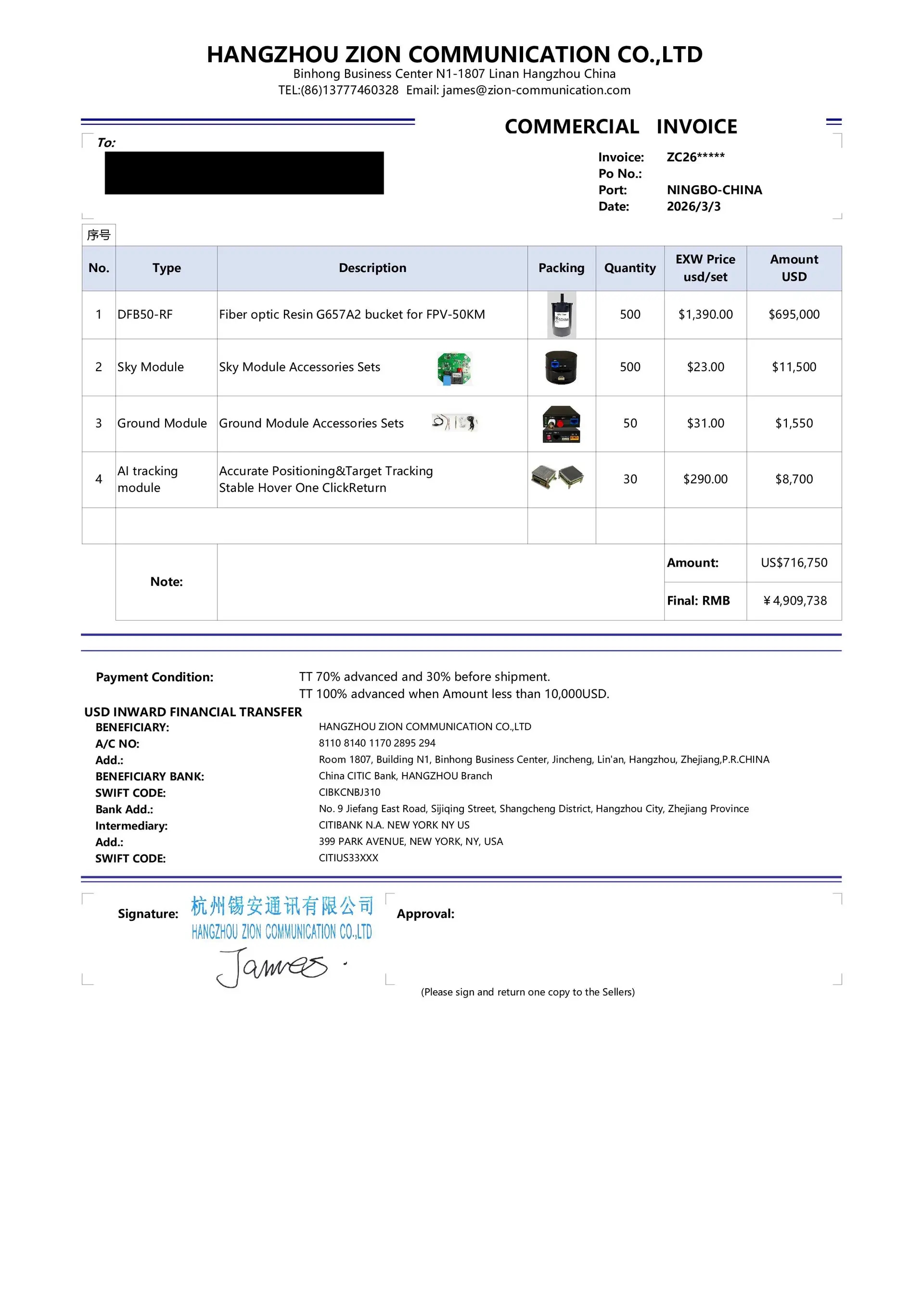
As discovered by Nordsint, among the companies willing to sell equipment for such drones to Russian military clients was Zion Communication Co. Ltd, a fiber optic manufacturer based in Hangzhou. Nordsint managed to “place an order” for 500 pre-spooled rolls of fiber optic cable for kamikaze drones. Each reel contained 50 kilometers of fiber optic cable at an average price of $27.8 per kilometer. The deal, totaling over $700,000, also included guidance modules utilizing artificial intelligence. These allow drones to track both stationary and moving targets, such as vehicles or infantry.
To facilitate the payment, Zion Communication provided an invoice in yuan and dollars to a Russian front company, allegedly based in Vladivostok, requesting that funds be transferred to its account at China CITIC Bank. Citibank North America was listed as the correspondent bank in the payment details.
The Insider found that Zion Communication Co. Ltd. is virtually absent from Russian customs databases. In 2025, it is mentioned only as a participant in the minor trade of non-military goods. This may mean that the databases were edited or that more sophisticated concealment schemes were used.
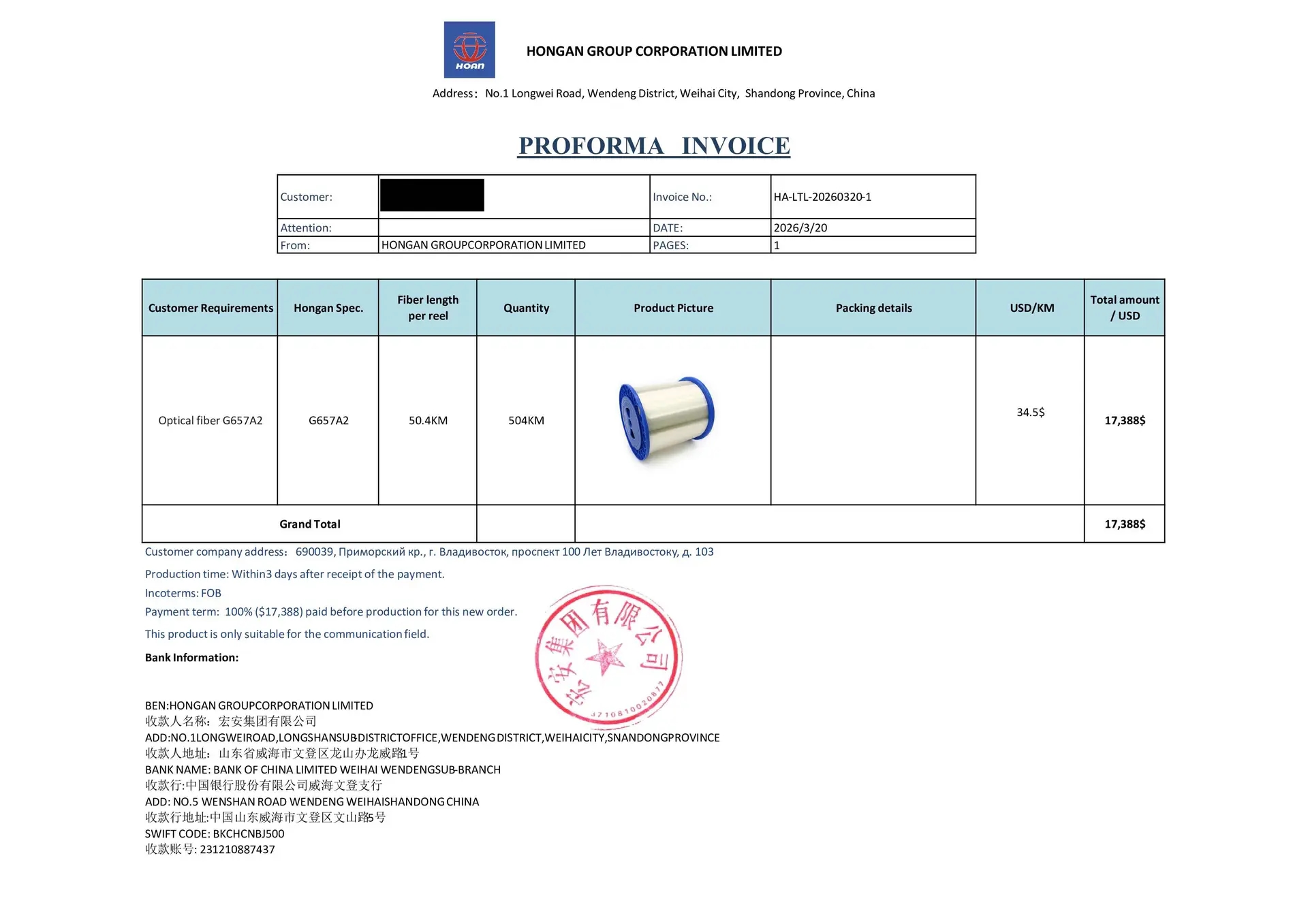
Hongan Group Corporation Limited, a manufacturer based in Weihai, Shandong Province, also expressed a willingness to sell fiber-optic reels for use in drones. Nordsint attempted to place an order for 25,000 kilometers of fiber optic cable for kamikaze drones, but was told that such a volume might be too large for the company’s production capacity.
“At the moment, our company’s order and production schedule is fully booked through the end of August. We are not sure we can allocate a sufficient number of kilometers of fiber-optic cable for you, as many customers are buying it up in insane volumes. For my part, I am currently awaiting information from the company regarding the price and the estimated length of fiber-optic cable available this month,” a representative of Hongan Group Corporation Limited told Nordsint.
When the topic of payment came up, he said that funds could be transferred via VTB Bank, but also asked if it was possible to receive payment in U.S. dollars. “Payments and receipts go through faster via the VTB account, but it’s more difficult for my company to withdraw the money,” wrote the Hongan representative. “Would it be convenient for you to send USD? I’m concerned that banks might block payments from sensitive countries.” Hongan ultimately issued Nordsint an invoice for 504 kilometers of fiber optic cable at a price of $34.5 per kilometer, specifying a Bank of China account as the ultimate recipient.
“Please let me know before transferring the funds. Do not send them directly, as our company’s account has recently received too many payments, which could trigger the risk control system. I need to check whether the account has been subject to restrictions,” wrote a Hongan representative.
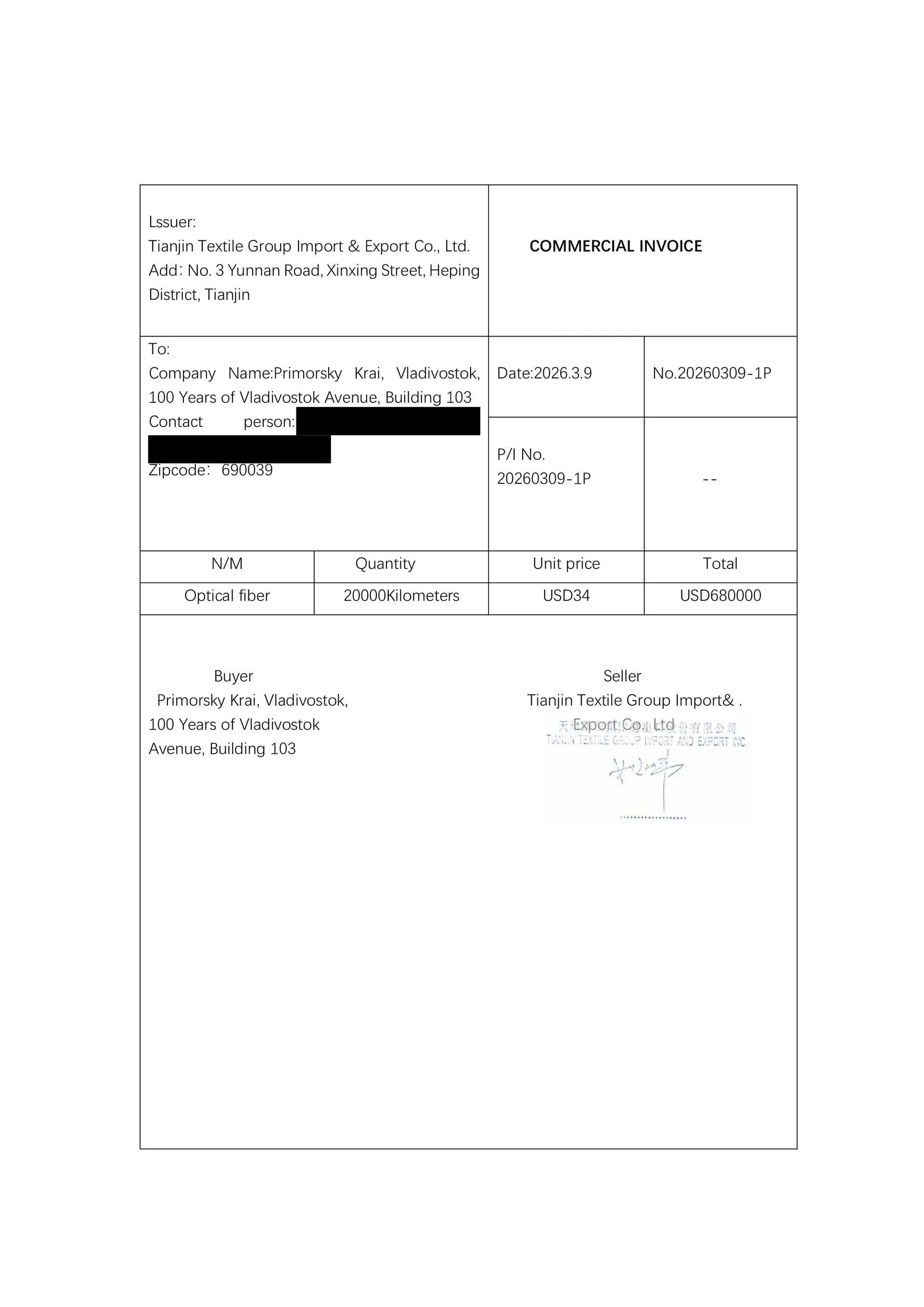
Shortly after Nordsint’s inquiry to Hongan Group, an unknown individual who identified himself as a Chinese fiber optic trader contacted Nordsint’s investigators. He refused to disclose how he had obtained the contact information. Later, the trader sent a commercial proposal, stating that he was a representative of Tianjin Textile Import and Export Inc. This seller acted as an intermediary for various fiber optic manufacturers.
According to data obtained by The Insider, in the first three months of 2025, Tianjin Textile Import and Export shipped over $10 million worth of goods to Russia, declaring them as bicycles and bicycle parts.
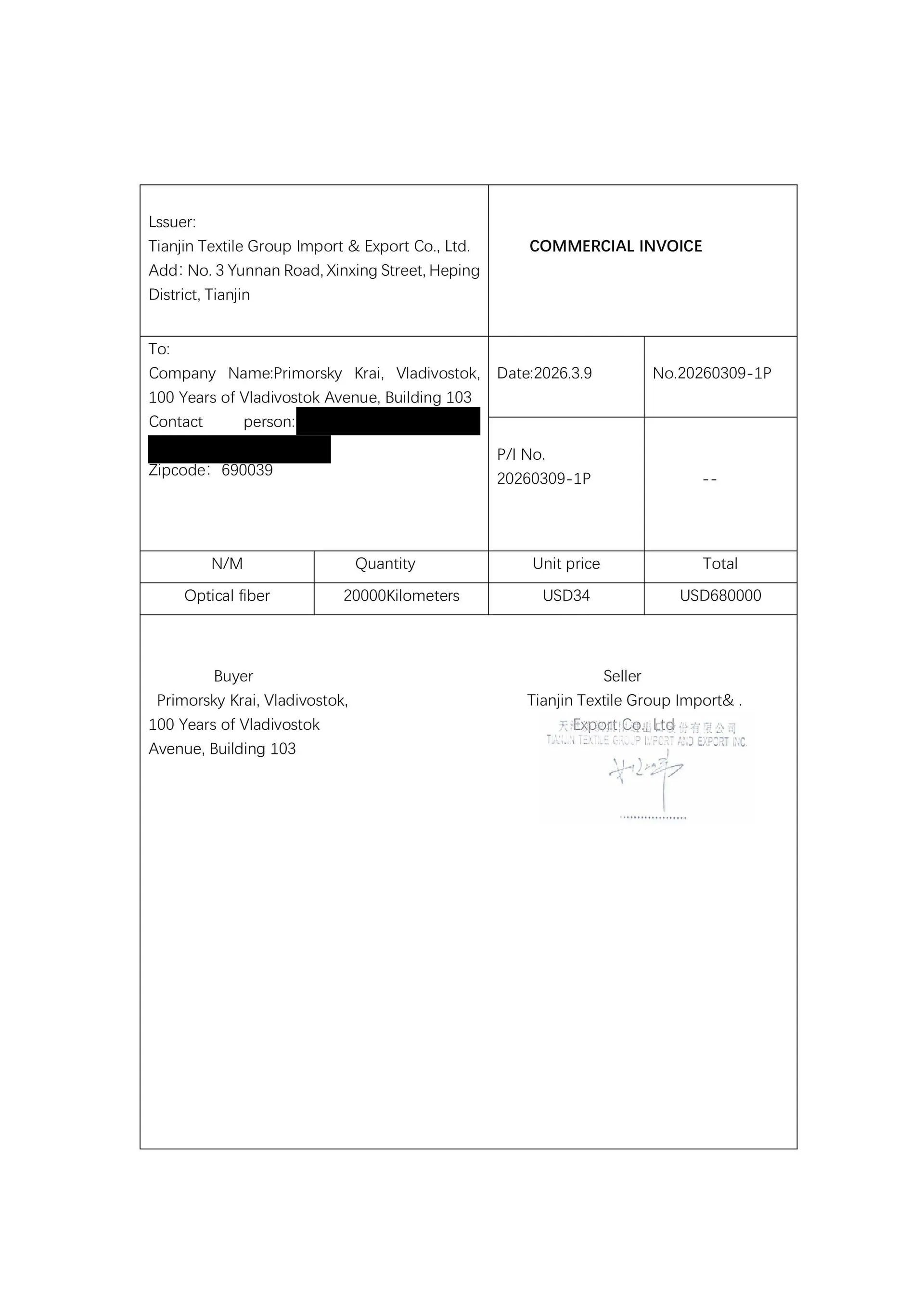
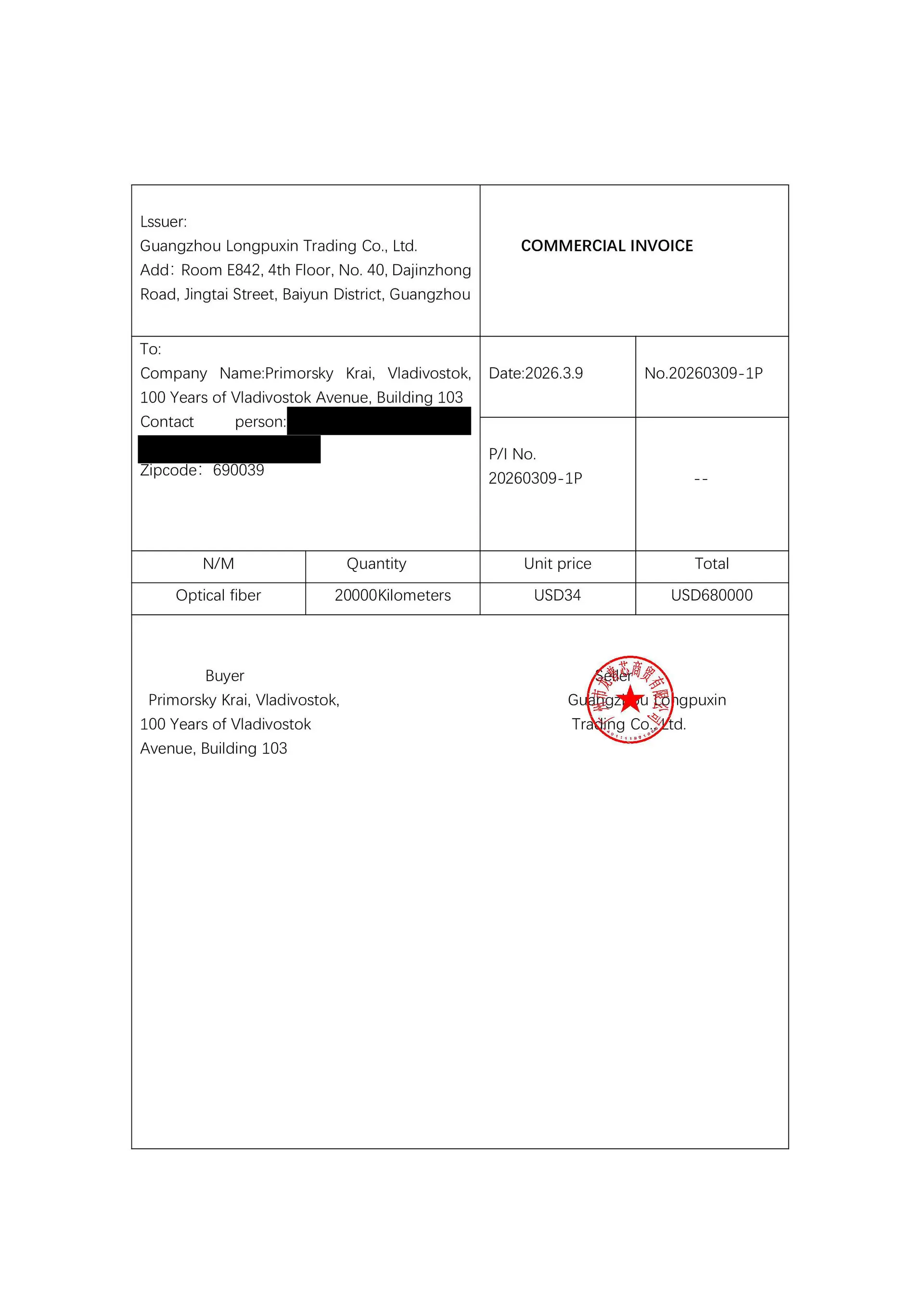
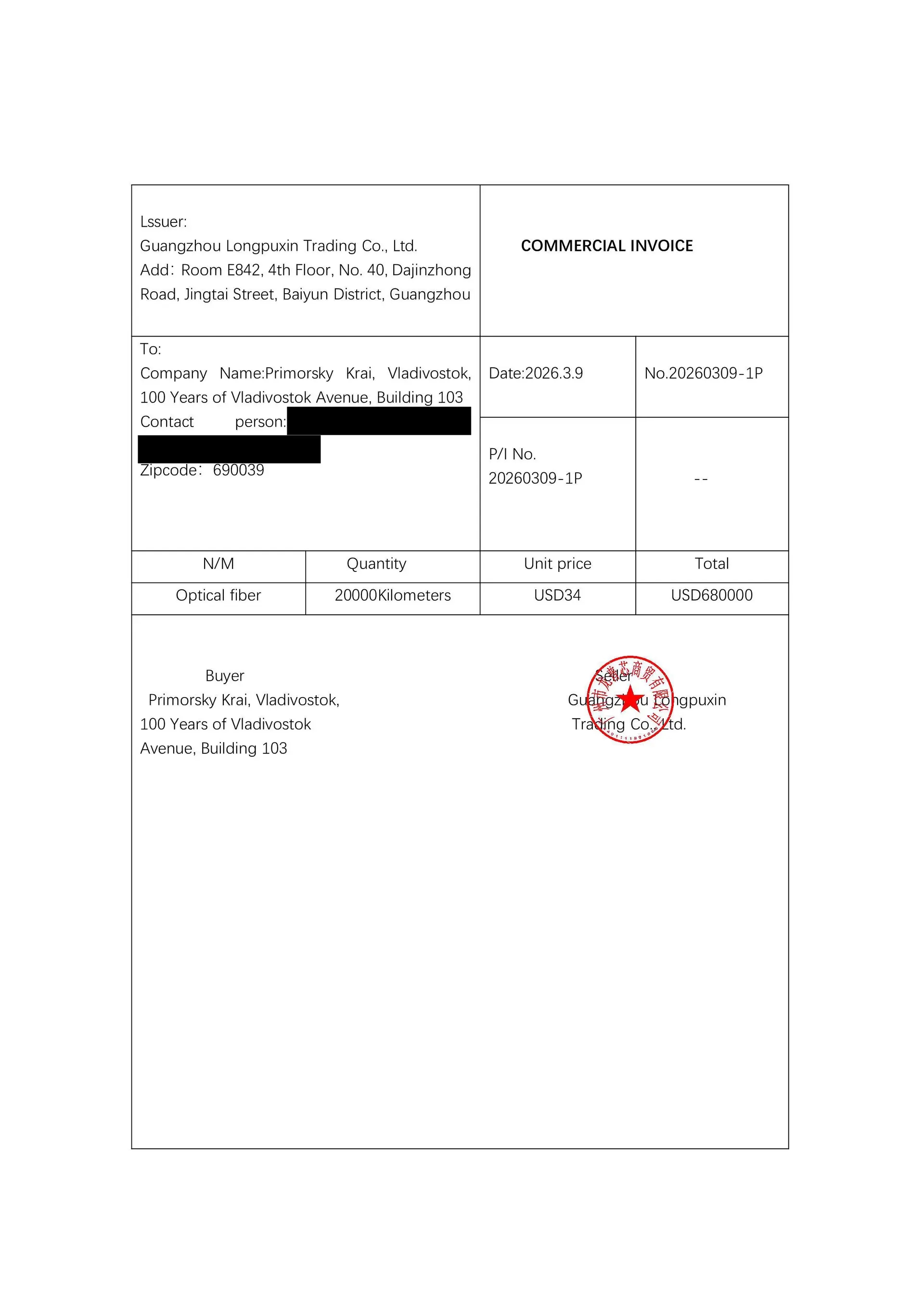
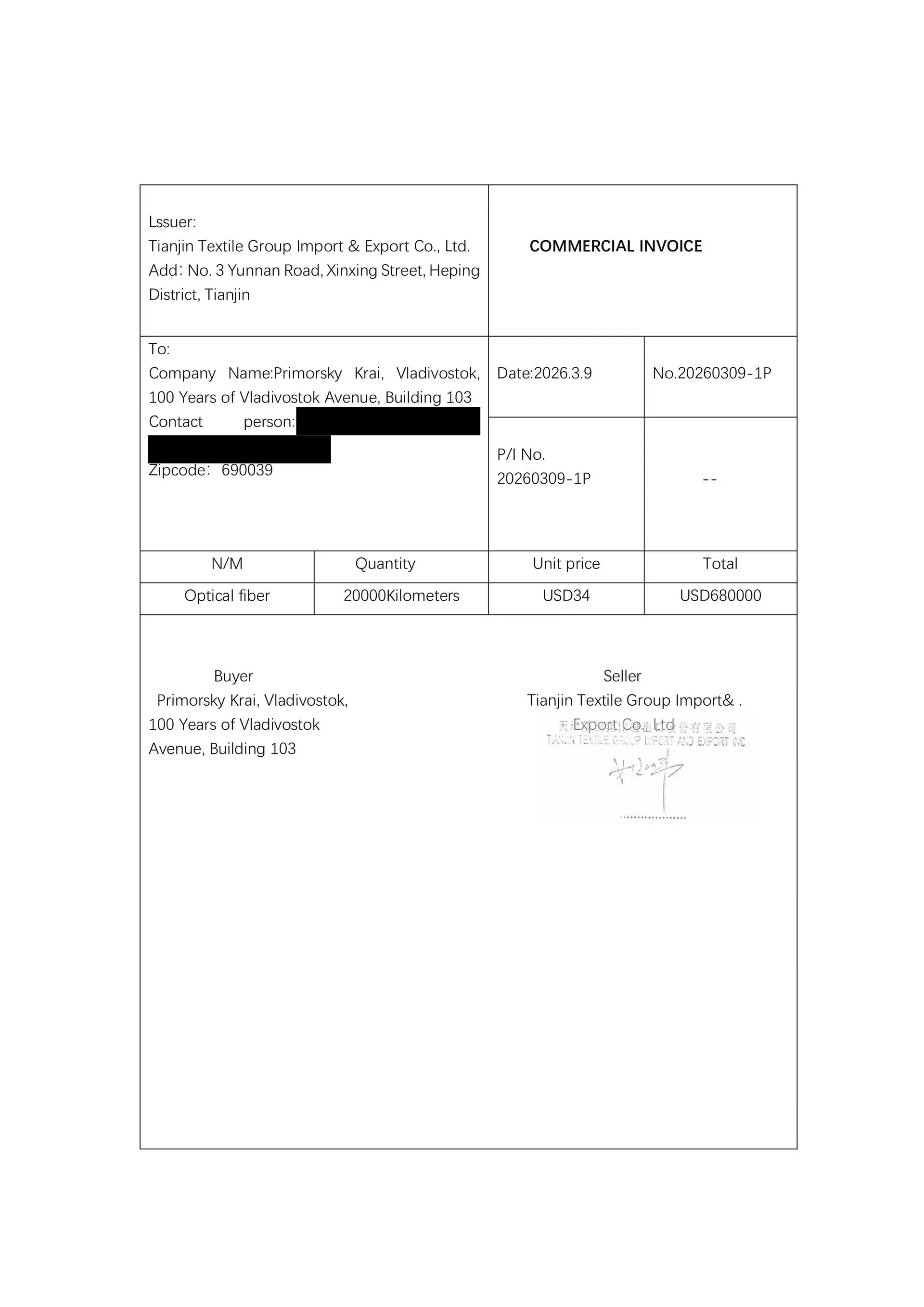
The seller sent Nordsint pro forma invoices listing Guangzhou Longpuxin Trading Co. Ltd and Tianjin Textile Import and Export as the counterparties. When asked why Guangzhou Longpuxin Trading was listed as the invoicer, the seller explained that both companies are controlled by the same owner. Neither Nordsint nor The Insider could confirm the existence of any legal or financial ties between these two firms. The Insider found no record of Guangzhou Longpuxin in Russian customs databases for 2024 or 2025.
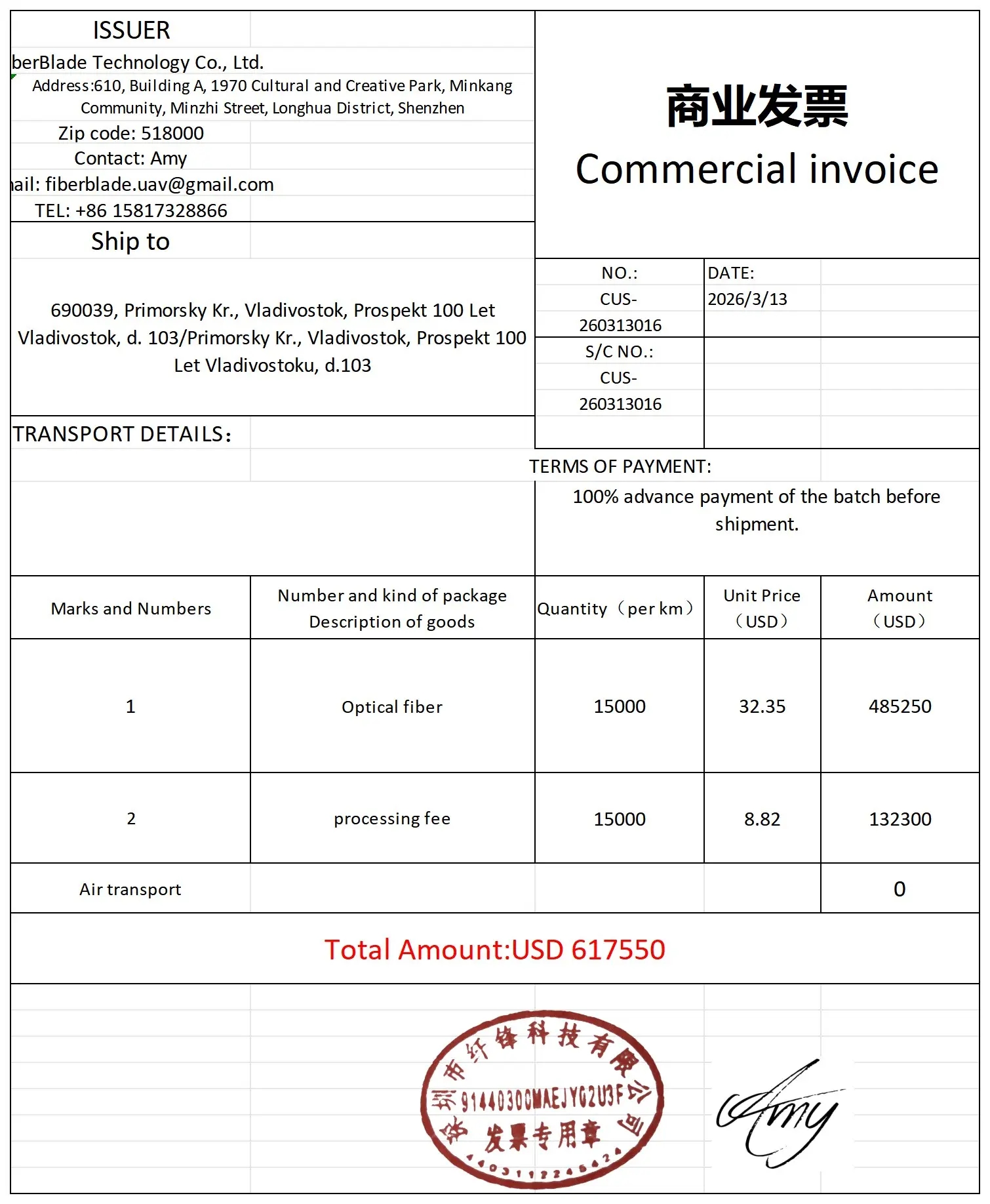
Another Chinese fiber optic seller, operating under the name Fiberblade, sent Nordsint an invoice for 15,000 kilometers of fiber optic cable at a price of 205 yuan ($29.84) per kilometer, plus a handling fee of 60 yuan ($8.73) per kilometer. Fiberblade sent Nordsint an invoice bearing the stamp of Shenzhen Xianfeng Technology Co. Ltd, a company that does not appear in recent customs data.
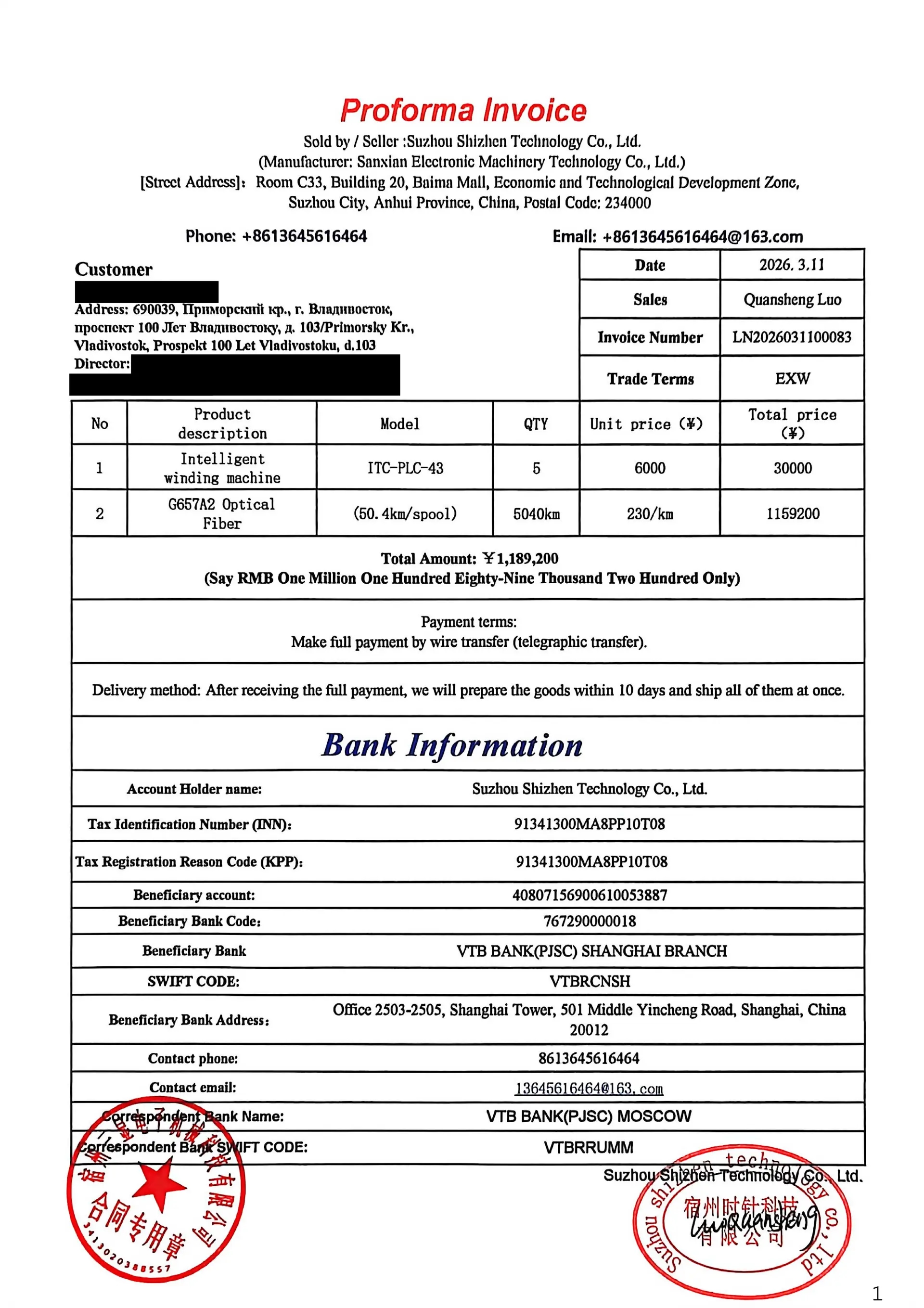
Suzhou Sanxian Electronic Machinery Technology Co., Ltd, which contacted the “undercover buyer” (i.e., Nordsint) based on information received “from a friend,” sent an invoice with an estimated price of 230 yuan per kilometer ($33.44). Within 24 hours, the seller notified Nordsint that the price had increased by 10 yuan ($1.46). The invoice was issued by Suzhou Shizhen Technology, which the trader identified as his foreign trade company.
They requested payment be made through a VTB Bank branch, as the company could not accept payments in U.S. dollars, explaining that “the risk is too high” and “payments for goods with a delivery address in Russia are often returned.” Suzhou Shizhen Technology, likewise, does not appear in recent customs transactions.
Machines for fiber optic cable production
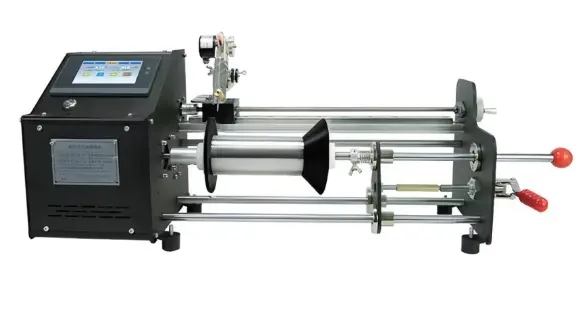
Aside from fiber-optic cable, Suzhou Sanxian Machinery was also ready to sell fiber-optic winding machines to the Russian defense industry. These machines are critical for fiber processing, as they automatically rewind cable from large “master” reels onto compact spools used by FPV drones.
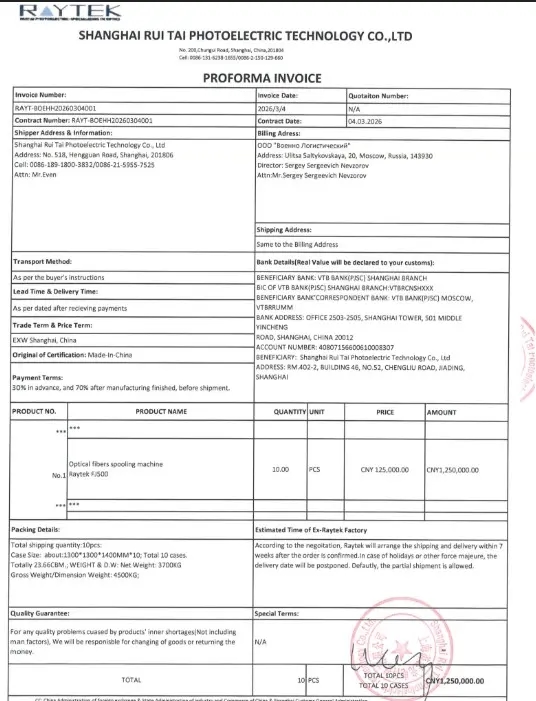
Shanghai Rui Tai Photoelectronic Technology Co., Ltd., a manufacturer of optical lenses and industrial equipment, was prepared to sell ten fiber-rewinding machines to a Russian client even after being informed that the devices were intended for military production. The payment details listed on the company’s invoice indicate that Shanghai Rui Tai has an account with VTB Bank.
Similar machines manufactured by Rui Tai, which operates under the Raytek brand, have appeared in the Russian registry of certificates of conformity. In December 2024, sole proprietor Yermek Suyundukov declared Raytek fiber-optic rewinding devices with Rosaccreditation. According to trade data available to The Insider, Suyundukov was the largest importer of fiber-optic cable into Russia in 2025.
Mesh modems for “Geran” drones
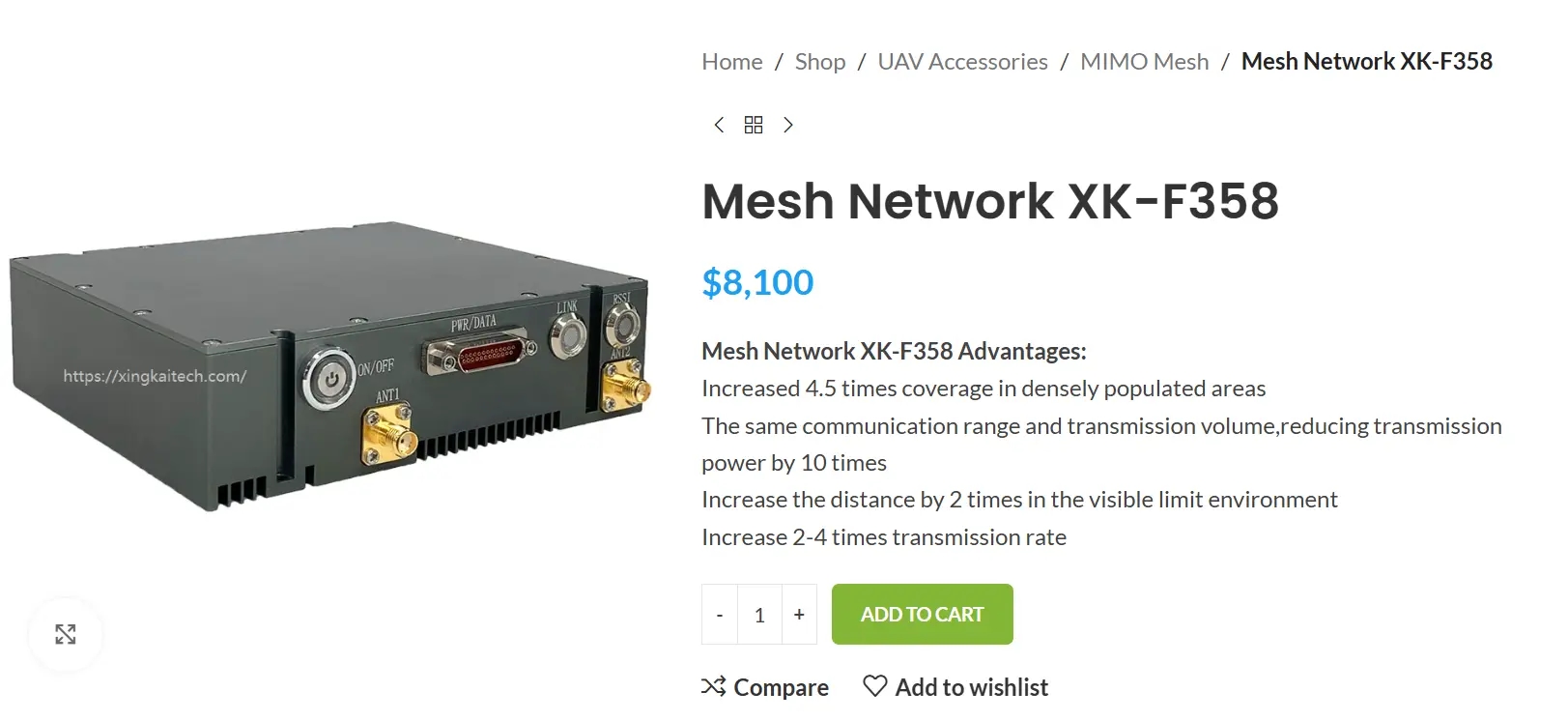
Mesh modems manufactured by Shenzhen Xingkai Technology Co. Ltd. were found in Russian long-range strike drones. These networking systems are critical, as they allow strike drones to form an interconnected communication chain, extending their operational range and enabling ground operators to maintain control even if individual network nodes are destroyed.
Nordsint contacted Xingkai Technology and posed as a potential client from Russia interested in purchasing mesh modems specifically for military drones. The Chinese company replied that it was willing to sell the mesh radio systems, adding that it has “many clients in Russia.”
A representative of the Chinese company also showed Nordsint a certificate of participation in the “Army-2024” forum — a large annual exhibition organized by the Russian Ministry of Defense. The same document is featured in some of the company’s listings on Alibaba.
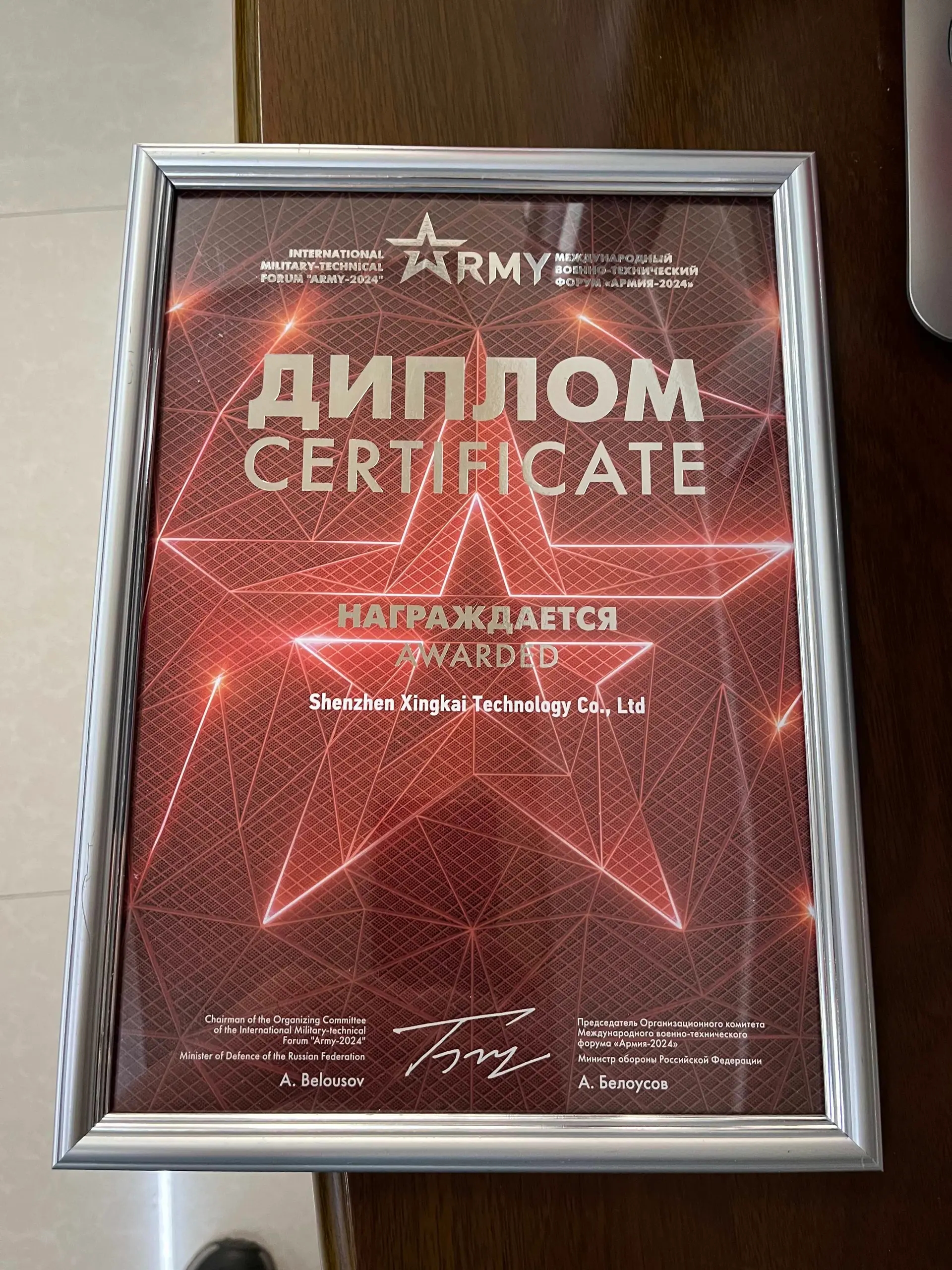
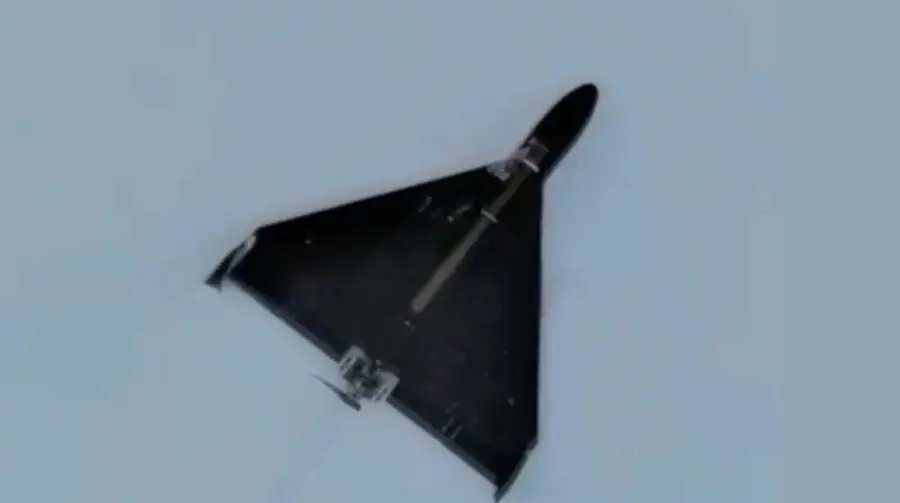
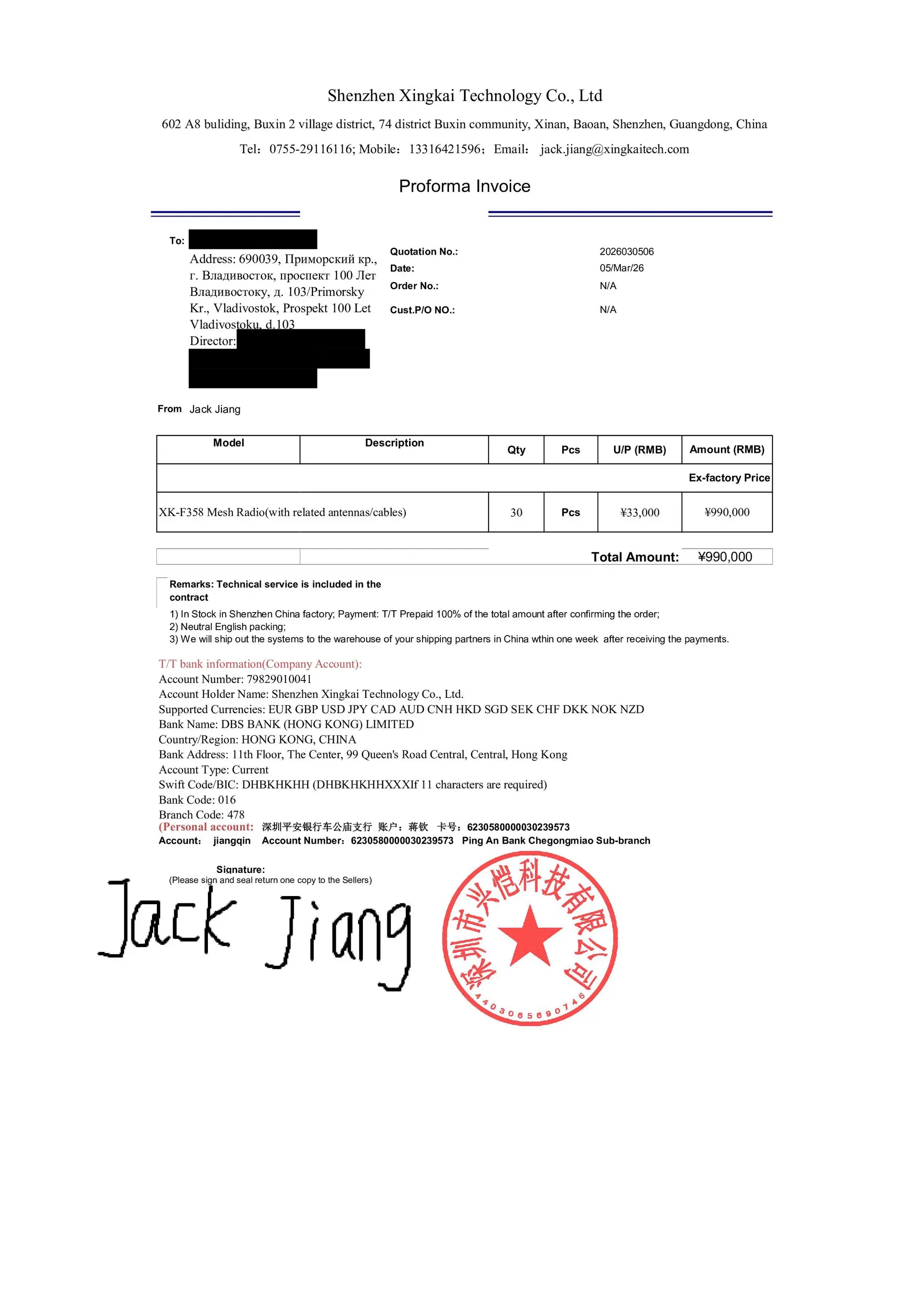
Xingkai Technology was ready to sell Nordsint XK-F303E data transmitters, along with XK-F358 mesh modems. The latter have been found in Russian fixed-wing drones, including the jet-powered “Geran-5” and the “Geran-2,” which is equipped with the “Verba” MANPADS, as well as in the “Gerbera” series of unmanned aerial vehicles. During the correspondence, a representative stated that Xingkai Technology is currently renting warehouse space in Moscow, where stocks of many components are already available.
Nordsint requested a list of goods in stock in Moscow. In response, the Xingkai Technology representative sent screenshots of inventory management software showing the total quantities of components available in Russia. According to this data, the Moscow warehouse held 102 XK-F303E data transmitters ready for immediate delivery.
However, components such as the XK-F358 modem were not available in Russian warehouses and had to be shipped from abroad. The company’s representative suggested doing so via third countries, such as Kyrgyzstan or Turkey.
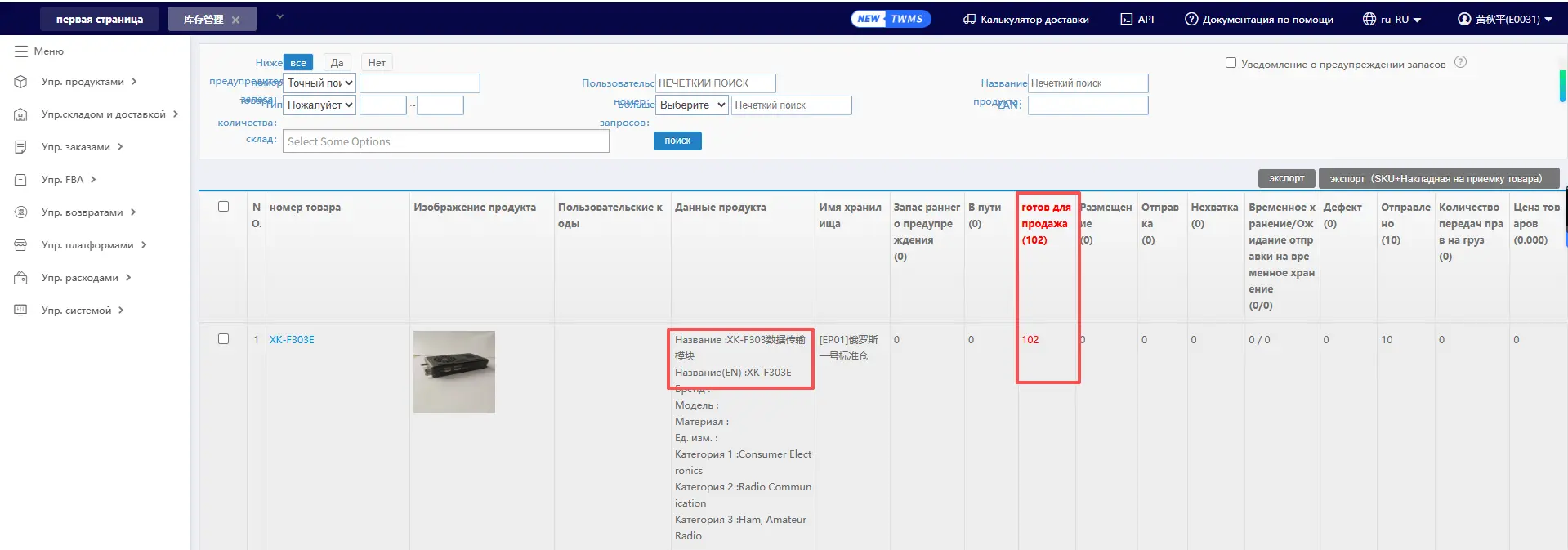
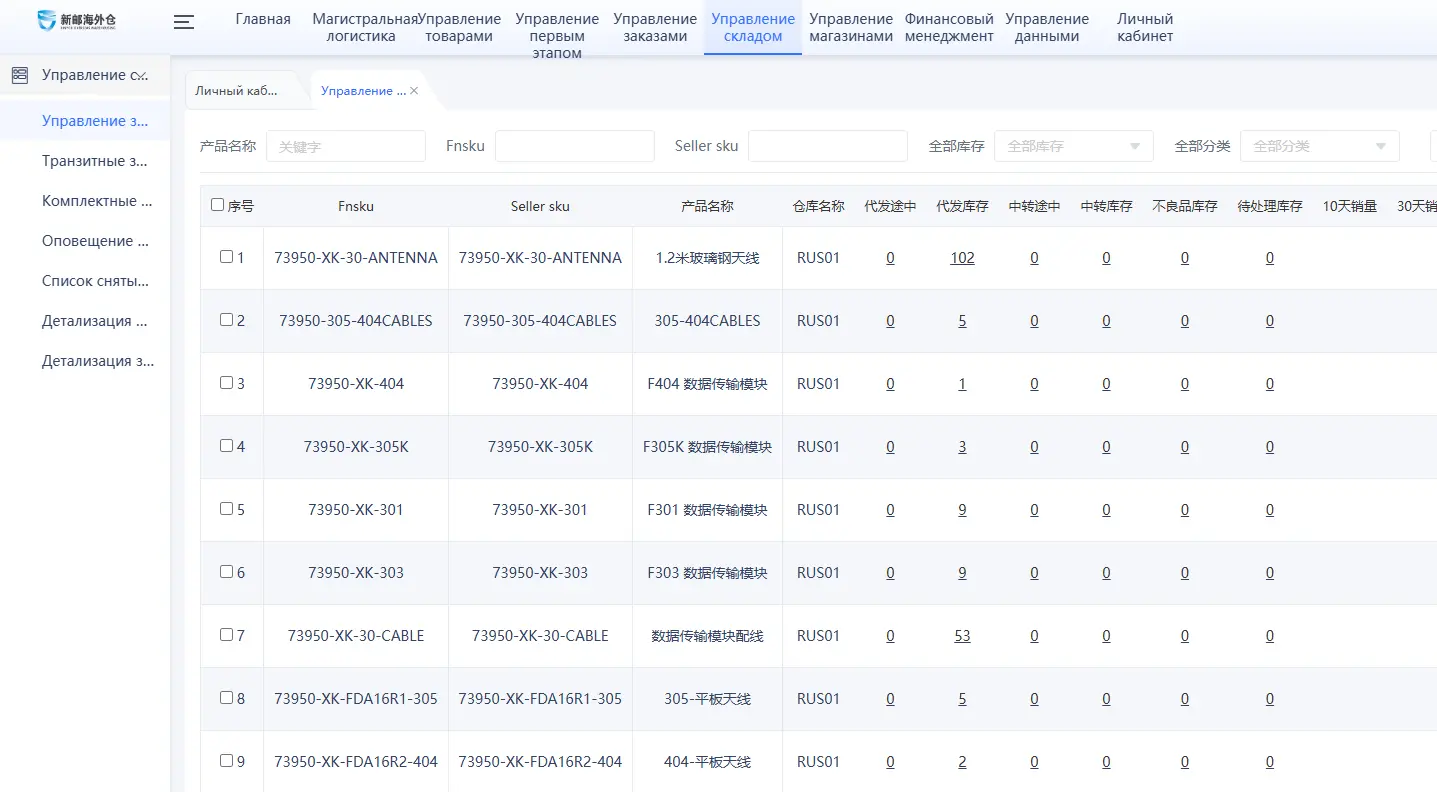
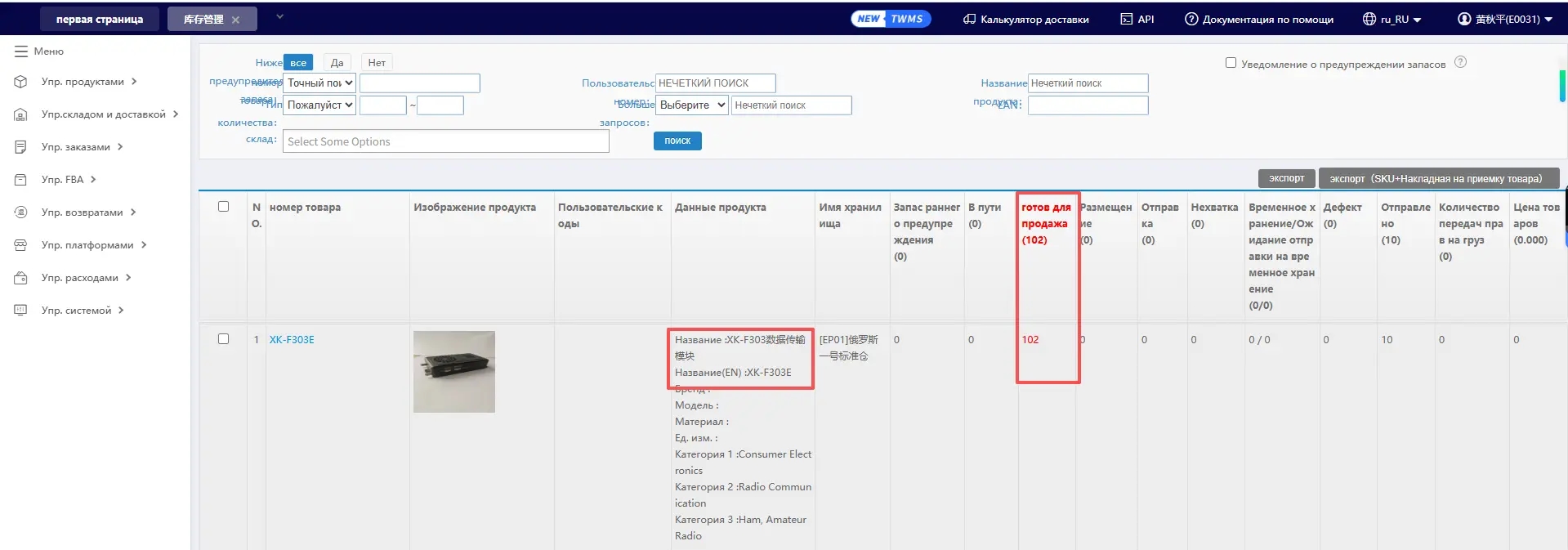
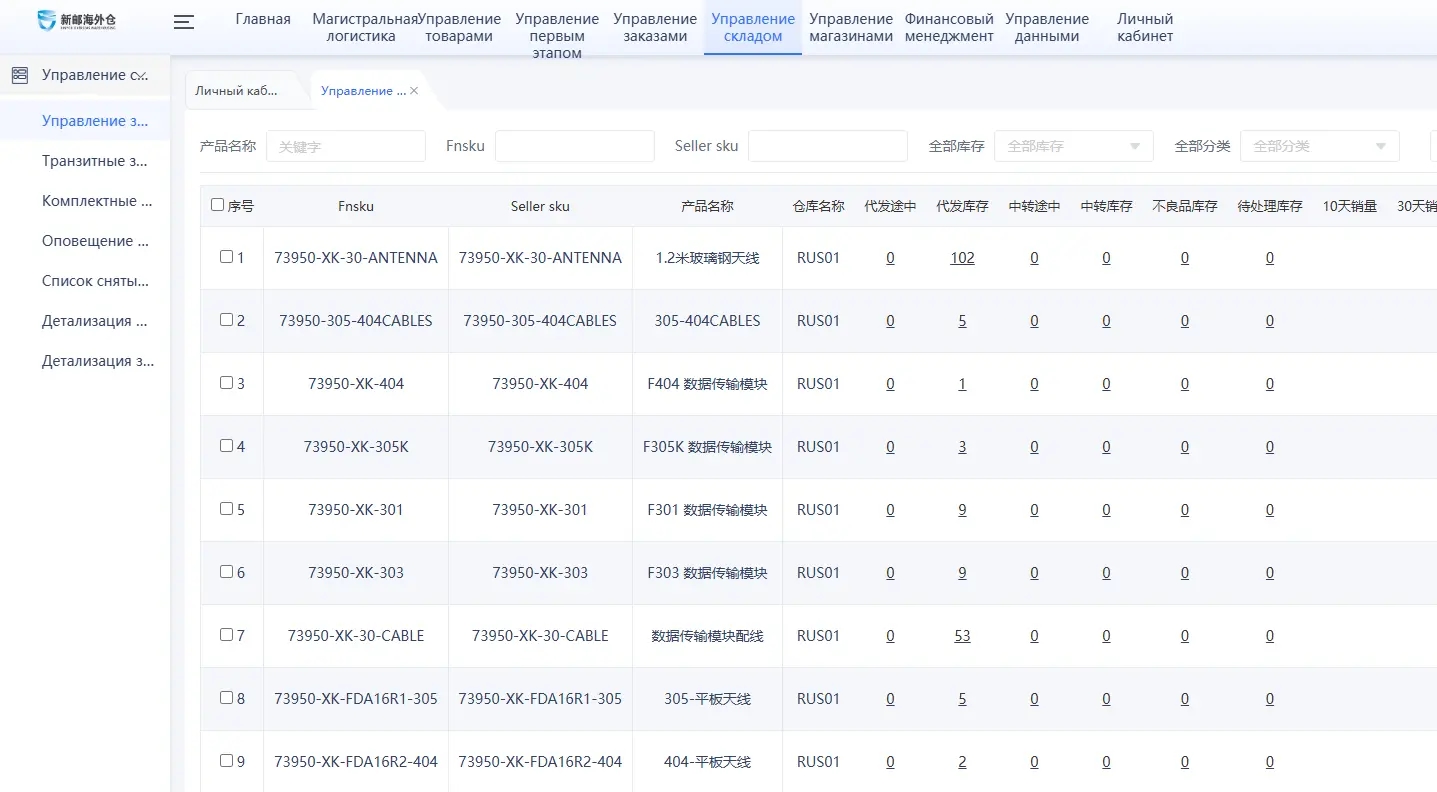
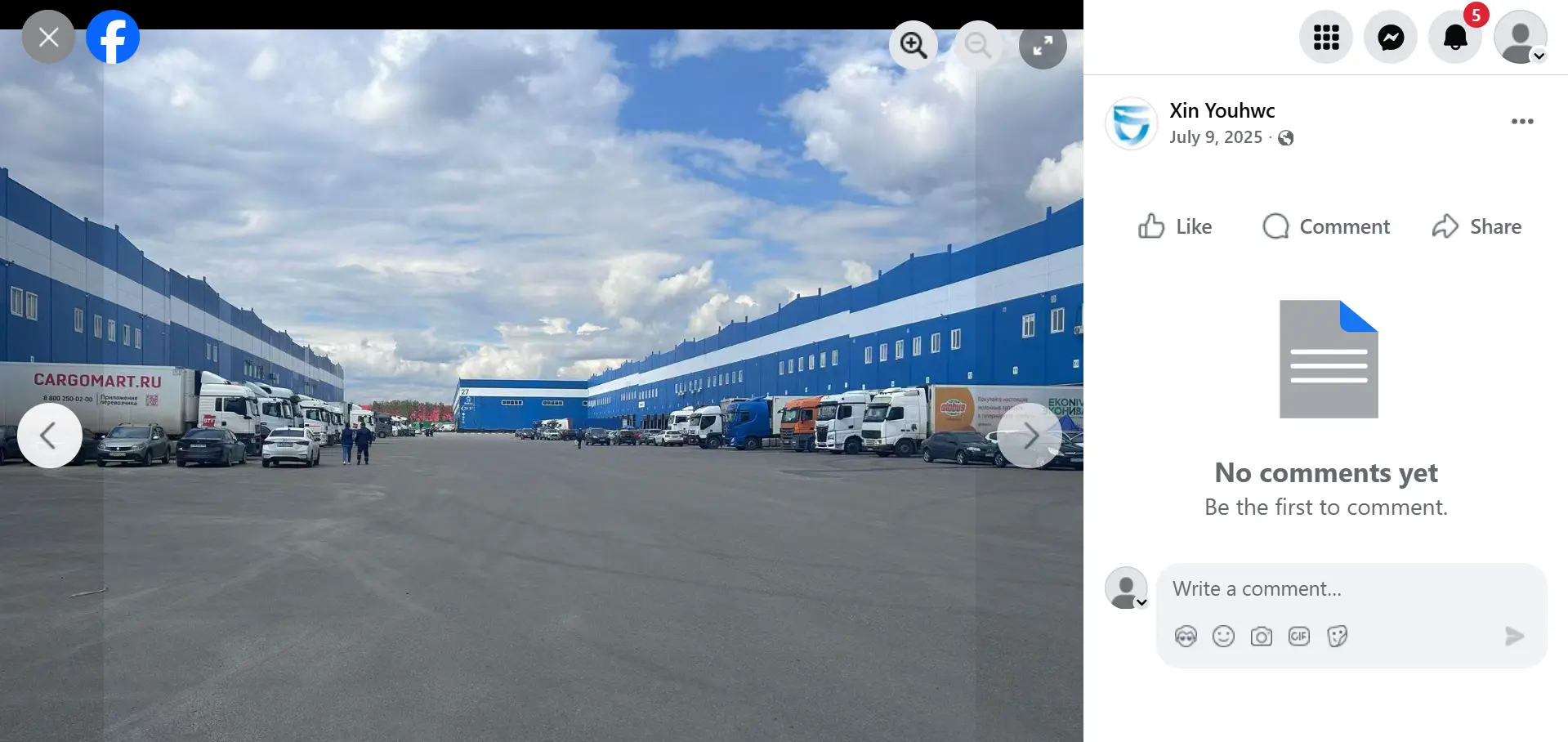
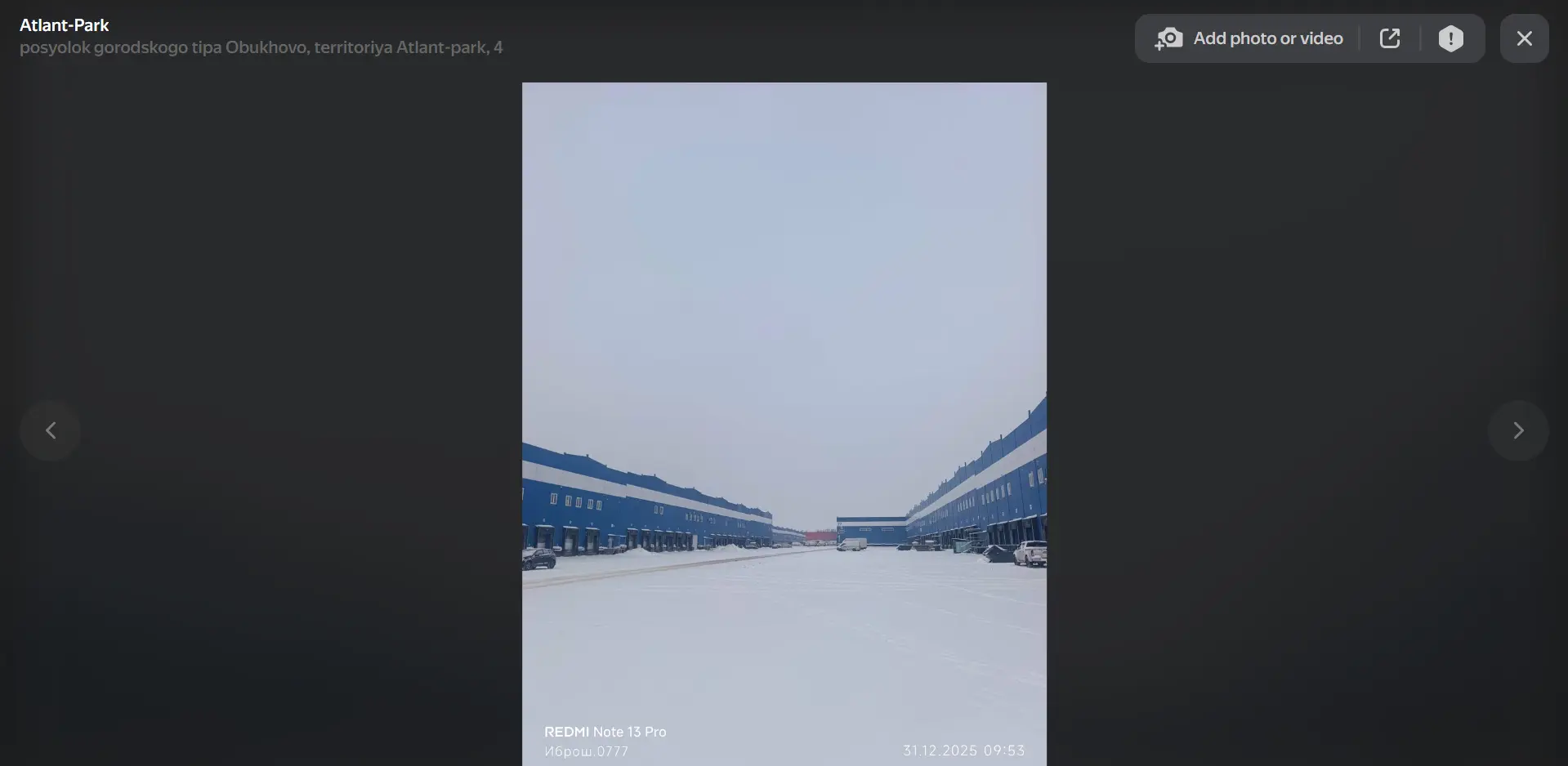
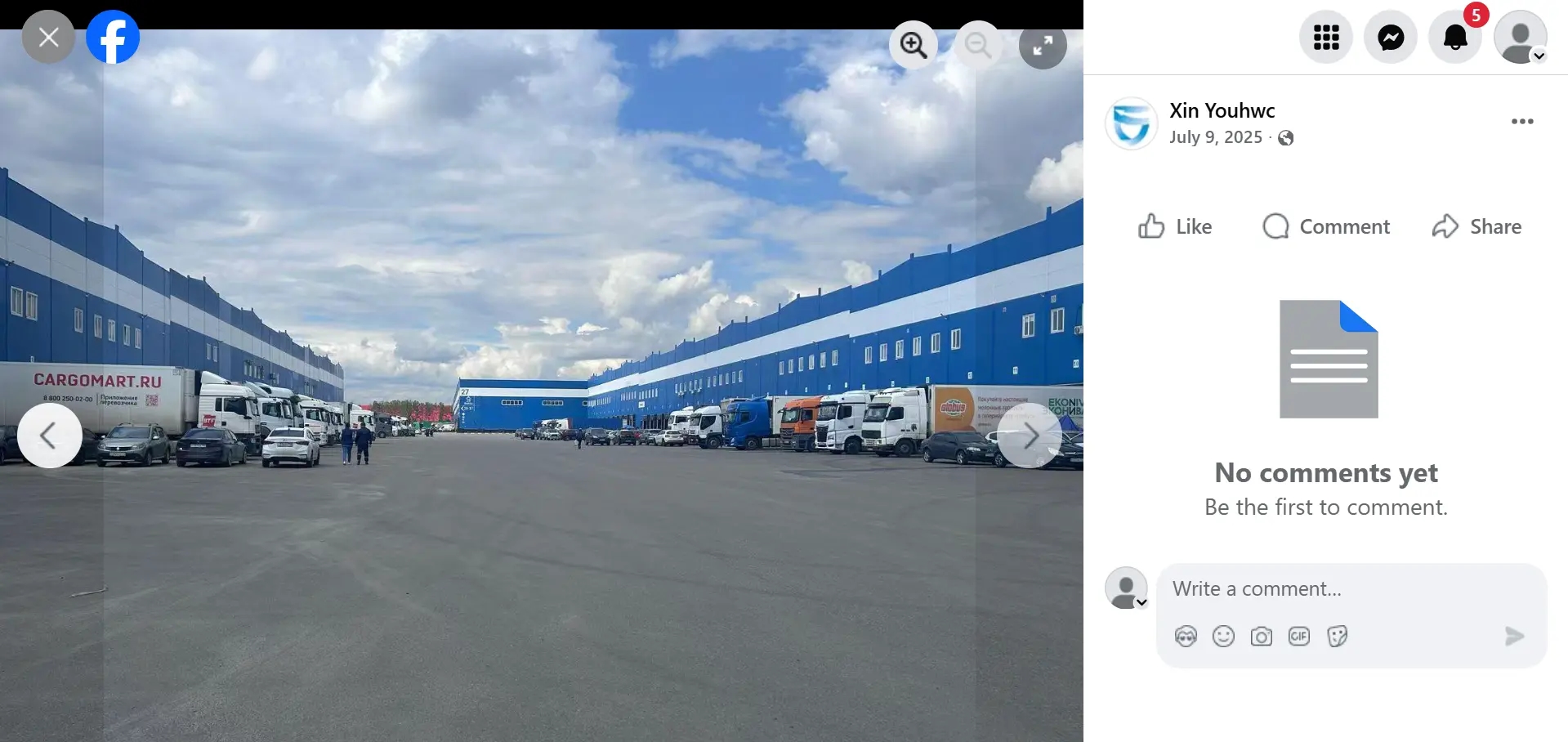
One of the provided screenshots of the warehouse management software shows the logo of Xinyou Overseas Warehousing Limited — a company providing warehousing services and based in Shenzhen. The exterior of the Russian warehouse, discovered on Xinyou Warehousing’s social media pages, matches images of the “Atlant-Park” complex, a warehouse zone in the urban-type settlement of Obukhovo in the Noginsky District of the Moscow Region. Videos posted on Xinyou Warehousing’s Facebook page show trucks with license plates from Kazakhstan and China.

References to the appearance of Xingkai Technology products on the Russian market were mainly linked to the intermediary LT Global Forwarding, which in 2023 imported data processing devices and antennas manufactured by Xingkai Technology worth $1.9 million. However, at that time, there was no confirmed evidence of direct official shipments from Xingkai Technology itself.
Payment details provided by Xingkai Technology show that the company’s bank accounts are held in Hong Kong at DBS Bank, while the personal account listed in the documents under the name of Jiang Qin is held at Ping An Bank. In online registries, Jiang Qin is listed as the company’s legal representative.
No recent records of Xingkai Technology’s customs operations could be found.
Cameras and interceptor drones
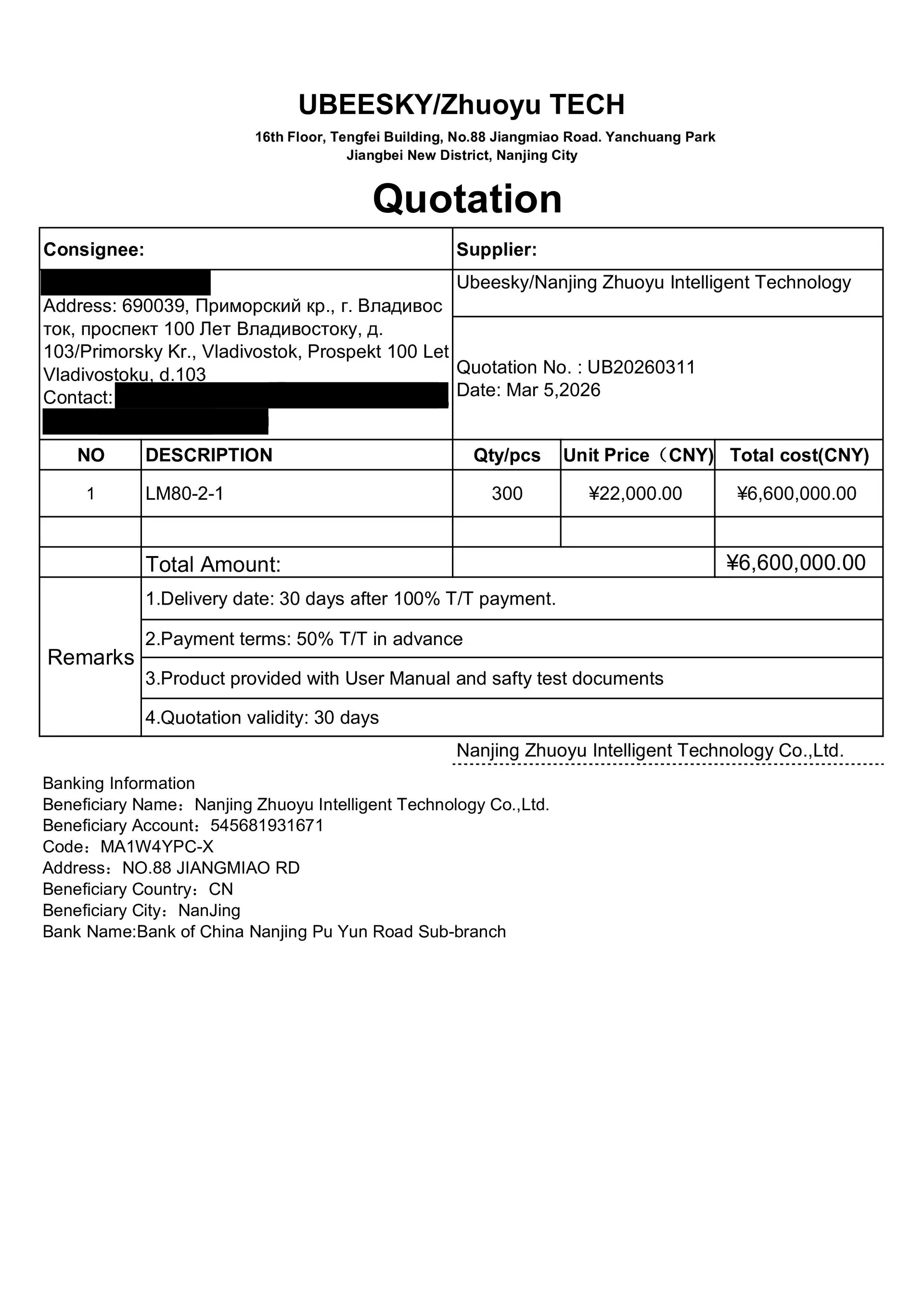
Reconnaissance and strike drones used by the Russian military employ thermal imaging systems to identify positions on the front lines and track personnel and equipment under any lighting conditions. Nanjing Zhuoyu Intelligent Technology Co., operating under the brand Ubeesky, was prepared to sell suspended cameras to a Russian client even after being informed that the products were intended for the Russian military. Nordsint received a commercial offer for LM80-2-1 electro-optical modules, which operate in both the visible and infrared spectrums. These modules are equipped with AI-based target acquisition and tracking capabilities. To facilitate payment, Ubeesky sent a proposal specifying that funds be transferred to an account at the Bank of China.
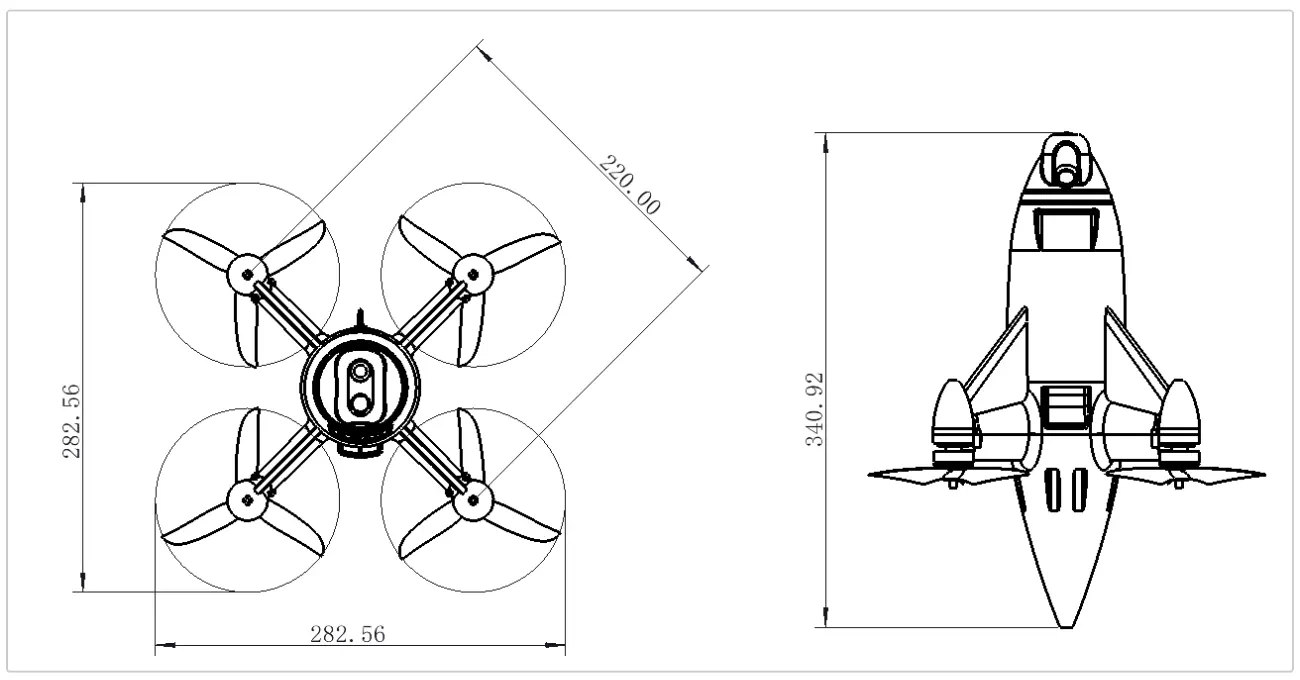
In addition to the cameras, a Ubeesky representative also reported that the company is in the process of developing an interceptor drone called the X-2 and sent Nordsint a product presentation.
The X-2 is a high-speed unmanned aerial vehicle designed to intercept other aircraft. It is controlled using built-in artificial intelligence and a ground-based tracking system.
Ubeesky was already known to be willing to supply products to Russia’s military-industrial complex. But marketing materials specifically promoting the X-2 interceptor point to an even more cynical business model.
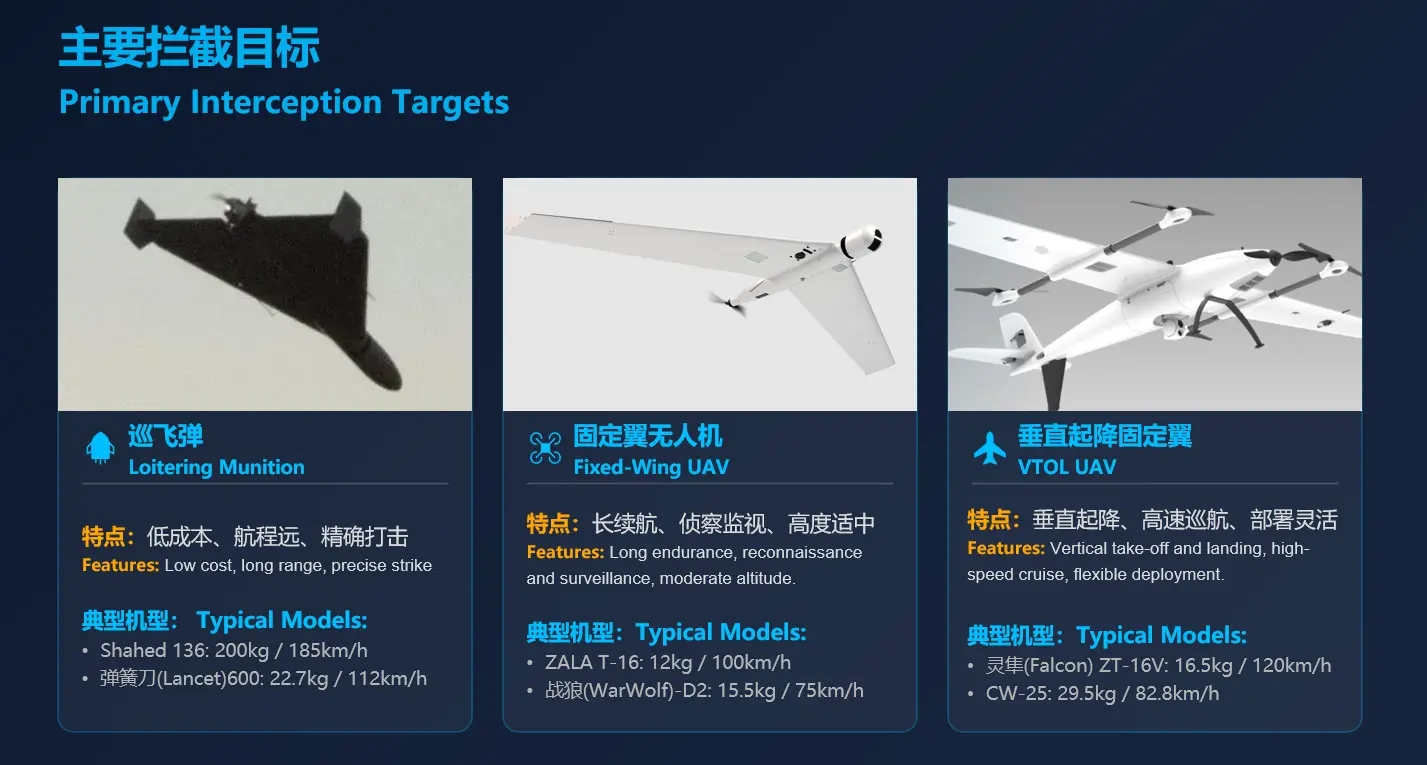
Ubeesky explicitly identifies the Shahed-136/Geran-2 and Zala T-16 as the primary targets of the X-2. In other words, the company is effectively advertising countermeasures against those very Russian systems that its own products help maintain. When Nordsint asked whether Ubeesky also sells its products to Ukrainian customers, a company representative replied in the negative while stating that the topic was “so sensitive” he would not discuss it further.
Shenzhen Zhenrong Era Supply Chain Management Co., operating under the name XT Shenzhen, was prepared to sell user-programmable field-programmable gate arrays (FPGAs) to Nordsint after being informed that the products were intended for use on long-range strike drones. FPGAs serve as the “brain” of high-precision weapon systems, providing low latency and parallel data processing.
When Nordsint expressed concerns that Western sanctions might hinder the import, a representative from XT Shenzhen acknowledged the complexity of the situation, calling it “very delicate.” He reported that the last sale to a Russian client took place eight years ago and proposed a workaround: “If we are to cooperate in the long term, I will need to register a new company and open an account with the Russian bank VTB before I can receive your payments directly.”
Radars and shell companies
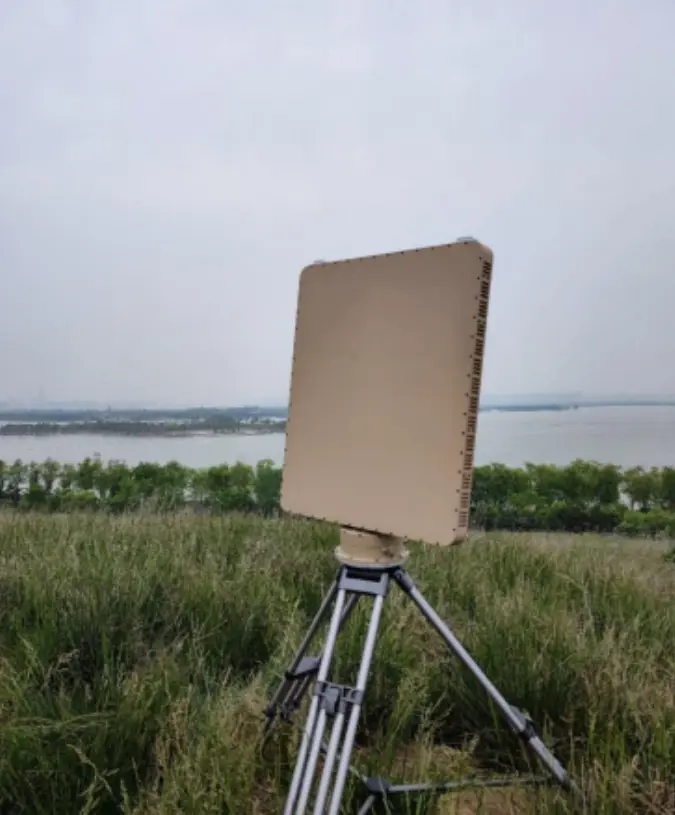
A Chinese seller operating under the Cloudwalker brand offered to supply portable X-band radar systems designed to detect FPV drones. The technical specifications provided by the company indicate that the system is capable of tracking small quadcopters at a distance of up to 10 kilometers, providing early warning of approaching loitering munitions.
A representative sent Nordsint an invoice. Even after being informed that the systems were intended for the Russian military for use on the front lines in Ukraine, they stated that such equipment could be shipped directly to Russia.
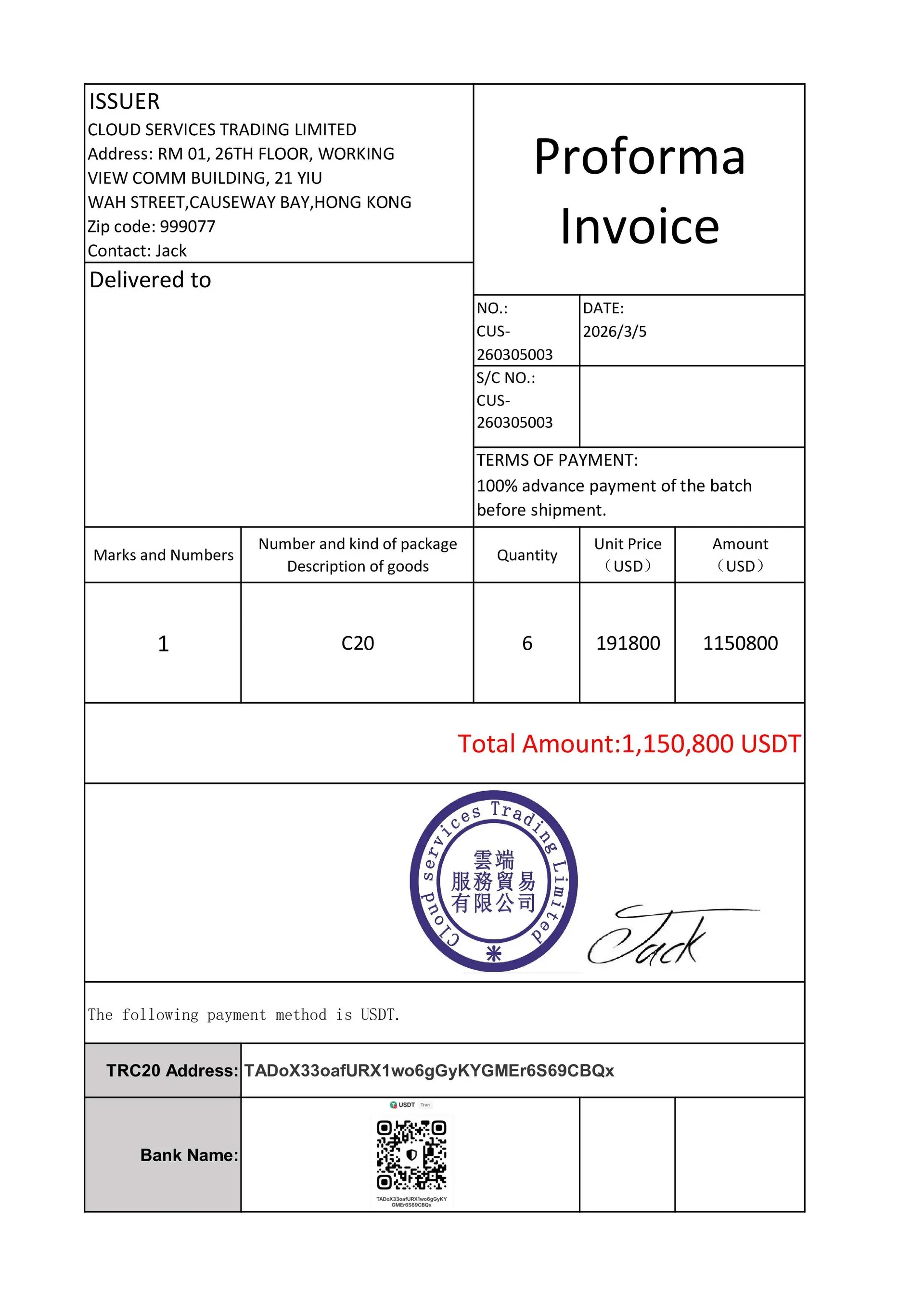
The invoice for the radar was issued by Cloud Services Trading Limited, a company registered in Hong Kong. There is virtually no public information available about this entity’s activities. Corporate records show that the company was registered in January 2025.
Cloudwalker requested payment in USDT (Tether) — a cryptocurrency pegged to the U.S. dollar that allows for nearly instant international transfers outside the traditional SWIFT network. An analysis of the blockchain for the specified wallet address shows high activity: since its creation, a total of 4,235,107 USDT has passed through this account.
When Nordsint requested identification documents, a Cloudwalker representative sent documents listing Shenzhen Yunchuang Linghang Technology Co. as the actual company behind the brand. Previous investigations, conducted in December 2025, had already identified Yunchuang Linghang as the shell company behind Cloudwalker.
It is noteworthy that Fiberblade — the previously mentioned fiber-optic cable supplier — is located in close proximity to Cloudwalker. The legal entities behind these companies (Shenzhen Xianfeng Technology and Shenzhen Yunchuang Linghang Technology) are registered at different addresses within the same building.
The Insider sent inquiries to the Chinese suppliers (Xt Shenzhen, Zion Communication, Hongan, Tianjin Textile, Raytek, Xingkaitech, Cloudwalker, Ubeesky, Fiberblade) but received no responses.
“Capture the ringleader first to nab the bandits”
The greed and moral recklessness of Chinese businessmen, willing to aid Russia in the killing of Ukrainians for the sake of the skyrocketing profits the market now promises, are well known. What is surprising is that the rather cautious Chinese banks continue to pretend they do not understand the purpose of incoming yuan transactions from Russia.
The Insider sent inquiries to the banks that were proposed as the direct recipients of payments for military goods: China CITIC Bank, DBS Bank, Ping An Bank, China Zheshang Bank, Bank of China Nanjing, and China Bank of Communications, but received no responses.
The Insider received a response to its inquiry only from Citibank, which appears in this investigation as a correspondent bank; it requested additional information, but then declined to comment.
Sanctions authorities from Western countries might do well to recall the Chinese stratagem: “Capture the ringleader first to nab the bandits.” In the current situation, the Chinese banking system acts as the “ringleader.” It appears that only severe sanctions pressure on those Chinese banks that are still working with exporters can stop the “bandits” from supplying their products to the Russian military-industrial complex.
Shortage in the Russian market and rapid price growth
Fiber optic imports to Russia in 2025 accounted for 10.5% of global production. In previous years, that figure did not exceed 1%. This growth is attributable to the cessation of production at the Optic Fiber Systems plant in Saransk following attacks by Ukrainian drones last April. Leonid Konik, CEO of ComNews Group, stated that all optical fiber used by Russia is now imported from China.
According to Anastasia Bizhelova, Director of Development and Operations at Telecom Birzhi, Chinese manufacturers have raised prices for optical fiber for Russian customers by 2.5 to 4 times. Alexey Babenko, CEO of the Ukrainian company Vyryi drone, stated in an interview with Militarnyi on March 5 that a 35-kilometer reel of fiber-optic cable for drone control now costs $700. This is more than the price of a Starlink terminal (which can also be used on drones to counter electronic warfare systems).
Chinese fiber optic manufacturers supply both the Russian and the Ukrainian sides in the ongoing war. Trade data shows that Hongan Group exported several shipments of fiber optic cable to Ukrainian companies, including to Shocktradestore LLC. This company, based in Bila Tserkva, is engaged in the “manufacture of weapons and ammunition” and participated in tenders for Ukrainian military procurement.
Chinese fiber optic manufacturers supply both Russia and Ukraine in the ongoing war
However, according to data from The Washington Post, fiber optic cable exports from China to Russia exceed shipments to Ukraine by a wide margin. In August 2025, China exported nearly 528,000 kilometers of fiber optic cable to Russia, while 116,000 kilometers were shipped to Ukraine that same month.
“To be honest, the Chinese fiber-optic market is in complete chaos right now, and prices are just insanely high,” one seller wrote in a conversation with Nordsint, adding that such prices are the result of “the current tense international situation.” The seller quoted a price of $28 per kilometer, noting that it was valid for only one hour. Later, the price rose to $34, as the seller was informed that the stock had sold out two days earlier and they needed to switch cable suppliers.
“The fiber optic market is constantly changing. Priority goes to whoever offers the highest price. So the price I’m offering you now, if you haven’t made a decision yet, could be snatched up by another buyer in just ten minutes,” the seller warned.
In recent months, the cost of Chinese fiber optic cable has skyrocketed. “Before the Spring Festival, the price was $13 [per kilometer]. No one expected it to rise to $30 after the holiday — that’s never happened before. Because of the price hike, I lost five clients this month,” the trader wrote.