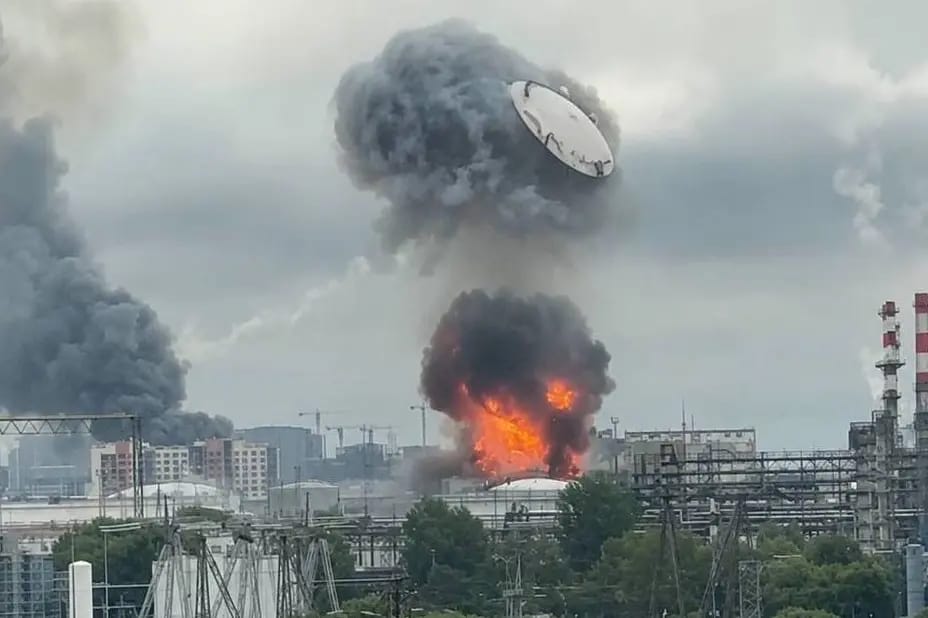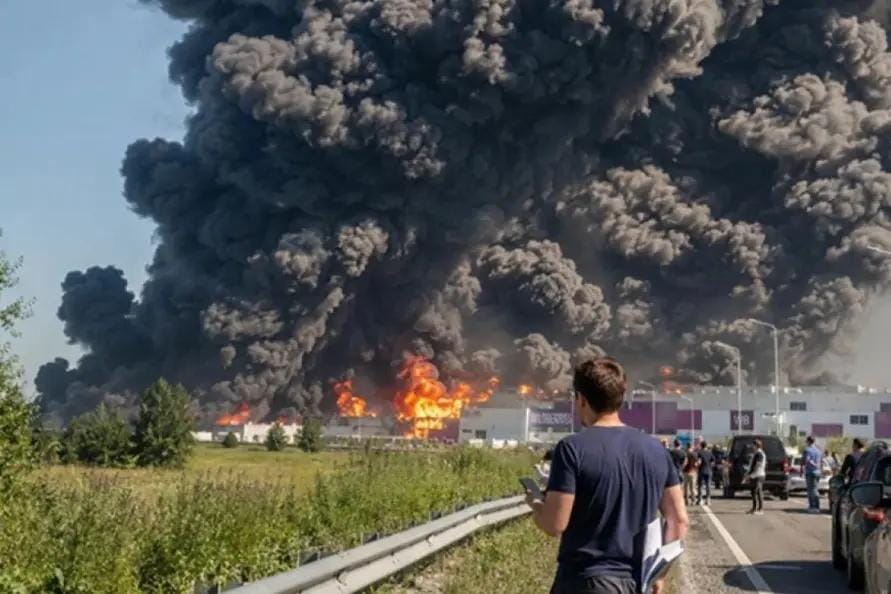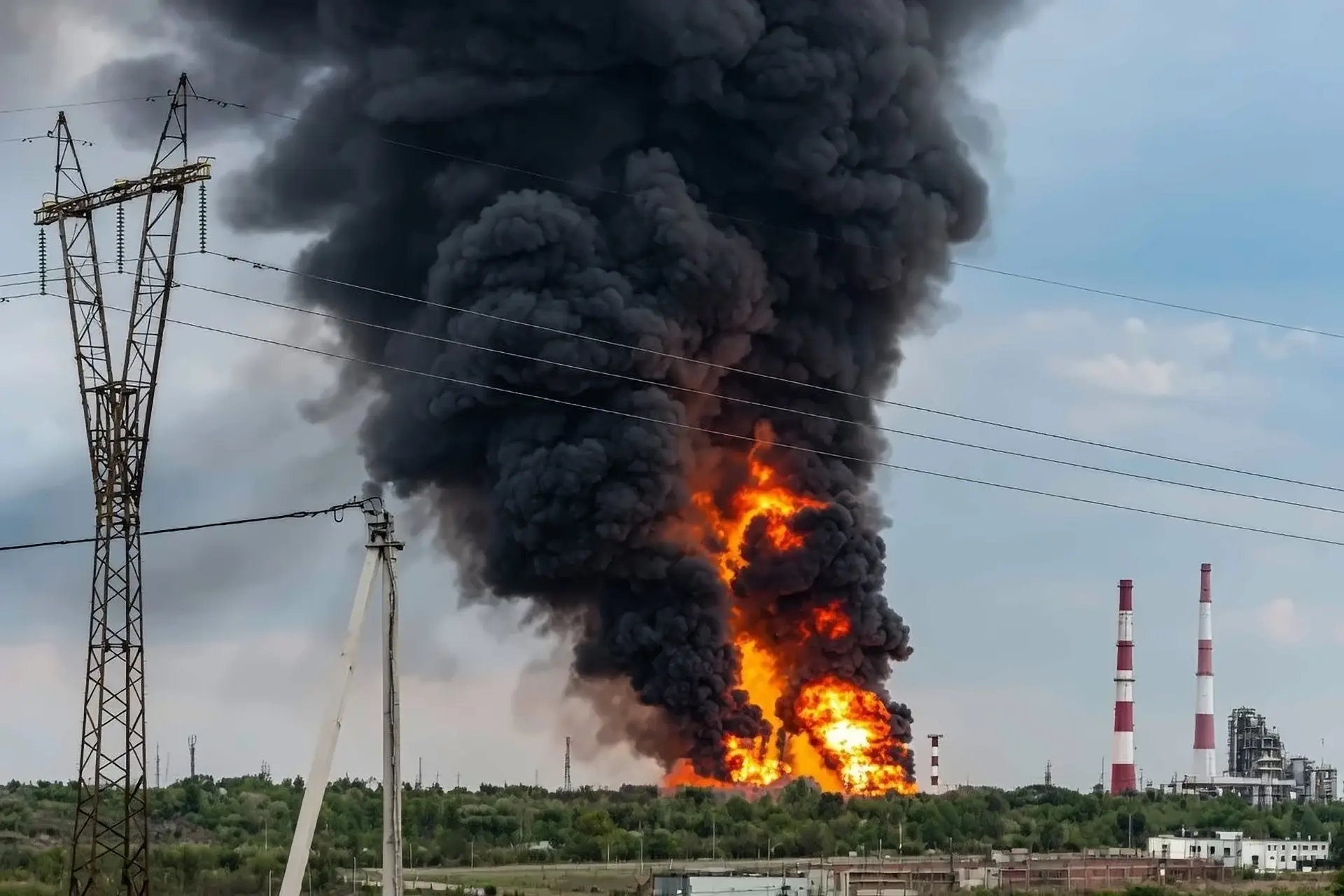
Russia’s losses from Ukrainian strikes on oil refineries have already reached 1% of GDP — and that's if Vladimir Putin is to be believed. Putin, of course, is hard to believe, but even 1% of GDP is an enormous sum — roughly half of the federal government's current budget deficit. And on top of that, mounting strikes mean the figure is likely only to rise — especially if the three recent attacks on Yandex data centers signal a new trend. According to The Insider’s estimates, each successful strike on an oil refinery costs Russia an average of around 23 billion rubles ($274 million), while a strike on an online marketplace warehouse costs 450,000 rubles ($5,350) per square meter. In the long run, these losses will weigh on the budget and drive down consumer demand — two key drivers of the Russian economy.
Average cost per unit
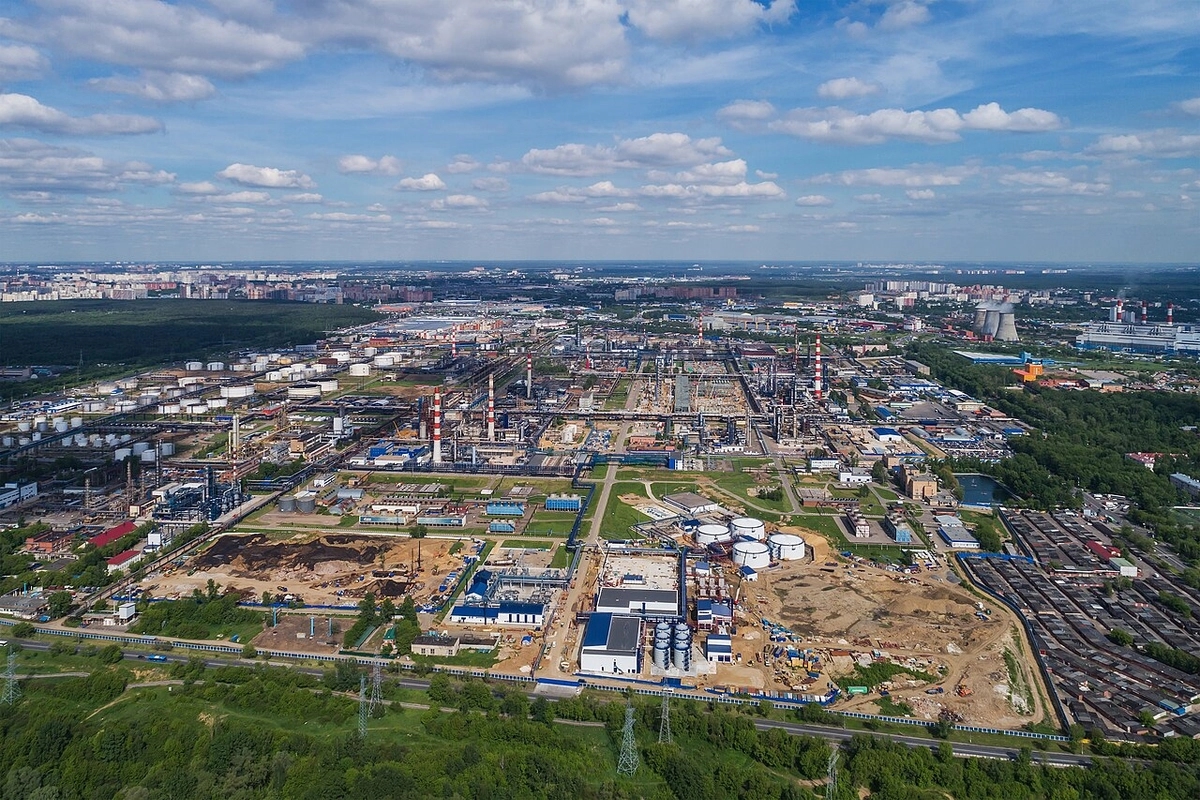
Unlike the production of crude oil, refining generates relatively little revenue for the Russian budget. When a refinery shuts down, the costs are borne by businesses: the refinery’s owner, fuel consumers, and intermediaries. Repair costs can be roughly estimated from equipment prices or the total cost of modernizing a refinery (since exact prices for individual units are rarely disclosed). For Russia’s large refineries, of which there are 37, several examples are available.
The Ministry of Energy estimated that 95 secondary-processing units were rebuilt and commissioned in Russia between 2011 and 2018, at a total investment of 1.6 trillion rubles. That works out to just under 17 billion rubles per unit, by a very rough estimate. Between 2019 and 2026, another 27 units were commissioned, against a target of 40, with investments totaling 512 billion rubles. That amounts to nearly 19 billion rubles per unit on average. The figures broadly corroborate each other and reflect rising costs, partly due to sanctions.
Bringing a single secondary-processing unit online costs 19 billion rubles – the average over the past seven years
Replacing imported oil-refining equipment with domestic alternatives has been a particular challenge. Foreign technologies dominated the original modernization projects, and after sanctions were imposed, the Ministry of Industry and Trade sought to promote import substitution. However, the industry continues to rely heavily on Asian suppliers.
There are also figures for individual companies. In 2023, Gazprom Neft ceremonially launched a new primary oil-processing complex in Omsk, costing more than 66 billion rubles. It replaced six older units built to previous environmental standards. In other words, replacing each old unit cost about 11 billion rubles.
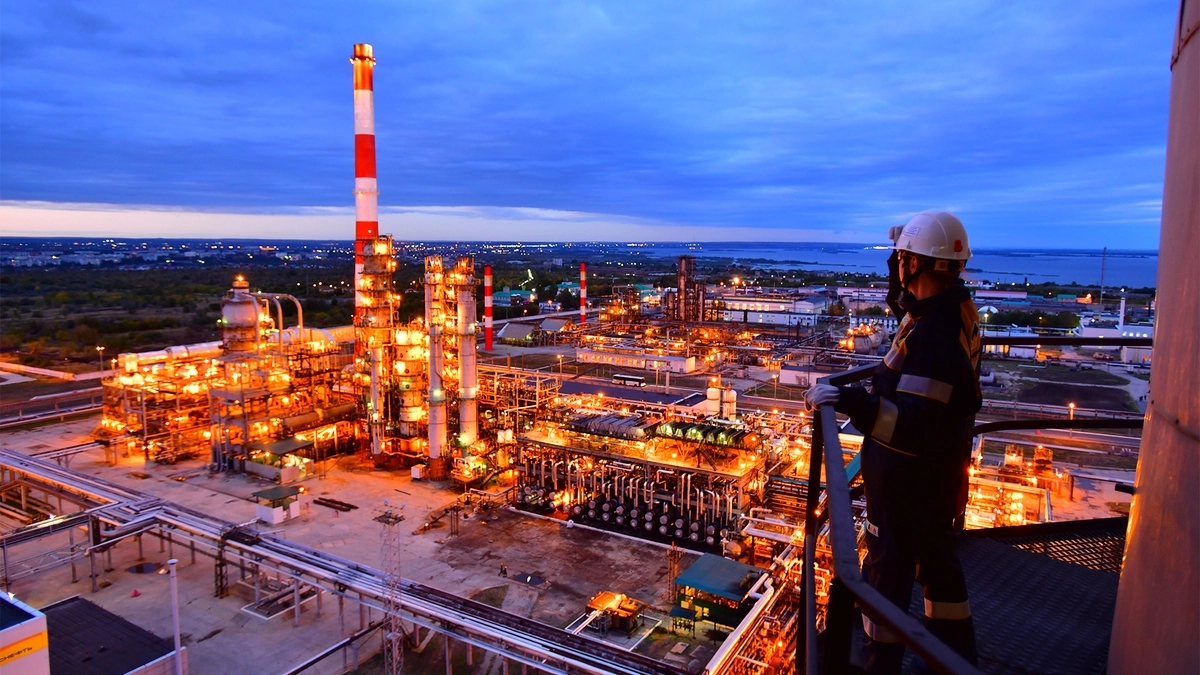
Matthew Sagers, an expert at S&P Global Commodity Insights, estimated that damage from a single Ukrainian drone attack in 2024 could have cost anywhere from several million to tens of millions of dollars. Around the same time, Sergey Vakulenko wrote that refinery repairs could run into tens of millions of dollars.
If the energy truce proposed by Trump is agreed to, it would give Russian refineries time to carry out repairs. But if the deal Ukraine is willing to accept — but which Russia is not — falls through again and the Ukrainian Armed Forces step up their attacks on refineries, major overhauls may soon be necessary, according to one industry source. Such an overhaul takes at least six months, as the unit must be designed by an engineering institute, approved, manufactured, and installed.
Repairs involving imported equipment could take even longer, as the necessary components may simply be unavailable. Recovery from a fire can take longer still, requiring an assessment of the site, the dismantling of damaged structures, and the removal of debris.
What would it cost to repair the Moscow refinery?
On the night of Sept. 20, a drone attack damaged the Euro+ complex at the Moscow refinery. The complex, which includes an ELOU-AVT-6 primary oil-processing unit, was commissioned in 2020 at a cost of 98 billion rubles.
ELOU-AVT is an integrated processing unit in which crude oil undergoes atmospheric and vacuum distillation after desalting. A typical configuration includes an electrical desalting unit, an atmospheric distillation unit, and a vacuum distillation unit, often along with gasoline stabilization and fractionation units. Most of these components are available from Chinese suppliers, albeit in smaller capacities than the original equipment. A search for “atmospheric distillation column,” for example, returns numerous offers. An atmospheric distillation unit can also be ordered separately from China, although available prices are only rough estimates.
“The Russia factor for Chinese equipment is four,” one industry source told The Insider, explaining why equipment repairs are becoming more expensive. In other words, Chinese equipment delivered to Russia costs four times the price quoted on a website or in a catalog. Meanwhile, European equipment routed through China is prohibitively expensive and economically viable only for specialized items that cannot be sourced elsewhere.
The cost of Chinese equipment comparable to that used at the Moscow refinery can be estimated from several international projects involving Chinese contractors. In 2016–2017, China Petroleum Engineering & Construction Corporation (CPECC) modernized an atmospheric distillation unit at an Algerian refinery under a contract worth $408 million (approximately 23 billion rubles). The engineering, procurement, and construction (EPC) contract covered the refurbishment of the atmospheric distillation unit, installation of a naphtha hydrotreating unit, and construction of a new control room.
At the Moscow refinery in Kapotnya, similar processes are part of the Euro+ complex: atmospheric and vacuum distillation in an ELOU-AVT-6 unit with an annual capacity of 6.6 million tons, as well as diesel fuel and naphtha hydrotreating. The Kapotnya refinery also has a unit for recovering sulfur from hydrogen sulfide, which was not included in the Algerian project.
A larger example is Kuwait’s Al-Zour refinery, which far exceeds the Moscow refinery in capacity. Its main processing units, including the atmospheric and vacuum distillation facilities, were built by China’s Sinopec Engineering in a consortium with Spain’s Técnicas Reunidas and South Korea’s Hanwha. The lump-sum turnkey (LSTK) contract ran from 2015 to 2019 and was worth $4.1 billion (equivalent to 265 billion rubles at the Central Bank’s average annual exchange rate). In addition to atmospheric and vacuum distillation and hydrotreating, the Kuwaiti project includes vacuum gas oil hydrocracking and a large elemental sulfur recovery unit. Similar facilities are also part of the Moscow refinery.
Another benchmark is China’s Zhongke refinery, with an annual capacity of 10 million tons. Built between 2017 and 2020, its first phase cost approximately $5.6 billion (around 360 billion rubles). Alongside atmospheric and vacuum distillation, it includes fluid catalytic cracking, hydrocracking, and an aromatics complex, as does the Moscow refinery.
However, an ELOU-AVT-6 unit cannot simply be bought off the shelf. Such facilities are not sold as finished products on the open market; they must be designed and built or reconstructed for a specific refinery. Publicly available figures offer only rough estimates for comparable units. In 2012, construction of a new ELOU-AVT-6 unit was estimated at 8.3 billion rubles. In Azerbaijan, dismantling and installing an operating ELOU-AVT unit with one-third the capacity cost $75–80 million in 2018, (equivalent to approximately 6–7 billion rubles at the time). In Russia, contracts for building new ELOU-AVT units comparable in capacity to the Azerbaijani facility were estimated at 14 billion rubles in 2017.
An ELOU-AVT-6 unit cannot simply be bought off the shelf: each must be built for a specific refinery. The price includes design, manufacturing and installation, and now runs to hundreds of billions of rubles
In other words, Chinese equipment for facilities comparable to those at the Moscow refinery can cost anywhere from several hundred million dollars to several billion dollars for an entire integrated refinery, depending on its scale and the range of secondary processing units.
The total cost of delivering equipment from China to Russia is three to four times the Chinese price, once logistics, customs duties, adaptation to Russian standards, and intermediaries’ margins are included. Repairs will therefore cost at least 25 billion rubles, with the upper end potentially reaching half a trillion rubles after markups.
The cost of the fuel shortage
Unfortunately, the full impact on the fuel market is difficult to assess. Rosstat has not published gasoline and diesel production data since May 29, 2024, leaving experts to guess. The most impressionistic approach is to look at gas stations — the length of queues and the level of tension among those waiting. But this is no basis for a serious assessment.
In early July, Ukraine’s General Staff put the share of affected refining capacity at 42.74%. The Financial Times estimated that by the end of July, 45% of capacity was nominally offline, with more than 30% actually idle. Refining output had fallen to 25–30% below normal levels. Alexander Shokhin, head of the Russian Union of Industrialists and Entrepreneurs, estimated the losses at 25–30%.
Experts broadly agree that Russian oil refining has fallen to 3.8–4.2 million barrels per day, down from 5.3–5.5 million barrels per day in 2024–2025 — a drop of 20–25%. The International Energy Agency forecasts a similar level of 4 million barrels per day. In September, it lowered its baseline forecast for the next 18 months.
Even an accurate estimate of lost refining output, however, does not tell us how much consumption has changed. That is crucial to assessing the indirect damage caused by the attacks. Short-term shortages can be partly offset by drawing on reserves, importing fuel, rerouting supplies, or increasing output at other refineries. The economic impact must therefore also be assessed from another angle: transport activity.
Sergei Vakulenko, an expert at the Berlin-based Carnegie Russia Eurasia Center, proposed using traffic accident statistics to gauge the severity of the fuel crisis, reasoning that they reflect the intensity of road traffic. His model showed that the number of accidents in July 2026 was 7.9% below the expected level, while the preliminary figure for August was 12.4% lower. The decline was particularly pronounced in more rural areas. Allowing for subsequent revisions to the data, Vakulenko estimated that gasoline consumption fell by 7.5–10% in August.
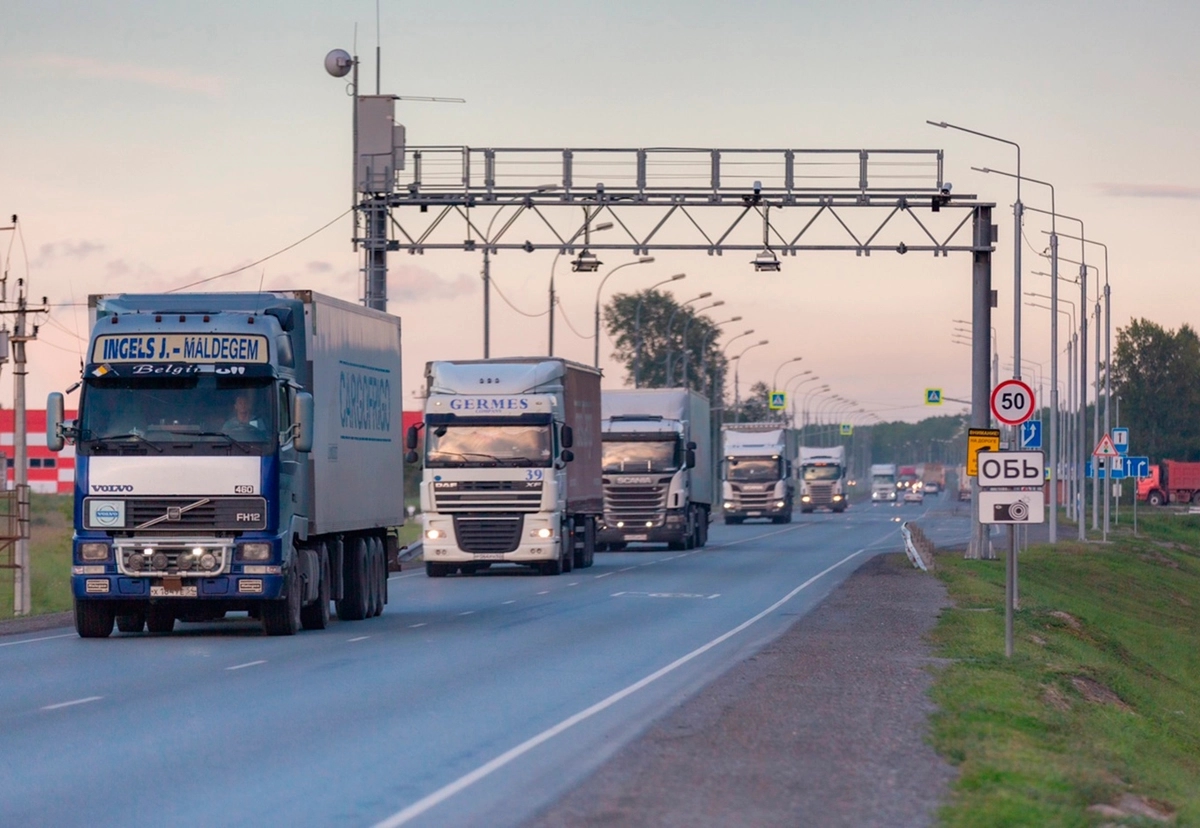
Payments by heavy trucks offer another indirect indicator. The Platon system charges vehicles weighing more than 12 metric tons a per-kilometer fee on federal highways, excluding toll roads. Monthly payments can be reconstructed from the operator’s reports by comparing the cumulative toll collections over time. (However, one adjustment is necessary, as the rate was 3.34 rubles per kilometer in 2025 but rose to 5.19 rubles in 2026.)
Using this method, The Insider calculated that between Aug. 15 and Sept. 15, 2026, truckers paid for 1.93 billion notional kilometers of travel, down from 2.4 billion a year earlier — a decline of about 20%.
Platon toll collections from August 15 to September 15 indicate that truck mileage fell by 20% year on year
A drop recorded over a single month is not enough to draw sweeping conclusions. But even if only one in ten trucks was taken off the road (rather than one in five), or all trucks kept running but traveled 20% fewer kilometers, the figures still point to a negative economic impact. After all, road freight is critical to the Russian economy.
As Putin himself said on Oct. 1: “Ukrainian forces began striking refineries and openly declared their goal: to damage our economy. Did they achieve it? Partly. By our estimates, we lost about 1% of GDP.” Notably, Putin did not specify the period covered by his estimate, but if he meant annual GDP, then the figure would be 232 trillion rubles, according to Finance Ministry projections. If true, that would put the losses from all the attacks at 2.32 trillion rubles — slightly more than a third of the projected 2026 budget deficit of 7.3 trillion rubles, and more than half the remaining liquid assets of Russia’s National Wealth Fund, which stood at 4 trillion rubles on Sept. 1.
Putin acknowledged that strikes on oil refineries had cost the Russian economy roughly 1% of GDP, but did not specify that this amounted to more than 2 trillion rubles
The estimate presumably includes destroyed property, repair costs, and losses caused by refinery disruptions — such as downtime, higher supply costs, and losses at businesses affected by fuel shortages. If Putin was referring to the current year, about 50 successful attacks on refineries were recorded in the first half of 2026, according to The Insider, followed by roughly the same number in July–September. That would put the average cost of each of the 100 successful strikes at 23 billion rubles (though this remains a very rough estimate based on an interpretation of figures released by the Kremlin).
Marketplaces: Goods burn, obligations remain
Russia’s retail sales totaled 61 trillion rubles in 2025. Though not a core economic sector, retail is just as vital to everyday life as the availability of fuel at filling stations. Alexander Maslennikov, deputy secretary of Russia’s Security Council, described the economic impact of strikes on warehouses belonging to the Wildberries online marketplace as “very limited” and “symbolic.” He acknowledged, however, that the attacks cause localized economic losses and affect small businesses.
The direct damage to the retail sector from strikes on Wildberries warehouses consists of the value of destroyed goods and damage to the warehouse infrastructure itself. Wildberries operates warehouses of varying sizes, and the Pareto principle applies to e-commerce too: 20% of products generate 80% of profits. In other words, 20% of the goods destroyed could account for 80% of the losses. Even so, some rough estimates of the damage are already available.
Following attacks on warehouses in Elektrostal (250,000 square meters) and Kotovsk (108,000 square meters), Kommersant reported that the cost of rebuilding the logistics complexes would range from just over 20 billion to 35.8 billion rubles. The variation reflects differing estimates of construction costs from industry sources, ranging from 60,000 to 100,000 rubles per square meter. The midpoint is 80,000 rubles per square meter, a useful benchmark for estimating damage from future attacks.

Estimating the value of goods destroyed by fire is even more speculative. Although products vary widely in price, we can assume that warehouses contain a roughly equal mix of cheap and expensive goods. On that basis, we can estimate the average value of goods destroyed per square meter. Ideally, we would use cubic meters, but warehouse capacity is not reported in those terms. Reports on fires also measure the affected buildings by floor area, not volume.
The value of goods destroyed in the fires in Elektrostal and Kotovsk was estimated at 150–170 billion rubles across a combined area of 360,000 square meters. That works out to an average of 444,000 rubles per square meter. In the attacks on warehouses in Krasnodar (150,000 square meters) and Nevinnomyssk (100,000 square meters), the value of destroyed goods was estimated at 100–120 billion rubles. That likewise comes to around 440,000 rubles’ worth of goods per square meter.
The average value of goods destroyed in fires at Wildberries warehouses is around 440,000 rubles per square meter, based on media reports
Other losses must also be considered. Every day that a distribution center remains out of operation costs tens of thousands of sellers when it comes to lost revenue, and it can take weeks for goods to be unblocked after an attack. Meanwhile, entrepreneurs’ working capital remains tied up and loan interest continues to accrue. Many lack financial reserves and are forced either to operate in the informal economy or shut down. Losing inventory depletes sellers’ working capital, as they must buy new stock to resume trading.
Even when insurance covers part of the losses, the wait for compensation itself represents a direct cost. Disputes between sellers and marketplaces are consequently increasing. According to SPARK, between July 15 and Sept. 15, Wildberries was named as the defendant in 599 new lawsuits, up 53.6% from the same period in 2025. Competitor Ozon’s main legal entity faced 236 new cases, more than twice as many as a year earlier.
For the government, this is a direct blow to the tax base, as the Finance Ministry loses VAT and corporate income tax revenue from an entire sector. If sellers’ lost revenue amounts to 445–508 billion rubles, the resulting tax losses can be estimated at 10–30 billion rubles. For sellers under the general tax regime, corporate income tax is calculated on profit margins of 15–25%, implying losses of 13–25 billion rubles.
Under the simplified tax regime, sellers pay 6% of their total revenue, which would mean tax losses of 26.7–30.5 billion rubles. A realistic estimate of the government’s one-off revenue losses is therefore 13–30 billion rubles. The lower end represents corporate income tax on a 15% margin applied to 445 billion rubles, while the upper end is the 6% simplified tax on 508 billion rubles. The actual mix of tax regimes could shift the estimate, but it provides a useful benchmark.
An alternative estimate, based on data from The Moscow Times, suggests even greater losses. According to the publication, Wildberries’ turnover has already fallen by a quarter due to sellers leaving the platform. With annual turnover of 6.1 trillion rubles, that implies 1.5 trillion rubles in lost revenue. VAT alone on that amount, at 20%, would total 300 billion rubles, excluding corporate income tax and taxes paid by sellers.
Moreover, a report by the Center for Tax Policy and the Russian Academy of Sciences’ Institute of Economic Forecasting estimates that the government could lose 440–690 billion rubles in marketplace-related tax revenue in 2026 because of the way these platforms operate. The attacks are only exacerbating this trend.
These are one-off losses, however. The long-term impact is more serious: depleted working capital will force some sellers out of business. Our calculations suggest that the loss of just 10% of active sellers would reduce annual tax revenue by 35–50 billion rubles and social insurance contributions by another 7–10 billion rubles. We assume that 10% of sellers account for roughly 10% of turnover — about 610 billion rubles out of 6.1 trillion. At a 6% simplified tax rate, that would mean 36.6 billion rubles in lost tax revenue. Social insurance contributions, normally around 30% of payroll, would add another 7–10 billion rubles, (although the exact amount is difficult to estimate).
The actual range could be wider depending on the mix of tax regimes, but we use this as a working estimate. In reality, the loss of working capital might force out 5% or 20% of sellers rather than 10%, significantly changing the outcome.
In any event, attacks on warehouses, like those on oil refineries, have also begun to fuel inflation. Prices on marketplaces rose by 10–30% within days of the attacks, and gasoline prices increased by 16.5% between January and August 2026 compared with the same period in 2025, according to Rosstat data. The year-on-year increase in August was 25%. Insurance payouts to businesses rose by a third in the first half of 2026, according to RBC. Higher insurance premiums will also feed through into prices over time.
Insurers are lowering their liability limits, and some risks are no longer covered at all. The loss ratio in terrorism insurance has exceeded 100%. Market rates for terrorism and sabotage insurance have risen tenfold over the past four years, according to Energogarant. Businesses are also rethinking their investment plans: why build a new production facility if a single attack could put it out of operation?
“Yandex”: The Ukrainian Armed Forces will find everything
Three of Yandex’s key data centers came under attack between Oct. 8 and 11. All three of the company’s supercomputers were housed at these facilities, with a combined computing power of 50.36 petaflops. Two of them — Lyapunov and Chervonenkis (the most powerful) — were located at the data center in Sasovo, Ryazan Region. “We cannot yet confirm that the equipment at the Sasovo data center can be restored,” Yandex said, warning that some services might become unavailable to users. Damage to the supercomputers would also affect the development of YandexGPT, the company’s neural network, which uses them for training.
The third supercomputer, Galushkin, was housed at the Vladimir data center, which shut down completely following a drone attack on the night of Oct. 11. Yandex also described its remaining resources as unstable and warned customers that its cloud platform was operating in emergency mode.
All of Yandex’s supercomputers may have been damaged. There is no reliable confirmation, but neither is there evidence to the contrary
Restoration could take up to six months. Sanctions restricting supplies of high-tech equipment will make repairs more difficult and expensive. The supercomputers ran on chips made by the U.S. company Nvidia, and the scale of the damage has yet to be officially assessed. Yandex spent 6 billion rubles building the Sasovo data center in 2011 and invested another 700 million rubles in its renovation ten years later, according to TASS. Investment in the Vladimir data center was expected to total around 9 billion rubles, according to Vladimirskie Vedomosti.
Many businesses, in Russia and abroad, rely on Yandex services hosted primarily at these three data centers. Cascading internet outages following the latest attack on Oct. 11 affected at least six countries, The Insider found. In Russia, two federal information systems — VetIS and Saturn, responsible for veterinary oversight and pesticide traceability — were switched to emergency mode. Russia’s Federal Service for Veterinary and Phytosanitary Surveillance attributed the disruption to a power outage in Vladimir Region.
Sources in the logistics industry reported that electronic waybills had stopped working for many companies. Their use had only just become mandatory. “A couple more strikes like this, and we’ll be back to paper,” one source said. T-Bank, ticketing services, online stores and cinemas, Russian Railways, and educational platforms also experienced problems.
The Russian economy rests on two main pillars: raw-material exports, which have funded the state budget, and domestic consumption, which generates demand and jobs. Drone strikes have hit both at once. The Ukrainian Armed Forces are targeting government revenue and consumer demand simultaneously, straining an economic model accustomed to offsetting structural problems through high oil prices, fast-turnover retail, or IT businesses whose services keep the system running efficiently and flexibly.