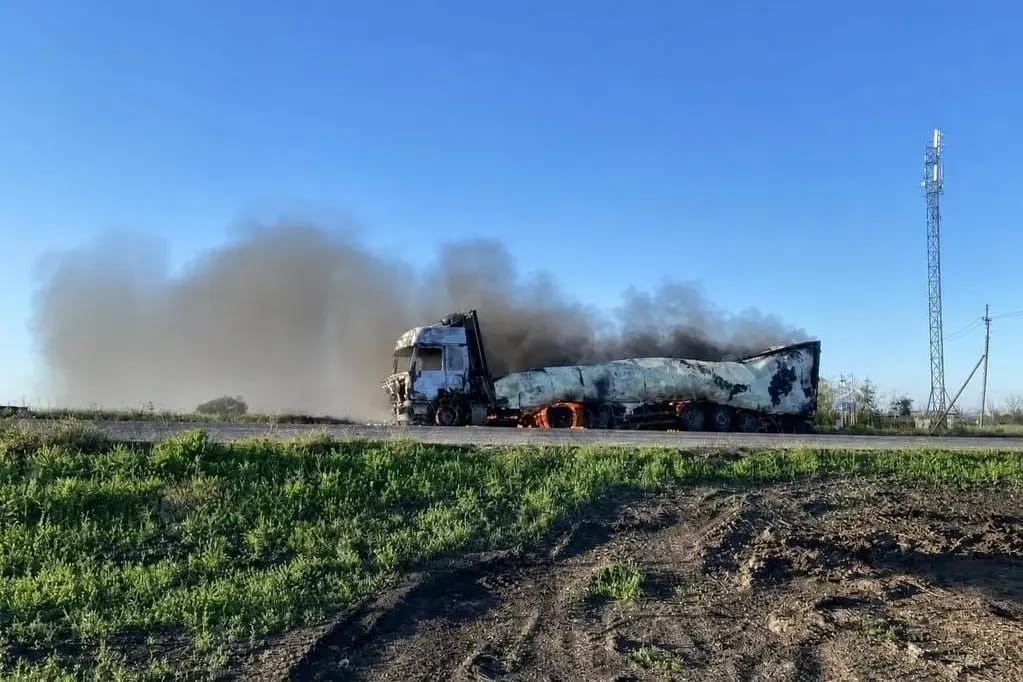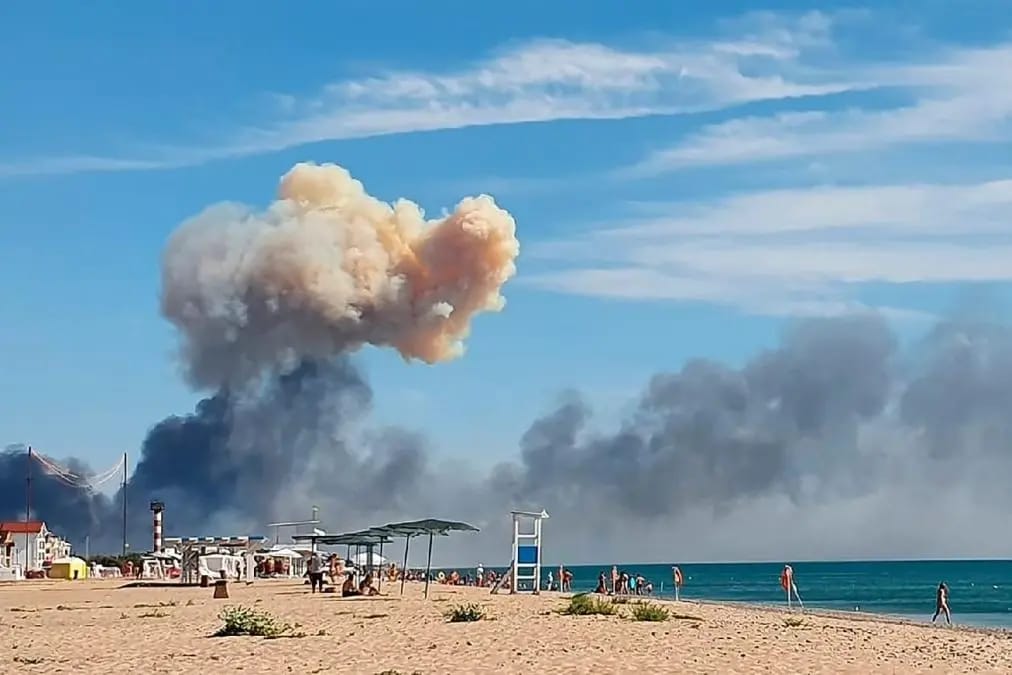
Shelling and blackouts have forced the shutdown of Crimean Titan, the Druzhba Narodov meat plant, and the Belogorsky greenhouse complex, Crimea’s biggest. In northern Crimea, many areas lack not only electricity, but also gas and gasoline. Small businesses are closing one after another and the tourist season has been derailed, with hotels cutting prices in half to attract at least a few visitors from neighboring regions. Crimeans left without work are drinking more and selling this year’s abundant cherry crop cheaply, as they cannot ship it off the peninsula. Nevertheless, with subsidies from Moscow, the economy can survive for the foreseeable future. The far more serious threat is a humanitarian disaster, which could begin if the area remains without electricity and water.
Lacking basic necessities
Ukrainian attacks on Crimea are intensifying by the day, increasingly cutting the peninsula off from supplies coming from Russia. As a result, residents are being left without electricity, water, fuel and food.
Overnight into July 14, Ukraine’s armed forces struck one of the most heavily protected sites in Crimea: the Balaklava thermal power plant (TPP). It is one of two power plants built on the peninsula after Russia’s annexation using Siemens gas turbines secretly delivered to the site — turbines that Russia no longer produces. Electricity in Sevastopol is now being supplied on a schedule of two hours on and six hours off. Simferopol has also been affected, though the power system of its Tavricheskaya TPP remains connected.
Local and federal authorities are concealing the scale of the damage caused by the strikes. But in Armyansk, Krasnoperekopsk, and the steppe settlements of northern Crimea, there has been no electricity for periods ranging from two weeks to a month. In the 12 years since water supplies through the North Crimean Canal were halted, these areas have suffered badly from drought and salinization. Melons, soybeans, and rice had to be replaced with hardy wheat varieties. Now, without electricity, pumps in wells cannot even draw the bitter, salty water that remains in underground aquifers — remnants from the “blessed” days when the canal was full.
Mobile service is unstable in those areas because the batteries powering GSM towers do not have time to recharge during the brief periods when electricity is supplied. Online cash registers and scanners no longer work in rural stores, and many shops have closed. Traveling to a district center for groceries is expensive, as is running a generator to keep them refrigerated — and there is no gasoline. Everyone who can is sending children to stay with relatives elsewhere. Local schools are preparing to switch to remote learning, much as those in Ukrainian frontline cities have long done — though how such an arrangement can be organized without reliable internet access is not entirely clear.
Hundreds of villages in the Pervomayskoye, Sovetsky, and Nizhnegorsky districts are not connected to the gas network, and tanks are no longer being delivered. Since 2020, liquefied gas had been transported to Crimea from Surgut by rail but in 2023, after three strikes on the Crimean Bridge, rail tank cars carrying propane began making their way by ferry.
But on June 21-23, 2026, TES-Terminal-1 and three ferries were blown up, making propane scarce. Crimean authorities are now trying first to supply gas stations, since a significant share of public transport in the peninsula’s cities has been converted to gas. Rural residents receive propane only after other needs are met, meaning they must wait one and a half to two months to refill a household cylinder through Krymgazseti. As a result, villagers are cooking over fires.
Druzhba Narodov shuts down
Large businesses in northern Crimea are gradually going under. The first to close was the Crimean Titan plant in Armyansk, one of Eastern Europe’s largest producers of titanium dioxide and the only such plant under the Kremlin’s control. For Armyansk, it is the city’s main employer. Before the takeover by Russia, the plant belonged to Ukrainian oligarch Dmytro Firtash. It later passed to structures linked to the Russian state-owned bank VTB. Local residents reported seeing several explosions after drones hit the plant overnight into June 13, after which production ground to a halt.
After Crimean Titan, the major agricultural holding Druzhba Narodov stopped operations at its meat plant in the village of Petrivka in the Krasnohvardiiske District. “Fuel has become much more expensive, logistics have become unprofitable,” employees told The Insider. “But the main thing is that we in Petrovka have had no electricity for a month.”
The closure of the meat plant was not announced officially, but The Insider’s sources said main production stopped June 28. Druzhba Narodov is the peninsula’s largest producer of pork, poultry, sausages, and processed meat products. Until recently, the company was profitable — in 2025, its revenue totaled 1.59 billion rubles, with net profit of 147.9 million rubles. But Druzhba Narodov’s exceptional position is linked to the peculiarities of the local market. Under Ukraine, a significant share of meat and poultry was produced by Crimean farmers. After annexation, large numbers of livestock were killed off by the state — the authorities blamed epidemics, but some farmers said the market was being cleared for large agricultural holdings from neighboring Kuban.
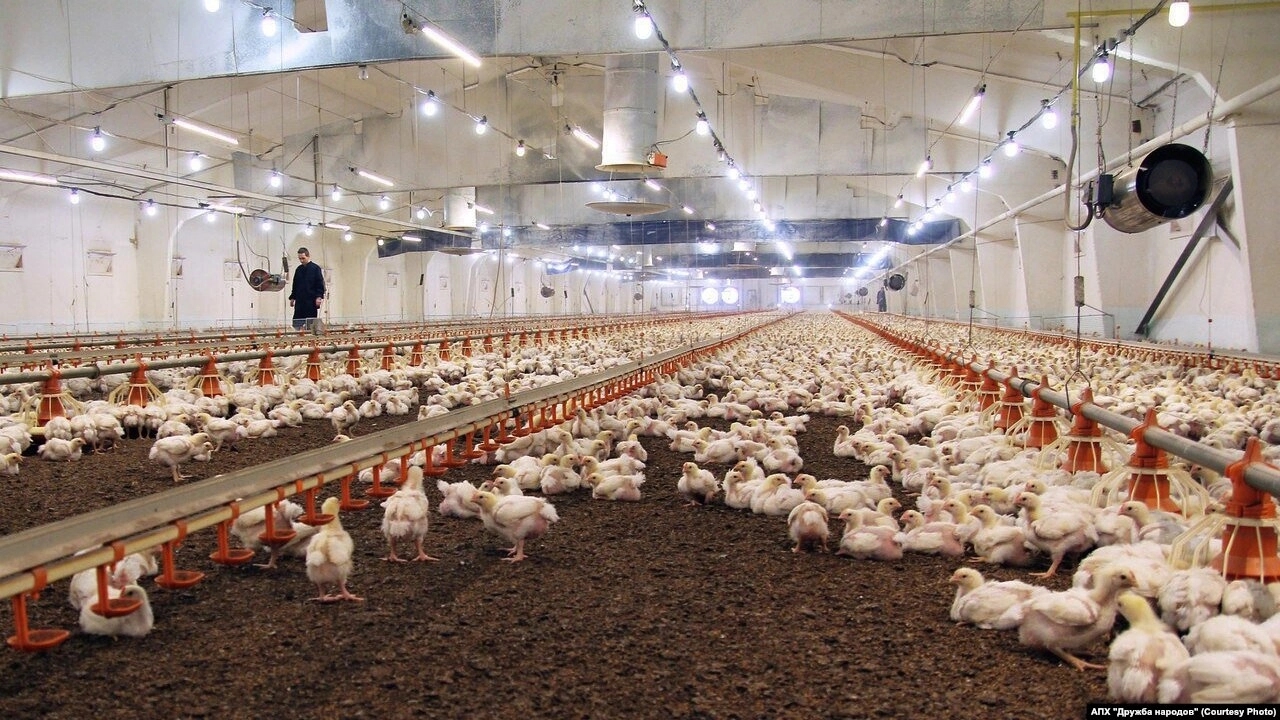
Under Ukraine, Druzhba Narodov belonged to Yuriy Kosiuk, an oligarch and friend of former President Petro Poroshenko. In 2017, he sold the holding to Moscow-based Optima-Finance Management Company, which is linked to the circles of former Prime Minister Dmitry Medvedev and National Guard chief Viktor Zolotov.
In 2018, the late Alexei Navalny’s Anti-Corruption Foundation found that the meat plant had become the National Guard’s monopoly supplier and was selling its products at above-market prices. In June 2022, the entire holding came under the control of former Kuban governor Alexander Tkachev. In 2025, Tkachev’s Druzhba Narodov effectively seized the canned food maker Glavprodukt, which Russia’s Prosecutor General’s Office had taken from its American owner.
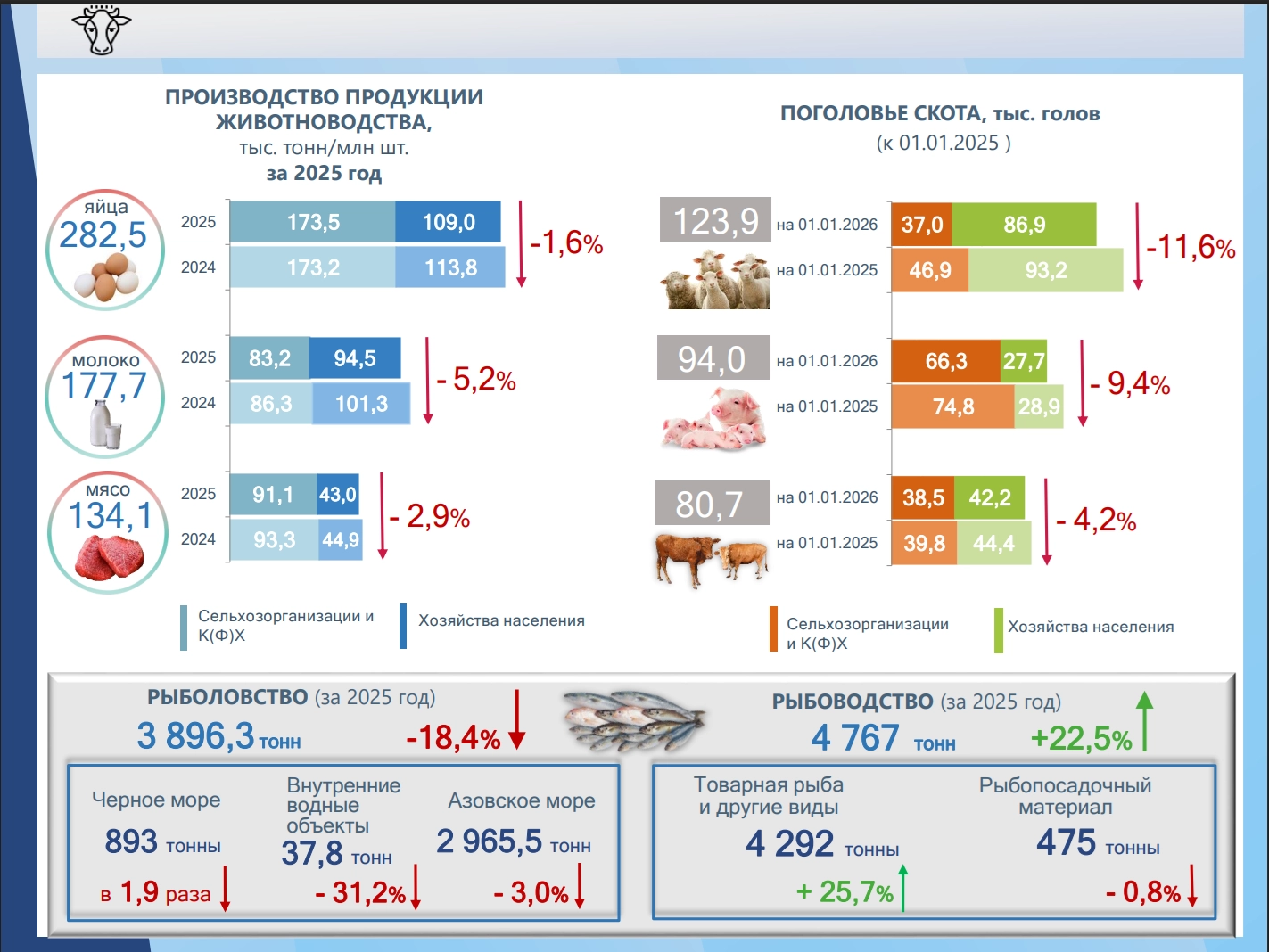
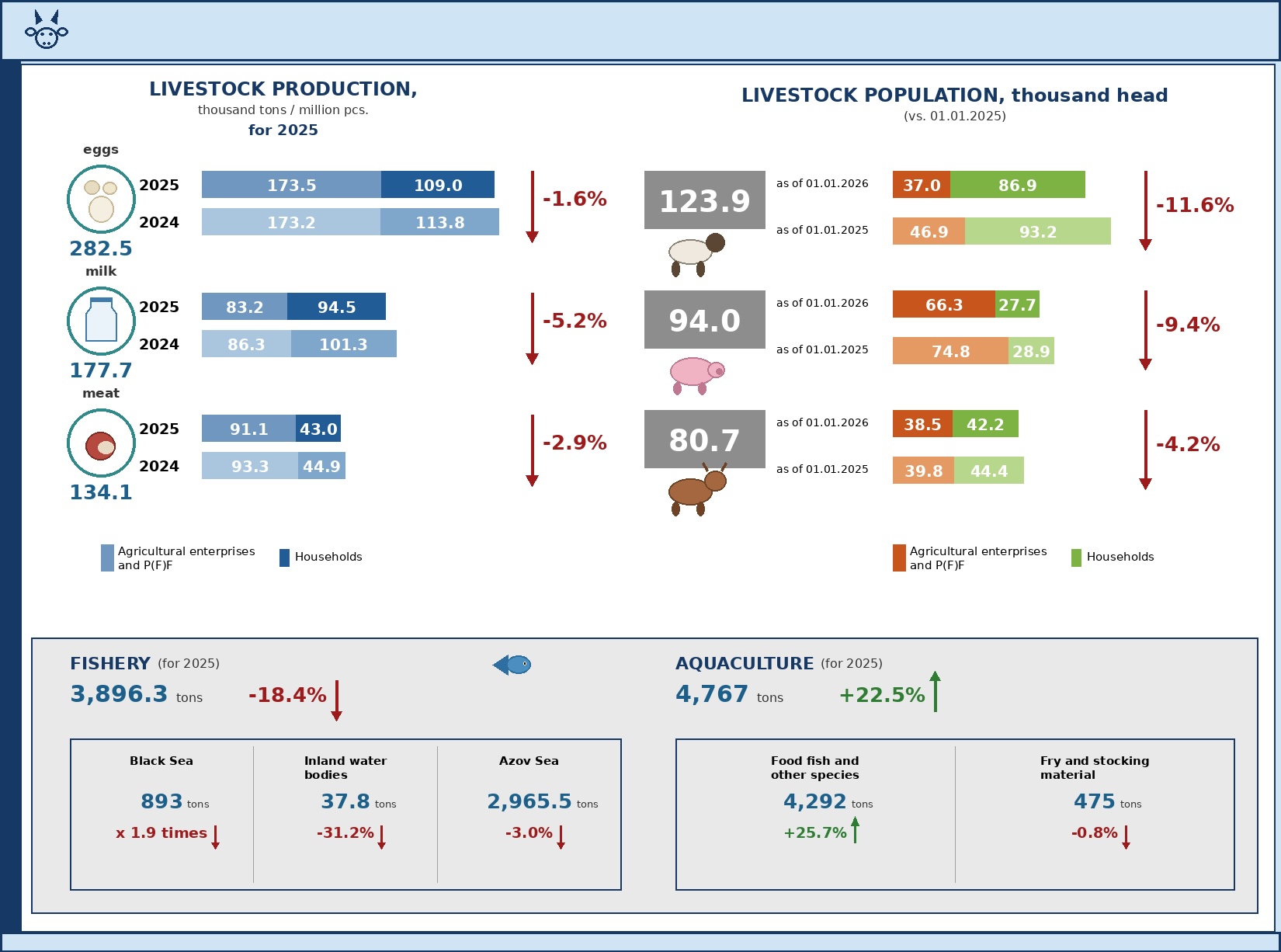
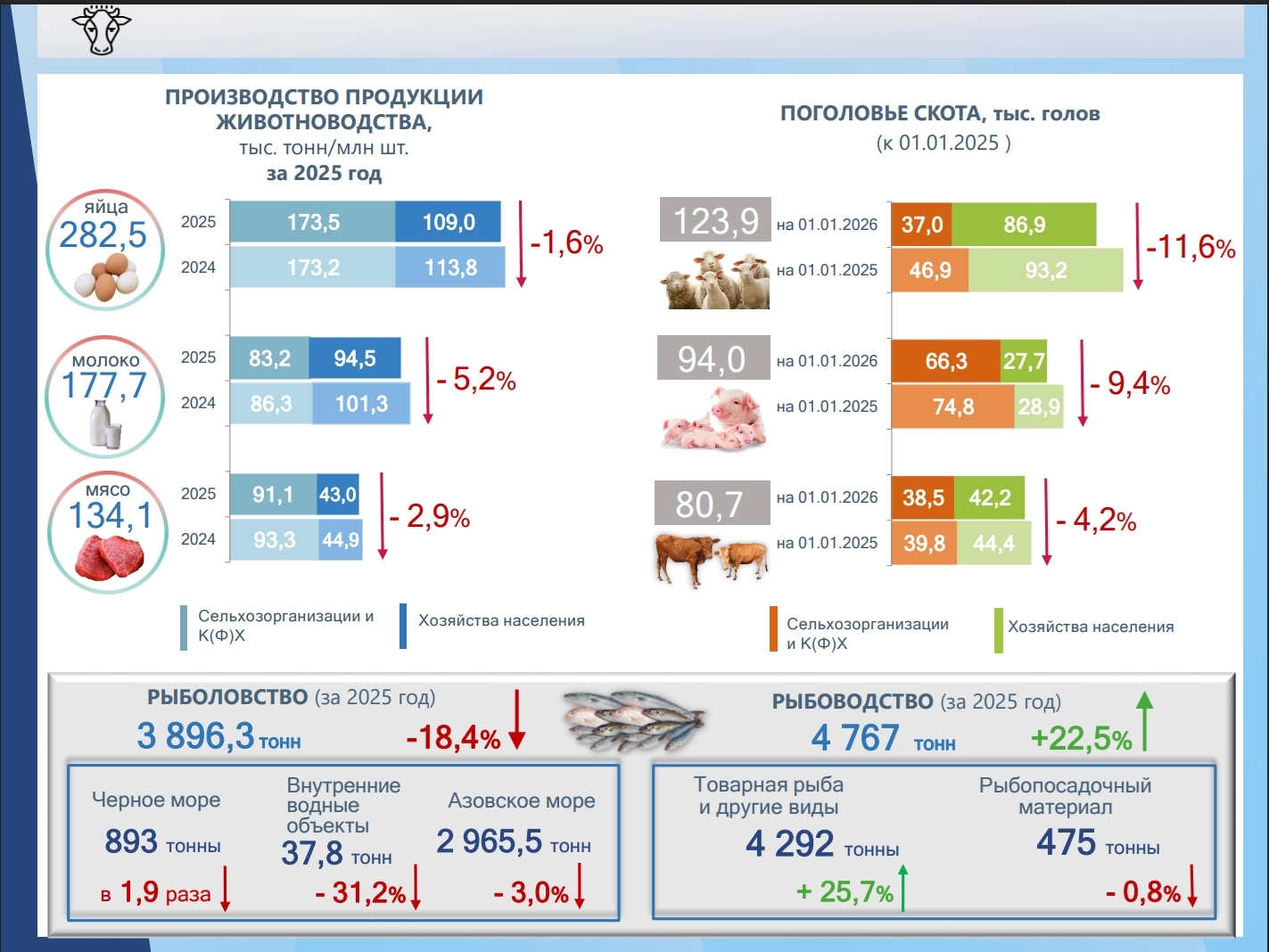
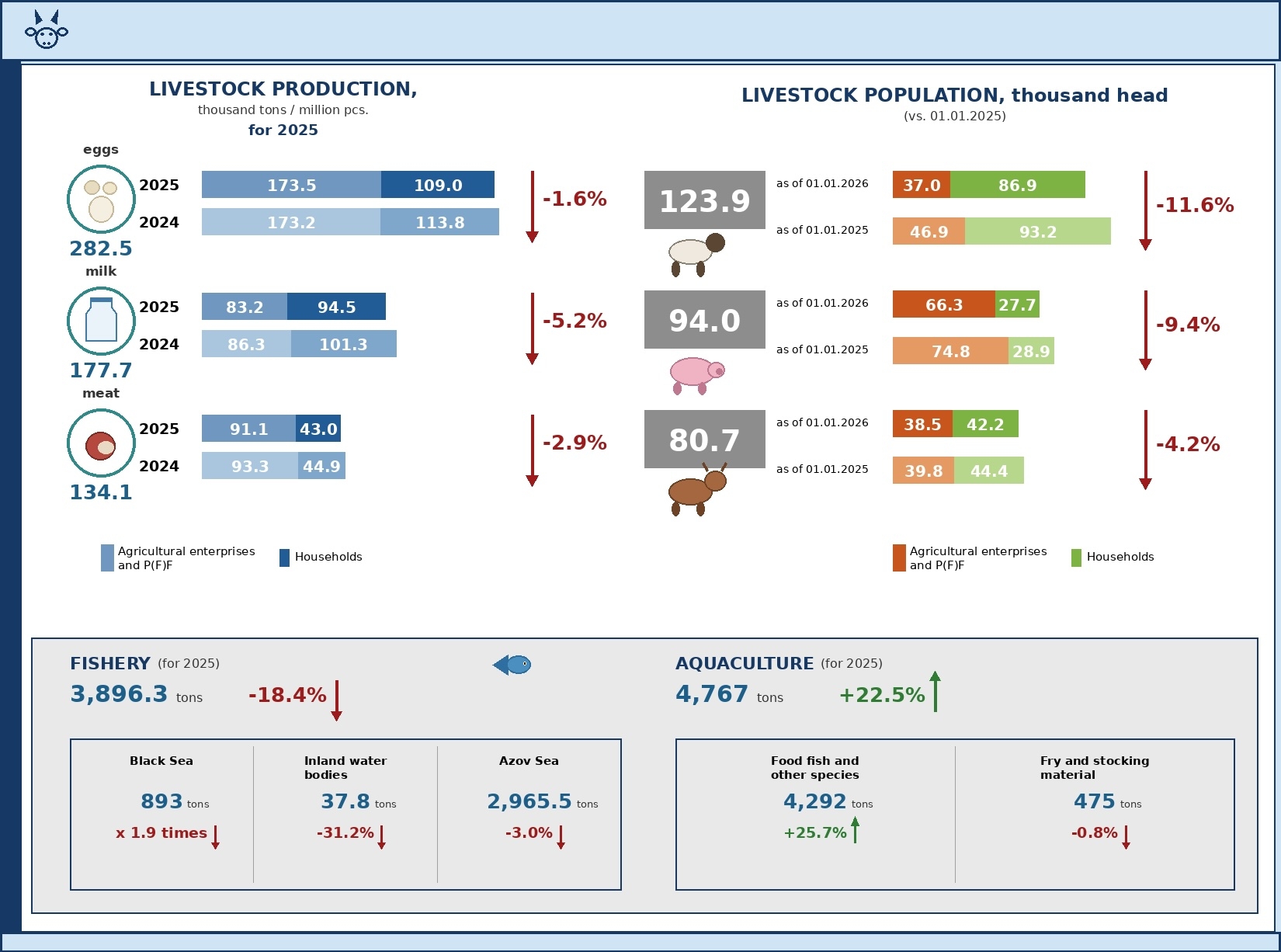
The meat plant’s closure is already affecting the local market. Few meat producers remain, trucks are banned from using the Crimean Bridge, and drones are attacking the “land corridor,” Russia’s route through occupied Ukrainian territory to Crimea. As a result, shipping a refrigerated truckload of meat from Rostov now costs an unprecedented 500,000 rubles. Shoppers say the range of meat and poultry products in stores has noticeably shrunk. Prices change every day, with even chain supermarkets displaying signs asking customers to check prices with cashiers.
The Belogorsky greenhouse complex, the largest in Crimea and Belogorsk’s main employer, has also closed, Krym.Realii reported. “The staff has been dismissed, with only administrative workers and security remaining. Leftover products were given free of charge to employees of local state institutions, and flower seedlings were handed over to local municipal enterprises,” the outlet’s source said.
Small businesses wind down
The crisis is not limited to northern Crimea. Small independent retailers began closing across the peninsula during the June 26 blackout. The first to suffer were shops selling perishable foods: meat, fish, and dairy products. Dairy is especially difficult because Crimea produces only about 40% of what it consumes. Supplies now mainly come from the Dzhankoi plant.
“Goods from Dzhankoi are delivered once a week, and delivery has become more expensive,” Alla, who owns several dairy stalls at a market in Simferopol, told The Insider. “I can’t stockpile anything because they cut my electricity, and the refrigerators leak. There are no normal customers — just pensioners, and they steal too. But I have to pay for everything: utilities, rent, taxes, plus sellers’ wages. I can’t operate at a loss. Those selling vegetables, fruit, and groceries are the only ones still working.”
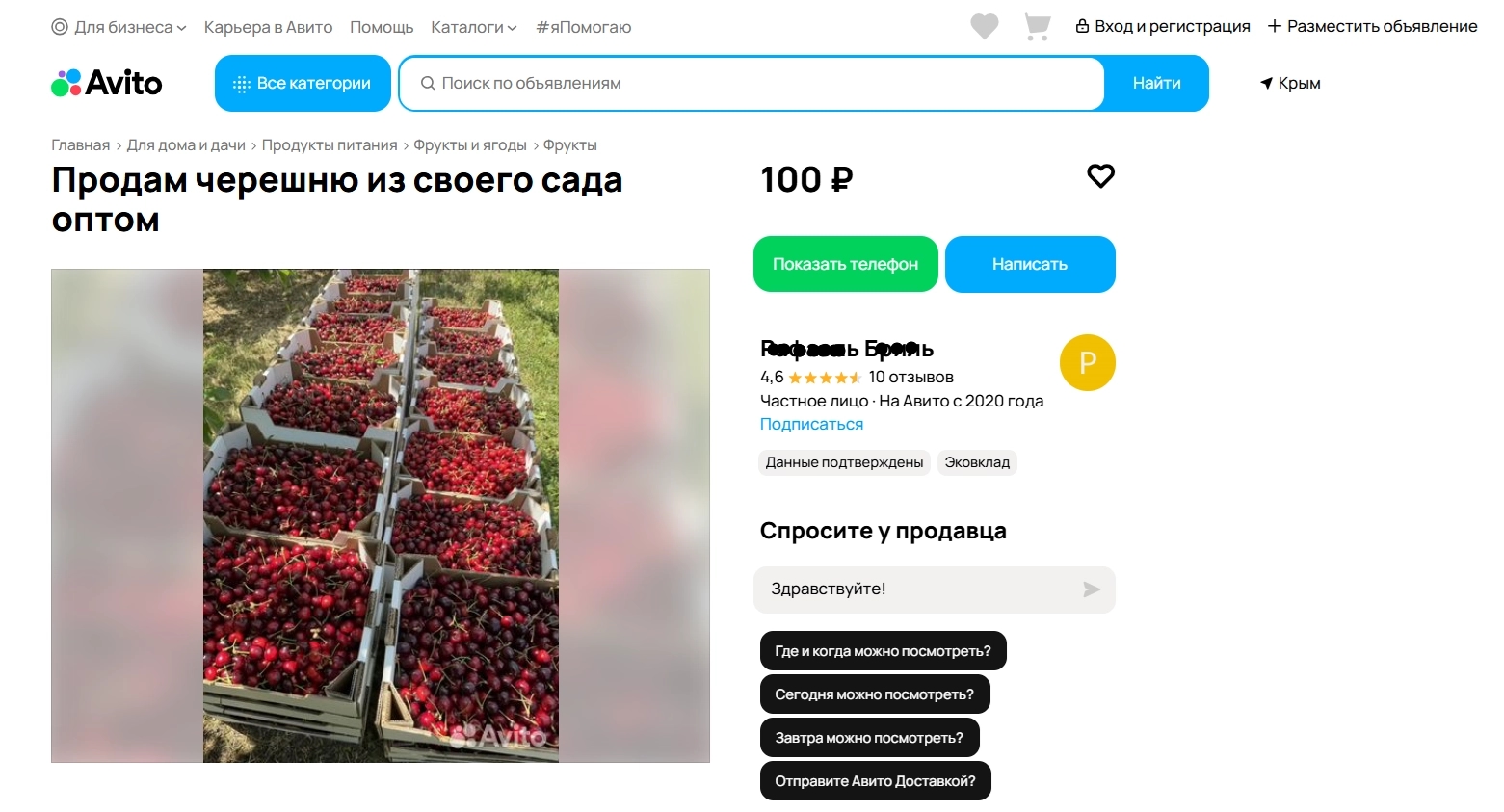
Fruits and vegetables, incidentally, have become cheaper in Crimea this year. The owner of a greenhouse near Bakhchysarai said that for the past decade, local harvests were bought up in full by wholesalers from mainland Russia, while imported produce was sold on the peninsula. This summer, however, there was a large cherry crop, and it is difficult to ship out. As a result, the going rate per kilogram has fallen from 300 rubles a year ago to 180 this July.
This summer, Crimea has a large cherry crop, but it is hard to ship it out, so it is selling for just over half of last year’s price
Entrepreneurs are surviving however they can.
“At first, we drove across the bridge to the mainland for gasoline,” said the owner of a confectionery workshop in Sevastopol. “But now it’s hard to fill up there too, so we buy from resellers in Kerch for 200 rubles. We installed a water tank in case the water is cut off. A little ZIL truck carrying five cubic meters costs 3,000 rubles. Of course, all this costs money, but we raise prices by 10 to 20 rubles per kilogram each week. At least we are working. We stop only when there is no power.”
A wholesale food company in Simferopol stopped working because fuel became too expensive.
“Even before the price increase, fuel accounted for a third of our transport costs. Now it is more than half,” the company’s co-owner told The Insider. “We include it in the rate, and orders decline. But that’s not even the main thing. We drive along the R-280 road, through the new territories, and there are drones there. They hit more than just fuel trucks, and there is no insurance. We decided it is better to make a pause than to lose the fleet. I think they will solve this problem by fall somehow.”
For a small accounting firm in Simferopol, electricity is not the problem, as an office generator does not consume much fuel. The problem is internet outages: “We can’t log into our accounts or our clients’ online reporting systems, we can’t send documents to the tax service or the bank. How are we supposed to work?” asked Olga, the firm’s director. “No one canceled our taxes, and we are required to use online cash registers — otherwise there is a fine.” In the end, Olga put seven of her 12 employees on unpaid leave.
The peninsula’s southern coast lures visitors with discounts
Crimea’s southern coast is considered the safest part of the peninsula. There are almost no military sites there, drones are not visible, and explosions are not heard. Many people can still be seen on Yalta’s beaches and waterfront. If they are not tourists, then they are affluent Crimeans taking advantage of a rare chance to vacation in the summer at winter prices.
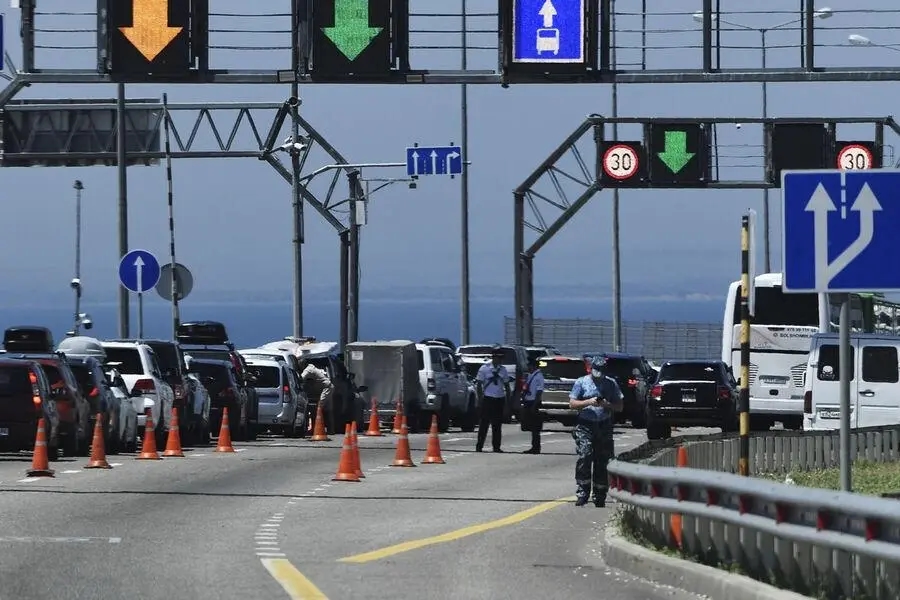
Kommersant, citing Travelline, reported that summer bookings had fallen by 43% in Sevastopol and 31% in Crimea as a whole. But that is likely an overly optimistic estimate. The few remaining trains to Crimea, packed at departure, empty out along the way. Only 10 to 15 people per carriage reach the final stop in Kerch — those who live and work on the peninsula. The lines of cars at the Crimean Bridge are also mostly heading out.
In these conditions, large hotels are trying to attract residents of Crimea, Russia’s Southern Federal District, and the “new territories” with unprecedented discounts. There is little hope of guests from farther away.
Mriya (lit. “dream” in Ukrainian), a resort owned by Sberbank in Greater Yalta, cut prices for rooms and villas by 30% from July 1 to Aug. 31. Guests can get another 10% to 20% off for early booking, and reserving a room for three nights means a fourth night for free — this at a hotel where rooms previously rented for 600,000 rubles and villas for 1.5 million rubles per night.
The five-star Villa Elena in central Yalta is offering residents of the Russia’s Southern Federal District, the Donetsk and Luhansk “people’s republics,” and the occupied Zaporizhzhia and Kherson regions a 50% discount through New Year’s. The hotel used to charge 5,000 rubles for day access to its pool without an overnight stay; now it allows people in effectively for free provided that they agree to spend 2,500 rubles in the restaurant.
The situation is especially difficult for mini-hotels with up to 50 rooms, which make up the majority of hotels in Crimea. Older Soviet-era sanatoriums hosted pensioners from mainland Russia in winter at state expense, but mini-hotels depended entirely on the summer season.
Dmitry Anosov, owner of the Balanzhur guesthouse in Balaklava, told the Sevastopol outlet ForPost that 98% of bookings at his 35-room hotel had been canceled. Customers are demanding that deposits be returned within 30 days, as required by law. But mini-hotels cannot comply — already spent that money preparing for the season, and there is no cash flow.
“Last season was good for us in Sudak, and this year we expected a record,” Anna, who owns a small guesthouse in Sudak, told The Insider. “So in the fall I built a small pool and installed a solar collector to save on heating water. I put all the deposits into that. I also took out a secured loan. So what now — will the bank take everything from me? They have declared an emergency and say there will be compensation. But so far nobody is telling us anything. At least give us loan holidays, or even better, a preferential loan at 2% to 3% so we can refinance. And exempt us from taxes.”
“We want support,” said the owner of a Sevastopol tourist camp, who asked that even its location not be named. “But what they are discussing now will not save us. For example, they say they may give us loan deferrals and subsidies, like during COVID, so we can pay staff at least the minimum wage and keep people. Fine. But first, you can’t keep people on minimum wage. They have families to feed, and they are leaving to work in Anapa and Sochi. Second, what am I supposed to repay the loan with? Even if gasoline appears in the fall and there are no attacks, the season will be over.”
“What am I supposed to repay the loan with? Even if gasoline appears in the fall and there are no attacks, the season will be over”
Residents of Crimea’s southern coast who are used to renting apartments to vacationers are pessimistic.
“Come to Foros and you’ll see people on the beach,” said the owner of apartments once rented by the author. “You’ll also see people in the sanatorium park. But they are all from Sevastopol and from the villages of the Baydar Valley, people who don’t mind spending gasoline. There are no vacationers in the village. What are people doing? Drinking.”
Local alcohol is another product, after cherries, that has not become more expensive this year. “There are stores where nothing but alcohol is left, and they still work,” The Insider’s source said. “Before the war, many people here had quit drinking. Now it’s the opposite. There’s no work.”
On life support from the state budget
Tourism and agriculture are usually seen as the main victims of Crimea’s blockade and shelling. But for the peninsula’s economy, the blow is not as severe as it may appear: Tourism accounts for just 5.8% of gross regional product, while agriculture accounts for 5.5%. Agriculture also absorbs more subsidies and investment than it generates in profit. In reality, the bulk of Crimea’s gross regional product comes from real estate transactions, trade, industry, and construction — sectors that are largely tied to the redistribution of budget money.
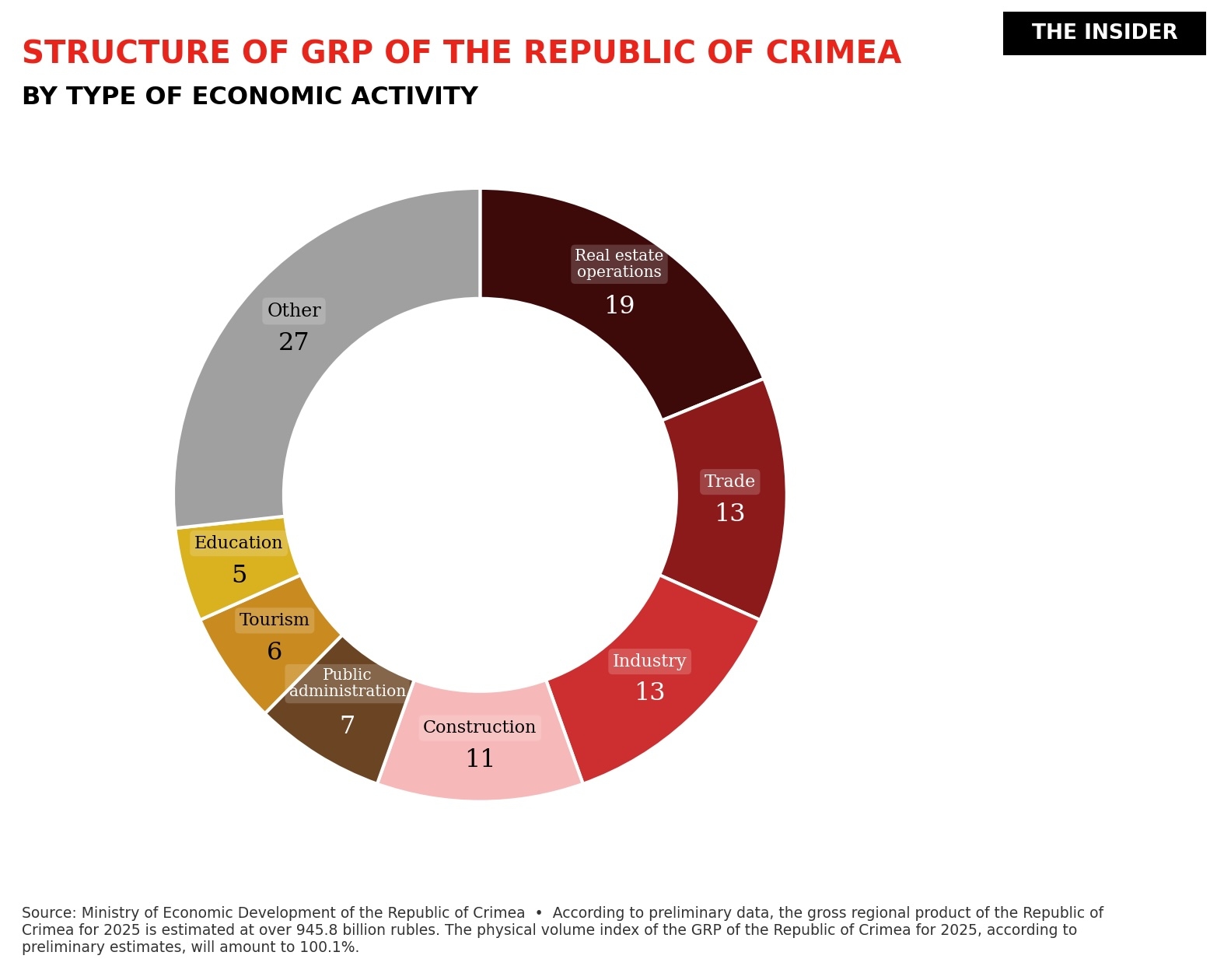
Industry includes state power plants, power grids, and major enterprises that also passed to the Russian state after 2014. Construction is mostly state-funded infrastructure, government contracts, and work financed through the Housing and Utilities Reform Fund. Health care and education on the peninsula are largely state-run. Budget money from those sectors flows into trade and services, including tourism, since large sanatoriums host pensioners from mainland Russia in winter at state expense.
Federal subsidies have been rising constantly since 2014. The independent outlet Verstka calculated that in 2014 Sevastopol received 19.5 billion rubles in free federal transfers and Crimea received 105.3 billion rubles. In 2024, those figures were 32.1 billion rubles and 130.6 billion rubles, respectively. Thanks to subsidies, Sevastopol’s budget in some years was comparable to that of Yekaterinburg (pop. 1.5 million) even though Sevastopol’s reported population of about 560,000 is considered by demographer Alexei Raksha to be greatly overstated.
Occupied Crimea has barely traded with the outside world for 12 years, and its ports have stood idle. Integration into Russia suffocated many small businesses, as activities such as fishing, gathering wild plants, conducting tours, going out to sea by boat, and selling crops from household plots all became heavily regulated. As a result, the private sector in Crimea, as across Russia, has steadily shrunk, while the state-funded sector has grown. After annexation, the number of officials in Crimea doubled, and in Sevastopol it tripled.
The private sector has been steadily shrinking under the weight of expanding regulation, while the public sector continues to grow
In addition, high real estate prices, low wages, and years of cuts to higher education institutions have driven young people out of Crimea, leading to an aging population, as retirees from Russia's colder regions have taken their place. The image of an all-Russian retirement home is not far from reality: shortly before the war, the state was supporting 60% of Sevastopol's population. Considering that the state is also the primary client for many local businesses, the share of people whose livelihoods depend on government spending is even higher — especially now, as entrepreneurs continue to leave Crimea as well.
Paradoxically, however, this dependence on public spending makes Crimea's stagnant economy relatively resilient to wartime shocks. Even in places where fuel, electricity, and gas are unavailable, pensioners and public-sector employees continue to receive their modest payments. Putin-era construction projects also continue — including the yacht marina in Balaklava, the cultural cluster in Sevastopol, and new residential developments. Streams of budget funding continue to flow through the economy's capillaries, sustaining retail trade, transportation, services, and private healthcare. Even if tourism were to disappear entirely, Crimea could remain in this state of budget-funded slow motion for quite some time — provided its transport and utility links are not completely severed.