Hundreds of Arabs from the Palestinian Authority apply for asylum in Israel each year on the basis of the fact that they are members of the LGBTQ community. However, even asylum does not guarantee protection from persecution by their own families. Other queer Arabs insist on identifying as Palestinian even though they are Israeli citizens, while others face prejudice from the international community because of their support for Israel.
- 1.“They hung me up in an abandoned building and started beating me”
- 2.“I was afraid to go outside”
- 3.Relatives tied him to a post for two weeks
- 4.“I was constantly pretending so I could be accepted”
- 5.“Yes, damn it, I’m Palestinian”
- 6.The most vulnerable group in the State of Israel
- 7.“Israeli Arabs look down on people from the West Bank”
- 8.Triple prejudice
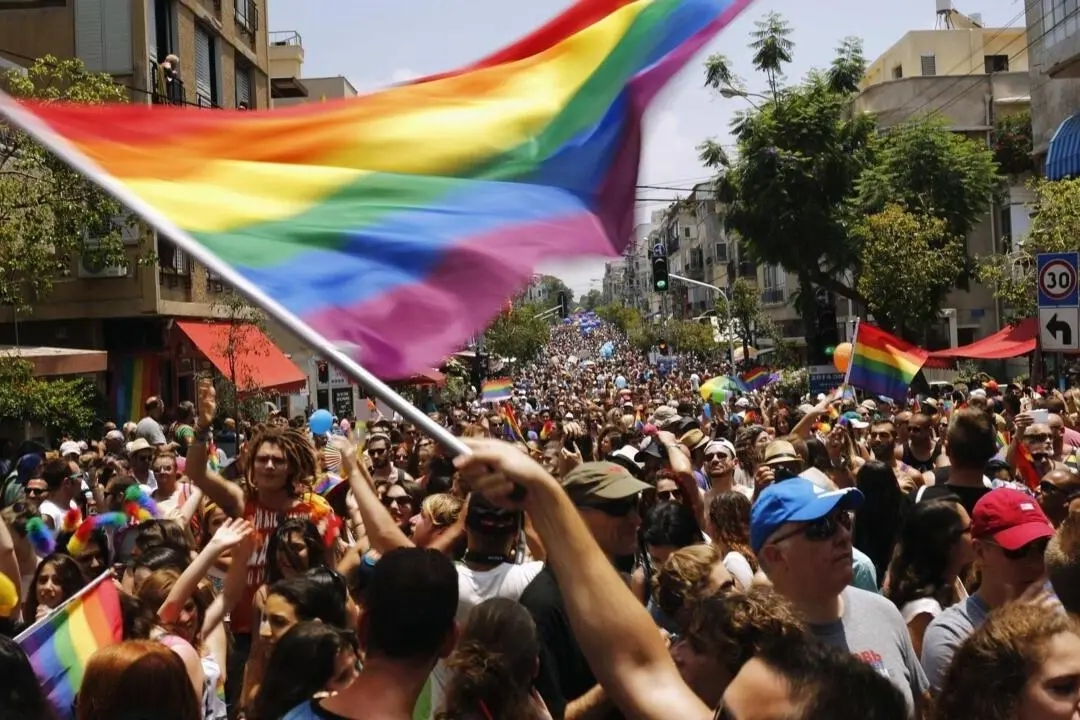
On a summer night in Tel Aviv, a group of queer Arabs has gathered for a party at a nightclub. Young and flamboyantly dressed, they laugh loudly, speak in deliberately campy voices, and gesture theatrically, seemingly eager to attract attention. One of them, a strikingly beautiful woman, is asked by another patron, “Where are you from?” She pointedly replies, “Palestine,” seemingly testing her interlocutor’s reaction.
Even among queer Arabs born and raised in Israel who are fluent in Hebrew, Arabic, and English, life is still far from secure, and those still living in the Palestinian Authority (or who come to Israel to seek asylum) face an even more uncertain future. According to data from HIAS, a Jewish organization that advocates for refugees, as of July 2026 there were around 300 Palestinian LGBTQ asylum seekers in Israel, and that figure includes only those known to organizations working in the field.
“They hung me up in an abandoned building and started beating me”
In November 2023, 23-year-old Yamen, who is gay, fled to Israel from Nablus, a major Palestinian city in the northern West Bank. He was forced to abandon his studies in physics at a local university, and after arriving in Israel he found a job cleaning offices. Yamen told HIAS representatives that he was learning Hebrew and looking for better work.
When Yamen’s family learned about his sexual orientation, his uncle — an intelligence officer with the Palestinian Authority — threatened to have him jailed. His relatives also accused him of collaborating with Israel, shouted at him, and beat him.
From the time Yamen was a teenager, his family had noticed that he was somewhat more effeminate than other young men, but they never discussed it. According to HIAS representatives, this is a common pattern in Palestinian families. Violence against LGBTQ people by their families begins only after a relative’s sexual orientation or gender identity becomes known to others.
Yamen says that from a young age, people around him treated him aggressively – mocking, harassing, and attacking him. Once, when he was 14, a police officer stopped him and a friend. According to Yamen, the reason was their “refined” appearance. The officer wanted to put them in his patrol car, but after a few phone calls he ultimately let the teenagers go. Yamen concluded that the officer had only wanted to frighten them.
However, an attempt to abduct Yamen succeeded and forced him to flee:
“One day I was just walking down the street. About 20 men suddenly attacked me – they simply forced me into a car and drove me away. They hung me up in some abandoned building and started beating me. They were relatively young. Then others joined them – men around my father’s age. I didn’t understand who they were or what they wanted from me. I had never experienced anything like this and had no idea how to react. It was as if they were saying, ‘We found a guy who looks gay, let’s take him and make fun of him for entertainment.’ I couldn’t believe this was happening to me…
They took everything I had, even my phone. Then things became even more serious when they found out my last name. They said, ‘Now we have a problem, and we don’t know what to do.’ They called my family. When my relatives came to find out what had happened and why I had been attacked like that, they were told, ‘Your son is this and that.’ I wasn’t allowed to explain anything, wasn’t given a chance to say a word. I had been a good child my whole life, and this was the first problem that required my family’s intervention.
But my relatives didn’t take my side. They were angry with me, and I didn’t understand what I had done. Instead of being angry with the people who had abducted their son, they simply abandoned me. It was the worst feeling I had ever experienced in my life…
From that moment on, my family turned my life into hell. The story spread until it reached the police, and an investigation was opened — but it was closed very quickly, because nobody cares about an abducted gay man. No one was prepared to protect me. And then I realized: if I want to stay alive, I have to run away from there.”
“I was afraid to go outside”
Twenty-five-year-old lesbian Manar fled to Israel from a village in the West Bank after her father discovered romantic messages with another woman on her phone.
Manar later told HIAS representatives her story:
“When my father found out that I was attracted to women, he started beating me regularly. Then my family decided to marry me off to some guy. He was a loser, a bad person, and used drugs. They simply put me in his house. There was no real wedding, no ceremony, nothing. I was basically kept there, unable to leave the house. He would constantly put some kind of powder in my water and make me drink it. Then I wouldn’t remember anything and couldn’t resist. One day I finally managed to escape, though I don’t even remember how. But I remember very well how I felt when my family abandoned me.”
Manar made a report to the Palestinian police about her father’s violence. He was initially detained, but once it became clear that the conflict stemmed from his daughter’s sexual orientation, he was released and sent home without further investigation.
When she was 18, Manar fled to another city, but relatives found her and tried to run her down with a car. Passersby rescued her. According to Manar, the police refused to intervene, so she fled to another city.
“One day, on my way home from work, I noticed someone photographing me on the street. I later recognized him as a close friend of my cousin. As it happened, there was a police officer nearby. I approached him and said that the guy over there was photographing me for my cousin, who had threatened to kill me. Now they would know where I was. The police did nothing. They didn’t even bother approaching him to ask why he was photographing me. They said it was none of their business, that it was purely a family matter.
“So I stopped working and stayed home because I was afraid to go outside, to go to work, or to be seen by anyone. I didn’t know what to do with myself or where to go. I became depressed and tried to kill myself... My partner found me and called an ambulance.”
After another attack, Manar decided to flee to Israel.
Relatives tied him to a post for two weeks
Twenty-seven-year-old Amjad, who was living in a third country by the time of his interview, described how his “once-loving” family discovered his correspondence with a man and tied him to a post outside the house for more than two weeks. His relatives threatened him with weapons. Only his sister secretly brought him food.
Another interviewee, 29-year-old Shadi from Jericho (who is also living in a third country), said his father had brutally beaten him and broken sticks over him since childhood because of his unusually high, soft voice. For a time, Shadi was made to take hormonal drugs. After a stranger told his father that Shadi was gay, his father told the family he intended to kill him. Shadi packed his things and fled to Israel.
Twenty-eight-year-old Amir, from a major city in the West Bank, said armed members of the Palestinian security forces attacked the home where he lived with his partner. Amir was detained for several days in connection with a case involving “indecent acts.”
“I was constantly pretending so I could be accepted”
“As a child, I often felt like an outsider. I remember sitting alone at lunch and wondering how people could make friends so easily. Mean Girls helped me,” says 28-year-old K. He dyed his hair platinum blond while keeping his perfectly trimmed beard black.
“That movie taught me to pretend to be someone else so society would accept me. It taught me to project confidence and put on a show for those around me. That’s how I started hanging out with the popular girls. If they were popular, then I was popular too, and straight guys would treat me normally because I was with the coolest girls in school,” K. recalls. “But that performance came at a price: I began to forget who I really was.”
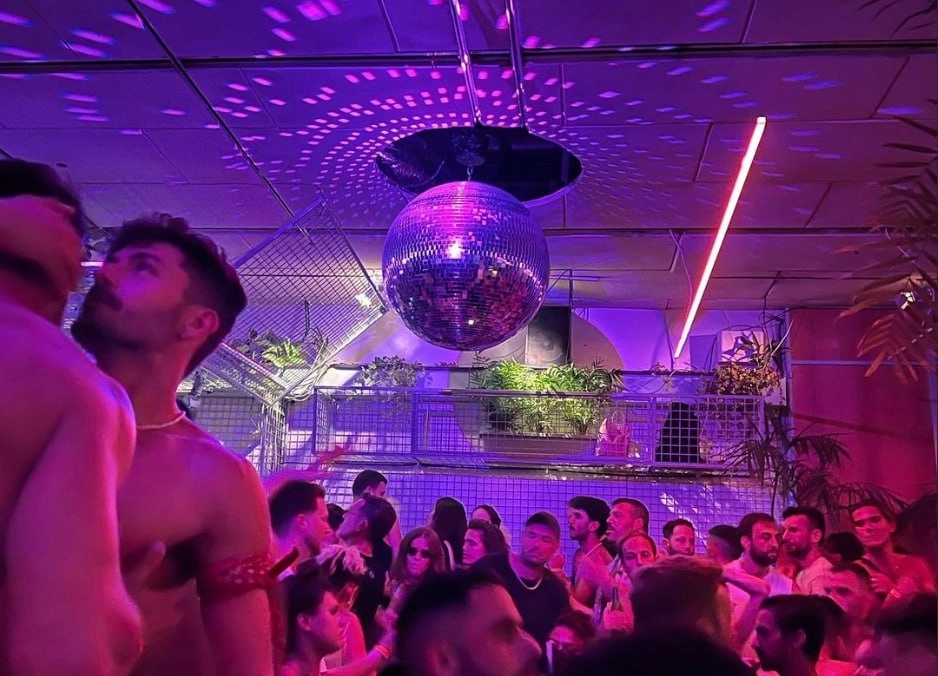
K. grew up in northern Israel, in Nazareth, a city sacred to Christians. His father is an Arab Christian, his mother comes from a secular Lebanese family, and he has Jewish and Muslim relatives. K. says his parents celebrate Christian holidays, while everyone in the family tries to respect one another — they never discuss politics.
From childhood, K. understood that he did not fit any conventional mold, and his attraction to both men and women made things even more complicated. He never came out to his family:
“I used to think identity had to be fixed, that you had to choose one label and stick to it. If I’m gay, for example, then I’m only gay. But as I grew older, I realized I couldn’t fit myself into any one category. Over the years, I discovered new things about my sexuality. More importantly though, I realized I don’t owe anyone a simple definition of who I am. My identity is fluid and multilayered, and I don’t feel the need to explain who I am to anyone."
At the same time, his family was wary of the way he dressed, spoke, and moved. They drew their own conclusions.
“When I was younger, my parents would comment on it. It wasn’t easy for them either, because I had always been the ‘black sheep’ of the family. Whenever someone was getting married, they would think twice about whether to invite me, because they knew I might show up in some huge oversized suit and everyone would say, ‘What the hell are you wearing? That’s your grandfather’s suit!’"
After he earned a bachelor’s degree in fashion design and began working with major brands, K.'s parents realized that their son wasn’t just “playing games.”
“Yes, damn it, I’m Palestinian”
As a child, K. identified as Lebanese, but after struggling to find work following graduation from university — and amid the war that followed the Hamas terrorist attacks of October 7, 2023 — he came to fully embrace his Palestinian identity:
“While I was studying, I lived in a bubble – peace, love, and all that. But after graduation, I saw my Jewish classmates move up very quickly in the fashion world, while doors were closing for me. I asked myself, ‘Is this really happening because I’m Arab?’
Then I started noticing that there were almost no Arab names at Tel Aviv’s nightclubs and festivals – no DJs, designers, or artists. That’s when I realized it wasn’t just about me. There weren’t enough platforms where Palestinian creatives could be seen and supported.
So I said, ‘Yes, damn it, I’m Palestinian, and I’m going to fight for this community.’ That’s how I created a platform for Palestinian creatives. It’s not just about parties; it’s a space creating opportunities for people who didn’t have them, just as I once didn’t.”
In July 2026, K. moved to Berlin to begin pursuing a master’s degree while continuing to develop his project. When people ask where he is from, he insists on answering “Palestine” — “and my best friend, who is Jewish, says he’s from Israel,” K. adds with a smile.
The status of Arabs in Israel
According to 2025 data from the Israeli government, around 2.1 million Arabs live in the country, accounting for about 21% of the population. Arab citizens formally enjoy equal rights: they can vote, stand for election to the Knesset, form political parties, bring cases before the courts, and so on. At the same time, a 2024 study by the Israel Democracy Institute found that 79% of Arab respondents believe they face discrimination compared with Jews.
In addition to Arab citizens, there are Arabs living under Israeli control – residents of East Jerusalem and the West Bank. The West Bank itself is divided into three areas under the Oslo Accords signed in 1995. Area A is fully controlled by the Palestinian Authority. Area B is under joint control: the PA administers civil affairs, while Israel is responsible for security. Area C is under Israeli control. More than 3 million Arabs live in the West Bank, according to the Palestinian Authority’s Central Bureau of Statistics.
The most vulnerable group in the State of Israel
While K. was able to build a life for himself and move to Berlin to study, hundreds of other queer people from Israel’s Arab community face persecution because of their identity.
“This is the most vulnerable group in the State of Israel,” says lawyer Nimrod Gorenstein, chair of The Aguda, Israel’s LGBTQ rights association. “Unfortunately, some are still killed in horrific crimes that never even make the news. Others repeatedly seek shelter and a roof over their heads so they can live in safety and peace and integrate into society.”
Some are still killed in horrific crimes that never even make the news
Although Israel generally grants asylum to queer Palestinians living in the West Bank, this does not always guarantee their safety or protect them from their persecutors. In 2022, for example, 25-year-old gay refugee Ahmad Abu-Maruhi was brutally murdered near Hebron: he was decapitated and his body mutilated. Human rights activists said a video of his murder was sent to other LGBTQ Palestinians to intimidate them.
There is no official law against homosexuality in the Palestinian Authority, explains Hamoudi Omar, the director of Israel's Beit al-Mim nonprofit organization, which helps LGBTQ Arabs in Israel and the West Bank. Nevertheless, religious and social norms make life unbearable for people in the community.
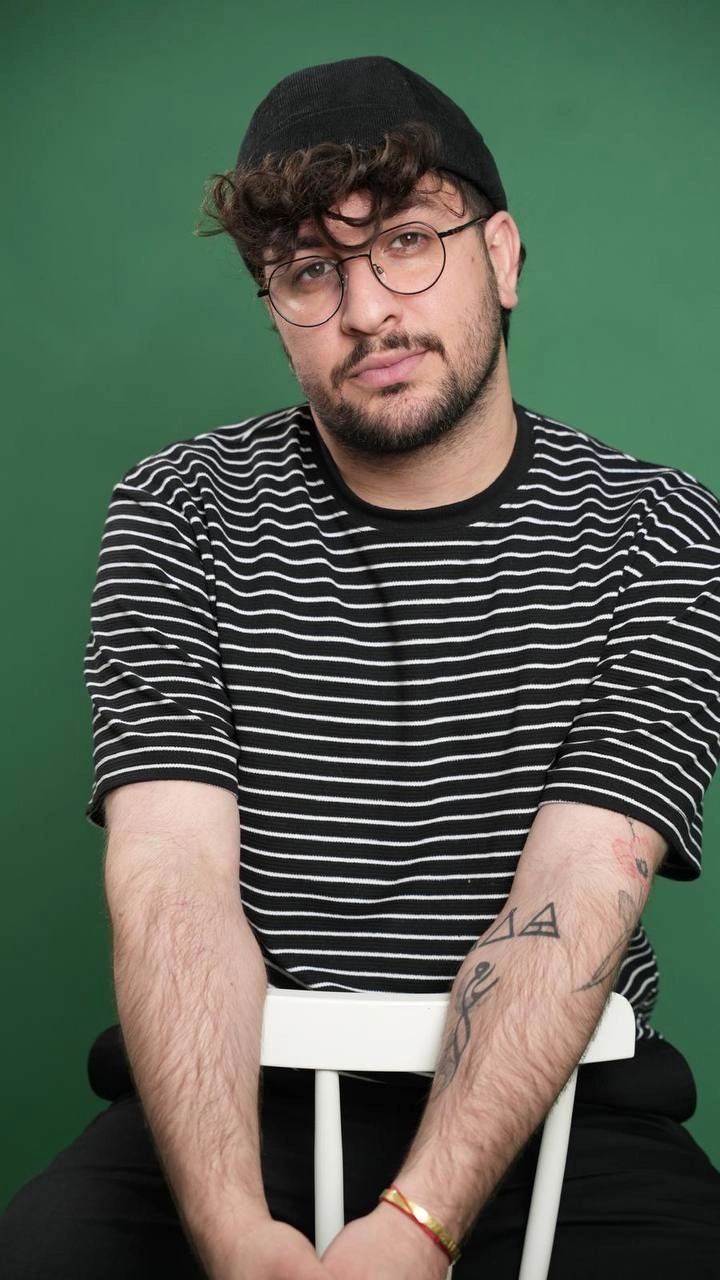
Last year, around 400 people approached Beit al-Mim seeking asylum, and upwards of 600 sought psychological support — up from just 200 two years ago. Omar described one of the most memorable cases the organization has encountered this year: after learning of a young man’s sexual orientation, his father and brother cut off his genitals. The young man sent the organization’s staff photographs, but later stopped responding.
From Berlin, K. notes the even harsher reality faced by LGBTQ people living in the West Bank.
“Their reality is nothing like mine. When we meet and I hear their stories, I realize I wouldn’t have survived in their place. There, you can be killed simply for wearing the wrong thing. But even there, small communities hold secret gatherings where people can dress however they want.”
“Israeli Arabs look down on people from the West Bank”
As a rule, queer people forced to leave the West Bank do not receive official refugee status in Israel. Instead, they are issued temporary residence permits – valid for three, six, or 12 months – which must be renewed. According to Omar, before October 7, around 90% of applicants received permits; in the aftermath of the Hamas terrorist attacks, however, the figure has fallen to about 5%.
Without official status, queer Palestinians struggle to find permanent housing, to secure work, or to access healthcare. Low levels of education and limited Hebrew skills make integration even harder. Israeli Arabs look down on people from the West Bank, while Jews see them as a security threat, Omar explains.
Israeli Arabs look down on people from the West Bank, while Jews see them as a security threat
Many of the refugees dream of moving to Canada, Switzerland, or Europe, but their limited education and lack of language skills also stand in their way. Beit al-Mim helps them find safe housing in Israel and provides legal and psychological support — sometimes simply making sure they have food to eat.
Omar himself is an openly gay Muslim and an Israeli citizen. When he came out, his religious, hijab-wearing mother told him, “God made you this way. We love you as you are.” But, he says, far from all LGBTQ Arabs in Israel find support from their families. “Many face homophobia and threats at work and in their communities. On top of that, we often experience discrimination because we are Arabs,” he says, recalling an incident in which a gay couple in Budapest asked him whether he was carrying a knife after hearing him speak Arabic.
Triple prejudice
L., an Arab transgender woman, has identified as Israeli since childhood. She became particularly aware of her Israeli identity during the Second Lebanon War in the summer of 2006. “They attacked all of us. I was born in this Jewish state. This is my home,” she explains.
L.'s mother sought to integrate into Israeli society. Her father, however, insisted on identifying as Palestinian, seeing it as a form of resistance against the “Zionist regime” — “they were constantly arguing over which language should dominate in our home,” L. recalls.
After high school, L. voluntarily enlisted in the Israeli military, where she first began seriously thinking about the Palestinian side of the conflict. “That’s when I began confronting the issue of the occupation and what we as a state do beyond our borders,” she says.
Reflecting on her gender identity, L. says she is tired of living up to other people’s expectations. “Some people hate me because I’m too queer. Others because I’m Israeli. Some don’t like me because I’m Arab. Others because I said something they didn’t like. Well, to hell with it! It’s time to return to being myself,” she concludes.