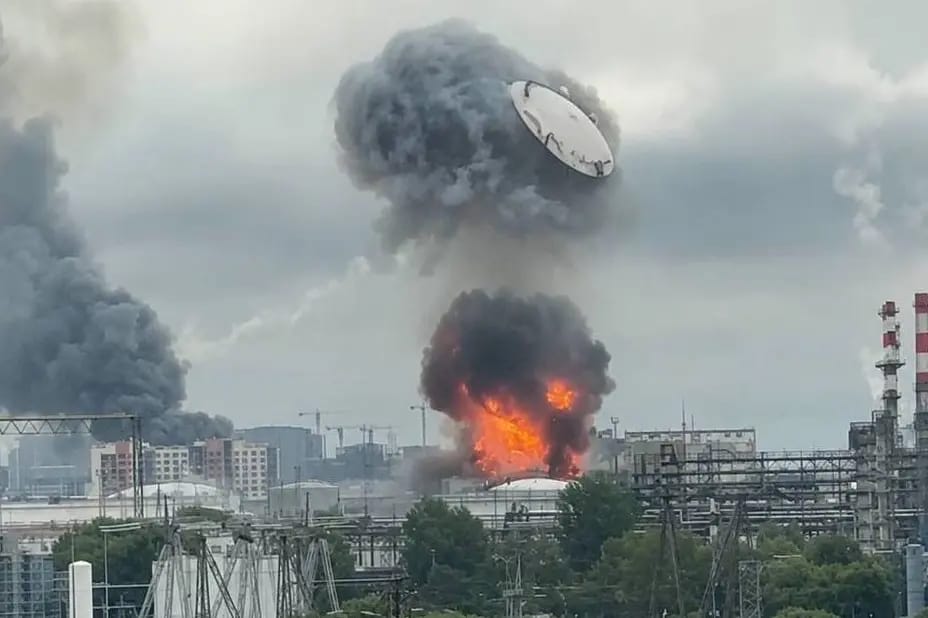
After Ukraine intensified its campaign of drone attacks against Russian fuel infrastructure in late June, gasoline and diesel shortages began affecting a wide range of economic sectors across the country, including agriculture, tourism, and small businesses. The Insider spoke with entrepreneurs whose businesses have suffered the consequences.
“There’s almost no point in farming anymore”
Denis, farmer, Voronezh Region
All my equipment runs on diesel — combines, tractors, trucks that haul the harvest out of the fields, loaders (including front-loaders) — absolutely everything. Diesel now costs 120–130 rubles ($1.5-1.6) per liter wholesale; farmers, when they drew up their budget roadmaps, were counting on 70. Do the math — fuel prices almost doubled.
Drones don’t hit our facilities as often as in the neighboring Kursk and Belgorod regions. But a missile blasted our plant about three weeks ago. I immediately grabbed my bike and rode over to see it.
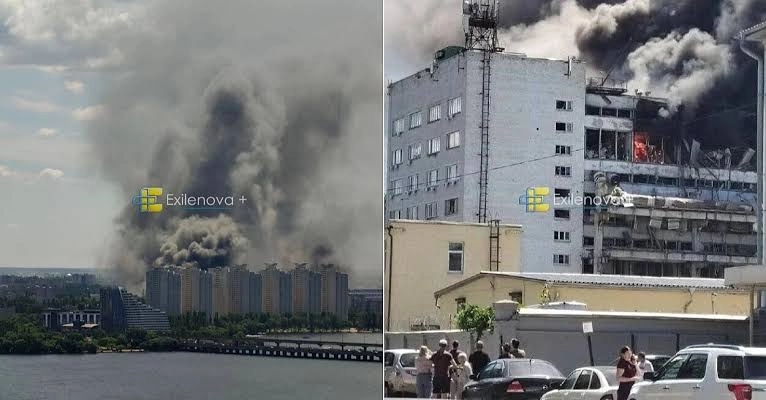
The harvest hasn’t come to a standstill anywhere here. But the harvest isn’t even the point. The real trouble will start in the fall, when fall fieldwork begins. A tractor with a plow burns 600–800 liters per shift. And that’s just one tractor.
Nobody really knows what to do next. There are options: instead of plowing, you can disc the fields. This technique saves a lot of fuel but will negatively affect the future harvest.
Due to state control of prices, the harvest is unlikely to yield bigger profits. Wheat prices are holding, but production costs have likely tripled. A farmer can’t set their own prices — there’s almost no export market, and bread is a strategically important commodity, so prices are strictly fixed. There’s no way around it.
There’s almost no point in farming anymore. It gets worse every year. But abandoning the land isn’t an option either: if you leave it for even a couple of months, it’s ruined — weeds take over. Leave it for more than a year, and it’s overgrown with bushes. Clearing bushes from a hundred hectares is an enormous undertaking. Nobody can do that on their own.
You could, of course, lease the land to a holding company. But this year is the most critical one. I’m sure many won’t make it through. Economists on YouTube say that if the strikes continue, something close to a food crisis could begin. I don’t believe that — the stores still have everything, and the big holding companies will cover all needs with room to spare. But for private farmers, the crisis is already here.
We’re bracing ourselves for things to get worse, for the strikes to intensify. Rallying around Putin for him to “squeeze” Ukraine — only a handful of eccentrics say that now. Everyone is just waiting for “de-Putinization.” And, most importantly, even those who did not believe in it have changed their minds. Before, everyone was sure Putin wasn’t going anywhere. That feeling is gone now.
Everyone is just waiting for “de-Putinization” — even those who did not believe in it
In that sense, things have gotten a bit easier. We go to various events. I play poker, and while nobody used to breathe a word about any of this at the table — everyone just played cards — now they openly tell that “old man” to go to hell. That never used to happen. Before, there were those who always cursed him — people like you, liberal journalists — and the rest stayed quiet, at best. Now nobody stays quiet. My take: he’s got no good way out anymore.
“People are developing a negative reaction to troops in the city”
Yegor, construction worker, Belgorod Region
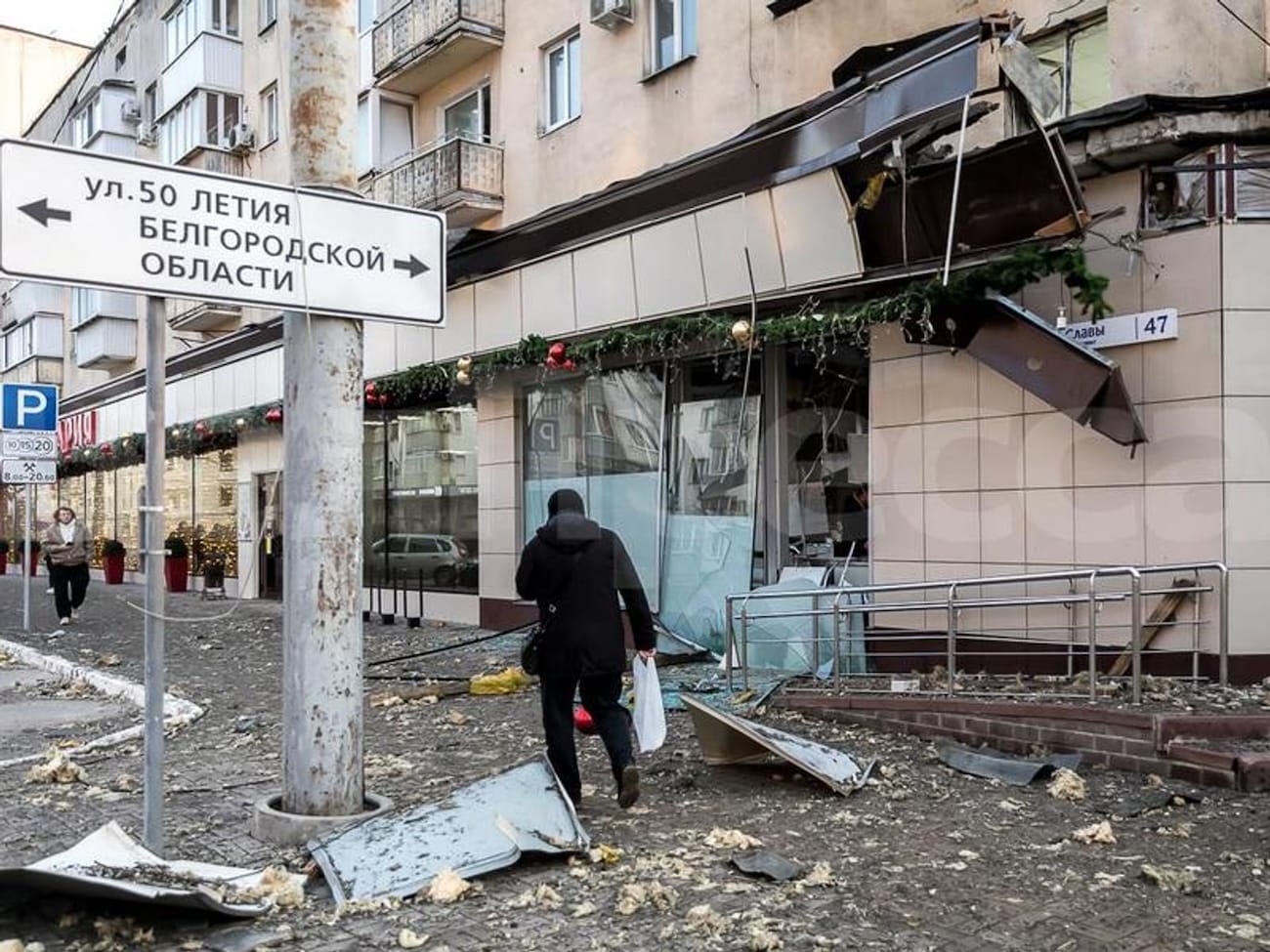
My business partner has two KamAZ trucks constantly in service. He calls to complain, saying: ‘There’s no work, we probably need to go our separate ways.’ Lindor got hit, and four large enterprises on Sumskaya Street stopped operating. After much difficulty, they managed to restore power in a week — it’s hard to imagine what resources were needed for four enterprises like that.
And now we’ve been struck with diesel shortages. Before, he used to get fuel any way he could — some shady suppliers would bring it, or soldiers. Now no one has anything to offer — the soldiers themselves are looking to buy. They’re handing out 60 liters per day per vehicle, and that’s nothing. KamAZ trucks consume on a completely different scale; it’s a drop in the bucket.
Diesel is rationed: government institutions, the military, security forces, and farmers get priority, otherwise everything would grind to a halt. On the other hand, we have relatives who are well-off farmers. They grow beets and wheat and have several combine harvesters — a well-run operation. They’re allocated 27 tons of diesel. They say it’s more than enough. I asked them to give me a ton. No problem, they said; if you need more, I’ll give you more.
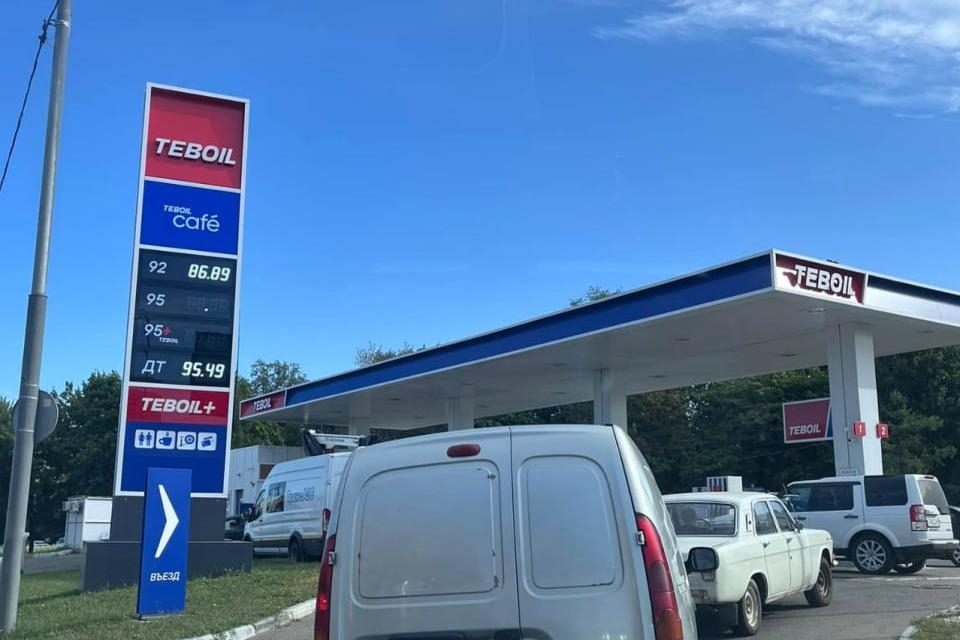
Things have somewhat improved with gasoline, but not a hundred percent. Today I saw a huge line at Dalnyaya Igumenka — an enormous queue, even though I used to fill up there without any issues. Gas stations are still getting hit. The station near Stroitel got struck; the Lukoil station got struck. A rocket hit the Teboil on Sumskaya, killing a female attendant. Then the station was rebuilt — and got hit again. The Rosneft near the car wash under the bridge got hit too. And the Rosneft in Bolkhovets also got hit.
In short, city gas stations are getting hit hard, so it makes sense to fuel up somewhere out in the countryside, outside of town. That actually works better for me: I drive out in the evening to a rural station, fill up the tank, fill a jerry can — no problem.
After the latest strikes, many people are driving around with walkie-talkies. I’m thinking of charging mine and relearning how to use it — I haven’t picked it up since 2022. Someone sent me the military frequency they use to broadcast attack warnings. That’s the most up-to-date information right now, so I’ll use it. Because if they start launching direct strikes on the city again, that’ll be it.
As for the mood, the temperature has genuinely changed. People are less and less afraid, speaking out more sharply. The fear is starting to disappear. Before, only anonymous accounts on social media would dare to make sharp statements about the authorities, but now real, non-anonymous accounts are posting them.
The mood is clear: the authorities are clamping down and filtering the media, but people have adapted somehow, communicating through their own channels, and the overall level of discontent keeps growing. You can’t bail out the sea with a sieve, and you can’t block everything. People are discussing what’s happening in Krasnodar, in Voronezh. Everyone is saying the same thing right now: [the Kremlin’s United Russia Party] will get nothing in September [when parliamentary elections are held].
Talk of mobilization, of everyone going to the trenches, of a possible attack on Europe to escalate the conflict — these are very different conversations from 2022–23. And interestingly, nobody remembers anymore what they themselves were saying two years ago. It turns out everyone was against the war. Everyone suddenly recalls that they supposedly always said it wasn’t needed, that they all have relatives in Ukraine, that we are one people.
Everyone suddenly recalls that they supposedly always said the war wasn’t needed, that they all have relatives in Ukraine, that we are one people
I may not be entirely right, but people are developing a negative reaction to troops in the city. They wander around looking disheveled, pull up to shops in dirty, beat-up vehicles, and carry weapons everywhere. It hasn’t really manifested overtly yet — I just see that people find it unpleasant. There’s a Pyaterochka [supermarket] nearby — they’re always going in there and grabbing bread with their hands. People are already asking: what kind of guardians are they, if at least one civilian is killed every day?
The new regional governor Shuvaev is nowhere to be seen. In the comments people are no longer shy. They write: “You bastards are dividing up the money while we’re getting screwed to the fullest extent.” Nikolskoye is under constant shelling, and they’ve changed the public transport route there. The bus now only goes as far as Tavrovo, and beyond that it’s on foot. Some people work in Nikolskoye, but it’s unclear how they’re supposed to get there. And nobody has declared a state of emergency.
“Crimea is dying as a tourist region”
Ivan, works in the tourism industry, Crimea
I’ve lived in Crimea since birth, in a resort town. I used to work in education, now in tourism. For many years I’ve had no other income — my livelihood depends on outsiders coming here. Last year was good, but this year is just bleak. It’s so hard that words can’t describe it. All our travel agencies are on the brink. We pool resources to put together tour buses, but even those run half-empty. I now work two or three days a week at most. Things were still manageable in mid-June, but from the end of June it got completely awful.
We don’t really have attacks as such: it’s a resort town, and any military bases that were here were destroyed long ago. But they’re hitting the power grid. Naturally, there are fuel problems. Tourists are hardly coming, because how would they get here? On horseback?
This year we can still make it through, but if next year is the same, then it’s off to the breadline. I have absolutely no interest in moving to Russia. I’m not a Russian — I’m a native Crimean. That’s my position on the matter.
Some feel the same way and want no part of Russia here. But we don’t know their names, because everyone keeps their mouths shut — it’s very dangerous, someone might report you. I have an acquaintance who has been held in Lefortovo prison without trial or investigation for nearly two years. No official charges have been brought against him. Informally, they are accusing him of treason — he said something wrong in a private conversation.
It’s a true state of limbo here — neither raw nor cooked. You don’t know what comes next. What better outcome can you hope for? If Ukraine achieves its goals, it will be very painful — Russia will lose everything. It’s unlikely Ukraine will stop shelling Crimea and let it bloom into a paradise — they’re bombing oil refineries, marketplaces, and so on. They’re bombing the Belgorod Region. Why would Ukraine suddenly stop any of that? The chances are zero.
And the idea that everyone will stop at some line of contact — you’d have to put on rose-colored glasses to believe that. Maybe some people believe things will settle down, but in my view, those people have a screw loose.
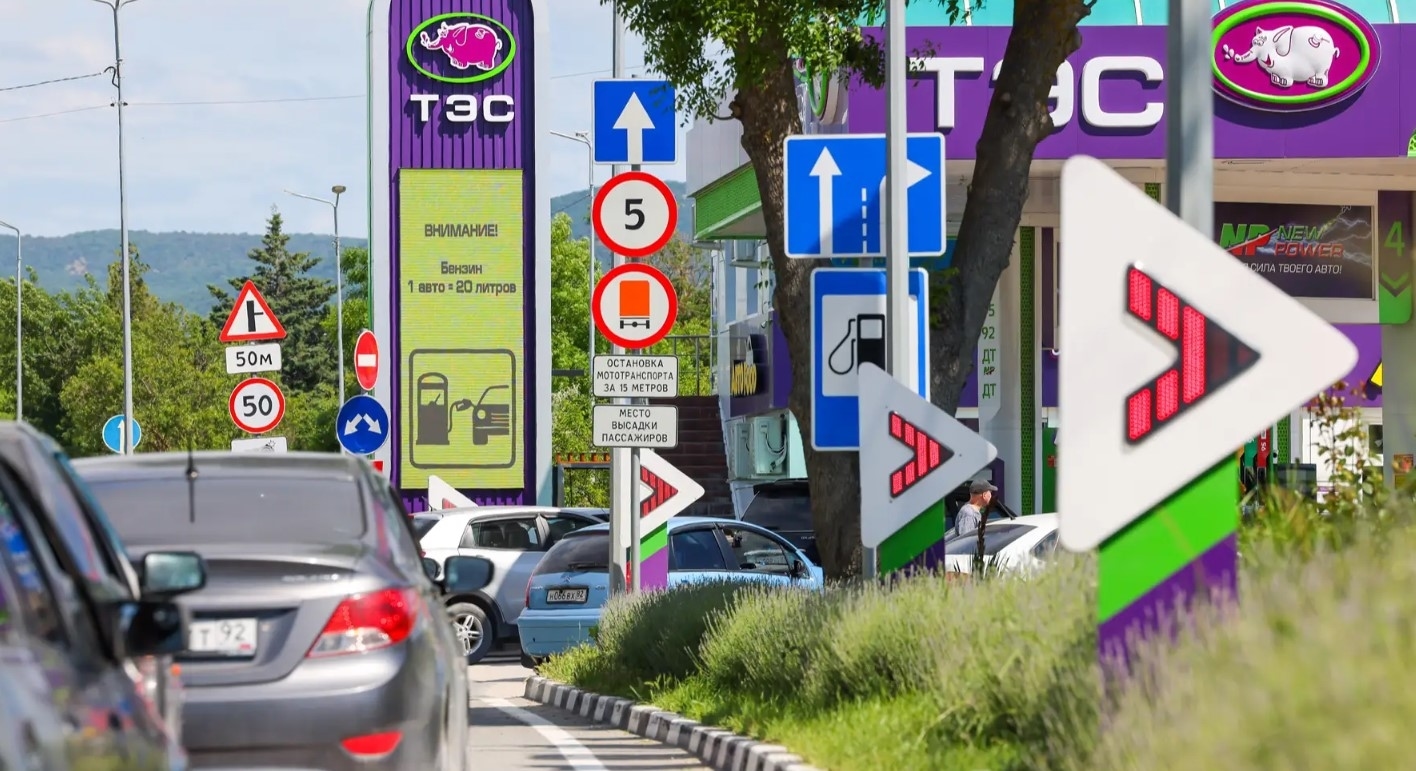
Crimea is dying as a tourist region. We had a team member who used to sell 150–170 tickets a day. Now she goes five days without work — not a single ticket. As I said, I work a couple of days a week, and all the rest of the time is a slow-burning depression — I don’t want to leave the house. Sometimes you go to the sea just to have some distraction. When winter comes, it’ll be completely unbearable.
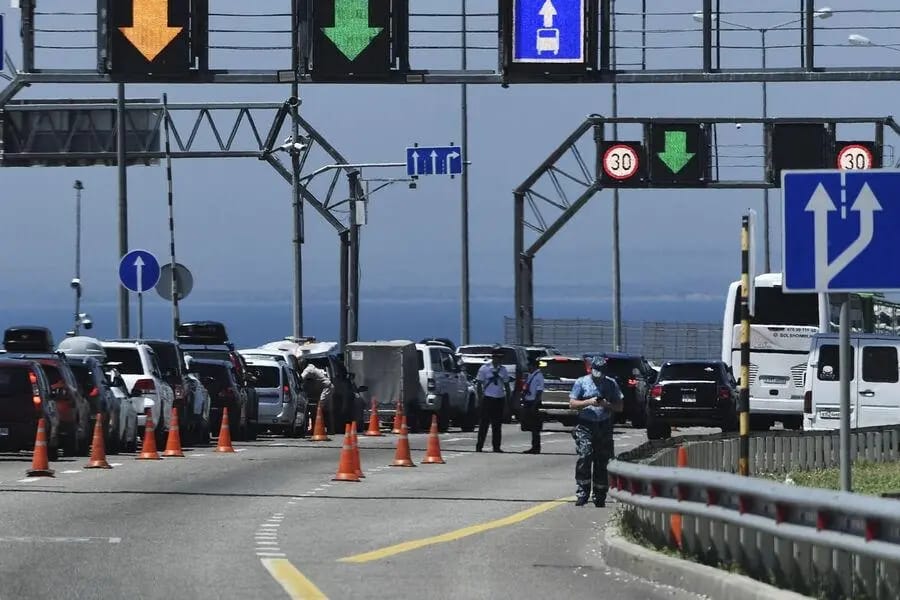
Tourist buses are traveling to the mainland to refuel. But the gas stations aren’t located right at the Kerch Strait Bridge — you have to drive another hundred kilometers or so, to Temryuk, toward Krasnodar. So you have to spend three hundred liters to fill four hundred. Not exactly ideal. And there are queues there too. As far as I understand, Russia has major gasoline problems as well. We recently had 95-octane at 265 rubles per liter.
Everyone has switched to bicycles. Once my colleague and I decided to go have coffee — there was no work anyway. When we got to the coffee shop, we couldn’t park our bikes: before, all the spots were empty, but now there are ten bikes at every rack. All the bike shops and repair shops are packed with bicycles — those are the businesses that are doing well. But it’s the only exception; for everyone else, things are very grim.
My mobile internet barely works, and the landline doesn’t work without power. Yalta had a three-day blackout, and Alushta had a five-day outage. All business — not just online sales, but ordinary trade in ice cream or meat — just goes to hell. You can’t really run an ice cream stand on diesel or gasoline at three hundred rubles a liter.
We have a bread factory in Crimea that makes the “best white brick loaf in the world.” It’s sold without packaging or bags, just sitting hot on the shelves. Last year it cost 22 rubles — now it’s 42.
Local authorities say the pretty phrase: “Trust official sources.” The implication is that anything that contradicts the official version will be suppressed. On Instagram, whenever people write something, bots immediately swarm in to say that everything here is wonderful.
Is there resentment toward Moscow for abandoning us, for setting us up? The Putinists don’t understand anything and shout things like: “Vladimir Vladimirovich is protecting us from NATO.” It’s a collective form of madness. They don’t understand that nobody gives a damn about Crimea, and nobody is going to solve its problems.
[Occupation administration head Sergei] Aksyonov occasionally speaks up and says: ‘there won’t be fuel, there won’t be fuel.’ Guys, in France they’d have already rioted and turned all of Crimea upside down if they were in our situation. Even on the mainland, people are already being told: ‘guys, buy your own generators, protect your own marketplaces, shops, and properties.’ What does that tell you? You can all go to hell, pardon my French. Nobody in Moscow plans to do anything for the people.
They promised 4.3 billion rubles in aid to the tourism cluster, but I can’t even imagine how that money could be distributed. To whom — hotels, travel agencies, private entrepreneurs who hosted vacationers, mini-hotel owners, shops? How is this going to work? It’s ridiculous.
In some villages, power was cut for several days. Krymenergo said: ‘those without power for 48 hours would receive compensation — 15,000 rubles [$184].’ People’s refrigerators burned out, lots of food spoiled. They started paying out compensation, and then they started doing the following: cutting the power for one day,23 hours, and 50 minutes, then turning it on for ten minutes — and that’s it. Formally, less than 48 hours have passed, so no compensation is owed. Very clever.
My colleague is having a meltdown. I say: ‘what are you throwing tantrums for? Do you have a time machine to undo everything, to change something? Do you want to give yourself a stroke? The food went bad — well, what can you do? There’s no money — are you going to earn it by panicking?’ We’ll chew on grass if we have to. If there’s no gas or electricity, we’ll cut down some trees and chop firewood.
Still, sometimes I give in too. Today I said I wanted chicken broth, herring, Russian salad, a pastry, compote, and a shot of vodka. Everyone immediately figured out from the list of dishes that it was a wake — one for the country’s most important comrade. That’s the kind of wake I’m looking forward to.
The other day some tourists from Belgorod came by and said it’s a luxury resort here compared to what’s going on back home — very calm. ‘Say no more,’ I said. I don’t bring up these topics with tourists at all. Things are indeed relatively calm here. They just cut the power, and nothing else happens. But I think the people who travel to Crimea to vacation right now are out of their minds.
Tourists from Belgorod say that compared to what’s happening at home, Crimea is a luxury resort
One night, about 70 drones flew in from Ukraine. I heard that a military unit near Bakhchisaray got obliterated. The southern coast of Crimea was left without water, electricity, and internet — meaning many of the drones got through.
Life over the past months has changed so much that we are in a constant state of uncertainty, constantly bracing for the worst. We had no electricity back in 2016 either, but we survived. And Russia helped back then. I think now Ukraine is deliberately targeting power stations to drive Russian troops out of Crimea, destroying air defense and military units so they can’t resist. In other words, they’re preparing the ground for a physical entry into Crimea. That’s why they’re knocking out all the energy infrastructure, literally to zero. This is sort of logical: war can’t be a one-sided game.
Gleeful comments from Ukrainians do not sting. Since we stayed silent, since we were cowardly in 2014, we have only ourselves to blame. We betrayed our homeland for reasons nobody can explain.