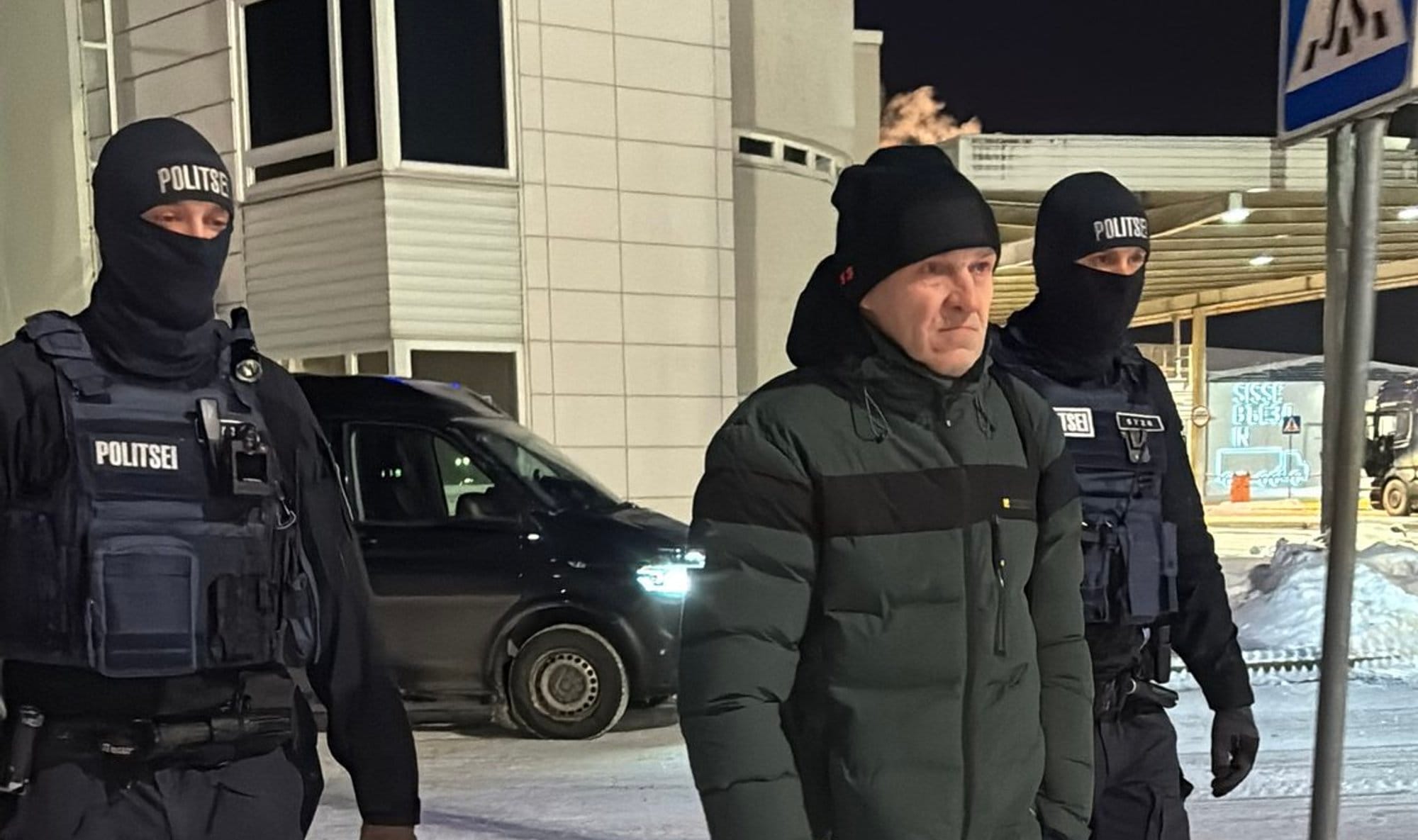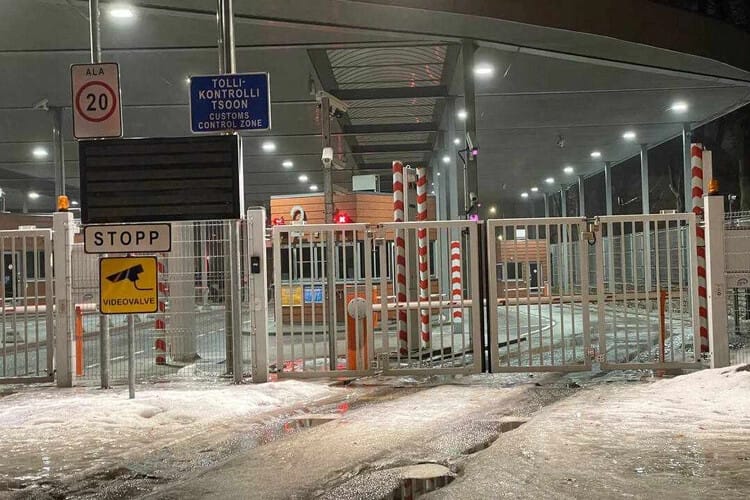
On Nov. 20, the Estonian government formalized a decision to close all road checkpoints on the border with Russia starting from Dec. 1. The restriction will apply to vehicles and pedestrians. After six months, the government will assess whether the restrictions need to be modified.
The decision applies to five checkpoints: Narva-1, Narva-2, Koidula, Luhamaa, and Saatse, three of which are still currently operating (Narva-1, Koidula, and Luhamaa, with the Narva crossing allowing only pedestrians). Rail freight shipments will continue under customs control. Passenger trains do not cross the border.
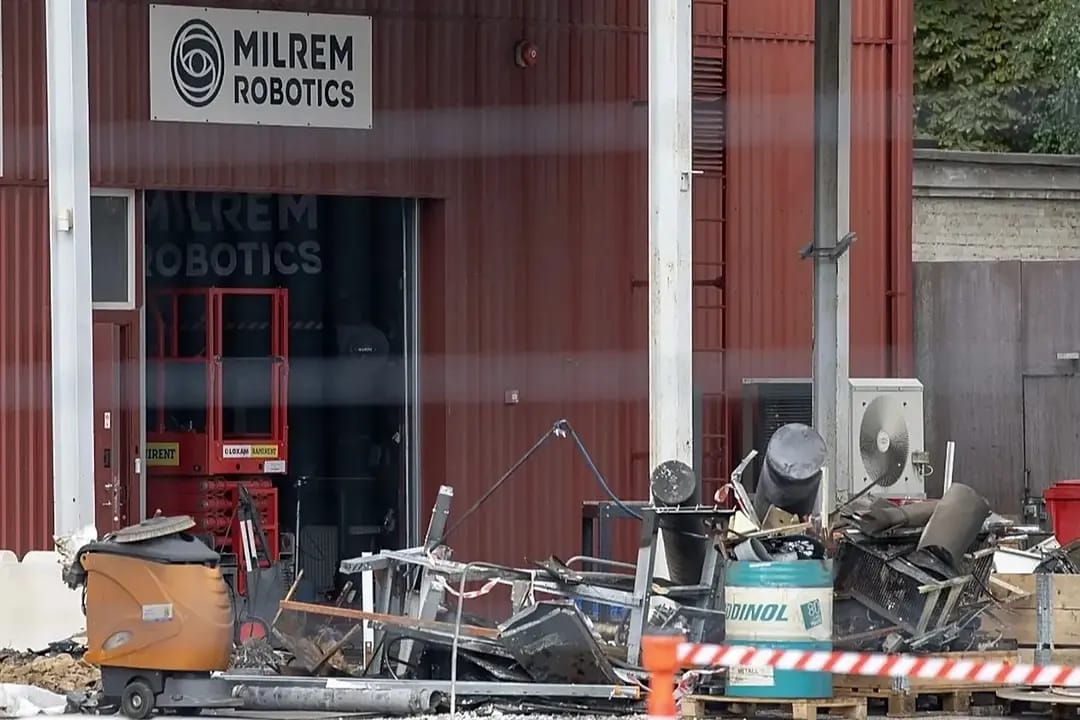
Estonian Foreign Minister Margus Tsahkna announced the plans to close the crossings on Nov. 15, following reports that the Estonian authorities had prevented an arson attempt at a facility belonging to the drone manufacturer Threod Systems near Tallinn. According to Estonian counterintelligence, the sabotage attempt was organized by Russian military intelligence. Russian presidential press secretary Dmitry Peskov rejected the accusation.
In the first half of 2026, Estonia’s Ministry of the Interior recorded approximately 444,000 border crossings through the three operating checkpoints, 13% fewer than a year earlier. The number of crossings by vehicle fell by 20%, to 35,000.
In a Nov. 16 article headlined “Closing the border with Russia will lead to collapse, Narva authorities believe,” Russian state-owned media outlet RIA Novosti reported that:
“Chairman of the Narva City Council Urbo Vaarmann and former mayor Katri Raik believe that the decision of the Estonian authorities to close the border with Russia may bring the city to economic collapse, Postimees writes.
‘If on Dec. 1 Estonia closes the checkpoints on the border with Russia, the state will bear a double responsibility: to strengthen the security of Estonia and Europe and to take care of the well-being, sense of security and peace of mind of the residents of Narva and the whole (county) of Ida-Viru,’ the portal quotes Vaarmann as saying.
According to him, the closure of the border may deal a serious blow to businesses, which will put jobs at risk as well, and the government must have a plan to support the region, which will suffer the most.
‘These steps must be agreed with the city and entrepreneurs before the possible restrictions come into force,’ Vaarmann added.
Raik, for her part, said that the closure of the border crossings will sever ties between people and that Narva will face a severe economic shock. She noted that the unemployment rate in the city is already twice the national average, and the halt of cross-border traffic will finish off related businesses as well. In her opinion, as a result, freight shipments will stop, and the hotels and cafes that survived on visitors will empty.”

The Chairman of the Narva City Council did write a Facebook post about the upcoming closure of the border. However, RIA Novosti conveys its content in a rather peculiar way. In fact, the post itself reads:
“If the border is closed on Dec. 1, the state bears a double responsibility: to strengthen the security of Estonia and Europe while at the same time taking care of the well-being, sense of security and peace of mind of the residents of Narva and the whole of Ida-Viru County.
Narva and the whole region must remain a place where people feel safe, where it is pleasant to come and where one can invest with confidence. The announcement of the border closure may prompt guests and investors to reconsider their plans. Therefore, the state must help maintain trust in our region, support local business and facilitate the attraction of new investment.
The assessments of the Estonian security services must be taken with the utmost seriousness. It is the duty of the state to protect its citizens and prevent security threats. This responsibility also implies having a concrete plan to support the region that will be most affected by such decisions.
People must feel that the state is on their side. This means safe living conditions, employment opportunities, a warm home, and affordable utility bills.
For entrepreneurs, the closure of the border may become a serious blow. At the same time, the well-being of our families and the future of the whole region depend on business performance.
Therefore, we expect the government to provide the affected businesses with tangible financial assistance, support the creation of new jobs and the attraction of investment, and propose long-term solutions to rising utility costs. These measures must be coordinated with the city authorities and business representatives before any restrictions are introduced.
As Chair of the Narva City Council, I am convinced that cooperation with the government must bring real benefits to our people and companies and strengthen the confidence of the residents of Narva and the whole region for tomorrow.
The well-being of our people and the security of Estonia are inextricably linked.
Europe begins in Narva. The well-being of our region must be a shared priority for both Estonia and the whole of Europe — and this must be felt in everyday life.”
That is, Vaarmann does not deny the need for protective measures and does not criticize the government’s decision to close the border completely. Without predicting any collapse, he merely believes that in this situation the government should support the region financially.
Former mayor Katri Raik is more critical of the government’s decision, but she, too, does not speak of collapse:
“The closure of the Estonian-Russian border is not a great surprise, but it is a painful development for the border city of Narva. People had always hoped it would not happen… Estonian residents who are currently in Russia have two weeks to return home. After that, the journey from St. Petersburg to Narva will effectively go through Istanbul.
Freight traffic, which in recent years moved through the southern border crossing, will disappear entirely. The much-criticized border queue brought people to the city who ate, stayed overnight, and used taxis. In the end, standing in the border queue for €10 an hour had become an important source of income for quite a few locals.
Even today, unemployment in Narva is roughly twice the national average.”
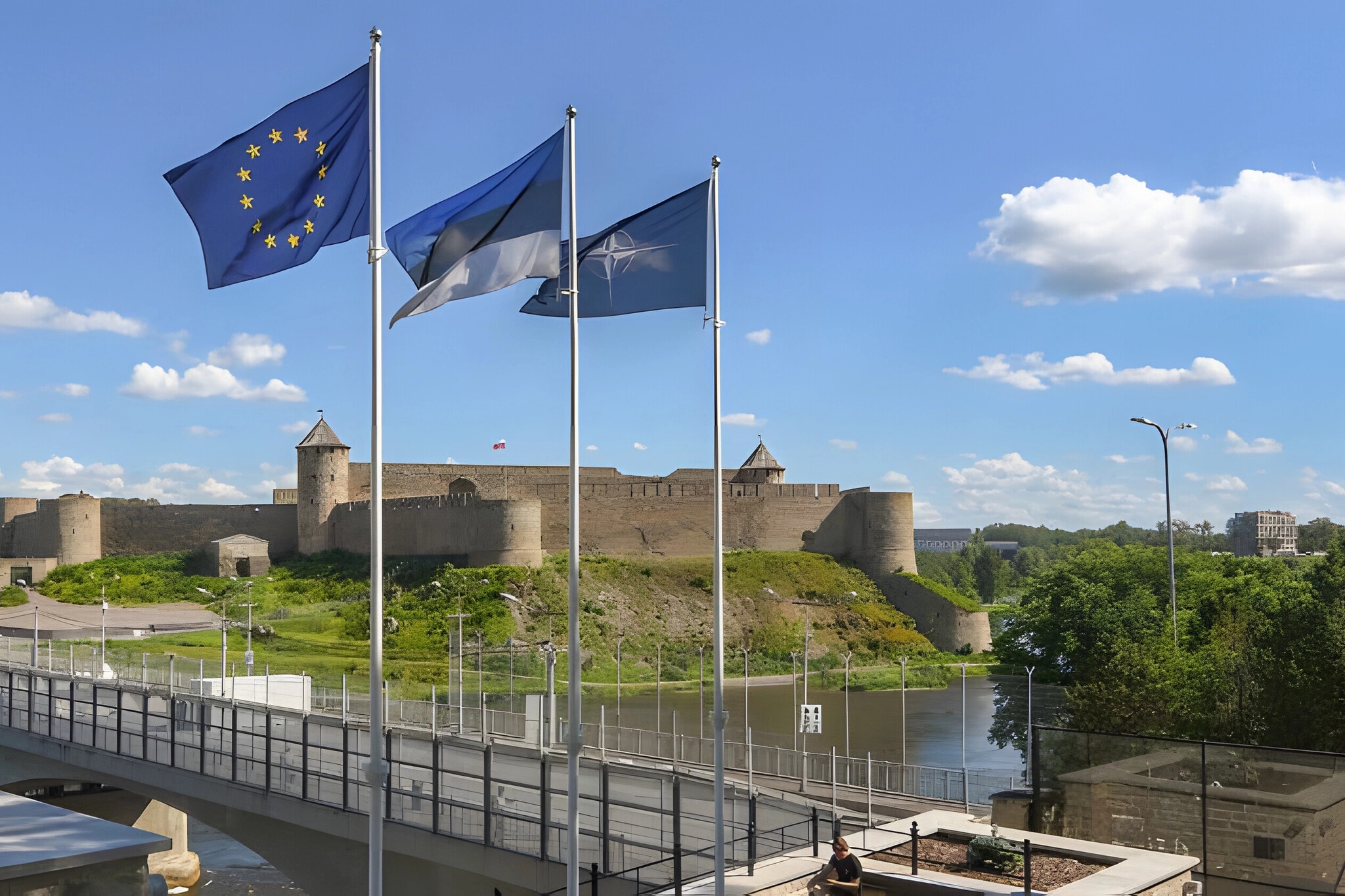
The claim about freight traffic looks somewhat strange: since February 2024, Russia has closed its Ivangorod checkpoint to all types of transport (citing reconstruction), and in Narva the border can be crossed only on foot. The freight flow between Estonia and Russia does not go through Narva–Ivangorod but through the Koidula–Kunichina Gora and Luhamaa–Shumilkino checkpoints. Of all businesses, the abolition of pedestrian border crossing in Narva could affect hardly anything but hotels, restaurants, small retail, and intercity transport. The city’s largest enterprises — the Narva Haigla hospital and the plants HANZA Heavy Mechanics Narva, HANZA Mechanics Narva, and NPM Narva — have nothing to do with border infrastructure.
Unemployment in Narva and in Estonia’s eastern region of Ida-Viru County is indeed substantially higher than in Estonia as a whole, but it should be noted that the closure of road traffic across the border in February 2024 did not affect its level. Moreover, the employment rate in the city even rose somewhat in 2024, to 56.7%, compared with 54.7% the year before.
Perhaps such a harsh critical tone in Raik’s statement is linked to domestic politics: in July 2026 the City Council dismissed her by a vote of no confidence, so she found herself in the opposition.
The most surprising statement about Estonia was made by Alexey Pushkov, a member of the constitutional committee of Russia’s Federation Council. His remark is also cited by RIA Novosti:
“In fact, Estonia exists as a political unit on the world map only insofar as Russia exists. The hatred of Russia, the preparation for occupation, the readiness to host nuclear weapons and NATO bases, to close the border, to build bunkers, to sit endlessly in discussions with allies about Russia’s policy and intentions, the pushing of Kallas into negotiations with Russia, the sense of being part of world politics — all of this is connected with us.
Russia is Estonia’s great obsession. In Tallinn, living next to Russia is considered a great geographical curse, but they are wrong. It is precisely this neighborhood that gives Estonia meaning as a state and gives it weight within the EU and NATO, alongside far more significant states — weight it could never have dreamed of if it were located anywhere else. To paraphrase Descartes: Estonia is absorbed in a meaningless struggle with Russia, therefore it exists. Without Russia, Estonia faces the disintegration of its elite, demobilization, Baltic melancholy, moral decay, and irreversible national fading.”
In reality, in the 2010s Estonia was quite a successful state economically. At the beginning of the decade, its GDP per capita was only 66% of the EU average, but within ten years it was up to 84% after Estonia posted one of the highest growth rates in the EU. Its most important economic partners were Finland and Sweden, which provided investment, industrial cooperation, and help in the banking sector. In 2010, the Finnish and Swedish markets combined to account for around a third of all the goods Estonia exported. Ties with Russia were significantly less important. According to a Swedbank Research study of Feb. 14, 2022, at that time Russia was Estonia’s eighth-largest trade partner, Latvia’s fourth-largest, and Lithuania’s largest. High technology developed rapidly in Estonia, which became one of the world leaders in digital government, the IT sector, and the startup ecosystem. Successful companies such as Skype, Bolt, Wise, and Pipedrive were created in the country. Because of its weaker connection to the Russian economy, Estonia weathered the severing of ties in 2022 more easily than other countries in the region, largely because it has its own energy source — oil shale. Estonia does have a budget deficit, but as late as 2025 it did not exceed the 3% level set by the Maastricht criteria (though in 2026 it is forecast to reach 4.5%, mainly because of rising defense spending). At the same time, Estonia has one of the lowest levels of government debt in the EU — only 26.9% of GDP.
In short, Pushkov’s conclusions about “Baltic melancholy, moral decay, and irreversible national fading” have no basis. In fact, Estonia’s tough foreign policy toward the aggressor state does not in any way cancel out the fact that the country is developing quite dynamically, thanks primarily to interactions with its EU partners.