Russians convicted on “extremism” or “terrorism” charges do not regain full freedom even after leaving prison. For the next eight to ten years, they remain under court-ordered administrative police supervision. Former political prisoners are required to report to the police several times a month, barred from leaving their region or city, subjected to nighttime inspections, and prohibited from attending loosely defined “public gatherings.” Charges of “extremism” and “terrorism” have become the Russian authorities' primary tool of repression, with law enforcement officials increasingly putting pressure on former prisoners to sign a military contract and go to war in exchange for having their police supervision lifted.
A failed attempt to emigrate
In March 2025, 42-year-old Kaluga resident Ivan Lyubshin was released from a penal colony in the Yaroslavl region. In the spring of 2020, the Court of the 2nd Western District Military had sentenced him to five years and two months in prison. The case stemmed from a comment he posted about Mikhail Zhlobitsky, a 17-year-old anarchist who carried out a suicide bombing at the entrance to the FSB's Arkhangelsk regional headquarters on Oct. 31, 2018. Zhlobitsky was killed, and three FSB officers were injured. Lyubshin wrote something about Zhlobitsky being the “Person of the week – everyone's talking about him, a hero, he died,” later explaining that he had meant that the dead teenager was “the week's biggest newsmaker,” not a “hero in general.” Lyubshin later described being tortured by law enforcement officers.
After his release from prison in 2023, Lyubshin did not become a free man. The court placed him under supervision for another eight years, requiring him to report regularly to the police, banning him from leaving his home at night, and prohibiting him from leaving the Kaluga region without permission.
In May 2026, Lyubshin decided to try to leave Russia via Belarus. On the night of May 2, he was due to fly from Minsk to Yerevan, where he planned to obtain a French humanitarian visa — which, according to him, had already been approved by the French consulate. From Yerevan, he intended to continue on to France.
Lyubshin never made it to his flight. Two hours before departure, he was detained by Belarusian border guards, then handed over to the police, and afterward to officers of the KGB. According to Lyubshin, they in turn transferred him to Russian law enforcement officers.
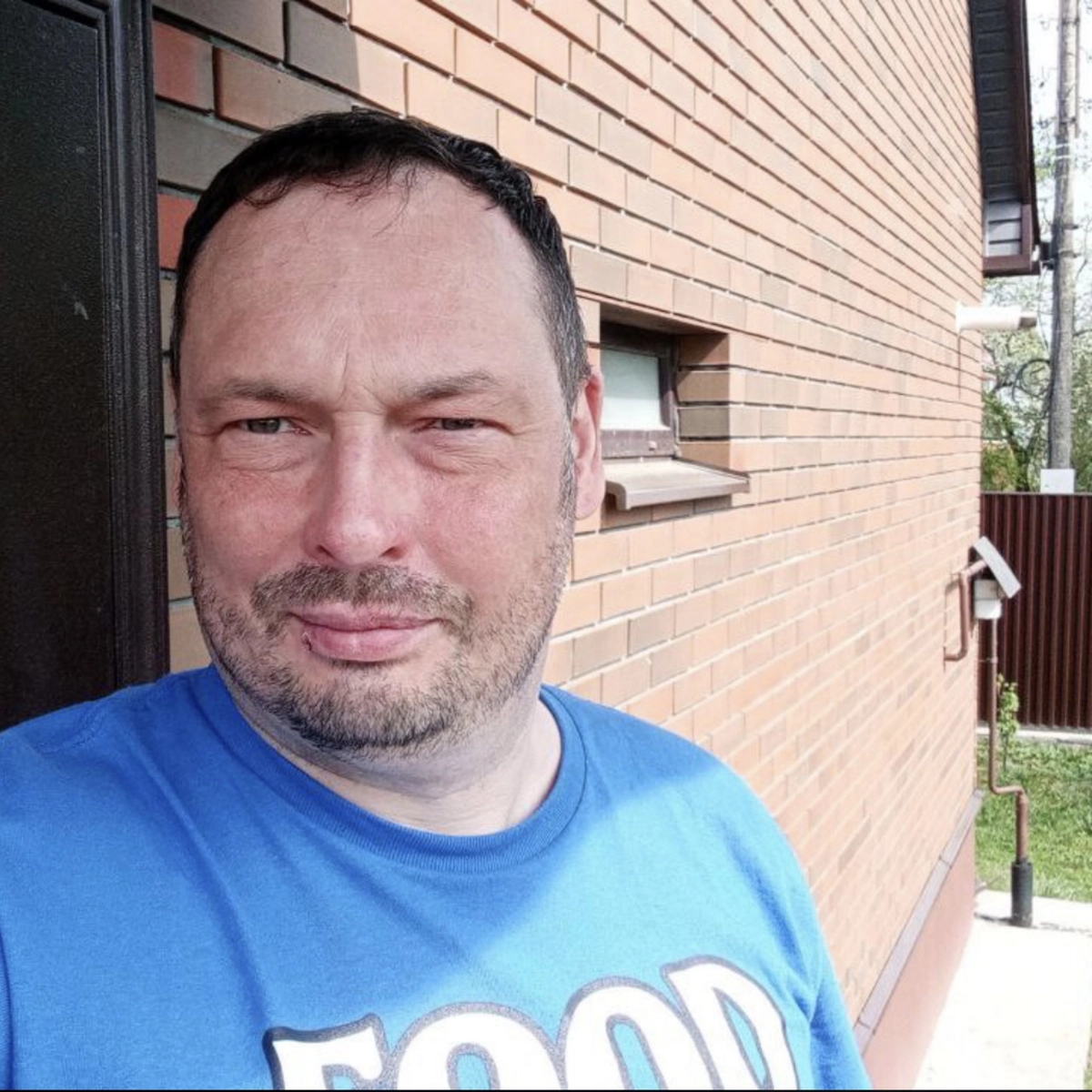
Lyubshin tried to explain to the security officers that he had no intention of traveling to Ukraine, showing them documents confirming the status of his French humanitarian visa, a ticket from Yerevan to Paris, and a hotel reservation. Nevertheless, his attempt to leave the country served as the basis for a new criminal case on charges of evading administrative police supervision. His home was searched, and he was placed under a travel ban pending trial.
Police also charged him with petty hooliganism. According to police reports, he had been using obscene language in a public place and ignored remarks from passersby. Lyubshin says the time of the alleged incident listed in the report coincides with the period when police were conducting the search of his apartment in his presence.
Lyubshin remains under travel restrictions pending the outcome of the criminal case accusing him of evading administrative supervision.
From prison to police supervision
Administrative supervision was introduced into Russian law in 2011 as a mechanism for monitoring people released from prison. Formally, it is not considered an additional punishment. In practice, however, for former prisoners, administrative supervision becomes an extension of their sentence, with many aspects of everyday life requiring approval from law enforcement authorities.
According to official statistics, Russian courts considered 34,777 cases seeking to impose administrative supervision in 2024 alone, approving 33,301 of them. More than 5,000 additional cases concerned extending existing supervision orders, and almost all of those also resulted in extensions.
In 2024, Russian courts considered nearly 35,000 cases seeking to impose administrative supervision and approved 33,301 of them
Not everyone released from prison is placed under administrative supervision. The measure may be imposed if a prisoner is classified as a “persistent violator of prison regulations,” or if they were convicted of crimes committed as repeat offenders under Russia's legal classification of dangerous or especially dangerous recidivism.
There are, however, two categories of convicts who are placed under administrative supervision regardless of their conduct in prison or whether they have previous convictions. The first is those convicted of sexual offenses against minors. The second includes those convicted under Russia's “terrorism” and “extremism” laws, as well as people convicted of attempting to kill law enforcement officers or judges. In such cases, supervision lasts until the person's criminal record is expunged, which can take up to 10 years. In effect, the conviction continues to have legal consequences even after the prison term has been served.
The only mandatory restriction imposed on everyone placed under administrative supervision is the requirement to report regularly to the local police department — anywhere from one to four times a month, depending on the judge’s determination. Any additional restrictions are imposed at the court's discretion: a person may be barred from entering certain places, attending public gatherings or other events, leaving home during specified hours, or traveling beyond a designated geographical area. Violating the restrictions carries administrative liability. but multiple violations can become grounds for a criminal case on charges of evading administrative supervision. The maximum penalty is relatively short (up to one year in prison), but once that sentence is served, administrative supervision is imposed again.
For former political prisoners in particular, this means that even after leaving prison they remain in regular contact with the police and are under the constant threat of renewed prosecution.
“In politically motivated cases, administrative supervision has become the rule rather than the exception,” says lawyer Valeria Vetoshkina, who works with OVD-Info. According to her, the system creates “an endless cycle of punishment”: first, a person serves a prison sentence, and after release they remain burdened by a criminal record and administrative supervision. Under Russia's current legal framework, Vetoshkina argues, this form of control no longer serves any legitimate legal purpose.
Nighttime inspections
Former political prisoner Alexei (a pseudonym used at his request) learned several months before the end of his sentence that he would be placed under administrative supervision. The issue was decided at a court hearing held to determine what restrictions would apply after his release. It came as no surprise to him: several of his co-defendants had already been released, and their experience made it clear that anyone convicted on “terrorism” charges was inevitably placed under supervision. The court barred Alexei from leaving the Moscow region, ordered him to remain at home at night, and required him to report to the police twice a month.
Of all the restrictions, Alexei says the nighttime inspections had the greatest impact on his life.
“If you want to travel anywhere far away, you have to stay overnight. That always means there's a risk they'll come that night. I remember that every night — whether I was at a dacha, somewhere else, or out hiking — I kept thinking: ‘have they called yet? Maybe they're calling now? Maybe I should check my phone.”
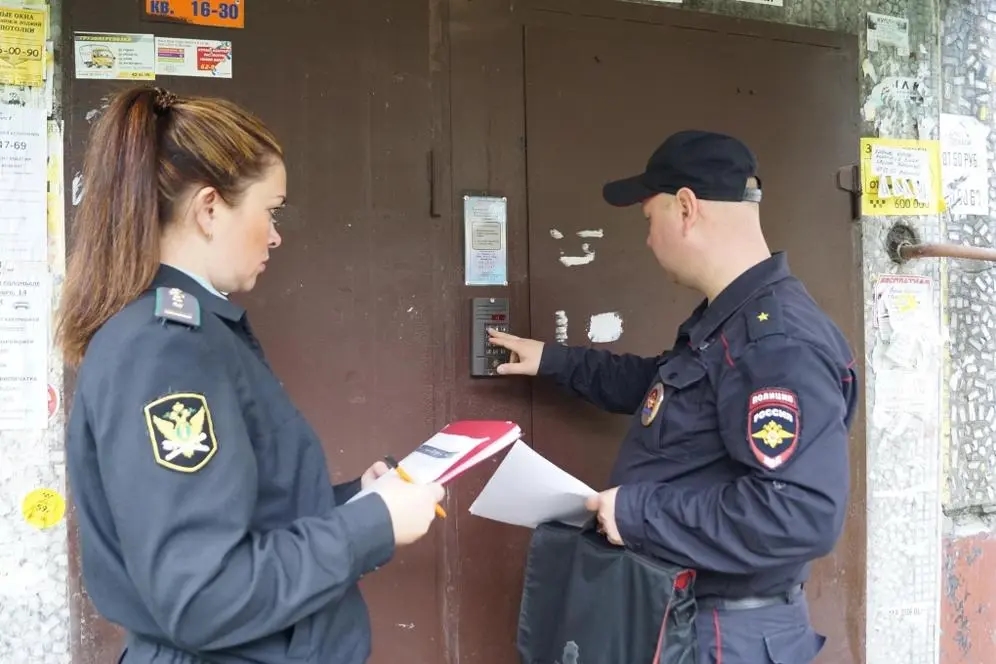
During nighttime inspections, police officers would either call Alexei on the phone or ring his intercom. Sometimes they asked him to come outside; other times they came up to his apartment themselves. They arrived after 11 p.m., and sometimes as late as 4 a.m. The officers recorded the inspections on video. Alexei had to sign a log confirming that he was at home.
Human rights advocate Ivan Astashin encountered administrative supervision in his work before living through it himself. After serving nearly 10 years in prison in the fabricated ABTO case, a court placed him under administrative supervision for eight years. One of the restrictions prohibited him from being outside his home between 10 p.m. and 6 a.m.
At one of the routine check-ins, the supervising officer asked Astashin whether he had managed to get home before 10 p.m. on a particular day. She then showed him photographs generated by a facial recognition system: a surveillance camera had captured him leaving the metro station at 9:50 p.m. His home was a seven-minute walk from the station.
“I always made it home in time, of course. But that was the moment I saw how the system works: it doesn't just monitor people after 10 p.m. — it starts tracking them as the deadline approaches and automatically sends the information to the supervising officers,” the human rights advocate says.
There were times, however, when Astashin had to return home after 10 p.m. On those occasions, he tried to avoid being identified by surveillance cameras. “I'd just put on a baseball cap, a hood, and a face mask — COVID restrictions were still in place then,” he says. “The cameras wouldn't recognize me.”
The limits of what is permitted
The geographical area that a person under administrative supervision is prohibited from leaving without permission is determined by the court. In most cases, it is the region where the person lives. Sometimes, however, the court limits the permitted area to a specific district or municipality. As a result, people under supervision are effectively barred from many jobs that require travel. Shift work, long-distance transportation, truck driving, and business trips become almost impossible. “And those are often exactly the kinds of jobs that are relatively easy for a former prisoner to get, unlike many others,” Astashin explains.
In Moscow and the surrounding region, this restriction can take on a particularly absurd character. The capital is designated as a federal district all to itself, meaning that if a person is confined to Moscow, they cannot travel beyond the city’s ring road (MKAD). Conversely, if they live in the Moscow region but need to travel into Moscow for work or medical treatment, that too counts as a departure from the territory designated by the court.
Former political prisoner Alexander (a pseudonym used at his request) experienced this firsthand. He was placed under administrative supervision for eight years. The court prohibited him from leaving the Moscow region, required him to remain at home between 10 p.m. and 6 a.m., barred him from attending public events, and ordered him to report to the supervisory authorities twice a month.
Because he was forbidden from leaving the Moscow region, Alexander was unable to visit his mother, who lives in another region and was due to undergo surgery. The supervising authorities demanded medical records confirming her condition and the scheduled operation, but immediately warned him that permission was not guaranteed even with all the necessary documents. To authorize the trip, officials first had to obtain approval from their superiors and prepare an accompanying letter so they could monitor his travel, his stay with his mother, and his return. “She was born in 1952, and I may never see her alive again,” Alexander says.
“It feels like I'm under house arrest, except I'm allowed to spend more time outside”
According to lawyer Valeria Vetoshkina, the law allows for temporary travel beyond the boundaries set by the court, but only in exceptional circumstances. In practice, however, Vetoshkina notes that Interior Ministry officials may refuse permission even in situations explicitly provided by law.
A ban on attending public gatherings
One of the vaguest restrictions imposed on people under administrative supervision is the ban on attending public gatherings. Unlike curfews or mandatory police check-ins, the boundaries here are often unclear: it is not always obvious which events a person is forbidden to attend, where they are not allowed to be present, or at what point merely being near an event could be treated as a violation.
This restriction was imposed on former political prisoner Vadim (a pseudonym used at his request). He is prohibited from attending public gatherings but says he still does not fully understand what the ban actually covers. A football match, a concert, a city festival, a cultural performance, a small local gathering, a protest, or even simply walking past one — all of these remain potential sources of risk.
“It's an extremely vague provision. I still haven't figured out exactly what it means,” Vadim says. According to him, police officers informally assured him that such violations are not actually monitored. But he understands that if surveillance cameras capture him and he is identified by police officers or “someone else with an interest,” it could still be treated as a violation.

“'If I go to a concert or perform together with several other small bands, will that be considered attending a public gathering or not? As I've now come to understand, it will be extremely difficult for me to lead a normal public and creative life,'“ Vadim says.
Lawyer Vetoshkina explains that a court order should clearly specify exactly what is prohibited under administrative supervision. A resolution of the Plenum of the Supreme Court distinguishes between sporting events, cultural and entertainment events, and other gatherings that are not political in nature, contrasting them with public assemblies such as rallies, marches, demonstrations, and pickets. In practice, however, court orders vary: some simply prohibit attendance at public gatherings, while others separately specify “public gatherings and rallies.”
A lawyer who spoke to The Insider on condition of anonymity says that wording such as “public gatherings and other events” can be interpreted arbitrarily — such a phrasing could encompass holidays, concerts, and other public gatherings as well. “There are no clear criteria here. A great deal depends on the particular police department and how its officers choose to enforce the restriction,” the lawyer says.
The prohibition is worded so broadly that it can encompass holidays, concerts, and other public gatherings
Astashin was not prohibited from attending public gatherings. However, in March 2022, shortly after the start of Russia's full-scale invasion of Ukraine, a local police officer came to his home one morning and told him he needed to go to the station. Astashin could not refuse. When he stepped outside, two FSB officers were waiting with the local police officer.
At the police station, he was escorted to an operations office and left alone with the FSB officers. They asked him what he had planned to do that day. Astashin replied that he was going to the dentist.
“They said, 'No, we have information that you were planning to take part in an unauthorized protest,’” he recalls. “It was the anniversary of the annexation of Crimea, and there had been announcements about Putin's rally at the Luzhniki Stadium.”
After questioning him, the security officers kept Astashin at the police station for the rest of the day. No detention report was drawn up, no administrative charges were filed, and he was forbidden from using his phone. Friends and his lawyer, who came to the station, were told that Astashin was not there. At around 10 p.m., officers put him into a police car, drove him home, and escorted him into his apartment at precisely the time when, under the terms of his administrative supervision, he was required to be there.
Planning to leave must begin long before release
Administrative supervision is not listed in Russia's federal law as grounds for a travel ban, but since it prohibits a person from leaving a designated territory, emigrating legally becomes nearly impossible. Vadim says that leaving Russia is the first thing he would like to do, but he cannot obtain a passport. “I understand that things are only going to get worse,” he says. “There's this constant feeling of insecurity: they can come at any moment, seize whatever they want, put you in prison. And it will go on forever.”
Alexei had not originally planned to leave the country. He remained in Russia after the start of the full-scale war and, even after mobilization was announced in September 2022, he believed he was not at risk. But then one of his co-defendants, who was also under administrative supervision, told him that during a routine police check-in officers had said military recruitment officials would soon arrive to sign people up for the army. “'Don't worry, they'll take all of you,'“ Alexei recalls the officers saying.
After that, he began seriously exploring ways to leave Russia. At first, he looked into illegal routes, contacting people who crossed forests and fields into Latvia or Lithuania. Later, an acquaintance suggested a simpler option: buying a ticket to Armenia, which he could enter using an internal Russian ID.
Before his flight, Alexei prepared a cover story and arranged for an acquaintance in Armenia to confirm, if necessary, that they were business partners. He bought a return ticket so the trip would appear temporary.
Alexei suspects that information about airline tickets purchased by people under administrative supervision is shared with the authorities responsible for monitoring them. “As soon as I bought the ticket, they started calling my girlfriend, asking where I was. They said, 'We have information that he bought a ticket,'” Alexei says.
“I thought they probably wouldn't let me through, that there would be some kind of dramatic security operation. So I was really surprised when, at passport control, they simply said, 'All right, go ahead,'” Alexei recalls.
After he arrived in Armenia, local police officers visited his parents in Russia several times, repeatedly called his girlfriend, and took witness statements. Nevertheless, as far as Alexei knows, no criminal case has been opened against him.
According to Astashin, people who are still in prison and understand that they are likely to be placed under administrative supervision after their release should begin planning their departure well in advance. “If you're planning to leave the country after your release, you should get in touch with human rights advocates about six months beforehand — before the court even starts considering the administrative supervision order. There are important issues at that stage that can still be influenced, and doing so may make it much easier to leave the country later,” the human rights advocate advises.
Violating administrative supervision
Violating the terms of administrative supervision initially results in administrative penalties. If a person fails to comply with restrictions imposed by the court — for example, by leaving home at night or traveling beyond the permitted territory — they face a fine of 1,000 to 1,500 rubles or up to 15 days of administrative detention. Failure to fulfill other obligations imposed on people under supervision, such as appearing when summoned or notifying the police of a change of residence, may result in a warning or a fine of 500 to 1,000 rubles.
A repeat violation of the restrictions within one year may lead to up to 40 hours of compulsory community service or administrative detention for between 10 and 15 days. If the violations continue, the person risks criminal prosecution for evading administrative supervision or for repeatedly violating court-imposed restrictions. The maximum penalty under this provision is up to one year in prison.
According to Vadim, his supervising officer warned him explicitly that if the authorities were unable to reach him, they could simply report that he had not been at home and record it as a violation. As a result, he was advised to install a surveillance camera in his apartment to document his own presence and to obtain a second SIM card in case something happened to his primary phone.
According to Vadim, his supervising officer advised him to install a camera in his apartment to document his own presence
But even strict compliance with every rule and procedural requirement may not protect a person from being accused of “violations.” Ivan Astashin was not prohibited from leaving Moscow or from changing his place of residence temporarily. Nevertheless, before a planned trip to St. Petersburg, his local police department in Moscow began interpreting the terms of his administrative supervision to mean that he was permitted to spend the night only at his registered address.
Astashin applied to the Kotlovka police department for permission to travel. The head of the department replied that he saw no legal grounds for allowing Astashin to change his place of stay. Astashin, however, believed that no special authorization was required in his case. In his view, it was sufficient to notify his local police department of the trip and, upon arriving in St. Petersburg, register with the local police there.
That is exactly what he did. He bought a train ticket in his own name, traveled to St. Petersburg without incident, went to the local police department, and registered there. According to the human rights advocate, the officers in St. Petersburg raised no objections. After returning to Moscow, he notified his local police department that he was once again staying at his registered address.
However, at his next scheduled check-in at the Moscow police department, Astashin was presented with three administrative citations for violating the terms of his supervision. Each stated that police officers had come to verify his presence at his Moscow address — at 11:35 p.m. on the first night, 11:55 p.m. on the second, and 2:50 a.m. on the third — and had not found him at home. In all three cases, the court found Astashin guilty and fined him 1,000 rubles for each violation.
“Well, I guess crime in our district has finally been defeated if the police have time to come check on me every single night,” Astashin later remarked sarcastically.
The human rights advocate compared the experience to life in prison. At Penal Colony No. 15 in Norilsk, he had been disciplined whenever he was not in his assigned bunk during nighttime checks. An officer would enter the barracks, or a surveillance camera would record that the inmate was not on his bunk, and a disciplinary report would then be filed. “It didn't matter whether you were in the bathroom or had simply gotten up for a drink of water — they could throw you into the hole,” Astashin explained.
An exit through war
The state does, however, offer one fast way out of the restrictions imposed by administrative supervision: signing a contract with the Ministry of Defense.
A lawyer who spoke on condition of anonymity says this practice is widespread. Recruitment efforts may begin with informational brochures and end with a summons to the military enlistment office, sometimes under the pretext of updating military records. In exchange for signing a military contract, people under administrative supervision may be promised that their criminal record will be cleared and that the supervision order will be lifted.
In exchange for signing a military contract, people are promised that their criminal record will be cleared and their administrative supervision will be lifted
Alexander says he received exactly these kinds of offers after his release — the officials responsible for monitoring his administrative supervision repeatedly urged him to sign a contract, and on one occasion an FSB officer aggressively tried to persuade him to go to war. He recalls that prison officials had also promoted military contracts while he was still incarcerated, but there it was done on a general basis, offered to all prisoners rather than specifically targeting those convicted on politically motivated charges.
Vadim describes a similar experience. He says officials began encouraging him to enlist about a month before his release, and the recruitment efforts continued after he was freed — both at the police station and during nighttime inspections. He was told that signing a military contract would eliminate all aspects of administrative supervision: no more nighttime checks, no more restrictions, and no more problems associated with being listed by Rosfinmonitoring. “Sign the contract, and it'll wipe your slate clean,” Vadim says, summarizing the message he was repeatedly given.