“We're going to ask you to pretend I'm on the ballot,” Donald Trump urged his supporters on the eve of America's midterm elections. The result was a crushing defeat for Republicans. Vice President JD Vance blamed the outcome largely on the war in Iran, stressing that he had opposed it from the outset. Yet polls showed that voters were most concerned about corruption (especially on the question of his son-in-law Jared Kushner) and rising prices driven by tariffs and crackdown on migrants.
The Triumph of DEI
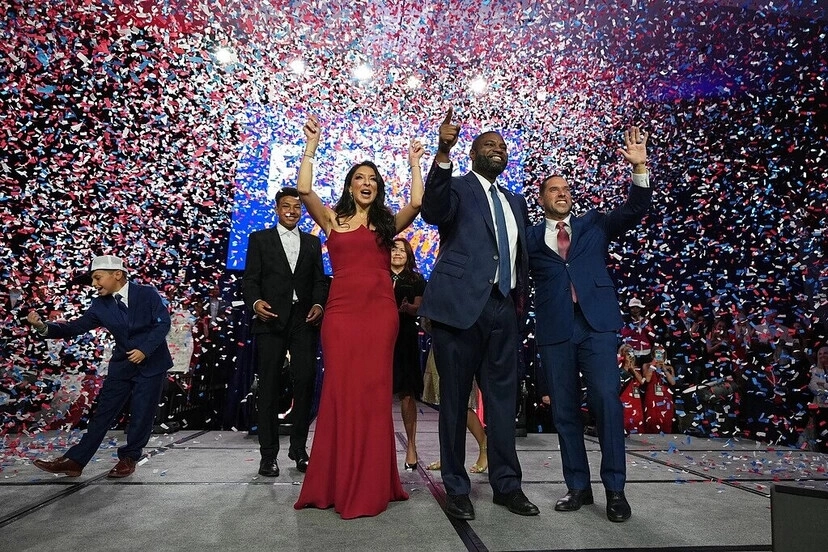
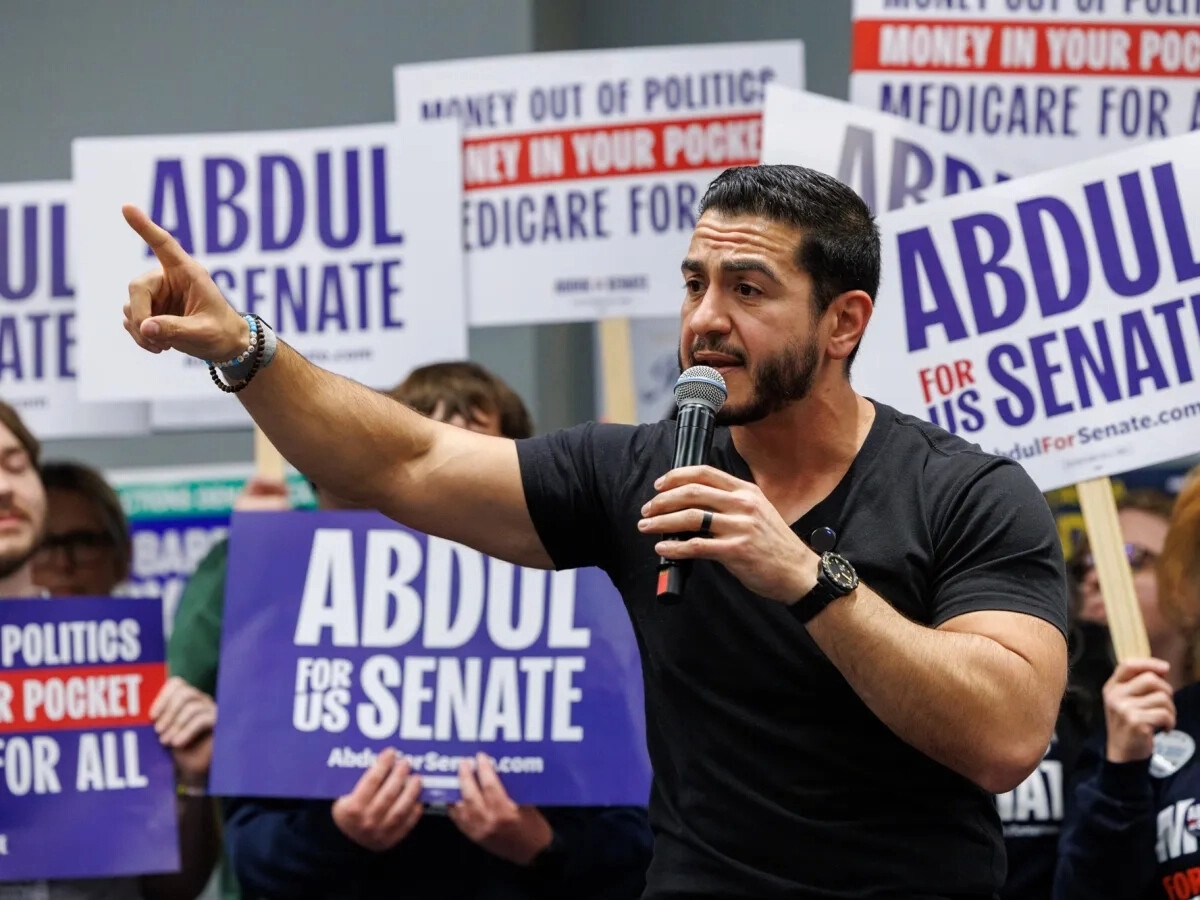
After returning to the Oval Office just under two years ago, Donald Trump declared a war on DEI (Diversity, Equity, and Inclusion) programs — meaning it is only fitting that in the mid-term elections, the victorious Democratic candidates included: Michigan's Abdul El-Sayed, who became the first Muslim senator in U.S. history; New Hampshire's Chris Pappas, who became the first openly gay man elected to the U.S. Senate; Peggy Flanagan, who became the first Native American Senator from Minnesota; and Keisha Lance Bottoms, who became the first African American woman to serve as a state's governor (in Georgia of all places).
At least 100 Democratic women won seats in the House of Representatives while spanning a broad ideological spectrum — from socialists to centrists and included candidates with some unusual life stories. In Kansas, for example, pastor Adam Hamilton won a Senate seat for the Democrats.
Democrats Win in a Landslide
The scale of the Democratic victory is striking, with many observers calling it the party's biggest win in half a century. Democrats secured at least 256 of the 435 seats in the House of Representatives, with votes still being counted in dozens of districts.
In the Senate, Democrats needed to flip at least four Republican-held seats — they got seven (and possibly counting), with the Mississippi and Alaska Senate races that are still "too close to call" both tilting Democrat. At least six states elected Democratic senators for the first time in decades.
The geographical reach of the Democratic gains was equally impressive. They made inroads deep into territory long considered safely Republican, winning Senate races in Texas, Kansas, and South Carolina, and thus making its still very impressive wins in recently red Iowa, Maine, North Carolina, and Ohio feel routine by comparison. According to Reuters, the Republican share of the vote declined compared with 2024 in all but 1% of approximately 2,200 US electoral districts.
The geographical reach of the Democratic gains was equally impressive. They made inroads deep into territory long considered safely Republican
Americans traditionally vote against the president's party in midterm elections, but this election was a powerful backlash against Trump's behavior and his policies alike, even if it is sometimes difficult to separate the two. For example, the list of voters' grievances against him included: shutting down government agencies, conducting mass raids against undocumented migrants, waging a seemingly pointless war in Iran, and driving up gas prices.
Shortly before the election, 70% of respondents in an Associated Press poll said that Congress was not doing enough to rein in Trump — gaining the agreement of 40% of Republicans. In short, the result should be seen less as enthusiasm for the Democrats and more as a repudiation of Trump. In the same AP poll, only around half of respondents viewed the the Democrats favorably, while 20% of Democrats themselves had an unfavorable opinion of their own party.
Why the Republicans Lost
Immediately after the election, JD Vance blamed the Republicans' defeat on the war with Iran, and according to an AP poll, 34% of voters did indeed say that the war was among the key factors influencing their vote. However, 49% cited the cost of living, and 55% named government corruption.
Even more revealing were voters' answers when asked about the biggest problem facing the United States: around 40% said the economy, roughly 30% expressed concern about the state of American democracy, and immigration and health care each gained around 10% each. Although the war with Iran was a concern, it was not the main issue that brought down the Republicans.
According to an analysis by The Washington Post, voting preferences shifted sharply toward the Democrats across a wide range of demographic groups. The shift amounted to 28 percentage points in districts with a Hispanic majority and 21 points in poorer districts with younger populations. Even in rural areas, the GOP lost 15 points from its showing in 2024. A New York Times infographic shows that voting preferences shifted almost everywhere.
The Washington Post analysis also provides a breakdown of the shifts among individual voter groups. Among white men, Trump won 55% of the vote in 2024 but received only 43% this year, while Democratic support among women rose from 52% to 56%.
In addition, more than 60% of Hispanic voters backed the Democrats, a 28-point swing compared with 2024. The age breakdown was equally striking: two-thirds of voters under 24 supported the Democrats, while those aged 25–29 gave them around 60% of the vote, with similar results among older age groups. Even retirees voted Democratic by a six-point margin. Republicans failed to win a single age group, including the traditionally pro-Trump category of voters without college degrees — Trump had won this group by 12 points in 2024; this time, the Democrats were ahead by two.
The shift was also striking among independent voters. The Democrats won this group by a margin of more than 20 points — in Kansas, nearly 70% of independent voters backed Democrat Adam Hamilton, and in Texas, two-thirds supported James Talarico.
A New York Times infographic shows that voting preferences shifted almost everywhere
The Fall of Republican Strongholds
Many Democratic victories came as a surprise, apparently even to the candidates themselves. Kansas elected its first Democratic Senator since 1932. Texas had not elected a Democrat in a general election since the late 1980s. Yet Talarico easily defeated state Attorney General Ken Paxton, even despite the Republican spending many times more on his campaign. Billionaire Elon Musk alone (who relocated to Texas from California) donated as much as $190 million to Paxton — this out of the approximately $400 he apparently spent on the campaign.
Trump backed Paxton, effectively sidelining incumbent Senator John Cornyn. The president justified his decision by pointing to Paxton's strong personal loyalty to him. The result was a crushing defeat for the Republicans.
Even more shocking to observers was Gina Hinojosa's victory in the Texas gubernatorial race. She denied Greg Abbott, one of the country's most powerful Republicans, a fourth term as governor.

Across the country, Republicans fielded candidates personally endorsed by Trump who lost traditionally Republican seats. In South Carolina, for example, political newcomer Darlene Graham lost the Senate seat that her brother, Lindsey, who died earlier this year, had held for a quarter century. During a debate, she admitted that she knew little about national security. Voters may also have been put off by such an obvious, heavy-handed attempt to impose a candidate on them.
However, publicly distancing themselves from Trump did not guarantee Republicans victory either. Susan Collins lost her Senate seat in Maine to Democrat Troy Jackson. He stepped in after primary winner Graham Platner withdrew amid allegations of sexual harassment. Collins had served in the Senate since 1997.
Another example of changing voter sentiment was the comeback of Democratic Senator Sherrod Brown, who lost his seat in 2024 but has now made his triumphant return by defeating incumbent John Husted (who replaced JD Vance in 2025) by five points.
Conceding Defeat
The main question on election night was how Trump would react. After all, when he lost the presidential election in 2020, he declared it “stolen” and (at the very least) did nothing to stop his supporters from trying to storm the Capitol and prevent Congress from certifying the results.
Before this year's election, too, both Trump and many of his supporters had made clear that they would vigorously challenge any results they found unacceptable. Federal authorities had been putting relentless pressure on state officials, who are responsible for administering elections, demanding that they carry out compulsory audits of voter rolls.
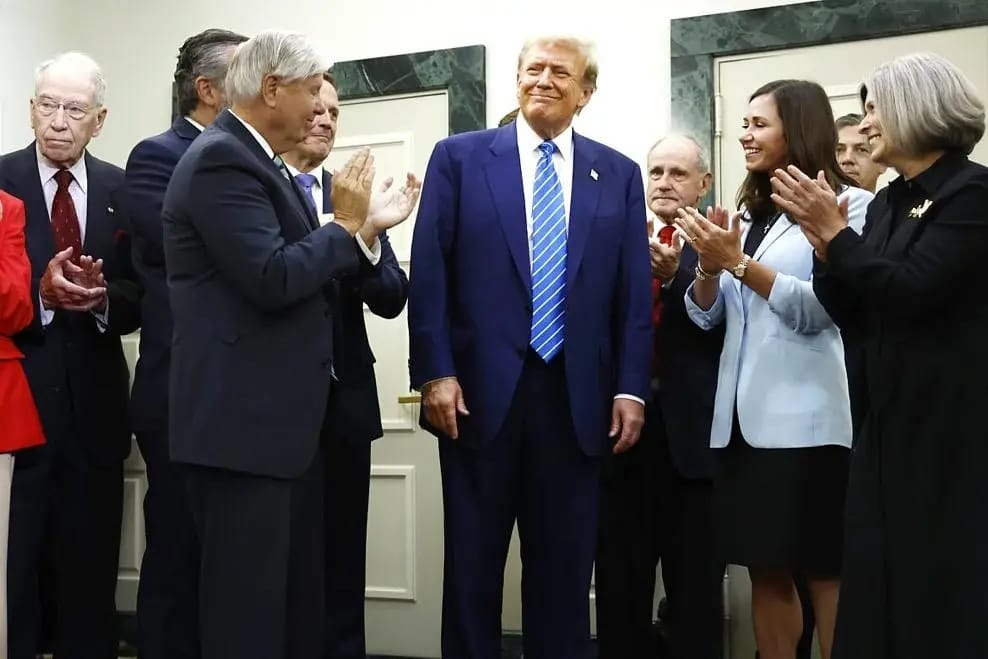
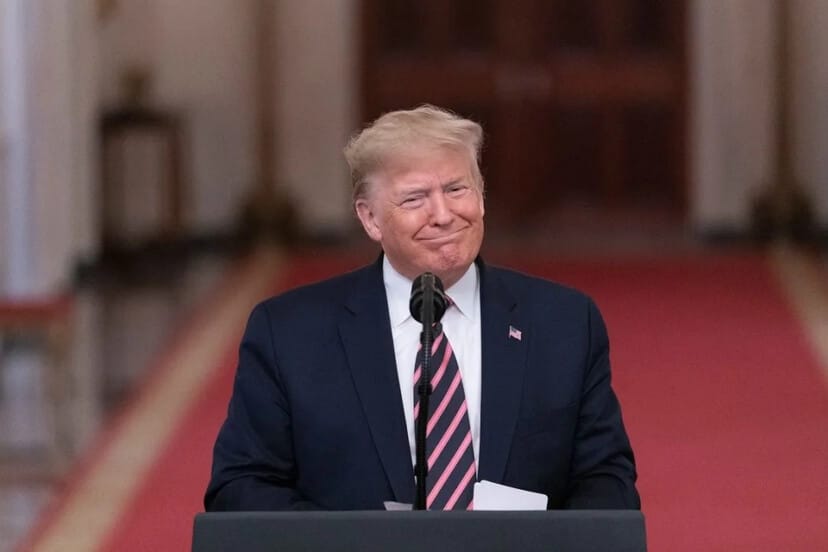
Nevertheless, this year Trump spent much of election night posting on Truth Social, claiming that Republicans were losing simply because his own name was not on the ballot. He also lashed out at Fox News, accusing the network of turning against him, and even promised to become a political commentator and reveal the inside story of the election.
When it became clear that the Democrats had won both chambers of Congress, Trump posted a photo of a baseball cap bearing the word “VETO.” Yet when the New York Times reached Trump by phone, he said he was “fully prepared” to accept the results and hoped to work with the Democrats.
In recent days, Trump has been criticized for becoming increasingly detached from reality. His final campaign speech before the election was devoted to his favorite project — renovating the Reflecting Pool on the National Mall . He was no less distracted on election night, giving journalists a brief tour of the construction site for the new White House ballroom. He talked about everything from the new marble floors to the helipad, but not about his party's defeat.
Republicans accuse Trump of losing touch with reality
The biggest story of the election is not so much that Trump's party suffered a comprehensive defeat as that Trump himself has so far made no attempt to challenge the results (except perhaps in Alaska). As Trump enters his final two years in the White House, his party will have to reinvent itself if it is to hold on to the presidncy after the 2028 election.