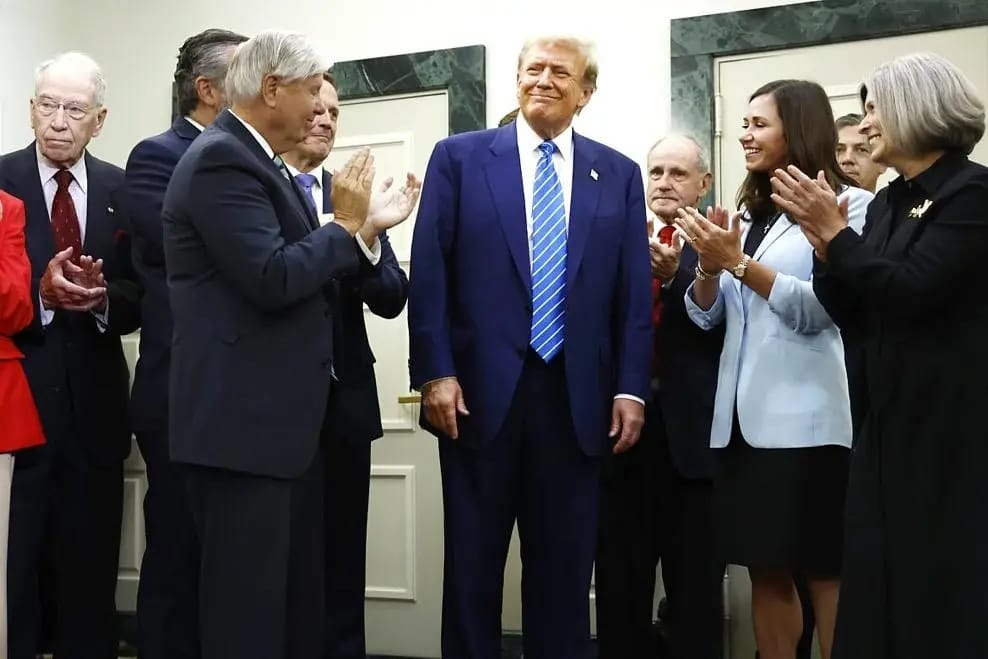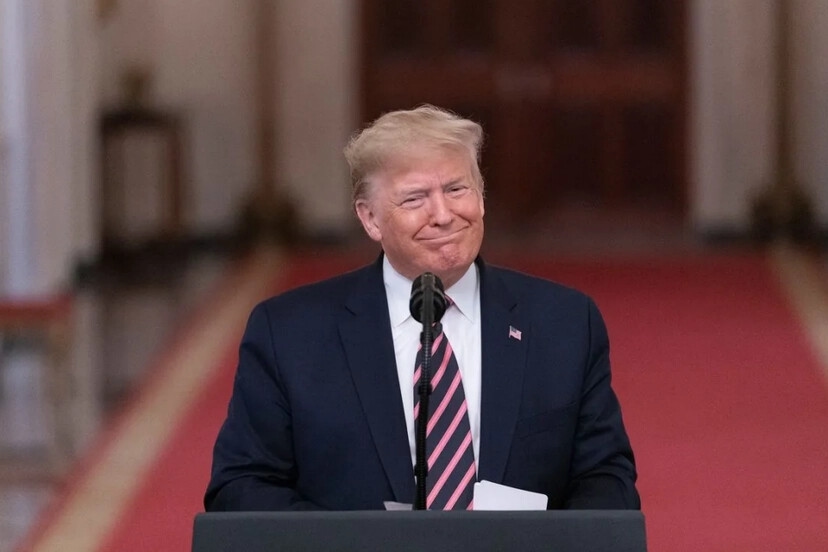
Democrats have seized the initiative from Donald Trump and his Republicans party. The president's approval rating has hit a record low amid inflation, war, and corruption scandals. The traditional midterm backlash against the party in power could turn into a Democratic wave, making it much harder for Trump to push through some of his initiatives. However, the U.S. electoral system and divisions within the opposition could significantly complicate the Democrats’ efforts.
Republicans under siege
According to the latest figures from polling aggregator RealClearPolitics, Democratic candidates lead the generic congressional ballot with more than 51% support, compared with less than 43% for Republicans. Democrats are ahead in all major polls, even the size of their lead varies state-by-state and race-by-race.
In the Senate, Democrats are fighting to hold on to seats they already control in states such as Michigan, Georgia, and New Hampshire. But Republicans are in even greater trouble: even in Texas, where Democrats have not won a statewide race in more than 30 years, James Talarico is narrowly leading Republican Ken Paxton in the polls. Among those publicly urging voters to support Talarico is the brother of former Republican President George W. Bush (Neil, not Jeb).
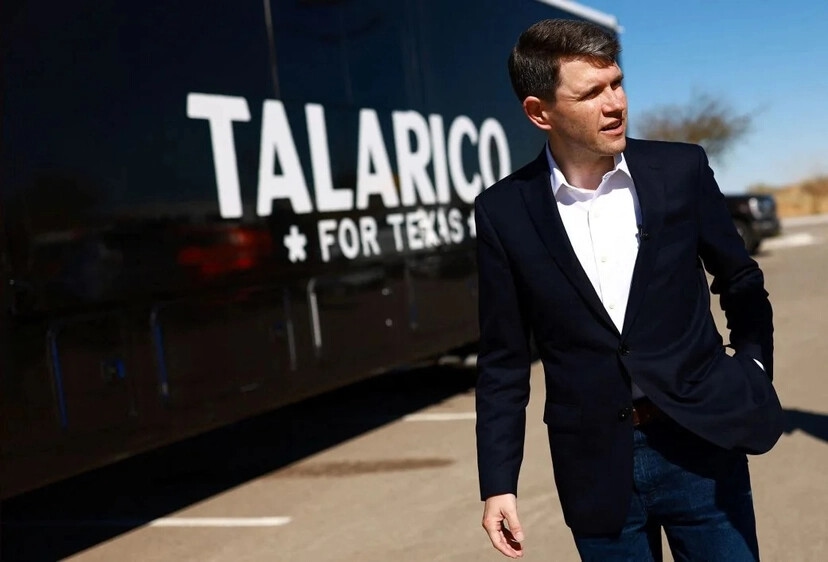
An unexpectedly tight race has also emerged in Alaska — and even in Kansas, which has not elected a Democratic senator in 94 years.
Three interconnected issues are eroding support for the party in power: inflation, fuel prices, and the war in Iran. In addition, roughly half of voters are concerned about government inefficiency and the state of healthcare, where prices are rising significantly faster than overall inflation.
Corruption has also become a major issue for voters. According to a recent Fox News poll, 60% of respondents are “extremely concerned” about it.
Ultimately, all these problems come back to Donald Trump, who drove up fuel prices by launching the war with Iran. Unsurprisingly, Trump's average approval rating has plunged to a record low of 36%, and more than 60% of Americans openly disapprove of his performance. Nevertheless, according to Forbes, the president has increased his fortune by at least $2.7 billion since winning the 2024 election.
The scale of the Democrats’ potential gains remains unclear. The Senate races to watch most closely are in Maine, North Carolina, and Ohio, where Democrats have high hopes of flipping Republican-held seats. Victories in Texas, Alaska or Kansas would signal a decisive Democratic triumph. Conversely, losses in Michigan or New Hampshire would sharply diminish their chances of taking control of the Senate.
Electoral geography works against Democrats
Dissatisfaction with the president does not automatically translate into support for Democrats at the ballot box. A lead in the polls does not necessarily translate into congressional seats, especially given that the current electoral map favors Republicans, who currently hold 53 of the Senate’s 100 seats.
Democrats need to flip at least four Republican-held seats, as a 50–50 split would still leave Republicans in control given that Vice President JD Vance can cast the tie-breaking vote as president of the Senate. Republicans are most vulnerable in Maine, North Carolina, and Ohio.
Republicans are most vulnerable in Maine, North Carolina and Ohio. Even such strongholds as Texas, Alaska and Kansas are now at risk
Unlike the Senate, where only a portion of the seats are contested, all 435 seats in the House of Representatives are up for election. Over the past two years, a number of states controlled by the president’s party have undergone gerrymandering. Estimates suggest that Republicans expected to gain an additional 15–16 seats through this strategy, butDemocrats responded in kind in states they control and are counting on securing six additional seats by diluting the Republican vote.
However, gerrymandering has a weakness: it depends on a particular balance of support between the two major parties. If Democrats win over a majority of undecided voters and some traditional Republican supporters, the advantage Republicans have engineered in the newly drawn districts could disappear.
In Texas, for example, Republicans had hoped to gain five additional seats, but three of those are already under threat as Democratic support grows. A case in point is the 35th Congressional District in San Antonio. Trump carried the district by roughly 10 percentage points in 2024, but Democrat Johnny Garcia has emerged as an unexpectedly strong challenger to Republican Carlos De La Cruz.
Voter turnout will also be crucial to the Democrats' chances for victory. According to a recent Pew Research Center poll, among those who say they intend to vote, 59% support Democrats and just 35% favor Republican candidates. But how much of this advantage will hold up on Election Day remains unclear.
Trump as a political liability
The Republicans’ biggest problem is their own unpopular president. Although Republican candidates profess loyalty to Trump, many are trying to distance themselves from him. According to Reuters, candidates in 41 of 62 competitive districts disagree with the president on key issues.
According to the Associated Press, Democrats have mentioned Trump more than 180,000 times in their ads, seeking to pin his policies on their opponents. Democrats see their best chance of success in turning the election into a referendum on Trump rather than a series of separate contests between candidates.
Republicans are trying to avoid mentioning Trump altogether, spending less than 1% of their advertising budget on ads that mention him
Republicans have a clear advantage, however, when it comes to campaign financing. According to the Financial Times, they have spent around $1.3 billion during this election cycle, compared with $800 million spent by Democrats. The Republican National Committee still has more than $680 million in campaign funds available, compared with $480 million for its Democratic counterpart.
Ultrawealthy businesspeople play a major role in financing the campaigns. The world’s richest man, Elon Musk, has contributed nearly half a billion dollars to Republican campaigns. He was Trump’s biggest donor in 2024 and took part in the purge of federal agencies before falling out with the president, then reconciling with him. Musk’s critics argue that a Republican victory would help him preserve and expand government contracts for his companies, SpaceX chief among them.
Democrats also have plenty of wealthy donors, but even when taken togetehr, their two biggest benefactors, George Soros and Michael Bloomberg, have spent less than half as much as Musk has contributed to Republicans. The disparity is evident in individual races as well. In Texas, which has shifted from a solidly conservative state to a battleground, Republicans have spent nearly $240 million on Ken Paxton’s campaign – more than five times what Democrats have spent backing James Talarico, who betting markets favor to win.
Democrats vs. Democrats
Despite favorable public opinion, Democrats face a serious problem: the party is deeply divided. It has no single, widely recognized leader, and one is unlikely to emerge until the 2028 presidential primaries.
Over the past year and a half, Democratic leaders in Congress have failed to find effective ways to counter Trump’s policies. Moreover, both major parties are essentially big-tent organizations encompassing a wide range of often conflicting ideologies.
Moderates are looking for ways to reform the existing system, particularly economic policy and healthcare. The growing democratic socialist movement is calling for more radical changes to the economy and society. Mainstream Democrats favor economic regulation and higher taxes on the wealthy, while their left-wing counterparts advocate bringing entire industries back into public ownership and redistributing wealth. Mainstream Democrats want to expand the existing healthcare system, which leaves many people without coverage, while democratic socialists are calling for universal health insurance.
The party establishment supports NATO, military alliances, and aid to Israel, while the left wing wants to scale back America's role in international affairs and end military assistance to Netanyahu’s government.
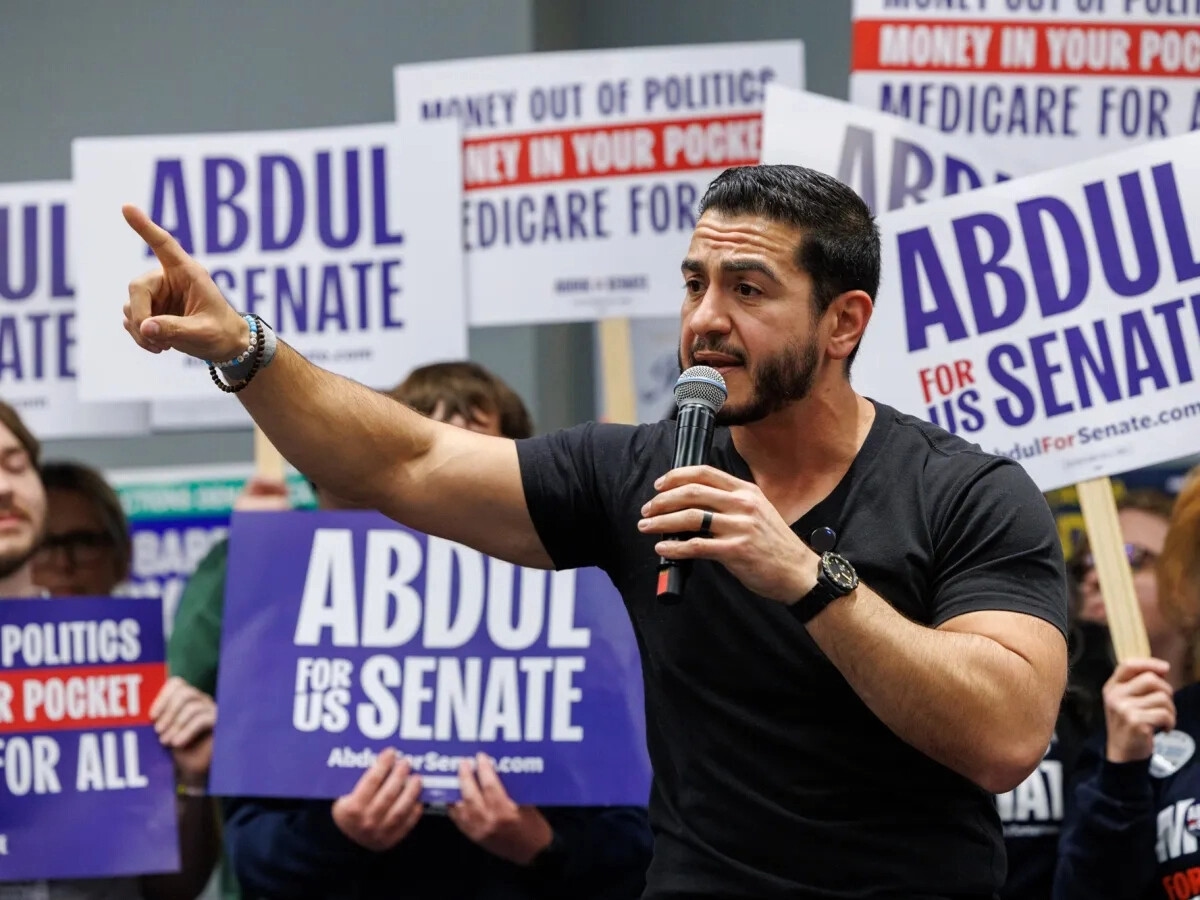
A case in point is the contrast between two Senate candidates: James Talarico in Texas and Abdul El-Sayed in Michigan. They differ on a number of key issues, including immigration, economic policy, energy subsidies, and support for Israel. It would be difficult to imagine a Muslim candidate like El-Sayed running in Texas, let alone being in a position to win statewide.
Although radical ideas appeal to many voters, the socialists’ electoral results have so far been underwhelming. Their candidates have won primaries in only seven of the 25 districts where they stood for election.
What's at stake
If Democrats regain control of the House of Representatives, they promise to investigate alleged corruption involving Trump and his inner circle and launch impeachment proceedings against several senior officials, above all the unpopular Defense Secretary Pete Hegseth.
There is less agreement on whether to impeach Trump himself. The House of Representatives voted to impeach him twice during his first term, but he was acquitted by the Republican-controlled Senate.
Even if Democrats secure a majority in the Senate this time, they are unlikely to muster the two-thirds vote needed to remove Trump from office. Moreover, the opposition itself risks splitting apart: individual factions could stage a mutiny, making their support for party leaders conditional on their demands being met. This could make it difficult for Democrats to present a united front against Trump, even with a majority.
Democrats may struggle to present a united front against Trump, even with a majority
Overall, if the opposition wins control of the Senate, it will be able to block budgetary initiatives and appointments to key posts. Even without impeachment, this would significantly constrain Trump, who has so far made many decisions without consulting even his own party.