Donald Trump’s Board of Peace will finally get its first American money: more than $206 million to build an international military contingent in the Gaza Strip. The first practical result of an organization created to demilitarize and rebuild the region was not a peace agreement, but a preliminary contract to build a military base on Israeli-controlled territory. In seven months, a body with nearly unlimited powers has launched neither demilitarization nor full-scale reconstruction of Gaza. Instead, it has become a commercial club of politicians loyal to Trump.
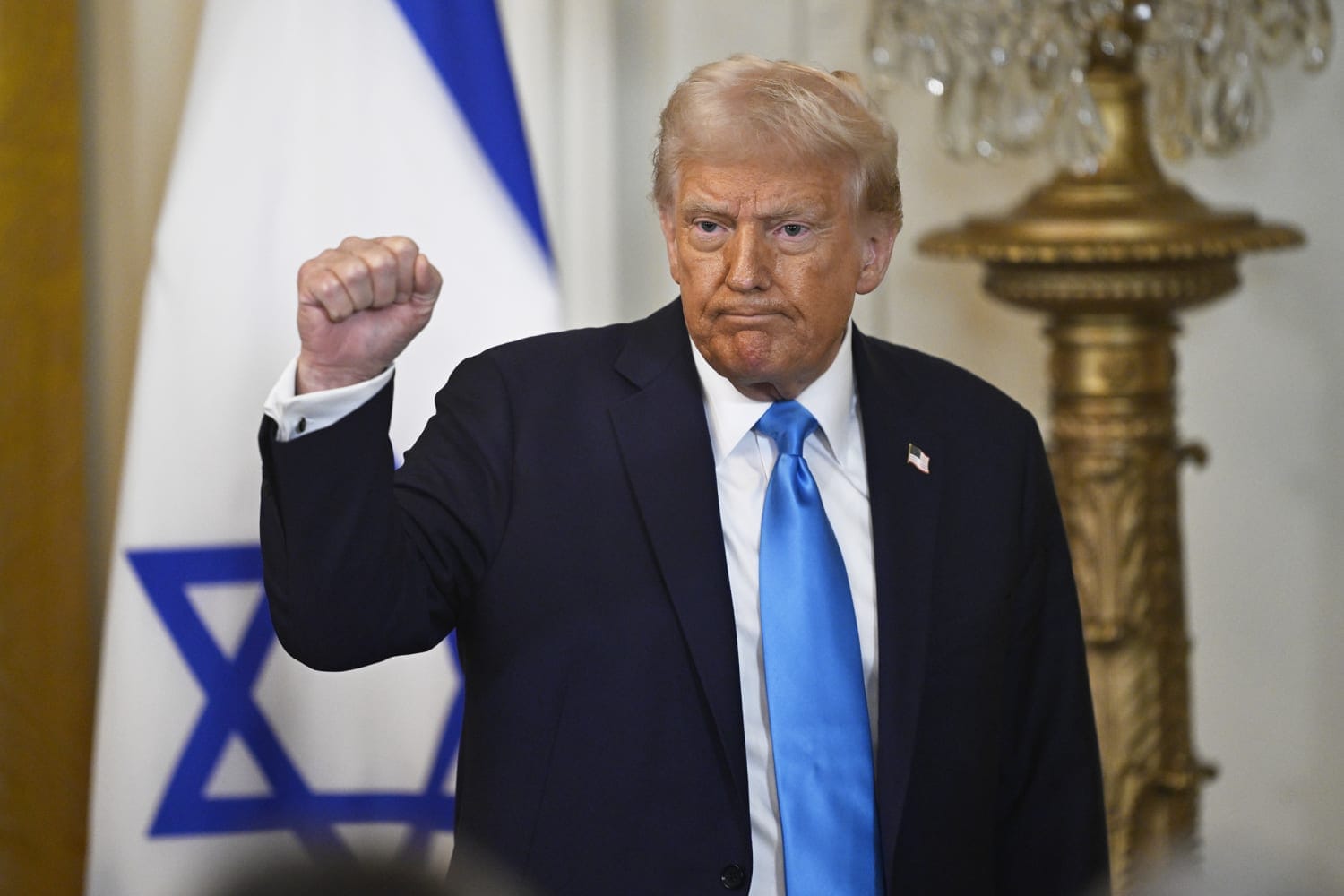
“We don’t want to fund anything having to do with the bloodshed, hatred, or terror,” U.S. President Donald Trump said in Egypt in the fall of 2025 at a summit aimed at achieving a peace settlement for the Gaza Strip. “We’ve agreed that Gaza’s reconstruction requires that it be demilitarized.”
The “we” Trump was referring to was the summit participants — the leaders of 20 countries who gathered at the resort of Sharm el-Sheikh to discuss Gaza’s post-war future. Their decisions laid the foundations for the Board of Peace, which emerged in early 2026 as a supranational “executive committee” responsible for rebuilding Gaza.
A body with unlimited powers
Trump, as the mastermind of the Board, speaks as if his creation could assume responsibility for the whole world, not just one small region. Conveniently, the Board’s charter specifies no geographic limits at all, even though it is associated primarily with Gaza.
The mandate for creating it was issued by the UN Security Council specifically to establish peace in the Gaza Strip. Or rather, the board gave those powers to itself and its members, since the Security Council merely approved the creation of the Board of Peace to implement the U.S. president’s fairly general peace plan. The Board, once created, then adopted its own charter containing these broad powers.
The Board of Peace also gave itself the right to oversee the technocratic Palestinian administration that would govern Gaza during the transitional period — between the cessation of hostilities and the formation of fully functioning elected authorities. The Board distributes humanitarian aid, is responsible for rebuilding infrastructure and the economy, and has even secured the right to form its own International Stabilization Force (ISF) — a quasi-army meant to maintain order in the region until Gaza has effective police units in place.
The Board of Peace gave itself the right to oversee the technocratic Palestinian administration
As chairman of the Board, Trump holds nearly unlimited powers, including veto power over any decision and the authority to personally appoint his successor without input from other officials. He can also select the ISF’s commander and create or dissolve bodies within the Board. What’s more, Trump remains at the head of the Board indefinitely, as the founding documents provide neither term limits for the top post nor any mechanism for removing him from it. The chairpersonship is not even tied to his presidency.
By and large, the charter and structure of the Board of Peace resemble those of a commercial company rather than those of a supranational organization responsible for resolving one of the world’s longest-running and bloodiest conflicts. Even the name itself points to the corporate world.
The “board of Trump’s friends”
How did Trump manage to get the UN Security Council to sign off on the creation of an almost openly commercial structure accountable to virtually no one? How did he entice the leaders of more than two dozen countries to join his new board? Several factors were at play.
First, Trump’s peace plan, though written in a “something for everyone” style, is virtually the only option that was marginally acceptable for Israel, Hamas, and the leading regional players all at once (though not without caveats, of course). Even Trump’s fiercest critics, such as Hillary Clinton, publicly praised the plan as the only realistic roadmap to peace. In principle, that was enough for the Security Council to approve the creation of a new body (with China and Russia abstaining).
Second, for several national leaders — like, say, Belarusian strongman Alexander Lukashenko — joining the Board offers a chance to curry favor with Trump and leverage his weight to solve their own problems. On top of that, Trump all but openly advertised his creation as a structure whose members could gain access to the budgets allocated for rebuilding Gaza.
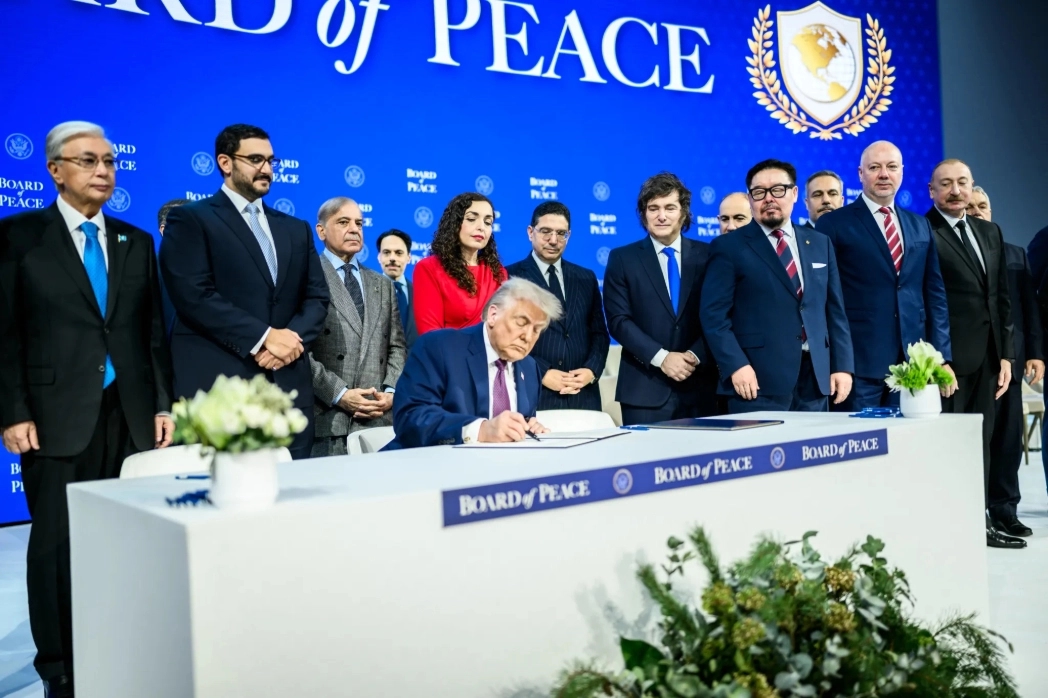
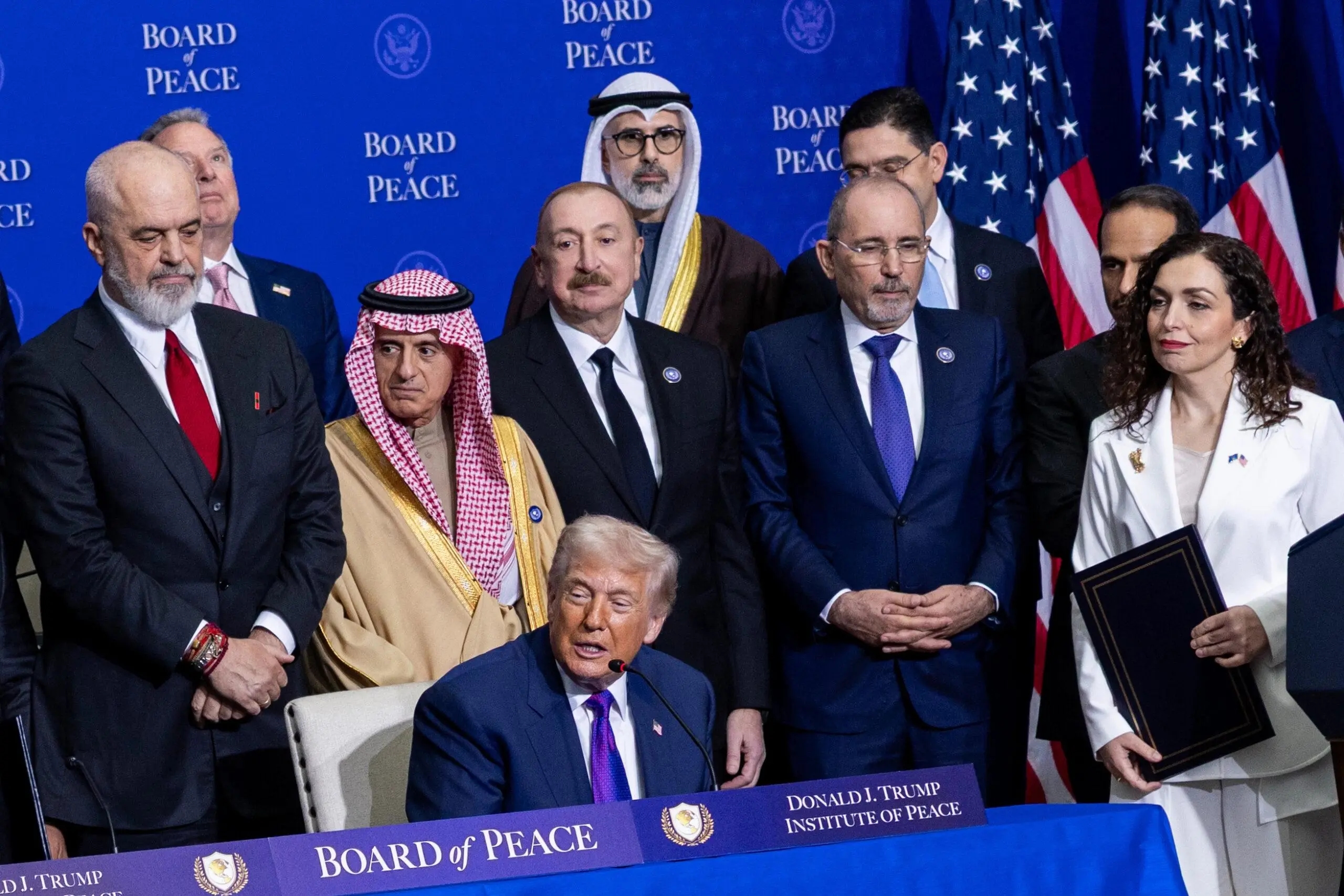
As a result, the composition of the Board of Peace resembles a roster of Trump’s friends and those aspiring to join their ranks. Aside from Lukashenko, the list features the leaders of Azerbaijan and Armenia, the king of Jordan, and the emir of Kuwait — but no representatives of the United Kingdom, France, Japan, or Germany. Also telling is the presence of Trump’s favorite, Viktor Orbán, still listed on the Board of Peace’s official website as prime minister of Hungary, even though Hungary’s government has been led by Péter Magyar since May 2026.
The Board pays little attention to such nuances, as it has convened in full only twice — both times for ceremonial receptions rather than working sessions. After the first meeting in January 2026, when the Board’s charter was signed, the so-called inaugural session followed less than a month later. No decisions were made at that meeting, which merely laid out the organization’s purpose.
Importantly, all heads of state sit on the Board in their personal capacity, meaning that the body does not create obligations for the countries involved. It is better described as a club of Trump-loyal politicians assembled under the pretext of helping Gaza. For this reason, many major world powers are absent from the Board, and the European Union is represented by just two members — the already-mentioned Orbán and Bulgarian President Iliana Iotova.
Leaders of states with solid, well-established standing in long-running institutions such as the UN, the G7, and NATO are in no hurry to join Trump’s club. They prefer to operate in settings they already know and to use more traditional models of interaction with one another. They see the Board of Peace as a new, alternative UN in which Trump takes on the roles of chairman, Security Council, and supreme judge all at once. Unsurprisingly, he has even spoken openly about the possibility of replacing the UN with his creation.
Vladimir Putin’s possible membership on the Board of Peace is also a cause for concern. The Russian dictator was officially invited to join Trump’s club immediately after it was created, but he has yet to provide an official response to the offer. The dictator may be holding off on joining because he does not want to play second fiddle in an organization built around Trump. But he cannot say so openly either, for fear of damaging relations with the American leader.
In any case, the invitation has not been withdrawn, and in theory Putin could join the Board at any moment — and would almost certainly try to use it to pull Trump to his side and discredit other international institutions.
No structure, no budget
All of the above is just a fraction of the Board’s many troubles and risks. The organization appears to lack funding to carry out what it envisions: forming and sustaining the International Stabilization Force, rebuilding thousands of homes and infrastructure facilities, creating a favorable investment climate in Gaza, and all the rest of the aspirations laid out in Trump’s peace plan.
While the Board was being set up, Trump urged its would-be members to contribute to the organization’s fund. One billion dollars would buy a lifetime membership and veto power. Members could skip the contribution, but then their membership was limited to two or three years — and no veto power. Since the Board’s budget was empty as of this past May, it appears that neither the members’ contributions nor the $10 billion Trump promised from the U.S. Treasury ever actually arrived.
At the end of the day, the Board of Peace is a body with enormous powers on paper but no budget of its own, no clear deadlines, and no clear division of responsibilities among its members — in other words, none of the things integral to the functioning of such international organizations.
Still, the Board continues to exist simply because Trump wants it to. He has yet to tire of his creation and shows no intention of abandoning the cockamamie unfinished structure. The Board still is not really functional and has not even published a report for the first six months of its existence — most likely because there is nothing to report.
In August, almost a year after the Egypt summit at which the U.S. president promised Gaza’s demilitarization, Trump’s club signed its first preliminary contract to build a military base in Gaza. Instead of the promised demilitarization, implementation of the U.S. president’s peace plan is set to begin with the construction — in the Israeli-occupied part of the Gaza Strip — of a barracks and a number of support buildings for a Moroccan ISF contingent. Morocco was one of the first countries (along with Kazakhstan and Kosovo, among others) to announce its readiness to send troops to Gaza to help form the International Stabilization Force.
The initial plan suggested sending 500 Moroccan service members to Palestine. Then reports emerged that there would be 200 — supposedly to guard a refugee camp while also training the Palestinian security forces. But all of this remains at the level of speculation and guesswork. There are still no concrete documents specifying the numbers or the exact mission of the Moroccan troops in Gaza, and the source and size of financing for the construction of their base is just as vague. The contract reportedly went to Arkel International, a Louisiana-based company that has built multiple U.S. military facilities abroad. But the funding sources, the contract’s value, and its timeline are not mentioned anywhere in open sources.
And that’s not even the biggest problem with the first real initiative of the Board of Peace. What matters far more is the glaring gap between the institution’s grand plans and its actions. The Board, which presents itself as the main instrument for turning a war-torn region into a flourishing land, has managed to issue just one contract — and even that a preliminary one — for building a decidedly modest outpost to house a single reinforced army company.
Moreover, news of the Arkel International contract coincided with the Board of Peace’s first serious internal conflict. On August 9, Israeli Prime Minister and Board of Peace member Benjamin Netanyahu called Trump’s plan for establishing peace in Gaza unacceptable.
Prior to that, Trump announced in late July that the Board of Peace had secured a promise from Hamas to lay down its weapons, and that it was time for Israel to begin the gradual withdrawal of its forces from the Strip. Netanyahu, for his part, argued that no agreements with Hamas existed, and that Israel therefore had no obligation to pull back its troops.
If the Board of Peace were a normally functioning diplomatic organization, this scandal would have seriously damaged its reputation. After all, it was the Board that, according to Trump, reached an agreement with Hamas, and it was the same Board that, according to Netanyahu, never agreed to anything at all. However, in the absence of a reputation, even such a scandal did little to tarnish the Board’s name.
In the absence of a reputation, even a real scandal did little to tarnish the Board’s name
Obviously, putting a complete end to the war in Gaza and bringing stability and prosperity to the region is a monumental task. It cannot be solved with just a club of Trump’s friends — a good number of whom, one can assume, have little concern for Gaza’s fate. From the very start, this initiative by the U.S. president bore the mark of political adventurism and differed little from his promises to end the war in Ukraine in 24 hours, to make Canada a U.S. state, or to make Mexico pay for a border wall.
The Board of Peace could perhaps be compared to the American president’s previous pet project: the Department of Government Efficiency (DOGE), created specifically for Elon Musk. It was conceived as a tool for sharply cutting government spending and shrinking the federal workforce, and at the start of his second presidential term, Trump praised DOGE almost daily. But over time, the president’s interest in the new department faded, Musk fell out of Trump’s favor, and DOGE stopped operating.
It is reasonable to assume something similar will happen with the Board of Peace. Once Trump realizes that its members are in no hurry to fill its coffers — and that the decisions made and even the contracts signed are not bringing the transformation of Gaza’s ruins into a “Middle Eastern Riviera” any closer — the U.S. president will lose interest in the project and move on to his next quixotic grift.