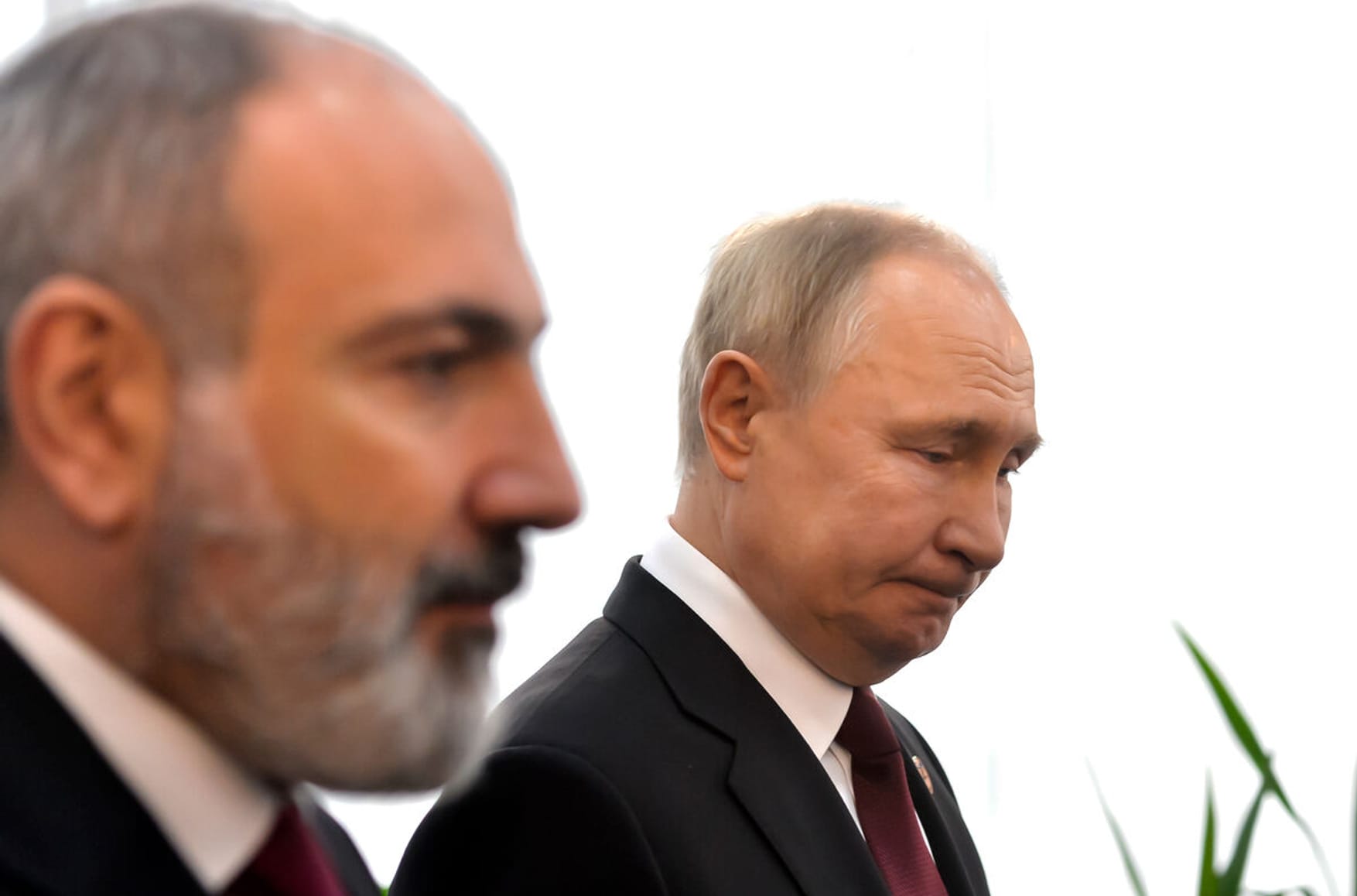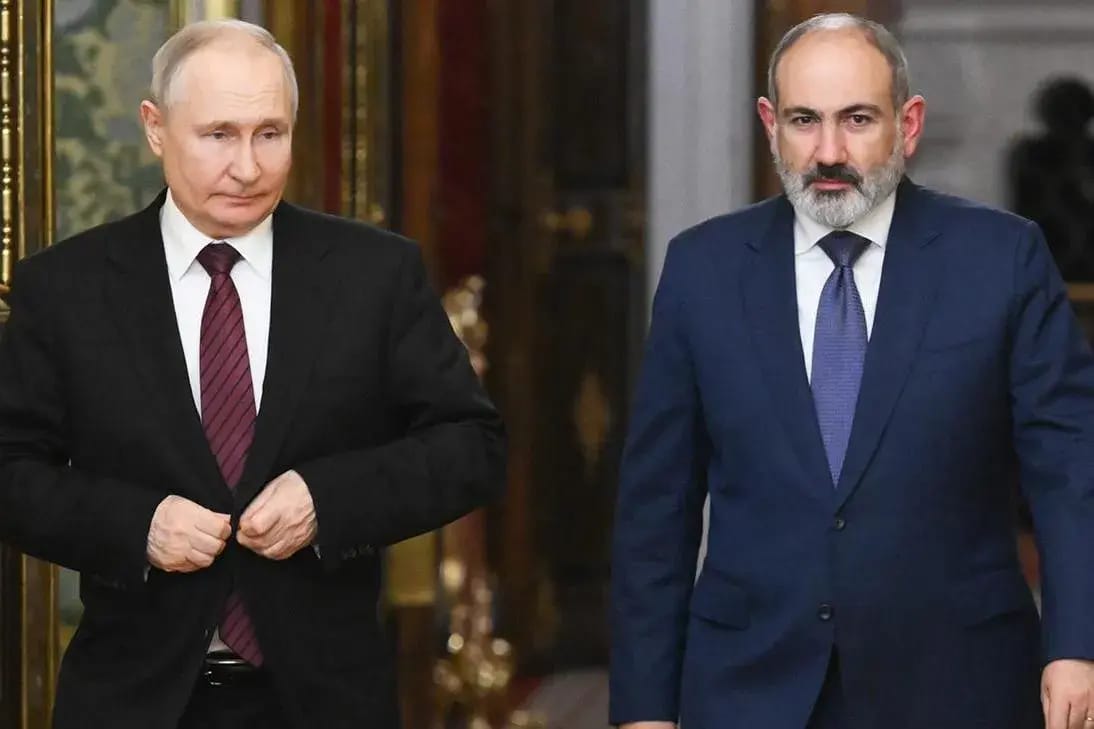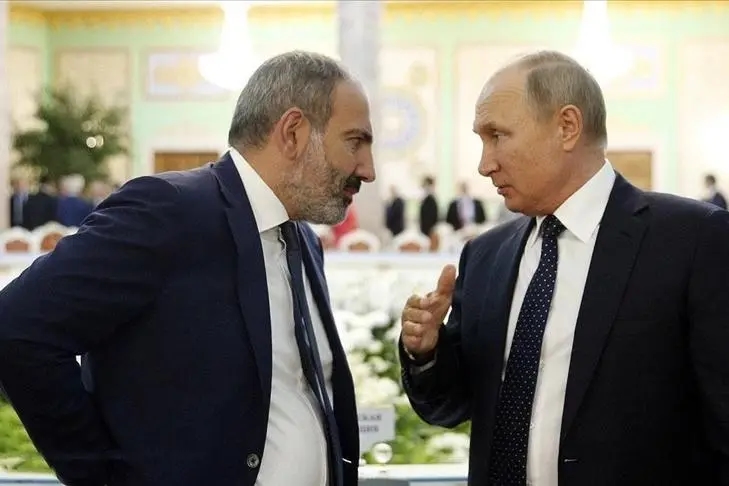
Moscow has begun speaking to Yerevan in the language of sanctions. In June, it restricted Armenian exports on the eve of the country's parliamentary elections, and the Kremlin has not let up, demanding in an ultimatum that Armenians choose between the Eurasian Economic Union and the European Union. The “post-election normalization” expected by some observers never materialized, and the “divorce” between the two countries is now entering a final — and irreversible — stage.
Relations between Yerevan and Moscow failed to normalize after Armenia’s June parliamentary elections, in which pro-Russian forces suffered a crushing defeat. After years of deteriorating ties, the Kremlin decided to press ahead with a familiar playbook: speaking in the language of sanctions. Armenian mineral water, brandy, wine, and flowers, as well as virtually all agricultural products from the South Caucasus country, have been subjected to partial or complete bans.
Yerevan says this marks the beginning of the end for the Eurasian Economic Union, which Moscow once spearheaded. At the same time, however, Armenia still has no plans to hold a referendum on joining the European Union anytime soon. Instead, it intends to respond to the sanctions with sanctions of its own while preserving its vital trade with Russia to the extent that Moscow's policies still allow for that to be possible.
What Moscow wants from Yerevan
As Armenia was busy campaigning this past spring ahead of the parliamentary elections, an unexpected message arrived from the other four members of the Eurasian Economic Union (EAEU) – Russia, Belarus, Kazakhstan and Kyrgyzstan – amid a summit being held in Astana, Kazakhstan. On May 29, they issued a special statement concerning the fifth member of their union, Armenia. It said, among other things:
“We share the view that a nationwide referendum should be held in the Republic of Armenia as soon as possible on joining the European Union or remaining in the Eurasian Economic Union.”
It thus became clear that Russia was not the only country demanding that Armenia make a choice about its geopolitical and economic orientation. The remainining members of the EAEU, it turned out, were also unwilling to risk a confrontation with Russia over Armenia.
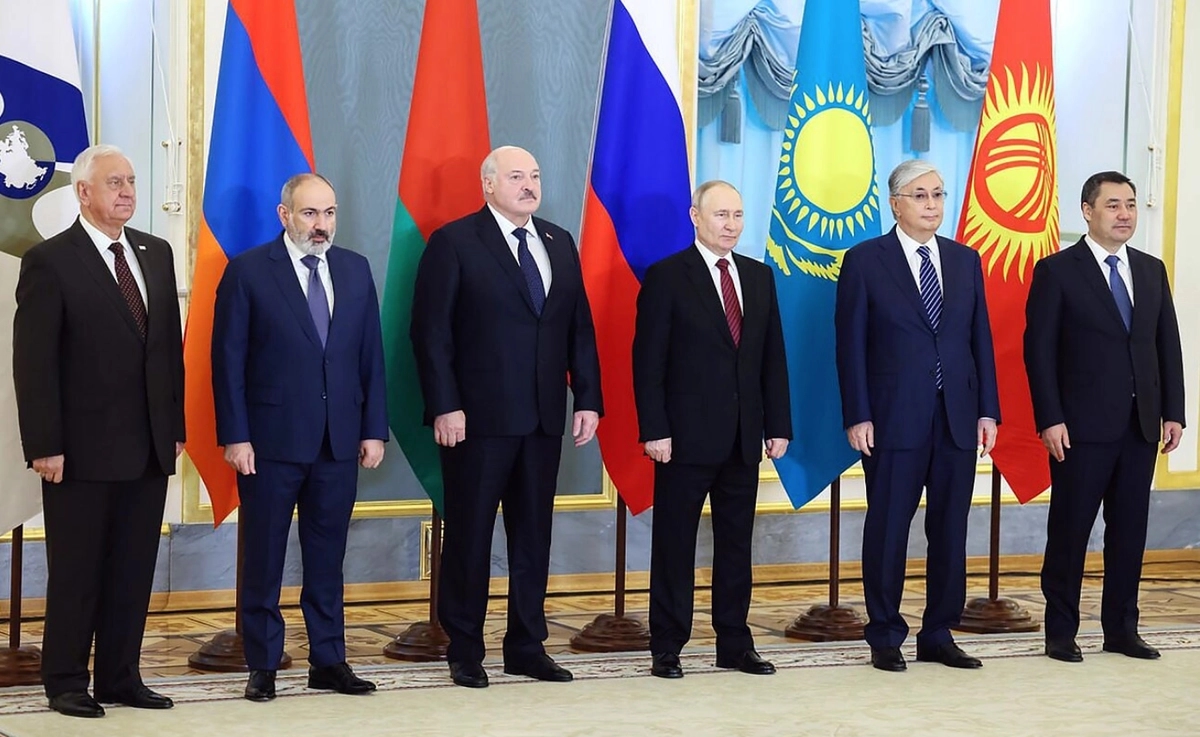
Notably, the statement was adopted without the participation of the Armenian prime minister. At the time, Nikol Pashinyan was occupied with domestic political concerns, but after familiarizing himself with his colleagues’ position, he responded in distinctly ironic fashion:
“I am grateful to my EAEU colleagues for recognizing Armenia’s legitimate right, as well as that of any other EAEU member state, to develop relations with various partners and create trade and economic alternatives for its country. I believe such an approach is beneficial to the EAEU, since the existence of possible alternatives is a factor that will contribute to the EAEU’s competitiveness and attractiveness.”
After the statement issued in Astana, Russia tightened its sanctions against Armenia. After winning the elections, Pashinyan eventually called Vladimir Putin.
What the “sworn allies” talked about
Reports of possible Russian sanctions emerged as Armenia’s election campaign got underway. Before that, Pashinyan had traveled to Moscow and heard the Kremlin’s request to allow pro-Russian forces to participate in the elections. They were indeed allowed to run.
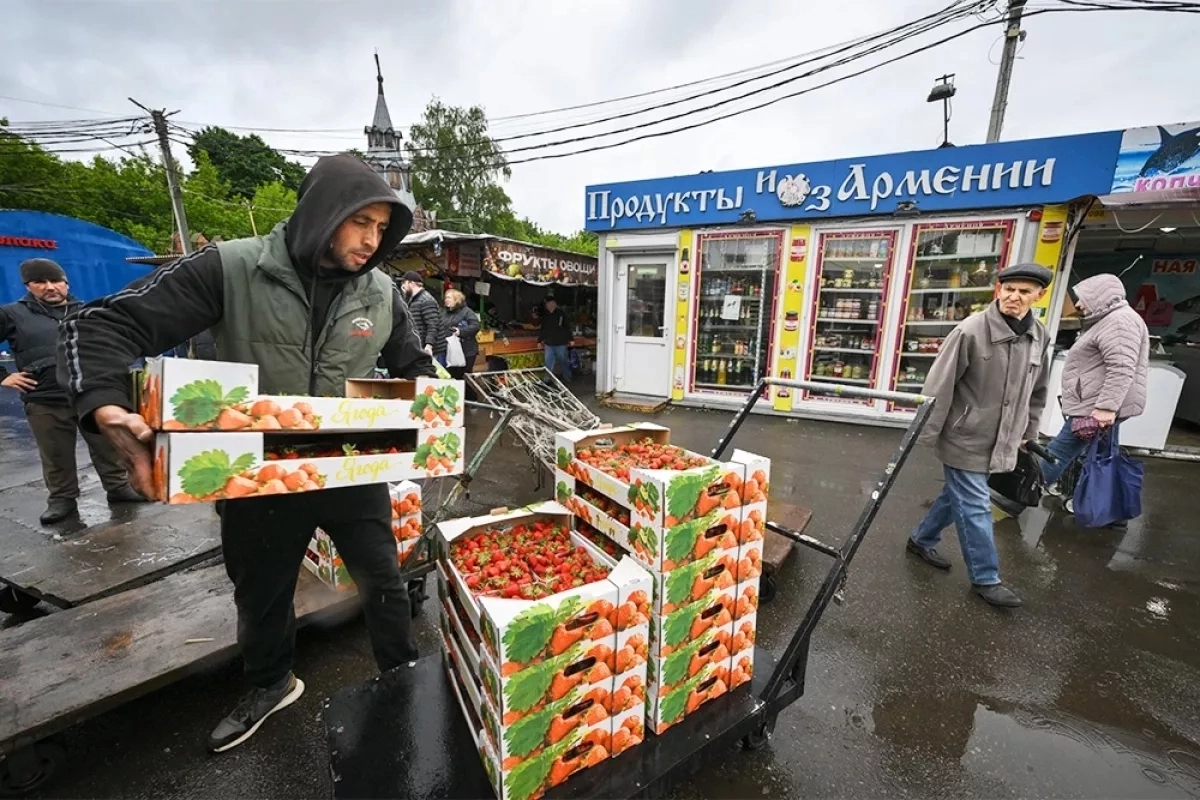
But even that concession failed to prevent the now-familiar notifications from Rospotrebnadzor, Russia’s consumer protection watchdog. One after another, Armenian products were found to be in violation of Russian quality standards. First, the ban affected the well-known Jermuk mineral water, as well as wine and brandy from selected producers. Then flowers, fruits, and vegetables followed.
“From May 30, 2026, Rosselkhoznadzor is imposing temporary restrictions on the import of fresh tomatoes, cucumbers, peppers, leafy greens, and strawberries originating from and shipped from Armenia until an appropriate process is developed to ensure the safety of the products being shipped,” the agency said in a statement.
It also became clear that, unlike in previous cases, the Kremlin was prepared to play the long game. The restrictions targeted the largest segment of Armenian exports and were imposed just before the harvest season. For years, Russia had been the main market for Armenian apricots, cherries, apples, tomatoes, cucumbers, and peppers. Moscow was naturally counting on this dependence as a reliable lever of pressure.
In Armenia, there were hopes that after the elections everything would return to normal – that the sanctions were merely an attempt to influence voters to turn against Pashinyan. But those expectations quickly evaporated as the prime minister's Civil Contract party secured a parliamentary majority. In Moscow, officials began considering what else they could ban.
They found something. The next wave targeted fish and dairy products, meaning that in effect, virtually all Armenian value-added goods that had carved out a niche in the Russian market and attracted Russian consumers were now subject to restrictions.
The Armenian prime minister then decided to speak to Russia’s president to see how the problem could be resolved. After the first reports of a phone call between Pashinyan and Putin, everyone eagerly awaited details. The Kremlin website published a very brief but quite explicit communiqué that left little room for ambiguity:
“Vladimir Putin reaffirmed his commitment to the Joint Statement adopted at the EAEU summit in Astana on May 29, 2026, by the leaders of Belarus, Kazakhstan, Kyrgyzstan, and Russia concerning the actions of the Republic of Armenia aimed at joining the European Union. In particular, the need to hold a nationwide referendum in Armenia as soon as possible on joining the EU or remaining in the EAEU was emphasized.”
It thus became clear that no one in Moscow intended to resolve the problems through negotiations. Yerevan was being required to hold a referendum.
There will be a referendum, but later
Having realized that Moscow was no longer showing much restraint either in its statements or its policies, Yerevan decided to stop holding back as well. Prime Minister Pashinyan openly stated that the EAEU’s mechanisms were not working: “The problem is not Armenia, but the EAEU, because it turns out that the Eurasian Economic Union is paralyzed and does not work. If this issue is not resolved quickly, let me predict that this will mark the beginning of the end of the EAEU.”
“The Eurasian Economic Union is paralyzed and does not work,” Nikol Pashinyan said
Then, in early August, Pashinyan traveled to Bishkek for a meeting of the Eurasian Intergovernmental Council. While there, he criticized the bloc and asserted his country’s right to pursue alternatives:
“It is the legitimate right of any country – all countries work to ensure that they have alternatives. At this point, the best position for the EAEU would not be to ‘torpedo’ this process, but, on the contrary, to work toward increasing the EAEU’s competitiveness and attractiveness. This is the right approach, and Armenia is ready to work on it.”
But the EAEU is unlikely to take this proposal seriously, all the more so given the fact that Russia had viewed Armenia as its outpost for decades. However, in recent years the status quo in the South Caucasus has changed. Moscow is no longer the only player in the region – and it is no longer even the most influential one. The Kremlin is naturally unwilling to accept this reality, but Russia now has few instruments for exerting influence beyond economic pressure.
Why Russia lost Armenia
Armenia lost Nagorno-Karabakh in 2020. A few years later, following the exodus of the Armenian population from the unrecognized republic, Russia lost its main source of leverage in the region. For years, the Nagorno-Karabakh conflict had given Moscow the necessary means to pressure both Yerevan and Baku. That was enough to keep the two post-Soviet republics’ foreign policies closely aligned with Moscow’s wishes.
But in September 2023, Azerbaijan established full control over Karabakh. In the aftermath, around 120,000 Armenians fled their homes over the course of just two days, while Russian peacekeepers remained mere bystanders. In the end, there was no one left to “keep the peace,” and the Russian contingent withdrew from Karabakh two years ahead of schedule.
This was, without exaggeration, a catastrophe for the Kremlin’s regional policy, and it is particularly telling that it happened in Nagorno-Karabakh, where attitudes toward Russia had been exceptionally favorable. Beyond the political consequences, Moscow also suffered enormous reputational damage, with Russia’s standing in Armenia effectively collapsing in the years following the war. Just before the confict, 92% of Armenians described relations with Russia as good, but by 2024, 66% of respondents described relations with Russia as “bad” or “very bad.” In spring 2026, 55% of respondents said they did not trust Russia.
By 2024, 66% of respondents described relations with Russia as “bad” or “very bad”
The situation could still have been salvaged after 2020. Nagorno-Karabakh was officially not part of Armenia, and Russia had every formal right not to help Yerevan maintain control over the region. But the events that followed cemented the Kremlin’s reputation as an unreliable ally.
After the loss of Karabakh, Baku escalated the conflict by bringing the conflict to Armenian territory itself on several occasions. In September 2022, Azerbaijan’s armed forces launched an offensive, crossed the state border, and seized additional territory. Hundreds of people were killed in the process, making it clear that Armenia would struggle to defend itself against external threats on its own.
Yerevan had options, including through the Collective Security Treaty Organization. Armenia formally appealed to its military allies for assistance, but in response it did not even receive political support. Instead, the allies said it was necessary to establish where exactly the border between the two states ran.
Yerevan thus directed its appeals to the West, but Brussels asked it to definitively abandon any claims to Nagorno-Karabakh. In return, the EU was prepared to send a civilian mission to Armenia that would provide political, economic, humanitarian, and even military assistance. Pashinyan agreed, thereby depriving Moscow of its exclusive control over developments in the South Caucasus.
Leverage and countermeasures
The Armenian economy remained dependent on Russia even eight years after the 2018 Velvet Revolution. Suffice it to say that, before the recent sanctions were imposed, 90% of Armenia’s agricultural exports went to Russia. According to the latest official data from Armenia’s Statistical Committee, Russia accounted for 35.6% of the republic’s total exports in the first half of 2026.
But contrary to expectations, Russia’s restrictions have neither crippled the Armenian economy nor triggered a serious collapse – at least not yet. There will be losses in the long term, but the Armenian government nevertheless remains focused on finding alternatives.
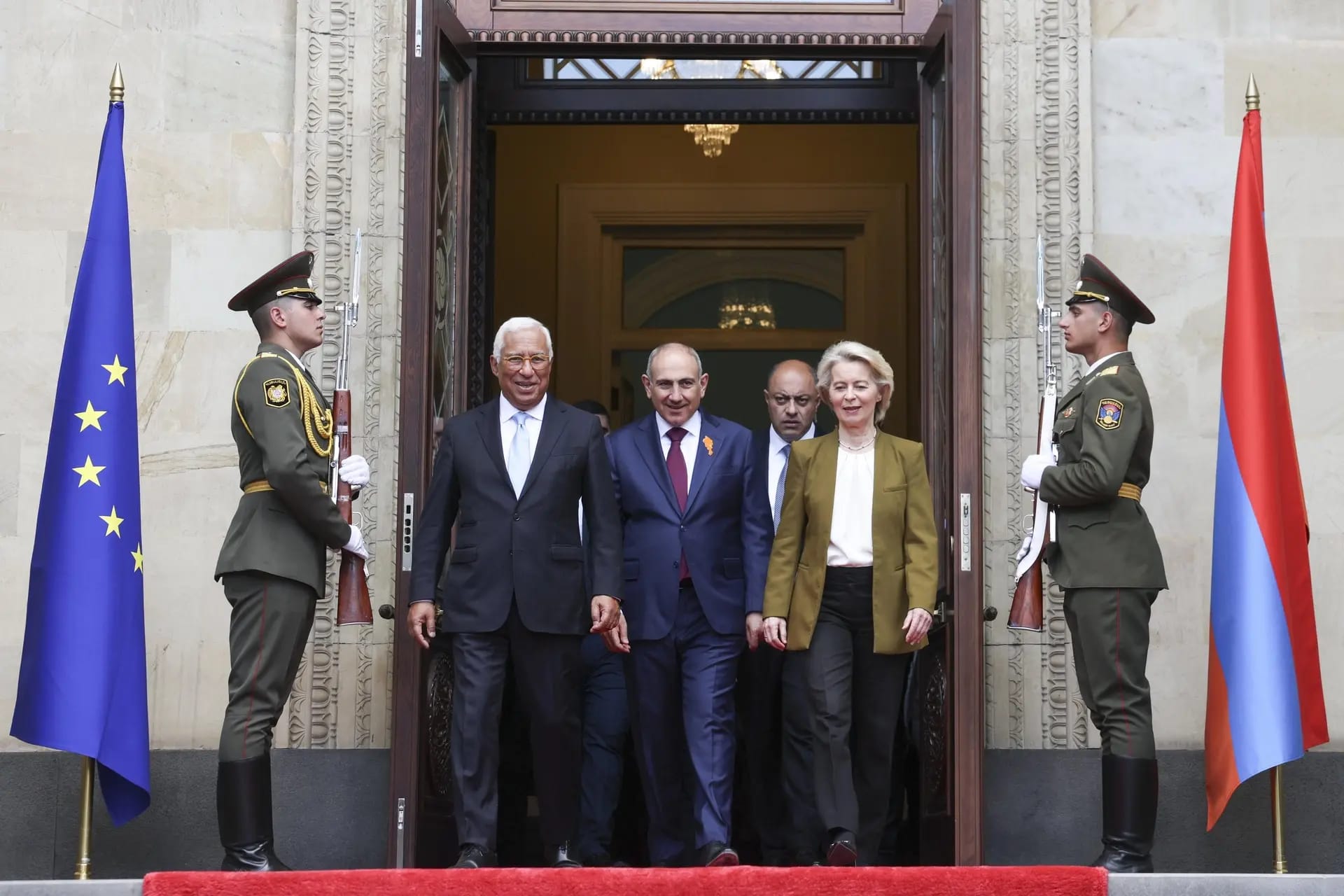
Against this backdrop, the European Union is reaching out to Yerevan. Brussels has already allocated tens of millions of dollars in assistance to strengthen the economy under the “Armenia Growth Plan,” while also partially opening its markets to Armenian products. As a result, fruits and vegetables from Armenia have appeared on the shelves of stores in France, Poland, and the Netherlands.
Of course, Russia still has other levers of pressure. One is natural gas., which Armenia continues to buy from Russian despite Moscow making it clear that prices could be revised soon. Additionally, the 102nd Russian military base is still stationed in Armenia, while Russian Railways operates Armenia’s railway network.
If necessary, however, the Armenian authorities will make use of these cards, as Prime Minister Pashinyan has already said:
“There is a lot of talk now, mainly from the opposition, about the possibility of this or that becoming more expensive. But it may turn out that, for what was provided free of charge in Armenia for 30 years, Armenia will start demanding $2 billion. I am not hinting at the railway – I am saying directly that it is the property of the Republic of Armenia, and there is no other option.”
For the first time since the collapse of the Soviet Union, Russia no longer has any clear-cut levers of pressure over Armenia. Those that remain are purely economic.
With a peace agreement between Armenia and Azerbaijan potentially on the horizon and the Armenian-Turkish border set to reopen, Yerevan’s European trajectory is becoming increasingly clear. Notably, Russia is unlikely to be able to do much about it. Once the country rids itself of Moscow's remaining levers of influence in the economy, Armenia will finally be able to make its own independent political choices.