Armenian Prime Minister Nikol Pashinyan’s recent visit to Moscow was marked by a sudden verbal clash with Vladimir Putin. The trip came in the middle of Armenia’s election campaign. Voting is set to take place on June 7, and the results will play a decisive role in determining the country’s future. If Pashinyan stays in power, experts say Armenia will move farther away from Russia and will very likely leave the Moscow-led Collective Security Treaty Organization (CSTO) and Eurasian Economic Union. If he loses, Armenia could return to the Kremlin’s orbit, and tensions in the region could intensify — up to and including a new conflict with Azerbaijan over Nagorno-Karabakh. Moscow has activated all of its agents of influence, who have moved from behind-the-scenes intrigue to open public confrontation.
The landscape two months before the election
Although the election campaign has not yet officially begun, the main candidates are already known. Unsurprisingly, all credible polls put Prime Minister Nikol Pashinyan and his Civil Contract party in first place. Why unsurprisingly? Because in Armenia, the incumbent has been considered the favorite in every election cycle.
As for the upcoming vote, 24% of respondents in a poll conducted by the International Republican Institute (IRI) said they were ready to support the prime minister and his political platform. Pashinyan’s current level of support — a mere 13% — may represent an all-time low, but his opponents’ ratings are even lower.
The surprise of this election campaign — even for the Armenian public — is that the leading opposition figure on the eve of the vote has been Russian billionaire and philanthropist Samvel Karapetyan, owner of the Tashir Group, a Moscow-based business conglomerate with assets in retail, real estate, and construction. A year ago, he was barely visible on Armenia’s political scene.
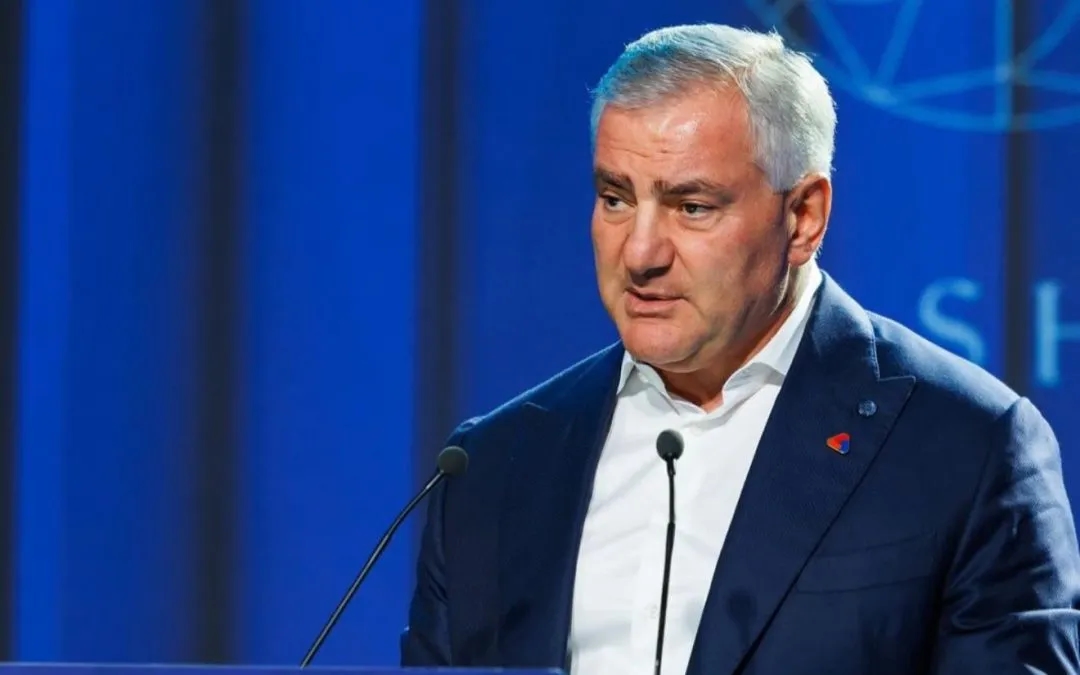
Karapetyan had always taken an active part in the life of his historic homeland. He met with the country’s leadership, invested money, donated significant sums for the construction and renovation of various facilities, and promoted athletes and cultural figures abroad.
That remained the case until June 17, 2025, when the businessman said:
“What opinion can I have when a small group of people, having forgotten Armenian history and the thousand-year tradition of our Church, attacks it and the Armenian people? I have always stood with the Church and the people and will take a direct part [in resolving the conflict between Pashinyan and the Armenian Apostolic Church]. If politicians fail to deal with this challenge, we will take part in our own way.”
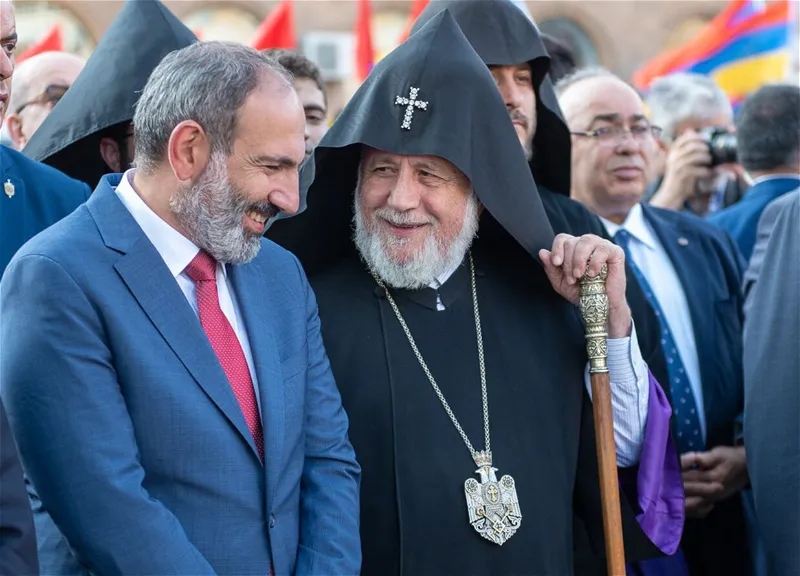
Karapetyan was speaking about the conflict between Nikol Pashinyan and the Armenian Apostolic Church (AAC). Since the 2020 war with Azerbaijan (more on this below), Armenia’s prime minister has sought to remove Catholicos of All Armenians Garegin II — the head of the AAC — from office. The formal trigger for Pashinyan’s criticism was information that the head of the Armenian Apostolic Church allegedly has a child, which would amount to a serious violation of church canons.
But the conflict goes far beyond personal accusations. The real reason for the standoff is that the church has consistently refused to support the secular government’s foreign policy line on Nagorno-Karabakh and has regularly issued political statements criticizing the authorities’ actions. The AAC, an influential force inside the country, openly opposed recognizing Nagorno-Karabakh as part of Azerbaijan.
A few hours after his statement in defense of the church, Karapetyan was detained, ultimately spending six months behind bars. In addition, one of the largest companies belonging to him, Electric Networks of Armenia, was nationalized. As a result, the Armenian political game acquired a new player — one who very quickly secured the image of the main opponent of the authorities and of Nikol Pashinyan personally.
According to the aforementioned IRI poll, 9% of respondents are ready to vote for Samvel Karapetyan and his Strong Armenia party. But there is a problem: Karapetyan cannot run for prime minister and will not even be able to obtain a parliamentary seat. The reason is that, in addition to his Armenian citizenship, the businessman holds Russian citizenship and, according to some reports, a Cypriot passport as well. In addition, he has not lived permanently in Armenia in recent years, as required by the country’s Constitution for parliamentary candidates.
Despite this, Strong Armenia says it will still be able to make Karapetyan prime minister. The businessman’s nephew, Narek Karapetyan, who heads the party’s list in the election, said Strong Armenia expects to win the parliamentary vote and amend the relevant article of the Constitution, which would give Samvel Karapetyan the right to be elected.
Strong Armenia expects to win the parliamentary vote and amend the Constitution to give Samvel Karapetyan the right to be elected PM
According to the polls, one candidate who has virtually no chance of becoming the country’s leader is Armenia’s second president, Robert Kocharyan. His current rating is 3% — this despite winning 21% of the vote as Pashinyan’s main rival in the 2021 elections.
Despite the noticeable decline in his numbers, Kocharyan has elected not to help Karapetyan improve his standing by pulling out of the race. If Kocharyan’s bloc fails to clear the 8% threshold set for alliances, its votes will in effect be redistributed in favor of political forces that do enter parliament.
The candidates’ trump cards
After the collapse of the Soviet Union, Nagorno-Karabakh was internationally recognized as part of Azerbaijan, but in practice it existed outside Baku’s control. When Pashinyan came to power in 2018, his government initially tried to preserve the previous negotiating framework, but when open hostilities broke out in 2020, the war ended in a serious defeat for Armenia that saw part of the territory come under Azerbaijani control.
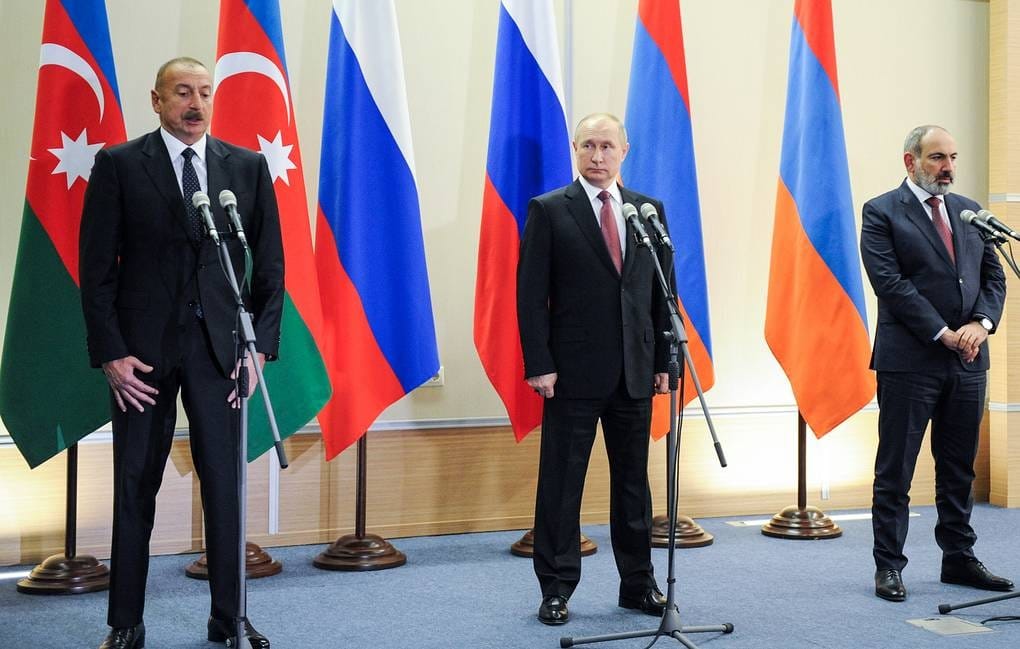
The total loss of Karabakh in 2023 after the fighting resumed strengthened the view in Yerevan that Moscow was no longer willing to provide its Armenian ally with military support. Against that backdrop, Pashinyan agreed to base the peace process on mutual recognition of territorial integrity within the borders of the former Soviet republics. As a result, the leaders of Armenia and Azerbaijan began meeting without intermediaries. After initialing a peace agreement, they said the period of conflict between the two countries had come to an end.
It was clear from the beginning that Pashinyan and his ruling Civil Contract party would make the agreements reached with Azerbaijan a centerpiece of the election campaign. But few expected their rhetoric to be so harsh. One need only look at Pashinyan’s statement that if the opposition came to power, a new war would supposedly begin, with all the consequences that would entail:
“There are certain circles in Armenia that, if they come to power, intend to revise the peace agenda. All these forces speak from the position of revising peace, which means an inevitable war shortly after the election, at the latest by autumn.”
The prime minister also appealed to the second main campaign message of the ruling party:
“All these forces themselves do not understand what they are saying. They are voicing texts written by others and cannot claim any official status in Armenia.”
Who those “others” are in the case of Samvel Karapetyan and Robert Kocharyan is not difficult to guess. Armenia’s authorities, at the highest level, are effectively saying that the country’s opposition is controlled by and fully subordinate to Russia. Whether that is true or not is another matter. The fact is, with that statement, official Yerevan is showing that it no longer shies away from confrontation with Moscow and is in effect openly saying that the Kremlin is trying to bring about a change of power in Armenia.
That the authorities are doing everything they can to tie Samvel Karapetyan’s name to Russia and keep that issue at the center of public attention is evident not only from official statements, but also from pro-government media and Telegram channels, where the businessman is often called “a Kremlin agent on a special assignment” and “a pro-Russian oligarch.”
The Putin-Pashinyan meeting
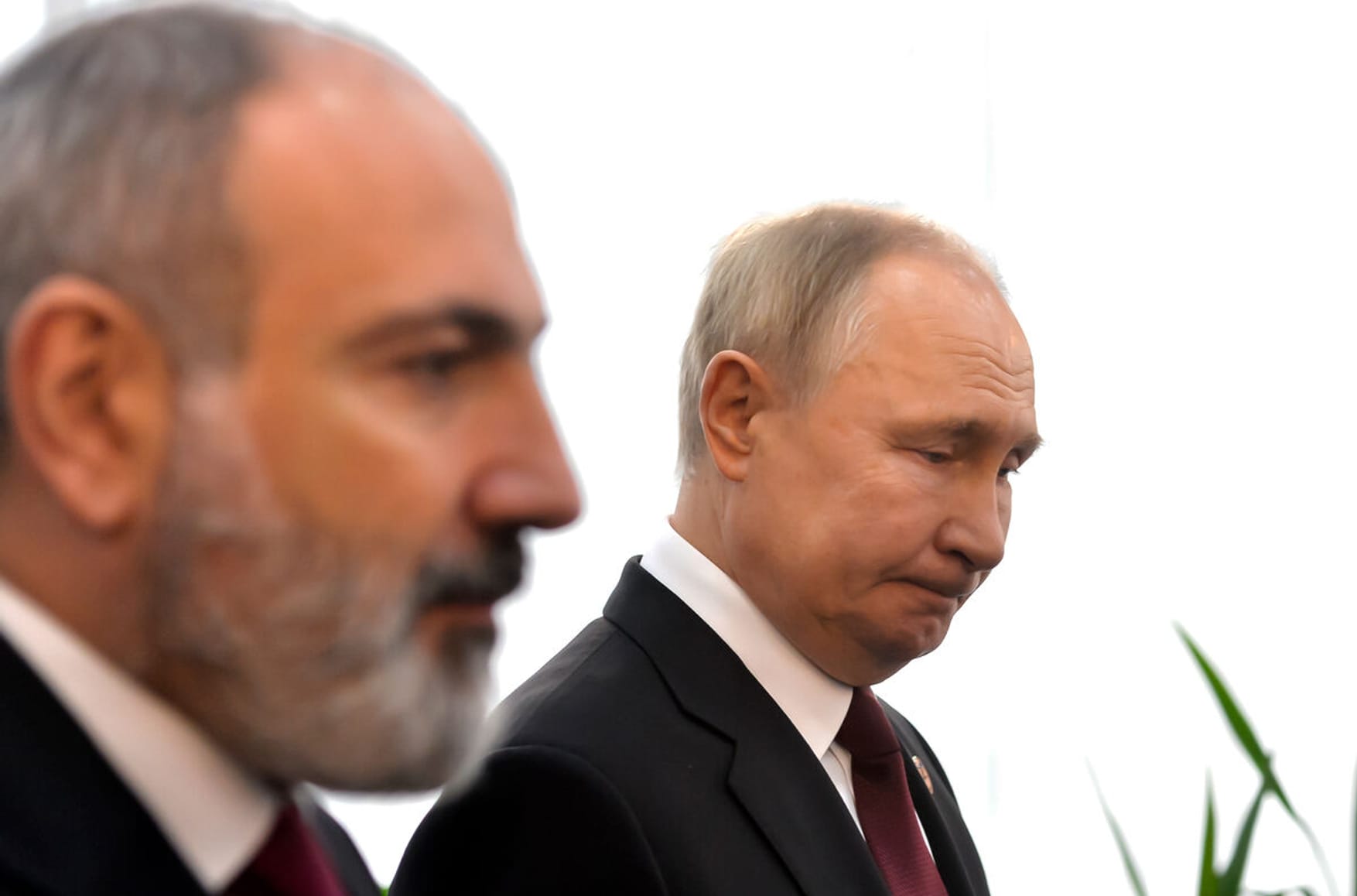
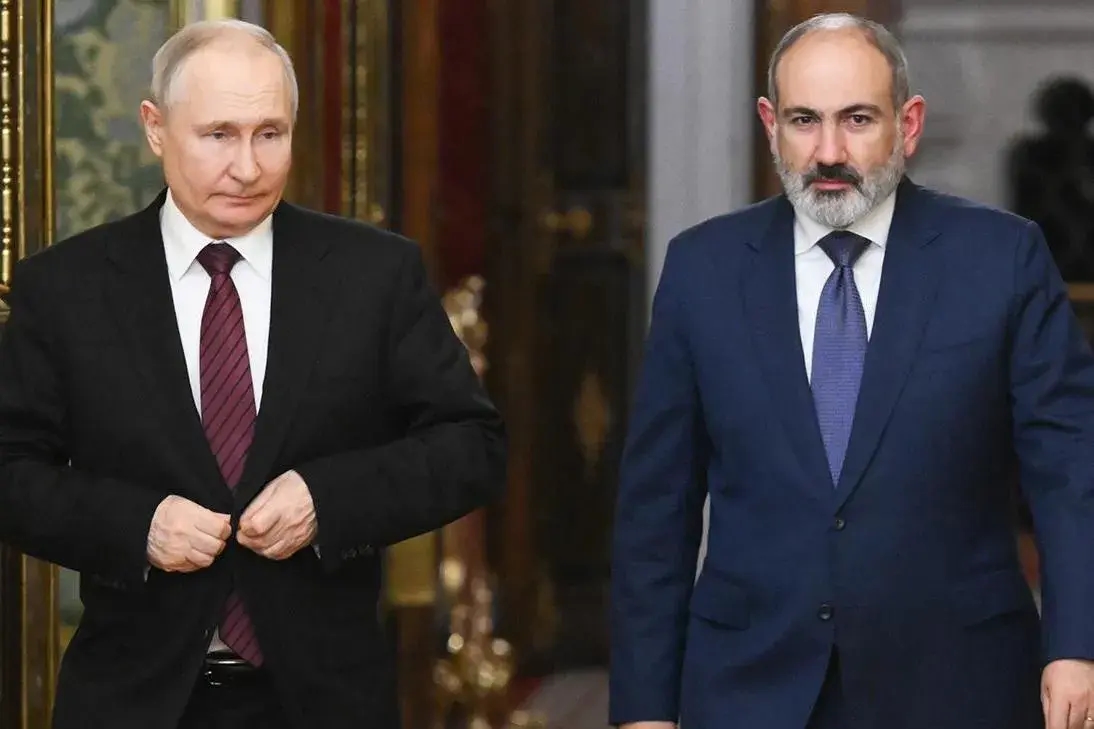
Against that backdrop, with the main players having laid all their cards on the table nearly two months before the election, a communiqué appeared announcing that Nikol Pashinyan was traveling to Russia on a working visit. The news surprised many people, and not only in Armenia. The leaders of the two countries have been meeting and speaking less and less frequently. But, as it turned out, there was plenty to talk about.
First, Vladimir Putin, speaking in the context of a question about Armenian-Azerbaijani relations, reminded Pashinyan that he had recognized Nagorno-Karabakh as part of Azerbaijan. In response, Pashinyan told Putin that he himself had already done so twice.
Then the Kremlin leader openly began saying that all pro-Russian forces ought to be allowed to take part in Armenia’s election:
“There are many political forces that are pro-Russian... We would very much like all these political parties and politicians to be able to take part in this domestic political work during the elections. Some, I know, are in places of detention, despite the fact that they have Russian passports.”
Although he spoke in the plural, everyone understood that he was talking about one person: Samvel Karapetyan. Pashinyan did not stay silent on that point either, saying that Armenia’s Constitution does not allow a person with dual citizenship to become prime minister.
It was as if the journalists in the room had been allowed to observe the closed-door portion of the talks, and that they had been allowed to record disputes that rulers typically try not to conduct in public. For the first time, the Russian side openly expressed its interest in the Armenian election issue, and there were not even the usual ritual phrases saying that any outcome would be acceptable to the Kremlin.
The talks also showed that Russian official rhetoric has hardened considerably on the eve of the election. If earlier Moscow tried not to make any abrupt moves and did not pay much attention to some of Yerevan’s actions, circumstances have now changed. Nikol Pashinyan was directly warned both about a possible rise in the price of Russian gas and about potential problems with Armenian imports into Russia. Armenia’s prime minister was also told that membership in the Eurasian Economic Union rules out deep integration into the European Union.
And yet Armenia has effectively mapped out a course toward Europe. Pashinyan himself has said so repeatedly.
No Karabakh, no leverage
Pashinyan’s response to the Russian president’s remarks suggests at a minimum that Yerevan is not going to yield to pressure from Moscow, the intensification of which now seems beyond doubt. But is this merely pre-election bravado by Pashinyan, or does Yerevan really have the resources to resist Russia’s influence?
Most likely, one does not exclude the other. Pashinyan clearly wants to show his voters that, even in Moscow, he can say what he says at home in Armenia, where pro-government media blame Russian peacekeepers and the Kremlin for the departure of the Armenian population from Nagorno-Karabakh and write that Russia views Armenia as an outpost while maintaining agents of influence among the opposition.
But Pashinyan’s rhetoric is not driven by domestic political expediency alone. For many years, Armenian-Russian relations were shaped by the Karabakh issue. By winning the first Karabakh war of 1988-1994, Yerevan gained control over territory, but the unrecognized republic also became a lever of influence over Armenia itself. Economically and geopolitically dependent on Moscow, Yerevan could not go against the Kremlin’s wishes without risking a renewal of the hot conflict.
Now, however, Armenia has officially recognized Nagorno-Karabakh as part of Azerbaijan. The so-called Russian peacekeeping forces and the Armenian population have left. The OSCE Minsk Group, in which Russia, the United States, and France had tried jointly to find a peaceful solution, has been dissolved. And absent the very particular problem of the disputed region, there is no main lever of pressure for Russia to exert on Armenia.
Still, Yerevan remains vulnerable economically. About 25% of Armenian exports go to Russia. That includes agricultural goods and value-added products — in other words, sectors that employ large numbers of people. In addition, Armenia receives natural gas and nuclear fuel from Russia.
Yerevan remains vulnerable economically, as close to 25% of Armenian exports are sent to Russia
At the same time, more as a result of the war in Ukraine than of anything else, Armenia has also in practice rid itself of its former dependence on Russian weapons. Russia’s inability to supply outside arms markets has meant that, over the past few years, Yerevan has completely changed the list of weapons it purchases and, accordingly, its choice of suppliers.
Moreover, Armenia has for the first time received weapons from two NATO countries — France and the United States. Against that backdrop, official Yerevan clearly has no intention of returning to the Russian market.
That is, unless there is a change of power in the country.
Distant European prospects
Against the backdrop of the confrontation between Yerevan and Moscow, which has lasted for more than five years, the European Union has significantly strengthened its position in the South Caucasus. During that time, Armenia has received hundreds of millions of dollars for reforms in various sectors, political support in addressing the Karabakh conflict, and assurances of readiness to begin a process for the country’s accession to the EU.
That does not mean Yerevan will have a chance of becoming a full member anytime soon, but the process has clearly begun. The country’s parliament has even adopted a law “On the beginning of the process of the Republic of Armenia’s accession to the EU,” and Pashinyan has repeatedly said that his country is ready to deepen its ties with Europe to whatever extent the EU itself considers appropriate.
It is notable that against that backdrop, as well as because of the outcome of the 2020 war in Karabakh, the number of pro-European citizens in Armenia has grown. The logic is simple: if Armenia, after gaining independence, placed its bet on Russia and built its security system around it, but ultimately lost the 2020 war, then that was the wrong policy. The number of citizens in favor of Europe and against Russia rose further after September 2021, when Azerbaijan attacked Armenia’s sovereign territory and Yerevan appealed to the Collective Security Treaty Organization for help but did not receive it. Since then, the country has effectively frozen its membership in the military bloc.
Russia’s standing in Armenia dropped sharply precisely after the 2020 war. As recently as 2019, about 93% of citizens described relations with Russia as good. Five years later, however, 41% of respondents said Russia was a threat to political security.
In 2024, 41% of respondents in Armenia said Russia was a threat to the country’s political security
This shift in attitudes toward Armenia’s former main ally is especially important on the eve of the election. The broader fear that, if Samvel Karapetyan’s political platform wins, Armenia will once again reorient itself toward Russia may well work against him — and most likely will.
On the other side, Pashinyan’s pro-European rhetoric is likely to bring his party additional votes. By February 2026, support in Armenia for joining the European Union had reached a record 72%, the highest figure recorded since the International Republican Institute began polling in Armenia.
The U.S. and Turkey factors
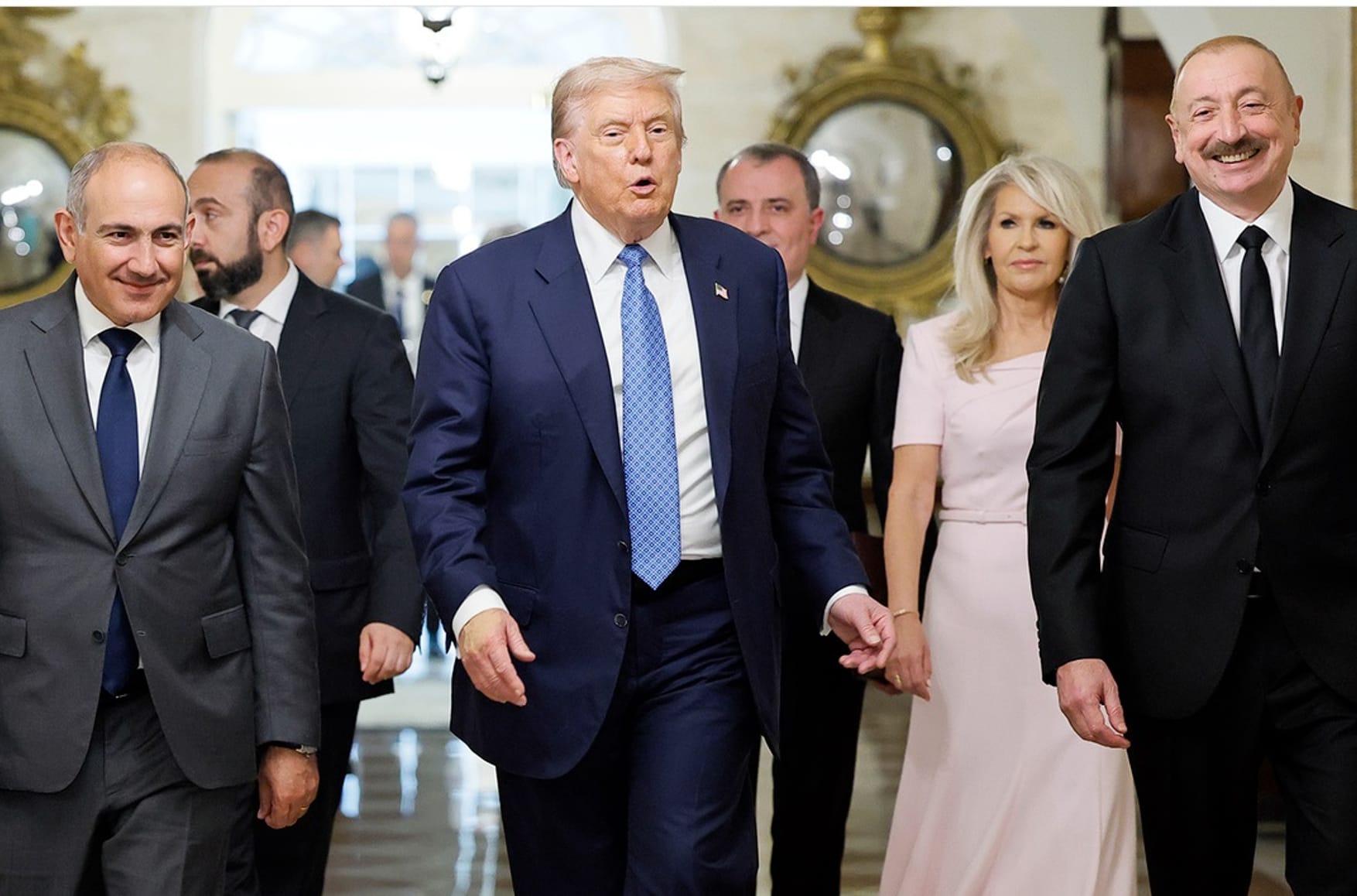
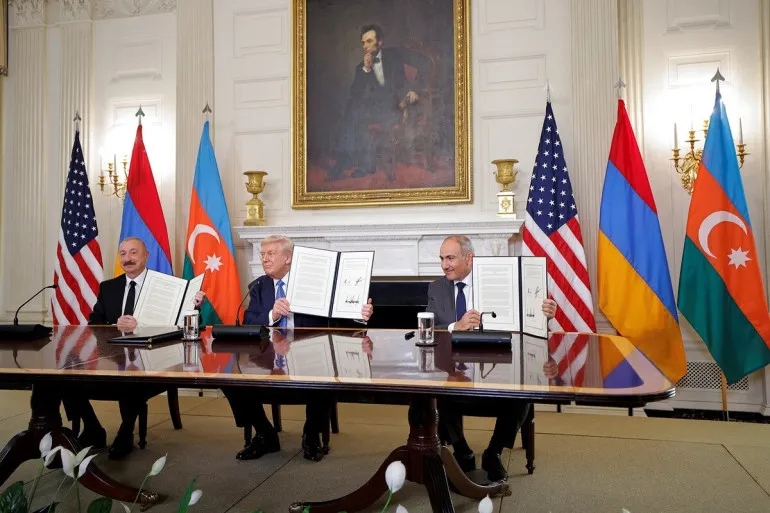
If six years ago the United States was considered a complete outsider in the struggle for influence in the South Caucasus, the picture is now the exact opposite. In August of last year, the leaders of Armenia and Azerbaijan traveled to the White House, where they signed a special declaration in the presence of Donald Trump. The document not only set out the Armenian-Azerbaijani agenda, but also marked the beginning of the “Trump Route for International Peace and Prosperity” initiative, or TRIPP. The route is meant to connect Azerbaijan with its exclave, the Nakhchivan Autonomous Republic, via a special road running through Armenian territory.
The implementation of that project could also help Armenia normalize relations with Turkey. The border between the two countries has been closed for more than 30 years, a legacy of Ankara’s support for Baku all the way back in the first Karabakh war. Now, however, with the conflict over, Yerevan wants all the region’s borders opened, and the two neighbors have already begun reconstructing customs infrastructure and have signed several agreements.
So far there has been no landmark breakthrough in Turkish-Armenian relations, but Pashinyan’s Civil Contract party says there will be one if it manages to remain in power. The “Trump Route” and the Turkey factor, contrary to long-standing stereotypes, are also important political assets for Pashinyan as the election approaches.
The “Trump Route” and the Turkey factor are also important political assets in Nikol Pashinyan’s hands in the upcoming election
Whatever the outcome, Armenia’s June vote is shaping up as a contest not just between individual politicians, but between competing visions of the country’s foreign policy orientation for years to come. Pashinyan is asking voters to stay the course he has already set: close the chapter on Karabakh, complete the peace process with Azerbaijan, reduce dependence on Moscow, and speed up Armenia’s rapprochement with Europe and the United States. His opponents argue for a different path: a review of what they see as overly rapid concessions, the preservation of traditional ties with Russia, and a more cautious approach to the new regional order.
For this very reason, the campaign is unfolding in an atmosphere in which domestic debate has almost completely merged with a geopolitical choice. For the first time in many years, the struggle for parliamentary seats in Yerevan has in effect turned into an argument over what kind of country Armenia will be after Karabakh: part of a new Western configuration for the South Caucasus, or a state that will try to rebuild an allied relationship with Russia.