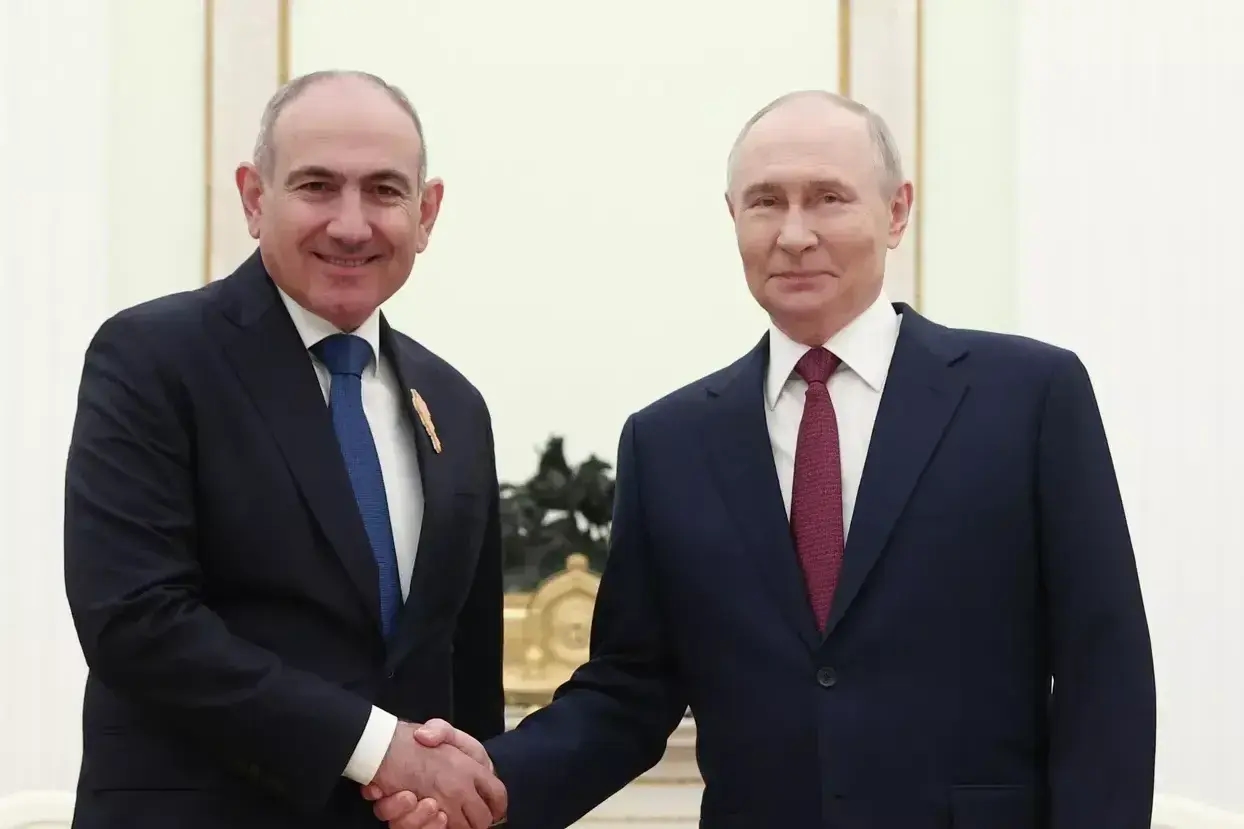
On April 2, one day after a contentious meeting in the Kremlin between Vladimir Putin and Armenian Prime Minister Nikol Pashinyan, the head of Russia’s Federal Service for Veterinary and Phytosanitary Supervision (Rosselkhoznadzor), Sergei Dankvert, said the agency has concerns about crop and livestock products from Armenia. According to Dankvert, the problem could be solved by integrating information systems within the Eurasian Economic Union, which would make it possible to trace the origin of products. He made the remarks in an interview with Rossiya 24, as quoted by Interfax.
“The range and quantity of products coming from Armenia give reason to believe that not all of them are actually of Armenian origin. We were dealing with this issue in 2024 and in 2023,” Dankvert said, explaining that the development might be linked to Armenia’s simplified access to markets within the Eurasian Economic Union. “Over three years, Armenia increased flower exports from 36 million to more than 100 million stems. There was also growth in other categories of products. We were forced to move phytosanitary controls closer to the border. We also saw that a large volume of the products being shipped to Russia never reaches the destinations it is supposedly intended for,” said the Rosselkhoznadzor head.
“We have been dealing with these issues for quite a long time and are seeing a large number of quarantine-related cases. We receive more than 900 detections of quarantine pests and diseases from Armenia, which significantly complicates our work. For example, decontamination has to be carried out. As for flowers, we have to certify production sites and have tried conducting video inspections,” Dankvert added.
Speaking about animal products, he noted that some nominally Armenian products, such as butter, cheeses, and trout, may also be of non-Armenian origin.
According to Dankvert, the regulator has had to apply a special set of criteria to supplies from Armenia, including stricter rules on product traceability. As a solution, the official suggests integrating food safety monitoring information systems within the Eurasian Economic Union.
Meeting between Pashinyan and Putin
On April 1, Nikol Pashinyan met with Vladimir Putin in the Kremlin. At the meeting, the Armenian leader explained the suspension of Yerevan’s CSTO membership by saying that the organization had failed to fulfill its mandate during the conflict in Nagorno-Karabakh in 2022, when Azerbaijan took control of the territory, forcing its Armenian population to evacuate under duress.
Armenia’s increasingly close relationship with Europe was discussed separately. Putin said that Russia has a neutral attitude to the cultivation of Armenia’s ties with the EU, but insisted on the need to make corresponding arrangements in advance, as simultaneous membership in the European Union Customs Union (EUCU) and the Russia-led Eurasian Economic Union (EEU) was “impossible.” Pashinyan, in turn, acknowledged the incompatibility of the two blocs, but added that as long as there was an opportunity to combine both options, Yerevan would use it, and that ultimately the choice between the two lies with his country's citizens.
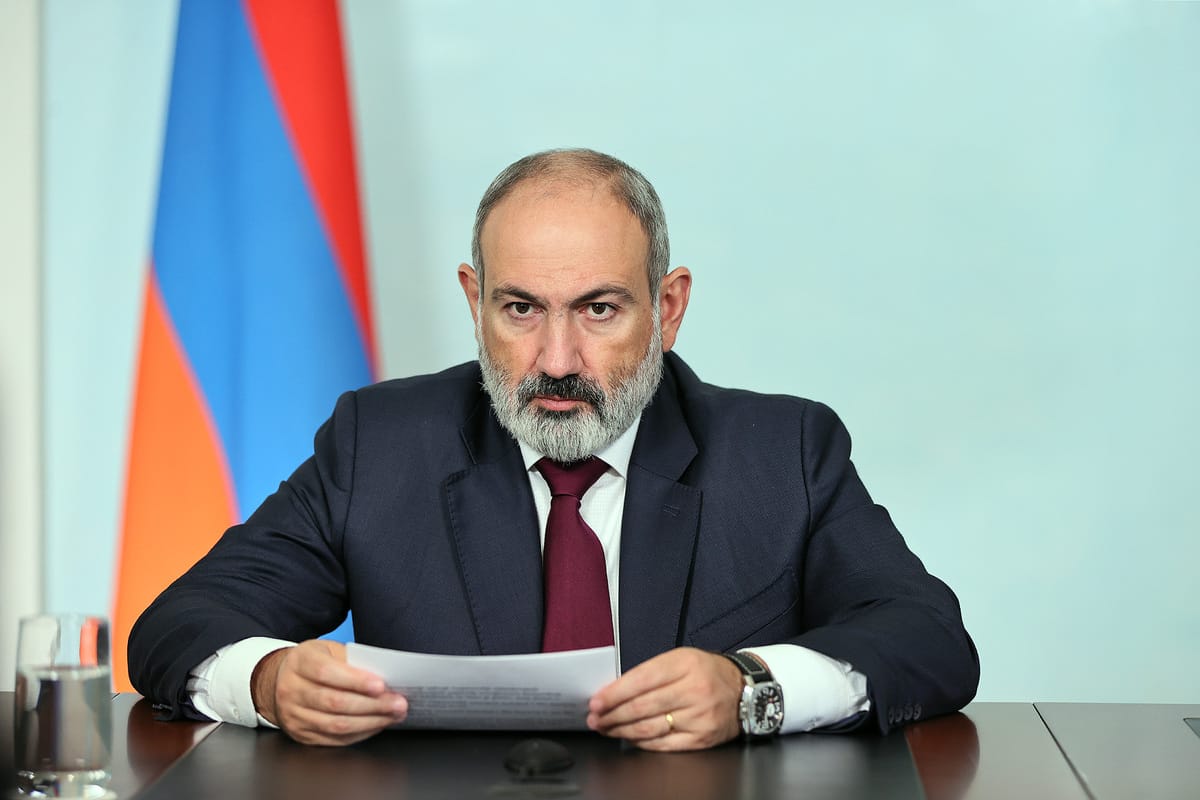
The prime minister stressed that Armenia is a democracy: “Armenia is a democratic country. We have democratic processes for everything. This is already the norm. Some citizens even think there is too much democracy in Armenia… This is a matter of principle for us. Our social networks, for instance, are 100 percent free. There are no restrictions whatsoever.”
Russia’s deputy prime minister is not impressed
After the meeting, Russian Deputy Prime Minister Alexey Overchuk stressed in an interview with TASS that Yerevan cannot simultaneously be part of both the EUCU and the EEU, despite Putin’s neutral attitude.
According to Overchuk, Armenia’s European integration has nearly reached the point at which Russia will have to restructure its economic relations with the country. He claims that Russia and Armenia lost $5.1 billion in mutual trade turnover in 2025 due to Yerevan’s efforts to move closer to the EU.
Indeed, starting in 2020, Armenia gradually began to reorient itself toward Western institutions, intensifying cooperation with the EU in the areas of security, economics, and government reform. Against the backdrop of cooling relations with Moscow and distrust toward the CSTO, Yerevan deepened its dialogue with Brussels, signed a Comprehensive and Enhanced Partnership Agreement (CEPA), and began the process of adapting to European standards.