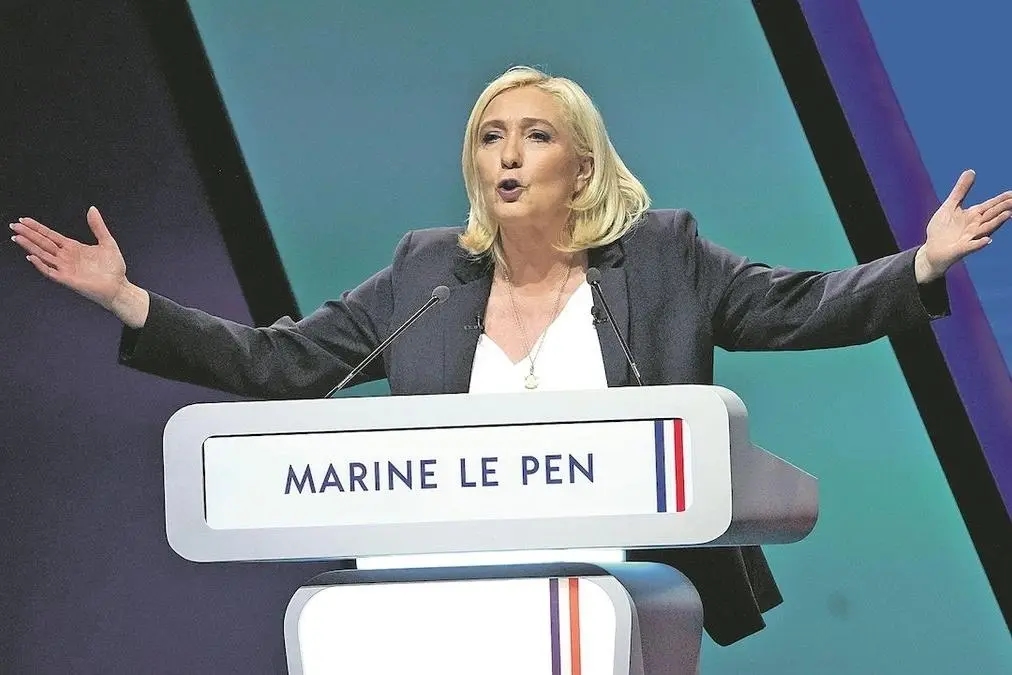
Nine months from now, France will elect a new president. Incumbent Emmanuel Macron is term-limited, and the country's political centrists are scrambling to find a consensus coalition capable of defeating the country's radicals at the ballot box – Marine Le Pen on the right and Jean-Luc Mélenchon on the left. Until recently, it seemed that Le Pen had effectively withdrawn from politics, ceding her place atop the National Rally to a new generation. But a relatively lenient court ruling has given her another chance to run for president, and, judging by the polls, her place in the second-round runoff to be held next May appears all but inevitable.
The Le Pen trial
In March 2025, a verdict was handed down in Paris in a case concerning the National Rally party's misuse of European Parliament funds. In popular discourse, the courtroom drama was often referred to as the “Marine Le Pen trial” — even though, in total, the court’s guilty verdict also named 23 other people, as well as the party itself. The prosecution sought a prison sentence (which, under French law, would in any case have been suspended) and a fine, but the central question was whether the judiciary would ban Le Pen from public office, leaving her ineligible to stand in the 2027 presidential election. It did, barring her from electoral politics for a period of five years.
It is important to emphasize that the prosecution did not seek to prove that Marine Le Pen had personally enriched herself, as it had no substantial evidence to support such a claim. The case instead concerned her party's systematic use of European Parliament funds for its own internal needs rather than to support the work of MEPs. Thus, despite the undeniable violations and Le Pen’s central role in organizing such a scheme, the seriousness of the offense did not appear particularly great — not only to National Rally voters but also to a substantial part of the wider public. Critics of the first-instance court’s ruling argued that Le Pen should be defeated at the ballot box, not in court.
Marine Le Pen must be defeated at the ballot box, not through legal proceedings
Le Pen's public statements predictably accused various dark forces of working to bring about her “political death.” She and her allies challenged the verdict on appeal. But the slow pace of the French justice system offered little hope that the case would be reconsidered quickly enough for the politician to take part in the 2027 presidential election.
Then a miracle occurred. The appeals court agreed to deliver its verdict in the summer of 2026 — effectively dispelling any suspicions that the government was manipulating the justice system in order to eliminate a political rival. The ruling satisfied everyone: the guilty verdict was upheld, but Le Pen's ban on standing for election was eased. For the leader of the National Rally, the path to the most important election of her life was once again open.
France’s largest party
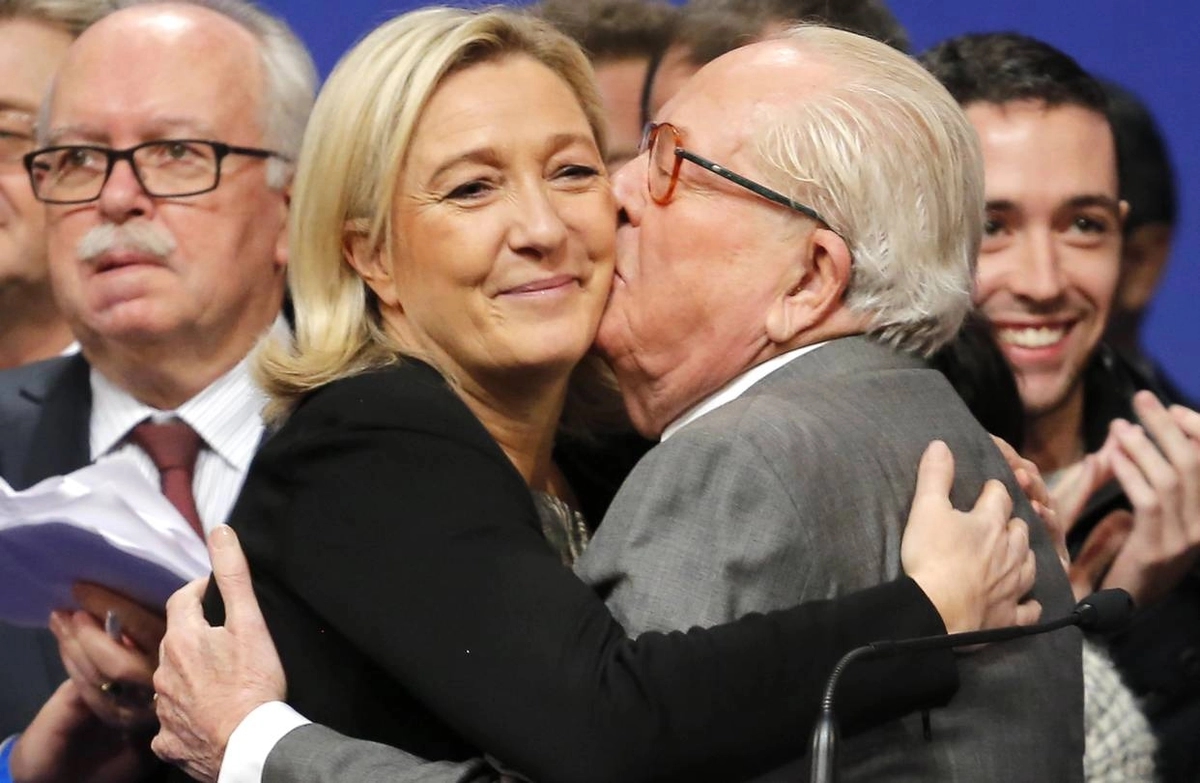
In 2011, Marine Le Pen inherited the National Front from her father, taking over a party in crisis. On the one hand, Jean-Marie Le Pen was well known, an eloquent speaker, and was recognized as an authority in right-wing conservative circles. On the other, his party’s reputation as a xenophobic, far-right movement prevented it from attracting broad electoral support.
The daughter Le Pen worked to rebrand the party, including changing its name and sidelining her aging father. However, its populist rhetoric was retained: the party continued to criticize the traditional political elites, the project of a united Europe, and any policy that could be conceivably portrayed as pro-immigrant. At the same time, the party abandoned any outright xenophobic rhetoric while actively reaching out to potential voters at the local level.
Essentially, the National Front underwent a process of “normalization." Its candidates began winning races, and the public saw that the sky did not fall as a result. Le Pen herself made it to the second round of the presidential election against Emmanuel Macron twice, in 2017 and 2022, improving her result each time. The name change to National Rally in 2018 symbolized the party's partial break from its past.
The National Front underwent a process of “normalization,” becoming part of the routine political landscape
Marine Le Pen's years of sustained effort, aided by widespread discontent over Macron’s muddled political course and a succession of various crises, made the populist leader a recognized contender for the 2027 election. The trial nearly erased all these achievements — but it the end it left her in an even stronger position, with the first public opinion polls published after the appeals court handed down its verdict showing Le Pen winning a hypothetical second round contest against any of her likely rivals.
Nevertheless, there is still a long way to go. The election campaign will start only in September, practically at the same time as the Senate by-elections, whose outcome will have a major bearing on the mood of French voters. For now, preliminary polls provide only the first indications of what may be to come. Moreover, it is impossible even to make an approximate prediction of who Marine Le Pen’s main rival will be, and who she will most likely face in the second round. Her own “skeletons in the closet,” both past and recent, could also prove a significant obstacle on the road to victory in 2027, complicating her campaign and putting her on the defensive.
First, no one can say for certain whether she will be able to break through her electoral ceiling — the result of voters’ reservations about her name, her party’s past, and its legal troubles — and win more than 50% of the vote in the second round. According to polls conducted after the first court ruling in the Le Pen case, 49% of French voters wanted to see her run, while 51% did not. If voters’ attitudes have become more favorable today, that does not mean that those who remain skeptical of the party have definitively changed their minds.
Second, even French voters who opposed her being barred from running and welcomed her return are not prepared to turn a blind eye to the abuses that did indeed take place. Some details of the wrongdoing, in particular the fact that Le Pen’s personal bodyguard was listed as a parliamentary assistant (as well as her role as the main coordinator of the scheme), will certainly be used against her by her rivals. The verdict was guilty, and it remains guilty.
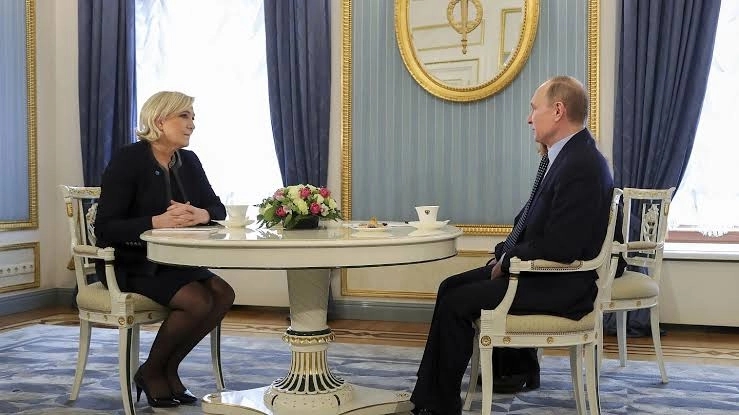
Third, Marine Le Pen has a reputation, if not as an admirer of Putin and Trump, then certainly as a politician belonging to the same camp as the two of them. Although she formally condemned Russia’s invasion of Ukraine, she has always been highly evasive when it comes to supporting Kyiv and has aligned herself with the position of former Hungarian Prime Minister Viktor Orbán. Neither Putin nor Trump is popular with French voters, and Le Pen will try to distance herself from them – something that is not always easy to do. In mid-July, Elon Musk, who is also not particularly popular among the French, openly voiced his support for Le Pen, which she was hardly likely to welcome.
Additionally, tensions inside the National Rally itself could also prove to be an obstacle (even if the party denies that such internal divisions exist).
Young and ambitious
One way Marine Le Pen sought to bring new people into the party was by recruiting fresh talent. Jordan Bardella’s meteoric rise is an excellent example.
Bardella will turn 31 in September, and he embodies the party’s new course away from the National Front’s scandal-ridden past. Given his age, Bardella had no involvement in the aforementioned legal proceedings, as the abuses in question took place between 2004 and 2016.
For many years, Marine Le Pen built an extremely rigid system of control within the party, preventing any parallel centers of influence from emerging. Bardella was not exaggerating when he admitted that he “owed everything to her.” But after her defeat in 2022, Le Pen decided to focus on the 2027 presidential election while stepping back somewhat from the day-to-day running of the party.
At the end of 2022, Bardella became president of the National Rally — giving frequent interviews and speaking out boldly on political issues. It seemed that the two leaders were in complete agreement over the division of roles: Marine Le Pen as the party’s number one, with her sights set on the presidency, and Bardella as number two, with the prospect of becoming prime minister if Le Pen won.
But the trial and the harsh first-instance sentence somewhat disrupted this arrangement. Until the appeals court issued its ruling in July, no one knew whether Marine Le Pen would be able to run in the election.
Publicly, Jordan Bardella declared his full solidarity and “loyalty” to the party’s de facto leader, calling the verdict against her “political.” But he could not have been unaware of the results of polls showing that, if Le Pen were unable to run, his support in the 2027 presidential election stood at roughly the same level as hers – 34–37%. Moreover, this scenario was known to other National Rally leaders as well, and they could have begun considering the situation in terms of their own personal strategies.
Voters saw no problem with replacing Marine Le Pen, the party’s long-standing leader, with the young Jordan Bardella
Despite the public display of unity, the differences between Bardella and Le Pen are not merely generational (even if Bardella boasts more than two million followers on Tik Tok). He has consistently taken right-wing conservative positions, at times even liberal ones from an economic perspective, while Le Pen has sought to pay greater attention to social issues. These differences were not particularly significant while the party was gaining ground, but an election campaign will require greater clarity when it comes to questions of policy.
The previous balance of power has now been restored: Le Pen is the presidential candidate, and Bardella is in line to become prime minister. But one can only speculate about what the young man went through as he spent an entire year seeing his name at the top of the presidential polls, and how he now views his return to the number-two position.
Everyone against Le Pen
The National Rally’s greatest asset is its electorate, which has become disillusioned with the current political system. The fact that these voters were ready to support either Le Pen or Bardella with roughly equal determination says less about the candidates’ abilities than it does about the extent of French voters’ weariness with Macron’s inconsistent style of governance. Consequently, other candidates must present themselves as a credible alternative both to the incumbent president and to Marine Le Pen, whose lead in the polls is now so substantial that it is difficult to imagine her failing to reach the second round (though she has no chance of winning in the first round).
Voters across the West in general have been moving to the right, and the French cite the migration crisis and declining security as their main causes for concern, in line with the National Rally's platform. Le Pen's opponent in the second round of the presidential contest will likely come from one of three distinct groups.
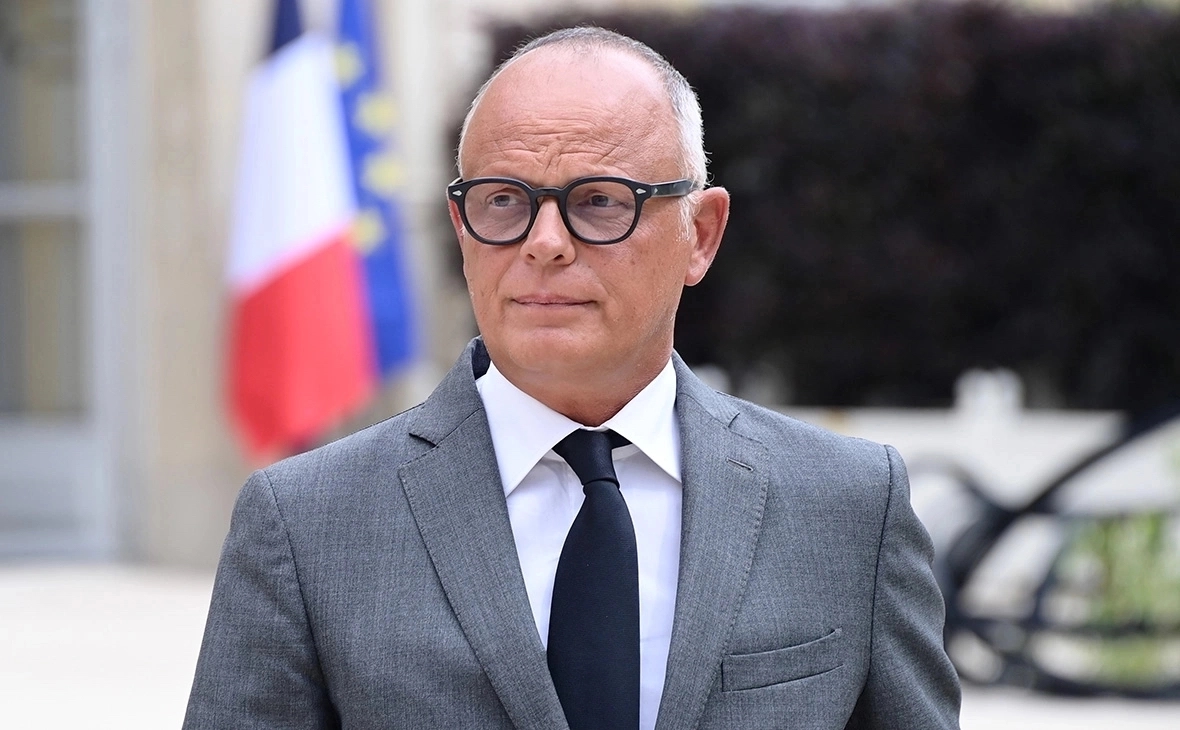
The first consists of moderate center-right politicians who possess governing experience and have conventional political careers behind them. They include former prime ministers Édouard Philippe and Gabriel Attal, along with cabinet ministers Gérald Darmanin and Bruno Retailleau, among other contenders. Former prime minister François Bayrou, for example, is already proposing that a common bloc be formed.

The problem with the candidates listed above is that they all belong, in one way or another, to the old political establishment, making them relatively easy targets for criticism. Le Pen will blame them for all of Macron’s failures, real or perceived. Overall, as of today, Édouard Philippe is the closest of them to defeating Marine Le Pen in the second round.
The second group consists of left-wing politicians, but their initial prospects are far from promising. The leader here is the radical left-wing Jean-Luc Mélenchon, a gifted orator and a regular participant in presidential campaigns who in the past was able to attract more moderate left-wing voters, finishing third overall with 21.95% of the first round vote in 2022 (and fourth in 2017, with 19.58%).
This time, however, the split within the left-wing camp is so deep that uniting it will most likely be impossible. Among Mélenchon’s potential rivals is former President François Hollande, who was even less popular when he left office than Macron is today. However, the French tend to forget the bad things with time.
Finally, there is the third group, which contains zero names — at least for now. However, the emergence of an unexpected, anti-establishment candidate cannot be ruled out — for example, a prominent entrepreneur who could present himself as the savior of the country from Macron, Le Pen, and all the other politicians. Macron himself played roughly the same role back in 2017.
In short, the election campaign that begins in France in September promises to be both very interesting and highly challenging for Marine Le Pen. But the other candidates will also have to work hard to ensure that the roughly 51% of voters who do not like right-wing populists actually turn out in the spring to cast their ballots for whoever makes it through to the second round to take on Le Pen.