
Right-wing British populist Nigel Farage has returned to Parliament as planned, but the event can hardly be called a triumph. His Reform UK party, which until recently dreamed of definitively replacing the Conservatives, has faced falling poll numbers, investigations into suspicious donations, and its own institutional weakness. Now its leader must prove that his creation is not merely a temporary home for protest voters (or a one-man party built around a single scandal-prone politician), but a real political force.
Nigel Farage's the right-wing populist party, Reform UK, is at a make-or-break moment. It will either replace the Tories as the country's main political force on the right, or it will continue to be a marginal movement with no real hope of taking power. The populists face three fundamental barriers on the road to success: high unfavorable ratings outside their electoral base, an electoral platform that essentially promises to dismantle the government structures is seeks to lead, and a lack of “institutional depth” — i.e., a history, a developed organization, and a firm place in voters’ political memory.
What Reform UK does have in abundance, however, is dependence on its leader.
The Battle of Clowns in Clacton
Financing is often a weak spot for right-wing populists. Nigel Farage likes to talk about how he was given millions of pounds without being asked for anything in return, arguing that his finances are being investigated by British authorities only because the establishment cannot defeat him in a fair political fight. “Let ordinary voters judge me,” he said: “If I win, you win, because if I lose, they win.” This was the main message of Farage’s speech this past July 7, when he announced that he would stand again in an early election in his Clacton constituency. His slogan for that campaign: “The People versus the Establishment.”
The comedy began the very next day. All parties with any meaningful support – Labour, the Tories, the Liberal Democrats, the Greens, and Restore Britain (Farage’s rival on the right) – declined to field candidates. Thus, Farage’s main opponent was Count Binface (literally a man with a garbage bin on his head), along with three representatives of the Official Monster Raving Loony Party, several other novelty candidates, and a couple of dozen independents. A record 34 candidates in all joined the field.

Farage, of course, won. From the outset, around 70% of the constituency’s voters were ready to support him, compared with roughly 20% for Count Binface, and in the end the Reform UK head claimed 63% (then declined to attend the official announcement of the results). More importantly though, at the national level, 73% of Britons believe the investigation into Farage's finances should continue, no matter what the voters of Clacton may have said.
Political resilience
Farage is one of the most consistent and persistent politicians in modern Britain. For more than 30 years, he has built his political career around a single idea: I am on the side of the people in their struggle against a political class that betrays the will of ordinary Britons, and I will restore the country’s national sovereignty and control over its borders. The names and party labels change, but Farage and his basic message remain.
In 1989, Farage, still a Tory at the time, voted for the Green Party, reportedly because it was then seen as Euroskeptic. Three years later, in protest against the signing of the Maastricht Treaty (which created the European Union), he left the Conservative Party and joined the Anti-Federalist League, which soon became the United Kingdom Independence Party (UKIP). He led UKIP from 2006 to 2016 before taking over the newly established Brexit Party in 2019. In 2021, the party was renamed Reform UK, and Farage announced his retirement from politics. But ahead of the 2024 general election, he unexpectedly returned and, on his eighth attempt, was elected to the House of Commons.
Farage likes to portray himself as an outsider who can bring about the political revolution Britain so badly needs
Farage likes to portray himself as an outsider who can bring about a political revolution Britain supposedly so badly needs. The son of a trader, he attended a private school and then followed in his father's footsteps, becoming a trader in non-ferrous metals in the City of London. He made his way into politics thanks to an obvious talent for working with the media and a skillfully crafted political narrative that was very simple – and, therefore, persuasive.
The narrative works
Immigration and sovereignty remain at the core of Farage’s political program – in other words, his main political tool remains emotion. Farage's positions on “secondary” issues, especially economic ones, can change, sometimes radically, and his critics' charge that Farage offers slogans rather than plans are indeed consistent with reality. Unsurprisingly, 86% of Reform supporters consider immigration to be the country's most important political issue, compared with 42% of Britons overall. (The cost of living comes second, at 38%.)
In the worldview Farage offers, the topics of immigration, Brexit, economic problems, the declining quality of public services, and distrust in government institutions have become intertwined. The conclusion – that Britain is “broken” – is often expressed in forceful, militaristic rhetoric, with words such as “betrayal,” “war,” and “invasion.” The changes proposed are sometimes even given the names of military campaigns, such as “Operation Restore Justice.”
Channeling these emotions has proven effective. By summer 2026, 61% of Britons surveyed considered Reform to be one of the “major parties,” compared with just 19% two years earlier. In the 2025 and 2026 local elections, hundreds of the party’s candidates were elected as local councilors, and Reform now controls dozens of local authorities. It has become a real political force.
Something went wrong
Until early fall 2025, the average of the seven most recent polls conducted by different firms showed a steady rise in support for Reform, reaching around 32%. For comparison, Labour, now the governing party, won more than 400 of the 650 seats in 2024 with a comparable share of the vote.
But then came an equally steady decline. As of Aug. 5, support for Reform UK was back down to 24.0%, coming in behind Labour at 25.9%, with the Conservatives, Greens, and Liberal Democrats attracting 19.4%, 11.1%, and 10.7% support, respectively).
Reform’s growing prominence probably brought greater scrutiny of its plans, revealing that many people either saw the party’s proposals as eye-catching wish lists without realistic plans behind them (such as its call to invade France) or simply did not approve of them. For example, critics described as unfair and “un-British” the proposal to force people who had legally settled in Britain years or even decades ago to prove their right to remain all over again.
Another possible reason for Reform’s deteriorating position in the polls is the gradual recovery of the Conservative Party, which Farage has publicly vowed to displace. The Tories' current leader, Kemi Badenoch, has seen her popularity rise since September 2025.
Finally, a string of new scandals and reports of parliamentary and police investigations into the financial dealings of Farage and Reform, which began in spring 2026, may also have played a role. Not the main one, since Reform’s decline in the polls began long before the first reports of possible financial irregularities. Nevertheless, the allegations could ultimately cost Farage his seat in Parliament.
Is there life after Farage
The facts and suspicions described above – million-pound gifts, transfers sent through complicated channels, questions about financial disclosures, and ongoing investigations – look like a pattern of behavior when taken together, even if all of the allegations are yet to be proven. As a result, Farage's rhetoric of being with the people and against the elites is beginning to sound less convincing.
Traditionally, Farage is seen as the party’s main asset – he is still better than anyone else in Britain at using the media, and the loyalty of Reform UK supporters is centered on him. As many as 91% of those who back the party view him positively, with 49% viewing him very positively. Among the electorate as a whole, however, the picture is radically different. When More in Common asked Britons “Who do you trust more, the leader or the party?”, 7% chose Farage, while 17% chose Reform UK. Under the circumstances, breaking with Farage might actually benefit the party: while the leader once pulled the party upward, his high personal unfavorable ratings and financial scandals could now drag it down. For now, however, Reform UK is, in essence, Nigel Farage himself.
In the More in Common poll, when asked “Who do you trust more, the leader or the party?”, 7% chose Farage, while 17% chose Reform UK
Major internal party disagreements are usually resolved through Farage’s personal intervention. That was the case, for example, in June 2025, when party official Zia Yusuf announced his resignation. However, after speaking with Farage, who publicly said he had “forgiven” Yusuf, he returned 48 hours later. The same applies to tensions between Reform UK’s old core and the Conservatives who have joined the party – above all Robert Jenrick. For now, these tensions are largely being managed from above by Farage.
Or take the procedure for selecting parliamentary candidates. As of early August, the party’s Parliamentary candidates portal promised to “publish in due course” the rules for selecting them – this despite the fact that the party has existed for more than seven years, participated with some success in a general election two years ago, and intends to win a parliamentary majority in 2029. Somehow though, there are still no clear rules beyond the discretionary decisions of the party leadership.
The same story is playing out at the local level. In the absence of an established procedure, Reform UK can end up with candidates like Linden Kemkaran, who became leader of Kent County Council after the party won a majority there in 2025. So far, under her leadership, the local administration has been known largely for the advice its new leader gave to dissenting fellow party members: “fucking suck it up.”
That is precisely why bringing in experienced politicians and administrators is so important for Reform UK, as demonstrated by the example of North Northamptonshire Council, which is successfully led by a former Tory. Once in power, the rhetoric of revolution runs up against the mundane realities of everyday work like drawing up budgets and dealing with the rest of the administrative grind.
To become a successful, long-lived political force, Reform UK will have to develop mechanisms and procedures for the party’s internal life: how to resolve conflicts, how to constrain the leader’s arbitrary power, how to select high-quality candidates, and what a party member can do if they disagree with a decision. It is precisely the existence of such mechanisms that allows Labour and the Conservatives to survive instability at the top. With the “Faragists,” it is the other way around – stability at the very top and chaos below.
Obstacles from the right as well
In addition to internal professionalization, Reform UK’s future also depends on what happens to the Conservative Party over the next few years. The two right-of-center political groupings face different challenges. For Reform to win in the long run, it is not enough to be incrementally more popular; instead, it needs to prove that the Conservatives are finished as a serious electoral player.
This will not be easy. The growing personal popularity of Tory leader Kemi Badenoch represents a real threat to Reform UK. Among Reform supporters, 56% have a positive view of her, up from 37% a year earlier, and 40% say they would consider voting for her party. Among those who voted Conservative in 2024 but later switched to Reform, her net favorability rating has risen from +20 to +58, and 73% of this group say they could return to the Conservatives.
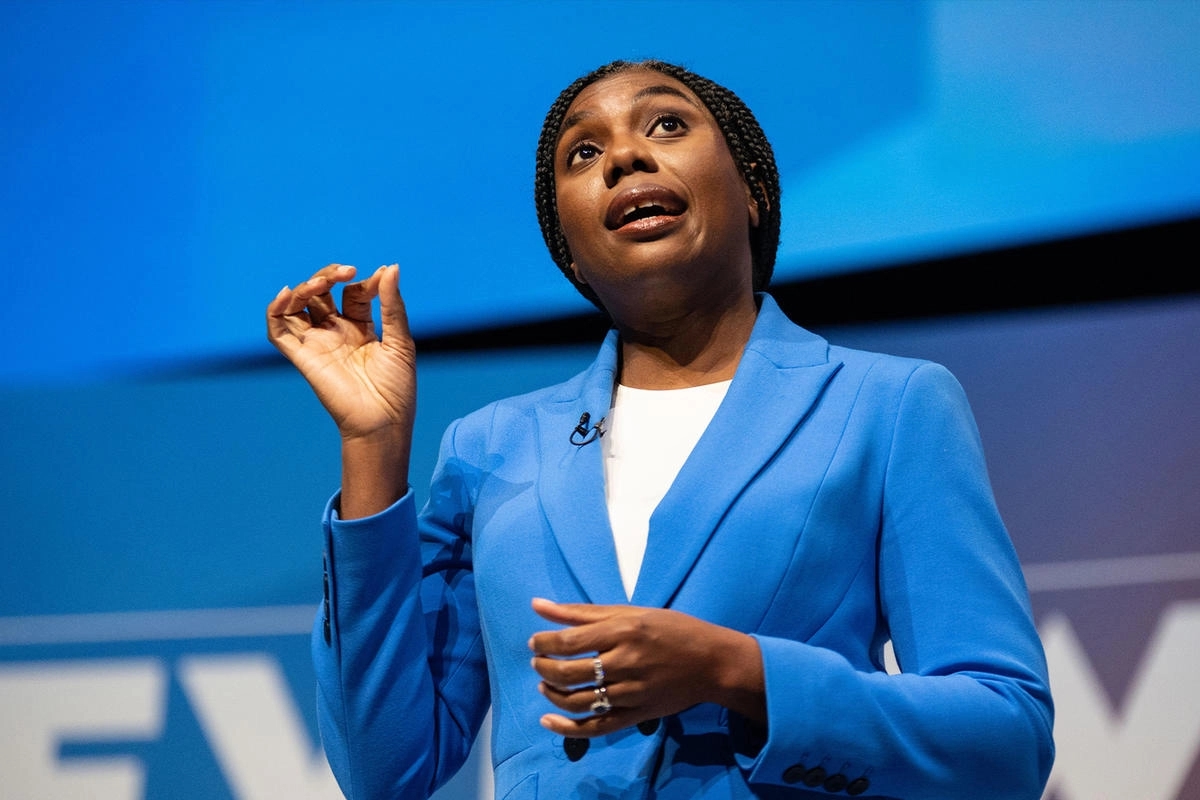
In short, the Conservatives are showing true signs of life. The results of the 2026 local elections were not as bad as expected, and they looked poor in part because they were being compared with unusually strong results in the previous electoral cycle. The Tories won the Aberdeen South parliamentary by-election with 49.5% of the vote, leaving Reform in third place with 8.6% – several times lower than its nationwide polling numbers. Moreover, this was the first Scottish by-election won by the Conservatives in half a century.
This was the first Scottish by-election won by the Conservatives in half a century
The Tories’ long-term prospects are impossible to predict. They may gradually recover under the firm hand of Badenoch, but it may also turn out that what we took for signs of life were merely bumps that made the corpse jolt.
Reform also has a more radical rival on the right – Restore Britain, founded by former Reform member Rupert Lowe. Like Reform, Restore too is “viciously attacked by the establishment.” It has also been publicly endorsed by Elon Musk and has already won 7–9% in several elections.
Lowe is popular among Reform supporters, particularly those who voted for the party in 2024 but do not see Farage as being radical enough. However, if Reform drifts to the right under the influence of this faction, it will ultimately lose the center, where elections are still won.
The electoral pen
Institutional weakness, an incomplete program, and high unfavorability ratings could trap Reform in a kind of electoral pen. Its outer boundary is made up of the many voters who find Farage and his party unacceptable, as even some people who are planning to vote for Reform sometimes say in focus groups that they will do so while holding their noses. Its inner boundary consists of the most radical supporters, who are ready to switch to Restore if Reform tries to become more moderate – for example, if it refuses to hold the referendum on restoring the death penalty as demanded by Lowe.
Institutional weakness could prevent Reform UK from convincing voters that it is capable of governing effectively. There is a gap between support for the party and perceptions of its readiness for exercising power — an Ipsos poll conducted in late June 2026 showed that support for Reform was significantly higher than the number of people prepared to trust it to form a government (and the latter figure fell from 29% last September to 21% earlier this summer). With Reform and Labour hovering around comparable polling numbers, 30% overall still preferred to see Andy Burnham as prime minister, while only 16% chose Farage.
Looking competent is especially important for a party that is deeply unpopular beyond outside its base of loyal supporters. This is a feature of the first-past-the-post system: whatever your overall polling numbers, what matters is beating your opponent by a single vote in a given constituency. As tactical voting becomes more popular, some voters cast their ballots for the party that can stop a candidate they dislike.
Here Reform is at a real disadvantage. A YouGov poll published in early July 2026 shows that around 62–63% of Britons have a negative view of Farage's party. When compared with the Conservative Party the overall figure for support is comparable, but 39% viewed the Tories “very negatively,” as opposed to 53% in the case of Reform – this a mere two years after the Tories suffered their worst electoral defeat in history.
Farage himself is doing no better. According to Pollcheck, as of Aug. 1 he ranked last among party leaders, with a net favorability rating of –22.3%, while his main rival on the right, the Conservatives' Badenoch, stood at +1.7%.
How the story ends
Forecasting at a point of bifurcation is a thankless task. Broadly speaking, two medium-term scenarios are emerging: Reform could replace the Tories as the main party on the right, or it could end up in its own electoral pen, expansive but with no way out.
For Farage’s party to succeed, it needs to halt its decline in the polls, become a professional political institution, and establish itself in the eyes of right-wing voters as the main means of removing Labour from power – and it needs to do so before investigations and internal infighting undermine voters' confidence in Farage and his movement. If Reform succeeds, it would attract not only tactical voters (for whom defeating the “left” is the overriding priority), but also higher-caliber candidates and staff.
Reform UK could replace the Tories as the main party on the right or end up in its own electoral pen, expansive but with no way out
But the opposite outcome is entirely possible: the party could retain its high unfavorable rating and remain unable to move beyond its current base, while also failing to professionalize. Meanwhile, the “revived” Conservatives could win back some of their erstwhile supporters who are currently holding their noses while voting for Reform.
In short, the populist tactics that enabled Reform to grow so quickly are now holding it back, making it harder to turn a “party of the aggrieved” into a party of government.
And of course, there is the separate question of what will happen with Farage himself. He has already shown that he can pursue his goal for decades and get back on his feet after defeats. But he has now set himself a new task – to create a party capable of crushing or absorbing one of the oldest political institutions in history. The Conservatives need only avoid losing, while Farage needs to win. The moment of truth is approaching for Farage and Reform UK.