Although the ceasefire agreement in Gaza has led to a reduction in the intensity of fighting in the region, the promised “day after the war” has yet to arrive. Donald Trump’s Peace Council fund for Gaza has not received a single contribution, and Israel continues to eliminate members of the Hamas leadership. Neither international stabilization forces nor a temporary Palestinian administration have entered Gaza. Instead, Hamas has retained control over western Gaza and refused to disarm, while Israel controls more than half of the Strip and continues carrying out targeted strikes. Meanwhile, more than a million Palestinians are still living in tents or among the ruins of their homes. More than six months after the ceasefire agreement took effect, The Insider spoke with Gaza residents about what life in the enclave is really like.
The only thing that continues to function reliably in the Gaza Strip is the internet. “In that sense, Gaza is better than Russia,” The Insider’s interviewee Musallam jokes. According to him, freedom of speech is not formally restricted, but people are still afraid to speak out “against anyone.” “Though, to be honest, politics, freedom of speech, and all that do not concern them much right now. Everyone is focused on survival: looking for food, water, work,” he explains.
Musallam is a 32-year-old doctor living in western Nuseirat, near the Mediterranean Sea. His house survived the war. “I’m one of the few lucky ones. There were airstrikes in western Nuseirat, but no ground invasion. In that sense I was fortunate. If the war had continued, we would have ended up in a very bad situation.” According to Musallam, unlike in Israel, Gaza has neither bomb shelters nor warning systems.
Trump’s plan and its failure
The war in Gaza began after Hamas attacked Israel on October 7, 2023, in what was the deadliest massacre of civilians in Israel’s history. The terrorists killed more than 1,200 people and took approximately 250 hostages. In response to the attack, Israel declared war on Hamas, and tens of thousands of people were killed in the resulting conflict. A ceasefire agreement between Israel and the Palestinian terrorist group Hamas only came into effect in the Gaza Strip this past October.
Under the terms of the agreement, Israel withdrew its troops from roughly half of the areas where fighting had taken place and released around two thousand Palestinian prisoners. Hamas, for its part, handed over the last surviving hostages, along with the bodies of those who had died.
In November, the UN Security Council passed Resolution 2803, approving U.S. President Donald Trump’s peace plan for Gaza. It provides for the reconstruction of the enclave, the disarmament and removal from power of Hamas, the deployment of international stabilization forces, and the creation of a temporary Palestinian administration under the supervision of a special body: the “Peace Council,” to be headed by Trump himself.
A formal “truce” with periodic violations is currently in effect in Gaza, and the Strip is divided by the so-called Yellow Line — the boundary between the area under Israel Defense Forces (IDF) control in the east and the area controlled by Hamas in the west. No Palestinians live in the “yellow” zone.
Implementation of the peace plan stalled after Hamas refused to lay down its arms. The group said it would disarm only after the Israeli army withdrew from the enclave and on the condition that the plan promised to lead to the creation of a Palestinian state.
According to Israeli military expert David Sharp, there are currently no international stabilization forces inside Gaza, nor is there a temporary Palestinian administration as envisioned under Trump’s plan. Civilian administration remains in the hands of Hamas.
The Yellow Line: what the IDF is doing in Gaza
As Sharp notes, by the end of May the IDF controlled just over 60% of Gaza, and the Israeli army had advanced roughly 10% deeper into the enclave since the start of the ceasefire, destroying tunnels, weapons depots, and potentially dangerous buildings in the territory it controls while also eliminating Hamas militants and carrying out limited strikes on the group’s military infrastructure in other parts of Gaza.
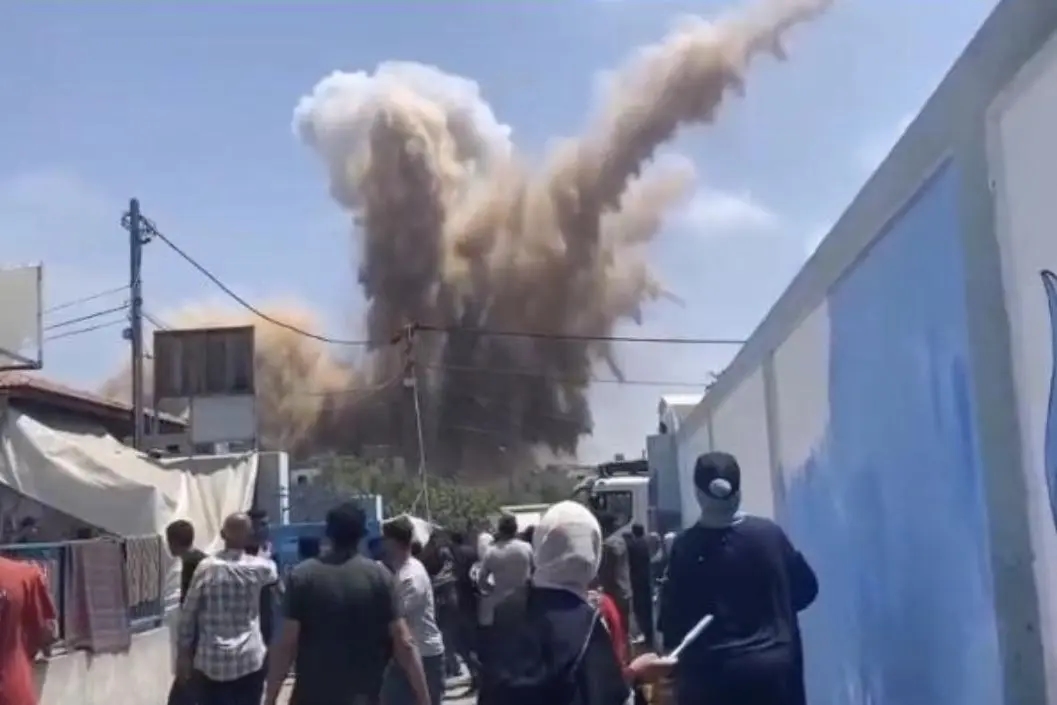
Sharp emphasizes that in the “yellow” zone, the Israeli army demolishes only buildings designated as part of the terror group’s infrastructure. “AMAN [Israel’s Military Intelligence Directorate] and Shin Bet [Israel Security Agency] gather intelligence very carefully – evidence is required before a building can be demolished,” he explains. According to Sharp, such measures are necessary in order to prevent militants from resuming any activity in this part of the enclave after the IDF withdraws.
Local residents say the intensity of the fighting has declined significantly since the ceasefire, although they still occasionally hear gunfire, artillery fire, and airstrikes. Interviewees confirmed that such incidents occur, even if they are isolated. They target specific groups of people, police stations, and police officers themselves.
Under such conditions, residents do not feel safe. The tension is constant, and the danger remains that full-scale fighting could resume.
Life in tents and among the ruins
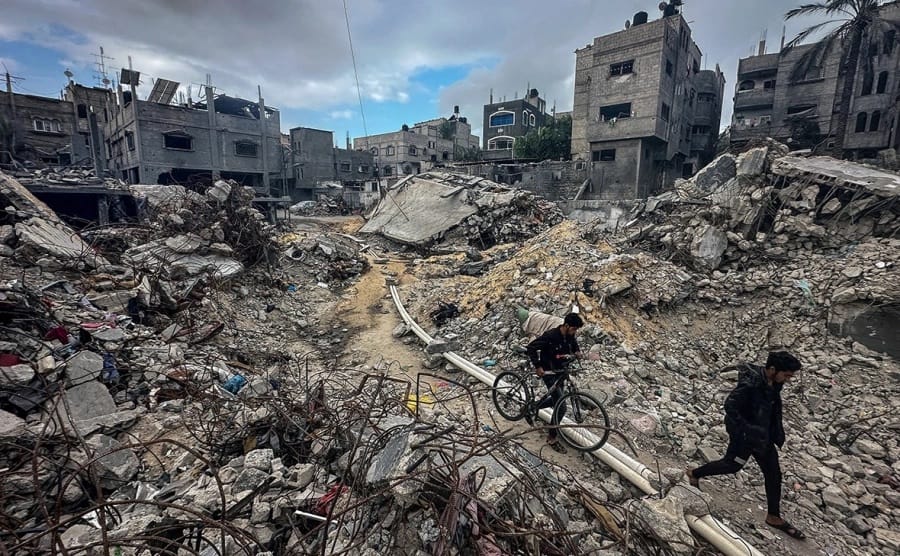
On May 21, the Peace Council’s chief representative — Nikolay Mladenov, who is respected by both the Israeli and Palestinian sides — said in a report to the UN Security Council that around 80% of buildings in the enclave had been damaged or destroyed and that upwards of 70 million tons of rubble were scattered across the territory. According to his estimates, more than a million people are living in tents or partially destroyed buildings.
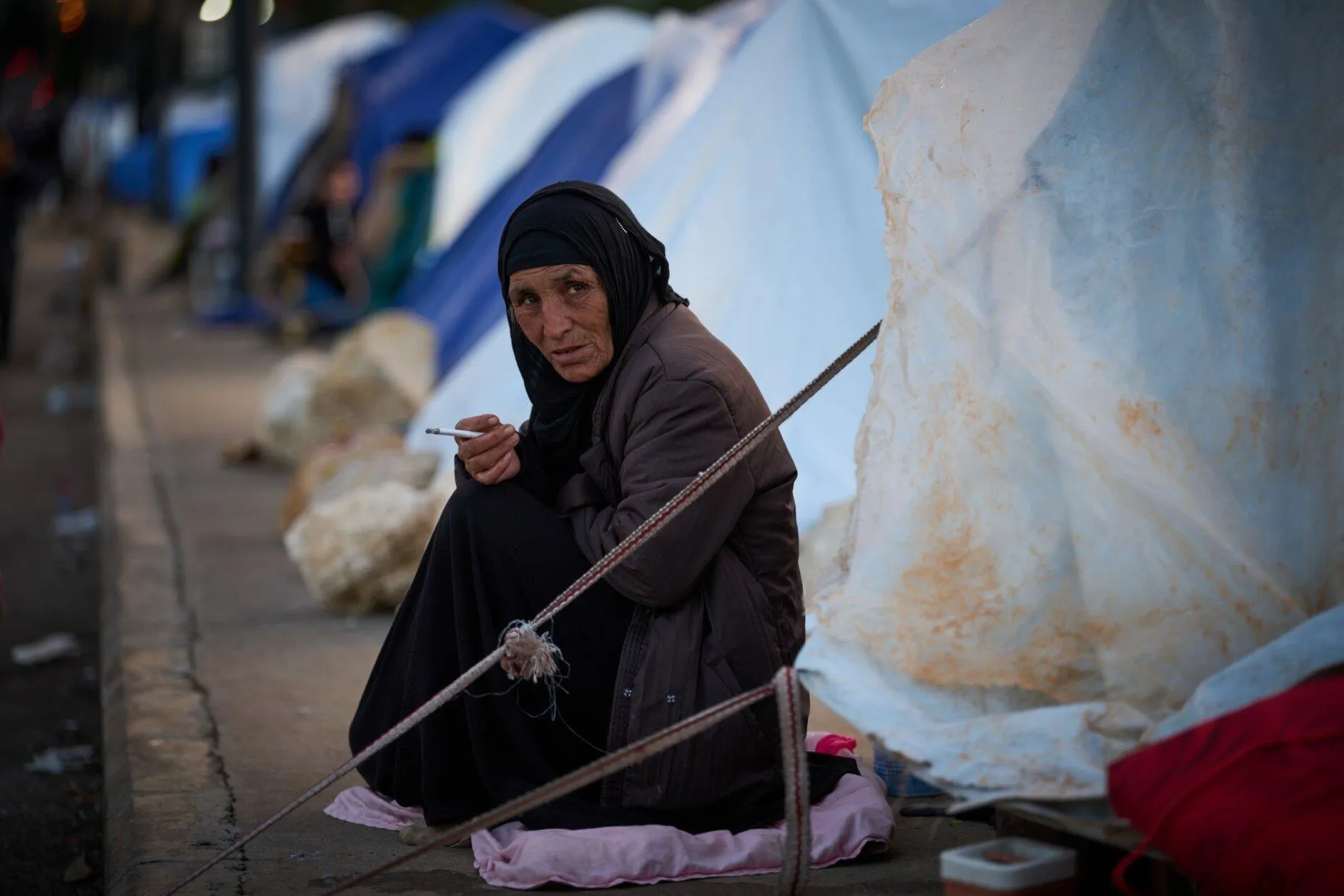
The Insider’s interviewees speak of displaced residents in western Khan Younis and central Gaza living in small tents, schools, and partially destroyed homes, with a lucky few moving in with relatives whose homes remain intact. They say conditions for refugees remain extremely harsh: people suffer from overcrowding and exposure to the elements, lack of privacy, mice and insects, as well as problems accessing electricity, water, and medical care.
Shahad, a 30-year-old resident of Gaza City who lost both her home and her handmade accessories business during the war, says destroyed homes are not being rebuilt. “Some families try to carry out temporary repairs, but there is a shortage of construction materials, and restrictions on their import make reconstruction almost impossible,” she explains. Restrictions on imports of certain materials were introduced to prevent Hamas from building new tunnels, but in practice they have also made civilian construction impossible.
In addition to residential buildings, civilian infrastructure across the enclave has also suffered: “for example, Al-Shifa Hospital in Gaza City and the hospital in Khan Younis,” Musallam says. “Some facilities were completely destroyed because airstrikes hit the buildings directly, while others are inaccessible because the area is under the control of the Israeli army.”
Access to food, water, medicine, and the internet
After the October 7, 2023 attack, Israel tightened its control over access to the Gaza Strip, and in March 2025 it completely halted humanitarian aid deliveries before later resuming them under the supervision of new operators. Israeli authorities now say that Gaza is not facing a shortage of humanitarian assistance. In his March 21 report to the UN Security Council, Peace Council representative Nikolay Mladenov said that the number of Palestinians receiving humanitarian aid had risen from 400,000 to 2 million.
At the same time, according to residents interviewed, the enclave continues to face shortages of basic food products and medicines. “Food aid is distributed by UNRWA and charitable organizations. However, the available volumes are insufficient to meet needs consistently,” Shahad says. Musallam adds that the hospital where he works currently has only two of the eight vital medications needed for epilepsy patients, while medicines for cancer patients and people with various chronic illnesses are also in short supply.
Local residents say prices for basic food products have risen sharply in recent months. According to Naji, a 38-year-old industrial engineer, a new class of traders profiting from shortages has emerged in Gaza since the start of the ceasefire. “They wait for any border closure in order to raise prices many times over. Only the wealthy segment of society benefits,” the engineer claims.
Humanitarian organizations deliver water to camps for displaced people – around 20 liters per family. “People are constantly waiting for these trucks. But the water is not always clean: sometimes there is sand or insects in it,” Musallam says.
“There are only the very rich and the very poor in Gaza”
According to Peace Council chief representative Mladenov, around 80% of Gaza’s working-age residents remain unemployed. Locals interviewed by The Insider say economic life in the enclave has yet to recover after the ceasefire. Many businesses have been destroyed, commerce functions only partially, a significant share of residents depend on humanitarian aid, and prices remain high.
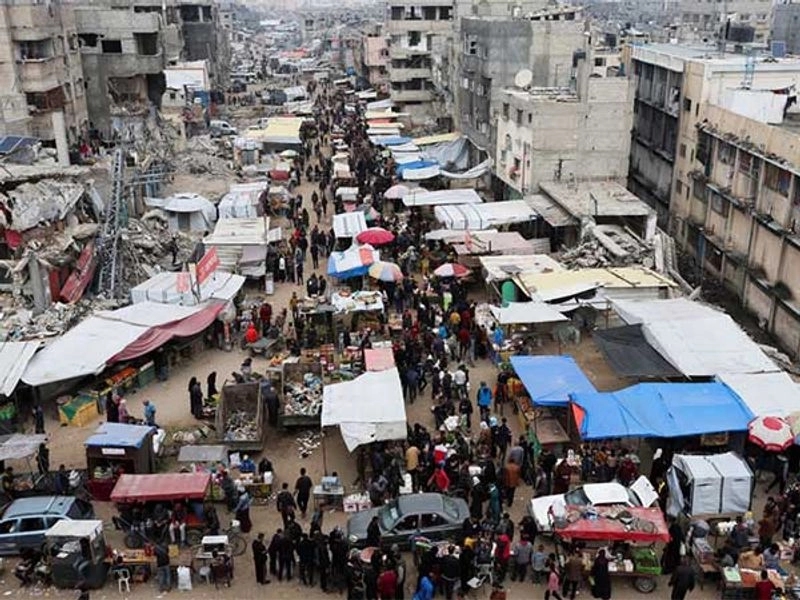
Musallam says that only a small number of people are currently able to work – mainly doctors, nurses, and employees of humanitarian organizations. Naji describes a situation in which there are “two layers” in the social structure of the enclave: the very rich and the very poor. He places traders, NGO employees, and people who managed to raise money through private GoFundMe campaigns in the first category. The second consists of people with no income whatsoever — these are “simply waiting for their turn to receive a food package, water, or cash assistance.”
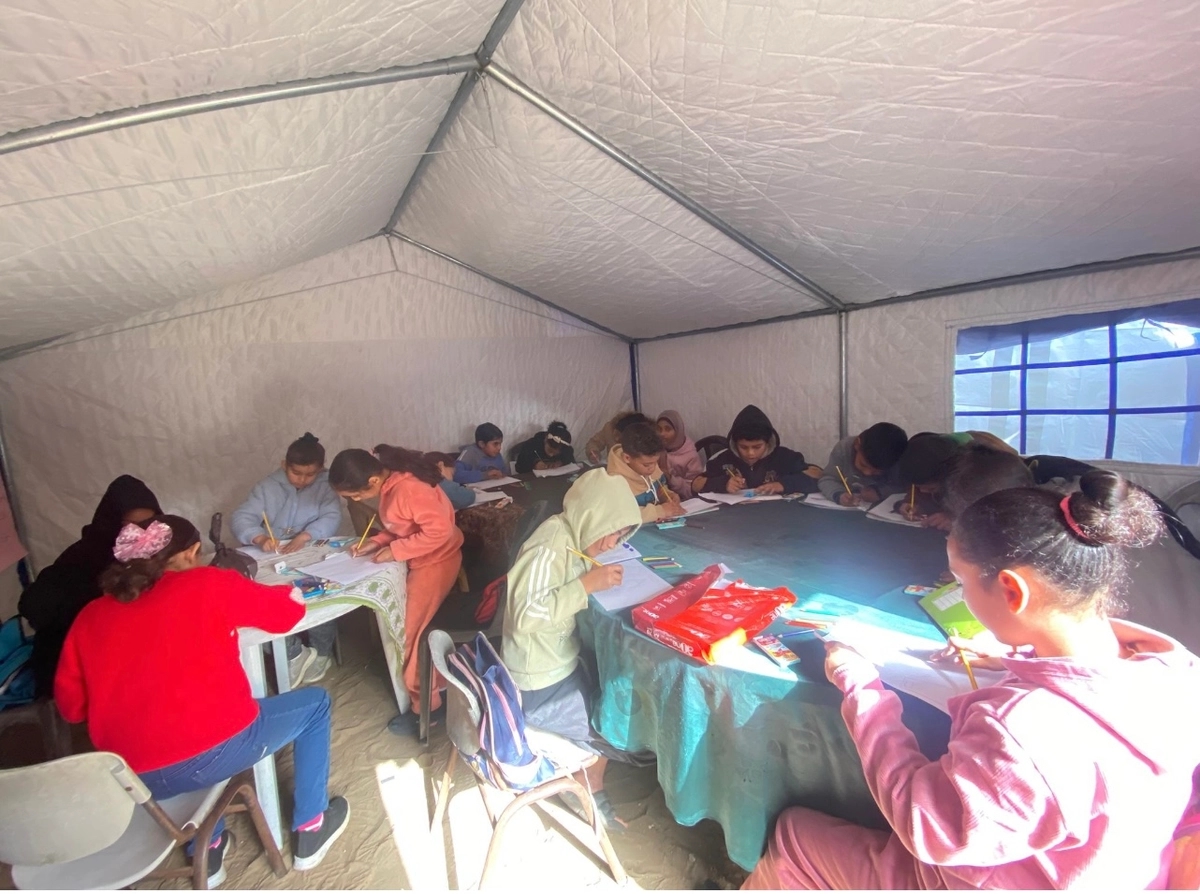
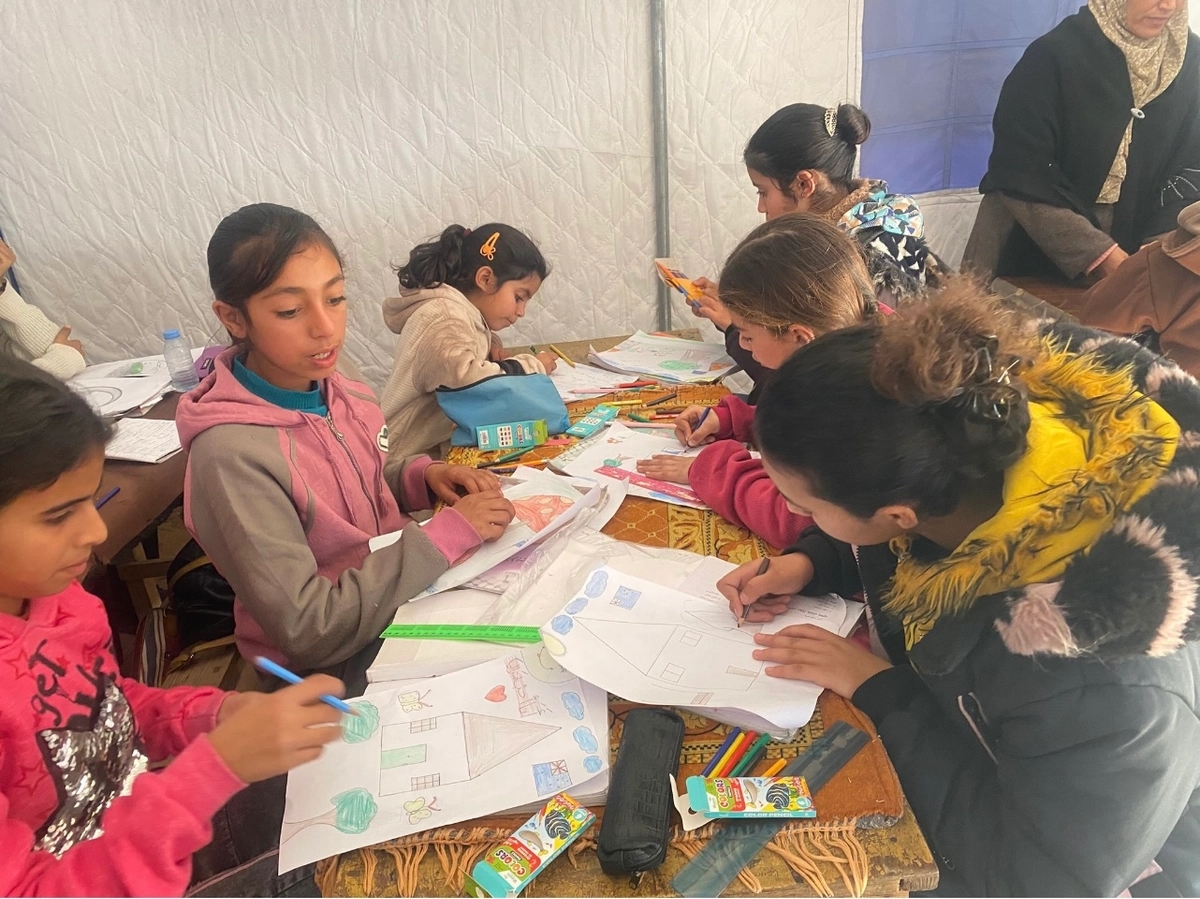
The education system is functioning only partially. Shahad says many schools have either been destroyed or are being used as shelters for displaced families. According to her, some educational institutions are trying to continue operating, but access to their services remains limited. Naji says small private schools and improvised educational centers have appeared in refugee camps, but most people cannot afford to send their children there.
“Many are looking for ways to leave”
Despite the ceasefire, it remains extremely difficult to leave the Gaza Strip. All three interviewees spoke of strict restrictions on departures.
According to Musallam, only a very small number of people have managed to leave through the Rafah crossing on the border with Egypt. Most of them were patients who had long been waiting for permission to evacuate.
“For example, my sister is engaged to an Egyptian man who is currently in Saudi Arabia, and after the ceasefire we tried very hard to find a way for her to leave Gaza and reunite with her husband. We failed,” he says.
Naji says that among those who managed to leave the enclave, some eventually returned, although there are not many of them. “Very, very, very many people are looking for opportunities to leave. Those who return are people who could not find work, housing, or support outside the enclave.”
Frustration and no future
Local residents describe the mood in Gaza as one of exhaustion, frustration, depression, anxiety, and disappointment. “We were constantly promised that infrastructure reconstruction would begin soon and that new funding for Palestinians would be unlocked, but we have seen nothing of the sort,” Musallam sighs. Shahad says that for now residents are not dreaming of anything more than simply returning to the situation that existed before October 7. “At least back then we had a life,” she says with a shrug.
Musallam holds a similar view, stressing that very few residents support war with Israel. “Most people simply want to live their lives. They want political and economic independence. These conflicts and wars do not benefit anyone,” he concludes.