Donald Trump announced that he has postponed previously planned military strikes against Iran thanks to “progress” in conflict settlement negotiations. He had earlier informed Congress of an “end to the war,” but with the peace agreement still in the works, the American president has to choose between maintaining the naval blockade of Iran and launching a new round of hostilities. Despite the blockade significantly curtailing Iran’s oil exports, the CIA estimates that Tehran’s financial and economic system still has a resilience buffer of at least three to four more months — a timeline experts consider unacceptably long for the Trump administration. At the same time, there is no clear understanding of what kind of military campaign could force the Iranian leadership to make concessions given that neither “decapitation strikes” nor the destruction of a significant portion of the country’s armed forces and defense industry have achieved this. It appears that, contrary to Trump’s assurances, the conflict may drag on.
Key points of disagreement between the U.S. and Iran
On May 18, U.S. President Donald Trump announced that he was postponing new strikes against Iran at the request of the leaders of Saudi Arabia, Qatar, and the UAE given that “serious negotiations” on a deal to end the conflict were underway. He also emphasized Iran’s inability to obtain nuclear weapons and Washington’s readiness to resume a full-scale military campaign if the deal fails. Trump later clarified that the talks are proceeding in an “orderly and constructive manner” and that there is therefore no need to rush the talks.
Since April 7, the parties have broadly maintained a ceasefire while simultaneously conducting negotiations to end the conflict. Furthermore, Trump notified Congress that he considers the war against Iran over.
The parties are broadly maintaining a ceasefire while simultaneously conducting negotiations to end the conflict
At the same time, all known peace initiatives have so far diverged on several key points:
- The fate of Iran’s accumulated enriched uranium stockpiles
- The operational status of Iran’s nuclear facilities
- Control over the Strait of Hormuz
- Payment of compensation for damages incurred
- Cessation of hostilities against Iran’s regional allies
Publicly available versions of the Iranian plan either directly contradict American proposals or defer discussion of these issues to an indefinite future date, demanding the following conditions:
- Retention of Iranian uranium enrichment capabilities
- Cessation of hostilities against Iranian allies on all fronts (including Lebanon)
- Lifting of the U.S. naval blockade and removal of American and UN sanctions
- Unfreezing of Iranian assets and compensation for war damages
- Withdrawal of all U.S. troops from regions bordering Iran
Trump has repeatedly stated that he does not intend to accept such terms, and on the key issue of handling enriched uranium stockpiles, he insists either on transfer to the U.S. or destruction under external supervision. Meanwhile, Iranian representatives have so far expressed a willingness to transfer only a portion of the stockpiles to a friendly country, and only temporarily.
Therefore, two options remain for achieving a peace deal with parameters acceptable to Trump: maintaining the blockade on Iranian oil exports in the expectation that economic difficulties will eventually force the leadership in Tehran to make concessions, or resuming hostilities.
How the Americans are enforcing the blockade
U.S. Central Command (CENTCOM) announced the start of the blockade at 10:00 a.m. Eastern Time on April 13. According to the press release, the blockade applies to all vessels departing from Iranian ports and ports in adjacent waters, effectively shutting down traffic in the Persian Gulf and the Gulf of Oman.
The blockade involves two carrier strike groups led by the aircraft carriers USS Abraham Lincoln (CVN-72) and USS George H. W. Bush (CVN-77), as well as the 31st Marine Expeditionary Unit of the U.S. Marine Corps. The force totals more than 200 aircraft, 20 ships, and 15,000 personnel.
U.S. forces are enforcing the blockade through both vessel seizures and direct strikes against ships, but the actual control line lies east of the Strait of Hormuz, in the waters of the Gulf of Oman and the Arabian Sea, a measure taken due to the risk of attacks emanating from Iranian territory. This is precisely why U.S. Secretary of Defense Pete Hegseth stated that there is no “blockade of the Strait of Hormuz,” since the strait can in theory no longer be freely navigated without the permission of the U.S. Navy.
According to CENTCOM, as of May 27, 2026, a total of 109 commercial vessels have been “redirected” since the blockade began, with four more ships “immobilized” by force. By early May, a total of 70 tankers had been reportedly prevented from entering or leaving Iranian ports. Those tankers’ combined carrying capacity was just over 166 million barrels, and the financial damage to Iran was estimated at more than $13 billion.
In reality, “shadow fleet” tankers disable or spoof their identification signals, making their detection on the open sea a fairly complex task. According to Vortexa estimates, more than 100 tankers and gas carriers have successfully breached the blockade since it began. At the same time, TankerTrackers reports that as of May 12, Iran had failed to export a single shipment of crude oil by sea (excluding petroleum products) since mid-April.
More than 20 tankers have accumulated near the terminal on Kharg Island (compared to four vessels before the blockade began). Some are likely being used as floating storage sites, as onshore storage capacity is nearing exhaustion. The port of Chabahar now holds 14 tankers (the pre-blockade average was five), eight of which are carrying oil previously intercepted and “redirected” by U.S. forces.
How Iranian forces are fighting the blockade
U.S. forces have effectively destroyed Iran’s navy, but the Iranian command still retains a “mosquito fleet” consisting of a large number of small, fast patrol boats. Together with mines, land-based launch systems, and drones, these assets maintain an effective blockade on commercial vessels attempting to independently transit the Strait of Hormuz.
However, patrol boats and drones cannot protect Iranian tankers themselves, meaning Iran’s blockade serves as a pressure tool against U.S. allies in the Persian Gulf and also puts pressure on global energy markets, while the American blockade exclusively targets Iran’s oil export sector. Iranian authorities have also declared their intention to monetize control over the Strait of Hormuz in one way or another and to make this issue part of any future negotiations.
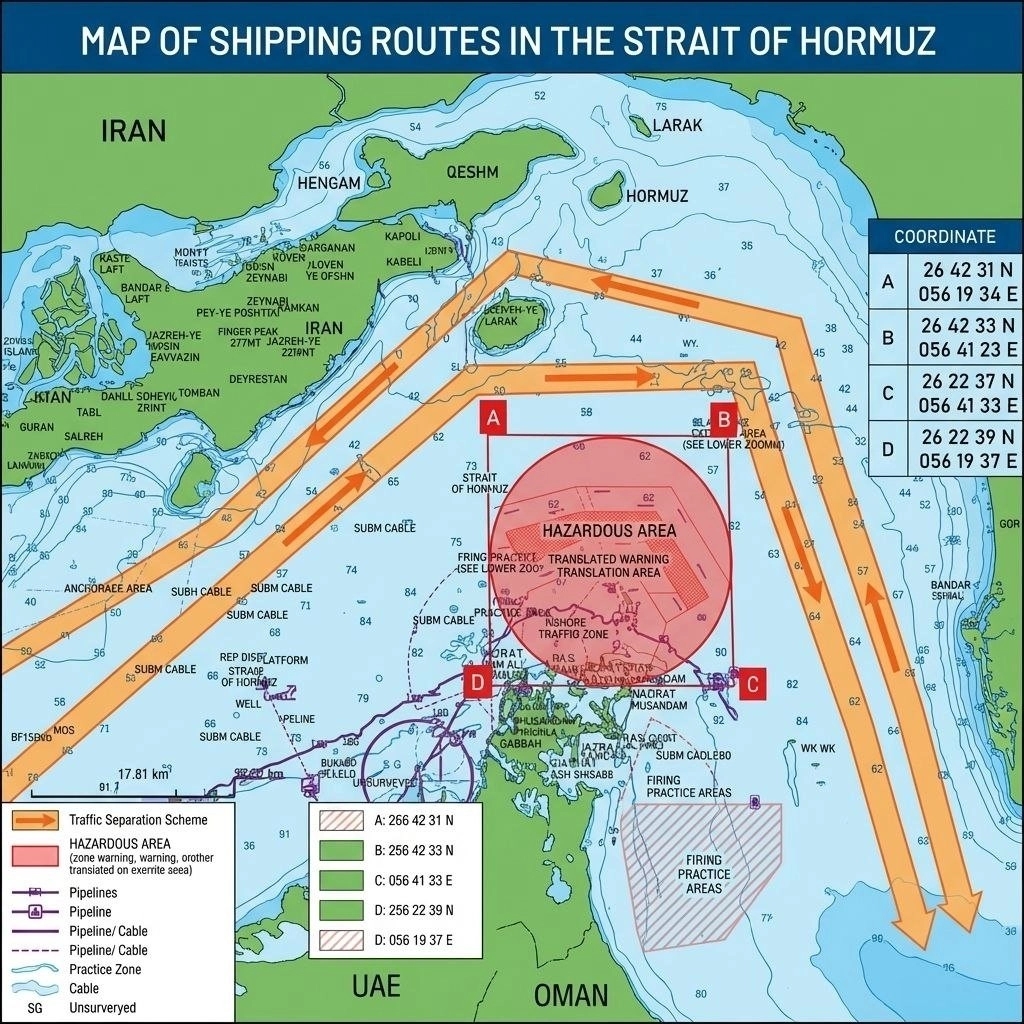
The maritime “guerrilla war” in the Strait of Hormuz — in which Iranian patrol boats patrol the waters, lay new minefields, and seize and attack vessels breaking the blockade, while U.S. forces attempt to stop them — has involved a collection of fairly significant combat incidents, each of which could potentially have ended the ceasefire.
In early May, the sides exchanged strikes, with attacks occurring against Qeshm Island and the port of Bandar Abbas. In late May, U.S. forces struck at boats laying mines and onshore launch sites, after which Iran attempted to attack an air base in Kuwait. Despite the ceasefire, since April 7 Iran has launched at least 320 drones and missiles at targets in neighboring countries and adjacent waters.
How the blockade is affecting Iran’s situation
The damage to Iran from the hostilities is estimated at $270 billion, comparable to the country’s pre-war annual GDP. By the end of 2026, its economy will likely have contracted by 10%. Oil export revenues at high global prices could have mitigated the losses, but the U.S. naval blockade is forcing Iran to stockpile oil in onshore tanks and tankers. Loading fell from 2.1 million barrels per day in April to just 640,000 barrels per day in May 2026.
Iran’s oil stockpiles in tankers outside the U.S. Navy’s control zone have dropped from 122 million barrels to 89 million barrels, and an increasing number of tankers are falling under U.S. sanctions, complicating deliveries to Chinese refineries. According to Kpler estimates, if the current situation persists, Iranian oil export revenues will fall to zero within 60-70 days even in the absence of a new military campaign.
If the naval blockade is maintained, Iran’s oil export revenues will drop to zero within 60-70 days
Economic difficulties are mounting inside Iran: annual inflation exceeds 50% (over 100% for food), the national currency is depreciating, and between 3.5 and 4.5 million Iranians have fallen below the poverty line. Nevertheless, the Iranian leadership maintains control of the country and, according to CIA estimates, has a resilience buffer of at least three to four months despite the blockade.
The Hormuz deadlock could drag on
Iranian forces have been maintaining a blockade of the Strait of Hormuz since March 2 (with a brief formal pause on April 17-18). Since April 13, the U.S. naval force has established its own blockade. The combined blockades are effectively restricting Gulf oil supplies to the global market — both Iranian oil and oil from third countries. Before hostilities began on Feb. 28, an average of 138 vessels transited the Strait of Hormuz each day. In the first half of May, that figure fell to approximately 10 vessels per day. Iranian oil exports have, by all known estimates, ceased entirely.
Iran refuses to stop obstructing maritime traffic through the strait as long as the American blockade continues, and Tehran plans to maintain control over the strait going forward. Meanwhile, Trump’s recent statements suggest that he is not prepared to lift his own blockade until a comprehensive agreement with Iran is reached and a return to the pre-war status quo is achieved.
The demining of the Strait of Hormuz that was announced by Trump has stalled: according to U.S. Defense Department estimates, the process will take six months and can only be begun after the conflict ends. An initiative to provide U.S. naval escorts for vessels from neutral countries also failed. Despite reports that U.S. forces have been quietly escorting commercial ships through the danger zone, CENTCOM has denied that this is happening.
Demining the Strait of Hormuz will take six months
Meanwhile, the war with Iran has become a domestic political problem for the Trump administration. The official cost of the operation has reached $25 billion, but a more realistic estimate (which includes the cost of lost weapons and damage to military facilities) amounts to $40-50 billion.
Over the brief duration of the conflict, U.S. forces have expended between 25% and 50% of their total stockpiles of precision-guided munitions and surface-to-air missiles. Replenishing these stocks will take the defense industry between 42 and 64 months.
The same applies to certain types of military equipment. For example, between 24 and 30 MQ-9 Reaper reconnaissance-strike drones have been lost (approximately 20% of the U.S. military’s total fleet), with a combined value of around $1 billion. At the same time, Iran is estimated to have retained up to 70% of its pre-war missile arsenal and mobile launch systems, and the country has regained access to 90% of its underground missile bases.
On April 28, the Wall Street Journal reported that Trump was preparing for a prolonged blockade of Iran, having assessed the options of resuming airstrikes and ending the war as riskier. However, if the Iranian regime’s resilience buffer is indeed three to four months, he will either need to lift the Iranian blockade or else find a way to deal with persistently high global oil prices — and high domestic gasoline prices — ahead of the U.S. midterm elections.
Moreover, there is no clarity on what a new military campaign would look like. “Decapitation strikes” against Iran’s leadership have likely radicalized the surviving regime by significantly strengthening the IRGC’s influence, making an agreement on American terms less likely to be reached.
Before the twelve-day bombing campaign against Iran in June 2025, Tehran was estimated to be 3-6 months away from acquiring a nuclear weapon. Intelligence assessments circulating in the media now put Iran at approximately 9-12 months away from acquiring its own nuclear weapon, even though the most recent joint U.S.-Israeli campaign primarily targeted facilities unrelated to the nuclear program. If no breakthroughs occur in negotiations over the fate of the nuclear program, what lies ahead is either a prolonged standoff in the form of mutual naval blockades with sporadic episodes of military escalation, or a new round of armed conflict. For now at least, a lasting peace appears to have no chance.