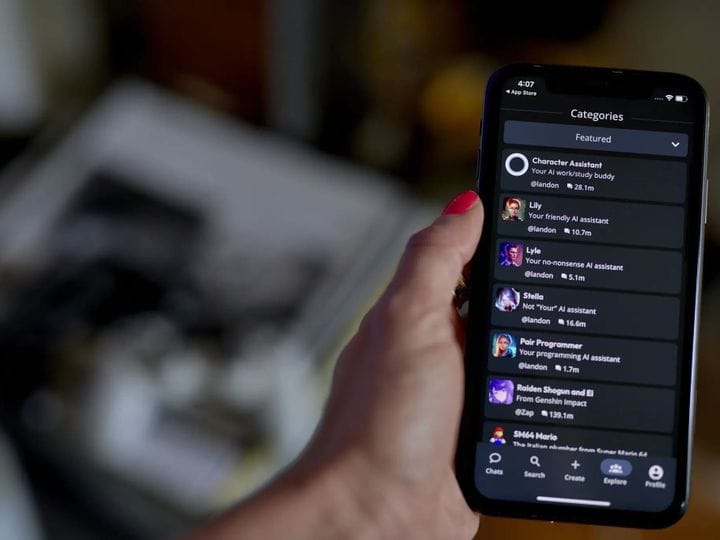
In an effort to avoid leaks of confidential information, the European Parliament has barred lawmakers from using artificial intelligence on work devices in order to avoid leaks of confidential information. The move reflects a broader distrust within EU institutions toward key internet platforms, most of which got their start in the United States. In response, officials in Washington are threatening to punish Europe for what they call “unfair competition and discrimination.” The dispute could force internet platforms to follow different rules on different continents — while also triggering new trade wars, higher customs duties, and demands for the payment of substantial fines.
In 2024, the European Union began enforcing its twin package of digital rules: the Digital Services Act (DSA) and the Digital Markets Act (DMA). The first, at least in theory, is aimed at protecting consumer rights, while the second focuses on market practices. Almost immediately after the deadline for implementing the new rules expired, Brussels fined four Big Tech giants — Google, Apple, Meta, and X — for failing to comply. The total amount of the fines came in at 3.77 billion euros, though the bulk of that sum (2.95 billion euros) was imposed on Google.
The EU’s fines against American Big Tech firms totaled 3.77 billion euros
Both laws are aimed at strengthening the EU’s “digital sovereignty,” the bloc’s ability to independently set the rules of the game in the digital sphere and enforce them regardless of the influence of global corporations and international platforms. That includes algorithmic transparency, limiting the monopoly power of so-called gatekeepers, and, above all, protecting the data of European citizens. In a sense, the EU sees its digital sovereignty projects as a way of returning control over the internet to Europeans themselves.
In addition to fines from the European Commission, there are other examples of this kind of “returning control.” An important shift came in a recent court case between Meta, the owner of Facebook, and the Dutch digital rights group Bits of Freedom, which accused the American company of violating the DSA. A Dutch court ruled that Meta has to allow European users to opt out of algorithmic feeds in its apps and choose chronological ones instead.
A third legislative proposal is sometimes placed in the same category as the DSA and DMA: the so-called Child Sexual Abuse Regulation, or CSAR, more commonly referred to as “chat control.” In its original version, first presented in 2022, the act proposed the widespread scanning of Europeans’ private messages for material involving child sexual abuse. But unlike the DSA and DMA, the initiative faced sharp criticism from the European public and has since been revised several times.
A sore point
Washington reacted painfully, if not outright aggressively, to the proceedings against American companies. Even before the EU issued its final decision on its fines for Apple, Google, and Meta, Donald Trump called the new laws “extortion” and threatened to impose fresh tariffs on European goods.
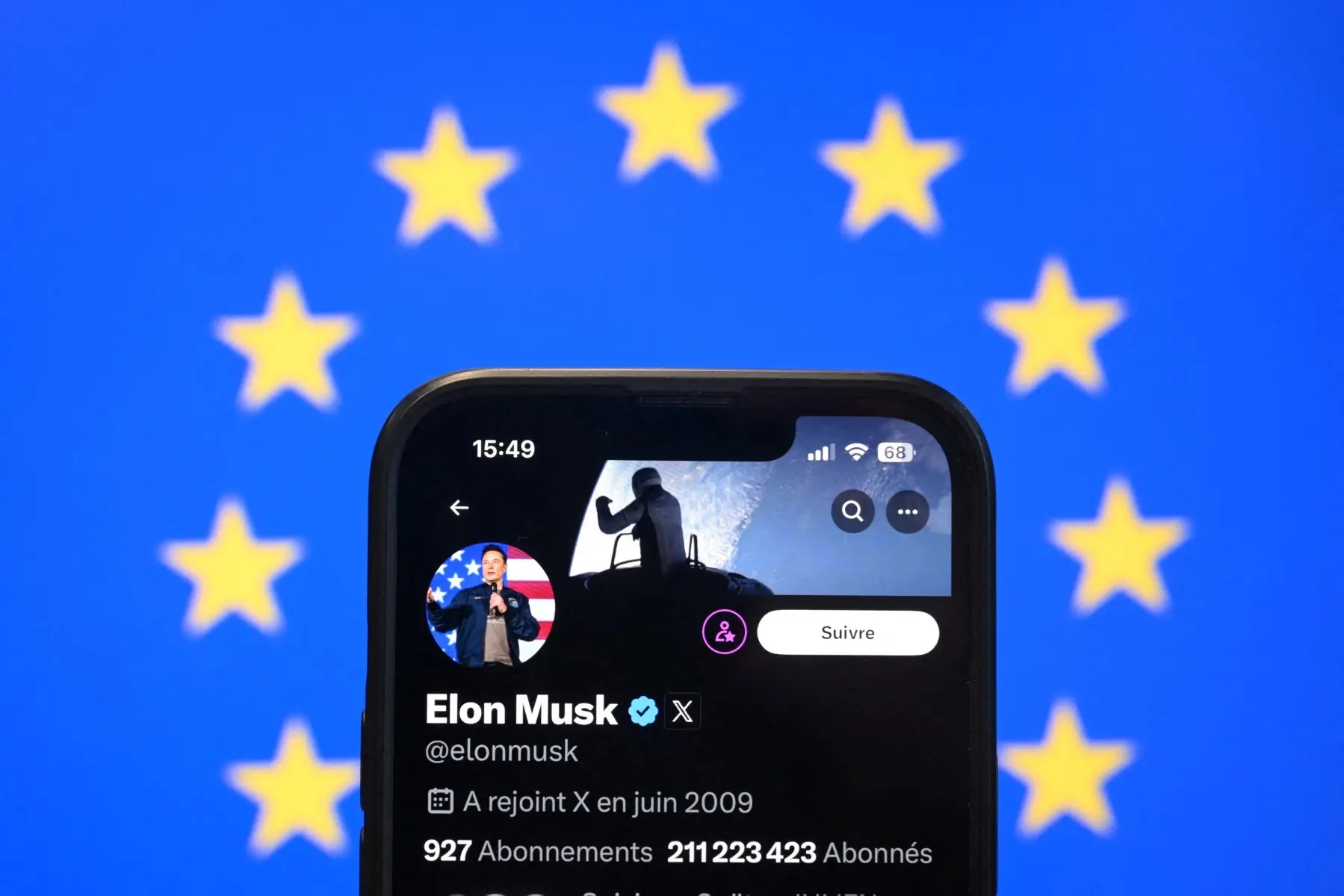
The reaction from X owner Elon Musk was even harsher. In response to the official announcement of the fine, the billionaire wrote that the EU should be “abolished and sovereignty returned to individual countries.” Musk characterized the move as a personal attack and threatened a “response not just to the EU, but also to the individuals who took this action against me.”
After a fine was imposed on X, Elon Musk wrote that the EU should be “abolished and sovereignty returned to individual countries”
Over the course of several days, Musk posted repeated calls on his account for the dissolution of the EU — and of the European Commission in particular, accusing it of “killing Europe.” He also insulted European politicians by calling them “gay,” then barred the European Commission from running ads on X.
Many American officials also criticized the new European rules. Republican congressman Jim Jordan called the DSA a “global censorship law” and accused the EU of abusing antitrust legislation. Secretary of State Marco Rubio said the fine against X was “an attack on American citizens.” And Vice President JD Vance accused European authorities of “censorship” even before they had formally announced their decision.
Censorship or rights protection?
Despite claims from top U.S. officials about “censorship,” the official reasons for the fine imposed on X are not related to the platform’s moderation policies, and they are not connected to widespread accusations that it spreads disinformation and incites hatred.
Instead, the European Commission concluded that changes to X’s account verification system mislead users. Previously, during its time as Twitter, the platform provided a blue verification check mark free of charge to confirmed accounts of public figures and organizations. However, some time after Musk gained control of the company, the check mark was awarded to those who signed up for a paid subscription, creating a false impression for users.
The commission ruled that the decision violated DSA transparency requirements. Users were effectively pushed into a new paid service, while the authenticity of accounts could no longer be reliably assessed. The platform was also accused of opaque advertising practices and of refusing to share data with independent researchers, something that had previously been guaranteed.
Despite the vehemence of the statements coming from across the pond, European officials categorically reject the censorship accusations. As stressed by the European Parliament, the DSA is aimed first and foremost at combating illegal content — material related to terrorism, child sexual abuse, and the like — while leaving broad room for freedom of expression.

The DSA is mainly focused on users’ rights. It applies to all online services, including small applications, with additional obligations for the largest ones (defined as those with more than 45 million users in the EU). The DSA requires platforms to be transparent about moderation, explain decisions to users, and disclose how their algorithms work. Users gain new rights, while services are required to provide clear information about advertising and recommendation systems. The law also bans so-called “dark patterns,” the use of deceptive buttons or AI to “force a user to do something they did not want to do, such as signing up or buying something.”
From a free speech perspective, there are criticisms to be made against DSA, and they have been voiced within EU institutions themselves. The European Parliament, for example, notes that the lack of a single definition of “dark patterns” could lead to enforcement errors. Additionally, experts such as lawyers Inge Graef, Martin Brenncke, and their colleagues warn that platforms may ignore the recommendations and continue using manipulative practices, or, conversely, begin removing perfectly lawful material or features. The same applies to the lack of a clear definition of “illegal content,” which gives platforms ample grounds to remove virtually anything by pointing to vague legislative language (even despite the law’s transparency requirements for moderation).
The invisible hand of the DMA
A handful of American firms almost completely control Europe’s online economy. Google handles around 90% of search queries, Apple sells nearly 40% of all smartphones, Amazon controls more than half of e-commerce in the EU’s largest markets, and Facebook reaches more than 80% of internet users on the continent.
When it comes to digital advertising, Google and Meta receive more than half of all revenue, while Microsoft remains the dominant player in the market for PC operating systems and professional software. Faced with such a concentration of American digital products, the European Union appears to have concluded that ordinary antitrust measures no longer work. As Amanda Lotz, a professor of media studies at the University of Michigan, has noted, each of these companies in effect controls its own market niche.
Facebook reaches more than 80% of internet users on the continent, while Google and Meta receive more than half of all digital advertising revenue
It is precisely for such corporations that the DMA introduces a special term: “gatekeeper,” meaning an entity that controls entire market segments and can restrict access to them for other players. In September 2023, the European Commission officially designated the first six gatekeepers: Alphabet (Google’s parent company), Amazon, Apple, ByteDance (the owner of TikTok), Meta, and Microsoft.
Each of these companies provides one or another “core platform service,” from mobile app stores to search engines to social networks, connecting businesses with millions of users. The EU expresses concern that gatekeepers can create what are effectively bottlenecks — areas where monetary flows are almost entirely under the control of the dominant company in a given sector.
The EU position holds that if a company controls a service that is de facto vital, it should not abuse that power. Thus under the DMA, gatekeepers are required to follow a specific list of rules. For example, they must allow users to easily delete preinstalled applications or choose alternative app stores. Companies are also required to open access to data, whether performance metrics for advertising or information generated by business users on the platforms. Prohibitions include the practice of tracking user behavior outside the platform and of unfairly ranking their own products above those of competitors.
The text of the DMA repeatedly uses the word “unfairness,” which is defined as “an imbalance between the rights and obligations of business users” on a platform. If, for example, an app developer or seller gets lost in opaque conditions and requirements and thereby effectively falls under the control of the platform owner, the platform will be considered “unfair.” This consumer- and developer-oriented approach does not at all match the more big-business-friendly practice of U.S. antitrust law, creating yet another point of tension between Brussels and Washington.
American experts and officials, of course, have argued that the predominance of U.S. companies on the list of “gatekeepers” shows Europe’s bias against American technology (even if the inclusion of China’s ByteDance on the same list undercuts such claims). Moreover, the U.S. antitrust committee has expressed complaints about exactly the same firms.
Even so, given current tensions in trans-Atlantic relations, the EU’s digital policy has fueled talk of an economic “Cold War” in the technology sphere. As analysts at the Atlantic Council put it, the new European rules represent a “declaration of independence” from Silicon Valley.
Failure to comply with the DMA can result in fines of up to 10% of a company’s global revenue — or 20% for especially egregious violators. As a last resort, demands could even be made to break up corporations into smaller entities.
Here there is actually an American precedent. In 1982, after antitrust proceedings, the U.S. government broke up telecom giant AT&T into smaller regional companies. And in 2001, Microsoft nearly suffered a similar fate before the matter ended in a settlement.
The Trump threat
The EU’s position has provoked not only criticism from Washington, but also retaliatory policies. In July 2025, the House Judiciary Committee published a report titled “The Foreign Censorship Threat: How the European Union’s Digital Services Act Compels Global Censorship and Infringes on American Free Speech.”
The American document cites unspecified, non-public EU materials to make the claim that the DSA’s content moderation requirements effectively force platforms to suppress political discourse worldwide, including in the United States. According to their account, the DSA is even used to censor “humor and satire.”
The legal community sharply criticized these allegations. One open letter notes that the House report entirely ignores the safeguards for the protection and promotion of free speech and expression envisaged by DSA and points out the fact that the law’s requirements largely align with long-established U.S. standards for removing illegal content. Moreover, the authors emphasize that there is no evidence American companies are treated any differently from European or Chinese ones.

Nevertheless, in August 2025 Trump warned on social media that “all countries with digital taxes, legislation, rules, or regulations” (that is, essentially any country) would face consequences, warning that: “Unless these discriminatory actions are removed, I, as President of the United States, will impose substantial additional tariffs on that country’s exports to the USA.” Trump followed up by threatening sanctions against European officials. In other words, digital laws adopted by the EU have become yet another pretext for Trump to wield the trade cudgel.
Internet protection measures adopted by the EU have given Trump another pretext to wield the trade cudgel
Representatives of the U.S. trade authorities made it clear that progress on seemingly unrelated issues, such as tariffs on steel and aluminum, could hinge on the rollback of European tech restrictions. Brussels rejected even the idea of bargaining on this front, insisting that protecting its digital market is a sovereign right of the European Union.
Such a combative reaction may be linked to the particular warmth Trump shows toward major technology companies. Google, Apple, Meta, and X have long been among the biggest lobbyists in the United States, investing tens of millions of dollars in outreach to Congress and the White House. Personal ties also play a significant role, with leading tech entrepreneurs and investors actively seeking to build relationships directly with Trump and the Republican camp: Elon Musk spent $277 million supporting Trump’s election campaign, Mark Zuckerberg donated $1 million to his inauguration, and Google co-founder Sergey Brin paid a high-profile visit to Trump’s Mar-a-Lago residence.
The chat controversy
The most controversial element of the EU’s digital legislation has been the proposal of so-called “chat control.” Initially, the plan envisaged screening users’ private communications for content related to child sexual abuse. It even contemplated scanning end-to-end encrypted messages — which, according to critics, would amount to the de facto installation of spyware on every European citizen’s phone.
Activists and scholars warned that the mass, indiscriminate interception of users’ messages before encryption would undermine the fundamental principles of online privacy and call into question basic human rights. Moreover, experts repeatedly emphasized that no existing technology is capable of reliably detecting illegal material without generating massive numbers of false positives coming from harmless content.
No extant technology is capable of reliably detecting illegal material without generating a vast number of false positives
Supporters of the proposal, including child protection groups and certain law enforcement agencies, argued that chat control was necessary to catch criminals. Unsurprisingly, disagreements arose even within European institutions: at the end of 2025, Denmark, which held the EU Council presidency, refused to back the initiative.
Ultimately, the bill was softened. Brussels abandoned the requirement to bypass encryption, opting for less invasive tools and voluntary information sharing. The mandatory element of widespread surveillance was removed.
However, some of the risks persist. Even in its revised form, the initiative limits anonymity, requiring user identity verification and age confirmation when registering for certain services.
This undoubtedly puts many potentially vulnerable people at risk. Journalists often use anonymous accounts or encrypted services to communicate with sources. Whistleblowers reporting corruption or other violations also rely on confidentiality. Activists, human rights defenders, and refugees, both outside and within the EU, could be endangered if their communications are exposed.
The same applies to LGBTQ+ people, especially in countries where homosexuality and transgenderism are criminalized or heavily stigmatized. They often have to rely on anonymous communication channels to safely connect with their communities and support networks.
The U.S., however, has different concerns. After all, the Trump administration has no qualms about disregarding the privacy of its own citizens. Instead, Washington is far more focused on the interests of its tech platforms, which are ramping up lobbying efforts both in the U.S. and Europe. If the United States continues imposing tariffs, suppliers of high-tech products from semiconductors to software could find themselves embroiled in a full-scale trade war.