
At this moment, no one can say with certainty who controls the Strait of Hormuz. Everyone understands that the United States holds all of the strongest cards, but Iran still determines the stakes. By dispersing its forces and disregarding international maritime law, Tehran has effectively deterred commercial shipping through the critical waterway, inflicting enormous costs on the Gulf states and the global economy. To break this strategic deadlock, the parties will have to return to a diplomatic settlement — though prospects for such an agreement remain dim, writes Dr. Emma Salisbury, a non-resident senior fellow in the National Security Program at the Foreign Policy Research Institute.
As the war between Iran, the United States, and Israel approaches the end of its fifth month, the Strait of Hormuz has stopped being a hypothetical flashpoint in wargaming scenarios and has instead become a live demonstration of what maritime chokepoint denial actually looks like. The uncertainty around the future of passage through the Strait and the continued danger to commercial shipping has had profound impacts on the global economy, and things do not look likely to improve in the near future. Does Iran set the rules of the game or does the United States retain effective means of ensuring freedom of navigation in and out of the Gulf? There is no clear answer to this question — because both are true, albeit in different ways.
A sea war
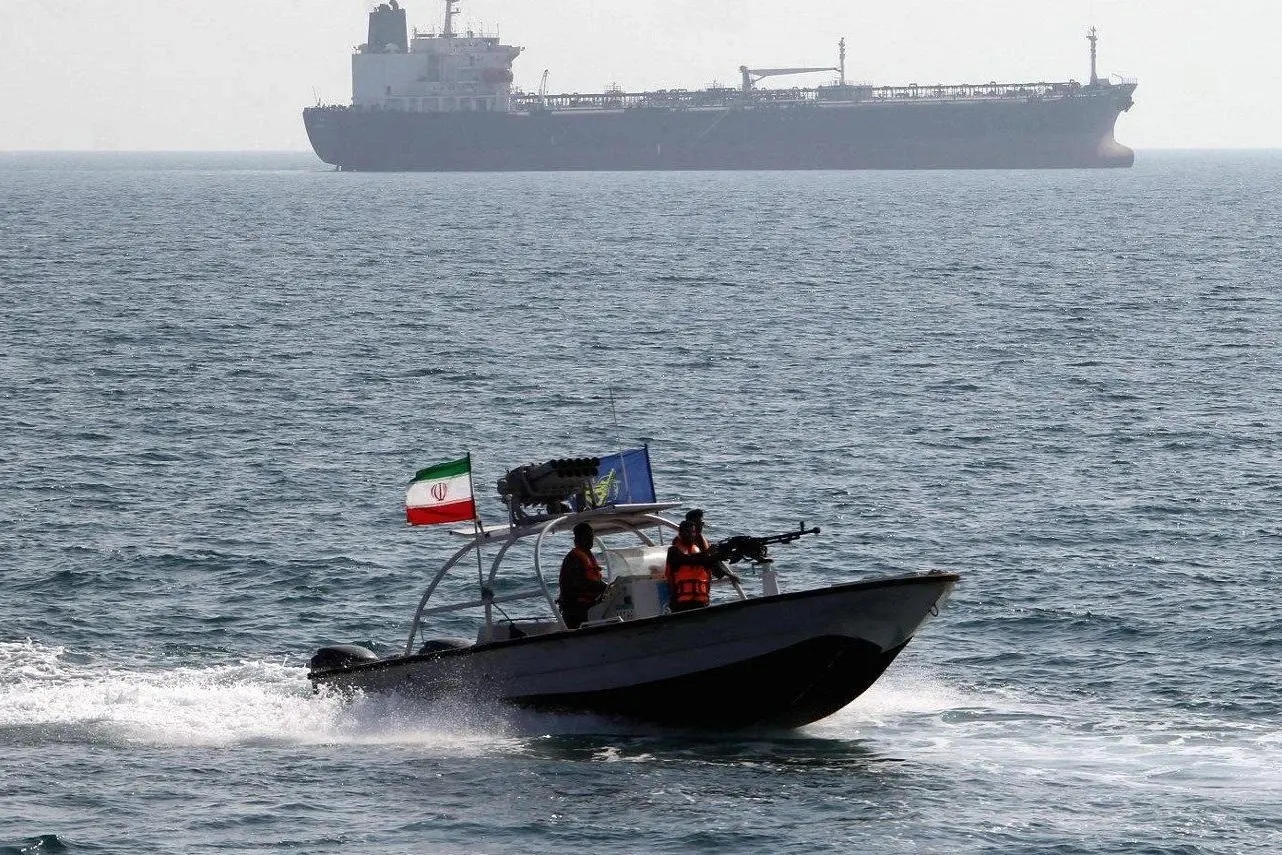
At its narrowest point, the strait is only 21 nautical miles across, with navigable shipping lanes running largely through Omani territorial waters. The close proximity of these lanes to the Iranian coastline means that Iran does not need a traditional blue-water navy to threaten them – indeed, most of Iran’s warships were destroyed very quickly by U.S. airstrikes at the start of this conflict. All Iran needs to do is to render the risk of transiting through the Strait high enough to make passage too dangerous for ships and their insurers. Achieving that requires capabilities that Iran has in spades — small fast attack boats, mobile missile and drone launchers, and naval mines. This is what we call sea denial: making waters prohibitively risky for the other side to operate in, even if one doesn’t outright control them.
All Iran needs to do is to render the risk of transiting through the Strait high enough to make passage too dangerous
The war has allowed us to see the four interweaving layers of the Iranian strategy for sea denial. The first layer is the swarm, carried out by a large fleet of attack craft. These boats are small, fast, and armed, designed to overwhelm a target through their weight of numbers and maneuverability rather than by individual lethality. The craft are hidden along a large stretch of the Iranian coastline, making them easy to deploy and hard to hit with airstrikes while berthed.
The second layer is land-based and mobile: truck-mounted launchers for anti-ship missiles and drones dispersed throughout the mountainous coastline. These launchers use “shoot and scoot” tactics, exploiting the natural cover offered by the terrain while severely complicating U.S. targeting in response.
The third layer is under the water: midget submarines that can both ambush ships and lay mines in the shallow waters of the Strait. Iran’s stockpile of naval mines likely runs into the thousands, and the mere fact of the capability works as a deterrent — given how hard it is to spot them, merely the plausible threat of mines has been enough to significantly increase the risk of passage.
The fourth layer is legal and bureaucratic. Under the United Nations Convention on the Law of the Sea (UNCLOS), ships retain the right to transit through straits that are used for international navigation, with or without the consent of any adjoining coastal state. Iran has never ratified UNCLOS, but Tehran has attempted to provide a fig leaf of legal legitimacy for its actions by passing domestic law that gives it the right to suspend passage for any ship it deems hostile. Iran has built on this with the establishment of the Persian Gulf Strait Authority, a military-linked civilian body responsible for granting permits and collecting tolls for transit through the Strait. The Authority was sanctioned by the United States almost immediately, with U.S. warnings to Oman not to facilitate any toll arrangement. Still, its true function is to give Iran a mechanism through which it can claim administrative control over the Strait even without physical control over every transit.
The American response has largely followed classic doctrine for countering area denial: first degrading sensors and command-and-control nodes, then mobile launch capability, then the smaller naval assets, all while imposing a naval blockade on Iranian ports to raise the cost of continued non-compliance. Given that sustained minesweeping can only really be done after hostilities have ended, these operations are the best the Americans can realistically do at the moment. Looking at U.S. Central Command’s hitlist shows us an attempt at a systematic attritional campaign waged against Iran’s capabilities to threaten the Strait, though the dispersed nature of these capabilities has meant that success is still rather far off. The U.S. has also struck Iran in retaliation for its attacks on American and partner assets around the Gulf, including in Jordan, Bahrain, Kuwait, Qatar, and the United Arab Emirates (although this does not seem to be doing much to dissuade Iran).
A bottleneck
Prior to the war, an average of around 180 vessels transited through the Strait of Hormuz every day. That number collapsed during the worst points of the conflict, and periodic ceasefires never saw it fully recover. Many of the transits made have been carried out by ships linked to Iran, China, and Russia — all under tight Iranian supervision, running dark with their trackers switched off to avoid sanctions enforcement.
Many other commercial ships are still priced out of attempting passage. War-risk insurance now costs orders of magnitude more than before the conflict, as insurers price in the threat of Iranian missiles, drones and mines. Often this steep cost is more than the value of the cargo — and that’s before adding in potential transit charges (likely paid in yuan to avoid sanctioned financial channels) and operational hurdles put in place by Iran. Even though many American officials insist that transit through the Strait of Hormuz is physically possible, as things stand it is only a brave (and possibly foolhardy) ship captain who attempts it.
As things stand, only a brave (and possibly foolhardy) ship captain attempts transit through the Strait of Hormuz
We should also remember that Iran and the United States are not the only countries with a stake in the outcome of this war. The Strait of Hormuz normally handles the flow of around a fifth of global crude oil supplies and a fifth of liquified natural gas. Much of this is bound east rather than west, as we have seen from the huge impact of the Strait’s closure on countries like Vietnam, Thailand, and the Philippines. China typically accounts for around a third of the oil moving through the Strait, but its ships are the least troubled by either Western sanctions enforcement or the reputational cost of dealing with Iran, so there has been less impact on the Chinese economy.
Meanwhile, the states bordering the Gulf have had to hedge their positions carefully: Bahrain, Kuwait, Qatar, Saudi Arabia, and the United Arab Emirates, all close partners of the United States, have jointly protested to the International Maritime Organization regarding Iran’s transit restrictions, but the Gulf monarchies do not have the military capability to enforce that protest, and they are all absorbing repeated Iranian strikes as retaliation for hosting American forces on their soil. Oman is in a particularly delicate position as the other coastal state on the Strait of Hormuz: the southern shipping lanes pass through its waters and it is a traditional intermediary between Tehran and Washington, but it is under significant pressure from the United States not to give any legitimacy to Iranian toll and permit measures.
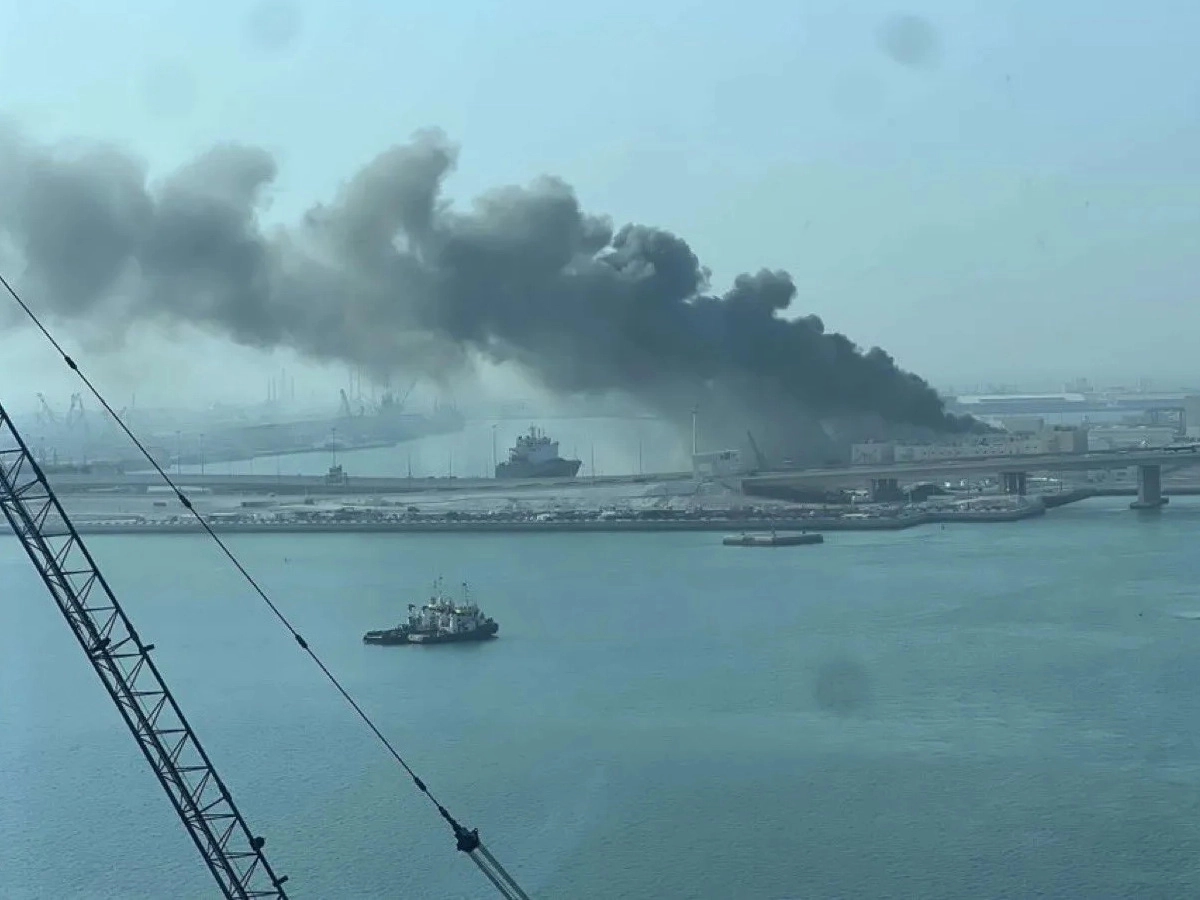
Everything hinges on negotiations
Despite having tracked this war closely since the beginning, I have no simple answer to the question of who controls the Strait of Hormuz. As things currently stand, Iran sets the terms of risk while the United States retains the capacity to set the terms of consequence. Importantly, these are not the same thing. Iran cannot forever close the Strait in the face of a determined American campaign of attrition, as every American airstrike degrades Iranian capabilities a little further. The combination of economic sanctions and a naval blockade is costing the Iranian regime dearly; however Iran can still succeed on its own terms by keeping the risk to transit high enough and the administrative burden off-putting enough to ensure that commercial ships avoid the Strait despite American insistence that it is open. This is a form of maritime control that does not require winning a single naval battle — and it is therefore one that the United States struggles to counter efficiently.
Ultimately, the future of the Strait of Hormuz rests not in the hands of U.S. Central Command, but on the negotiating table. Until there is a durable cessation of hostilities and an agreement over the administration of transit, the practical reality in the Gulf will remain the same: a Strait that is neither open nor closed, moving a small fraction of its normal traffic at a wildly inflated cost, with continued impact on the global economy. Given how the negotiations have gone so far, a timely end is looking like an increasingly remote outcome, but we must hope for reason to prevail.