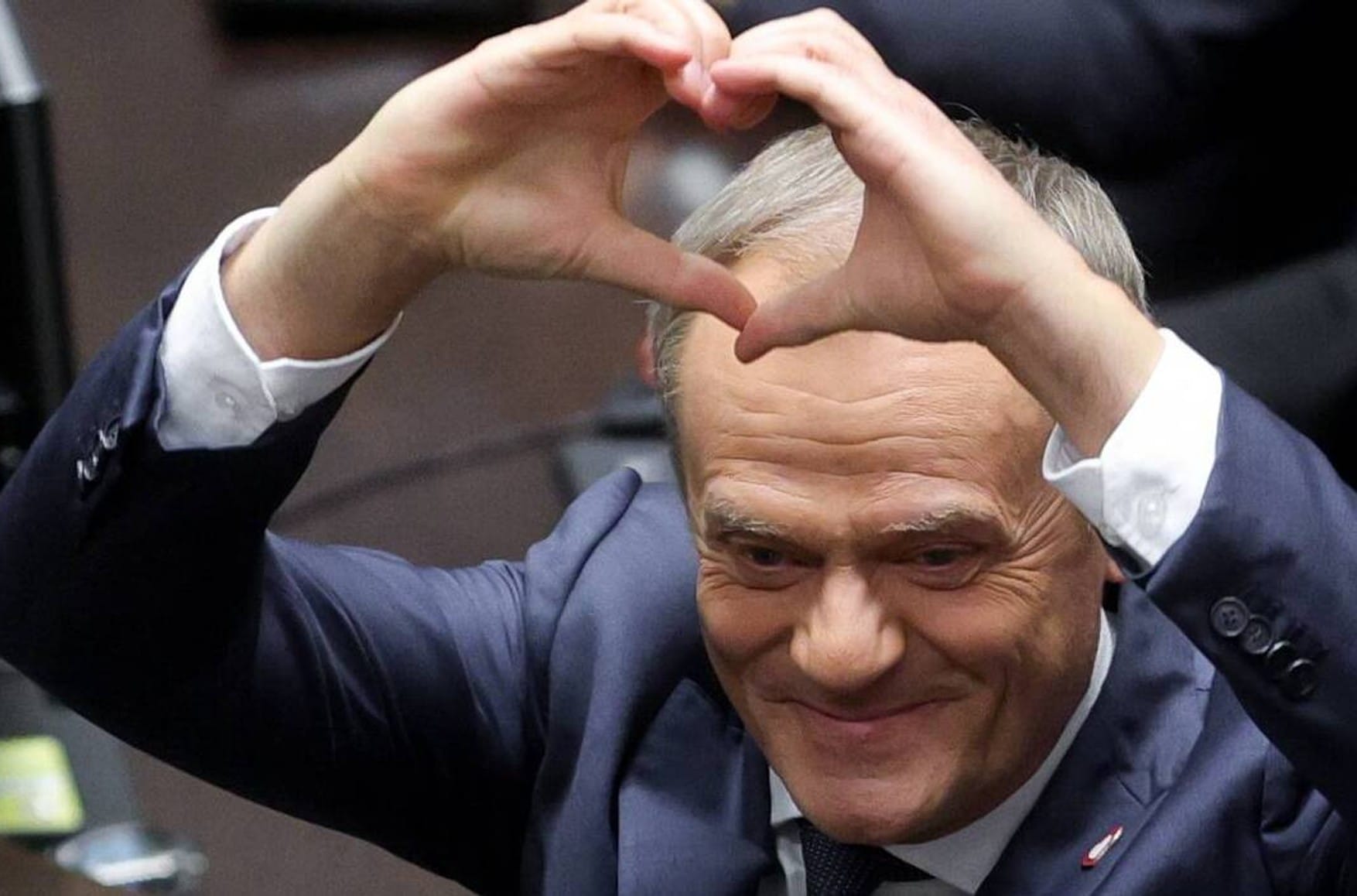

In early 2022, when Russian tanks were massed outside Kyiv, Poland proved to be one of Ukraine’s most reliable and steadfast allies. But four years later, relations have entered a crisis — one fueled by historical grievances and economic disputes. Today, 52% of Poles are opposed to their country supporting Ukraine’s accession to the EU, while 44% favor suspending military aid. Politicians on both sides of the border are actively exploiting these disagreements to boost their own ratings, forgetting about the strategic partnership. Meanwhile, Russia is gleefully fanning the flames of the dispute, Polish commentator Pavel Reshka writes.
Family quarrels
What is happening today at the level of the Polish and Ukrainian governments sometimes resembles a kindergarten sandbox squabble. For example, Polish politicians recently began competing over who had sent less military equipment to Ukraine.
“We gave them nothing but scrap metal from our warehouses!” says a former prime minister.
“Scrap metal? It was pretty good weaponry! I’ll show everyone the documents now! Here we are! We’re hardly giving them anything,” counters the former defense minister.
“What about the Patriot missiles?” the opposition presses.
Under normal circumstances, a cabinet minister would be proud of having sent missiles to save the lives of countless innocent civilians by protecting Ukraine from Russia’s barbaric attacks. But now this is not a source of pride, but a political problem — something that requires defensive justification.
Or take the Ukrainian president naming a Ukrainian Armed Forces unit after the “heroes of the UPA.” This, in fact, was the initial trigger of the current escalation. Volodymyr Zelenskyy showed complete disregard for the fact that the reaction in Poland would be fierce, as the awful role of the WWII-era Ukrainian Insurgent Army (UPA) in the Volhynia Massacre represents a historical wound that has still not healed. When pollsters ask Poles, “What should the government discuss with Ukraine?” they hear in response: the exhumation and commemoration of the thousands of compatriots killed by the UPA in 1943, who still lie in the ground in mass graves on the other side of the border.
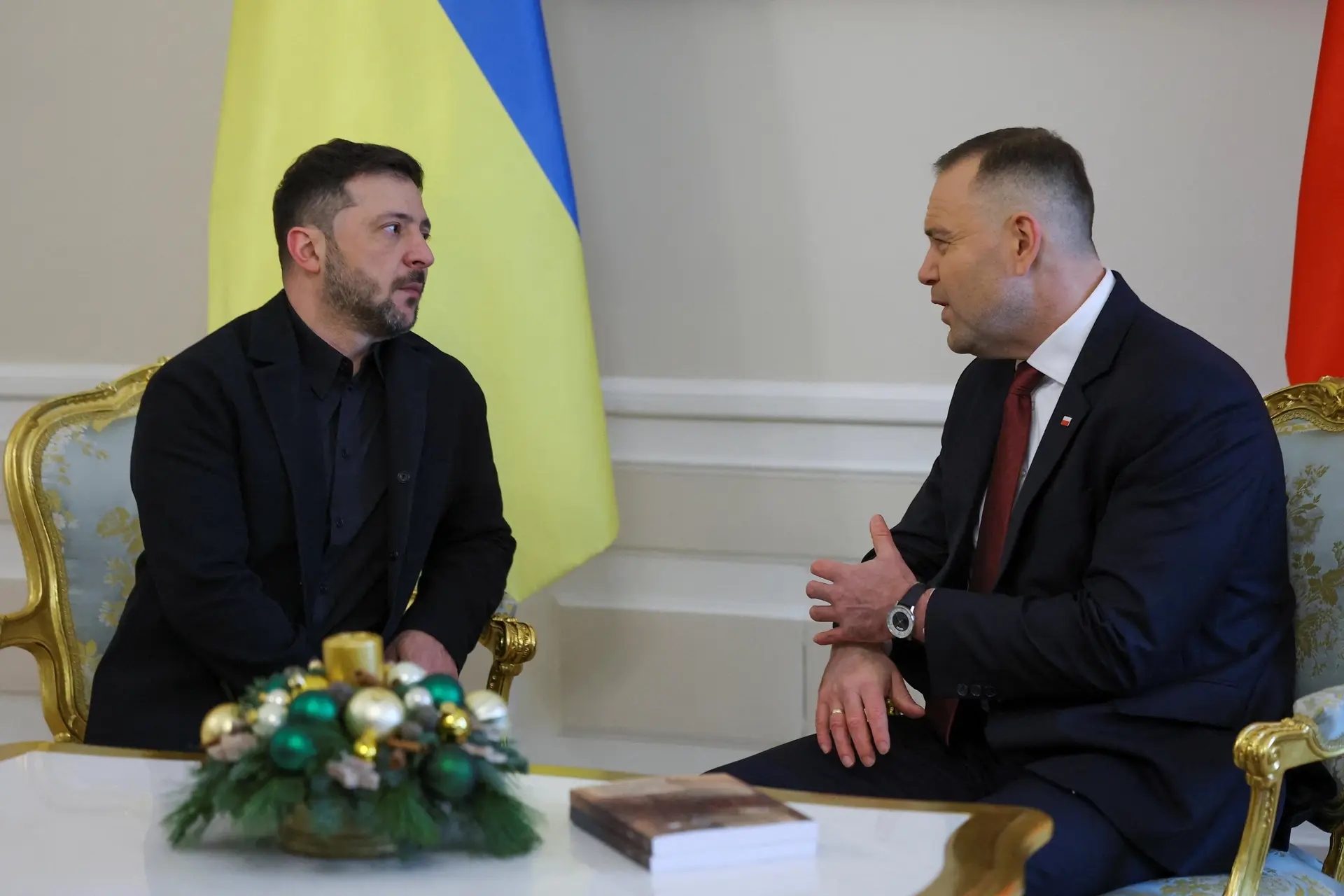
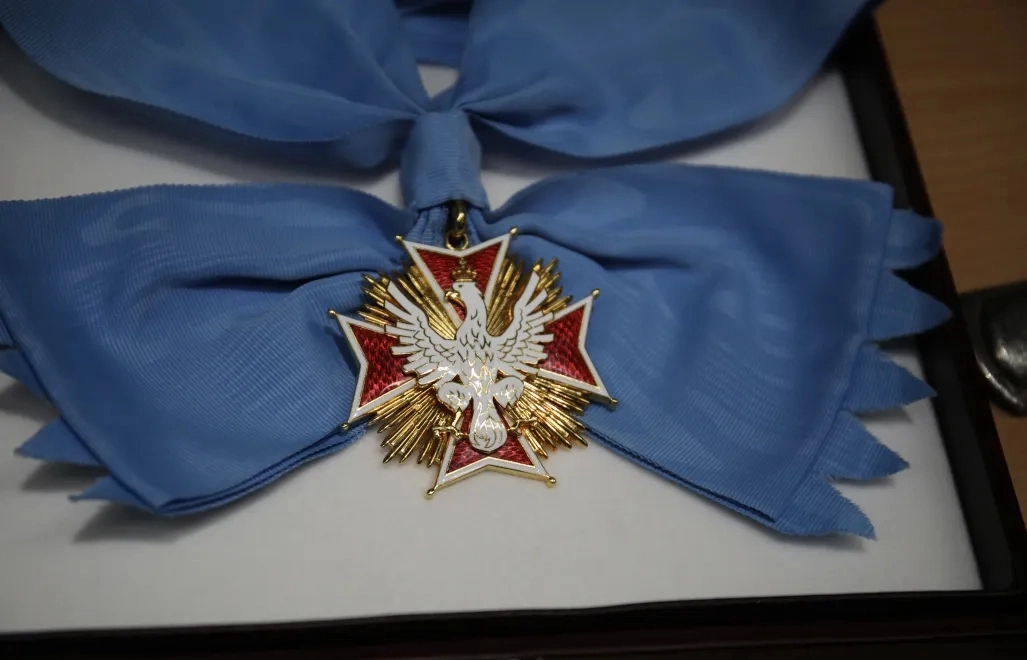
Moves like Zelensky's provoke outrage. Polish President Karol Nawrocki, egged on by pro-Russian politicians such as former Prime Minister Leszek Miller, demanded that Volodymyr Zelenskyy be stripped of the Order of the White Eagle. (gov.pl)
Zelensky did not keep him waiting long, sending it back to Nawrocki by mail in a box, and several former Ukrainian presidents, cabinet ministers, ambassadors, and officials followed suit with their Polish awards. Suddenly, a multitude of Orders of the White Eagle arrived in Poland. In the opposite direction, Polish officials sent Orders of Prince Yaroslav the Wise, 1st, 2nd, and 3rd Class.
Warsaw is not at the table during “Coalition of the Willing” meetings — at Kyiv’s behest — nor is it part of the newly formed anti-ballistic coalition.
“Fine! We don’t care. And you’re not getting into the EU with your Bandera anyway,” the Poles say.
“You don’t care? Well, did you know Zelensky won’t be coming to Gdańsk?”
“But it’s the Ukraine Recovery Conference!”
“We can handle the recovery without you as well.”
Online, the two sides are trading blows. Experts and analysts on the Polish side are sounding the alarm that Ukraine is steeped in Nazism and Bandera ideology. Ukrainian experts insist that the atmosphere in Poland is reminiscent of the period before pogroms. They call on fellow citizens living along the Vistula to return home (which makes sense, since Ukraine has an interest in having its citizens return, just as Polish business owners have an interest in having them stay in Poland).
It should be noted here that the Polish police respond firmly and in an exemplary manner to reports of physical aggression against Ukrainians (these are orders from above). However, anti-Ukrainian and anti-Polish sentiment is currently in vogue – it generates clicks and likes.
The conflict has gone so far that Przemysław Czarnek, a leading politician in Poland’s main opposition party, Law and Justice (PiS), and a potential candidate for prime minister, declares: “We need to force the European Union, including by using our position within the EU, to suspend all funding for arms deliveries to Ukraine and for Ukraine’s reconstruction for the time being, until it sets out on the path of universal human values.”
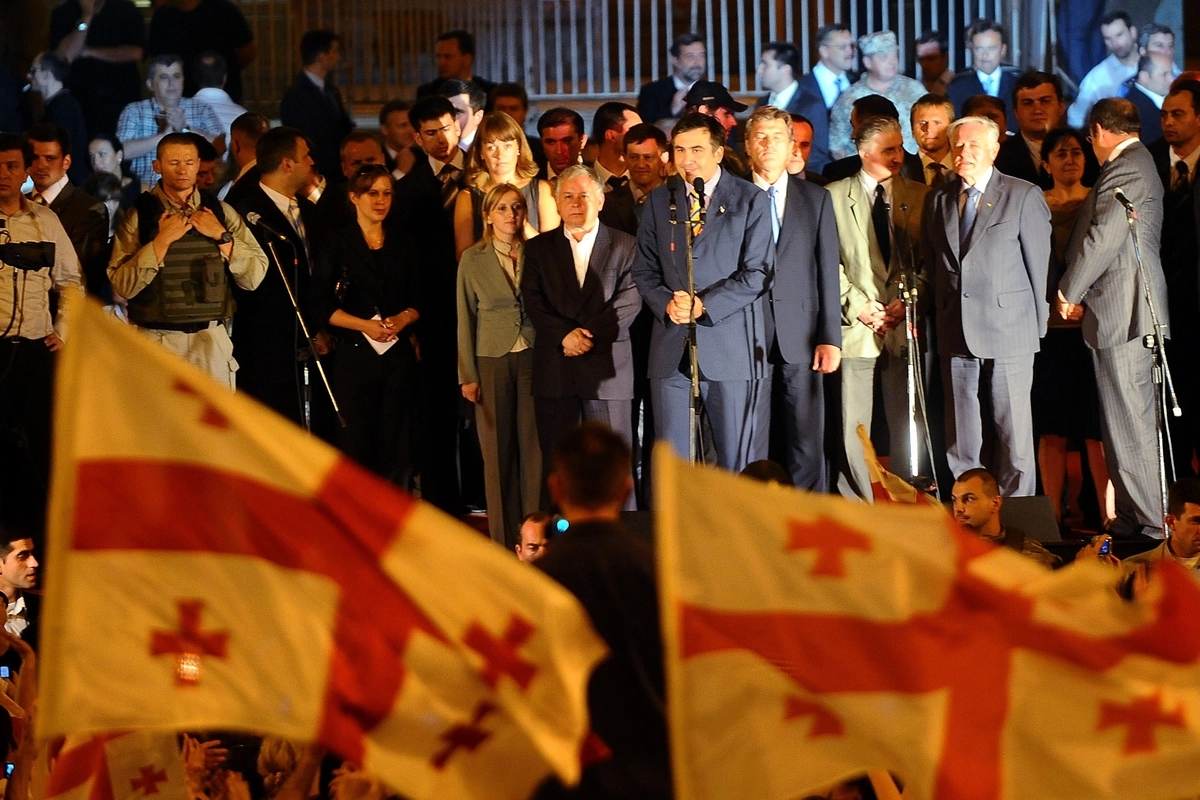
True, Czarnek was called to order by the party chairman and the party split — not surprising given that PiS is not some fringe group, but the main opposition party. It was PiS that was running Poland in 2022 and did everything it could to help its neighbors. Its political position has always been to support Ukraine’s sovereignty and exercise caution toward imperial Russia. Its ranks produced the late Lech Kaczyński, who addressed the parliament in Tbilisi in 2008, with Russian tanks stationed on the outskirts of the city: “Today Georgia, tomorrow Ukraine, the day after tomorrow the Baltic states, and then perhaps the time will come for my country, Poland!” Now, one of the leading figures in the PiS of 2026 is calling for the suspension of Western aid to Kyiv.
Pendulum: from love to hatred
Amid the flurry of mutual accusations, several fundamental problems are being overlooked. Ukraine is fighting a defensive war. At such a moment, its only concern is the struggle for survival. When you are fighting for your life, there is no room for any phrase beginning with “yes, but…” There are no nuances when the world is burning, bombs are falling on your head, and the eastern horde is taking yet another village.
There are no nuances when the world is burning, bombs are falling on your head, and the eastern horde is taking yet another city
Poland is Ukraine’s closest ally. Whatever politicians and commentators in Warsaw may say, it is a weapons supplier and the logistical backbone of the front.
The two countries have a common existential enemy, and Ukraine’s defeat would be a catastrophe for Poland’s security. Ukraine’s victory and its continued course toward the West are crucial to that security, but Ukraine will not ever be able to join the EU without Poland’s consent. And glorifying historical figures who are, to put it mildly, controversial, certainly does not help Kyiv's cause. More than a million Ukrainians live, work, study, and pay taxes in Poland. Despite the disagreements, we are neighbors. And as we can see, despite the Kremlin’s enormous efforts, that is not going to change.
In the words of Jerzy Giedroyc, whose ideas became the foundation of Poland’s foreign policy after 1989:
“Polish state interests require a belt of independent states between Poland and Russia. Warsaw should support the sovereignty of its eastern neighbors, even if this means giving up some historical claims and disputes. Historical conflicts with Ukrainians should not obscure the strategic goal – an independent Ukraine as a guarantee of Poland’s security against Russian imperialism.”
So what, then, is the problem? Well, if you look at it coldly and armed with statistics, there is nothing surprising about the current dispute. CBOS, one of Poland’s most important public opinion research centers, first asked respondents about their attitudes toward Ukrainians in 1993. At the time, just 12% of Poles expressed sympathy for their neighbors, while a full 65% of respondents expressed dislike. Even Russians, Germans, and Jews – nations that traditionally receive only “so-so” affection in Poland – elicited warmer feelings. One could say that Poles really enjoyed not liking Ukrainians back then. A year later, in 1994, sympathy fell even further, reaching a historic low of 9%.
And all this was happening at a time when the Third Polish Republic was proud that “Solidarity” had helped bring down the USSR – the evil empire. In Warsaw, the independence gained by every nation recently subjugated under Moscow's rule was greeted with applause. On a diplomatic level, Poland was, after all, the first country to recognize Ukraine’s independence. The ideas of Jerzy Giedroyc described above were the guiding principle of its eastern policy, even if the mood in society was less than enthusiastic about befriending their newly free neighbor.
Interestingly, in the years that followed, sympathy toward Ukrainians and Ukraine slowly grew — albeit in an up-and-down pattern resembling a sine wave creeping upward. Surges of warm feelings came at particular moments. Poles felt warmly toward their neighbors in 2004 during the Orange Revolution, in 2008 at the time of the Russian-Georgian war, and in 2013–2014 during Ukraine's Revolution of Dignity, Russia's annexation of Crimea, and the outbreak of war in Donbas. Each upswing was followed by a cooling-off period, usually caused by fatigue with the situation and the return of difficult questions about history, particularly the war crimes committed by the UPA in Volhynia.
For a long time, Ukrainian politicians considered the UPA issue to be a problem invented for the purposes of domestic politics in Poland. However, as all the studies show, this is a deep wound that cannot be ignored. In 1943, at least 100,000 innocent civilians were killed in mass killings organized by the UPA. They were murdered in brutal ways. To this day, many Poles believe that the matter has not been properly resolved, and it cannot be buried without exhumations and re-burials. Ukraine blocked a decision on this for years.
The killing of 100,000 Polish civilians by the UPA cannot be resolved without exhumations and burials, and Ukraine blocked a decision on this for years
Thus, Poles' sympathy for their neighbors rose and fell. However, the pendulum never returned to its previous position, and from decade to decade, Poles grew increasingly fond of Ukrainians. By around 2010, sympathy had even begun to outweigh antipathy.
Sentiments on the other side of the border were similar. This is only natural: when we are in trouble, we appreciate a neighbor who wants to come to our aid, and we are grateful to them. Polish flags on the Maidan, the visit of Presidents Lech Kaczyński and Viktor Yushchenko to Tbilisi in 2008, Warsaw’s protests against the brazen annexation of Crimea – all this made a favorable impression on Ukrainians.
A pattern is easy to spot here: the worse Russian behavior was, the better relations between Poles and Ukrainians became. From this perspective, their attachment was a function of their dislike of an aggressive neighbor that threatened “both you and us.” A similar mechanism came into play in 2022. Poles opened their homes and hearts, taking in hundreds of thousands of women and children fleeing the full-scale war unleashed by the Kremlin.
President Andrzej Duda, the PiS government, and the opposition alike did everything they could to provide civilians with social assistance and the Ukrainian army with weapons and ammunition. However, the wave of spontaneous empathy and outrage at Russia, which was committing war crimes, did not prevent Polish politicians from keeping an eye on sociological trends. They could see that if Ukraine survived, the pendulum of sympathy would begin to swing in the other direction, and they needed to prepare for that.
Sociologists say that 2022 was nevertheless such an extraordinary year that it completely disrupted the typical pattern on both sides of the border. CBOS polls show that in March of that year, 94% of Poles supported accepting refugees from Ukraine, and Poland was Ukrainians’ most favored country, with 83% expressing a positive opinion of Poles. President Zelensky said that Ukraine and Poland were sisters.
It must be said that sister Poland really did open its arms wide to sister Ukraine. Legislators in Warsaw changed laws with lightning speed: for example, the law on assistance to Ukrainian citizens was adopted as early as March 12, 2022. This allowed refugees to easily legalize their stay and establish lives thanks to access to the labor market, social assistance, health care, and education – around 300,000 children and teenagers who did not know the language entered the school system. The challenge was enormous: during the first two weeks after February 24 alone, around a million people crossed the Polish border. Europe had not seen such a mass movement since World War II.
And estimates of the size of the migration varied considerably. For example, according to the Union of Polish Metropolises, shortly after the invasion there could have been as many as 3.9 million Ukrainians in Poland.
Reality and emotions
A year and a half later, more precise estimates could be made. They showed that the number of Ukrainians in Poland with an active PESEL Ukr number (which confirms legal residence and grants access to social benefits) stood at around 970,000. The majority of them (87%) were women and children. Poland is also home to more than 420,000 Ukrainians residing on other grounds, including temporary residence related to employment and permanent residence. This puts the total at approximately 1.4 million.
Sister Ukraine actively got to work in Poland. A year and a half after the invasion, 80% of Ukrainian migrant households supported themselves through their own labor. They worked for others or started businesses themselves: since 2022, Ukrainians have founded 60,000 businesses, of which around 35,000 remain active. They also own or co-own the largest share of companies with foreign capital (41%). “Ukrainian workers contributed to higher economic growth, by between 0.7 and 1.1 percentage points,” says Aleksander Łaszek, PhD in economics and a Deloitte expert.
Sister Poland, however, was in shock. After World War II, our country was essentially mono-ethnic. According to the 2011 National Census, foreigners accounted for only 0.1–0.2% of Poland’s population, or about 60,000 people. In reality, the figure was probably closer to 100,000, but hearing another language on the street was something unusual. In recent years, everything has been turned upside down: Ukrainian, and less often Russian and Belarusian, can be heard in stores, hospitals, and hotels. This could not fail to provoke a reaction from a society unprepared for such a dramatic change, and its effects were bound to begin showing up in the polls.
According to the 2011 National Population Census, foreigners accounted for around 0.1–0.2% of Poland’s population
Symptoms of the unraveling solidarity appeared fairly early. “What united the narratives of our middle- and working-class respondents was a strong dislike of Ukrainians, expressed spontaneously in all the focus groups. They reflect anxiety about losing priority access to benefits and public services,” Przemysław Sadura and Sławomir Sierakowski wrote in their report "Poles Are for Ukraine, but Against Ukrainians," based on research conducted in early June 2022.
Such voices rarely broke through into public discourse, but in real life people increasingly talked, for example, about Ukrainians driving down wages. The actual data showed that this was not true. For example, the influx of migrants had a negligible effect on the rise in unemployment (0.18–0.3%), and as Dr. Łaszek noted, “A Ukrainian taking a job was often associated with a Polish worker being promoted because they were more experienced and had a better command of the language.”
However, some rumors cannot be disproved with hard economic data. How, for example, do you disprove the panicked rumors about cunning Ukrainian women who, instead of showing gratitude, set about seducing Polish husbands? Or about Ukrainian children being admitted to emergency departments (SORs) ahead of young Poles waiting in line? These stories spread on social media, and according to experts, they were part of a disinformation campaign – one of many that would later sweep across Poland.
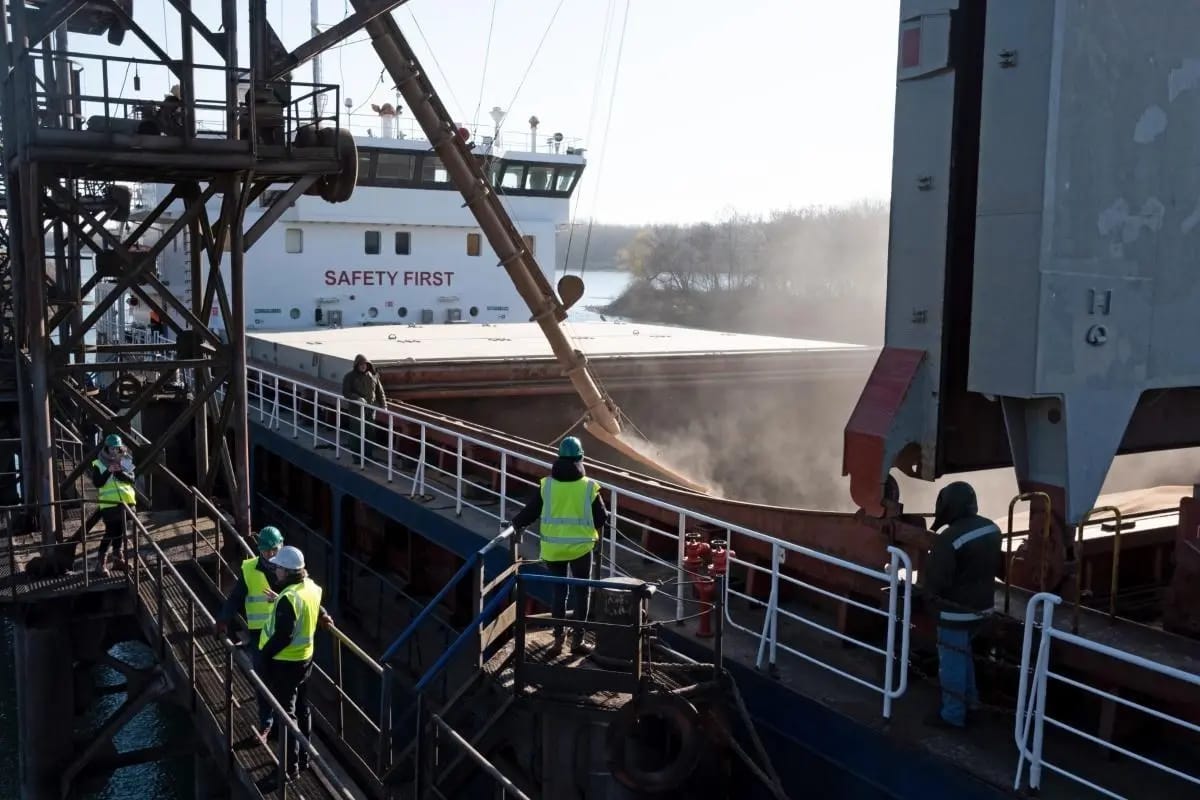
Of course, there were also measurable, entirely objective factors. Ukraine, having gained easier access to EU markets for grain and transportation because of the ongoing war, became a genuine competitor to Polish farmers and businesses. This resulted in a huge influx of grain into Poland, falling prices, and farmers’ protests in 2023, accompanied by a blockade of the border and Ukrainian grain being dumped onto the ground – images that were particularly painful in Ukraine, which had experienced the Holodomor.
This was compounded by President Zelensky’s words at a UN session: “Some of our friends are helping to set the stage for a Moscow actor.” In Poland, this was perceived as a stab in the back to President Andrzej Duda, who was finding it increasingly difficult to rally his camp behind unconditional support for Ukraine.
Moreover, Ukraine was putting pressure on EU institutions, arguing that the restrictions were hurting its economy and violating the principles of the single market and trade agreements. The European Commission became an arena for the dispute, as it was the Commission that administered the so-called autonomous trade measures for Ukraine. In September 2023, after the Commission decided not to extend the EU ban on imports, Ukraine filed a complaint against Poland (and also against Hungary and Slovakia) at the WTO.
In Poland, this was seen as disloyalty and a lack of solidarity. After all, it was not only Andrzej Duda who might have disliked Zelensky’s barbed hint at him in his UN speech. The late Lech Kaczyński must have felt awful when his friend Viktor Yushchenko called Stepan Bandera and Roman Shukhevych heroes. And Bronisław Komorowski must have felt the same when, on the day he addressed the Verkhovna Rada, Ukrainian lawmakers passed a law granting UPA fighters veteran status.
Foreign policy as domestic policy
Poland entered an electoral cycle in 2023, beginning with parliamentary elections marked by the highest turnout in the country's history. This was followed by the no less hotly contested presidential election of 2025. In 2027 there will once again be a battle for a parliamentary majority, a fact that does not make for normal debate.
Parties commission polls and tailor their messaging to voters’ expectations, and a combination of fear and anxiety can propel a party to the top. Everyone wants to ride this wave; no one will swim against the current, because they will drown.
“Of course, politicians sensed the growing skepticism and did not want to go against the tide,” political scientist Ernest Wyciszkiewicz, until recently the director of the Juliusz Mieroszewski Center for Dialogue, said in an interview with Polityka weekly. The center has been conducting detailed sociological research on Polish-Ukrainian relations since the beginning of the invasion, and historical issues — Volhynia, exhumations, and irritation over monuments being erected and streets being named after figures such as UPA commander Roman Shukhevych — have been coming up increasingly often.
On the Ukrainian side, meanwhile, there has been a noticeable rise in national pride. There has also been a renaissance of interest in history. Under the circumstances of the war, the past actions of the UPA have been reinterpreted. Just a decade and a half ago, only around 20% of respondents viewed the UPA positively. Today, the overwhelming majority viewing them as fighters for independence. More than 80% sympathize with Stepan Bandera, and around 70% with Roman Shukhevych, both of whom are viewed as villains in Poland.
More than 80% of Ukrainians sympathize with Bandera, and around 70% with Shukhevych
Poles do not like this, but this is perhaps the worst possible moment to give their neighbors “history lessons.” Ukrainians are defending themselves against Russia and suffering daily casualties. They have no desire to listen to criticism from anyone.
At the same time, far-right groups have been gaining popularity in Poland by riding the anti-Ukrainian wave. A party called “Confederation” received 7% and 18 seats in parliament in October 2023, finishing fifth. Today, “Confederation” has split into two factions, both of which are gaining ground: the first has around 13–15% support, while the second has around 8–11%. In the presidential election, candidates from “Confederation” came in third and fourth, while the top spot went to PiS candidate Karol Nawrocki, a former head of the Institute of National Remembrance (IPN) who had no qualms about attacking “Banderite” Ukraine, threatening that it would not join NATO or the EU and calling for the “restoration of justice” – that is, stripping refugees of financial benefits.
The radicals’ convictions inevitably set the tone of the debate, leading others to become more radical. As a result, a law was passed abolishing assistance for the most vulnerable Ukrainian refugees who depend on aid. It is not about the money (after all, it is a pittance), but about showing that we care primarily about our own citizens. The prime minister talks about the need to deport young Ukrainians who got into a scuffle with security guards at a concert (by Max Korzh in Warsaw), while the interior minister personally takes up the case of a blogger who drove a race car with Ukrainian license plates into a national park in the Tatra Mountains to take a selfie. The illegal catching of a catfish by a Ukrainian migrant is elevated to the level of a national security issue.
Ukraine, too, pretends that it is not engaged in domestic politics amid the war, but that is not true either. A political game is afoot in Kyiv given the understanding that as soon as the shooting stops, parliamentary elections and a new race for the presidency will begin.
A Ukrainian opposition politician said that viewing the current dispute with Poland as a cunning ploy by Zelensky would be a gross exaggeration: “There is a narrative being promoted in Warsaw that Zelensky cleverly engineered all this – he stirred up a storm and boosted his ratings. That is a wonderful compliment to the president’s entourage, but completely undeserved. There was no plan. It should be added that, like a stage performer, he has a genius for reading his audience. He quickly realized that people liked this assertiveness and went in that direction: ‘Karol wants the White Eagle back? Great, send it!’ And he was right. The support was enormous. Unfortunately, the price was a deterioration in relations with Poland.”
Zelensky went further, pushing through a law on the Pantheon of Heroes of Ukraine. It is to be a place commemorating figures important to the country’s history and will almost certainly include people whom Warsaw will find difficult to accept. Kyiv, for example, is seeking the return of Stepan Bandera’s remains to Ukraine, to be followed by a ceremonial burial. Even politicians who are not sympathetic to Zelensky came out in his support.
Zelensky is, after all, fighting for reelection. A huge corruption scandal is hanging over him, and increasingly serious opponents are emerging. The situation at the front, dissatisfaction with mobilization, and holes in the budget are all on his shoulders. Relations with Poland are certainly not a priority for him. Preserving his hold on power, however, is.
Nothing but negativity
The Polish research group Res Futura, which studies the internet and social media, noticed something interesting during the latest dispute over naming a Ukrainian military unit after the “heroes of the UPA.” According to its research, 754,000 posts about Ukraine appeared from June 1-21, 2026. These posts generated 10.2 million reactions and comments. “Among non-neutral posts, nine out of ten are negative toward Ukrainians,” emphasized Michał Fedorowicz of Res Futura.
Between June 1 and 21, 2026, 754,000 posts about Ukraine appeared, and if neutral posts are excluded, nine out of ten are negative, Res Futura calculated
Criticism of Ukraine on social media has been growing steadily since the beginning of May, and each crisis pushes this level higher. Importantly, it no longer recedes.
Fedorowicz says that the UPA issue accounted for less than 5% of discussions about Ukraine on social media a year ago. At the time, there was a social and online consensus that the issue should not be discussed because it served Russia’s interests (and was being promoted by pro-Russian propaganda). However, the situation has now been turned upside down: “Today, there is absolutely no room – above all, politically – to change these sentiments.”
Of course, eventually, the pendulum will swing in the other direction again – the sooner, the better. At some point, Poland and Ukraine will love each other a little more again – they have little choice. That is, after all, how sisters love.