A Swedish court has transferred a cargo ship to Ukraine that had previously been seized in the Baltic Sea. The vessel, formally sailing under the Guinean flag, was detained on suspicion of exporting grain from Ukraine's Russian-occupied territories. Cases in which shipments of grain harvested on occupied land are successfully intercepted are becoming more common, but there is still little indication that they will be enough to halt the trade. Russia has become adept at disguising the origin of the grain it exports, doing everything possible to ensure that wheat and barley from occupied territories appear in official paperwork as Russian products. Countries across the Middle East and Africa remain heavily dependent on these supplies, while the legal mechanisms available to combat such trade are limited.
On June 4, a court in the Swedish city of Ystad ruled that the 96-meter cargo ship Caffa should be transferred to Ukraine. Since 2025, the vessel had been under Ukrainian sanctions for transporting grain from Russian-occupied Sevastopol. At the time of its seizure, however, Caffa appears to have been carrying no grain at all, instead simply sailing through the Baltic Sea.
The ship was stopped on March 6 off Sweden's southern coast while traveling from Casablanca to St. Petersburg under the Guinean flag — which Swedish authorities determined that it had no legal right to fly. Following the ships detention, inspectors also discovered numerous technical faults aboard Caffa.
The captain was arrested for using forged maritime certificates but was later released. The cargo ship itself, however, is to be transferred to Ukraine as part of an investigation into the alleged war crime of exporting grain from occupied territories. State prosecutor Håkan Larsson explained the decision as follows: “If the circumstances described by the Ukrainian side were transposed into the Swedish legal system, we believe they would be classified in Sweden as a war crime.”
The reason Caffa was seized and transferred to Ukraine was not its cargo but the false flag it was flying, explains Eugene Kontorovich, a law professor at George Mason University, in an interview with The Insider:
“Using a false flag makes Caffa a stateless vessel and allows it to be detained regardless of its cargo. The seizure of stateless vessels is not unusual. For example, the United States uses this mechanism to combat drug trafficking at sea. In this case, it was applied quite creatively to target Russia's so-called shadow fleet.”
There are grounds to argue that the vessels themselves may be subject to confiscation because they were used to transport illegally exported grain, adds maritime law expert Wolff Heintschel von Heinegg, professor emeritus at European University Viadrina in Germany. “Such an approach would be permissible if the confiscation were carried out by the other party to the conflict. However, I am not convinced that third countries have the authority to do so.”
Ukraine itself has previously confiscated vessels involved in transporting grain from occupied Crimea. However, this is the first time that a court in a European country has issued such a ruling. In any event, officials in Kyiv welcomed the news enthusiastically.
“When our authorities sent Sweden a request for mutual legal assistance, we thought they would simply invite Ukrainian prosecutors to take part in the investigative actions. Instead, they did everything themselves,” says Kateryna Yaresko of the SeaKrime investigative project run by the MyrotvoretsCenter.
Controversy in Israel
SeaKrime volunteers use open-source information and contacts inside ports to track Russia's maritime exports from the occupied territories of Ukraine. With the exception of a few shipments of coal from Mariupol, the cargo is almost always agricultural products. An investigation by Kateryna Yaresko and her colleagues sparked a scandal this spring after a Russian cargo ship carrying Crimean wheat unloaded in Haifa, Israel.
On April 12, the cargo ship Abinsk docked at the Port of Haifa in order to unload 43,765 tons of wheat. The entire shipment was declared as Russian. However, SeaKrime obtained several documents confirming that the grain had in fact originated in occupied Crimea (copies have been reviewed by The Insider).
Under normal circumstances, Abinsk serves as a floating grain elevator in the Kerch Strait. Smaller vessels bring grain from Russian and occupied Ukrainian ports, transferring their cargo to Abinsk directly at sea.
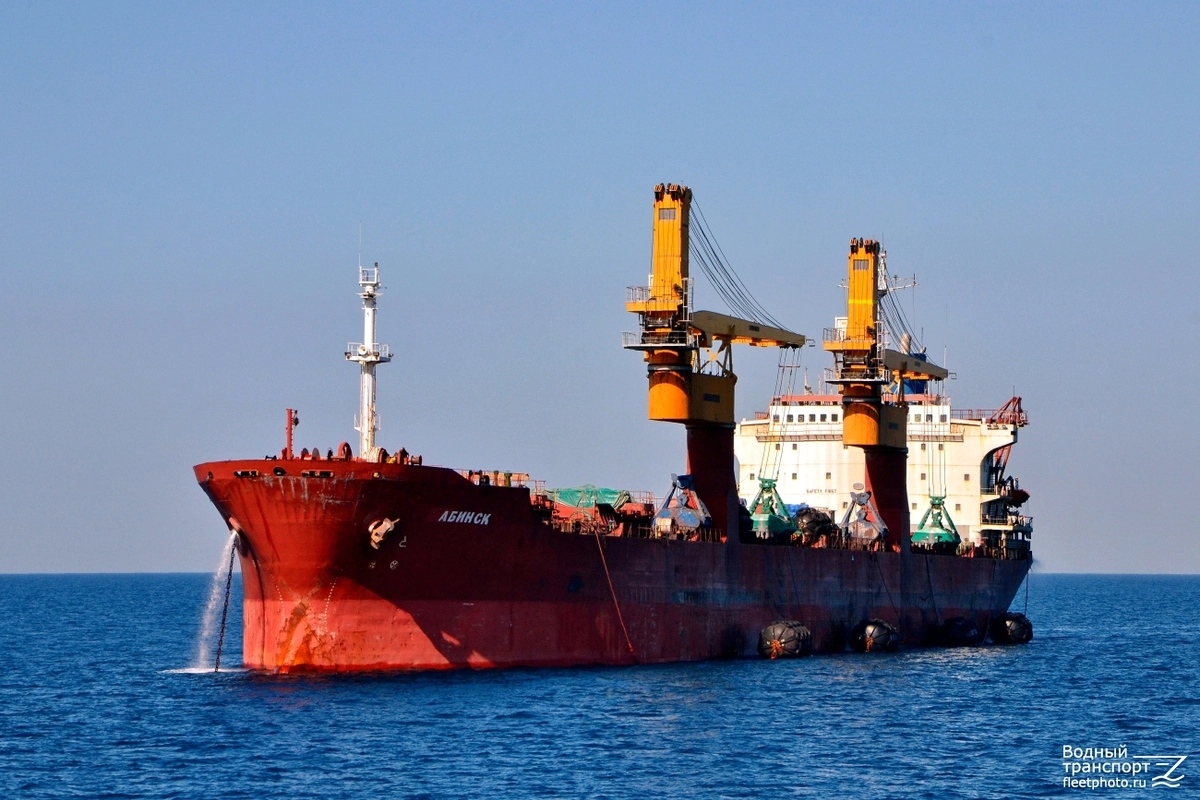
SeaKrime established that the cargo ship Leonid Pestrikov had loaded 7,500 tons of wheat in Kerch before transferring the cargo to Abinsk. Shortly afterward, Abinsk departed for Haifa. Despite protests from Ukraine and a series of reports in Israeli and international media, the vessel was allowed to unload its cargo and sail away without incident.
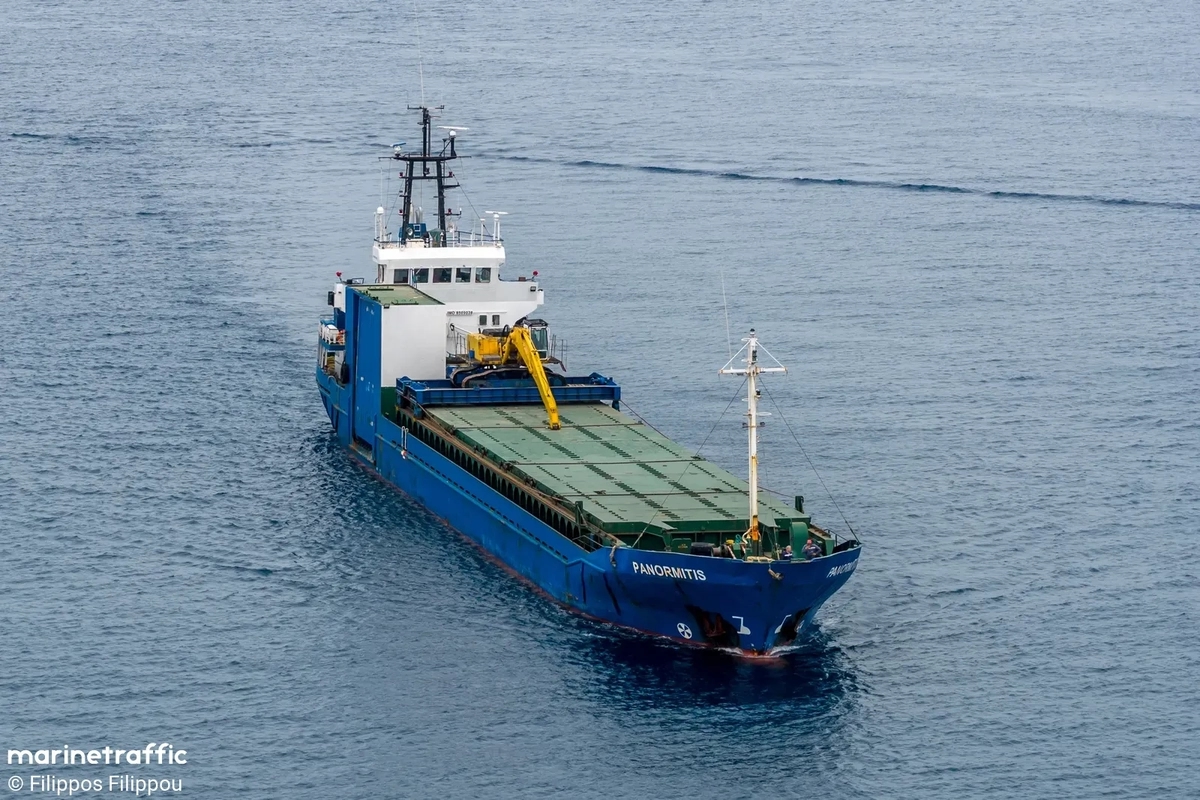
Abinsk was followed to Haifa by another cargo ship, PANORMITIS — a Greek-owned vessel sailing under the Panamanian flag. According to SeaKrime, part of its cargo had also been loaded from Leonid Pestrikov in an occupied Ukrainian port. This time, however, the investigators had no documentary evidence. According to the official paperwork, the wheat and barley on board were of Russian origin.
Nevertheless, both international and domestic pressure on Israel intensified. Ukraine threatened to seek European sanctions against companies purchasing the grain, and the NGO Israeli Friends of Ukraine organized a protest outside the offices of wholesale grain traders. As a result, the buyer refused the shipment, PANORMITIS was denied entry to the Port of Haifa, and the port of Ashdod announced that it would not accept Russian or Ukrainian grain until it received instructions from the government.
Food dependence
Although there have been growing calls in Israel to stop buying Russian grain altogether, doing so is practically impossible. The Middle East and North Africa have traditionally relied on Russian and Ukrainian grain shipped through the Black Sea. However, following the start of Russia's full-scale invasion, Ukraine redirected much of its exports to Europe, leaving importers with few alternative suppliers.
As recently as 2021, Ukrainian wheat and barley barely reached Europe. By the 2023–2024 marketing year, however, 57% of Ukraine's grain exports were destined for the European Union. In the 2024–2025 season, the EU's share declined to 44% as Ukrainian producers regained access to maritime export routes. Wheat and barley once again began flowing to China, Libya, and the Middle East. Even so, export volumes remain well below their 2021 levels.
Before 2022, Russia and Ukraine combined to account for roughly 30% of global wheat trade, explains Joseph Glauber of the International Food Policy Research Institute:
“Virtually all of that grain moved through the Black Sea before the full-scale invasion. Russia also exported small amounts via the Caspian Sea and overland routes, but those volumes were never significant. Black Sea exports were essential for supplies to North Africa and the Middle East — Turkey, Syria, Lebanon, Israel, Egypt, Algeria, Tunisia, and Morocco. Some wheat continued through the Suez Canal to East Africa and Yemen, and even as far as Indonesia and Bangladesh. After the invasion, the geography of Ukraine's grain trade changed. Grain began flowing overland into Europe, through Romania and via river routes.”
Under these circumstances, it is extremely difficult for countries in the Middle East and Africa to stop buying Russian grain. The world's dependence on Black Sea grain has already demonstrated its global impact once before. In 2010, droughts in Russia and Ukraine led to poor harvests and soaring prices – developments widely regarded as one of the factors that contributed to the Arab Spring, As Glauber recalls:
“Yes, there are other suppliers on the market: the United States, Canada, Australia, Argentina, and the European Union. But first, in recent years their share of this region's market has declined in favor of Russia and Ukraine. And second, the United States is currently experiencing drought, and the harvest is expected to be poor.”
At the same time, grain from occupied territories in Ukraine accounts for a relatively small share of Russia's total exports. During the last marketing year (July 2024 through June 2025), Russia exported 53 million metric tons of grain, including 44 million metric tons of wheat. That represents roughly half of the country's harvest: internationally recognized Russian territory, together with occupied Crimea, produced 125.9 million metric tons of grain, including 82.6 million metric tons of wheat. Of that total, occupied Crimea accounted for 1.14 million metric tons of grain.
Russian Agriculture Minister Oksana Lut has said that about 4 million metric tons were harvested in the so-called “new regions” — the occupied parts of the Donetsk, Luhansk, Kherson, and Zaporizhzhia regions. Including occupied Crimea, this means Russia harvested approximately 5.1 million metric tons of grain from the sovereign territory of Ukraine, compared with 124.8 million metric tons harvested within Russia's internationally recognized borders.
Russia harvested approximately 5.1 million metric tons of grain from the occupied territories of Ukraine
If oilseed crops are included as well, then around 30 million metric tons of agricultural products were removed from the occupied territories during the first three years of the war, estimates Taras Vysotskyi, Ukraine’s Deputy Minister of Economy, Environment, and Agriculture.
Deception and exposure
Russia does everything it can to make wheat and barley from occupied Ukrainian territories indistinguishable from grain harvested within Russia's internationally recognized borders. Regulators in the importing country are supposed to verify certificates of origin, but uncovering the truth is extremely difficult because an elaborate system of falsification has been put in place, Glauber says.
In addition, as early as 2017, Russia began concealing the names of ships entering Crimean ports, covering those sections of the hull with tarps. Kateryna Yaresko recalls:
“This practice exists at the official level. We've heard about it from all kinds of people. Once, I received a message from a complete stranger — apparently a sailor from Sevastopol. He was deeply emotional about it. For a sailor, a ship's name is a source of pride. Seeing a vessel enter port with its name covered by a tarp outraged him.”
The deception is often exposed by the crews themselves. Yaresko recalls one case in which an elderly captain brought a cargo ship into Sevastopol and, following instructions, covered the vessel's name. SeaKrime investigators found his profile on the Russian social network Odnoklassniki, where it turned out the veteran sailor had carefully photographed the entire voyage and shared the pictures with friends. Those images ultimately became evidence in the investigation.
On another occasion, social media searches helped assemble evidence for court proceedings in Lebanon. In 2022, a vessel carrying grain from Feodosia arrived in the country, prompting legal action at Ukraine's request. As Yaresko explains, “The captain claimed that he had entered Feodosia but hadn't loaded any cargo there. Then I found eight videos from the port, filmed on different days by tourists. They clearly showed the ship's draft changing.”
Webcams installed throughout occupied Crimea by the Russian authorities after the peninsula's annexation also proved invaluable. Their footage repeatedly helped investigators demonstrate that ships had been loaded in Crimean ports.
The Russian authorities tried to counter these efforts. At times, the cameras were covered with cloth, and in some cases the images they captured were altered. In October 2022, following the first attacks by Ukrainian naval drones, the cameras were removed altogether.
These Russian efforts have also been accompanied by systematic document forgery. Previously, Russian authorities simply replaced Ukrainian ports of departure with the Russian Port Kavkaz in shipping documents, and at times, the deception became absurd. Again according to Yaresko, “There was one case where a Russian ship carried grain from Feodosia to Port Kavkaz. Yet the paperwork stated that the grain had been transported from Port Kavkaz to Port Kavkaz.”
In the fall of 2022, the Financial Times revealed in an investigation how the document substitution worked. The newspaper found that Russian authorities had simply prepared two separate sets of paperwork for the same wheat shipment. One set, intended for domestic use, confirmed that the grain had been loaded in Berdiansk, in the occupied Zaporizhzhia region. The other, prepared for foreign counterparties, certified that the very same grain had been loaded at Port Kavkaz.
The main falsification method has since changed. Instead of identifying a specific port of loading, shipping documents now state only “One safe port in the Black Sea or the Sea of Azov.” That is precisely how the certificates for Abinsk and PANORMITIS describe their point of origin.
Shipping documents now list only “One safe port in the Black Sea or the Sea of Azov” instead of specifying the actual port of loading
According to Yaresko, similar manipulation occurs with phytosanitary certificates. Rather than naming the specific port of origin, the documents simply state “Russian Federation.”
However, in a recent interview with DW, Ukrainian Deputy Minister Vysotskyi said that Ukraine now has laboratory methods capable of proving that grain carried aboard ships originated in the occupied territories, adding that the technology in question is part of a joint project with the United Kingdom and Lithuania that has collected grain samples from across the areas of Ukraine that Russian physically controls. Each sample contains unique markers linked to the climate, weather, soil composition, and other characteristics of the area where it was grown. Vysotskyi says the project has already built a database that “makes it possible, with a probability close to 100%, to determine whether a particular grain sample originates from a specific territory.” If at least 10% of a shipment comes from occupied territories, the laboratory is able to detect it, he says.
The forensic methodology was developed by the United Kingdom, while the laboratory itself is located in Lithuania. It began operating on a pilot basis in 2024, performing dozens of analyses. However, for the findings to have an impact beyond the laboratory, concrete legal action is required.
Legal status
Ukraine describes any grain coming from the occupied territories as “stolen.” However, some critics stress that a distinction must be made between wheat that has been physically looted from grain elevators — as happened during the early stages of the war — and grain that was simply grown on land occupied by Russia after 2022.
From the standpoint of international law, there is no difference between these two categories, argues Professor Wolff Heintschel von Heinegg:
“If we set aside Russia's position and accept that this is occupied territory, then before turning to maritime law we must first look at the law of occupation. It is governed by the 1907 Convention. Under those rules, grain grown in occupied territory does not become the property of the occupying power. Russia, of course, claims that the proceeds from grain sales benefit the residents of these territories and are used to develop local infrastructure. Even if that were true, it would not give Russia the right to trade in that grain. The harvest from Crimea or the occupied parts of other Ukrainian regions remains the sovereign property of Ukraine.”
Professor Eugene Kontorovich, by contrast, argues that the term “stolen grain” is not entirely appropriate: “An occupying power is subject to certain restrictions on its use of the natural resources of occupied territory. However, under the legal opinion issued by UN Legal Counsel Hans Corell in the case of Western Sahara, it also enjoys rights of usufruct.”
Usufruct (from the Latin usufructus) is an ancient concept dating back to Roman law. It literally means the right to use someone else's property and derive benefit from it without becoming its owner. According to Kontorovich, the concept applies in this case because Russia is not permanently depriving the territory of its natural resource: “Grain is grown and harvested every year. It will either rot in the fields or be harvested.”
International law has never prohibited trade with an occupying power in goods originating from occupied territory, Kontorovich argues. The European Union recognizes this principle and therefore permits imports of agricultural products from Western Sahara, Northern Cyprus, and the West Bank: “No country prohibited the import of wine from Armenian-occupied Nagorno-Karabakh. Of course, there are people who would like international law to prohibit this kind of trade, but no such rule currently exists.”
International law has never prohibited trade with an occupying power in goods originating from occupied territory
Still, University of Reading legal scholar Marko Milanovic is inclined to agree with von Heinegg's position. In Milanovic’s view, the seizure and sale of agricultural products may constitute the war crime of pillage, provided the actions are are carried out for commercial gain.
“The only thing that distinguishes grain and other agricultural products is that they are renewable resources,” Milanovic says. “From a legal standpoint, however, that makes no difference. Any grain grown in occupied Ukrainian territory belongs to the lawful owners of the land, whether private individuals or the state. That owner is neither Russia nor any Russian company.”
Nevertheless, it remains far from clear what countries whose ports receive grain from occupied territories are permitted — or required — to do. According to Professor Milanovic, international law contains neither an explicit authorization nor an explicit prohibition on seizing vessels involved in such trade.
Ukraine can ask the receiving country to confiscate the grain, but this is where the legal gray area begins, as von Heinegg acknowledges: “That third country is under no clear legal obligation to confiscate the cargo before reaching an agreement with the occupied state. The second problem is that it is the cargo, not the vessel, that can be confiscated. Unloading thousands of tons of grain is a lengthy process. Yet there is no legal basis for compelling a ship to dock and unload its cargo.”
At the same time, if Israel, Turkey, or another third country does confiscate the grain at Ukraine's request, Russia would have no legal grounds to bring claims against either the port or the buyer, von Heinegg explains. Above all, responsibility for a vessel rests with its flag state, which is also the party entitled to challenge its seizure. If a cargo ship sails under the Panamanian flag, for example, it would be Panama — not Russia — that would have to contest the confiscation.
Sanctions targeting Russia's “shadow fleet” also occupy a legal gray area because they are unilateral. As von Heinegg adds, “They cannot be adopted through the UN Security Council because of Russia's veto. Let's be frank: the system of collective security no longer functions. Everything depends on the actions of individual countries and how far they are prepared to go. Many countries, particularly in Europe, are willing to go very far.”
Different responses across the Middle East
Europe is not dependent on imports of Russian grain, but nations elsewhere are. As a result, Middle Eastern countries have responded to Ukraine's requests in very different ways.
Kateryna Yaresko recalls how in 2022, immediately after the invasion, grain from the pre-war harvest was still being stored in elevators on territory that came under Russian occupation. It was quickly removed and shipped to Syria and Turkey:
“Ukraine sent a request for mutual legal assistance through the Prosecutor General's Office. The Turks denied entry to some vessels. They often remained anchored outside port for more than a month. There was one unusual case where a ship that had loaded corn in Sevastopol returned and unloaded it there. There were also threats of sanctions against Turkish companies. Many of those companies work with the UN's grain program, and sanctions could have seriously harmed them. On top of that, an extraordinary number of investigative reports were published in the summer of 2022. The coverage put Turkey in an uncomfortable position, and it began taking action.”
Turkey already had a mechanism in place. In 2017, it had adopted an internal memorandum prohibiting the dispatch and receipt of cargoes to and from occupied Crimea. According to Yaresko, Turkish ports accept grain only when the accompanying documentation removes any reasonable doubt that it might have come from the occupied territories of Ukraine.
In another example, the cargo ship, PANORMITIS, which had been turned away in Israel, sailed to Turkey afterward. It was denied permission to unload there as well.
Egypt has taken a different approach. As Yaresko says, “I know that our president spoke with Egypt's president on April 3. He assured Zelensky that Egypt would no longer buy grain from the occupied territories. The day before, on April 2, a ship carrying stolen wheat that had been anchored while awaiting permission to unload turned around and left. That said, several more vessels have sailed to Egypt since then.”
According to Yaresko, attempts to import stolen grain have triggered public backlash not only in Israel, but also in Lebanon: “Lebanon has a highly competitive political environment, and journalists showed great interest in our investigation. One outlet published a story, then another followed. The company that had purchased the grain was in shock. There has never been a case where a ship that we learned was carrying stolen grain was ultimately allowed to unload in Lebanon.”
SeaKrime considers Syria to be the main destination for wheat and barley from the occupied territories. One reason is that Kyiv has no diplomatic relations with Damascus.
Syria was already a major buyer of grain from the occupied territories under the Assad government. It also paid well above market prices. When wheat was selling for $225–250 per metric ton, Syria was paying about $375 per metric ton. Yaresko believes the premium was either a concealed Russian payment for something else or simply the result of corruption.
After the change of power in Syria, the trade temporarily came to a halt, with the bulk carrier Mikhail Nenashev fleeing Tartus before it had even finished unloading. But a few months after the establishment of Ahmed al-Sharaa's regime, Damascus resumed purchases of Ukrainian grain from Russia, Yaresko says. In Syria, these purchases are handled by the state grain operator, meaning they cannot simply be the initiative of private companies.
Wheat from occupied Ukrainian farmland also makes its way to Iran. Some shipments travel across the Caspian Sea, while others pass through the Suez Canal to the Persian Gulf.
Cases of grain from the occupied territories reaching other countries are known, but they tend to be isolated. Individual incidents have involved Libya, the Gulf states, and even one involving Albania. In Yaresko's view, however, the Albanian example was simply an instance of Russian counterparties deceiving their European customers.
A war of attrition
Following the scandal in Haifa, the Israeli side said it was prepared to cooperate with Ukraine on monitoring grain export, a fact that Taras Vysotskyi confirmed in a recent interview. According to Yaresko, the episode also had a positive effect on other countries: “Turkey became more open to cooperation afterward. Yes, we can't always persuade the Turks, but we don't expect to. The main goal is to make this trade commercially unprofitable.”
SeaKrime does not expect to stop Russia's exports of Ukrainian grain altogether. Instead, the project's aim is to make them more difficult and more expensive. Every month that a cargo ship spends sitting in port awaiting a decision costs its owner money, and having to change a vessel's flag is another financial burden.
Since 2018, Ukraine has followed the same procedure whenever a ship called at a Crimean port, Yaresko says. The Ukrainian embassy in the vessel's flag state would seek to have its registration revoked. After that, obtaining a new flag costs about $50,000, she says, and all of the ship's documentation must then be reissued. The process takes about a month. Then, when the renamed vessel returns to Crimea, the cycle begins again.
Such ships are also placed under Ukrainian sanctions, creating problems for them in other ports. The cargo ship Caffa is a case in point. According to Yaresko, once a vessel has been caught transporting Ukrainian grain, it generally ends up specializing in that trade, as scrutiny from importing countries increases regardless of the contents of future cargoes.
In reality, Russia has other ways of moving wheat out of the occupied territories, but they have their drawbacks. Shipments by road and rail are much harder to track, but maritime transport is both cheaper and more efficient. It also serves another purpose: keeping the occupied ports alive. In occupied Feodosia, Kerch, and Berdiansk, the ports are the cities' principal employers, Yaresko notes:
“For them, it's a matter of prestige. People in port cities are acutely aware of the difference. They remember when ships arrived one after another. Now the ports are deteriorating. In Kamyshova Bay in Sevastopol, for example, the grain elevators are no longer operational, so grain is loaded using improvised equipment. In Feodosia, there isn't even a tugboat to bring ships alongside the pier. They have to borrow one from the military or bring one over from Kerch. Sometimes the port asks the company loading the grain to pay the electricity bill. They don't have enough money — not only for repairs, but even for salaries and utility payments.”
Indeed, cargo throughput at ports in the Russian-occupied parts of Ukraine has fallen dramatically since the start of the full-scale war. The occupation authorities recently reported that “263,600 metric tons and 211,300 metric tons of cargo were handled through the ports of Mariupol and Berdiansk, respectively, between January and November 2025.” By comparison, in 2019 Mariupol handled 5.9 million metric tons of cargo, while Berdiansk processed nearly 2.1 million metric tons.
Crimea's ports have also gone through several rounds of downsizing. In 2018, more than half of their roughly 6,000 employees were laid off, and another 321 workers were dismissed in 2020.
Under these conditions, normal port operations have broken down. “Normally, a ship can be loaded in a day. But here, they take four or five days. Before that, the vessel sits waiting for anywhere from two weeks to a month,” Yaresko explains. “Then, for security reasons, it may spend another month waiting for military clearance to depart. Once it reaches Syria, it can sit in the destination port for another two weeks. I have serious doubts about the efficiency of these operations.”
Ukrainian investigators see this as, at least in part, the result of their own efforts.