When Bulgarians went to the polls on April 19, the issue of the country’s relationship with Russia was far from the most pressing issue to voters. Although future prime minister Rumen Radev has been compared to Viktor Orbán, it would be a mistake to revive old claims that he is unequivocally “pro-Kremlin,” argues Kyiv-based political analyst Georgy Chizhov. While Radev may be willing to benefit from Moscow’s difficulties, Bulgaria’s national interest will not allow him to become “a second Orbán,” even if he wanted to.
Between NATO and Russia
Rumen Radev was first elected president of Bulgaria in January 2017. Since then, the country has held nine parliamentary elections — eight of them in the past five years. A range of parties has emerged victorious: the systemically pro-European but corruption-tainted GERB party; the staunchly liberal, pro-Western “We Continue the Change”; and the loosely defined protest party “There Is Such a People,” led by entertainer Slavi Trifonov, which failed to form a ruling coalition. During periods when Bulgaria lacked a parliamentary majority, President Radev appointed “caretaker” governments, effectively consolidating power in what is formally a parliamentary republic. But this did not prevent him from remaining the country’s most popular politician.
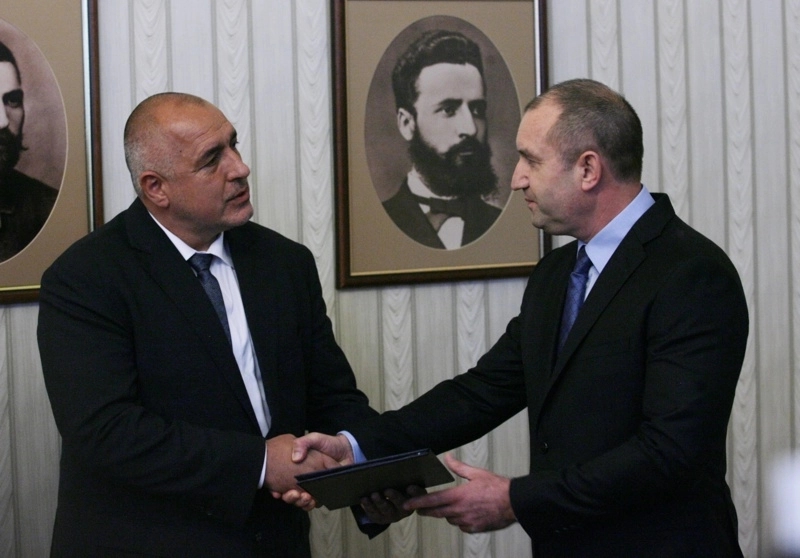
Radev had been labeled “pro-Russian” even before taking office. He dismissed the claim, saying: “I am a NATO general and have devoted my entire life to ensuring Bulgaria is a strong and active member of the alliance.” In 2026, Radev’s Progressive Bulgaria party claimed much of the former electorate of the Bulgarian Socialist Party (BSP), the successor to the country’s communist party.
A “last hope” candidate
Voters expect a miracle from the former general and president — much as they once did from Bulgaria’s last monarch, Simeon II, who was deposed by communists in 1946 before making a sensational political comeback by winning parliamentary elections in 2001. A quarter-century later, Progressive Bulgaria is set to secure about 130 seats in parliament, compared with 120 for Simeon’s movement in 2001.
Simeon’s “miracle” faded when the monarch-turned-democrat lost public trust. Radev, by contrast, is seen as a “last hope” candidate. Many Bulgarians believe previous governments either failed to tackle organized crime or were themselves part of it. For nearly a decade, Radev remained above the fray, maintaining strong approval ratings. Now, in his new role as prime minister, he will have to confront the issue directly.
Radev is seen as a “last hope” candidate that will have to confront the issue of organized crime
One of Progressive Bulgaria’s key campaign promises involves judicial reform, but implementing such measures requires a constitutional majority — three-quarters of parliament, meaning 180 out of the body’s 240 seats. Radev’s party secured an impressive 130, but even that figure is still well short of the needed mark.A “softer” option exists — two-thirds, or 160 votes — but it involves a more complex and lengthy process and cannot be used for the most fundamental issues. Again though, even that threshold is out of reach for the three-party coalition led by Radev.
Besides Progressive Bulgaria, four other parties entered parliament. Two of them — GERB and the Movement for Rights and Freedoms — are widely seen as representing entrenched oligarchic interests and have been opposed to judicial reform. Radev said before the election that cooperation with them would be impossible.
Another party, the hardline Euroskeptic and pro-Russian Revival, is too toxic for Radev, who has reaffirmed Bulgaria’s European course. In any case, Revival holds only 12 seats — not enough to make a difference. That leaves the liberals: a complex alliance between “We Continue the Change” and the smaller, diverse Democratic Bulgaria coalition. Although Radev criticized both during the campaign, he has not ruled out cooperation with either now that the election is over.
Business over ideology
However cooperation between Progressive Bulgaria and the liberal bloc is structured — whether through a formal coalition or issue-based voting — the liberals are unlikely to allow the new prime minister to abandon support for Ukraine or move significantly closer to Russia.
At the start of Russia’s full-scale invasion of Ukraine, Bulgaria was governed by Kiril Petkov’s “We Continue the Change,” and support from Sofia proved crucial to Kyiv in the early months of the war, helping to cover a significant diesel fuel shortage after Russian strikes on Ukrainian refineries and depots. It also supplied large numbers of 152 mm artillery shells and Soviet-standard small arms ammunition, as Bulgaria is the largest producer of such munitions outside Russia.
These arms shipments had been taking place quietly since 2014, becoming public mainly through incidents such as the poisoning of Bulgarian arms dealer Emilian Gebrev with Novichok or explosions at weapons depots in the Czech village of Vrbětice, where Bulgarian munitions were reportedly stored.
In 2022, there were also discussions about transferring Bulgaria’s MiG-29 fighter jets to Ukraine. The move is widely believed to have been blocked by then-President Radev. While Poland and Slovakia later sent their jets, Bulgaria did not.
In practice, decisions on Bulgarian arms transfers are made by the government, which largely ignored Radev’s warnings about being drawn into the war. Still, the MiGs were not sent, in part because, as a former air force commander, Radev was seen as an authoritative voice on the issue. He argued that Bulgaria had no “spare” aircraft.
As prime minister, Radev is likely to adopt a position similar to that of Slovakia’s Robert Fico: no free military aid to Ukraine, but existing commercial contracts will be fulfilled, and new ones may be signed.
For Kyiv, such a stance is acceptable. Larger European powers provide financial support, defense manufacturers fulfill paid orders, and Bulgaria’s surplus Soviet-era stockpiles have largely been depleted.
Radev is also unlikely to pursue any anti-Ukrainian actions along the lines of Hungary’s Orban-era use of vetoes on EU decisions. First, Bulgaria is highly dependent on EU funding — more so than Hungary. Second, potential coalition partners from the liberal bloc would exert pressure.
Russia, meanwhile, is unlikely to mobilize significant domestic pressure against Radev, as his political movement has already absorbed much of the Euroskeptic electorate. Nor is he likely to align himself with Europe’s pro-Kremlin, Trump-friendly forces. Direct appeals to the United States would also be difficult, given that Trump has shown little affinity for center-left politicians like Radev.
More reliable with Europe
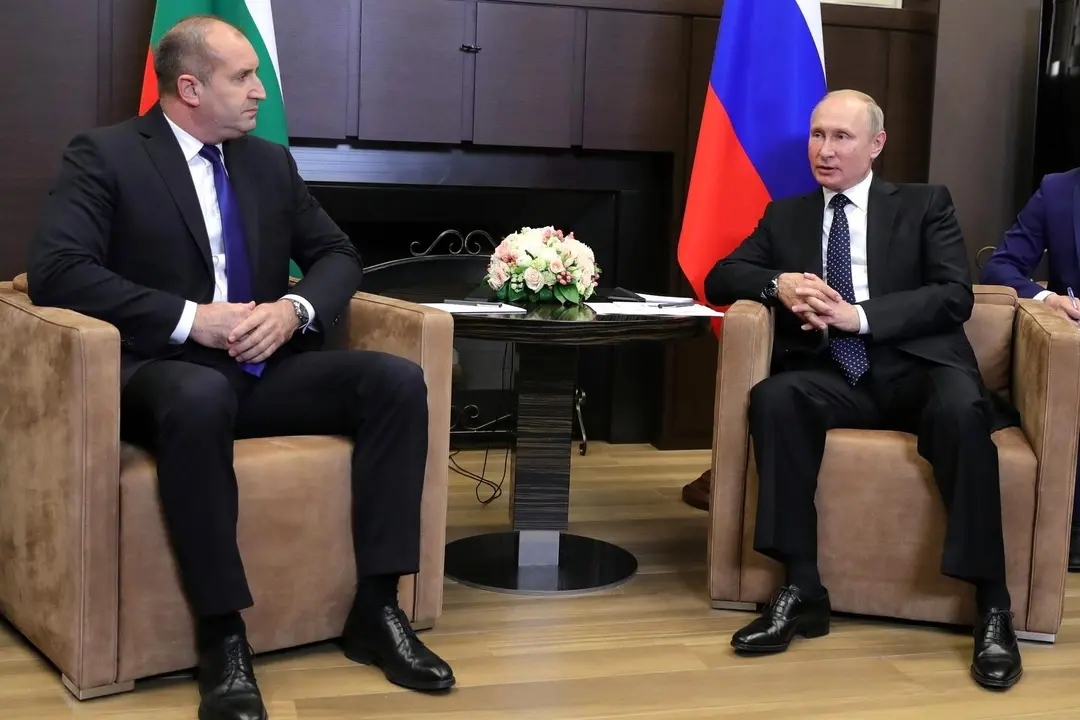
Radev is pragmatic. His statements about the need to build relations with Russia based on mutual respect and equality, and about the desirability of restoring full Russian oil and gas supplies to Europe, are worth noting. Without taking Viktor Orban’s radical position, Bulgaria’s incoming PM would like to receive material benefits in exchange for a willingness to gently promote Moscow’s interests in the European Union.
Bulgaria’s incoming PM would like to receive material benefits in exchange for a willingness to gently promote Moscow’s interests in the EU
But here, too, his room for maneuver is sharply limited. Bulgaria’s economic contacts with Russia have seriously deteriorated. Sofia abandoned construction of the South Stream gas pipeline in 2014 under pressure from the European Commission. Gazprom Neft is present mainly through a small Gazprom-branded network of gas stations registered through a European jurisdiction. Lukoil’s petrochemical plant in Burgas, the largest refinery in the Balkans, has fallen under U.S. sanctions — it is being prepared for sale and cannot be “saved” from that fate by the national government. Meanwhile, resuming construction of the Belene nuclear power plant with Rosatom’s involvement is unlikely, both for economic reasons and because of the positions of the United States and the EU.
Bulgaria has also received substantial compensation from the EU over the past 12 years in order to help counteract the negative economic effects of joining sanctions against Russia, particularly in the energy and agricultural sectors. The country has learned that it is easier and safer to seek additional European funds than to try to revive risky business with Russia.
That means the main audience for the future prime minister’s rhetoric about rapprochement with Russia may not be the Kremlin at all. Ideologically, such rhetoric is likely aimed at domestic voters who shifted their support from Euroskeptic parties over to Radev. Pragmatically, the incoming prime minister’s words are being indirectly aimed at Brussels, which may be expected to offer new incentives to keep Bulgaria in its orbit.