
China is carrying out unprecedented purges in its military leadership. In late January, two generals suspected of corruption were removed from their posts. Both had been serving on the Communist Party’s Central Military Commission, which commands the army and the internal security forces. At this point, only two incumbent members remain on the commission — and Xi Jinping himself is one of them. While Western analysts have linked the dismissals to an internal power struggle, the purge may also be connected to Beijing’s effort to foster the image of a “peaceful superpower,” argues sinologist Doris Vogl, a lecturer at the University of Vienna. In her view, Beijing has pragmatic reasons for seeking to avoid over-militarizing the country.
Western media outlets are currently rife with speculation as to why corruption allegations have been levelled against two Chinese Central Military Commission (CMC) members: General Zhang Youxia and General Liu Zhenli. Of course, the true reasons behind the removal of top Chinese military officials from power rarely come to light, with most cases being dismissed as opaque corruption offences, leaving plenty of room for speculation.
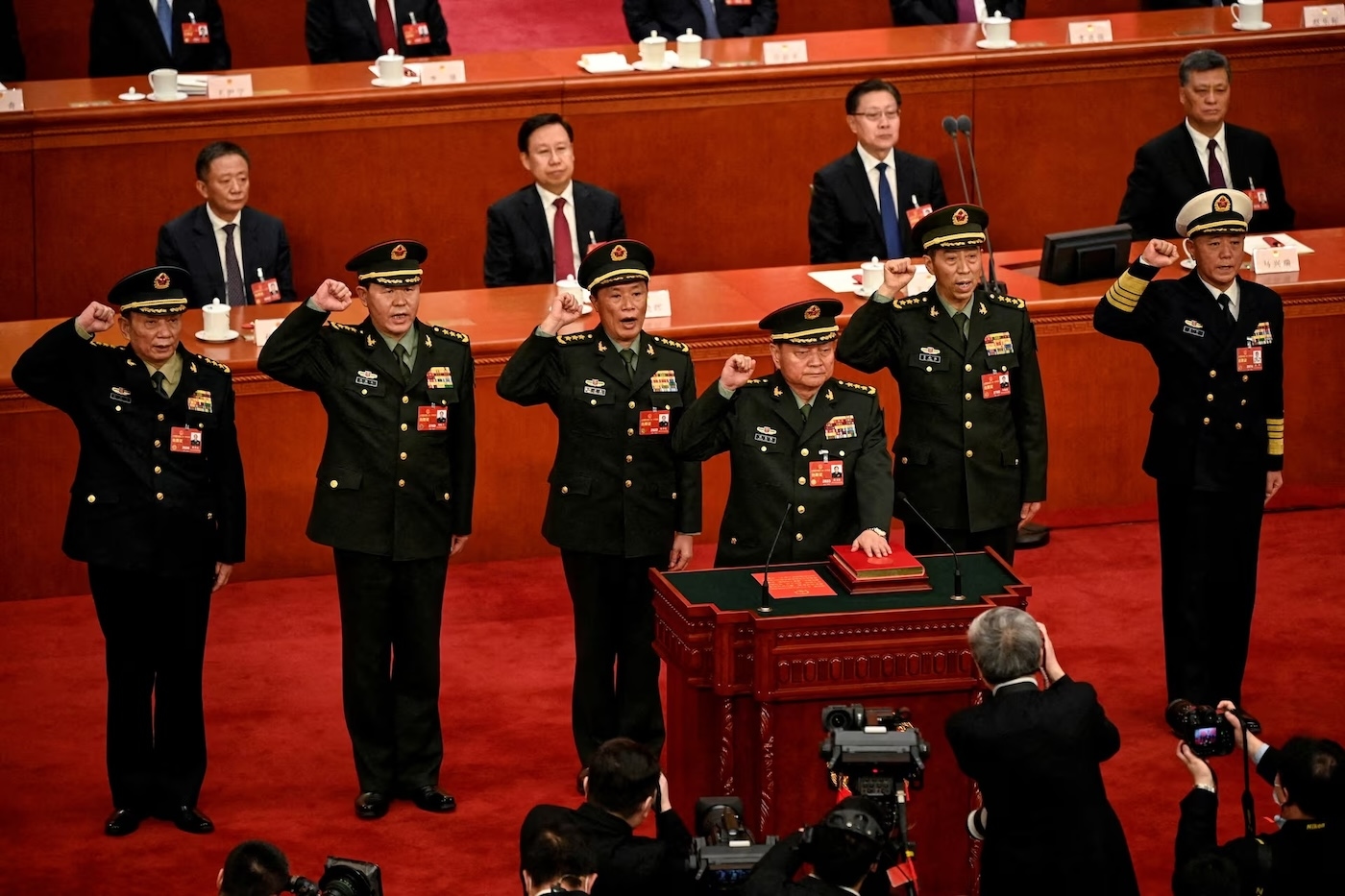
But what catches the world´s attention even more is the fact that, since the start of Xi Jinping's third term as CCP General Secretary in October 2022, a total of five high-ranking military officers have been “removed” from the CMC. Additionally, in the past two years two defense ministers — Wei Fenghe, Li Shangfu — have disappeared from the scene.
Admiral Dong Jun, who became defense minister in December 2023, has so far not been given a seat in the CMC, a break with a decades-long tradition in the leadership structures of the Communist Party of China. As of today, the CMC is represented by only two persons: CMC-Chairman Xi Jinping and the only remaining military officer, General Zhang Shengmin.
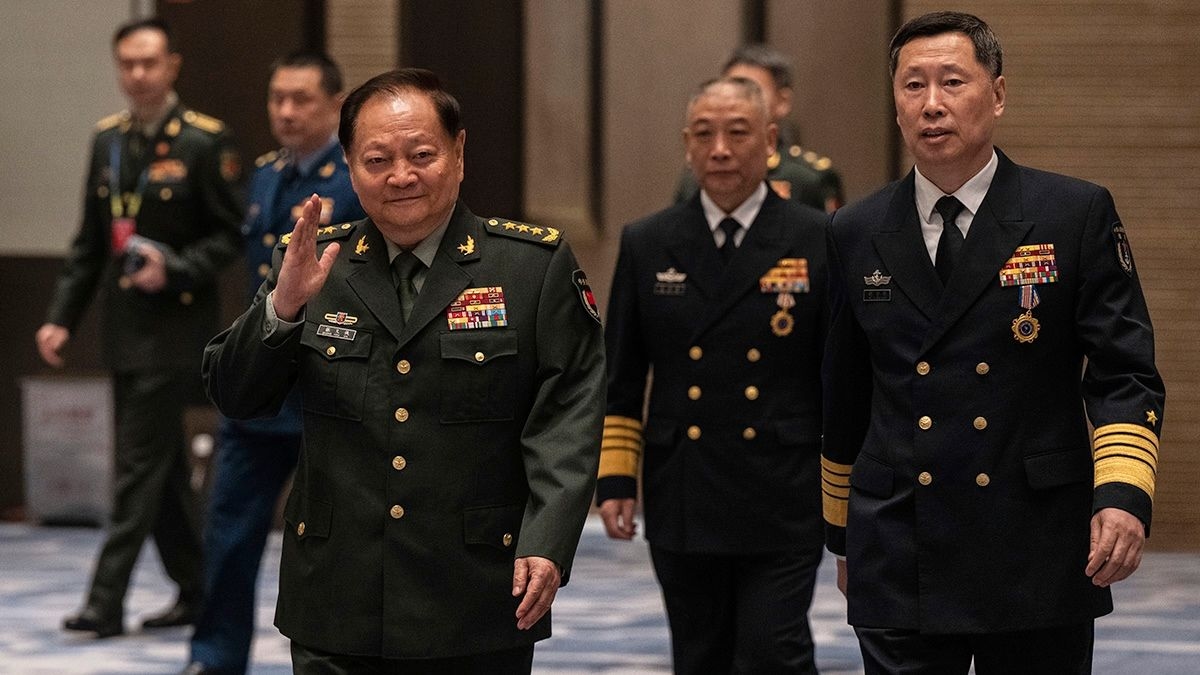
Some China analysts assume that the recent removal of high-ranking military officials was intended to prevent the formation of cliques — internal fractions that might have threatened Xi Jinping's power base. Others suspect a smoldering power struggle between the leadership of the People's Liberation Army and Xi Jinping. In general, these analyses are focused on the question of maintaining power within the system.
However, another possible explanation for the recent purges within the CMC remains largely unexamined, since it does not correspond to the China narrative dominating the Western media landscape. The analytical conclusion detailed below may at first seem to be an oversimplification, but its robust logic becomes evident upon closer inspection: the move is connected with China's official self-perception as a “responsible, peacekeeping superpower,” a phrase that is more than mere propagandistic rhetoric.
A turn to morality
With the announcement of the so-called “Global Security Initiative” (GSI) in February 2023, Beijing has presented to the world highly ambitious goals that include “promoting durable peace in the world”, “eliminating the root causes of international conflicts,” and “improving global security governance.”
In trumpeting such goals, China is deliberately stepping on moral grounds. For several years, a new, genuinely Chinese IR theory has been making waves in international Political Science communities. The talk is about “Moral Realism,” and an IR-school devoted to its tenets has been founded by Prof. Yan Xuetong, who is based at the renowned Tsinghua University in Beijing. It should therefore come as no surprise that the “moral obligations” of the young superpower China are reflected in the Global Security Initiative as well as in the most recent Global Governance Initiative (Sept 2025).
Beijing announced the so-called “Global Security Initiative” (GSI) in February 2023, whose goals include “promoting durable peace in the world”
Of course, the main target audience of the Chinese security concept, in which development and security are closely intertwined, is countries of the Global South. The industrialized G7 nations stick to a rock-solid positioning, defining China predominantly as an “aggressive” power — if not in the military sphere, then at least in the area of economic security. “Economic coercion” is the current buzz-word of the ongoing blame game.
But let us return to China´s CMC and the purged defense ministers. Just imagine the following scenario: you are a Chinese PLA general, commanding well-trained forces and drawing on a huge arsenal of high-tech equipment, and you are strongly convinced that a minor military strike in a given region would determine existing tensions rather quickly. However, much to your displeasure, the civilian decision-makers in the standing committee of the Politburo of the CCP are lecturing you again and again that medium-term global strategies are more important than short-term military success. They also underline that Beijing’s official commitments, as documented in the Global Security Initiative, do not allow for any deviations or military adventures. Such conversations between high-ranking PLA officers and civilian CCP cadres are by no means unrealistic and may have already played out several times.
The Party commands the Gun
So far, the analysis has deliberately referred to Politburo structures of the CCP and a wider Beijing-based leadership circle. We should not forget that China’s foreign policy strategies, together with the four existing global initiatives (including the Global Security Initiative) are the product of collective leadership. In this regard, most China commentaries are attributing too much political weight to Xi Jinping. One single individual can hardly be the mastermind of dozens of strategic concepts and long-term plans.
As general secretary of the CCP and president of the People’s Republic of China, Xi Jinping embodies the symbolic personification of strong and resilient leadership to the outside world, but this does not mean every initiative is the result of his personal predilections.
In the context of the CMC, however, the situation looks somewhat different. As chairman of the commission, Xi Jinping holds sole responsibility for major military decisions. In this function, he is also responsible for ensuring — vis-à-vis the collective leadership of the CCP — that China's long-term foreign policy strategy of being a “peaceful superpower” is furthered.
As chairman of the CMC, Xi Jinping holds sole responsibility for major military decisions.
It was no coincidence that the official “PLA Daily” newspaper accuses generals Zhang Youxia and Liu Zhenli of violating discipline and damaging the existing “chairman responsibility system.”
Here the overarching CCP principle “The Party commands the Gun” — enshrined since 1954 in the Chinese constitution — comes into play. As a logical consequence, the chairman of the Central Military Commission holds the final deciding vote on military matters. Notably, the civilian members of the CCP Politburo are not supposed to intervene in military affairs — with the sole exception being the CMC chairman.
Interestingly, there is already a narrative circulating that the recent downfall of General Zhang Youxia was due to his opposition to an imminent military offensive against Taiwan, planned for 2027. Despite such rhetoric, the facts actually point to a very different conclusion: Beijing has so far been quite successful in applying hybrid infiltration and rapprochement tactics to Taiwan and will therefore continue along this path for the foreseeable future without undertaking the considerable risk of a major military offensive.
The forbidden word “war”
Still, it is important to take a closer look at the morally charged narrative being presented by Beijing. The government-led image cultivation of the Chinese government as a “peaceful and peace-loving superpower” has had a real impact on several recent conflicts, both finished and ongoing.
In the deadly clashes between Indian and Chinese border guards at contested Himalaya region hot spots in 2020, the Chinese side was obviously ordered not to use firearms, mortars, hand grenades or similar weaponry. Instead they fought face-to-face with handcrafted nail-studded wooden clubs and similar medieval items. Until today the number and names of Chinese border guards who fell during combat in the Galwan valley has been kept secret. After all, any testimony that might create the circumstances for a war situation must be avoided by all means !
As for the ongoing skirmishes between Chinese coast guard units and the Philippine coast guard in the vicinity of the Spratly Islands in the South China Sea, a similar reluctance can be observed. Even though China Coast Guard (CCG) units have been subordinated to PLA command since 2018, the CCG proceeds ostentatiously — thought without firearms or torpedos — using water cannons, alarm sirens, blinding laser beams, and the sorts of sticks and axes capable of demolishing the opponent´s boat. In short, when it comes to direct confrontation in the field, China tries to avoid any situation that could cause a mere skirmish to be labeled a regular military combat.
This almost obsessive denial of warlike encounters is also reflected in the official presentation of recent history. The last full-scale war launched by the PRC took place 47 years ago. Chinese authorities refer to the Sino-Vietnamese conflict of February-March 1979 as the “China-Vietnam border self-defense counterattack operations,” the “Self-defensive counterattack operations against Vietnam to protect the border,» or the «Self-defensive counterattack against Vietnam.”
Chinese authorities refer to the Sino-Vietnamese conflict of February-March 1979 as a “self-defensive counterattack.”
Incidentally, this massive Chinese surprise offensive bears several similarities to the attack Russia launched against Ukraine in February 2022. On Feb 17, 1979, the PLA advanced into Vietnamese territory with a force of approximately 200,000 troops along several axes simultaneously. The PLA withdrew after four weeks, but claims victory to this day.
“Friends for Peace”
Another eye-catching datapoint corroborating Beijing’s aversion to anything that could be characterized as a “war” is the Chinese Foreign Ministry's insistence on using the term “Ukraine Crisis” for Russia’s ongoing invasion of its neighbor — in this case, the official designation of a “crisis” can only be taken as a euphemism.
Still, despite the linguistic gamesmanship, China has demonstrated a willingness to take part in peacemaking efforts. Li Hui, Beijing’s Special Representative on Eurasian Affairs, has undertaken a dozen shuttle trips to Europe in search of a compromise solution to end the war. In February 2023, the Chinese Foreign Ministry presented a position paper proposing the resumption of direct dialogue of the conflicting parties as quickly as possible and urging the commencement of peace talks. Since China´s diplomatic engagement under the banner of “active neutrality” was not well received by EU structures and other major actors, Beijing consequently sought a like-minded partner.
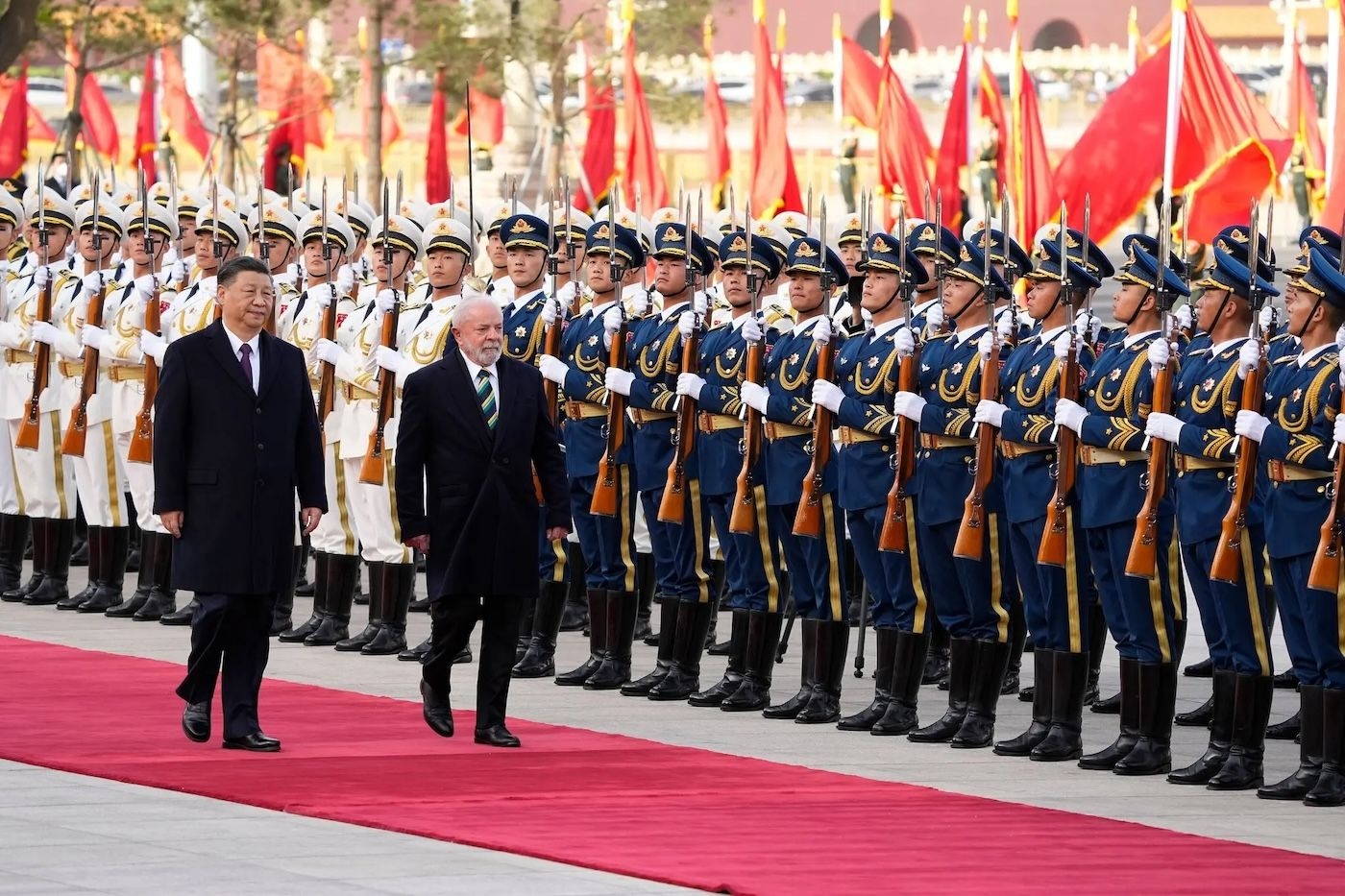
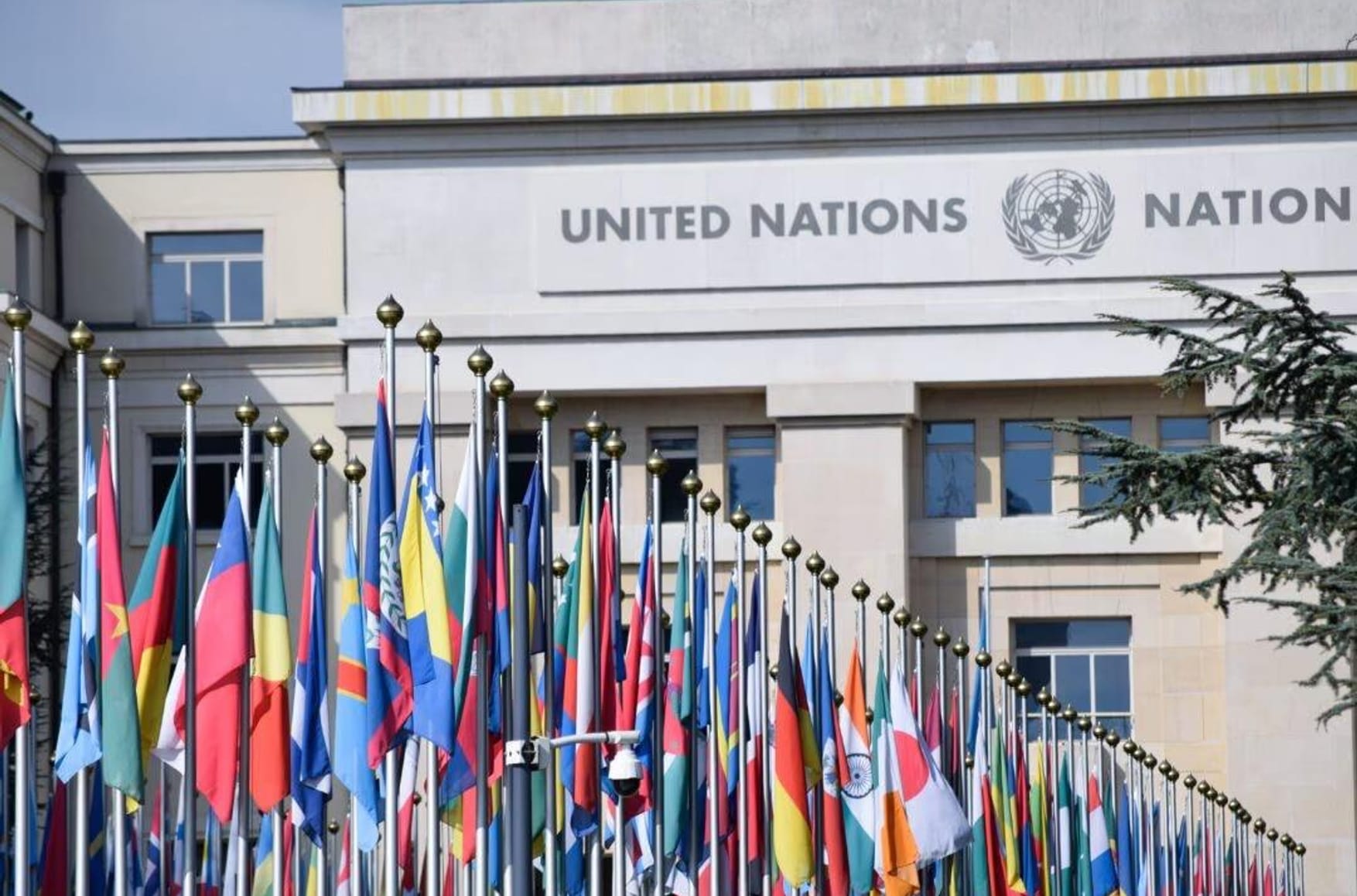
On May 23, 2024, a joint peace plan was issued in collaboration with Brazil. This proposal was followed by an initiative at UN level in September 2024, when Beijing initiated the “Group of Friends for Peace on the Ukraine Crisis,” again in tandem with Brazil. (Though admittedly, this group has not attracted a large following among UN member states, and repeated calls for a ceasefire in the framework of the Sino-Brazilian peace effort have remained limited to less than a dozen countries.)
Finally, one last critical point deserves particular emphasis. The aim of this background analysis was by no means to portray the People's Republic of China in a glowing light. The main purpose was to bring a few arguments into the ongoing discourse that are largely neglected. As with any other superpower, pragmatic considerations take precedence over moral principles when it comes to Chinese foreign policy initiatives.
The article was written by Doris Vogl, a lecturer at the University of Vienna and a teacher at the ICEUR School of Political Forecasting.