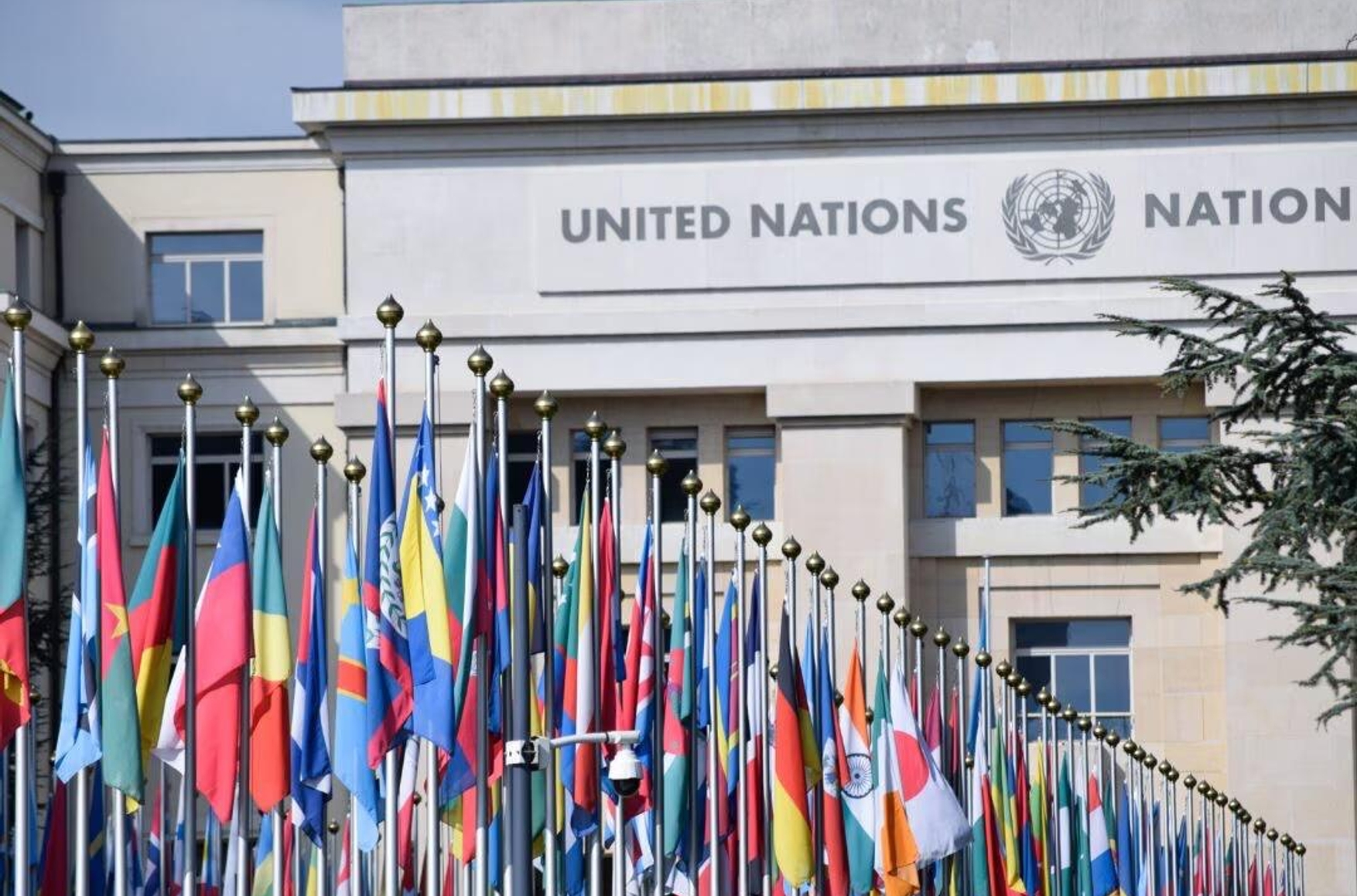
On Jan. 28, U.S. Secretary of State Marco Rubio said that Washington is prepared to use force to ensure “maximum cooperation” from Venezuela’s leadership. The capture of dictator Nicolás Maduro by American forces in early January became another sign that the system of global governance is rapidly deteriorating. The United States is openly flouting international norms, replacing the rules-based order with the law of the strong amid the evident paralysis from the UN.
The crisis in international relations had been building for decades. The legal architecture established after the Second World War has become hopelessly outdated and can no longer balance the influence of corporations against the ambitions of new superpowers, nor can it resolve the fundamental conflict between sovereignty and the primacy of human rights. The resulting chaos will sooner or later bring the world to a new order, which could take various forms — from a “new Yalta” to a world of networked regional empires and blocs.
Events at the end of 2025 and the beginning of 2026 offered yet another reminder that international law remains all but unenforceable. The fact that global institutions have long been in decline is nothing new. The system’s failures were visible, for instance, in its inability to resolve international conflicts like the ongoing war in Ukraine, but the problem is not exactly new: the UN, and the old alliances of major powers were unable to end various wars in the Middle East, and they never fully dealt with the consequences of Yugoslavia’s collapse.
During his first term, Donald Trump pulled the U.S. out of UNESCO and the Paris climate agreement, and while Joe Biden reversed those decisions, the return of Trump has met a return to an America that actively disregards the authority of global institutions. In November 2025, the leaders of the U.S. and China declined to take part in the Group of Eight summit in South Africa, and Washington’s new National Security Strategy, published in early December, harshly criticized the existing international order. Most recently, the Trump administration launched an intense round of foreign policy activity openly aimed at dismantling the established rules of the geopolitical game.
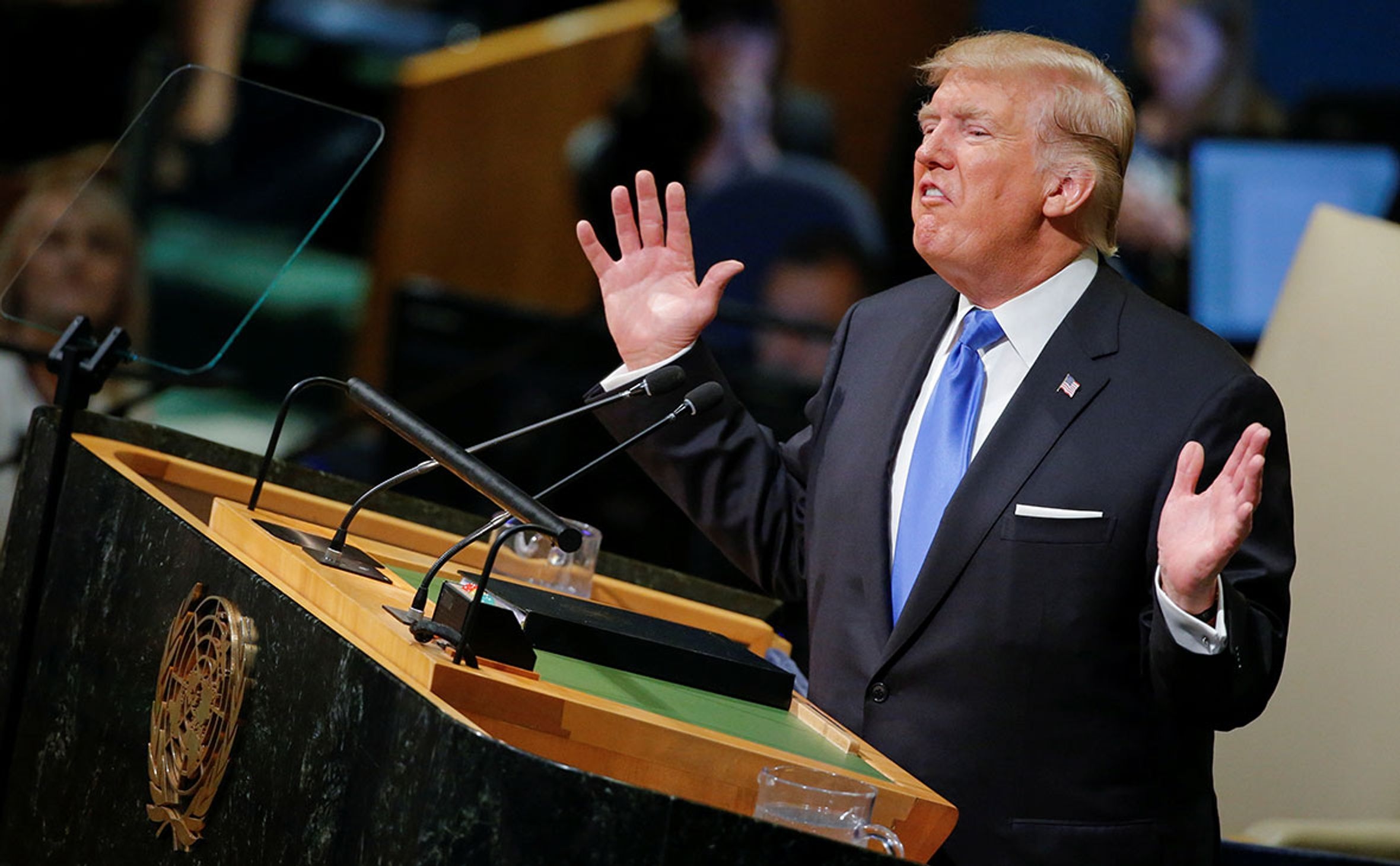
On Jan. 3, without UN authorization, the United States invaded Venezuela, seized Nicolás Maduro (who, to be fair, was viewed by much of the international community as a usurper), and transported him to New York to stand trial. At the same time, Washington issued a blunt demand that Greenland be handed over to the United States, threatening to use force if its bellicose entreaties were refused. On Jan. 8, Trump told reporters that he was constrained only by “personal morality and reason,” but not by international law. That month, he also signed a memorandum withdrawing the United States from 66 international organizations, including 31 UN bodies. By then, the U.S. had already left the UN Human Rights Council, the World Trade Organization, and several other international institutions.
Trump advisor Stephen Miller set out America’s claims to Greenland in starkly cynical terms, saying that the right to have a territory belongs to whoever can defend it. In the European tradition of international relations, it is difficult to find another precedent for such an explicit assertion of the primacy of force. During the Middle Ages, sovereignty was at least conditioned by dynastic legitimacy, and by the early 20th century the right of peoples to self-determination had become an established norm. Even foreign-policy adventurers (like Putin) have sought to cloak their aggressive actions in those same rights of peoples or in decontextualized references to international law, however implausible their purported justifications may be.
Trump advisor Stephen Miller said in January that the right to a territory belongs to whoever can defend it
Of course, it is possible to chalk up the latest events to the personal sociopsychological traits of Trump and his circle, just as Russia’s aggression against Ukraine was once explained by Putin’s personal characteristics. But that would be an oversimplification, as the crisis actually began back in the 1990s. According to calculations by scholars Maria Debre and Hylke Dijkstra, references to international organizations in UN General Assembly documents began to decline as early as 1996.
Today, the academic literature reflecting on the decline of global institutions forms a substantial body of work, ranging from broad studies to analyses of specific details.
The end of international law
Four main factors can be identified that define what has been happening in recent years. The first is the weakened foundation of the current system of international relations. The modern world order (the so-called Yalta order) emerged from the outcome of the Second World War. Its institutions reflected the balance of power that existed at the time, and its rules were a consensual embodiment of the values of the United Nations — that is, of the victorious powers.
Contradictions were inherent from the outset. On the one hand, all states were formally declared equal under international law. On the other, a pragmatic two-tier system of global governance was established in which the permanent members of the UN Security Council received an almost unconditional immunity from any attempt to normatively limit their freedom of action. The only real constraint on the great powers consisted of mechanisms of mutual deterrence combined with the values-based commitments they voluntarily assumed. These commitments matched the trends of the postwar era’s move towards humanization and democratization.
The end of the Cold War largely invalidated this system, which functioned only so long as the confrontation and fear of mutual destruction between the USSR and the United States existed. Russia, as a nuclear power, retained its permanent seat on the UN Security Council by inertia, but the dramatic decline of its capabilities compared with the Soviet period was obvious. New influential actors emerged — Germany, Japan, India, Brazil — and endless debates began about the need to reform the UN Security Council. Naturally, any changes were (and still are) blocked by the holders of the veto power, who not without reason regard it as a key marker of belonging to the top tier of world politics.
The global system established after the Second World War functioned as long as the fear of mutual destruction existed
As a result, informal structures like the G7 and the G20 emerged to compensate for the imbalance that had developed. Yet precisely because they are informal, they could not become an alternative to the UN Security Council. As a result, the interests of several countries that have effectively “grown into” global status remain markedly underrepresented at the international level.
The second factor is the changing role of the so-called “Third World.” In the past, their voices were taken into account only when they aligned with the position of a particular global superpower or were consolidated within a bloc like the Non-Aligned Movement. Now new centers of power — such as China and various Middle Eastern petrostates — are successfully competing for influence over the “Third World” by rallying collections of “small countries” around their agendas. This development further undermines the credibility of the global governance institutions, and one example of a response to these changes is the obstructionist policy pursued by the United States toward the UN.
The third factor is the system’s continuing failure to recognize the power of non-state actors — from transnational corporations to nongovernmental organizations — which often surpass many UN member states in their ability to influence global politics. Cryptocurrencies issued by private players circulate globally, undermining the financial sovereignty of states. Business, which lacks representation in international political forums, ultimately finds ways around its exclusion by using governments as instruments or exerting influence through numerous networked structures of varying degrees of formality.
The fourth factor undermining the effectiveness of the existing system of international relations is its nearly inevitable internal degeneration (as viewed through Max Weber’s sociological model). Institutions become autonomous from their creators, a reality that is clearly visible in the case of the European Union, which generates programs that increasingly irritate a significant share of its member states, along with their societies at large.
Such institutions often act for the sake of bureaucratic survival; their goals no longer align with those of the countries that created them, and they ultimately become independent political players. At the global level, similar processes are unfolding in the relationship between the UN and the United States. Trump’s cost-saving policies are fundamentally at odds with the UN’s global commitments, which are at times highly resource-intensive. This becomes yet another reason for Washington to obstruct the structures of the United Nations.
Conflict of postulates
The crisis of today’s model of global governance is also driven by the conflict between two fundamental ideas of modern political culture. The concept of individual and group human rights, which became one of the foundations of European civilization during the Enlightenment, contradicts the principle of state sovereignty. The postwar world order is built simultaneously on these two mutually exclusive postulates, as codified in the 1975 Helsinki Final Act, which proclaims the principles of protecting human rights, noninterference in the internal affairs of states, and the inviolability of postwar borders. At the same time, it was already clear all the way back then that the relationship among these points depended entirely on the situational balance of power. The USSR formally agreed to assume obligations in the sphere of rights precisely because it felt itself at the peak of its power.
The idea of human rights, which became one of the foundations of European civilization, contradicts the idea of state sovereignty
When the Cold War ended, this contradiction was fully exposed. Sovereignty remained the prerogative of strong players, while the principle of the primacy of human rights was applied more readily by the international community to the weak. China retains all the attributes of a respectable sovereign power, even though the catastrophic state of individual rights in the country is common knowledge.
An example of punishing the weak under the pretext of protecting human rights can be seen in the case of Yugoslavia, whose fate in the 1990s raises numerous questions from the standpoint of international law. These contradictions and value-based manipulations, along with so-called “democratic interventionism,” significantly discredited the humanist message of the need for a global order, clearing the way for the pragmatism, cynicism, and populist “national egoism” of today’s world politics.
Impoverishment and national selfishness
There are also domestic political factors that undermine the world order — in the countries of the “First World” most of all. The difficulties they have faced in recent years have reduced their ability to act as global (and at times even regional) arbiters.
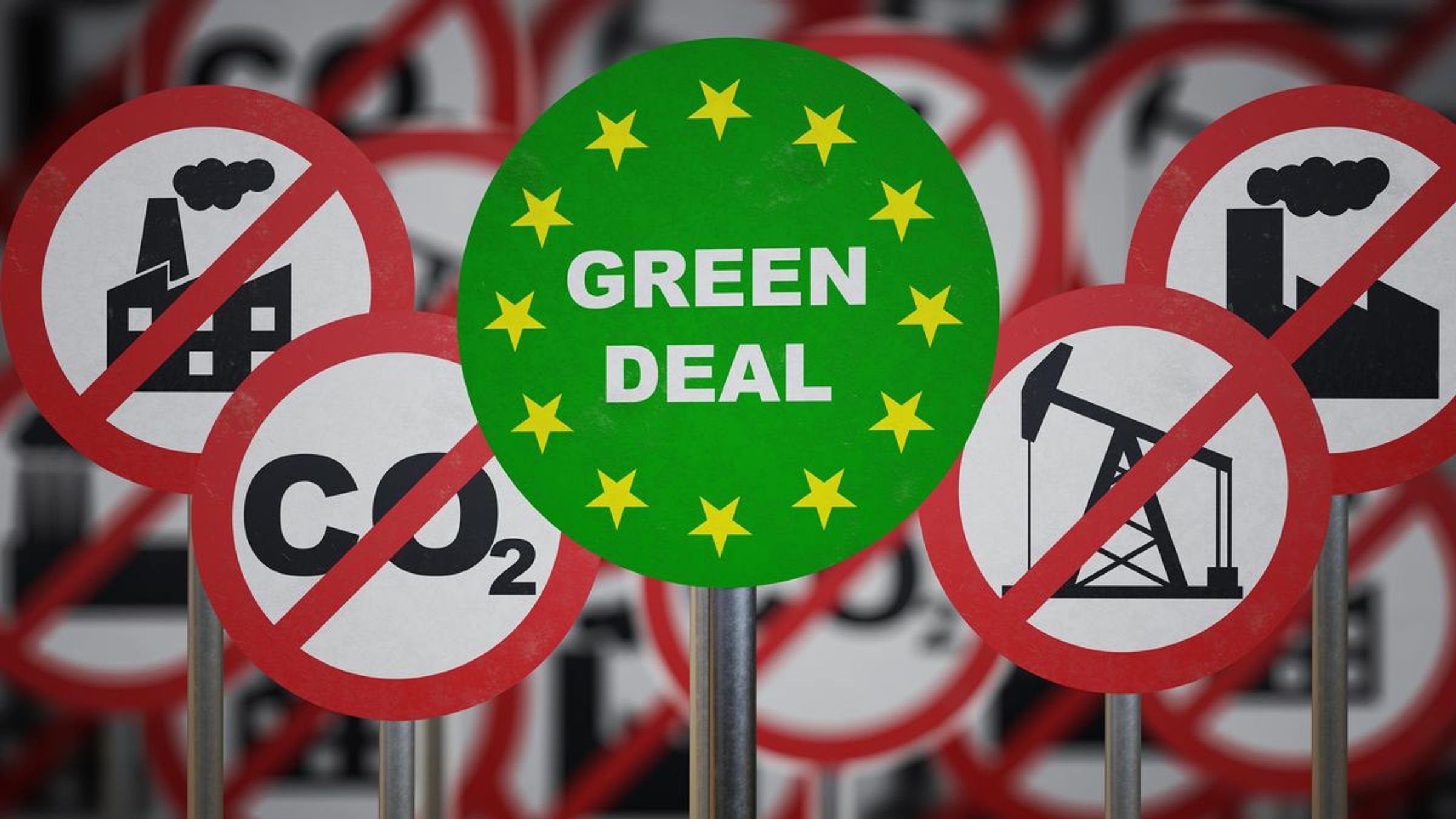
Economic problems limit these countries’ capacity to support the work of international institutions and programs. In this sense, the unenviable fate of the Paris Agreement on climate change, the EU’s Green Deal, and various UN assistance programs is telling. Financial difficulties are compounded by the rise of isolationist sentiment in the states of the “golden billion.”
This populist isolationism represents a variation of the classic national selfishness of the prewar era. The more power populists gain in Western countries, the more willing these countries become to reduce their international commitments or to convert the liberal idea of foreign assistance into realpolitik imperial claims, following the example set by Trump and the United States.
Where do we go from here?
The outlook for the further evolution of the modern world order depends directly on one’s view of its current state. If what we are seeing now is a crisis within the system, then the discussion ought to be about rebalancing: states that expect to benefit from this will establish new rules and formalize them both within individual organizations and at the level of international norms.
If, however, the crisis is considered to be external to the system, its outcome will be the complete dismantling of existing principles of global governance and the emergence of radically new actors. Based on these two assumptions, four potential scenarios can be outlined.
A New Yalta
The new world order will be built on old foundations. Global competition will be accompanied by compromises on issues important to all of humanity. The composition of decision-makers will change, and this will be reflected in the structure of new international governance institutions. The mechanisms of their interaction, however, will remain more or less the same. The principles of the new world order will again be defined by the winners.
This scenario seems optimistic only at first glance. If it comes to pass, the establishment of a new balance of power will follow a phase of global struggle for leadership — just as the creation of the UN and the Yalta system followed the Second World War. What is happening now is obviously only the beginning of this phase, and it is impossible to imagine its further course, let alone the final group of beneficiaries.
Inertial fragmentation
In this scenario, new centers of power and global players emerge by inertia over the course of the present international institutions’ decline. A possible analogy here would be the CIS as an instrument of the USSR’s “civilized divorce.” This scenario is optimistic only in the sense that it, unlike the first variant, does not imply a temporary descent into catastrophic chaos. In its consequences, however, it is rather more pessimistic, as it entails the degradation of global governance (even if, perhaps, only temporarily).
Complete collapse
This is a more radical version of the second scenario. In this case, supranational institutions would disappear entirely, and their place would be taken by integrated regional groupings or quasi-imperial structures. In both cases, the primacy of territorial sovereignty would be seriously weakened. Several regional or transregional clusters would emerge, each with its own institutionalized regimes. However, the concept of human rights would still retain its significance and would become the basis for new integration projects.
The likelihood of such a development, however, is very low. Working against this scenario are the very new global players that are not confined within the borders of national sovereignties. These are, above all, transnational corporations and nongovernmental organizations. Their influence on global dynamics is highly likely to increase due to a combination of social, technological, and economic factors.
Non-systemic networked world
In line with the current transformations of global institutions, it is possible to observe the growing influence of new, nontraditional actors. If this trend continues, today’s crisis should be viewed as extra-systemic — that is, one that destabilizes or destroys the old system of international relations and helps shape a fundamentally new world order and fundamentally new institutions.
If this is the case, the new system will become both networked and hierarchical, but it can hardly be called optimal — especially since its formation will inevitably be accompanied by the chaos of global conflict. In value terms, it will be extremely far from the ideals of the democratic world order built after the Second World War, because it will combine an imperial mode of spatial organization with the pragmatism of global corporations. The Westphalian primacy of territorial sovereignty will also lose its relevance in such a world. Empires, by definition, are heterogeneous and seek expansion, while corporations and nongovernmental organizations operate across borders and defy the confines of territorial sovereignty.