
The times when war automatically rallied a nation “around the flag” are gone, Boris Grozovsky argues. In the United States, Russia, and Iran alike, confrontations with external enemies have not consolidated society behind national leaders, and in some cases, armed conflict has deepened internal divisions. Only in states facing a truly existential threat — such as Ukraine or Israel — does a cross-party consensus in support of a national war effort endure.
Rallying “around the flag”
“The war gave meaning back to my generation,” Kremlin propagandist Vladimir Solovyov once said, speaking of Russia’s unprovoked invasion of Ukraine. Of course, Solovyov is not the only Russian who feels this way, but he is still in a relatively small minority — which is why the war is being fought by hired contract soldiers, and why the compensation package being offered to new recruits requires frequent increases,even as many regional budgets are in a dire state.
It is commonly believed that in earlier times, during the age of nation-states, war became the business of the whole people: internal quarrels and contradictions were set aside, and different social groups united to confront the enemy. “The natural patriotism of peasants and nobles extinguished class contradictions and mutual struggle, giving the war the nationwide character of a Patriotic War,” writes historian Mikhail Suslov about the War of 1812.
Suslov, who teaches at the Perm Military Institute of the National Guard Troops (formerly a military academy), insists that, at that time, everyone was united by the “value of the state” in defense of which disputes could be postponed and, if necessary, life itself sacrificed. Soldiers in 1812 may not even have known the word “state,” and they gave their lives not for that abstraction but more likely “for faith, tsar, and fatherland.” Yet even then, some peasants were instead waiting for the arrival of Napoleon Bonaparte as a liberator from serfdom. It was hardly so simple, even in those days, to set class contradictions aside, despite active efforts by tsarist propaganda to portray the war as a unifying, nation-forming event.
Now things are even more complicated. One explanation is that younger generations no longer see the state as something worth fighting for. As sociologist Ronald Inglehart described the current state of affairs, the widespread acceptance of “self-expression values” like personal growth, freedom, and creativity render people less willing to sacrifice their lives for abstract ideas. But whatever the cause, in many countries around the world, young people are increasingly unwilling to serve in the military or to risk their health and lives for the sake of their country.
The spread of hedonism worldwide makes people less willing to sacrifice their lives for abstract ideas
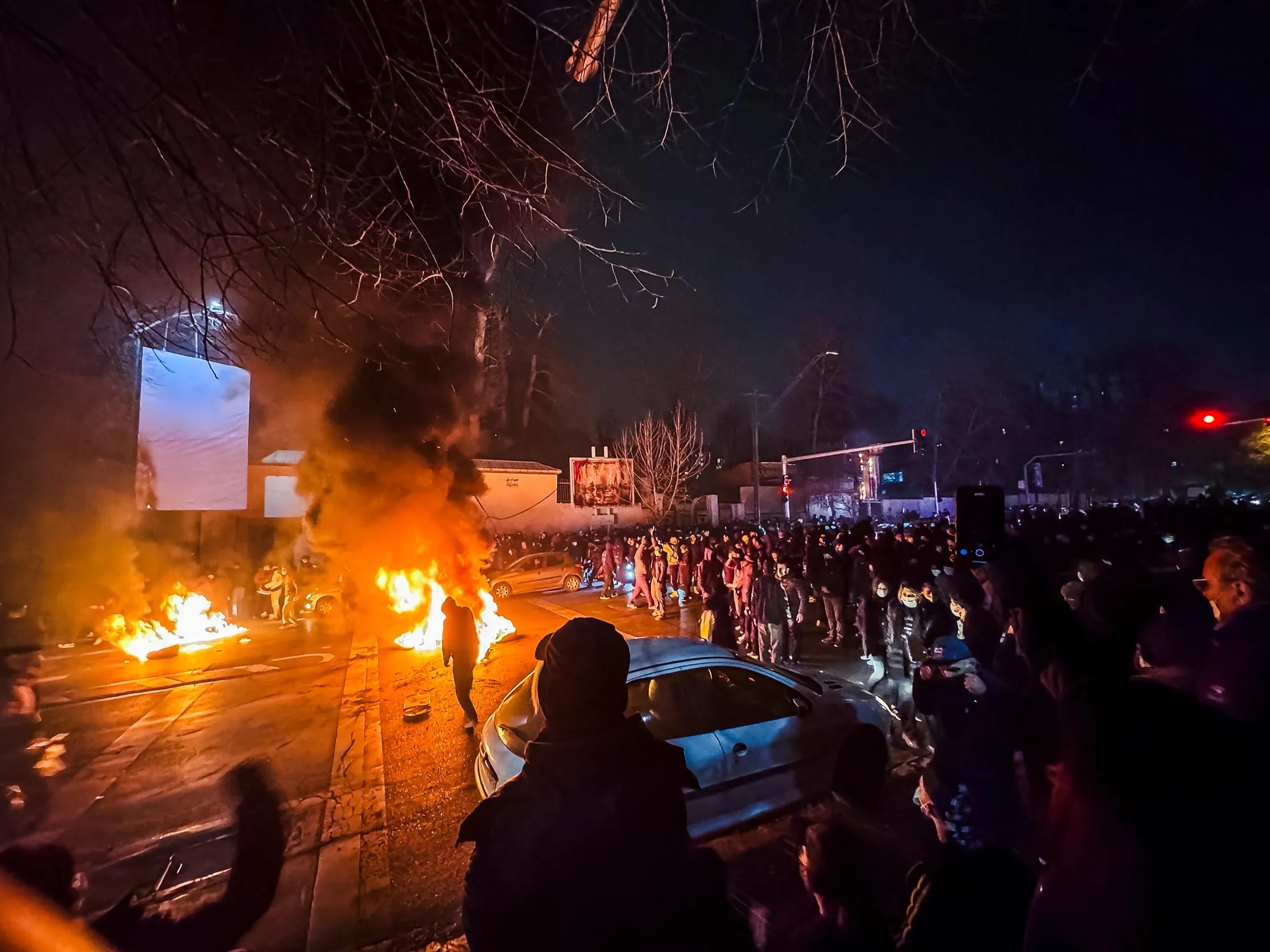
These same factors have also weakened the rally-around-the-flag effect. In March–April 2026, when war broke out in the Middle East, there was no sign in either the United States, Iran, or Israel of internal conflicts easing or of unity consolidating. Instead, in March Donald Trump’s approval rating declined from 40% to a new low of 36% (it had been 47% in January 2025). In Iran, under a dictatorial regime and amid internet shutdowns lasting for a month and a half, measuring public sentiment is impossible; however, there are no signs that society’s widespread grievances against the ayatollahs have been forgotten after protests against them brought millions into the streets in January.
Israel: war is a necessity, not an achievement of the ruling coalition
In Israel, during March and early April, the popularity of Benjamin Netanyahu and the parties in his coalition declined slightly — not because Israelis are dissatisfied with the war, but because many were disappointed that a ceasefire was announced before the war’s goals had been achieved. Approval of Netanyahu’s performance as prime minister fell during the war from 40% to 34%. Most Israelis see the war against Iran and Hezbollah as a necessity, but do not regard it as an achievement of the ruling coalition or a matter of party politics.
For Israel, war with Iran has an existential character. The destruction of Israel is an official goal of the ruling regime in Tehran, reaffirmed in numerous statements over several decades (1, 2, 3, 4, 5, 6, 7, 8). For many years Iran has supported virtually every armed group in the region engaged in terrorist activity against Israel.
For many years Iran has supported virtually every armed group in the region engaged in terrorist activity against Israel
Therefore, although Israel remains a polarized society, it is obvious to virtually everyone in the country that reducing Iran’s military capabilities is a necessary condition for the state’s survival. Which is why the war itself enjoyed broad popular support, with 78% of Jewish Israelis in favor of continuing combat operations against Iran as of late March.
At the same time, the main points of internal tension – regarding judicial reform, obligatory military service, and state policy regarding Gaza, Judea, and Samaria – remained contentious even during the war and pose a serious challenge to Netanyahu and his political allies ahead of parliamentary elections scheduled for this October.
United States: Trump is a bigger enemy than distant Iran
The situation in the United States is entirely different: the war with Iran did not become popular there. At the beginning of March, according to a Reuters/Ipsos poll, 27% supported an attack on Iran, while 43% were opposed. By mid-March, according to a YouGov/The Economist poll, only 33% were in favor and 55% were against. By early April, the figures in another Reuters/Ipsos survey showed 35% approval and 60% disapproval, while YouGov/The Economist poll had 34% in favor and 53% against.
It follows that Donald Trump entered into war with Iran with a very low level of public support. By comparison, at the start of the war in Afghanistan in 2001, 92% of respondents supported military action, while support for the 2003 war in Iraq initially stood at 71%.
Unlike Israel, for the United States the war with Iran did not become a matter of bipartisan consensus. A month after the attack began, it was supported by 74% of Republicans and 7% of Democrats. Amid broader disapproval of Trump’s decision to attack Iran 88% of Democrats opposed the operation, while 71% of Republicans supported it.
Attitudes toward Israel, America’s ally in the war with Iran, are similarly shaped by party affiliation. Israel is viewed negatively by 80% of respondents who lean Democratic but by only 41% of Republicans. It is therefore unsurprising that 16% of Democrats and 73% of Republicans approve of Trump’s policies regarding U.S.–Israel relations. The rest of U.S. foreign policy has also become a victim of partisan division. For example, Trump’s decisions regarding Ukraine and Russia are approved by 60% of Republicans and 7% of Democrats, while on Iran Trump enjoys 66% approval from co-partisans and the same 7% figure from his political opponents.
It seems that more than half of U.S. citizens simply reflexively reject anything Donald Trump does. For them, he is a far greater enemy than distant Iran, China, or Russia. For example, Paul Krugman, Nobel Prize-winning economist and outspoken Democrat, calls Trump a terrorist. Could he feel sympathy for any action Trump takes? The answer is obvious.
The public split in the United States has proved so all-encompassing that the country has effectively lost the ability to pursue a coherent foreign policy. Historians compare today’s polarization in the United States with the period of the American Civil War (even if the country today is still only divided in a political sense).
The split in the United States has become so deep that the country can no longer conduct a truly national foreign policy
Polarization has reached an extreme level, says Thomas Carothers, president of the Carnegie Endowment for International Peace. There is no unity on any issue: instead, when it comes to questions regarding Europe, Russia, Israel, Iran, and Venezuela, there are clearly delineated Republican and Democratic views, though it must be stressed that this by no means implies that the United States is moving toward an actual civil war.
Russia: either admit total defeat or keep fighting
It isn’t just Americans who are divided over their government’s foreign policy. Many in the Russian opposition, driven into exile or forced deep underground since 2022, hate the Putin regime and wish not for their country’s victory but for its defeat in the war with Ukraine. Some opposition figures help Ukrainians through various foundations and volunteer networks; others take part in fundraising campaigns to support the Ukrainian armed forces, actions that automatically qualify them as “traitors” back home.
Having lost the battle for Russia’s future and paid for it with exile, many opposition activists now hope for Vladimir Putin’s military defeat. Similar sentiments are also held by a minority inside the country. However, to openly express such views makes individuals vulnerable to the harshest forms of repression.
Having lost the battle for Russia’s future and paid for it with exile, many opposition activists now hope for Vladimir Putin’s military defeat
This resembles the situation of a civil war, when the losing side in a domestic political battle place their hopes on armed confrontation backed by support from abroad. They have exhausted political means of resolving the situation, meaning the only choice they have is to either admit total defeat or to continue the fight.
In order to pursue the latter course, strong allies outside the country are needed. During civil wars, opposing sides do not consider it shameful to solicit and accept outside assistance, since they are powerless to improve their position through internal struggle alone. When it is impossible to achieve more by one’s own efforts, national unity recedes into the background, giving way to political alliances that cross borders. During the Spanish Civil War, the Francoists were aided by Germany and Italy, while the Republicans were backed by the Soviet Union and a collection of 35,000 anti-fascist volunteers from 52 countries.
Iran: protest during war means certain death
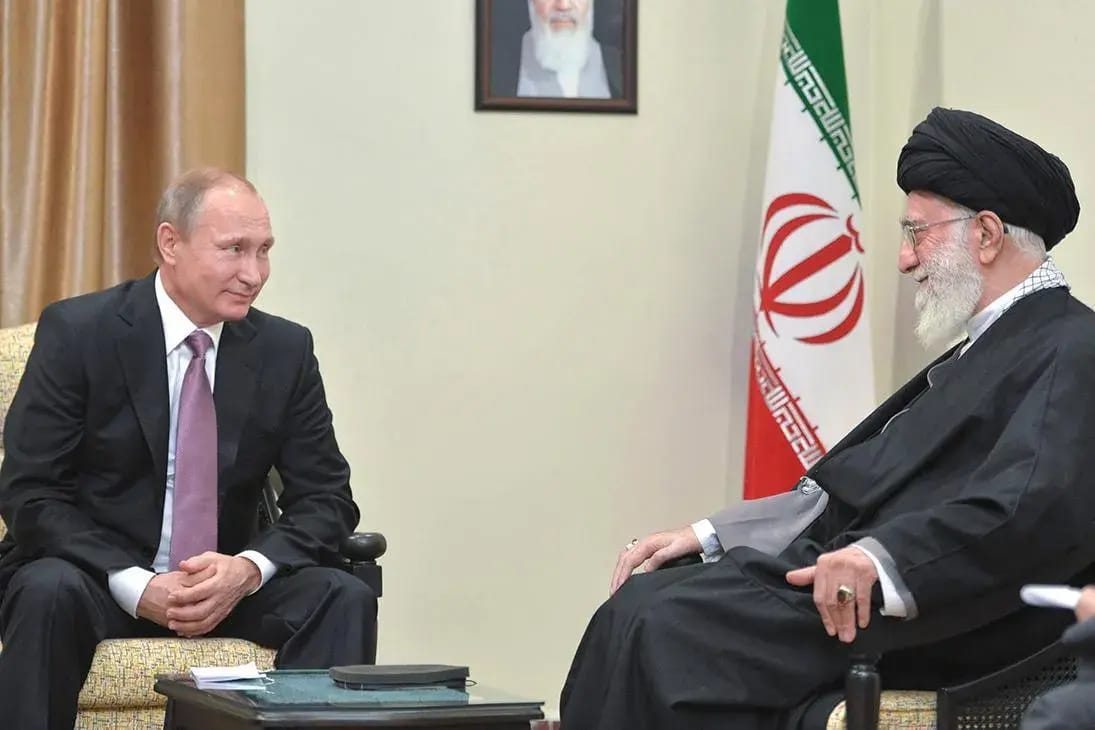
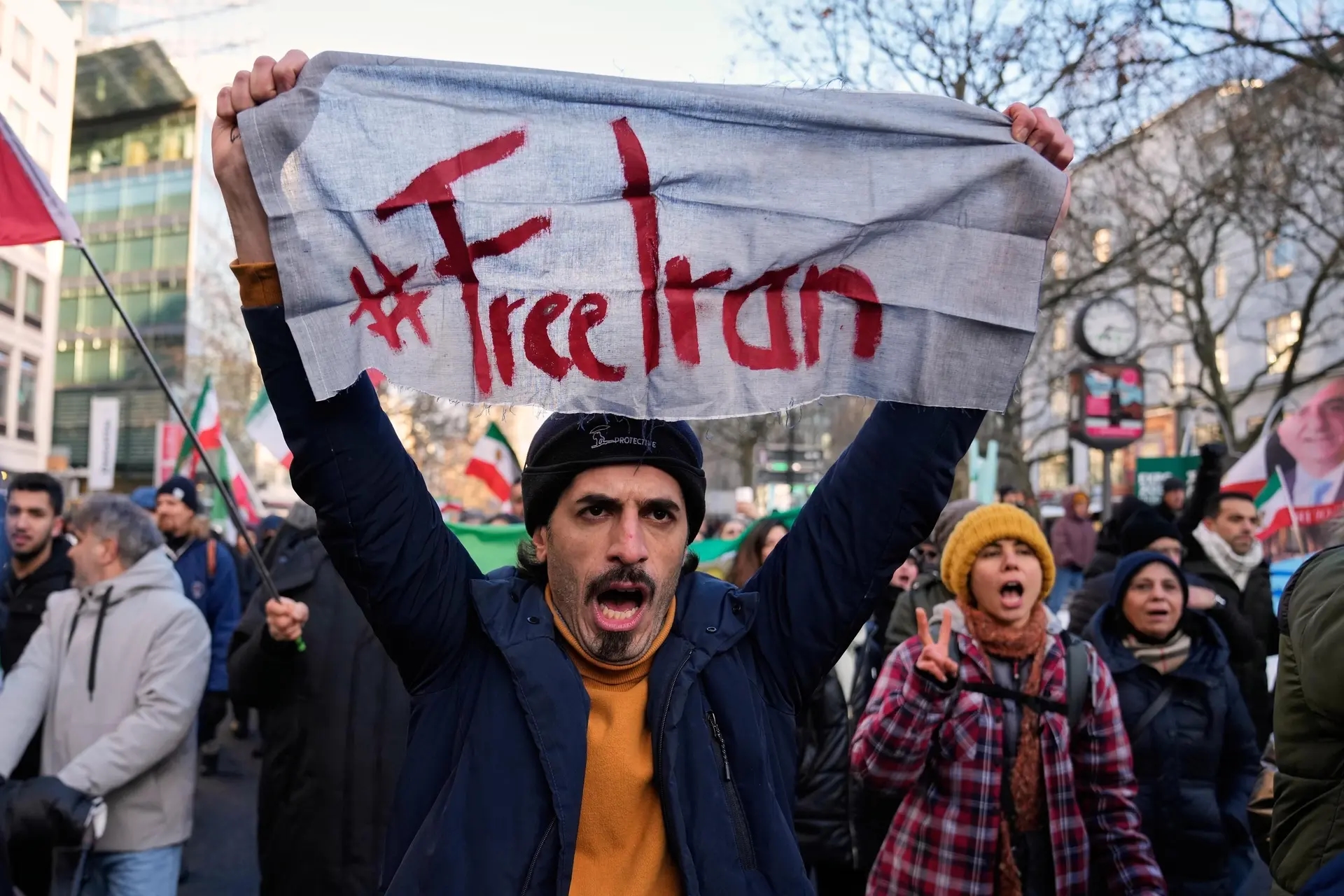
The position of the Iranian opposition is in many ways similar to that of the Russian opposition. In both countries, the authorities resort to harsh repression, the domestic opposition is disorganized and intimidated, and émigrés have little leverage over events back home. Crown Prince Reza Pahlavi enjoys a certain degree of popularity among Iranians but can do little to actually affect the situation on the ground. Part of the Iranian opposition, like part of the Russian opposition, wants its country to be defeated in war, seeing no other way to change the regime.
The war in the Middle East began a month and a half after the brutal suppression of protests that had seen 1.5 million people in Tehran take part and more than 5 million nationwide. According to reports from the Iranian opposition, between 30,000 and 37,000 protesters were killed (1, 2, 3). Even the Iranian government acknowledged around 3,000 victims, while the human rights group HRANA documented more than 7,000 deaths.
Against this backdrop, at first opposition-minded Iranians both inside and outside the country welcomed the U.S.-Israeli attack on the Iranian regime and the elimination of its leaders. However, the protests that Donald Trump and Benjamin Netanyahu were likely hoping for in the early days of the conflict did not materialize — likely because, for Iranians, taking to the streets would have meant certain death, as the police declared that protesters would be treated as enemies. At the same time, the Iranian authorities repeatedly organized demonstrations in support of the regime.
When a destructive war is underway, one that also targets civilian infrastructure, it is very difficult for the population to side with the “enemies” wreaking the havoc. Iranian authorities were also helped by careless statements from Trump, who alienated potential allies by threatening to bomb Iran “back into the Stone Age.”
Iranian authorities were helped by careless statements from Donald Trump, who threatened to bomb Iran “back into the Stone Age”
Coordination among the opposition was also hindered by the near-total absence of internet access in Iran beginning on February 28, the extreme brutality with which the authorities suppressed the uprising, and the opposition’s lack of organization and any plan for resisting regime repression.
And yet there is no doubt that a significant part of the Iranian opposition remains hostile to the rule of the ayatollahs and will return to confronting it when the opportunity arises. War with the United States and Israel does not make the Iranian opposition love a repressive regime. Likewise, the war with Ukraine does not make the Russian opposition more favorably disposed toward Vladimir Putin, while the war with Iran only increases dissatisfaction with Trump in the United States.
War for survival
In short, in many cases domestic political conflicts matter more to people than their country’s struggle against an external enemy, even if the intensity of that internal struggle varies by circumstance. In Iran, the years of deadly tension between protesters and the regime could reasonably be described as a civil war. The Russian case, meanwhile, is closer to that of Turkey, where confrontation is less overt. In the United States, the intensity of political conflict is rising, but what this struggle will lead to amid declining Republican popularity will become truly clear only when presidential elections are held in 2028.
By contrast, in Israel and Ukraine, interstate wars are not viewed through the prism of civil conflict, but as genuinely popular struggles for national survival. In both countries there are people who consider the wars waged by their states unjust, but they are in a clear minority.
Overall, the “rally around the flag” effect only seems to apply when a country’s survival is truly threatened — hence the low levels of support shown by American and Russians for their respective foreign military operations.
Notably, the current war in the Middle East is not existential for Iran either: neither the United States nor Israel has plans to occupy the Islamic Republic. The war could easily call into question the survival of the regime of the ayatollahs, but not of Iran as a political nation, which is why that regime continues to face opposition domestically.
A completely different hierarchy between foreign and domestic politics exists in Israel and Ukraine. There, domestic political disagreements do not overshadow war. As with Israelis, citizens of Ukraine after 2022 do not need to be persuaded: if the country does not fight Russia, it will not survive. Therefore, defense against Russian aggression enjoys widespread support regardless of which party ordinary citizens might favor at the polls. However, when peace ultimately returns, domestic political disputes are certain to reemerge.