The world order that humanity spent 80 years building has been broken. What we are witnessing today is not merely a crisis of individual institutions, but a fundamental regression toward the logic of “might makes right” that characterized most of human history, argues Andrei Yakovlev, an economist and visiting researcher at the Free University of Berlin. In the first half of the 20th century, that logic led to two world wars, and in Yakovlev’s view, the only way to save the world from the current wave of chaos is to strengthen cooperation within a “club of good-faith actors.”
An illusion of stability: Why the “post-1945 world” is a thing of the past
If we approach history not as a sequence of random events but as a succession of institutional models, it becomes clear that the world we have lived in for the past few decades was, on the whole, something of an anomaly. We have come to regard the “rules of the game” as something fixed — a kind of natural state of civilization. Yet what we call the “global world order” is in fact the product of a brief historical moment that began after 1945.
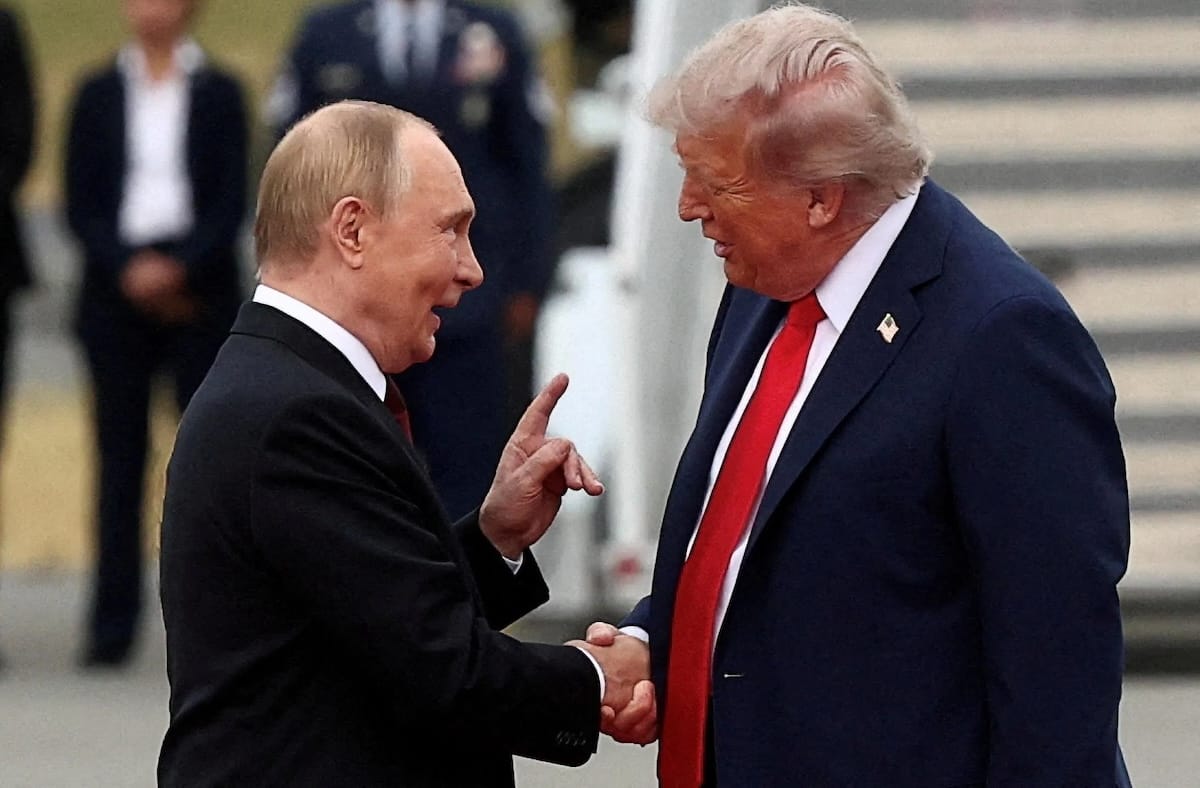
Today that order is in severe crisis, and contrary to popular belief, the problem goes beyond the reality of Donald Trump. Even if the White House were home to a president more aligned with the norms of conventional diplomacy, returning to the model of the past 80 years would no longer be possible. The world is sliding toward a state akin to global chaos, and the current American administration is merely accelerating that process.
The world order, with its established rules, is sliding toward global chaos, and the Trump administration is accelerating that process
This is a dramatic reversal. Until recently, it was assumed that obedient global citizens would enjoy a more or less predictable future, while states that broke the generally accepted rules would bring upon themselves a predictable response. That logic kept even the most militarized pariahs in check. North Korea could live in its “isolated corner” with a nuclear bomb, and no one attacked it so long as it refrained from trying to redraw the global map.
But now the very architects of the rules are beginning to employ direct force. The United States — the central systemic actor that once won the race against the Soviet Union precisely by betting on the power of stable institutions — is now shifting to tactics of outright coercion. And that means the old model of a “rules-based order” has ceased to exist.
North’s theory: How the world found order
To understand the reason why this is happening, it is worth turning to the work of Nobel laureate Douglass North and his co-authors John Wallis and Barry Weingast. Their concept of “open and limited access orders” is perhaps the most appropriate tool for analyzing today’s reality.
North made a compelling case that the vast majority of human societies throughout history have existed under “limited access orders” (or the “natural state”). In this kind of setup, elites hold power and resources, and the rule of the strong replaces the rule of law. As a result, all relationships are, at their core, merely personal arrangements. A monarch grants a baron land, peasants, and income from their labor in exchange for the baron’s payment of taxes to the royal treasury in peacetime and his contribution of men for the king’s army during wartime.
If one of them dies, the terms of the agreement may be renegotiated — with land transferred to another baron, or with the baron swearing loyalty to an heir to the throne. If one side disagrees, the dispute is resolved by force — usually with devastating consequences for the population. The same dynamic plays out in relations between states. Historically, this kind of zero-sum game, in which individual players endeavored to grow their share of largely fixed resources, went on for centuries, even if devastating interclan wars sometimes led to temporary periods of “playing by the rules.”
As North, Wallis, and Weingast showed, agreeing to surrender the struggle is rational provided that the new “non-aggression regime” can offer compensation comparable to what could be gained from waging war. Such compensation — or rents — can emerge if the state erects barriers to business activity or if there is insufficient competition in the economy. Maintaining such barriers requires enforcing limited access to political power — which is precisely why North and his co-authors define this type of society as a “limited access order.”
Such “non-aggression pacts,” however, tend to be short-lived, because over time the power of key players may wane and new players may emerge, hungry for their own piece of the pie. Natural disasters, technological progress, or geographic discoveries can also radically shift the sources of rent available to elites — and, in turn, alter their calculations of the costs and benefits of maintaining a “non-aggression regime” versus going to war.
Nevertheless, agreements reached by elites promote the emergence of institutions, which uphold the agreements in peacetime and facilitate progression toward more mature forms of “limited access” in which violence stays within certain boundaries. Rules provide a higher degree of predictability, and predictability provides incentives for productive labor and cooperation. Ultimately, this creates opportunity for a transition to “open-access orders” — systems in which access to economic activity, resources, and governance is based on rules rather than determined solely by proximity to those in power.
North and his co-authors believe that the success of the West starting from the 19th century became possible precisely because Britain, France, and the United States (and later other Western European countries) accomplished the difficult transition to an “open access order.” Its key element was the development of the rule of law, even if at first it only applied to the elites, whose personal privileges became impersonal, whose rights and assets became inheritable, and whose social status was thus secured.
The West’s economic success rests on the fact that these countries transitioned to the rule of law — that is, to an “open access order”
Historically, a key role was played by England’s Magna Carta, which King John was forced to sign in 1215 amid a profound crisis. War was raging, and John had little choice but to promise freedoms and rights to the barons in exchange for their support. He later tore up the charter, of course, and executed the most active barons. Yet the document survived, and in the Glorious Revolution of 1688, Britain returned to it.
It can take centuries of evolution before even a “limited access order” is achieved. Moreover, this progress can be reversed. While we tend to think of development as a forward-pointing arrow, institutional history demonstrated that regression is possible. North and his co-authors wrote about this explicitly in relation to “limited access orders.”
At the same time, they argued that “open access orders” are far more internally stable — and are no longer subject to the risks of regression. Yet before our very eyes, countries that North would have classified as having reached the “open access” stage are beginning to slide back into the “natural state,” in which politics once again becomes a projection of the interests of individual clans.
One possible reason lies in the fact that, despite having long since transitioned to open access institutions domestically, the ruling elites of developed countries continued to follow the logic of “might makes right” on the international scene. This was the fundamental cause of World War I: the interests of major national corporations became the interests of the state. Whenever businesses needed new markets, colonies, or access to mines, politics transformed itself to serve those needs, justifying expansion through appeals to the “greatness of the nation” — even as open access institutions were already functioning within those same countries.
This triggered a catastrophe that led to the deaths of millions and the destruction of economies across Europe. The deep disillusionment with the values proclaimed by the elites of developed countries gave rise to alternatives to the model of free markets and liberal democracy that the most advanced countries had embraced in their domestic policies at the start of the 20th century.
Those alternatives were the Bolshevik dictatorship of the proletariat in Russia and the fascist model, which originated in Italy and was then implemented in its most aggressive form in Nazi Germany. Attempts to create international mechanisms for resolving conflicts — in the form of the League of Nations and a system of international rules — proved unsuccessful in the interwar period. The result was an even bloodier and more destructive world war.
Disillusionment with the free-market model led to a Bolshevik dictatorship in Russia, fascism in Italy, and Nazism in Germany
The international order that emerged after 1945 had two distinct tracks: one governing relations between the two blocs that had formed around the USSR and the United States, and another internal track within each bloc.
In the case of the Soviet Union, the formal requirement was loyalty to communist ideology — which in practice meant unconditional subordination to Soviet leadership in exchange for resources from Moscow. Any display of disloyalty was suppressed by force — as happened in Hungary in 1956 and Czechoslovakia in 1968.
In its confrontation with the Soviet Union, the Western bloc, centered on the United States, needed its own ideological foundation. That role was filled by the ideas of market competition, political democracy, and freedom of speech. The declaration of rule-of-law principles was equally important.
In the United States and Western Europe, the practical implementation of these principles ensured the stability of democratic mechanisms and created incentives for economic development through the protection of property rights. By the early 1990s, when the Soviet model collapsed under the weight of its own inefficiency, this Western system had gone global. Even China began to integrate. Despite the importance of the American role as an informal “global policeman,” the system depended for decades on the consent and support of the majority of other states.
That support was ensured by the benefits enjoyed by most countries: the system guaranteed stable rules of the game and provided opportunities for cooperation and economic development. The most striking example is China, which became the primary beneficiary of globalization. Overall, the 1990s and 2000s were — despite all their problems — a period of unprecedented growth in global prosperity.
… And how it was lost
Despite the apparent success, a crisis was brewing that politicians preferred not to notice. Globalization benefited everyone — but in developed countries, especially the United States, those gains were distributed very unevenly. Business elites grew wealthy. The middle class — particularly skilled workers — did not grow poorer in absolute terms, but they lost status, stability, and their former sense of promise. People went from being workers with permanent contracts and union membership to sorting goods in Amazon warehouses, liable to be fired at any moment.
In the 2010s, American researchers documented a phenomenon unprecedented in the history of developed nations: starting in the late 1990s, life expectancy among white men over 45 began to decline — not because of illness, but because of despair and the drug addiction and alcoholism that came with it.
This was happening primarily in the so-called “Rust Belt,” home to the factories that had once formed the backbone of America’s manufacturing industry. However, in the 1980s and 1990s, their owners moved production en masse to Mexico or China. The media barely noticed, and the political class was even slower to respond.
In Europe, the problem was less severe thanks largely to the social-democratic system that kept inequality in check and provided higher levels of social guarantees. There, at least, production capacity could be relocated to Eastern European countries — meaning it stayed within the single market. The United States had no such buffers.
And then came Trump
Donald Trump himself belongs to the elite class that benefited the most from the current wave of globalization. But what he understood earlier than most was that the people who lost out in the process could win him an election.
Trump and his fellow tycoons had their own motives. By the 2010s, in an effort to preserve the global order by addressing a range of challenges — from terrorism to climate change to pandemics — the governments of several leading Western countries had begun making claims on the assets of the global business elite. The tightening of financial sector regulation after the 2008 crisis, pressure on offshore accounts, and stimulus for the energy transition meant that those with the biggest profits would have to pay. Unsurprisingly, most of those players had absolutely no desire to pay up.
Wanting to destroy the order that constrains you is entirely rational. Trump has no strategy, but he has a very clear instinctive sense of what stands in his way.
The economics of war
The most dangerous misconception is thinking that geopolitics exists separately from economics. Essentially, Trump is making a deliberate return to the “golden age” of the late 19th century, openly admitting he views that era as his ideal. But the problem is that for the United States it was a time when business elites directly dictated the country’s political agenda.
In late 19th-century America, the fusion of business and politics — i.e. corruption — reached new levels. It was the age of the “robber barons,” comparable to what Russia experienced in the 1990s. Government policies serving the interests of big business were among the causes of the First World War, even if the businesses that were pushing their politicians toward redividing the world did not foresee the meat grinder they were engineering. Instead of profit, they reaped an economic collapse.
Instead of profit, the business elite reaped economic collapse
Today we are witnessing striking parallels with that era. When modern politicians (and their corporate backers) begin to see international relations purely as a “zero-sum game,” they forget that the modern economy rests on cooperation and the division of labor.
In the Middle Ages, peasants and craftsmen did not invest in technology — not because they were foolish, but because there were no guarantees that assets created through investment would be protected: armed men could seize any surplus at any moment. When we destroy international rules, we create the same type of no-holds-barred playing field on a global scale. Why invest in innovation and long-term projects when you don’t know what policies the state will pursue tomorrow, or what conflicts your country might be drawn into as a result of those policies?
Putin pressed the button first
Trump, however, was not the first to begin stress-testing the system. Russia was — in 2014, with Crimea.
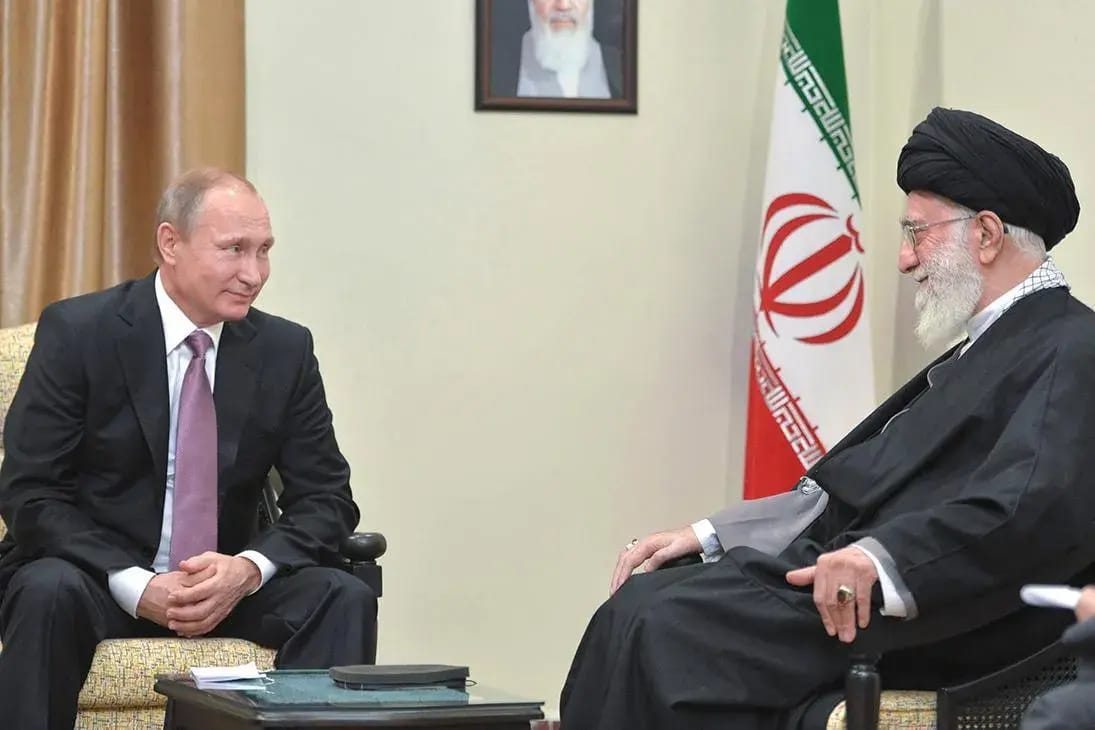
Putin’s logic was different, but it was equally self-interested. In the 2000s, the Russian elite badly wanted to join the “global club” — albeit on its own terms, without implementing any real reforms at home. However, they soon realized that was not going to happen. The initial response was a rhetoric of sovereignty and a flexing of “energy superpower” muscles (in the form of gas wars with Ukraine and Putin’s Munich speech in 2007). Yet even then, amid rising tensions with the West, their bet on integration into global markets remained on the table. The turning point came in 2011. Watching the fates of Mubarak and Gaddafi as a result of the Arab Spring, top members of Russia’s elite began to experience a deeply personal fear — a realization that moving toward integration could lead to the same outcome for them personally.
The consequence of that fear was a pivot toward a “besieged fortress” model — beginning with Crimea and Donbas in 2014 and culminating with the full-scale invasion of Ukraine in 2022. But for all the rhetoric, this was done for domestic political purposes. The same logic — in a different guise — drives Trump. One is dismantling the order to protect his business assets. The other is starting a war to hold on to power. Different methods, both stemming from the same opportunism.
If one were to draw historical analogies, however, the current situation differs from the era of the world wars in two important ways. First, for all the rapid growth of world trade at the start of the 20th century, major nation-states were largely self-sufficient. After the Second World War, the same could be said of the opposing political blocs built around the USSR and the United States. In today’s far more complex and interdependent world, however, the destruction of established ties and the intricate mechanisms that underpin global markets could have far more severe consequences.
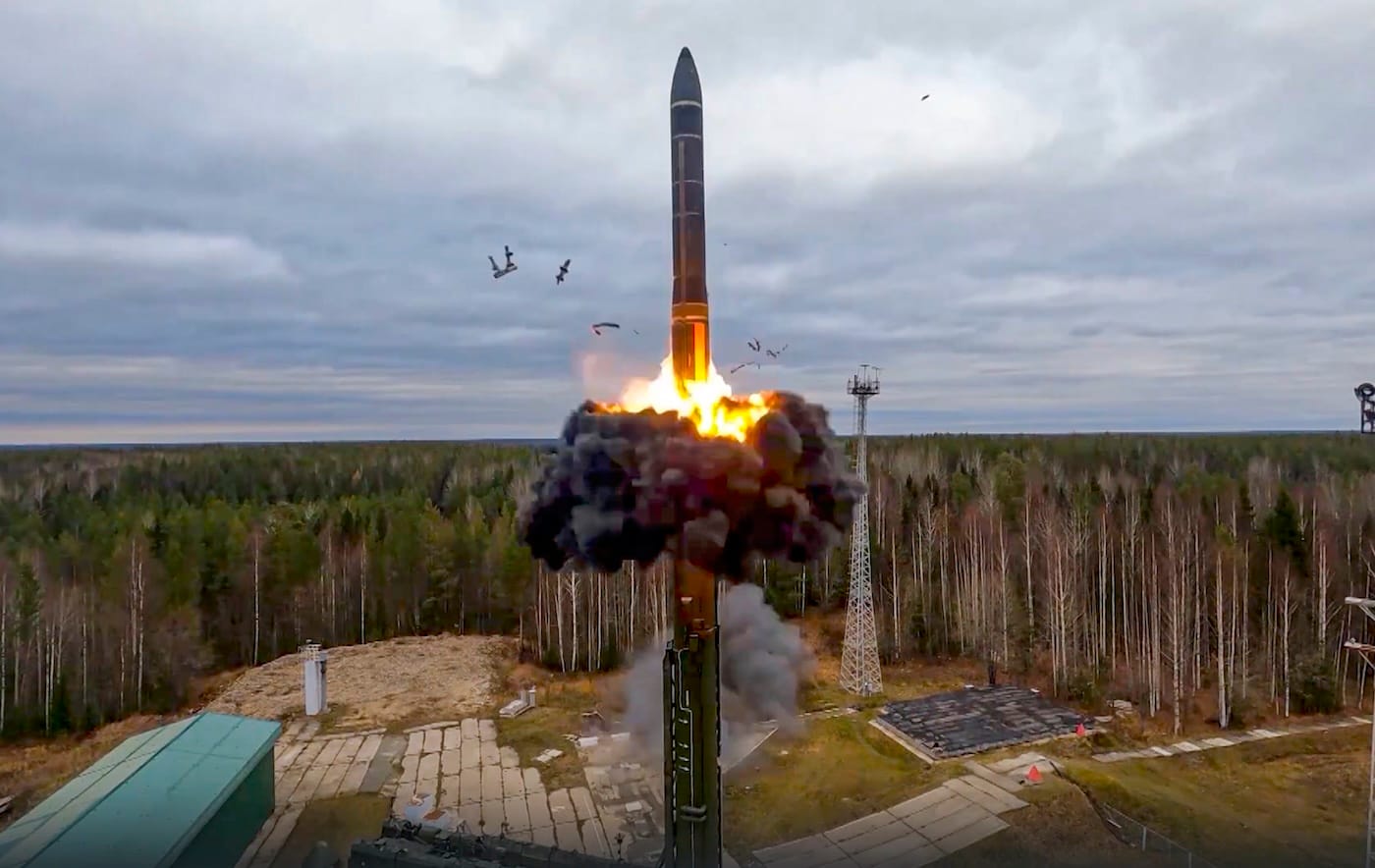
Second, there is the matter of nuclear arsenals — along with an evident decline in the psychological and political barriers to their use. Should nuclear weapons be deployed in a conflict between major powers, humanity risks not merely a recession and political chaos, but a literal return to the Middle Ages.
History has seen such a reversal before. The Roman Empire was a highly advanced state — but it collapsed nonetheless, and for nearly a thousand years after its fall, Europeans could not build bridges across great rivers like the one the Romans had constructed. Ultimately, civilization was saved by the existence of other centers of civilization — China, India, the Arab world, the states of Central America. But if today’s global world begins to collapse, we all risk finding ourselves in the ruins.
China: Not a savior, but a symptom
Against this backdrop, the China model seems almost appealing. At least it is stable and predictable — unlike Trump’s America, which is increasingly seen by many as a “monkey with a grenade.”
But there should be no illusions here either. At a conference attended by Chinese and European experts in Shanghai last year, a conversation arose about the concept of “mutual benefit” in the context of cultural differences. For Europeans, mutual benefit means “50-50” or “60-40.” In the Chinese context, any deal in which each side gets something is “mutually beneficial” — even if the ratio is closer to 90-10 (in favor of Beijing, of course). Without a trace of irony, the Chinese genuinely consider this normal: “It benefits you too, and you agreed to it yourself.” Like any ancient civilization, China is inclined to view all other peoples as barbarians — and taking a little more from the barbarians than they are willing to offer presents no moral dilemma.
This case serves to explain China’s behavior within the same zero-sum logic: it does not take sides, playing for itself alone. This is clearly visible in Chinese infrastructure development projects in developing countries, which are normally financed by Chinese loans and carried out by PRC-based companies with the hands of Chinese workers.
Beijing’s growing military capability — and its willingness to use it — raises the stakes enormously. A U.S.-China confrontation would not create a new stable order, as it would lack the ideological dimension that during the Cold War compelled Western elites to adhere to certain ethical standards. Instead, in terms of genuine values, there is no fundamental difference between Trump and Xi Jinping.
Alliance of good-faith actors as a way out
Against the backdrop of this grim context, some models do inspire cautious optimism. In the late 1980s, future Nobel laureate Eric Maskin proposed a solution to the classic “prisoner’s dilemma.” The standard version is static: two players whose mutual distrust leads to a stable bad equilibrium guaranteeing the worst outcomes for both. Maskin and his co-author Drew Fudenberg examined the dynamics: what happens if the number of such players and their interactions is infinite, and players learn from their own experience?
As the researchers concluded, in a dynamic setting, selection occurs. Good-faith players — those willing to take a risk and trust an unfamiliar counterpart at first contact — may initially suffer losses due to the opportunism of counterparties, but they then exclude those who have failed to earn their trust from further interactions. Over time, the good faith actors form a mutually beneficial cluster characterized by lower interaction costs.
In the long run, this coalition of players outperforms those betting on a zero-sum game. The question is whether anyone in today’s world can, as an alternative to the “war of all against all,” offer a new model of cooperation that creates conditions for the resolution of global issues on a similar basis.
Interestingly, in conversations with people living in Russia, I hear the same idea again and again: for all the attempts to reorient the nation toward China, for all the rhetoric about a “pivot to the East,” the majority still find Europe more appealing. The Western way of life, the values, the sense that people there don’t want to go to war. This is not nostalgia, but a signal that the European model carries something that neither China nor today’s United States can offer.
In my view, it is precisely the European Union — originally born from cooperation between France and Germany, countries that had fought each other for centuries — that could in theory offer a new model of engagement. The enormous losses suffered by these countries in the 20th century’s two world wars led their leaders and national elites to the realization that negotiating is cheaper than fighting.
The enormous losses suffered by France and Germany in the two world wars of the 20th century led to the realization that negotiating is cheaper than fighting
The problem is that for all the European Union’s obvious successes over the past 80 years, the bloc is now experiencing a crisis of its own: it expanded faster than it could integrate politically, and it has lived under an American security umbrella that has suddenly proved unreliable. The speech by U.S. Vice President J.D. Vance in Munich in early 2025 came as a genuine shock to European elites.
But perhaps that shock was exactly what was needed. Over the past year, movement toward real consolidation — both military and political — has finally begun. I will not venture to predict the probabilities, but the logic of both Maskin’s theory and the experience of postwar Europe points to one conclusion: a cooperating cluster is, in the long run, more effective than a war of all against all. The only question is whether we will have enough time for that cluster to form before the debris of the old order buries everyone.