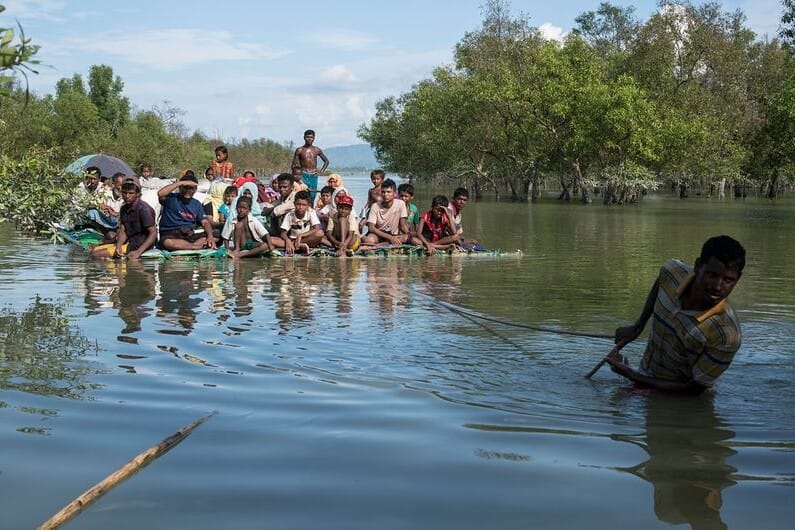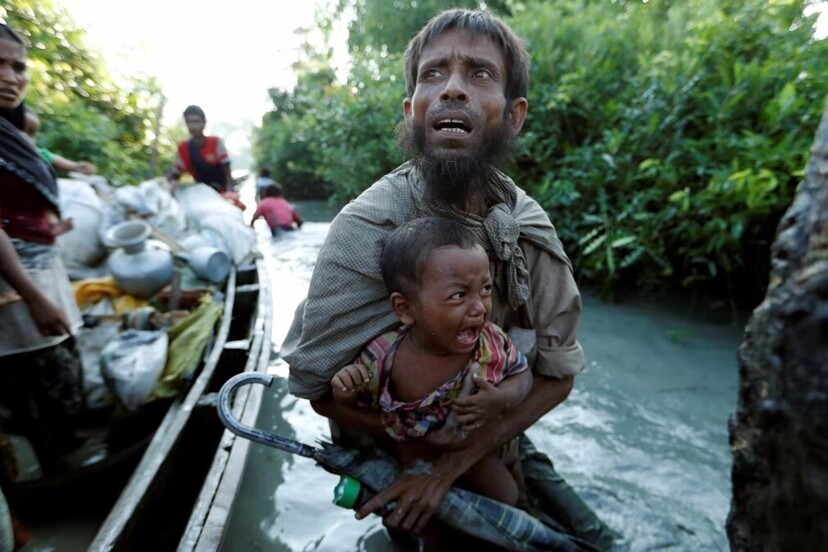
The ruling of the International Court of Justice in the case on the genocide of the Rohingya Muslim minority in Myanmar could have serious consequences for Israel, as South Africa has also filed a genocide case over the Israeli military operation in the Gaza Strip. International criminal law expert and genocide scholar William Schabas explained the ramifications of the decision in a conversation with The Insider.
According to Schabas, the court’s ruling is of fundamental importance for assessing the actions of the Israeli army, because the court recognized that genocidal intent can exist simultaneously with other motives.
“The consequences of the judgment are devastating for Israel. To take one example, the judgment refers to the killing of 2,100 children as evidence of genocidal intent. More than ten times that number of Palestinian children have been killed,” Schabas said.
The expert drew particular attention to the court’s conclusion that the presence of additional goals does not rule out genocidal intent, explaining that:
“The judgment says that genocidal intent can coexist with other forms of intent. Thus, Israel’s argument that its attacks on Palestinians amount to counter-terrorism, self-defence, punishment, or reprisal does not in any way negate the possibility that it is driven by genocidal intent.”
On Nov. 19, the United Nations’ International Court of Justice issued a ruling in the case on Myanmar’s violation of the Convention on the Prevention and Punishment of the Crime of Genocide. The proceedings were initiated by The Gambia in connection with the persecution of the Rohingya, hundreds of thousands of whom were forced to flee the country after the 2017 military operation.
Schabas stressed that the ICJ’s ruling establishes the responsibility of a state, not the criminal responsibility of specific leaders. The latter falls within the competence of the International Criminal Court (ICC), which is also investigating the situation in Myanmar.
In the expert’s assessment, enforcing any direct punishment against Myanmar’s leadership remains unlikely as long as the military retains power. The country is not a party to the Rome Statute and is not obliged to execute ICC arrest warrants.
At the same time, Schabas believes that the ICJ’s ruling could improve the prospects for the Rohingya’s return to Myanmar and lead to changes in national legislation in their favor.
South Africa filed its case against Israel at the ICJ in December 2023, accusing it of violating the Genocide Convention during military operations in the Gaza Strip. Israel rejects the accusations, arguing that its actions are directed against Hamas and have been carried out consistent with the right to self-defense.
The ruling on Myanmar does not predetermine the outcome of the proceedings against Israel, but the legal approaches formulated by the court during its most recent genocide case suggest that a similar ruling against Israel has become a real possibility.