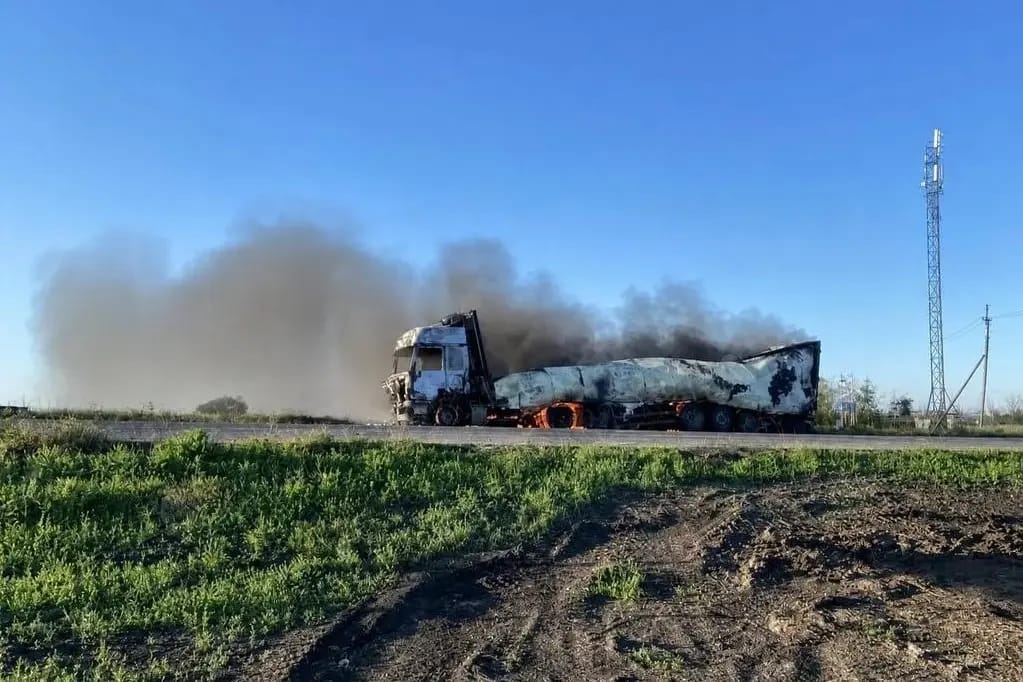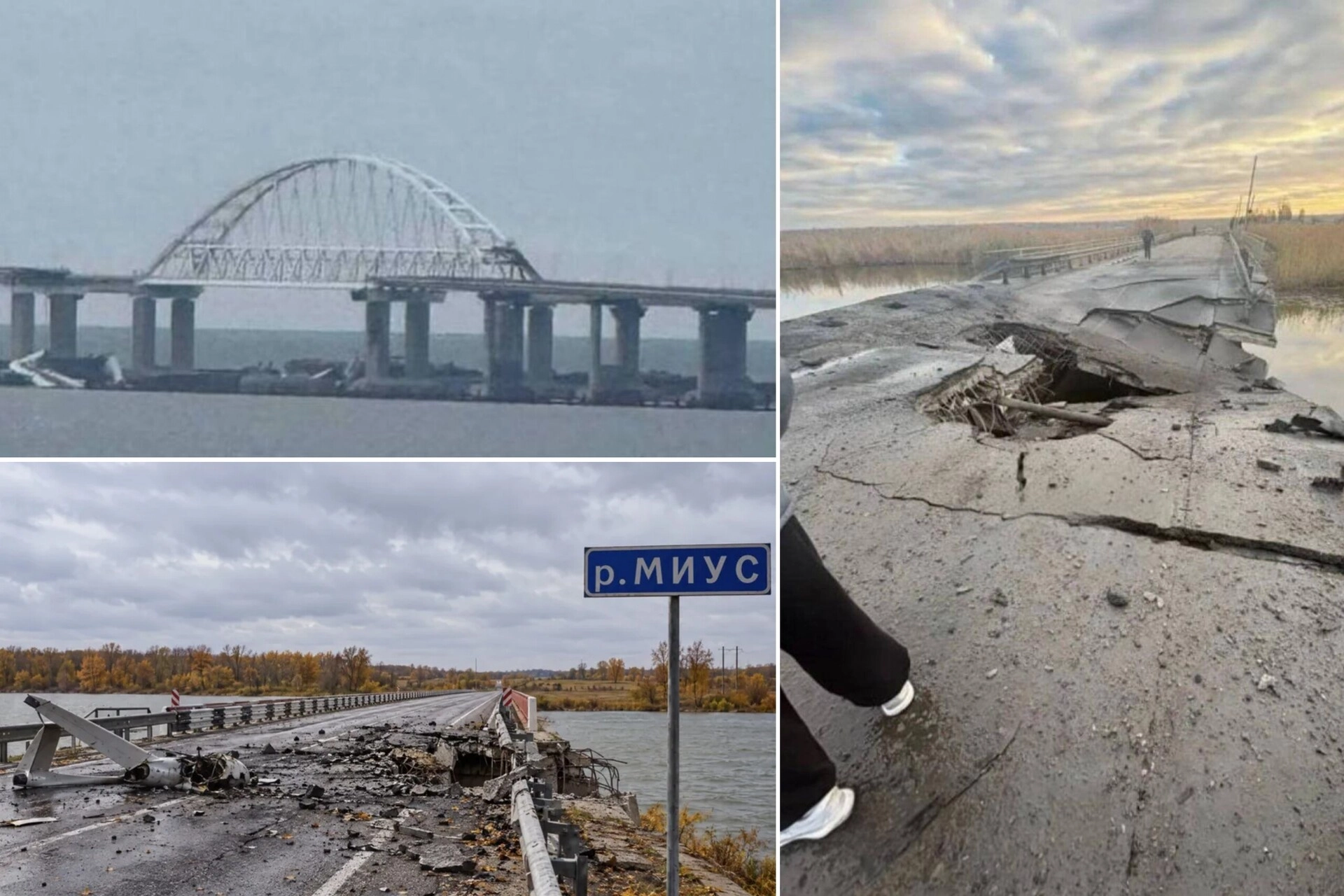
Ukraine is increasing pressure on Russia’s military supply network to Crimea by striking not only the Kerch Strait Bridge but also alternative land routes through Russian-occupied areas of southern Ukraine. Damage to bridges and crossings is forcing Russian forces to use secondary roads, slowing deliveries and requiring additional resources for repairs and temporary crossings. John Helin, founder of the Black Bird Group analytical team, described the situation to The Insider.
Helin said at least six bridges in the Rostov and Novoazovsk areas had been struck since early October. The bridges do not necessarily have to be completely destroyed to disrupt logistics, he explained, because even temporary closures create additional problems for Russian supply operations.
“Damaged bridges force more trucks onto secondary roads, create bottlenecks, and slow down the movement of supplies,” Helin said.
The main road supply route to Crimea through occupied Ukrainian territory remains the R-280 highway along the Sea of Azov. Its importance increased after the Crimean Bridge was bombed in 2022, when the movement of heavy trucks across the bridge was sharply restricted. The transport of some types of military cargo (including fuel and ammunition) over the bridge’s railway section has also been restricted.
The road span of the Crimean Bridge collapsed following Ukrainian attacks on Nov. 16-17. Konstantinos Tsavdaridis, a professor of structural engineering at City St George’s, University of London, told The Insider that restoring it would take many months even under normal conditions. The railway section was also damaged, and Russia’s Transport Ministry said on Nov. 19 that train traffic across the bridge had been suspended. Ukraine has also targeted Russian ferries and landing ships that have been used to carry cargo across the Kerch Strait, as noted by retired general and military analyst Mick Ryan.
Helin said Ukraine has been striking bridges and crossings since June. Several more crossings along the Sea of Azov coast were hit immediately before the latest attack on the Kerch Bridge. In his assessment, that suggests the strikes on several logistics routes may have been coordinated.
Russian forces are capable of repairing smaller bridges and building temporary crossings, but Ukraine can also target the replacements, Helin said. That forces the Russian military to carry out repairs again, search for detours, keep engineering units in the area, and potentially reinforce the crossings with additional air defenses.
However, Helin cautioned against overstating the effects of the Ukrainian strikes. Despite the disruption, the Russian military retains the ability to supply its forces in Crimea. A route being interrupted for several days or weeks, he said, is significantly different from being able to put it out of service for months:
“While I think there is a fairly clear Ukrainian effort to make these routes increasingly difficult to use, I wouldn't conclude that Russia is close to losing its logistical connections to Crimea altogether. Disrupting traffic for days or weeks is one thing. Keeping these routes out of operation for months, despite Russian repair efforts and alternative crossings, is another.”
The collapse of the road section of the Kerch Strait Bridge primarily deprives Russia of a backup route that could be used if the land supply network encountered serious problems, Helin said. A complete halt to rail traffic could have more significant consequences, although the volume of military cargo transported across the bridge has already been limited for some time.
Helin said Ukraine’s campaign of strikes at intermediate depth behind the front has likely contributed to slowing the Russian advance. Combined with growing manpower problems in the Russian military, mounting logistics difficulties could further limit Russia’s ability to increase the pace of offensive operations:
“What these strikes can do is make Russian offensive operations increasingly difficult and when combined with Russia's mounting manpower problems, I think it becomes harder and harder to see how the Russians could substantially pick up the pace of their offensive operations, which have already slowed to a crawl during this year.”
“Ultimately, I think the more important story here is not necessarily the destruction of the Crimean Bridge itself, but the growing pressure Ukraine is putting on Russia's logistics system as a whole,” Helin said.