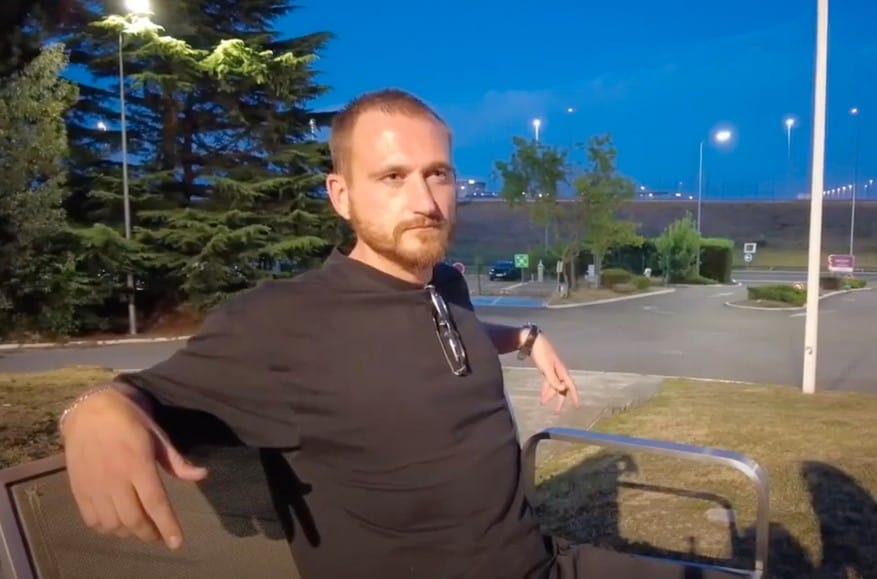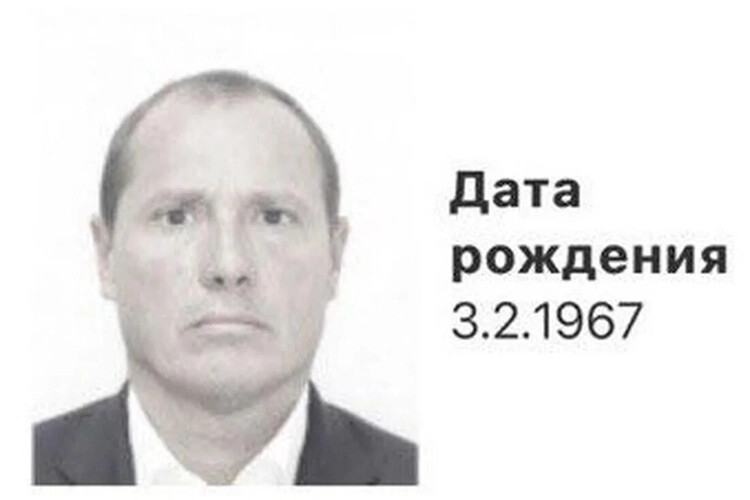
Igor Pestrikov, a former co-owner of the Solikamsk Magnesium Plant who was sentenced in absentia to eight years in a Russian prison, has applied for political asylum in France, according to a ruling by the High Court of England and Wales. As The Insider found, British judge Julia Dias, who heard the case, questioned whether the businessman could receive a fair trial in Russia.
Pestrikov brought a claim in a British court against Alexander Gutin, the former chairman of the Solikamsk Magnesium Plant’s board of directors. The businessman previously told Vedomosti that he was seeking $1 billion in compensation for the loss of his stakes in the Solikamsk Magnesium Plant and the Lovozero Mining and Processing Plant. Both companies were nationalized in 2022 and later came under the control of Rosatom, Russia’s state nuclear corporation.
Court documents say Pestrikov accuses Gutin and other former co-owners of the businesses, including Pyotr Kondrashev, Sergei Kirpichev and Timur Starostin, of conspiring to remove him from the firm’s management and to arrange for the transfer of control over the plants to Rosatom. Pestrikov alleges that Gutin, who represented Cyprus-based Canemare Enterprises (the seller of the shares), deliberately structured the transactions in 2015 so that Russian authorities could later declare them unlawful and intervene in the companies’ management. Gutin denies the allegations.
According to the ruling, Pestrikov’s asylum application in France was still pending as of June 25, 2026. It is not known whether he has since been granted asylum.
British judge questions prospect of a fair trial in Russia
Gutin challenged the British court’s jurisdiction, arguing that by the time the legal documents were served on him in October 2025, he was already permanently living in Cyprus. The judge found that documents he provided, including boarding passes, banking records, and information relating to him renting a home, supported his claim that he had moved. The court therefore ruled that service was invalid and set aside the proceedings without considering the conspiracy allegations on their merits.
In the ruling, The Insider found a notable observation by the judge about the Russian justice system. Dias said that although the core circumstances of the dispute were closely connected to Russia, there were serious grounds to believe Pestrikov would not be able to obtain a fair trial there. She described some of Gutin’s arguments to the contrary as weak.
Another detail identified by The Insider in the court records concerns the cost of the failed case. Gutin’s legal expenses exceeded 500,000 pounds. The judge expressed surprise at the size of the bill for what she described as a relatively straightforward procedural dispute and declined to approve the full amount without further review. Pestrikov was nevertheless ordered to make an interim payment of 100,000 pounds to the defendant.
Russia hands Pestrikov eight years in prison in absentia
In 2025, Igor Pestrikov acquired an approximate 25% of the shares in the Solikamsk Magnesium Plant. In May 2022, a court granted a prosecutor’s request to return to the state 89.5% of the plant’s shares that had been owned by four major shareholders. The court found that the plant’s privatization in the 1990s had been unlawful.
In April 2025, the Solikamsk City Court sentenced Pestrikov in absentia to eight years in prison. Prosecutors alleged that he had embezzled 250 million rubles ($3.1 million) belonging to the company and later tried to obtain another 2.5 billion rubles ($30.7 million) under the guise of a buyout of his stake in an affiliated business. Pestrikov was outside Russia, and the criminal case proceeded without him.
The regional publication RBC Perm reported in July 2025 that the criminal case included an Interpol document dated April 19, 2024, which characterized Pestrikov’s prosecution as political and aimed at depriving him of his property rights. A Russian appeals court rejected that assessment and upheld the eight-year sentence.
The nationalization of the Solikamsk Magnesium Plant affected more than its major shareholders. In March 2024, The Insider reported that a court had ordered the seizure of shares from private investors, many of whom had bought them on the stock exchange. The decision was criticized by Russian Central Bank Gov. Elvira Nabiullina and the Moscow Exchange, which warned that it could undermine investor confidence.
The nationalized plant continues supplying raw materials to Europe
After the nationalization, the Solikamsk Magnesium Plant and the Lovozero Mining and Processing Plant became part of Rosatom’s structure. The Lovozero plant mines rare-earth raw materials that are processed in Solikamsk. In October 2026, The Insider reported that the EU had removed the Solikamsk Magnesium Plant and its director, Ruslan Dimukhamedov, from a draft sanctions list at Estonia’s request because of European industry’s dependence on the company’s supplies.
According to the investigative project Sistema, between 2022 and 2024, the Solikamsk Magnesium Plant supplied Estonia’s NPM Silmet with more than $50 million worth of rare-earth raw materials. The company’s products are used in Europe’s automotive, electronics, and aviation industries, as well as in the production of wind turbines.