Russians seeking asylum in the European Union will soon be subjected to an accelerated review procedure, meaning they will have fewer opportunities to build cases and appeal negative decisions. The change is linked to new EU migration rules that will be applied to citizens from countries with low approval rates for international protection. Rights advocates warn that the approach could negatively affect political activists, deserters, anti-war Russians, and other vulnerable groups.
EU updates asylum rules: What changes on June 12
New rules for processing asylum applications will come into effect in the European Union on June 12. They are part of the EU Pact on Migration and Asylum, a reform package adopted by the Council of the EU in May 2024.
One of the key elements of the reform is a new regulation governing the procedure for granting international protection. It is intended to replace the previous system in which the national laws of member states governed procedures in line with an EU directive that set a general framework.
At present, asylum applications in the EU are reviewed under the regular procedure, or in some cases under an accelerated one. Until now, the use of accelerated procedures has largely remained an option to be used at the discretion of member states. The new regulation makes accelerated review mandatory for several categories of applicants.
One such category is citizens of a country whose average EU recognition rate for international protection is 20% or lower. In such cases, review deadlines are significantly shortened — down to three months. Exiled Russian politician and former political prisoner Andrei Pivovarov warned that this could affect the quality of case reviews, deprive applicants of the chance to provide additional arguments, and ultimately lead to more rejections.
Russia falls below the 20% threshold
The European Union Agency for Asylum (EUAA) told The Insider that the agency itself does not decide which countries fall under the 20% threshold. EUAA representatives said Eurostat compiles the list based on statistical data. The agency noted that every asylum application in the EU must be reviewed individually.
“We have, in fact, published a series of Country of Origin Information reports on the Russian Federation, most recently in December 2025, which impartially outline the situation of various political and social groups and developments pertaining to military service. Regardless of the 20% threshold, under European law, all asylum applications must always be assessed based on their individual merits. This does not change,” the agency said.
Russia is included in Eurostat’s published list of countries whose citizens have a first-instance recognition rate for international protection of 20% or lower, with a rate of 18.1%, according to the official list obtained by The Insider.
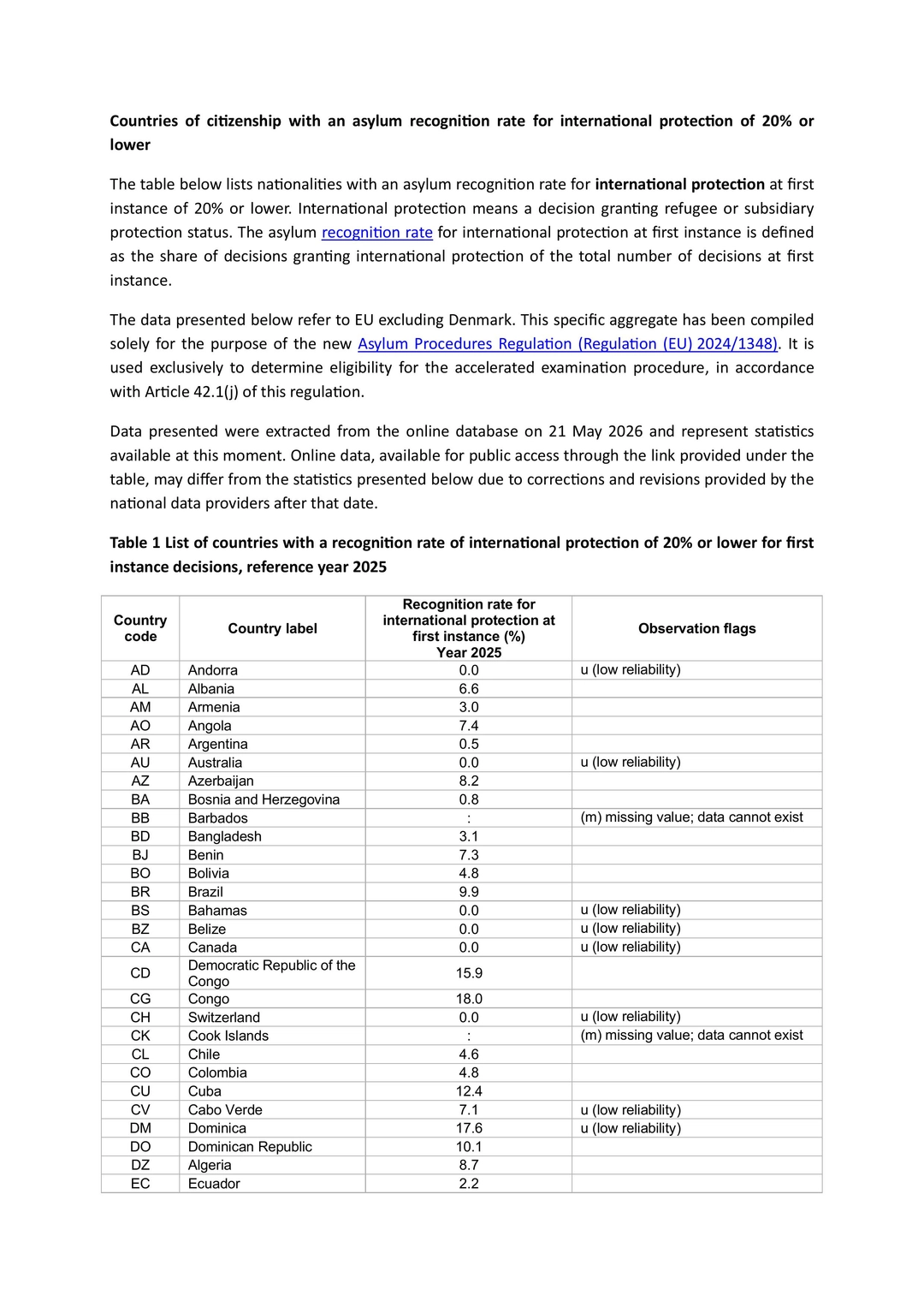
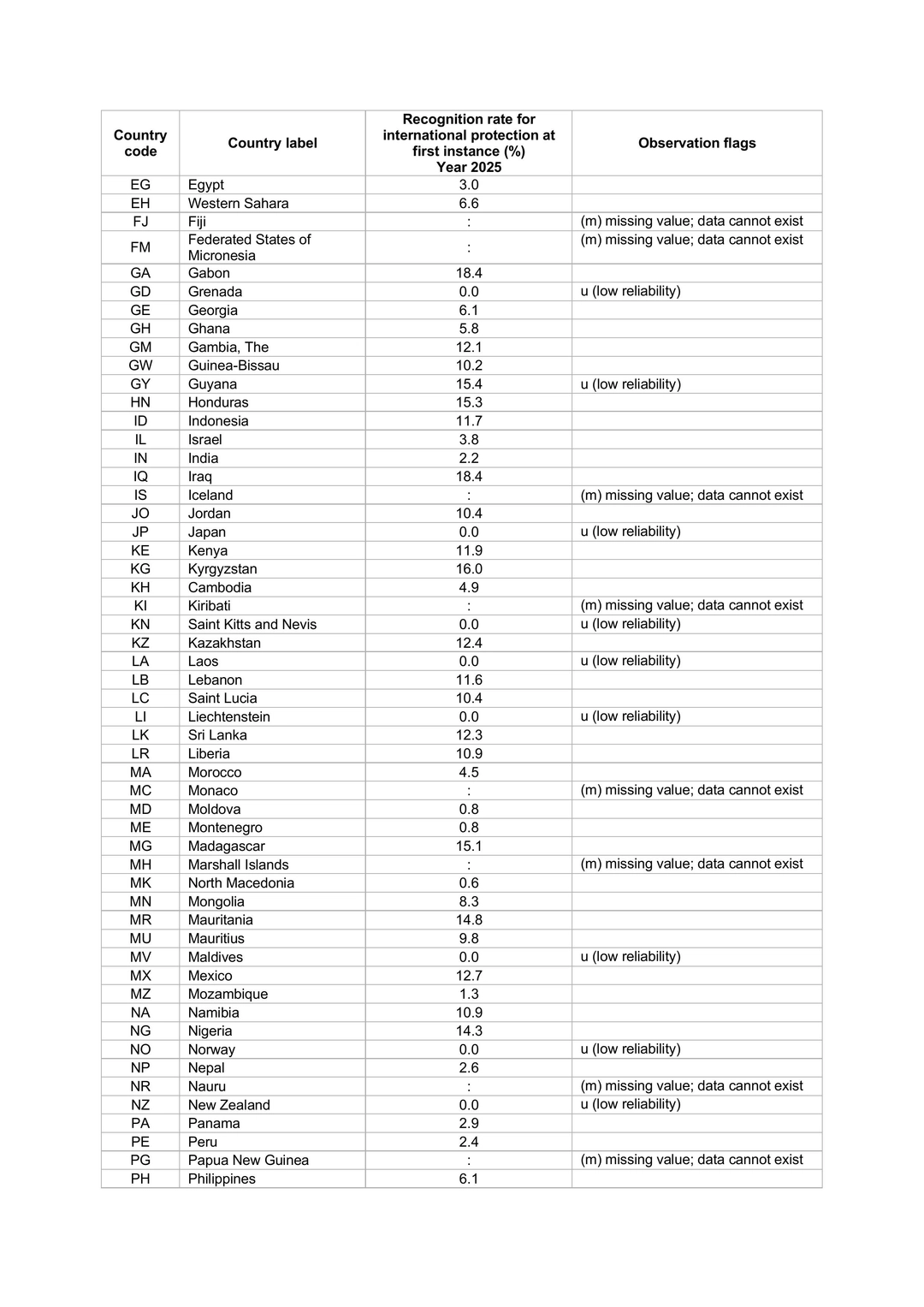
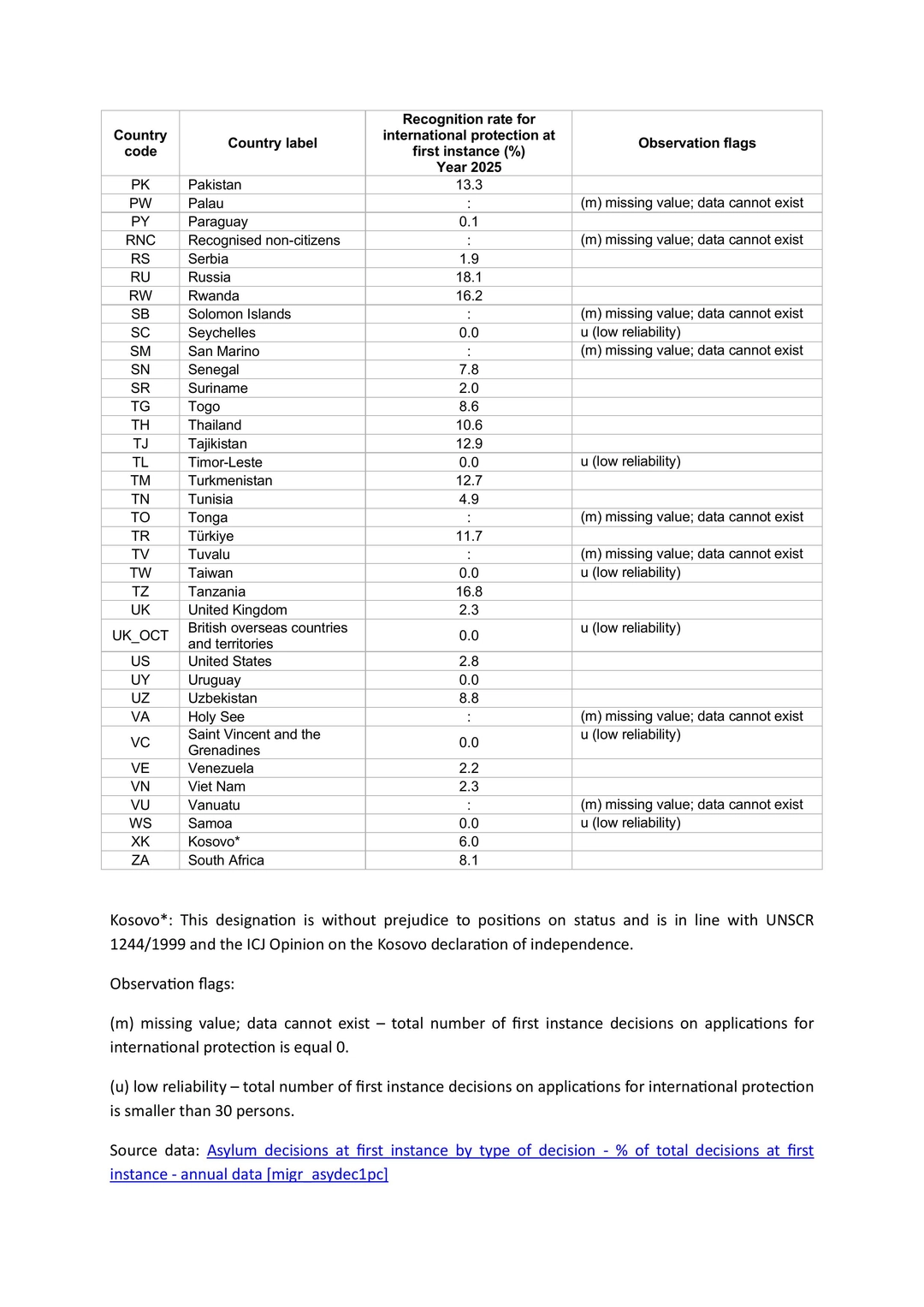
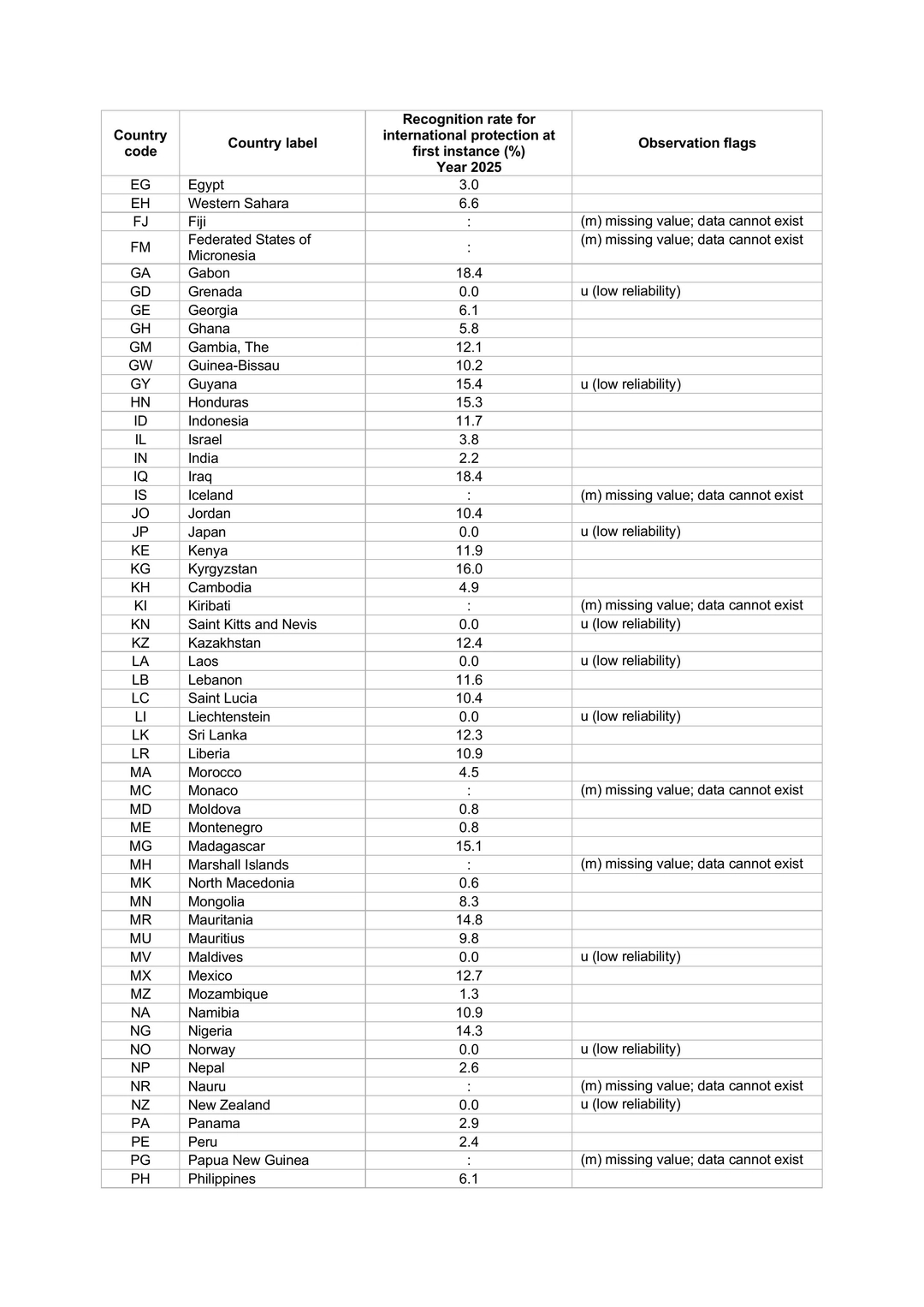
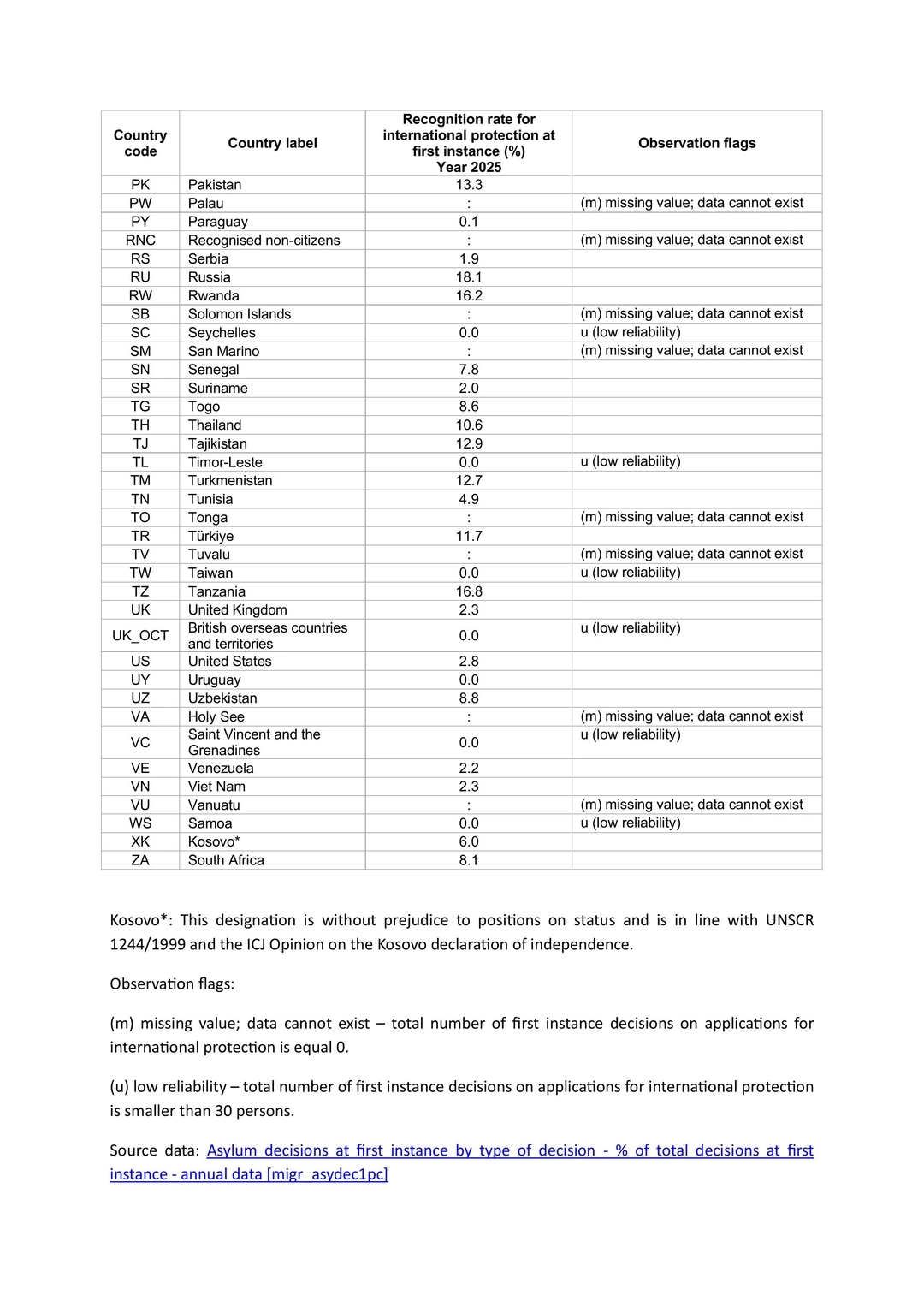
According to Eurostat’s official response to The Insider, the list was compiled specifically for the purpose of applying the results to the EU’s new asylum procedure regulation. It is used to determine whether applications from citizens of a given country may be reviewed under an accelerated or border procedure.
Eurostat said the indicator is calculated based on first-instance decisions on asylum applications. The agency’s database separately includes data on final decisions after appeals, but the list linked to the new regulation uses first-instance statistics.
Rights advocates dispute the logic of the EU’s new approach
Activists say Russia’s rate hovers around 20% but formally falls short of it. Rights advocate Daria Dudley told The Insider that the logic behind the policy change is extremely flawed:
“Instead of reconsidering the practice in which even applicants from countries with harsh dictatorships and armed conflicts — such as Turkmenistan, Azerbaijan, or the Democratic Republic of Congo — consistently show extremely low asylum recognition rates in the EU, the European Union is finally cementing this absurd logic in its new migration legislation,” Dudley said.
“Based on international protection recognition statistics, a list is being formed of about 70 countries with rates of 20% or lower, whose citizens are subject to an accelerated review procedure, including at the border.
This means that an applicant from any of these countries may go through an accelerated border procedure. In a very compressed time frame and without legal assistance, the burden falls on the applicant to prove that they genuinely face political persecution because of their civic or political activity.
Russia is also on this list, with a recognition rate of 18.1%, despite severe political repression, a huge number of political prisoners, and criminal prosecutions up to being labeled an ‘extremist’ or ‘traitor’ for an anti-war position or refusal to take part in the criminal war against Ukraine.
The EU’s new migration rules are a victory of absurdity over common sense, a complete disregard for human lives and human dignity, and a clear indifference to its own statements about supporting Ukraine, human rights, and the rule of law.
In trying to save money on the migration system and perhaps redirect funds to defense, the European Union is essentially shooting itself in the foot and destroying what it has spent decades building with such difficulty. It is clear that through the new migration legislation, the EU will very quickly, before our eyes, move toward a harsh American model with mass detentions and a legal vacuum for migrants, including Russians.”
The regulation provides exceptions for certain categories of applicants for whom overall country statistics do not reflect real risks. Pivovarov said that is why, on behalf of the “Consuls” of the Anti-War Committee of Russia, he sent an appeal to EUAA Executive Director Nina Gregori. In the appeal, he asks the agency to prepare separate Country Guidance on Russia and, until it is issued, to release interim clarification on which categories of Russians should not automatically be placed in accelerated or border procedures.
Pivovarov said the categories include political activists, people facing anti-war or “extremism” cases, journalists, human rights defenders, “foreign agents,” members of the LGBTQ+ community, members of religious minorities including Jehovah’s Witnesses, draft evaders, deserters, and women from the North Caucasus who have suffered gender-based violence.
“Russian cases cannot be assessed only by overall statistics. Politically persecuted and vulnerable groups must have a full review procedure, not an accelerated one,” he said.
Rights advocates say that if the procedure becomes accelerated, applicants may effectively lose the chance to “submit documents later.” For that reason, even people with strong cases must now seek help from human rights defenders or lawyers as early as possible.