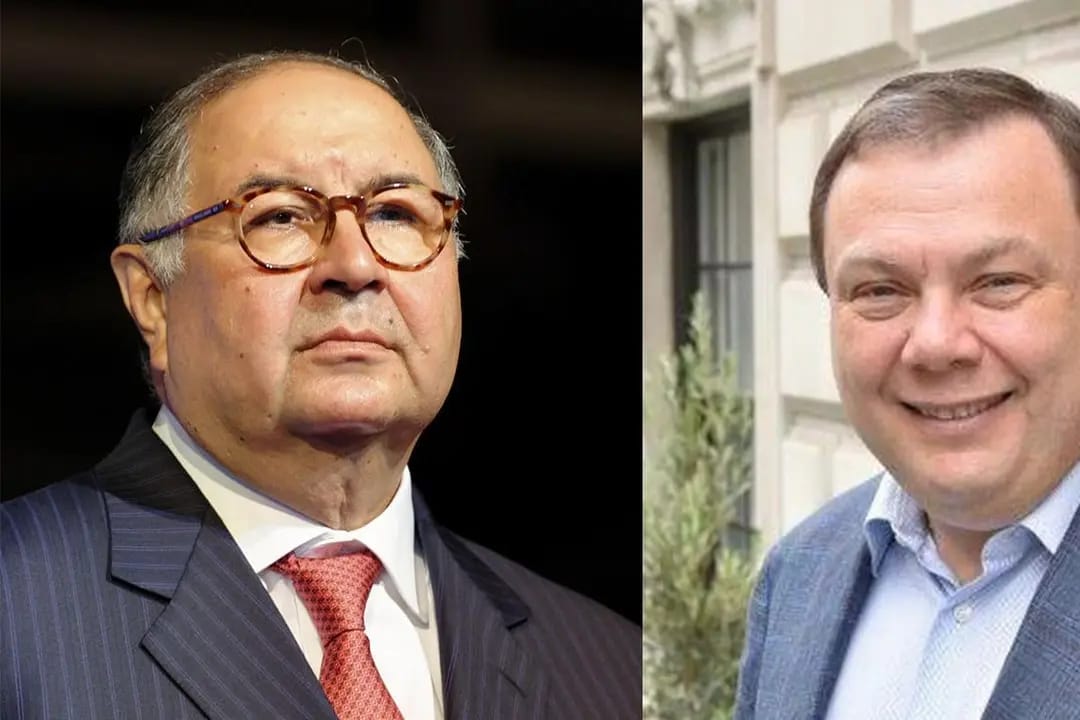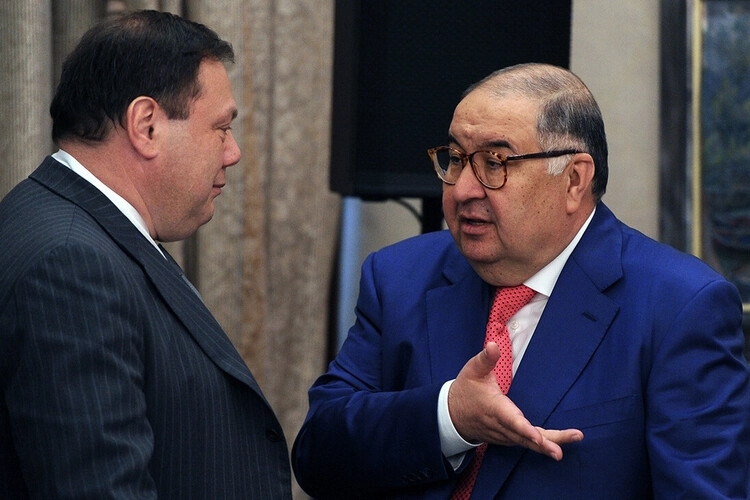
Switzerland has removed Russian billionaires Alisher Usmanov and Mikhail Fridman from its sanctions list, following a similar step by the European Union in late September. Switzerland also lifted sanctions from former Crimean Federal University rector Andrei Falaleyev and company Redbird Corporate Services Ltd., along with three people who have died — former Russian State Duma lawmaker Yuri Shvytkin, designer Alexander Leonov, and Iranian military official Alireza Tangsiri. The changes took effect on Nov. 5.
At the same time, the Swiss government said it would align its measures with the EU’s 21st sanctions package against Russia and Belarus, extending restrictions to 254 additional individuals and organizations. Switzerland also banned transactions with 33 Russian banks, one bank in a third country, 17 financial institutions and cryptocurrency service providers, five companies in third countries, four Russian airports, and two ports. It also imposed restrictions on the purchase, sale, and servicing of 41 vessels linked to Russia’s so-called shadow fleet, which is used to circumvent sanctions on Russian oil and other cargo.
Switzerland is not required to automatically follow the EU
Unlike the EU’s member states, Switzerland decides independently which foreign sanctions to adopt. It is not a member of the European Union, and the legal basis for its restrictive measures is its own Embargo Act. The Federal Council, Switzerland’s executive branch, makes decisions separately after assessing whether proposed measures comply with Swiss law, foreign policy interests, and the country’s neutrality policy.
Since 1998, however, Switzerland has in most cases adopted EU sanctions either fully or in part. On Feb. 28, 2022, four days after Russia launched its full-scale invasion of Ukraine, the Federal Council decided to adopt the EU’s initial sanctions packages against Russia. Swiss authorities have separately stressed that doing so did not amount to abandoning neutrality.
In the current case, the government explicitly said that it had removed six people and one company from the sanctions list in line with the EU decision. Switzerland nevertheless retained the ability to adjust other measures independently and has so far declined to add two EU-sanctioned Russian citizens to its list and has declined to impose tighter export controls on 14 companies in third countries. Their names were not disclosed.
What assets are frozen in Switzerland
According to data from the Swiss Bankers Association reviewed by The Insider, Swiss banks managed 9.73 trillion Swiss francs in assets in 2025. Of that total, 2.36 trillion was held in international private wealth management. According to Switzerland’s State Secretariat for Economic Affairs (SECO), 8.5 billion francs in financial assets belonging to sanctioned individuals and entities were frozen in the country as of July 1, 2026. Fourteen properties, as well as cars, aircraft, works of art, and other valuables, were also blocked.
Removing Usmanov and Fridman from the list could provide grounds for unfreezing some previously restricted assets. Swiss authorities, however, did not disclose the value of the Russian billionaires’ assets that had been subject to such measures.
Why the European Union lifted its restrictions
On Sept. 14, the Financial Times published an article citing sources who said French authorities, under pressure from Azerbaijan, were lobbying for the EU to lift sanctions on Uzbek-Russian billionaire Alisher Usmanov. According to the newspaper, removing the sanctions was part of a deal to secure the release of French citizens detained in Azerbaijan.
The European Union removed Usmanov and Fridman from its sanctions list on Sept. 22 but did not explain the specific reasons behind the decision. On Sept 23 Azerbaijani President Ilham Aliyev pardoned French citizen Martin Ryan, who had been sentenced to 10 years in prison on espionage charges. Ryan was released and returned to France.
The French Foreign Ministry characterized the pardon as the result of “patient and constructive” dialogue with Azerbaijani authorities. Azerbaijan, for its part, rejected allegations that it had sought to pressure France.
According to the FT’s sources, Luxembourg had sought the lifting of sanctions on Fridman. The businessman is seeking around $16 billion in compensation from the country over a dispute pertaining to frozen assets.
Ukraine’s reaction
The European Union’s decision drew criticism in Ukraine, where President Volodymyr Zelensky called the lifting of sanctions on individual Russian oligarchs “self-defeating and counterproductive,” saying pressure on Moscow should be increased rather than eased.